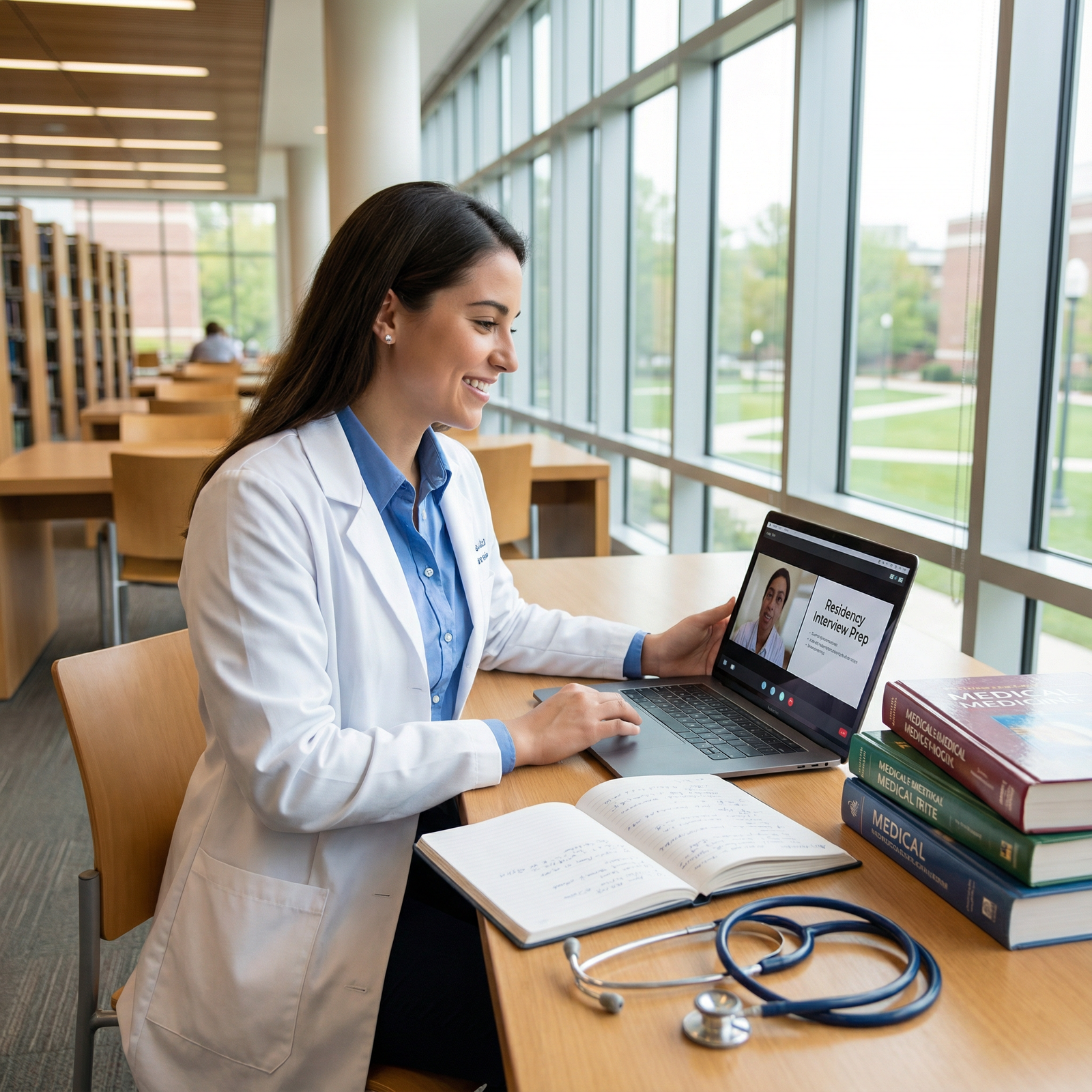
Understanding the Unique Challenges for Non-US Citizen IMGs in Preliminary Medicine
Pre-interview preparation for a non-US citizen IMG targeting a preliminary medicine year (prelim IM) requires a more strategic approach than for many US graduates or categorical applicants. You’re simultaneously navigating:
- A new healthcare system
- Visa and immigration concerns
- Perceptions and biases about international training
- The specific, often misunderstood role of a preliminary medicine year
Before you dive into classic residency interview preparation, you need clarity on three core areas:
Your pathway:
- Are you planning a prelim year before an advanced specialty (e.g., Neurology, Radiology, Anesthesiology)?
- Or are you seeking prelim IM as a bridge—to gain US experience, improve your profile, and then apply again for categorical IM or another field?
Your visa strategy:
- What visa(s) do you qualify for or prefer (J-1 vs H-1B)?
- Which programs sponsor your preferred visa, and how will you discuss this without sounding demanding or disorganized?
Your narrative as a foreign national medical graduate:
- How will you address training abroad, any gaps, and transition to US healthcare?
- How do you showcase your unique strengths as a non-US citizen IMG (language skills, resilience, adaptability)?
Clarifying these points before interview season will guide how you answer questions, choose programs, and present your long-term goals.
Academic and Clinical Preparation: Strengthening Your Application Before Interview Day
Even after your applications are submitted, there’s still time to improve how you present your academic and clinical readiness. For a prelim IM position, programs often emphasize:
- Reliability and work ethic (you’ll carry a significant service load)
- Clinical readiness and communication
- Ability to adapt quickly to US hospital systems
1. Review Your Clinical Foundations Strategically
In prelim medicine, you will be covering a broad range of adult inpatient issues. Before interviews begin, review:
- High-yield internal medicine topics:
- Chest pain, shortness of breath, sepsis, GI bleeding, electrolyte disturbances, acute kidney injury, DKA/HHS, stroke, COPD/asthma exacerbations
- Basic management frameworks:
- ABCs and initial stabilization
- Common admission orders: fluids, labs, telemetry, DVT prophylaxis, pain control
- Daily progress note structure and discharge planning
You won’t be quizzed like an exam, but when you speak about your clinical experiences, you need to demonstrate:
- Comfort with bread-and-butter internal medicine
- Familiarity with common inpatient workflows
- Insight into patient safety and communication
Use resources like MKSAP, Amboss, Uptodate-based notes, or your own US clinical experience logs. This deepens your understanding and helps you speak concretely about cases in interviews.
2. Optimize US Clinical Experience and References
If you’re still in or just finishing USCE (observership, externship, sub-internship, or research with clinical exposure):
- Ask for focused feedback from attendings on:
- Your clinical reasoning
- Handoff and communication skills
- Professionalism and punctuality
- Translate that feedback into stories you’ll use during interviews:
- “My attending mentioned that I improved significantly in delivering concise presentations…”
- “During my sub-internship, I learned to prioritize sickest patients first during pre-rounds…”
For a foreign national medical graduate, strong letters and credible stories from US attendings help programs feel confident you can handle the demands of a busy prelim IM year.
3. Address Gaps or Weak Spots Before Interviews
If you have:
- A long time since graduation (YOG > 5 years)
- One or more attempts in USMLE Step exams
- Limited or no US clinical experience
- A shift in specialty interest (e.g., initially aimed for surgery, now applying prelim IM before radiology)
Prepare now:
- Clarify your explanation for each issue.
- Focus on growth and insight, not excuses.
- Demonstrate recent productivity: courses, observerships, research, quality improvement (QI), publications.
You cannot change your past scores or YOG, but you can show that you are currently active, competent, and improving.
Building Your Personal Narrative: Why You, Why Prelim Medicine, Why This Path?
One of the most overlooked parts of how to prepare for interviews is constructing a coherent and compelling personal narrative. This is especially important for a non-US citizen IMG applying for a preliminary medicine year because your path may seem less traditional.
1. Core Elements of Your Story
By interview day, you should be able to articulate clearly:
Who you are academically and clinically
- Medical school background
- Clinical interests (e.g., hospital medicine, neurology, radiology, cardiology)
- Main strengths as a clinician-in-training (communication, efficiency, thoroughness, empathy)
Why you chose internal medicine for your prelim year
- Breadth of exposure to systemic disease
- Value of strong IM foundations before your advanced specialty
- Opportunity to develop inpatient management, procedures, and cross-specialty communication
Your ultimate career goal
- Example: “I plan to pursue Neurology and ultimately practice as an academic neurologist focusing on stroke care.”
- Or: “I am planning to apply again for categorical internal medicine after a strong prelim year and aim to work as a hospitalist.”
Programs know prelim residents often move on; what they need is honesty plus commitment to doing an excellent job during the year.
2. Explaining the Prelim vs Categorical Decision
You will almost certainly face interview questions residency programs commonly ask such as:
- “Why are you applying for a preliminary medicine position instead of categorical IM?”
- “How does this prelim year fit into your long-term goals?”
Effective approach:
- Be specific, not vague.
- Make it clear you value the prelim year, not just tolerating it as a requirement.
- Show that you understand the service and workload realities.
Example answer sketch:
“My long-term goal is to become a diagnostic radiologist with a strong understanding of acute inpatient care. I chose a preliminary medicine year because I want hands-on experience managing complex medical patients, interpreting lab trends, and understanding how primary teams think about imaging. This will make me a better consultant later. I fully understand that a prelim IM year is demanding, but I’m prepared to work hard and be a reliable member of the team.”
3. Framing Your IMG and Non-US Citizen Status Positively
Being a non-US citizen IMG can be framed as a strength:
- Multilingual ability and cultural competence
- Experience with healthcare resource limitations
- Adaptability to new systems and environments
Prepare a concise way to communicate this:
“Training as a foreign national medical graduate in [Country], I learned to work with limited resources and high patient volumes. That experience taught me to prioritize efficiently, communicate clearly with patients from different backgrounds, and collaborate closely with nursing staff. I believe these skills are transferable to a busy US internal medicine service.”
Avoid sounding defensive. Instead, emphasize:
- What your background adds to the program
- How you’ve demonstrated successful adaptation during any US experiences
Mastering Residency Interview Preparation: From Research to Mock Interviews
Strong residency interview preparation goes far beyond memorizing answers. Your goal is to sound prepared, clear, and genuine—not rehearsed.
1. Deep-Dive Program Research
Before each interview, research the program thoroughly. For prelim IM, pay attention to:
- Call structure and workload
- Night float vs 24-hour call
- Number of admissions per shift
- Types of rotations
- ICU exposure
- Subspecialty time (e.g., cardiology, nephrology, neurology)
- Educational support
- Morning report, noon conferences
- Board review sessions (even if you’re prelim, this shows a teaching culture)
- Role of prelim residents
- Are prelims integrated with categorical residents?
- Are prelims treated fairly regarding schedules, electives, and support?
Sources:
- Program website (check curriculum, rotations, benefits, visa policy)
- FREIDA / ACGME program details
- Forums and IMG communities—but use them carefully and verify with official sources
- Current or former residents (if accessible via alumni, mentors, or LinkedIn)
Use this research to:
- Personalize your answers to “Why our program?”
- Ask thoughtful, specific questions at the end of your interview
2. Preparing Answers to High-Yield Interview Questions
While you can’t predict every question, you should have structured responses ready for typical interview questions residency programs ask:
Common content areas:
Personal and motivation:
- “Tell me about yourself.”
- “Why internal medicine for your prelim year?”
- “Why the US, and why now?”
Academic and clinical:
- “Tell me about a challenging case you managed.”
- “Describe a time you dealt with a difficult patient or family.”
- “How do you handle working under pressure or long hours?”
Red flags or sensitive topics:
- “Can you explain your gap after graduation?”
- “What did you learn from your USMLE attempt(s)?”
- “You’ve been out of clinical practice for some time—how have you maintained your clinical skills?”
Future plans:
- “What are your long-term career goals?”
- “Where do you see yourself after this preliminary medicine year?”
Use a Simple Answer Framework
For behavioral questions, use STAR (Situation, Task, Action, Result):
- Briefly set the Situation and your Task
- Focus on your Action
- End with the Result and what you learned
Example (for conflict with a team member):
Situation/Task: “During my internal medicine rotation, I worked with another student on a busy ward. We disagreed about how to divide our tasks for pre-rounding and presentations.”
Action: “I suggested we sit down briefly after sign-out to clarify expectations, list all the tasks, and divide them based on our strengths and the sickest patients. I emphasized that our main goal was good patient care and timely information for our resident.”
Result: “After that conversation, our workflow was much smoother, and our resident actually praised us for our efficient teamwork. I learned how important early, direct communication is to prevent conflicts.”
3. Practicing Out Loud: Mock Interviews
How to prepare for interviews effectively as a non-US citizen IMG:
- Do multiple mock interviews:
- With mentors, faculty, or advisors
- Through your medical school career center
- With peers (especially other IMGs who understand cultural nuances)
- Simulate real conditions:
- Use video (Zoom) if your interviews will be virtual
- Wear professional attire
- Sit in a quiet, well-lit space
Record sessions if possible and review for:
- Clarity of speech and accent comprehensibility
- Pace (avoid speaking too fast when nervous)
- Eye contact and nonverbal communication
You do not need to sound “American,” but you must be understandable, confident, and professional.

Logistics, Visas, and Virtual Setup: Non-US Citizen Essentials
As a foreign national medical graduate, your pre-interview preparation must address logistics and immigration just as carefully as your answers.
1. Visa Awareness and How to Discuss It
Programs will usually ask, explicitly or implicitly, about your visa status. Prepare:
- Your current status (if in the US): F-1, J-1 research, etc.
- Your desired visa for residency:
- J-1: Most commonly sponsored by ECFMG; widely accepted; requires return-home rule in many cases.
- H-1B: Fewer IM programs sponsor; requires all USMLE Steps including Step 3 (check each program’s policy).
When asked:
“Do you require visa sponsorship?”
Respond clearly and briefly:
“Yes. As a non-US citizen IMG, I will require visa sponsorship. I am eligible for a J-1 visa and open to programs that sponsor J-1. If your program sponsors H-1B and requires Step 3, I am planning/taking Step 3 by [time frame].”
Avoid arguing or pushing if a program says they only sponsor J-1 or do not sponsor visas. Your job is to be transparent and knowledgeable, not confrontational.
2. Document and Timeline Organization
Before interview season:
- Prepare a digital folder system:
- CV (updated)
- Personal statement versions (if different for prelim vs advanced specialty)
- USMLE transcripts and ECFMG certificate
- Medical school diploma and transcripts (scanned)
- List of publications, posters, presentations
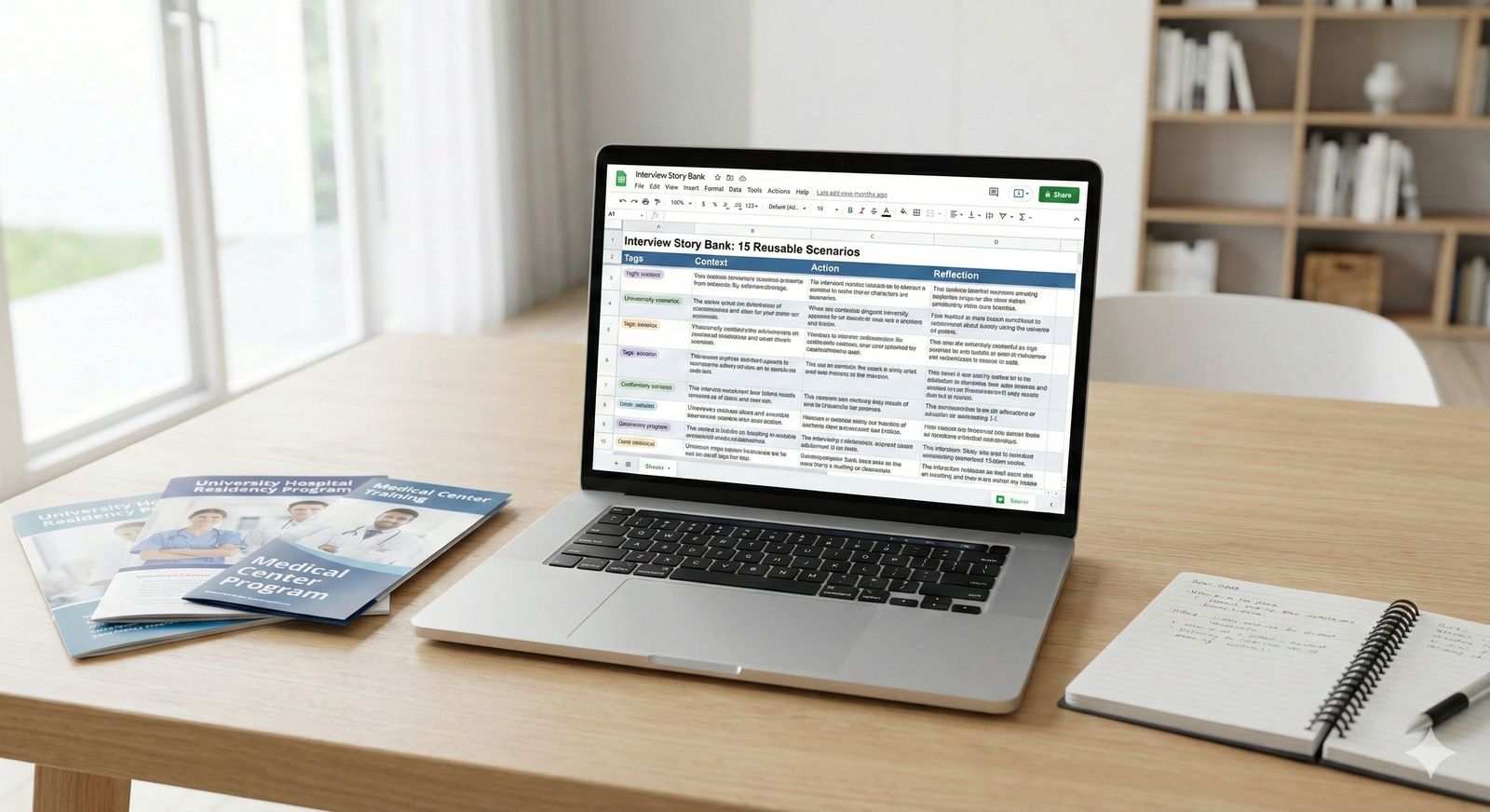
- Create a spreadsheet or tracker:
- Program name and ACGME ID
- Prelim vs categorical vs advanced linked applications
- Interview invitation dates and times (time zones!)
- Program notes: visa policy, strengths, red flags, questions to ask
- Post-interview impressions (for later ranking)
This organization will help you keep track of multiple prelim and advanced specialty interviews, which is common for those doing a preliminary medicine year before another field.
3. Technical and Environmental Setup for Virtual Interviews
Most interviews are still virtual or have virtual elements. As a non-US citizen IMG, your setting may be abroad with less stable internet, so prepare early:
- Internet and backup plan:
- Primary stable connection
- Backup hotspot or second network (if possible)
- Equipment:
- Laptop or desktop (avoid using a phone if possible)
- External webcam and microphone if your device quality is poor
- Environment:
- Quiet, neutral background (plain wall or tidy shelf)
- Good lighting (face the window or a soft light source)
- Test camera framing (shoulders and face visible, eye-level camera)
Do at least one full test call at the same time of day as your interview (to simulate lighting and noise conditions).
Professionalism, Communication Style, and Cultural Adaptation
Your clinical knowledge and scores got you the interview. Your communication and professionalism often determine whether you match.
1. Polished but Authentic Communication
Tips for non-US citizen IMGs:
- Avoid very long answers. Aim for 1–2 minutes per question unless the interviewer is clearly inviting more detail.
- Use simple, clear English rather than complex vocabulary that may sound memorized.
- If you do not understand a question, it’s acceptable to say:
- “I’m not sure I fully understood the question. May I clarify…?”
Common cultural expectations in US residency interviews:
- Being on time means joining a virtual room 10–15 minutes early.
- Address interviewers as “Dr. [Last Name]” until they invite you to do otherwise.
- Avoid overly personal topics (politics, religion) unless directly relevant and asked in a neutral professional context.
2. Handling Difficult or Unexpected Questions
You may encounter challenging topics as a foreign national medical graduate:
- “Why didn’t you match last year?”
- “Why have you been out of clinical work for several years?”
- “Why do you prefer the US over your home country for residency?”
General approach:
- Acknowledge the reality without being defensive.
- Take responsibility where appropriate.
- Emphasize what you learned and how you improved.
Example (previous non-match):
“I applied broadly last year but only secured a few interviews. On reflection, my US clinical experience was limited and my interview skills needed work. Over the past year I completed two observerships in internal medicine, improved my letters of recommendation, and did several mock interviews. I’m more prepared now, both clinically and in presenting my story clearly.”
3. Asking Insightful Questions
When asked, “Do you have any questions for us?” this is not optional. Prepare 2–4 program-specific questions, such as:
- “How are preliminary residents integrated with categorical residents on inpatient teams?”
- “What kind of support do prelim residents receive in terms of mentorship or advising, especially if they are applying to advanced specialties?”
- “Can you describe how feedback is given to residents, and how often?”
- “How have you supported international medical graduates in your program?”
Good questions show you are serious, thoughtful, and focused on succeeding in their environment.
FAQs: Pre-Interview Preparation for Non-US Citizen IMGs in Preliminary Medicine
1. As a non-US citizen IMG, should I mention my advanced specialty interest during a prelim IM interview?
Yes, but frame it carefully. Programs know many prelims are headed to advanced specialties. Be honest about your career goals (e.g., neurology, radiology, anesthesiology), but emphasize that:
- You value strong internal medicine training as a foundation.
- You are committed to working hard and being fully present during your prelim year. Avoid sounding like you see prelim IM as “just a requirement.”
2. How can I address my accent or communication concerns in residency interview preparation?
You do not need to eliminate your accent; you only need to ensure clarity. Focus on:
- Practicing common interview answers aloud and getting feedback.
- Recording yourself to identify unclear words or pacing issues.
- Speaking slightly slower and articulating key points clearly. If you’ve done patient communication in English during USCE, mention that experience to reassure interviewers.
3. Do programs see a preliminary medicine year as a weakness compared to categorical IM?
Not necessarily. Many advanced specialties require or value a preliminary medicine year, and programs understand its importance. What matters is that:
- You present a coherent long-term plan.
- You show respect for internal medicine and the learning you’ll gain from it.
- You demonstrate reliability and a team-oriented attitude, since prelim residents often carry significant responsibility.
4. How early should I start my residency interview preparation as an IMG?
Ideally, begin 2–3 months before interview season:
- Month 1: Clarify your narrative, review your CV, and start mock interviews.
- Month 2: Deepen program research, refine answers, practice behavioral questions.
- Ongoing: Strengthen clinical knowledge and keep a log of interesting cases to use as examples. Starting early is especially important for foreign national medical graduates, who also need time to manage visa questions, logistics across time zones, and technology for virtual interviews.
By approaching pre-interview preparation systematically—combining strong clinical review, a clear narrative, focused residency interview preparation, and careful attention to visa and technical details—you can transform your status as a non-US citizen IMG from a perceived obstacle into a distinct professional strength, and present yourself as a reliable, motivated candidate for any preliminary medicine year program.