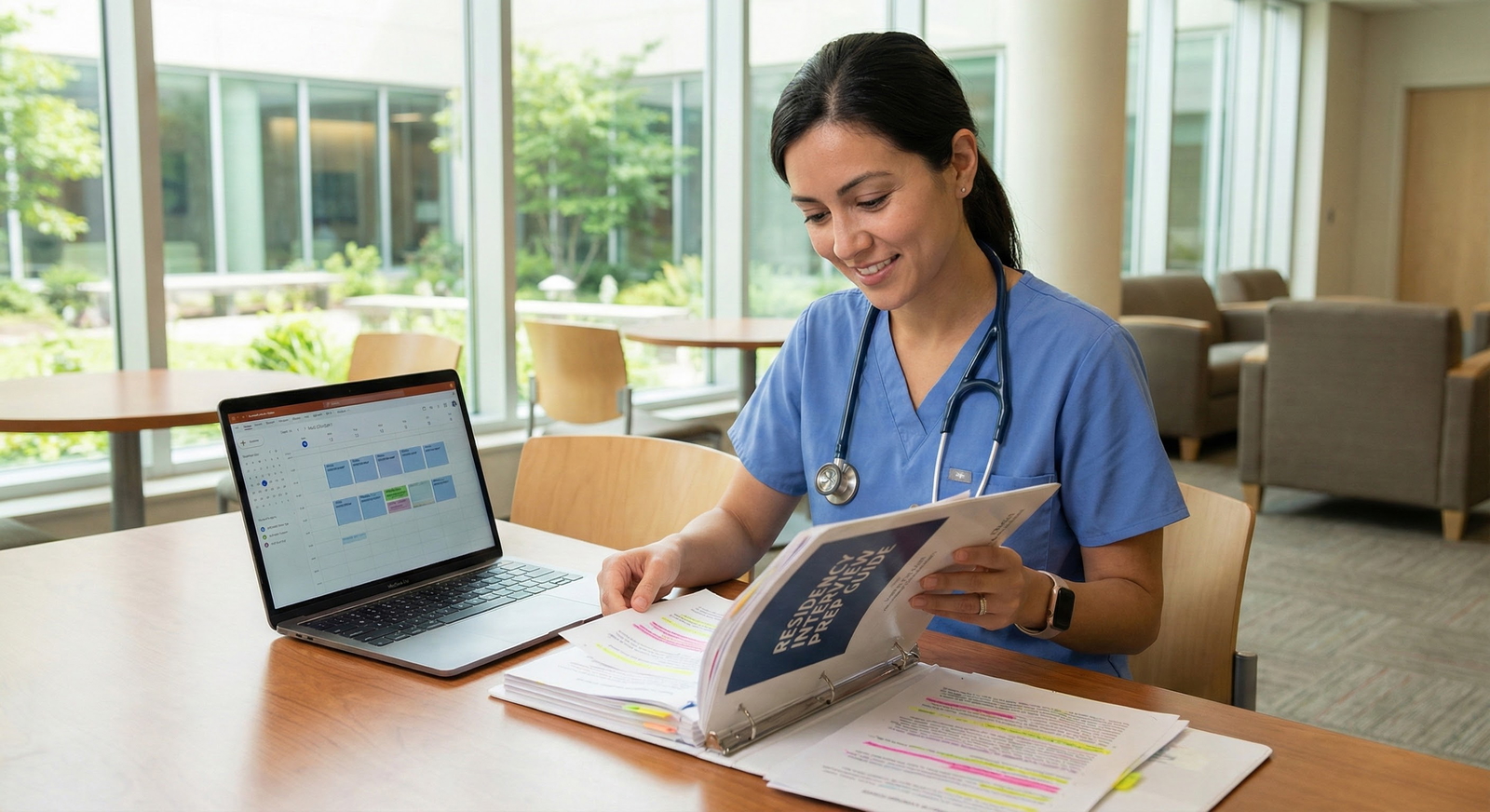
Understanding the In-Person Residency Interview as a Caribbean IMG
In-person residency interviews are high-stakes moments for every applicant, but for a Caribbean IMG they can feel especially consequential. You may have worked hard to address biases about Caribbean medical school training, spent years navigating complex visa and exam requirements, and now have one day to show a program who you really are.
Your goal on interview day is simple but not easy:
Convert your paper application into a real human impression that program directors, faculty, and residents will remember and trust.
This guide will walk you through in-person residency interview strategy from a Caribbean IMG–specific lens, including:
- How to frame your Caribbean medical school experience confidently
- How to prepare for common and difficult questions
- Professional appearance and what to wear interview day
- How to navigate the full interview day (formal and informal)
- How to follow up and use interview impressions strategically for your rank list
Throughout, you’ll see advice that applies to all applicants, plus targeted tips for those from Caribbean schools like SGU, AUC, Ross, Saba, and others—especially if you’re hoping for a strong SGU residency match or similar outcome.
1. Mindset and Positioning: Turning “Caribbean IMG” into a Strength
Many Caribbean IMGs walk into an in person residency interview with a defensive mindset—worried about bias, visa issues, or Step scores. That mindset can unintentionally make you appear less confident or overly apologetic.
Reframe Your Story
Programs already know you’re a Caribbean IMG. You don’t need to “defend” that; you need to explain it and build on it:
- Why you went to a Caribbean medical school
- What you gained from that experience
- How you proved you can thrive in U.S. clinical settings
Example positioning statement:
“I chose SGU because it offered a clear pathway to U.S.-based rotations, which I knew were essential for the career I envisioned. The transition required adaptability, self-discipline, and resilience, especially during my early basic science years on the island. Once in clinical rotations, I focused on high-volume teaching hospitals in [City/State], where I could prove I could perform at the level of U.S. graduates. That experience confirmed my commitment to [specialty] and taught me how to function effectively in diverse, resource-variable environments—skills I’ll bring to your program.”
This is proactive, confident, and strategic. You’re not apologizing—you’re owning your path.
Anticipate Bias Without Centering It
You may subtly encounter questions that reflect skepticism about Caribbean training. Prepare, but don’t make bias the center of your preparation or your emotional energy.
If asked something like, “How do you think your training compares to U.S. graduates?” you can calmly answer:
“Any medical pathway has strengths and limitations. My Caribbean medical school gave me a rigorous basic science foundation and required a high degree of self-directed learning. In my U.S. clinical rotations, I worked alongside U.S. students and saw that when we were on the wards, the expectations and evaluation standards were the same. My evaluations, Step scores, and strong letters of recommendation reflect that I can function at the level expected in your program.”
This is factual, not defensive. You’re showing that you belong.
2. Strategic Preparation Before Interview Day
Effective in-person interview strategy begins weeks before you step on campus.
Know the Program Beyond the Website
Caribbean IMGs often apply broadly; that can make it harder to know each program in depth. But during an in person residency interview, you must show you’re targeted, not generic.
For each program, research:
- Program structure: Number of residents, rotations, call schedule, continuity clinic sites
- Patient population: Safety net vs private, urban vs rural, particular communities served
- Fellowship or career outcomes: Where recent graduates end up
- Educational culture: Any mention of simulation, QI projects, scholarly activity, wellness
- IMG-friendliness: % of IMGs in recent classes, visa support, presence of other Caribbean grads
Pro tip for Caribbean IMGs:
Look through current resident bios—specifically note if there are graduates from your own Caribbean medical school. That matters both for fit and as a confidence boost: the program already trusts graduates from your environment.
Prepare Focused Talking Points Linked to the Program
Create a short list (3–5 bullets) of why this program specifically fits you, such as:
- “Strong focus on underserved communities similar to my clinical rotations in [location]”
- “Track record of supporting IMGs and Caribbean medical school graduates”
- “Opportunities in [subspecialty, QI, research] that align with my long-term goals”
Use these points to anchor your answers to “Why our program?” and to ask smarter questions.
Practice Core and High-Yield Questions
As a Caribbean IMG, you must be especially prepared for:
Tell me about yourself.
- Build a concise, 60–90 second response that connects:
- Your background
- Your decision to attend a Caribbean medical school
- Key differentiating experiences
- Why you’re standing in front of them today, applying to this specialty
- Build a concise, 60–90 second response that connects:
Why did you choose [specialty]?
- Anchor in specific clinical experiences (especially from U.S. rotations)
- Show long-term vision (hospitalist, primary care, fellowship, academic, etc.)
Why this program?
- Use the tailored research from above
- Connect program features to your needs as a Caribbean IMG (e.g., structured teaching, supportive environment, track record of matching IMGs into fellowships)
Challenges and resilience (often IMG-focused)
- Think of 2–3 challenging situations:
- Transitioning to life and study on the island
- Adapting to U.S. clinical rotations and documentation systems
- Step exam or scheduling challenges
- Show how you took ownership, sought feedback, and grew
- Think of 2–3 challenging situations:
Red flags or concerns:
- Extended time to graduation, exam failures, leaves of absence
- These must be rehearsed answers—honest, concise, focused on what changed, and ending on improvement.
Example (Step failure):
“I failed Step 1 on my first attempt. That was a turning point for me. I realized my approach—memorization heavy and inconsistent with practice questions—wasn’t working. I met regularly with academic support at my Caribbean medical school, used performance data from NBME practice exams, and implemented a strict question-based study plan. On my second attempt, I improved my score significantly and passed comfortably. Since then, I’ve maintained a consistent study and reflection habit, which helped me perform well on Step 2 and in my clinical rotations.”
Mock Interviews and Real-Time Feedback
Practice with:
- A faculty mentor or attending from your U.S. rotations
- A resident (especially one who’s an IMG or Caribbean graduate)
- Peers from your school
Ask for feedback specifically on:
- Clarity and organization of answers
- Filler words, pacing, and eye contact
- Whether you sound defensive vs. confident about being a Caribbean IMG

3. Professional Appearance: What to Wear and How to Present Yourself
Your attire won’t get you ranked first, but it can get you remembered for the wrong reasons. As a Caribbean IMG, you’re already navigating perceptions; professional, understated appearance helps keep the focus on your qualifications.
What to Wear Interview Day: General Principles
- Formality: Err on the side of traditional and conservative.
- Fit: Clothes should fit properly—neither too tight nor too loose. If possible, have them tailored.
- Colors: Dark neutral suit (black, navy, charcoal) with a light shirt or blouse.
- Shoes: Closed-toe, polished, comfortable—you may walk a lot on tour.
- Accessories: Minimal and non-distracting.
For Suits
- Two-piece suit (pants or skirt) in navy, charcoal, or black
- Shirt/blouse: White, light blue, or other soft neutral color
- Tie (if worn): Simple patterns or solid colors, no novelty designs
- Skirt (if chosen): Around knee length; avoid very tight or very short
Grooming
- Hair: Neat and off the face; styles that feel natural to you but are tidy
- Facial hair: Well-trimmed if you normally keep it; clean-shaven is also fine
- Nails: Clean, trimmed; if using polish, choose neutral colors
- Fragrance: Minimal or none (some interviewers have sensitivities)
Cultural and Personal Expression
You can still express your identity subtly (e.g., a small piece of jewelry, hairstyle, or color choice), but the dominant impression should be professional and distraction-free. If you’re unsure whether something is “too much,” it probably is—simplify.
Materials to Bring
- Professional portfolio or folder (not a backpack, if possible)
- Several printed copies of:
- Your CV
- Personal statement
- Abstracts/posters if research-heavy
- Notepad and pen
- Small bottle of water and light snack (for before or after, not during interviews)
4. Mastering the In-Person Interview Day: Start to Finish
On interview day, every interaction counts—from the pre-interview dinner to the final goodbye. As a Caribbean IMG, people may be subconsciously assessing how well you’d integrate into a U.S.-based team; your interpersonal behavior can strongly sway those impressions.
The Night Before / Pre-Interview Dinner (If Offered)
Many programs hold an informal dinner or virtual meet-and-greet with residents. Attendance is strongly recommended.
Goals:
- Get a feel for the resident culture and support for IMGs
- Show that you’re collegial and easy to talk to
- Ask questions you might not ask in front of faculty
Tips:
- Dress business casual (not as formal as interview day)
- Avoid controversial topics (politics, religion, etc.)
- If alcohol is served, one drink maximum, and only if you’re comfortable
- Do ask residents about:
- How supportive the program is for new IMGs or Caribbean graduates
- How attendings treat learners
- Schedule, call, and wellness realities (not just brochure talk)
Check-In and First Impressions
Arrive 15–20 minutes early. Check in, greet coordinators politely, and interact respectfully with all staff—many programs solicit their impressions.
Use this time to:
- Confirm pronunciation of names
- Review your notes briefly
- Engage casually with other applicants without sounding competitive or negative
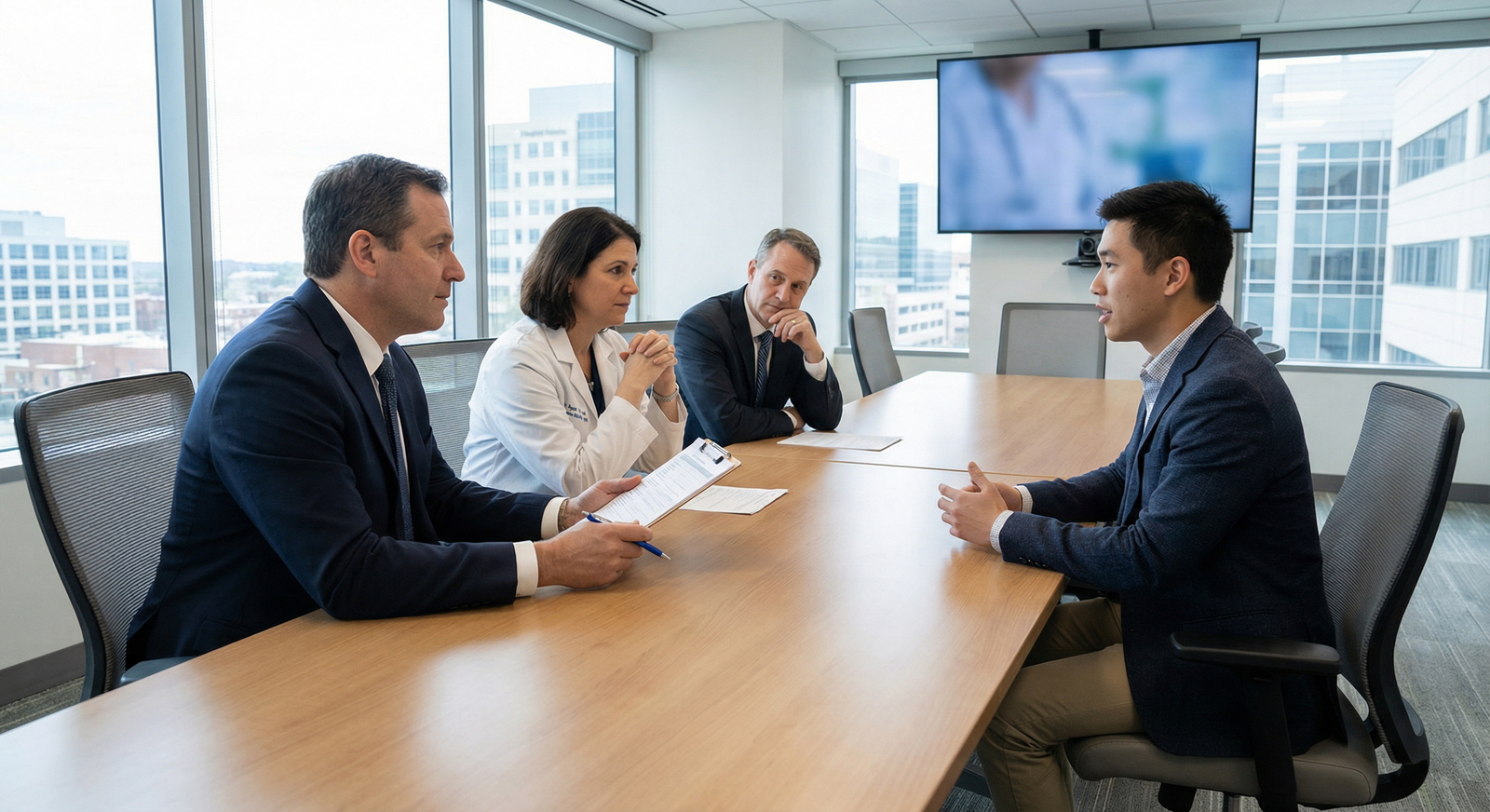
Interview Structure: One-on-One, Panels, and Walk-Throughs
You might meet:
- Program director
- Associate/assistant program directors
- Core faculty
- Chief residents
- Possibly other leaders (e.g., research director, clerkship director)
Core Strategy for Any Interview Format
For each interviewer, aim to:
- Connect personally: Brief small talk or something you noticed from their bio
- Show insight into the program: Reference program-specific details
- Communicate your value: Strengths + examples from Caribbean and U.S. experiences
- Ask thoughtful questions: Tailored to their role and interests
Example question to a program director:
“I noticed that several current residents are IMGs, including some from Caribbean schools. What specific supports or structures does your program offer to help all residents—especially those trained abroad—transition smoothly into intern year?”
This shows awareness, insight, and appreciation of their IMG-friendliness.
Answering Questions with Structure and Confidence
Use frameworks to keep responses clear:
STARR format for behavioral questions:
- Situation
- Task
- Action
- Result
- Reflection (what you learned)
3-part answers for questions like “Why this program?”:
- Something about training/education
- Something about culture/people
- Something about fit with your goals as a Caribbean IMG
Example:
“I’m drawn to your program for three main reasons. First, the structured teaching conferences and robust feedback culture would help me continue the growth I started in my U.S. rotations. Second, when I spoke with your residents, they emphasized how supportive faculty are—especially toward IMGs learning the system. Third, your strong track record of placing graduates into [hospitalist roles/fellowships] aligns well with my long-term plan of becoming a [career goal].”
Navigating Difficult or Sensitive Questions
As a Caribbean IMG, you may be asked:
- “Do you think there are disadvantages to having trained in a Caribbean medical school?”
- “You’ve done many rotations in different locations—how will you build stability?”
- “How would you handle working in a high-volume environment you may not have had before?”
Approach:
- Acknowledge reality briefly
- Emphasize adaptability and growth
- Pivot to your proven performance
Example:
“Caribbean schools often require students to rotate across multiple sites, which can be challenging. For me, the initial transitions were difficult, but they pushed me to adapt quickly to new hospital systems, documentation styles, and teams. The benefit is that I’m now very comfortable walking into a new environment, learning fast, and contributing effectively. My evaluations—from preceptors in [names or hospitals]—reflect that I can quickly integrate and perform well, which I believe is an asset for your busy service.”
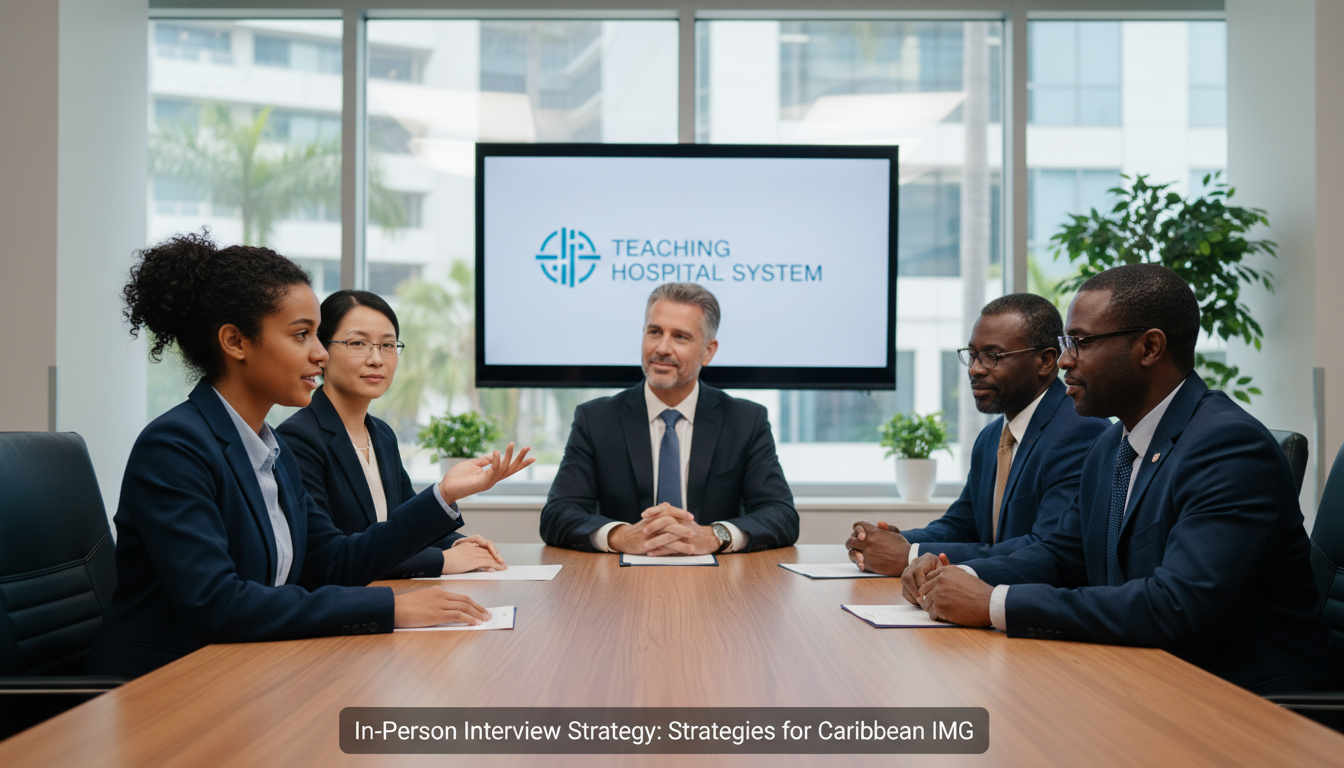
Body Language, Tone, and Cultural Nuances
Some IMGs, including Caribbean graduates, come from educational cultures that are more hierarchical and reserved. In U.S. residency interviews, programs often look for:
- Warmth and approachability
- Comfort with eye contact
- Participation in conversation (not monosyllabic)
Practice:
- Sitting upright, leaning slightly forward, not slouching
- Maintaining natural eye contact (without staring)
- Speaking clearly and at moderate pace
- Smiling occasionally, especially during greetings and goodbyes
5. Beyond the Formal Interview: Tours, Lunch, and Resident Interactions
Programs often say that much of their impression forms outside the formal interviews.
Hospital or Clinic Tours
Treat tours as extended interviews:
- Stay engaged—ask relevant questions about workflow, call rooms, EMR, etc.
- Avoid complaining (about weather, city, previous rotations, or other programs)
- Show curiosity about how interns are integrated and supervised
Lunch and Informal Conversations
Even during lunch:
- Avoid dominating conversations or steering toward controversial topics
- Ask residents:
- “What surprised you most after starting here?”
- “How would you describe how the program treats IMGs?”
- “What do you wish the program would improve, and how responsive are they?”
Many programs ask residents afterward, “Would you want to work a 28-hour call with this person?” Let your behavior answer “yes.”
Evaluating Programs as a Caribbean IMG
You are also interviewing them. Specifically consider:
IMG/Caribbean support:
- Are there multiple Caribbean medical school residency graduates?
- Do residents describe a welcoming, non-discriminatory environment?
Education quality:
- Do you see evidence of structured teaching, feedback, and supervision?
Visa and administrative support (if applicable):
- Are they clear and confident about sponsoring your required visa type?
Career outcomes for people like you:
- If you’re focused on an SGU residency match–type outcome (e.g., a strong university-affiliated or community program with good fellowship prospects), are there examples of IMGs going to those paths?
Take brief notes discreetly after each segment, especially on:
- How people interacted with you
- Specific strengths and concerns
- Any comments about IMGs, for better or worse
These will be invaluable later when forming your rank list.
6. After the Interview: Thank-You Notes, Reflection, and Rank Strategy
Your in person residency interview doesn’t end when you walk out of the hospital. The post-interview phase is critical for both professionalism and your own decision making.
Thank-You Notes: Whether and How to Send
While not universally required, thank-you notes are considered professional and can reinforce positive impressions.
Best practices:
- Send within 24–72 hours
- Email is standard and perfectly acceptable
- Keep them concise and genuine
Structure:
- Greeting and thank you for their time
- Specific reference to something you discussed
- Brief restatement of interest in the program
- Professional closing
Example:
Subject: Thank You – [Your Name], [Specialty] Interview on [Date]
Dear Dr. [Last Name],
Thank you for taking the time to speak with me during my in-person interview at [Program Name]. I appreciated our conversation about [specific topic—e.g., your work in resident-led QI projects and support for IMGs transitioning from Caribbean medical schools].
Our discussion reinforced my impression that [Program Name] offers a rigorous yet supportive environment where I could continue growing as a physician and contribute meaningfully to patient care and quality improvement efforts.
Thank you again for your time and consideration.
Sincerely,
[Your Full Name]
[AAMC/ERAS ID if appropriate]
Avoid over-communicating (e.g., multiple follow-ups, emotional pleas about ranking); maintain professionalism and boundaries.
Post-Interview Reflection: Capturing the Details
Within a few hours of each interview, jot down:
- Overall emotional impression (1–10 scale)
- Program strengths/weaknesses
- How supportive they seemed toward Caribbean IMGs
- Any concerns about culture, workload, or location
- Comments from residents that stood out
These notes will help you later when programs blur together—especially if you had many interviews.
Rank List Strategy as a Caribbean IMG
When ranking:
- Put your true preferences first—the Match algorithm favors applicants’ preferences over programs’
- Consider:
- Geography (visa, family, community support)
- IMG friendliness and precedent (Caribbean graduates doing well)
- Education quality over “name prestige” alone
- Your long-term goals (fellowships, hospitalist, primary care, etc.)
Don’t down-rank a program solely because you think you’re “not competitive enough.” If you interviewed there, they saw you as viable.
FAQ: In-Person Interview Strategy for Caribbean IMGs
1. As a Caribbean IMG, will my in-person interview matter more than my scores and application?
Your scores, clinical performance, and letters determine whether you get an interview. Once you’re in the room, the interview can become the primary factor differentiating you from other candidates, especially among those with similar metrics. For Caribbean medical school residency applicants, a strong in person residency interview:
- Demonstrates communication skills and professionalism
- Counters stereotypes about Caribbean training
- Shows you fit the team culturally and interpersonally
While it doesn’t erase objective metrics, it can significantly influence how high you’re ranked within the pool of interviewed applicants.
2. How do I address questions about being a Caribbean medical graduate without sounding defensive?
Keep your tone factual, calm, and confident:
- Briefly explain why you chose your Caribbean medical school
- Highlight the strengths of your training (adaptability, exposure to diverse health systems)
- Emphasize your successful transition and performance in U.S. clinical rotations
- Use data points (clerkship honors, strong letters, Step performance) as evidence
Avoid over-explaining, making excuses, or criticizing other paths. Your goal is to normalize your background and turn it into a story of resilience and growth.
3. What are some key interview day tips specific to Caribbean IMGs?
A few high-yield interview day tips:
- Know your ERAS application and personal statement in detail—expect questions about any gap or irregularity.
- Prepare clear, rehearsed explanations for any exam delays, failures, or extended graduation times.
- Be especially proactive in demonstrating communication skills—speak clearly, engage in small talk, and show warmth.
- Ask residents specifically about how the program supports IMGs and Caribbean graduates.
- Show you understand and are ready for the realities of U.S. residency (long hours, documentation, interprofessional teamwork).
4. Does graduating from a well-known Caribbean school (e.g., SGU) change my interview strategy?
If you’re from a well-recognized Caribbean school and aiming for a strong SGU residency match or similar pathway, you may benefit from:
- More program familiarity with your school’s curriculum and graduate performance
- Established pipelines or relationships with specific hospitals
Your in-person interview strategy, however, remains similar:
- Confidently own your path as a Caribbean IMG
- Leverage any program-specific history with your school (e.g., “I noticed you have several SGU graduates among your residents”)
- Show that you meet or exceed the performance of prior Caribbean graduates the program has trusted
Regardless of which Caribbean school you attended, your professionalism, clinical insight, and interpersonal skills on interview day will be what programs remember most.
By approaching your in person residency interview with intentional preparation, a confident narrative about your Caribbean medical education, and polished professional behavior, you position yourself not just to match—but to match into a program where you can truly thrive.