The worst time to “figure out” residency interviews is during your first real interview.
You need mock interviews scheduled, targeted, and tuned months ahead—on a specific timeline, not “whenever I get to it.”
Below is your step‑by‑step, time‑anchored plan: when to start, who to use, how often, and what to fix between sessions so you’re actually better by interview #1, not just “more practiced at rambling.”
Big-Picture Timeline: When Mock Interviews Fit Into Interview Season
At this point, you’re somewhere between writing ERAS and waiting for invites. So let’s anchor everything to three phases:
- Phase 1: Pre‑Invite Prep – 8–10 weeks before expected first interview
- Phase 2: Early Interview Season – First 4–6 weeks of actual interviews
- Phase 3: Late Interview Season & Rank List – Final 4–6 weeks of interviews
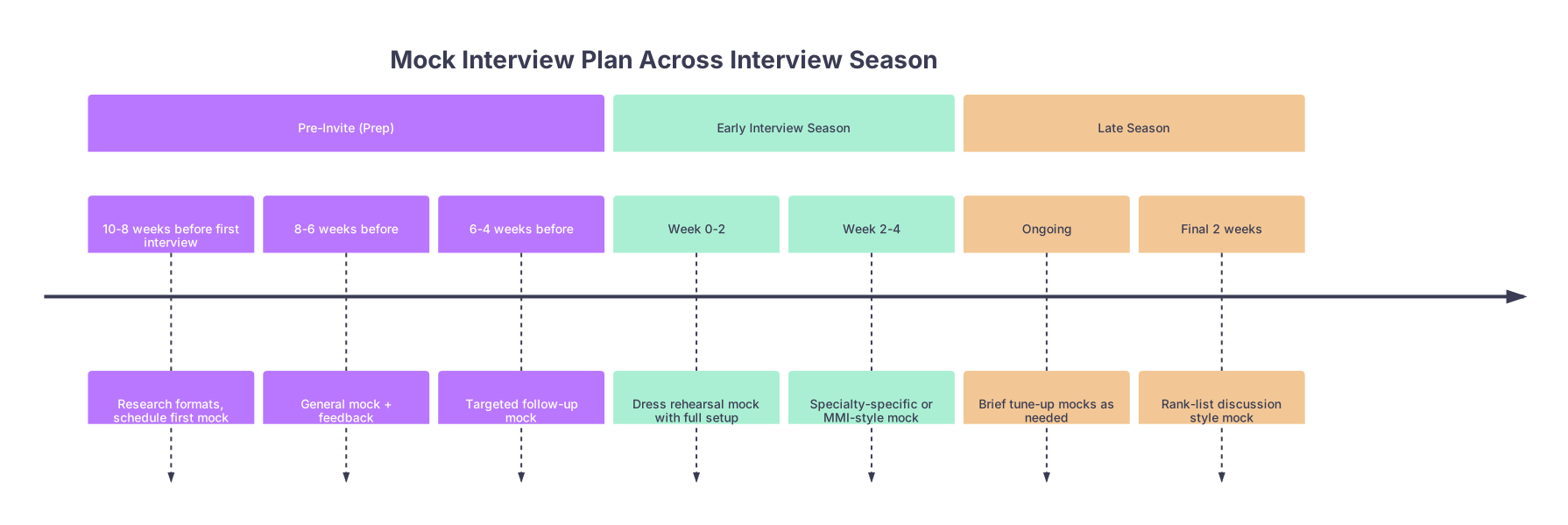
| Period | Event |
|---|---|
| Pre-Invite (Prep) - 10-8 weeks before first interview | Research formats, schedule first mock |
| Pre-Invite (Prep) - 8-6 weeks before | General mock + feedback |
| Pre-Invite (Prep) - 6-4 weeks before | Targeted follow-up mock |
| Early Interview Season - Week 0-2 | Dress rehearsal mock with full setup |
| Early Interview Season - Week 2-4 | Specialty-specific or MMI-style mock |
| Late Season - Ongoing | Brief tune-up mocks as needed |
| Late Season - Final 2 weeks | Rank-list discussion style mock |
If you want an outcome: aim for 3–5 substantive mock interviews before your first real one, and then 1–2 tune‑ups as the season goes.
Let’s break it down more aggressively.
2–3 Months Before Expected Interview Season: Laying the Groundwork
Assume interviews start mid‑October (common for many specialties). Work backward.
10–12 Weeks Before First Interview (Late July–Early August)
At this point you should:
Map your actual constraints
- Check your MS4 schedule. Are you on a brutal surgery sub‑I in September? Then front‑load mocks into August.
- Look at away rotations—you will not be doing thoughtful mock prep post‑call.
Identify your mock interview resources Create a concrete list, not just “I’ll ask someone later.”
- Your medical school:
- Student affairs dean or career office
- Specialty advisors (e.g., the IM program director who “loves giving feedback”)
- Standardized patient / simulation centers (some run structured mock interviews)
- External:
- Alumni in your specialty
- Current residents at target programs
- Professional services (only if you know what you need and your basics are already strong)
Put actual names next to each resource.
- Your medical school:
Decide your mock formats You should plan at least three distinct types:
- Traditional behavioral 1:1 (most common)
- Zoom/virtual mock (because many programs still use it)
- Specialty‑specific or program‑director‑style “grilling” session
Core Mock Interview Types to Schedule Mock Type When to Use Who Should Run It General Behavioral First & early mocks Dean, career advisor, faculty Specialty-Specific After basics solid Specialty advisor, resident, PD Virtual/Zoom Technical 1–2 weeks pre-season Any experienced interviewer High-Pressure “PD Style” Mid-season tune-up Program director or senior faculty Peer Rapid-Fire Throughout Classmates, co-applicants Book your first slots now
- Email your school’s office and specific faculty with actual week ranges.
- Target: First mock scheduled for ~8 weeks before your first likely interview date.
8–6 Weeks Before First Interview: Your First Real Mock
At this point you should have one full mock on the calendar with someone who does residency interviews in real life.
Your Goal for This Stage
Not to be polished.
Your goal is to expose the ugliness:
- Rambling
- Over‑rehearsed “robot talk”
- Weak answers to “Tell me about yourself” and “Why this specialty?”
- Poor nonverbals
Week Structure (Pick One Week in This Window)
Day −3 to −1 (Before Mock #1):
- Draft rough answers—not scripts—for:
- Tell me about yourself.
- Why this specialty?
- Why our program type / region?
- Biggest strength / weakness.
- Tell me about a conflict / failure / mistake.
- Outline 5–7 stories using the STAR format:
- Situation
- Task
- Action
- Result
You are not memorizing. You’re building a story toolbox.
Mock Interview #1 (General Behavioral)
At this point you should:
- Wear interview clothes
- Use the actual format you’ll face most:
- If many interviews are virtual, do this mock on Zoom.
- If most are in-person, go in-person if possible.
Have your interviewer:
- Ask 8–12 standard questions.
- Push on any vague answers: “Tell me more” / “Be specific” / “What exactly did you do?”
Immediately After (Same Day):
Ask for specific feedback in 3 buckets:
- Content: missing evidence, vague claims, lack of numbers.
- Structure: rambling, no clear story arc, not answering the question.
- Nonverbal: eye contact, fidgeting, tone.
Write down:
- 3 things you did well (you’ll forget these)
- 3 concrete things to fix by the next mock
(“Shorten my ‘tell me about yourself’ to 60–90 seconds” is concrete. “Be more confident” is garbage.)
6–4 Weeks Before First Interview: Targeted Second Mock
Now you’re still early enough to change habits. Use it.
At This Point You Should:
Rewrite and tighten your core answers (1 week)
Take the feedback from Mock #1 and:
- Cut every core answer down to:
- 60–90 seconds for “tell me about yourself”
- 45–75 seconds for other common questions
- Plug actual numbers into stories:
- “I increased clinic efficiency” → “We cut triage times from 90 minutes to 40.”
- Fix any red flags you discovered (e.g., defending a mistake instead of owning it).
- Cut every core answer down to:
Schedule Mock #2 with a different person
- Ideally someone in your target specialty.
- Ask them explicitly: “Can you push me like a real PD would?”
Mock Interview #2: Specialty-Focused
Focus for this session:
- “Why this specialty?” at a higher level.
Not “I like continuity of care.” Everyone says that. - Clinical reasoning–style questions if your field does that:
- EM, surgery, IM, anesthesiology – they may probe how you think.
- Fit questions:
- Community vs academic.
- Research vs clinical.
- “Where do you see yourself in 5–10 years?”
After Mock #2 (Next 1–2 Days):
- Turn their feedback into a one-page “fix list”:
- Top 3 content weaknesses.
- Top 3 behavior / presence issues.
- Decide which require:
- More reflection (e.g., your actual career goals are muddled).
- More practice (e.g., nervous filler words).
4–2 Weeks Before First Interview: Dress Rehearsal and Tech Check
Now we’re close enough that your habits on interview day will look like whatever you’re doing this week.
At This Point You Should:
Lock in at least one “dress rehearsal” mock
Format should mimic your actual first interview as closely as possible:
- If your first real one is:
- Virtual 1:1 → do a full-length mock on Zoom at the same time of day.
- Virtual panel → recruit 2–3 residents/faculty if you can.
- MMI → ask your school if they can set up MMI-style stations.
- If your first real one is:
Do a full tech and environment check (for virtual)
Use a mock session to test:
- Camera height, background, lighting (you should not look like a basement goblin).
- Audio (use headphones or a decent mic; laptop mics are wildly inconsistent).
- Internet stability.
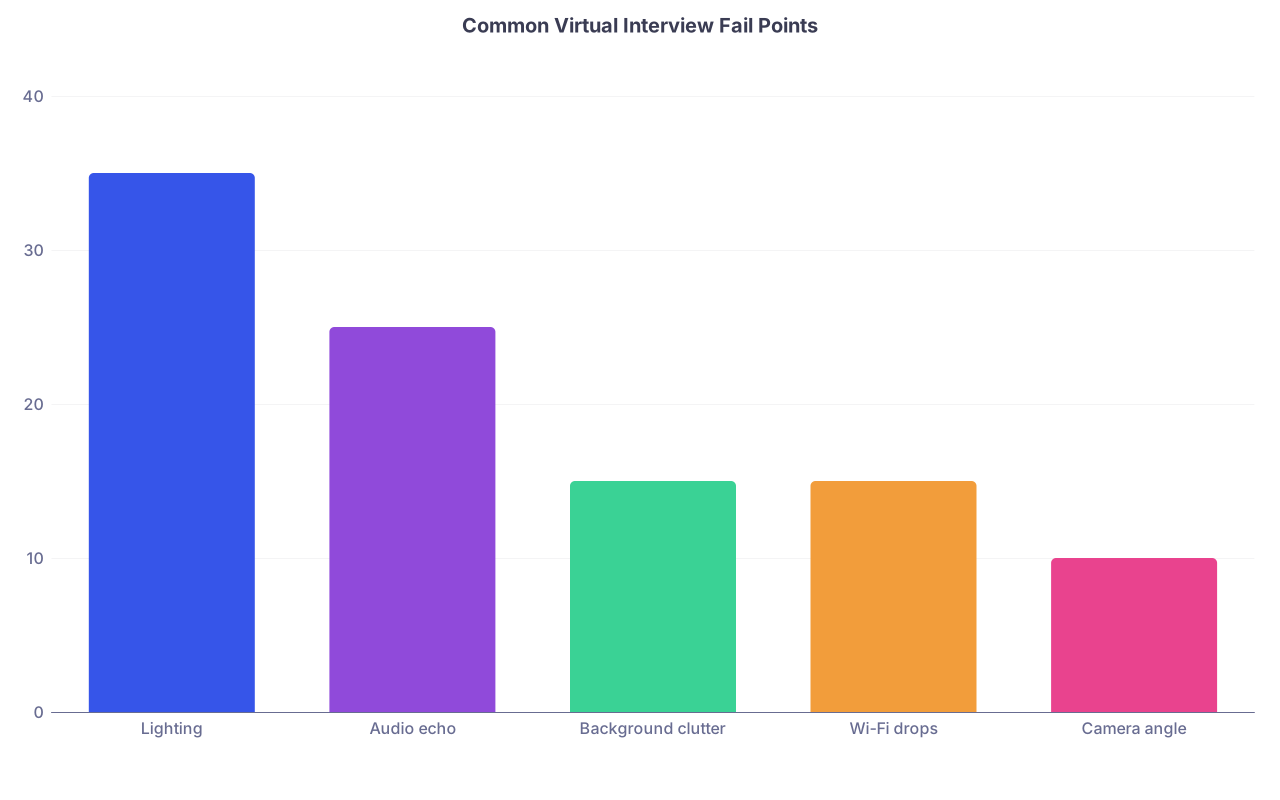
Common Virtual Interview Fail Points Category Value Lighting 35 Audio echo 25 Background clutter 15 Wi-Fi drops 15 Camera angle 10 Practice your open and close
In this stage, especially focus on:
- First 2 minutes of the interview:
- Greeting, brief small talk, then clean “tell me about yourself.”
- Last 2 minutes:
- Strong questions for them.
- Concise closing: “I’d be excited to train here because…”
- First 2 minutes of the interview:
The Dress Rehearsal Mock (1–2 Weeks Pre–First Interview)
Structure:
- 30–40 minutes of questions.
- 5–10 minutes post‑mock debrief.
- You record the session (ask permission).
Afterwards:
- Watch the recording once. Painful but mandatory.
- Note:
- Any weird facial habits (tight jaw, forced smile).
- Speaking speed and filler words.
- Points where your story clearly lost the listener.
This is where you start doing micro‑drills:
- 10 minutes per day:
- Answer “Tell me about yourself” twice.
- Answer 1 strength and 1 weakness question.
- One tough scenario (ethical or conflict).
First 2 Weeks of Real Interviews: Live Feedback and Fast Adjustments
At this point, you’re in it.
Your real interviews now become data for your mid‑season mocks.
Interview Week Rhythm
During weeks where you have 2–4 real interviews:
- Keep mock interviews light and targeted.
- Do one 20–30 minute mock or peer session focused on:
- Questions that went badly in real life.
- New curveballs you didn’t handle well.
Where the Mock Fits
Example week layout:
- Monday: Real interview #1
- Tuesday: Short peer mock at night (30 minutes, 5–6 questions that bothered you)
- Wednesday: Real interview #2
- Thursday or Friday: Brief mentor/resident mock (focus on one issue: answering succinctly, or sounding less rehearsed)
At this point you should:
- Keep a running interview log:
- Questions you’re seeing repeatedly.
- Questions that fluster you.
- Feedback or reactions from interviewers (“That’s a great example” vs blank stare).
Use that log to design the next mock.
Mid-Season (Weeks 3–6 of Interviews): High-Pressure and Problem-Focused Mocks
By now you’ll know your patterns.
- Maybe you keep talking over people when nervous.
- Maybe you give bland “why our program?” answers that even you don’t believe.
This is exactly when a high-pressure mock is valuable.
At This Point You Should:
Schedule one intense “PD-style” mock
Ideally with:
- A program director.
- Associate program director.
- Or a senior resident who sits on the selection committee.
Ask them upfront: “Be brutally honest. I don’t need my ego protected.”
Give them your data
Before the mock, send:
- Your CV and personal statement.
- 2–3 questions you know you’re weak on.
- One or two real interview experiences that felt off.
The High-Pressure Mock Session
What this should look like:
- They ask:
- Direct questions about red flags (USMLE attempts, leaves of absence, low grades).
- Gaps on your application.
- “What will we regret about ranking you?”
- They probe:
- Your understanding of the specialty’s hard realities.
- How you handle pushback: “I’m not convinced. Try that answer again.”
Outcome:
- You walk away with specific phrasing to handle:
- A poor grade.
- A disciplinary issue.
- A switch in specialty.
- Timing gaps.
At this point, your goal isn’t to be smoother. It’s to be more honest, more direct, and more confident in the hard conversations.
Late Season & Pre-Rank List: Strategic Mocks and Reflection
Now invites are slowing down. You’re thinking about rank lists.
This is when most people stop doing mocks. That’s a mistake.
Weeks 6–10: Closing the Loop
At this point you should:
Use one mock to pressure-test your narrative
Have a trusted mentor or advisor ask:
- “Why is Program X your #1?”
- “Would you be happy in community vs academic settings—really?”
- “What did you actually learn from these interviews about what you want?”
This isn’t just about performance. It’s about clarity. They’ll hear when you’re lying to yourself.
Run a “values alignment” mock
Ask for questions like:
- “Tell me about a time your values clashed with your team.”
- “What kind of culture do you thrive in?”
- “What type of department leadership motivates you?”
The way you answer these will often reveal whether your top choices actually make sense.
Short tune-up mocks only
No need for another hour‑long, full‑dress mock unless you’ve had a major gap in interviews.
Instead:- 15–20 minutes.
- One area at a time (energy, concision, authenticity).
- You’re polishing, not rebuilding.
Who to Use When: Matching Mock Interviewers to Phases
You shouldn’t use the same person for everything. They’ll normalize your quirks.
| Phase | Best Primary Mock Interviewer | Backup/Secondary Option |
|---|---|---|
| 8–6 weeks pre-season | Dean/career advisor | Senior resident |
| 6–4 weeks pre-season | Specialty faculty or PD | Alumni in same specialty |
| 2–1 weeks pre-season | Tech-savvy faculty/resident | Peer for repetition |
| Early interview season | Resident doing real interviews | Co-appelicant peer |
| Mid-season high-pressure | Program director / APD | Senior chief resident |
| Late season / rank list | Trusted mentor + specialty advisor | Dean or career advisor |
Quick Week-by-Week Example Timeline
Assume: First real interview is October 15.
August (10–8 Weeks Before)
- Week of Aug 5:
- Book all mock interviews through October.
- Draft core stories.
- Week of Aug 19:
- Mock #1 (general behavioral, 45–60 minutes).
- Debrief and adjust.
September (6–3 Weeks Before)
- Week of Sept 2:
- Mock #2 (specialty-focused, 45 minutes).
- Fix “why this specialty,” “why our program,” red flags.
- Week of Sept 23:
- Dress rehearsal mock (same format as first real interview).
- Tech check and environment optimization.
Early October (2–0 Weeks Before First Interview)
- Week of Oct 7:
- Light 20–30 minute peer mock.
- Focus on speed, clarity, first/last impressions.
Mid-October to November (First 4–6 Weeks of Interviews)
- Every 1–2 weeks:
- One 20–30 minute targeted mock based on real interview feedback.
- Late October:
- One high-pressure PD-style mock for tough questions and red flags.
December–January (Late Interviews & Rank List)
- Early December:
- Short mock on “fit” and future goals.
- January:
- Mock rank-list discussion with mentor to clarify priorities.
How Many Mocks Is Enough?
Most applicants need 3 serious full-length mocks and 3–6 shorter, targeted sessions across the whole season.
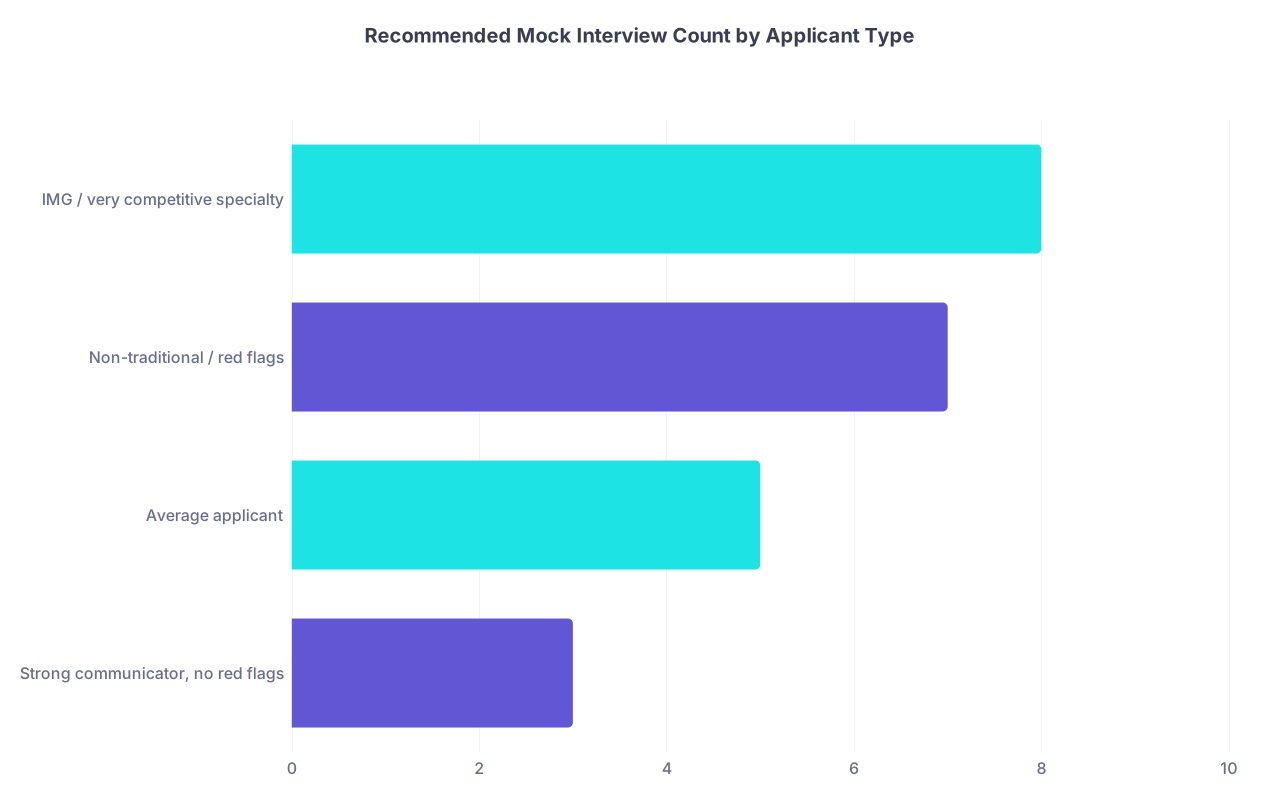
| Category | Value |
|---|---|
| Strong communicator, no red flags | 3 |
| Average applicant | 5 |
| Non-traditional / red flags | 7 |
| IMG / very competitive specialty | 8 |
If you’re doing 15+ full mocks, you’re likely over-practicing and becoming robotic. When someone says “You sound scripted,” that’s your sign to stop adding mocks and start loosening up.
How to Make Each Mock Actually Useful (Not Just Reps)
At any point in this timeline, every mock should end with:
- A ranked list of 3 priorities:
- “Top issue: rambling answers.”
- “Second issue: generic ‘why us?’ answers.”
- “Third issue: flat affect on Zoom.”
Then for the next 7–10 days:
- Spend 5–10 minutes/day on those three only.
- Ignore the rest. You are not trying to become a completely different person; you’re sanding down the sharp edges.
Final Takeaways
- Timing matters more than volume. Three well-timed, well-structured mocks beat ten random ones thrown in the night before interviews.
- Use different people for different phases. Early generalists, mid-season specialty insiders, late-season mentors who challenge your rank list story.
- Each mock needs a purpose. Go in with 1–2 specific goals, come out with 2–3 concrete fixes, and build that into the next week. That’s how you walk into your first real residency interview already operating at mid-season form.