
The morning of your residency interview is not for scrambling. If you’re still printing directions, fixing your hair plan, or rewriting answers, you’re already behind.
This morning is about execution. Calm, controlled, repeatable execution.
Below is a time-stamped, morning-of residency interview checklist that covers three things that actually make or break you that day:
- Logistics (travel, clothes, backups)
- Mindset (focus, nerves, mental scripts)
- Tech (Zoom, audio, video, backups)
I’ll walk you from wake-up to walking into the lobby / clicking “Join”. At each point: what you should be doing, what you should not be doing, and the quick checks that catch problems before they become disasters.
2–3 Days Before: Build Your Morning Template
If you want a smooth interview morning, you build it earlier. By 2–3 days before, you should already have a fixed morning template that you will reuse for every interview.
At this point you should:
Lock your wake-up window
- Decide: “On interview days, I wake up at 5:45 AM” (or whatever keeps you at least 2+ hours ahead of go time).
- Keep it roughly the same across interviews, even if the time zones shift. Your body likes patterns.
Pre-decide your breakfast
- Choose a boring, reliable breakfast that:
- You’ve eaten before
- Doesn’t cause GI drama
- Can be made in 10 minutes or less
- Example: oatmeal + banana + peanut butter; or Greek yogurt + granola; or eggs + toast.
- No experiment foods. No “hotel buffet roulette.”
- Choose a boring, reliable breakfast that:
Create a one-page Morning-of Checklist
- On real paper. Pen next to it. Not an app, not scattered notes.
- Divide into three short sections:
- Logistics
- Mindset
- Tech
- We’ll fill that out in detail below.
Standardize your outfit
- Pick the exact outfit formula for all interviews:
- Suit (color already chosen)
- Shirt/blouse
- Shoes
- Belt, watch, minimal jewelry
- For virtual: same, from waist up at least; comfortable but presentable from waist down.
- Pick the exact outfit formula for all interviews:
Test your tech like it’s a dress rehearsal
- Do a full 10–15 minute mock interview on the same device, same room, same Wi‑Fi you’ll use that day.
- Confirm:
- Audio clarity and volume
- Camera angle and lighting
- Background is neutral and not chaotic
- Save your meeting links in one place (calendar + a backup document).
Print or save your Quick Reference Sheet
- One page only:
- Program name and key details
- Names/roles of interviewers (if provided)
- 3 key stories you want to hit
- 2–3 questions to ask each level (resident, PD, faculty)
- This is for light review only, not memorization.
- One page only:
You’re not “hoping” your morning goes well. You’re staging it.
Night Before: Set the Board
At this point you should stop “preparing” and start laying out.
1. Lay out your entire outfit
For in-person:
- Hang or lay out:
- Suit, shirt/blouse, tie (if using), socks, underwear, belt
- Shoes visible and ready; check for scuffs and dirt
- Put a small fix-it kit in your bag:
- Stain stick/pen
- Mints
- Tissues
- Small comb/brush
- Sanity snacks (granola bar, nuts)
For virtual:
- Hang interview top within arm’s reach
- Place:
- Lint roller on desk
- Glasses cleaning cloth
- Water bottle or mug at your station
2. Stage your logistics
For in-person:
- Pack your bag fully:
- Wallet, ID (driver’s license or passport)
- Phone + portable charger + charging cable
- Printed email with invite and address
- Notepad + pen (that actually writes)
- Small umbrella if weather is questionable
- Look up:
- Route
- Exact entrance / building
- Parking plan (and backups)
- Set a hard leaving time that gets you there 45–60 minutes early.
For virtual:
- Clean/clear your interview space:
- Desk surface
- Background frame (no laundry mountains, no weird posters)
- Place:
- Notepad + pen
- Printed schedule or open on secondary screen
- Quick Reference Sheet
3. Freeze your tech setup
At this point you should:
- Update:
- Zoom / Teams / Webex app now, not tomorrow at 7:50 AM.
- Set:
- Device to Do Not Disturb during typical interview hours
- Confirm:
- Headphones / earbuds pairing
- Webcam works and is default
- Power strip or outlet reachable
- Place your backup device (tablet or second laptop) on your desk, charged, with links accessible.
Then stop. No more tinkering.
4. Decide your sleep and wake times
- Count backwards:
- Target at least 7 hours of actual sleep.
- Example:
- Need to be up at 5:45 → in bed by 10:15–10:30 PM.
- Set:
- Main alarm on phone
- Backup alarm on a different device, slightly offset (5–10 minutes later).
Last 30–45 minutes before bed: no deep prep. Light review at most.
The Morning-Of: Master Timeline (In-Person)
Let’s assume:
- Interview start: 8:00 AM
- Need to arrive by: 7:15 AM
- Commute: 30 minutes
- Wake-up: 5:45 AM
Adjust the times to your day, but keep the sequence.
5:45 AM – Wake-Up: Systems Check, Not Cramming
At this point you should:
Get vertical immediately
- Sit up, feet on floor.
- Turn off both alarms.
- No doom-scrolling. Phone stays off social media.
Hydrate first
- One glass of water
- Then coffee / tea if that’s your normal; don’t increase caffeine suddenly.
Quick physical reset (5 minutes)
- Light stretching: neck rolls, shoulder shrugs, back stretches
- 5–10 slow breaths: in for 4, hold 4, out for 6
- This is about convincing your body that this is “game day,” not “panic day.”
Mental scan (2 minutes)
- Ask yourself:
- “Do I have chest pain / migraine / anything actually concerning?”
- “Anything urgent I need to handle?” (If yes, handle fast or delegate.)
- If no major issues → you proceed. You’re not negotiating with your anxiety.
- Ask yourself:
6:00–6:20 AM – Breakfast + Light Review
At this point you should eat.
- Make your pre-decided breakfast. Nothing fancy.
- While eating:
- Glance over your Quick Reference Sheet
- Re-read:
- 2–3 key stories you want to share
- A short blurb about the program (mission, strengths, what appeals to you)
- Do not:
- Start researching new faculty members
- Rewrite your entire “Tell me about yourself”
Keep your brain in “remind,” not “rebuild.”
6:20–6:35 AM – Mindset Calibration
Now you shift from data to frame of mind.
Do three things:
Rehearse your anchors (5–7 minutes)
- Out loud, standing:
- “Tell me about yourself”
- “Why this program?”
- One example of:
- A challenge you faced
- A time you worked in a team
- Aim for steady and conversational, not word-perfect.
- Out loud, standing:
Set your intention
- One sentence, said out loud:
- “My goal today is to show them I’m a reliable, teachable colleague.”
- Or “Today I want them to see how I think and how I treat people.”
- This stops you from chasing perfection. You’re aiming for clarity and connection.
- One sentence, said out loud:
Run a 30-second confidence script
- Something like:
- “I’ve done the work. I’ve taken care of patients. I belong in this room.”
- Sounds cheesy. Works.
- Something like:
6:35–6:50 AM – Final Logistics Check
At this point you should walk through a physical checklist.
Run your bag and body like you’re going through preflight:
- On body or pocket:
- Phone
- Wallet + ID
- Keys
- In bag:
- Printed email / schedule
- Address and directions
- Notepad + working pen
- Charger
- Snacks + water bottle
- Fix-it kit (mints, tissues, etc.)
Look at your hard leaving time. If it says 6:45, you now have 10 minutes to get dressed.
6:50–7:05 AM – Get Fully Dressed
At this point you should be moving with purpose, not rushing.
- Dress in the outfit you staged.
- Check:
- Lint, pet hair, wrinkles
- Collar straight, tie properly placed if you’re using one
- Shoes appropriate and clean
- Quick mirror scan:
- Hair neat in the way you planned
- No distracting accessories
- Put everything on the same side of your body each time (phone in right pocket, wallet left, etc.). This reduces “Where did I put…?” moments.
7:05–7:10 AM – Last-Minute Bathroom + Reset
Quick but crucial.
- Bathroom stop (always).
- Wash hands, splash water on face if you need a reset.
- One last 60-second breathing cycle:
- In 4, hold 4, out 6, repeat 4–5 times.
You’re not checking your email right now. The only thing that matters for the next few hours is getting to that interview on time and present.
7:10–7:15 AM – Leave Early On Purpose
At this point you should be walking out the door. Not thinking about leaving. Leaving.
- Bring your bag
- Confirm:
- Phone charge is enough or charger is with you
- Address pulled up before you start driving / Ubering
You’re aiming to arrive 45–60 minutes early, which gives you margin for:
- Traffic
- Parking mess
- Security or sign-in delays
Upon Arrival (7:15–7:45 AM)
You’ve arrived early. Good. Use that time well.
At this point you should:
- Find:
- Bathroom
- Sign-in area
- A quiet corner or seat
- Do:
- 5 minutes of light review of names / program notes
- Two or three deep breaths to reset
- Don’t:
- Start quizzing yourself on obscure medical facts
- Compare yourself obsessively to everyone in the lobby
You’re in execution mode now.
The Morning-Of: Master Timeline (Virtual)
For virtual interviews, the “commute” is to your desk. That’s how people get sloppy. Don’t.
Let’s assume:
- Interview platform opens: 7:45 AM
- Official start: 8:00 AM
- Wake up: 5:45–6:00 AM
Wake-Up to 60 Minutes Before: Same as In-Person
You’ll follow the same structure:
- Wake, hydrate, short physical reset
- Eat the same reliable breakfast
- Brief anchor question rehearsal
- Mindset intentionality
The main shift starts about 60 minutes before you click Join.
60 Minutes Before (7:00 AM) – Tech Preflight
At this point you should move to your interview station.
Do a three-layer tech check:
Environment
- Sit in your actual interview chair
- Confirm:
- Camera at eye level (use books / boxes if needed)
- Background: simple, clean, no weird shadows
- Light in front of you, not behind
Hardware
- Plug laptop into power
- Check:
- Headphones / microphone connected and recognized
- Webcam lens clean
- Place your backup device on the desk, unlocked
Software
- Open:
- Zoom/Teams/Webex
- Test audio and video (most platforms have a test function)
- Close:
- Email notifications
- Messaging apps
- Anything that might send pop-ups or use bandwidth
- Open:
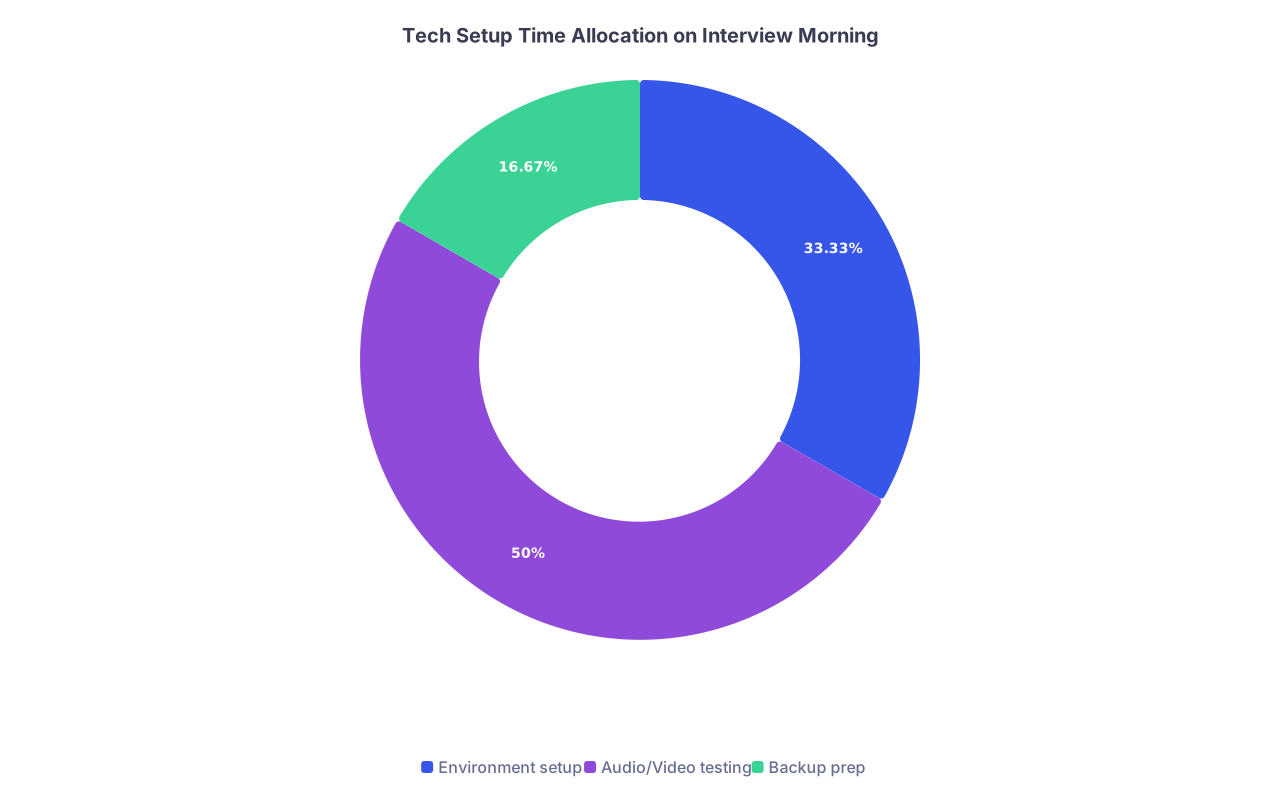
| Category | Value |
|---|---|
| Environment setup | 10 |
| Audio/Video testing | 15 |
| Backup prep | 5 |
45 Minutes Before (7:15 AM) – Dress and Final Look
At this point you should be in full interview attire.
- Top:
- Shirt/blouse + jacket (if you’re using one)
- Lint checked
- Bottom:
- Comfortable but presentable (you will stand up at some point)
- On your desk:
- Water (room temperature or slightly warm; ice can cause throat tightness)
- Notepad and pen
- Quick Reference Sheet
Do a test call with yourself:
- Open the meeting link or a test meeting
- Look at your own video:
- Are you centered?
- Is there headroom (not cutting off your forehead)?
- Do you look like someone they’d trust with their patients at 3 AM?
30 Minutes Before (7:30 AM) – Lock Everything Down
At this point you should stop adjusting.
- Put your phone on:
- Do Not Disturb
- Face-down, out of your main line of sight, but reachable in case of tech failure
- Shut down:
- Any nonessential browser tabs
- Any downloads and streaming
- Have the following opened and ready:
- Interview schedule
- Program information page
- Document with links (if using a browser-based platform)
20 Minutes Before (7:40 AM) – Calm Activation
You’re in the window where you can either:
- Spiral
- Or steady yourself
Choose steady.
- Sit back in your chair
- Place both feet on the floor
- Do:
- 2 minutes of slow breathing
- 3–4 mental reps of:
- “Tell me about yourself”
- “Why this program?”
- Remind yourself:
- Glitches happen. What they’re judging is how you respond, not whether your Wi‑Fi flickers for 5 seconds.
10 Minutes Before (7:50 AM) – Enter the Platform
At this point you should:
- Click “Join” early
- Confirm again:
- Name as displayed is professional (“First Last, MD” or “First Last”)
- Audio is muted when you’re not actively speaking
- If there’s a waiting room:
- Sit still
- Don’t keep muting/unmuting or adjusting video
- This is where a lot of people fidget themselves into visible anxiety
Quick Morning-of Checklist: Logistics, Mindset, Tech
Here’s your one-page, morning-of reference. Copy it, print it, adjust it.
| Category | Item |
|---|---|
| Logistics | Wake up on time (main + backup alarm) |
| Logistics | Eat pre-planned simple breakfast |
| Logistics | Confirm ID, wallet, keys, phone |
| Logistics | Bag packed (notepad, pen, charger, snacks) |
| Logistics | Outfit complete and checked (lint, wrinkles) |
| Mindset | 5 minutes of anchor question rehearsal |
| Mindset | Set intention for the day (1 sentence) |
| Mindset | 2–3 rounds of slow breathing |
| Tech | Device charged and plugged in |
| Tech | Audio and video tested |
| Tech | Backup device ready and accessible |
Tape this near your door or on the wall by your desk.
If Something Goes Wrong That Morning
Something will go wrong for someone this season. Lost tie. Zoom update loop. Sudden road closure. You don’t control that.
What you control is your response.
At this point you should have a simple playbook:
1. You’re running late (in-person)
- Priorities:
- Safety > punctuality. Don’t speed.
- When you realize you’ll be late:
- Pull over or pause in a safe spot
- Call or email using the contact info from their email
- Script:
- “Good morning, this is [Name]. I’m scheduled to interview at [time]. I’m on my way but delayed by [brief reason]. Current ETA is [time]. I’m very sorry for the inconvenience.”
- Then move forward. No repetitive apologies when you arrive, just one sincere apology and transition to being present.
2. Tech fails (virtual)
- Wi‑Fi drops:
- Immediately:
- Switch to your phone’s hotspot or move closer to the router
- If the disconnection is > 1–2 minutes:
- Email the coordinator:
- “Hi [Name], this is [Your Name]. I’m having temporary connectivity issues and am working to rejoin now. I apologize for the interruption and appreciate your patience.”
- Email the coordinator:
- Immediately:
- Platform crashes:
- Try rejoining
- If repeated:
- Use backup device
- Or join by phone audio while troubleshooting video, if the link allows
They’ve seen this before. They care more about your calm problem-solving than the glitch.
Visual Timeline: Your Interview Morning
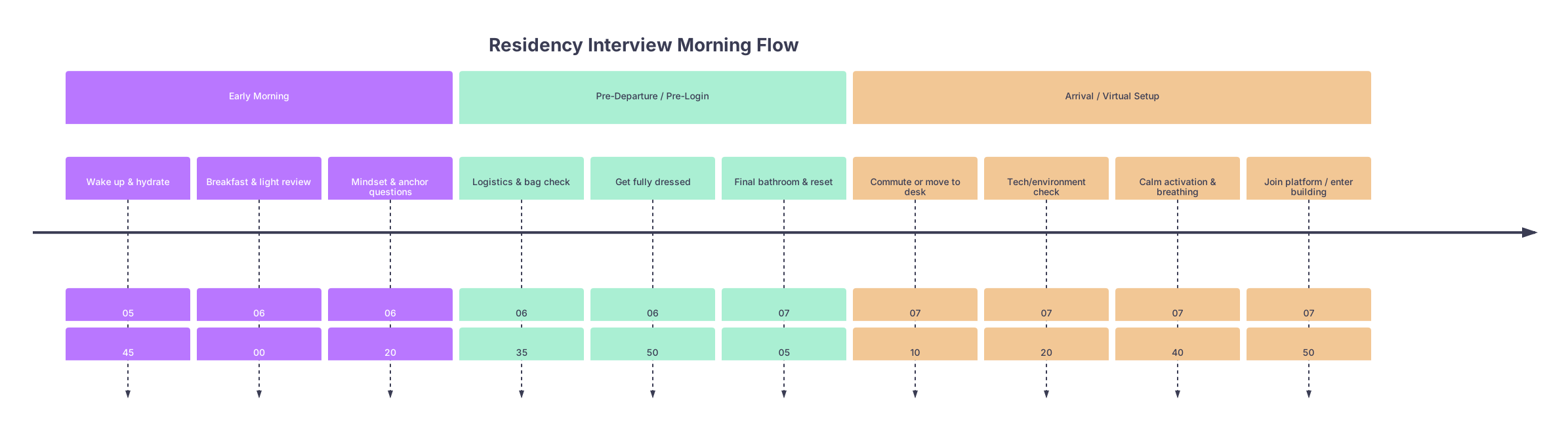
| Period | Event |
|---|---|
| Early Morning - Wake up & hydrate | 05 |
| Early Morning - Breakfast & light review | 06 |
| Early Morning - Mindset & anchor questions | 06 |
| Pre-Departure / Pre-Login - Logistics & bag check | 06 |
| Pre-Departure / Pre-Login - Get fully dressed | 06 |
| Pre-Departure / Pre-Login - Final bathroom & reset | 07 |
| Arrival / Virtual Setup - Commute or move to desk | 07 |
| Arrival / Virtual Setup - Tech/environment check | 07 |
| Arrival / Virtual Setup - Calm activation & breathing | 07 |
| Arrival / Virtual Setup - Join platform / enter building | 07 |
Three Things to Remember
- Your morning is not for learning; it’s for executing a script you already built. If you’re still “preparing,” you’re late.
- Control what you can: sleep, food, outfit, tech, and mindset. Those five levers decide 80% of how you feel in the first 10 minutes.
- Glitches don’t sink you—chaotic responses do. Your calm, deliberate handling of small problems often impresses more than a perfectly smooth day.