
It’s 6:25 a.m. in a windowless conference room on the 7th floor.
The residents are still pre-rounding. You’re at home changing your tie for the third time, or redoing eyeliner because your hand is shaking.
Meanwhile, on a laminated agenda in front of the program director, your name is already circled. Green highlighter. Next to it: “great LORs, average scores, strong clerkship comments, quiet on virtual meet-and-greet?”
You haven’t even logged into Zoom or parked your car yet. But the day has already started without you.
Let me walk you through what actually happens before you ever step into the building or log into the virtual room. Because the decisions and impressions that matter? A lot of them are made upstream—well before you shake a single hand.
The Night Before: The Real Shortlist Is Already Made
By the time your “Interview Day Schedule” email hits your inbox, the program has already done weeks of prep. And the night before your interview, there’s usually one last pass through the list.
Most applicants think the big evaluation starts when they start talking. No. The big evaluation started when your ERAS file landed and the coordinator dropped your name into the “Interviewed” spreadsheet.
The evening before:
- The program coordinator prints or shares a PDF deck of applicants.
- Interviewers get assigned: 3–5 names per attending or 5–10 per faculty panel, depending on specialty and format.
- Someone quietly labels you in their head as “auto-rank high,” “needs convincing,” or “courtesy interview.”
They don’t call it that out loud, but that’s exactly what it is.
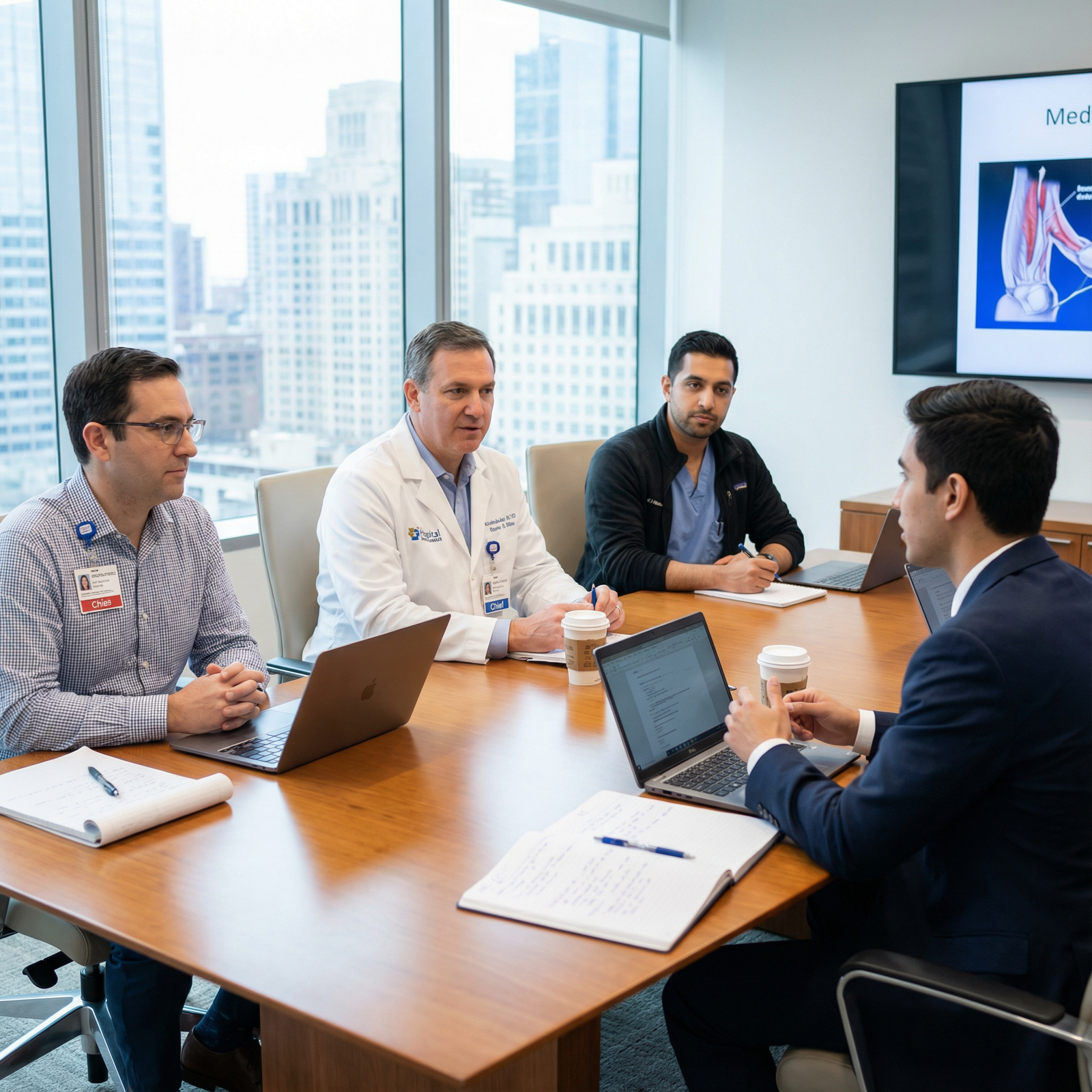
How They Look at Your File the Night Before
Here’s how a seasoned interviewer actually reads your file at 9:30 p.m. on their couch:
- Name. Medical school. Year. Visa status if relevant. Quick mental triage: “Home school”, “Big name school”, “IMG”, “DO”, “Non-traditional”.
- USMLE/COMLEX. If Step 1 is P/F, Step 2 becomes the gatekeeper. A 270 and a 225 are not read the same way, no matter what anyone says publicly.
- Red flags. Leaves of absence, failed exams, professionalism comments, “required additional supervision”. These get more attention than your honor society memberships.
- Letters. They skim for real signals: “top 5% of students I’ve worked with,” “would welcome back as a resident,” “has to be pushed” (death sentence phrase, by the way).
- Personal statement. They are looking for two things:
- Anything weird or concerning.
- One or two hooks they can ask you about so they do not have to improvise questions.
Most interviewers spend 3–5 minutes per file max the night before. Anyone telling you they spend 20 minutes per applicant either has three applicants or is lying.
What you need to understand: by the time they go to bed, they already have a mental map:
- Who’s impressive on paper
- Who looks standard/solid
- Who they’re not sure why is on the invite list
You cannot control that anymore. But you can understand how it sets the stage.
Early Morning: The Coordinator’s Quiet Control
If the program has a spine, it’s not the PD. It’s the program coordinator.
They’re in the office or logged on long before you. Coffee, Outlook, Zoom/Teams, and their master spreadsheet open.
They’re checking:
- Who confirmed
- Who no-showed
- Who emailed overnight with “flight delays,” “COVID,” or “I’m so sorry, got sick”
- Which interviewers called in post-call, stuck in the OR, stuck in clinic
You see a polished schedule. What’s actually happening is Tetris with human beings.
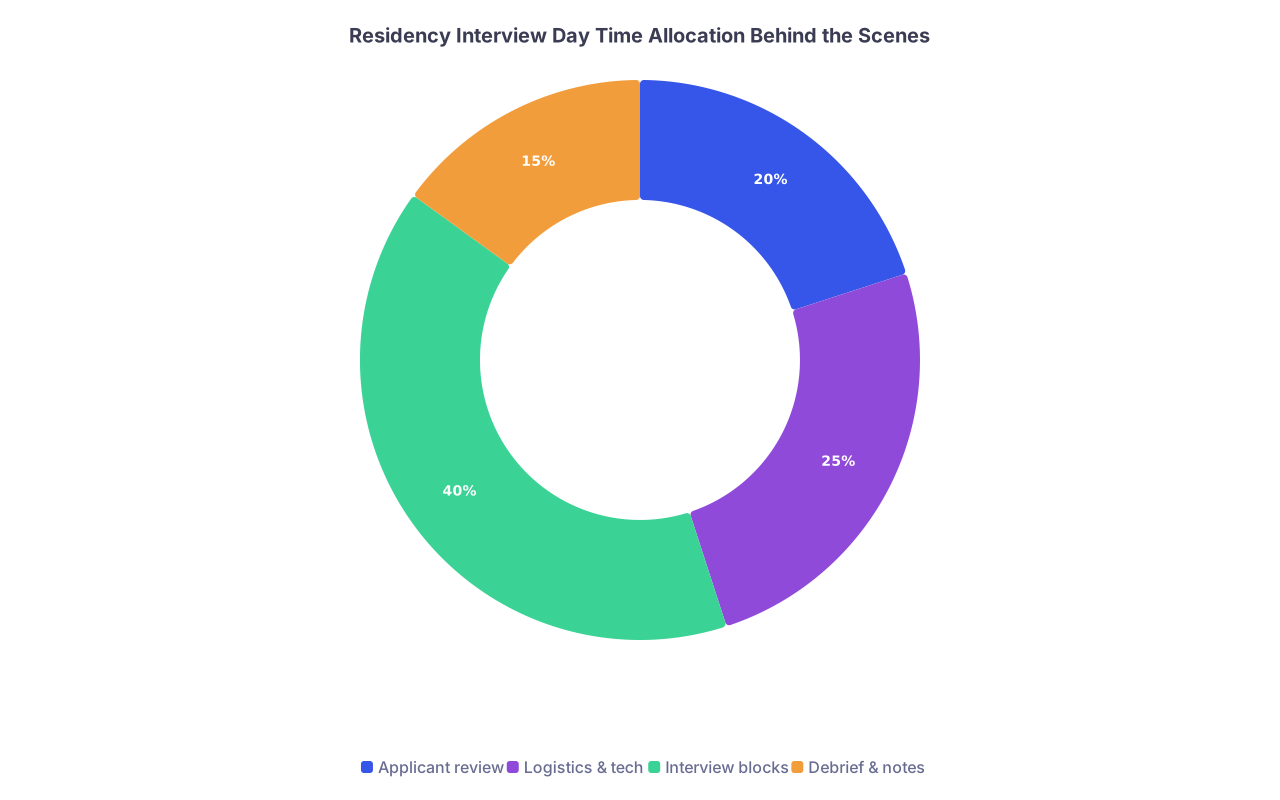
| Category | Value |
|---|---|
| Applicant review | 20 |
| Logistics & tech | 25 |
| Interview blocks | 40 |
| Debrief & notes | 15 |
That 9:15–9:35 “Faculty Interview #1” next to your name? It’s changed twice before you got your coffee.
Behind the scenes, the coordinator:
- Swaps interviewers around to cover gaps.
- Tries to prevent “two soft interviewers” from both seeing the same borderline candidate.
- Flags to the PD: “You’re seeing this applicant; they’re couples matching with the star we loved yesterday.”
Yes, couples match dynamics absolutely affect how they treat you. I’ve sat in rooms where people said, “We really want the partner, so let’s see if this one is workable.” That’s reality.
And they already know if you were the person sending five separate emails with tiny demands. Those notes get remembered.
Before You Log In or Walk In: Your Digital Shadow Is Already There
Programs talk. Not officially, not in emails. But texts and side conversations? Constant.
If you were awkward or rude on a pre-interview social, that got mentioned. If you made residents uncomfortable in a virtual social last week, that did not disappear just because today is “formal interview day.”
In the hour before interviews start:
- Residents who were on the pre-interview social may swing by the office or group chat:
“Hey, that Alex from X school is here today — they were quiet but seemed nice / talked over everyone / asked weird questions.” - Chief residents may warn: “This one grilled the interns about hours and moonlighting like a lawyer. Heads up.”
No one writes that in your file. But it colors how people interpret everything you do that day.
If your name came flagged from somewhere else—another program, another institution—that shadow walks into the room before you do.
The “Applicant Huddle”: How They Talk About You Before Seeing You
Some programs do this formally. Others do it informally over bagels. But almost everyone has some version of a pre-interview huddle.
It usually looks like this: PD, APDs, chief residents, sometimes a core faculty member or two, and the coordinator. They pull up a list of interviewees for the day.
You think your file is a cold read. It’s not.
What gets said in that huddle:
- “We really like this one—great narrative, strong Step 2, strong Sub-I here.”
- “This is a reapplicant to us and to several places. Be sure to ask what changed.”
- “She’s an IMG with excellent letters from US rotations. Pay attention to clinical reasoning.”
- “He has a professionalism notation; I want someone to probe that carefully.”
Here’s the uncomfortable truth: they’re already stratifying you within the interview day.
Some are “must watch closely, could be a star.”
Some are “probably rankable unless they say something strange.”
Some are “we’re not convinced, but we’ll meet them.”
They don’t call it that in the handbook. But I’ve heard almost those exact words out loud.
The File Bias No One Admits: PD vs Line Faculty
The program director and associate PDs often have a much deeper read on your file than the rank-and-file faculty.
A PD might have:
- Read your whole application when selecting invites
- Seen your name in prior committee discussions
- Noted you in an email: “This applicant is a good fit for our research track.”
A typical attending interviewer?
They get a PDF packet or ERAS link the evening before. If they’re conscientious, they skim all their applicants. If they’re tired, they read your personal statement and scores 10 minutes before meeting you.
So when you show up:
- The PD already has an opinion about “where you should land” if you don’t self-destruct.
- The random nephrologist or OB attending just wants to have a halfway decent conversation and figure out, “Can I work a night shift with this person?”
That’s why you’ll sometimes see a weird split: the PD loves you and a random attending was lukewarm, or vice versa. The PD saw the macro. The attending saw a 20-minute interaction.
You’re not walking into a level playing field. You’re walking into a room where some people already care how you do and others are just fulfilling a duty block.
How Red Flags Are Teed Up Before You Arrive
If you have any soft or hard red flags, they’re not “maybe they’ll notice.” They’re circled in red on someone’s copy.
These include:
- Failed or repeated Step/COMLEX
- Leave of absence
- Major change in specialty mid-med school
- Big drop in performance third year
- Vague “concerns” mentioned in an MSPE
In the pre-interview huddle, I’ve seen this many times:
“Okay, someone needs to ask about the Step 1 fail.” “Make sure we understand what happened during the LOA for family reasons.” “This person switched from surgery to peds in M4—why?”
Someone is assigned to bring it up. Often gently, but explicitly.
So when you get the question, “Can you walk me through what happened around second year?” — that’s not a spontaneous curiosity. That was scripted before you ever signed into the meeting.
Your job? Have a clean, practiced, concise narrative. No rambling, no oversharing, no defensiveness. If you fumble that, you reinforce their worst-case story about what that red flag means.
Resident Pre-Game: The Group Chat You’re Not In
Residents, especially chiefs and seniors, play a bigger role than you think, and they coordinate before you ever shake their hand.
There’s almost always some version of:
- A resident group chat blowing up with: “Who’s on interview day today?”
- Screenshots of the schedule: “You’ve got the research one from Hopkins; I’ve got the older DO applicant.”
- Quick gossip from prior socials: “That one seemed awesome,” or “That one was intense.”

There’s another piece: residents are warned.
They’re told who’s applying for:
- Research track
- Leadership interest
- Global health focus
- Couple’s match
So when a resident asks, “I heard you’re interested in global health—tell me more,” that’s not a random question. Someone told them that’s your “angle.”
If your angle doesn’t match how you present—say your application screams “research gunner” and you show up saying “I’m just here for the vibes and work-life balance”—it creates dissonance. And they bring that up in debrief.
Virtual vs In-Person: Different Logistics, Same Backstage Drama
You see a branded Zoom background, smiling faces, and carefully timed breakout rooms. Here’s what’s actually going on 15 minutes before the virtual session starts:
- Tech check chaos. Someone can’t get their camera working. Someone’s mic is echoing. The coordinator is slacking the IT guy.
- Last-minute switches. “Dr. X’s kid is sick, they’re out. Dr. Y, can you pick up these two extra candidates?”
- Background protocols: “Everyone mute unless speaking; close your email if you’re screen sharing; no side Slack visible.”

| Step | Description |
|---|---|
| Step 1 | Night before: Files assigned |
| Step 2 | Morning huddle |
| Step 3 | Coordinator adjusts schedule |
| Step 4 | Residents briefed |
| Step 5 | Interviews begin |
| Step 6 | Midday impressions shared |
| Step 7 | End-of-day debrief |
For in-person days, it’s just a different flavor of the same:
- Someone prints new packets at 7:10 because an attending lost theirs in their car.
- Tours are re-routed because a unit is on lockdown or the census is insane.
- PDs check the board: “We’ve got three codes this morning; tell me if I need to skip the meet-and-greet mid-morning.”
You’re trying not to spill coffee and remember everyone’s name. They’re just trying to keep the thing from catching fire while the hospital runs in the background.
You’re Being “Scored” Before You’ve Spoken
Some programs pretend they do holistic, warm, fuzzy evaluation without structure. Some have hard scoring rubrics. Many are somewhere in the messy middle.
What’s consistent: there’s a structured way they think about you, even if they don’t admit it.
Before you arrive, they’ve already slotted some of your attributes on a mental rubric:
- Academic strength (based on scores, school, clerkship comments)
- Fit with program focus (community vs academic vs niche)
- “Risk” level (red flags, leaves, unusual path)
- Diversity/adding something different to the class
- Known internal champions (did someone at the institution vouch for you?)
| Dimension | Mostly Decided From File | Interview Can Change It? |
|---|---|---|
| Academic floor | Yes | Only slightly |
| Red flag risk | Yes | Yes, if you explain well |
| Personality fit | No | Largely from interview |
| Commitment level | Partially | Yes |
| Rank tier range | Roughly | Can move within a band |
PDs won’t say this on the podium, but they often walk into the day thinking in tiers:
- “If they’re as good in person as they look on paper, this is a top-10 rank.”
- “If they’re normal and not weird, they’re in the middle chunk.”
- “They’re probably lower list unless they blow us away.”
The interview doesn’t invent their opinion from scratch; it nudges you up or down a band they’ve already imagined.
Lunchtime & Midday: Early Impressions Start to Leak
By the time you’re eating lunch—with residents in the conference room, or awkwardly on Zoom asking about call rooms—the faculty and PD have already had first impressions.
They don’t always wait till the end of the day to talk.
Casual hallway conversation you’ll never hear:
- “Anyone stand out this morning?”
- “The guy from Michigan is impressive. Very polished.”
- “The IMG from Ireland—good story, but I’m not sure they’ll thrive in our pace.”
- “That non-trad teacher? Great with patients I bet. Ask the residents what they think over lunch.”
Residents, meanwhile, are doing their own informal debrief in stairwells and side chats:
- “That Sara—super nice, asked good questions.”
- “Who had John? He talked a lot about salary and moonlighting.”
- “The couples match pair actually seems solid; they weren’t weird about needing to be together.”
Those comments are all raw material that gets poured into the end-of-day discussions. You won’t see any of it. But you’re living inside it.
The End-of-Day Plan That Starts Before You Arrive
The real ranking doesn’t happen on interview day. But the skeleton of it does.
Most programs do some version of an end-of-day touchpoint. That structure is decided well in advance:
- Who gets to give input (faculty only vs faculty + residents)
- How input is collected (numeric scores, free text, one-word captures)
- When they’ll compile and review (after each day vs after the whole interview season)
Before you ever show up, the PD has decided:
- “Resident voices will count heavily—we’ll ask if they’d want to be on nights with this person.”
- Or “Residents get to share, but they don’t decide the order.”
- Or “Only core faculty give numeric scores, the rest are narrative only.”
So if you’re banking on “I’ll just charm the residents and they’ll carry me,” you might be betting on the wrong power structure. At some places, yes—resident love can save a borderline candidate. At others, it’s a nice-to-have footnote.
What This Means for How You Prepare
You can’t control the fact that your name is being discussed before you walk in. You can’t rewrite your USMLE score on interview morning.
But understanding the pre-game changes how you prepare.
You should walk into interview day assuming:
- They have a working theory of you. Your job is to either confirm it (if it’s good) or gently overwrite it (if it’s bad or incomplete).
- Any obvious “issue” is going to be asked about. If you haven’t rehearsed that answer out loud 10 times, you’re not ready.
- Residents already know more about you than you think—from your file, from pre-interview socials, from internal emails.

So you prepare differently:
- You script your red flag answers. Concise, honest, framed around growth and outcome.
- You pick 2–3 “hooks” from your own file you actually want them to ask about—and you subtly point to them in answers.
- You practice being the same person in every room. Consistency is how you survive multiple independent impressions being cross-checked later.
One more thing: don’t assume a bad morning means a lost day. I’ve seen candidates start wooden, loosen up with residents at lunch, and end the day as “surprisingly strong” in the final debrief. Humans remember peaks and endings more than the awkward first 5 minutes.
The Summary No One Gives You on Interview Trail
Let me strip it down.
First: By the time you show up, you are not a blank slate. You are a hypothesis in their minds—formed by your file, your scores, your letters, and any prior contact. You walk in to confirm or revise that hypothesis, not to create it.
Second: There is an entire parallel process happening without you—coordinators shifting schedules, residents trading impressions, faculty getting briefed on your red flags and special angles. Interview day is choreographed chaos you only see one piece of.
Third: The interview moves you within a range, not from the bottom to the top. Strong performance can rescue a borderline application and tank a good one, but the groundwork—that “band” they see you in—was laid before you arrived. Prepare like you’re stepping into a story that’s already started, because you are.