The night before a residency interview is not for “winging it” or “just relaxing.” It is a performance warm‑up, and most applicants waste it.
Here is the structured, hour‑by‑hour routine that actually sets you up to perform on interview day—without staying up until 1 a.m. re-reading your ERAS.
The 24-Hour Timeline: From Afternoon to Lights Out
At this point, you should stop pretending “I’ll figure it out tomorrow” and follow a clock. The night before an interview is a logistics problem, not a vibes problem.
T‑24 to T‑18 hours: Afternoon of the Day Before
By mid‑afternoon the day before your interview, you should already be in the interview city.
By 3:00 p.m. local time, you should have:
- Checked into your hotel or Airbnb
- Confirmed Wi‑Fi works and there is a usable desk or table
- Charged:
- Phone
- Laptop / tablet
- Portable battery (if you have one)
- Laid out:
- Suit
- Shirt/blouse
- Belt
- Socks/hosiery
- Shoes
- Undershirt/undergarments
If your travel gets you in later than 3 p.m., you do the same checklist as soon as you arrive—no “I’ll do it after I sit down for a minute.” That “minute” turns into 90 minutes fast.
Quick environment check (10 minutes):
- Adjust thermostat to a comfortable sleeping temperature (you do not want to be freezing at 2 a.m.).
- Close or pin back curtains to ensure you can fully darken the room later.
- Find:
- Extra outlets
- Light switches you will need if you wake at night
- Where you will put your packed bag and shoes in the morning (you want zero searching).
T‑18 to T‑14 Hours: Core Program Review (Not All‑Night Cramming)
At this point, you should do targeted review, not scroll through the entire program website like a lost MS3.
Aim: 60–90 focused minutes.
1. Confirm the basics (10–15 minutes)
Pull up your interview confirmation email and the program website side by side.
You must know, without hesitation:
- Exact start time and time zone
- Platform and link (Zoom, Thalamus, in‑person address, specific building / floor)
- Any pre‑interview sessions (resident social, breakfast, “check‑in” time)
- Interview format:
- Number of interviews
- Approximate length (e.g., three 20‑minute interviews, one 45‑minute)
- Group vs individual
If anything is unclear, this is the moment to email the coordinator. Brief, polite, direct. They answer these questions daily; you are not the first.
2. Program snapshot page (20–30 minutes)
Create or open a one‑page “program snapshot”. No more. One page forces you to prioritize.
Ideal structure:
- Program name and location
- Key features (3–5 bullets)
- Example: “4+2 ambulatory structure; strong HIV clinic; county + VA mix; no 24‑hour calls”
- What genuinely attracts you (3 bullets)
- Must be specific, not “great teaching.”
- People:
- PD name
- APDs if relevant
- Any faculty or residents you have something in common with (school, research area, hometown)
- Red flags / questions (3–5)
- Call schedule details, fellowships, mentorship, board pass support
You are not writing an essay. You are stocking your short‑term memory with anchors.
3. Prepare 3–4 targeted questions (15–20 minutes)
At this point you should lock in program‑specific questions you are ready to use tomorrow.
Examples that do not sound generic:
- “I saw your interns do a month of night float early in the year. How do they usually feel about that timing by the end of the year?”
- “I noticed the primary care track has its own continuity clinic half‑day. How does that affect inpatient rotation scheduling?”
- “Several recent grads matched into cardiology. How early in residency do they usually identify and support fellowship interests?”
Write these on a small card or notes doc. You will blank on them under stress if they live only in your head.
Program review hard stop: 90 minutes max. If you are going down a rabbit hole of resident LinkedIn stalking, you are procrastinating, not preparing.
T‑14 to T‑12 Hours: Personal Story & Answer Rehearsal
Now you switch from “What is this program?” to “What do I sound like?”
1. Rehearse your opening answers (30–40 minutes)
At this point you should have clean, conversational outlines for:
- “Tell me about yourself.”
- “Why this specialty?”
- “Why our program?”
- “What are you looking for in a residency?”
- “Tell me about a challenge / conflict / failure.”
You are not memorizing monologues. You are rehearsing structure.
Simple structures:
Tell me about yourself:
- Present: who you are now (M4 at X, interested in Y)
- Past: 1–2 key experiences that led you here
- Future: what you are aiming for (type of resident, career direction)
Failure / challenge:
- Situation
- Your role
- What went wrong / challenge
- What you did
- What changed since (this last part is what they actually care about)
Speak these answers out loud. In the hotel room. Yes, it feels awkward. Do it anyway.
Watch for:
- Rambling over 2 minutes
- Laundry list CV recitation
- Overly polished “robotic” delivery
Aim for 60–90 seconds of content for most questions, with flexibility to expand.
2. Align your story with their program (15–20 minutes)
At this point, you should actively connect your themes with their specifics.
Example links:
You → “I care about underserved populations.”
Them → County hospital, refugee clinic, addiction medicine elective.
You → “I like systems and QI.”
Them → Residents present QI at morning report, institutional QI curriculum.
Write down 2–3 explicit “bridges” like:
- “Because of my QI work on ED throughput, I am especially drawn to your X project / weekly QI conference.”
- “My longitudinal work in our free clinic made your Y clinic and Z community partnership stand out.”
T‑12 to T‑10 Hours: Technology, Route, and Logistics Lock-In
This is where most people get sloppy. Then they end up sprinting or crying over a Zoom update at 7:55 a.m.
The exact tasks depend on in‑person vs virtual. Do both checklists now.
| Item Type | In-Person Interview | Virtual Interview |
|---|---|---|
| Route / Platform | Map route & backup | Test platform link |
| Timing Buffer | +30–45 min buffer | Log on 15 min early |
| Backup Plan | Uber/Taxi numbers | Phone hotspot ready |
| Printed Materials | Itinerary, map | Itinerary, contacts |
| Tech Check | Phone charged | Laptop, camera, mic |
In‑person: Route & timing (20–30 minutes)
By this point you should:
- Look up the exact entrance and floor (teaching hospital entrances are a maze).
- Check travel time for the actual time you will go, not midnight estimates.
- Plan:
- Primary route (walk / rideshare / drive)
- Backup (different route / earlier Uber window)
Build in:
- 15 minutes for unexpected delays
- 10 minutes for finding the right building / room
- 5–10 minutes bathroom / breath / straighten up
If you are the “I do not want to be the first person there” type, aim to arrive 15–20 minutes before the stated time. That usually puts you in the main cluster.
Virtual: Platform & camera reality check (20–30 minutes)
At this point you should test exactly what they will see tomorrow.
- Open:
- Zoom / Thalamus / Webex / whatever they stated
- Use the same device you will use tomorrow
- Check:
- Camera angle (no up‑the‑nostrils, no ceiling fans)
- Background (neutral, uncluttered, no unmade bed)
- Lighting: face toward a light source; avoid bright window behind you
- Audio: microphone level and background noise
If your hotel room background is terrible:
- Sit at the desk with a wall behind you.
- Move the lamp behind your monitor / laptop, shining toward your face.
- If necessary, use a tasteful virtual background (hospital / office style). Not a beach. Not outer space.
Run a 2‑minute test call with a friend or by recording yourself. Yes, really watch it. It will catch 80% of problems.
T‑10 to T‑8 Hours: Appearance, Packing, and Physical Prep
Now you are front‑loading all the small decisions that make mornings chaotic.
1. Suit and clothing run‑through (20–30 minutes)
At this point you should completely assemble your outfit. Not “I glanced at it in the bag.”
- Put on:
- Suit jacket and pants / skirt
- Shirt / blouse
- Belt
- Shoes and socks / hosiery
Check:
- Wrinkles? Use hotel iron / steamer now, not at 7 a.m. when someone else is using it.
- Stains / lint? Clean or adjust.
- Fit while sitting:
- Button strain?
- Skirt length okay when seated?
- Shoes comfortable enough for walking hospital corridors?
For virtual interviews, still wear full professional attire. You will sit differently when you know you are fully dressed for the role. I have seen people stand up briefly on camera. You do not want to be the pajama‑pants legend.
Lay clothes out in order of dressing on a chair or surface:
- Undergarments and socks
- Shirt / blouse, undershirt
- Pants / skirt
- Belt
- Jacket
- Shoes
2. Bag and materials packed (15–20 minutes)
By this point, your bag for tomorrow should be zipped and waiting.
Include:
- Wallet / ID
- Phone + charger or power bank
- Printed:
- Interview itinerary
- Program address and contact number
- Your own quick notes (program snapshot, your questions)
- Pen + small notebook
- Simple snack (bar, nuts) and water bottle
- Mints (not gum)
For virtual interviews, set a “desk pack”:
- Water bottle
- Snack within reach
- Tissues
- Printed / easily accessible:
- List of interviewers (if provided)
- Your questions
- Program snapshot
- Phone on silent, face down, but nearby as backup if tech fails
T‑8 to T‑6 Hours: Controlled Wind-Down and Light Movement
At this point, you should be stepping away from heavy cognitive work.
Your goal: tell your nervous system, “We are safe. We have a plan. We can sleep.”
1. Light physical reset (20–30 minutes)
Get your body to discharge some travel and screen tension.
- Short walk outside or on treadmill
- Gentle stretching: neck, shoulders, lower back, hips
- 10–15 minutes of light bodyweight movement (if that is your norm)
- Think: easy yoga flow, not PR deadlifts.
Avoid:
- Intense new workouts
- Anything that risks soreness or injury tomorrow
2. Dinner strategy (30–60 minutes)
At this point you should eat a normal, boring meal.
Guidelines:
- Moderate portion. Not starving, not Thanksgiving.
- Protein + complex carbs + a bit of fat.
- Avoid:
- Heavy, greasy food that will sit in your stomach
- Spicy food if you are not used to it
- Huge amounts of sugar or caffeine
If you know you will be too keyed up to eat much in the morning, slightly favor dinner, but not to the point of discomfort.
Hydrate, but do not chug a liter right before bed unless you enjoy 3 a.m. bathroom trips.
T‑6 to T‑3 Hours: Mental Rehearsal, Then Cutoff
Now you are entering the danger zone where most applicants sabotage themselves by over‑prepping.
You need a clear cutoff time for all interview‑related work.
1. Final 30–40 minutes of intentional prep
At this point you should do one last, short, deliberate practice block.
Options (choose 1–2):
- Review your 5–7 most likely questions and answer outlines out loud.
- Skim your ERAS personal statement and experiences once to refresh specific examples.
- Read your program snapshot one more time.
Then stop.
Set a time (e.g., 9:00 p.m.) when all interview materials close. No more Googling faculty. No more “just one more run‑through.”
2. Plan your morning in detail (10–15 minutes)
Future you is not reliable at 6:00 a.m. Plan now.
Write out (or type) a mini‑timeline:
- Wake time
- Shower / dressing window
- Breakfast time and location (hotel breakfast hours, nearby cafe, or food you brought)
- Departure time (for in‑person)
- Log‑on time (for virtual)
Example for 8:00 a.m. in‑person interview:
- 6:00 – Wake
- 6:00–6:20 – Shower / basic grooming
- 6:20–6:40 – Dress
- 6:40–7:00 – Breakfast
- 7:00 – Leave hotel (10–15 minute transit + buffer)
You want this written down where you will see it immediately upon waking.
T‑3 Hours to Lights Out: Sleep Setup and Anxiety Management
Now you stop thinking like an applicant and start thinking like an athlete the night before competition.
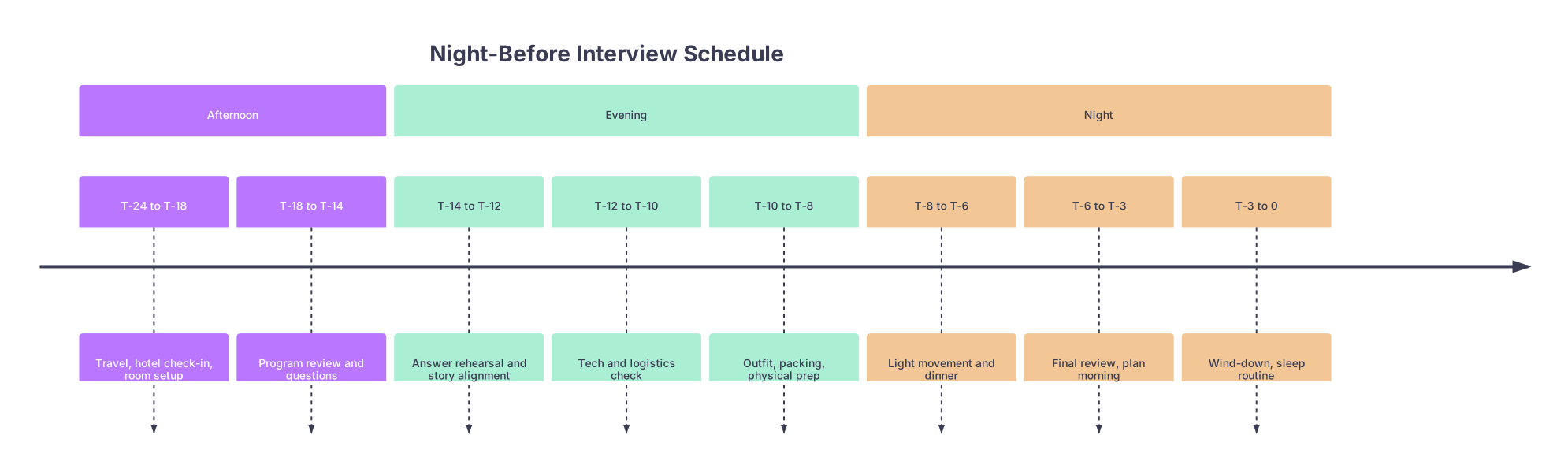
| Period | Event |
|---|---|
| Afternoon - T-24 to T-18 | Travel, hotel check-in, room setup |
| Afternoon - T-18 to T-14 | Program review and questions |
| Evening - T-14 to T-12 | Answer rehearsal and story alignment |
| Evening - T-12 to T-10 | Tech and logistics check |
| Evening - T-10 to T-8 | Outfit, packing, physical prep |
| Night - T-8 to T-6 | Light movement and dinner |
| Night - T-6 to T-3 | Final review, plan morning |
| Night - T-3 to 0 | Wind-down, sleep routine |
1. Sleep environment (10–15 minutes)
At this point you should actively make the room sleep‑friendly.
- Set:
- Alarm on your phone
- Backup alarm (second device, hotel wake‑up call)
- Place:
- Phone away from the bed but within earshot
- Clothes and shoes by a clear path from bed
- Bag by the door
Then:
- Dim room lights
- Close curtains completely
- Adjust thermostat for slightly cool temperature (most sleep studies favor cool over warm)
2. Mind dump and worry capture (10–15 minutes)
If your brain is spinning with “What if they ask…” doom scenarios, you need a mind dump.
On paper or in a notes app, write down:
- Any remaining questions about:
- The program
- Your application
- Tomorrow’s logistics
- Any worries (yes, literally: “I am worried I will blank on X.”)
Then respond in 1–2 lines each with what you have already done or will do:
- “If I blank, I will pause, restate the question, and answer one piece at a time.”
- “If the tech fails, I will use my phone hotspot / call the coordinator.”
You are not solving everything. You are convincing your brain that there is a plan.
3. Short relaxation routine (10–20 minutes)
You do not need an elaborate meditation practice. You need your arousal level to drop a few notches.
Options:
- 10–15 minutes of guided breathing (4‑7‑8 breathing, box breathing)
- Short body scan (progressively relaxing muscle groups from feet to head)
- Light reading (non‑medical, non‑work, no thrillers that spike adrenaline)
Avoid:
- Social media scroll
- Residency forums and Discords (nothing good happens there at 10 p.m. pre‑interview)
If you are used to melatonin or another sleep aid and have used it safely before, fine. Do not experiment with new substances tonight.
Morning Contingency: If You Sleep Badly
You will probably not sleep perfectly. Almost no one does.
If you wake up multiple times, or feel like you “did not sleep at all,” do not panic. Performance is more resilient than you think.
In the morning:
- Hydrate
- Eat a small, reliable breakfast even if you do not feel like it
- Take 3–5 slow, deep breaths before you join or walk into the first session
Very few interviewers will notice you slept 5.5 hours instead of 8. They will notice if you are scattered and unprepared. Your night‑before structure already fixed that.
Quick Reference: Night-Before Checklist
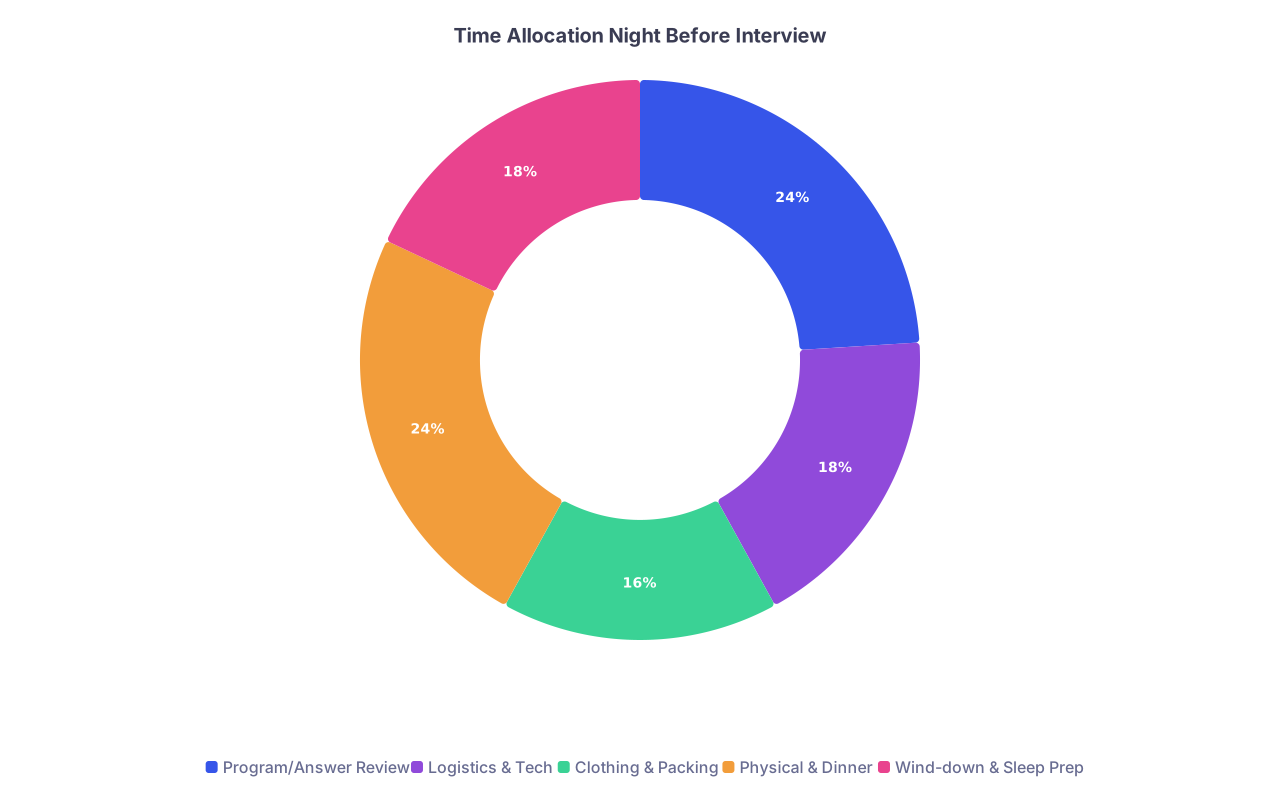
| Category | Value |
|---|---|
| Program/Answer Review | 60 |
| Logistics & Tech | 45 |
| Clothing & Packing | 40 |
| Physical & Dinner | 60 |
| Wind-down & Sleep Prep | 45 |
You can screenshot or rewrite this condensed list and keep it in your notes:
By late afternoon:
- Checked into room, Wi‑Fi and outlets confirmed
- Suit and full outfit located
- Devices charging
Early evening (T‑18 to T‑12):
- Program basics re‑confirmed (times, format, platform / location)
- One‑page program snapshot updated
- 3–4 program‑specific questions written
Mid evening (T‑12 to T‑8):
- Core answers rehearsed out loud once
- Your story aligned with program features
- Route and timing finalized (or virtual platform tested)
- Suit tried on; wrinkles addressed
- Bag / desk setup packed and ready
Later evening (T‑8 to T‑3):
- Light movement / walk
- Reasonable dinner
- Final 30–40 minute review block, then hard cutoff
- Morning timeline written
Before bed (T‑3 to 0):
- Alarms set (primary and backup)
- Room darkened and cooled
- Worries / questions brain‑dumped
- 10–15 minutes of relaxation before sleep
The Bottom Line
The night before your residency interview is not about doing more; it is about doing the right things in the right order.
Three key points:
- Front‑load decisions: clothes, route, tech, schedule—so morning you only executes, not debates.
- Cap your prep: 90 minutes of program review and 30–40 minutes of answer rehearsal are enough; more becomes counterproductive.
- Protect your brain: controlled wind‑down, simple routines, and a clear plan beat frantic last‑minute cramming every single time.