Understanding the Pediatrics Residency Landscape as a Caribbean IMG
Caribbean medical school residency pathways into U.S. pediatrics can be highly rewarding but also competitive. As a Caribbean IMG, you face unique strengths and challenges that should shape how you approach pre-interview preparation.
Why Pediatrics Is a Strong Option for Caribbean IMGs
Pediatrics remains one of the more IMG-friendly specialties compared with fields like dermatology or orthopedic surgery. Many programs value:
- Strong clinical skills
- Compassion and communication with children and families
- Commitment to underserved communities
- A track record of working with diverse populations
Caribbean graduates—especially from schools with strong match histories such as SGU (St. George’s University)—often bring these attributes. The SGU residency match data consistently show numerous successful placements into pediatrics and combined programs (e.g., med-peds), demonstrating that a Caribbean medical school residency pathway into pediatrics is absolutely realistic with the right preparation.
Unique Considerations for Caribbean IMGs
Before interviews, recognize how program directors may view your file:
Perceived strengths:
- Exposure to culturally diverse patient populations
- Early clinical responsibility in many Caribbean schools
- Resilience and adaptability from training away from home
- Often strong interest in underserved or global health pediatrics
Common concerns you must proactively address:
- Variability in clinical training settings
- Board exam performance (USMLE Step 1/2 CK/COMLEX)
- Gaps in training or delayed graduation
- Limited U.S. clinical experience or letters
Your pre-interview preparation should focus on clearly demonstrating that you are:
- Clinically competent (and ready for high-volume U.S. pediatric services)
- Well-prepared for boards and in-training exams
- A strong team player with excellent communication skills
- Genuinely committed to pediatrics long-term
Understanding this lens helps you tailor your responses and presentation during the peds match interview season.
Building a Strong Foundation Before Interview Season
Before you even step into residency interview preparation mode, you need to ensure your application and narrative are solid.
Step 1: Clarify Your Pediatrics Career Story
Programs want to know: Why pediatrics? Why you? Why now?
Draft a concise “career story” you’ll use repeatedly during residency interview preparation:
Origin: Where your interest in pediatrics began
- Example: “I first became interested in pediatrics during community outreach clinics in Grenada, where I worked with children with poorly controlled asthma.”
Development: How this interest matured through med school
- Example: Clerkship highlights, research projects, pediatric sub-internships, leadership roles in pediatric interest groups.
Now: How your current experiences and goals align with residency
- Example: Interest in general pediatrics, hospital medicine, or subspecialties such as neonatology or pediatric cardiology.
Write this as a one-page narrative for yourself, then condense it into:
- A 60–90 second spoken version (for “Tell me about yourself”)
- A 1–2 sentence version (for casual conversations and emails)
This story should be consistent with your personal statement and ERAS application; contradictions are a red flag.
Step 2: Know Your Application Inside Out
Before interviews begin, you must be able to discuss any part of your application fluently and confidently:
- USMLE/COMLEX scores: Be prepared to explain context (especially if there are failures, low scores, or large gaps between attempts).
- Clinical experiences: Recall key patients, what you learned, and how you grew—especially in pediatrics.
- Research and QI projects: Be able to summarize each project in 30–60 seconds, focusing on your role, results, and relevance to pediatrics.
- Leadership and extracurriculars: Have concrete examples of teamwork, teaching, advocacy, or community outreach.
Caribbean IMGs are often asked about transitions between countries, visa status, or why they chose a Caribbean medical school. Prepare clear, honest answers that emphasize maturity and intentional decision-making.
Step 3: Understand the U.S. Pediatrics Training Structure
To sound informed and committed, you should understand:
- Pediatrics residency length (3 years)
- Common program structures (categorical pediatrics, med-peds, pediatrics with research tracks)
- Typical rotations:
NICU, PICU, general wards, newborn nursery, ambulatory clinic, subspecialties (cards, GI, heme/onc, etc.) - Schedules, call systems, and night float models
Use program websites, AAP (American Academy of Pediatrics) resources, and SGU residency match reports (or your own school’s match reports) to understand how Caribbean graduates typically integrate into these programs.

Strategic Research: Know Your Programs Before You Interview
Solid residency interview preparation for a Caribbean IMG in pediatrics requires targeted, efficient research. This is how you convert generic interest into a compelling, personalized fit.
Step 4: Deep-Dive Into Each Program
For every interview, prepare a one-page “Program Snapshot” including:
Program basics:
- Location and affiliated hospitals
- Program size (number of residents per year)
- Patient population (community vs academic vs safety-net hospital)
- Presence of NICU/PICU and subspecialty services
Educational features:
- Curriculum structure and call schedule
- Simulation training, boot camps, or board review sessions
- Global health, advocacy, or community pediatrics tracks
- Research infrastructure and mentoring programs
IMG-friendliness indicators:
- Percentage of current or past residents who are IMGs or Caribbean graduates
- Any mention on the website of visa sponsorship
- Whether they list or show alumni from Caribbean schools (SGU, AUC, Ross, etc.)
Pediatrics-specific strengths:
- Subspecialty strengths (e.g., strong NICU or pulm programs)
- Notable faculty interests (e.g., obesity prevention, immigrant child health, developmental pediatrics)
- Links with children’s hospitals or community clinics
Search beyond the website:
- FREIDA, program social media (especially Instagram or X), alumni pages
- Resident bios (often reveal diversity, interests, and IMG presence)
- If possible, speak with Caribbean alumni from your school who matched there
Step 5: Prepare Program-Specific Questions
You will be asked, “What questions do you have for us?” at almost every interview. Strong, specific questions show preparation and genuine interest. Avoid questions easily answered on the website.
Examples (pediatrics-focused, IMG-aware):
- “How does your program support international graduates as they transition into the U.S. healthcare system, particularly in the first few months of intern year?”
- “Could you describe how residents are involved in the care of children from underserved communities or immigrant families?”
- “What opportunities exist for residents to participate in advocacy projects related to child health?”
- “How does your program support residents interested in pursuing fellowships in fields like NICU, PICU, or pediatric cardiology?”
Prepare 4–6 questions per program, and star 2–3 “must-ask” ones for the PD or chief residents.
Mastering Core Interview Content: What You’ll Be Asked and How to Prepare
You cannot predict every interview question, but key themes appear repeatedly across pediatric residency interviews. Structured residency interview preparation—especially for a Caribbean IMG—should prioritize these categories.
Step 6: Prepare for Classic Behavioral and Motivation Questions
These are the core interview questions residency programs use to understand who you are:
“Tell me about yourself.”
- Use your 60–90 second career story:
- Background (brief)
- Medical education (Caribbean training, key experiences)
- Why pediatrics
- Where you are now and what you seek in residency
- Use your 60–90 second career story:
“Why pediatrics?” / “Why pediatrics over other specialties?”
- Highlight:
- Enjoyment working with children and families
- Interest in prevention, development, and family-centered care
- Specific experiences in clerkships or sub-internships that solidified your decision
- Avoid vague answers like “I like kids”; give concrete clinical stories.
- Highlight:
“Why this program?”
- Connect your goals to the program’s strengths:
- “I’m interested in training at a safety-net hospital with a diverse patient population, and I noticed your strong community pediatrics and immigrant health clinics…”
- “I hope to pursue a neonatology fellowship; your busy Level III NICU and established research mentorship are very appealing.”
- Connect your goals to the program’s strengths:
“What are your strengths and weaknesses?”
- Strengths: Choose traits important in pediatrics (communication, patience, teamwork, reliability). Provide a brief example.
- Weaknesses: Honest but fixable traits (e.g., difficulty delegating, over-committing) with specific steps you are taking to improve.
“Tell me about a challenging case or difficult patient interaction.”
- Use pediatric examples when possible.
- Demonstrate empathy, communication with parents, learning from the situation, and collaboration with the team.
Step 7: Be Ready for Questions Specific to Caribbean IMGs
As a Caribbean IMG, you should anticipate questions about your training pathway:
“Why did you choose a Caribbean medical school?”
- Emphasize opportunities, global perspective, and resilience.
- Avoid sounding defensive or apologetic.
“How did your Caribbean medical education prepare you for pediatrics residency in the U.S.?”
- Highlight:
- Exposure to diverse pathologies
- Adaptability across different healthcare systems
- Strong clinical rotations in U.S. hospitals (if applicable)
- Highlight:
“Can you explain any gaps in your training or delays in graduation?”
- Be honest, concise, and solution-focused.
- Emphasize how you grew from the experience and are now ready for residency.
“What challenges do you anticipate as an IMG in residency, and how will you handle them?”
- Mention:
- Navigating a new system
- Adapting to documentation/EMR styles
- Seeking mentorship proactively
- Show self-awareness and a plan (e.g., shadowing early, using orientation well, asking for feedback).
- Mention:
Step 8: Prepare Pediatric Scenario and Ethics Questions
Pediatrics programs often test how you think through clinical and ethical challenges:
- Breaking bad news to parents
- Handling suspected abuse or neglect
- Managing disagreements between parents and the medical team
- Addressing non-adherence in a child with a chronic illness (e.g., asthma, diabetes)
Use a structured approach:
- Acknowledge emotions and family-centeredness
- Clarify medical facts in simple, jargon-free language
- Involve the team and follow institutional policies
- Emphasize child safety and best interest
- Maintain professionalism and empathy throughout
You do not need perfect medical details; they are looking at your communication style, maturity, and ethical reasoning.
Step 9: Practice with Mock Interviews and Feedback
Residency interview preparation is incomplete without practice. As a Caribbean IMG, this step is critical to polishing your communication and handling any bias or misconceptions.
- Ask your school’s career office, SGU/Caribbean alumni, or mentors to conduct mock interviews.
- Use common interview questions residency programs ask and record yourself:
- Review voice, clarity, pacing, and body language.
- Focus on:
- Avoiding overly long, rambling answers
- Speaking clearly and confidently (especially over Zoom)
- Maintaining eye contact (look at the camera, not your own image)
- Smiling appropriately and projecting warmth—key in pediatrics

Logistics, Professionalism, and Virtual Interview Readiness
Your preparation is not only what you say, but how you show up. For many programs, particularly post-pandemic, virtual interviews remain common. For a Caribbean IMG, this may reduce travel costs but increases emphasis on your virtual presentation.
Step 10: Optimize Your Interview Environment
Before interview day, do a full technical and environmental check:
- Internet connection: Stable, high-speed; use Ethernet if possible.
- Computer and camera: Test audio/video; position the camera at eye level.
- Background: Neutral, uncluttered; avoid distractions behind you.
- Lighting: Face a light source; avoid strong backlighting.
- Sound: Use headphones or a good microphone; minimize background noise.
Conduct a full “mock virtual interview” to evaluate the experience as the interviewer would see it.
Step 11: Professional Appearance and First Impressions
Pediatrics is family-facing, but residency interviews still expect conservative professionalism:
- Attire: Dark or neutral suit (or equivalent professional dress); simple shirt/blouse; minimal jewelry.
- Grooming: Neat hair; avoid distracting accessories.
- Body language: Sit up straight, open posture, nodding occasionally to show engagement.
Even on virtual platforms, first impressions in the first 30 seconds can influence how your answers are received.
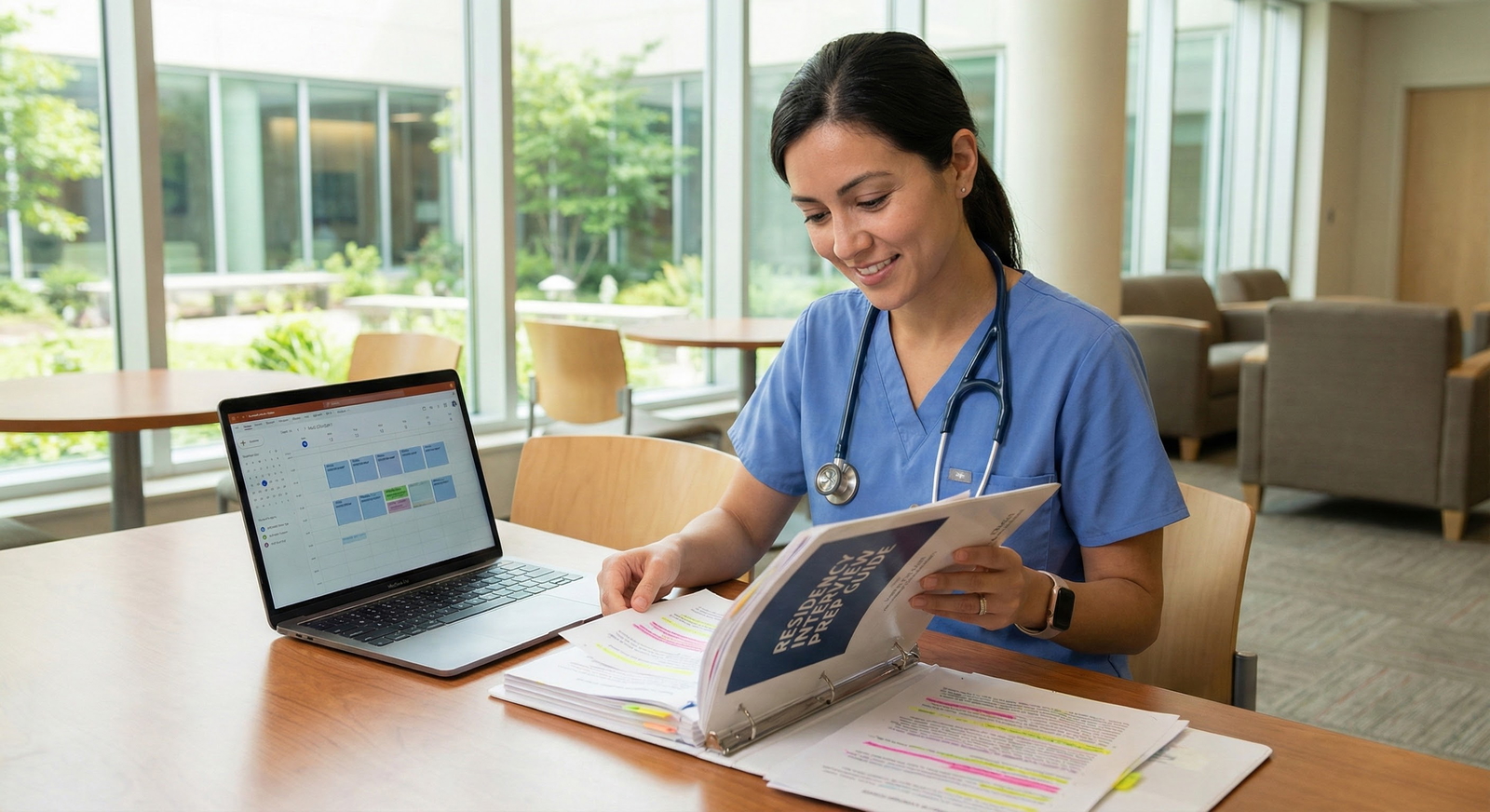
Step 12: Organize Your Materials
Have a clear system ready before each interview day:
- Printed or digital:
- Program Snapshot (one-page summary)
- Your ERAS application and personal statement
- List of questions for PD, APDs, faculty, and residents
- A notepad with:
- Bullet points of key experiences you want to highlight
- Reminder phrases like: “teamwork example,” “ethical dilemma example,” “pediatrics leadership example”
Don’t read directly from notes, but use them as a safety net if you get nervous.
Step 13: Plan for Time Zones and Scheduling
As a Caribbean IMG, you may be interviewing from a different time zone than the program. Confirm:
- Time zone for each interview (convert to your local time)
- Expected length of interview day
- Breaks and lunch times
- Platform (Zoom, Webex, Thalamus, etc.) and login details
Set multiple reminders, and have a backup device (phone, tablet) ready in case of technical issues. If something goes wrong, email or call the program coordinator immediately, apologize briefly, and request instructions.
Mindset, Communication, and Post-Interview Strategy
Beyond structured answers, programs are looking for future colleagues who are kind, teachable, and stable under stress—qualities especially vital in pediatrics.
Step 14: Adopt the Right Mindset
Before each interview day:
- Remember: You were invited because they consider you capable of succeeding there.
- Your goal is not to “impress” in an artificial way, but to have a genuine conversation about mutual fit.
- View each interview as practice for being a good pediatric resident: listening, empathizing, learning, and communicating clearly.
For Caribbean IMGs, imposter feelings are common; counter them with facts:
- Your clinical experiences
- Passing board exams
- Strong letters and evaluations
- The program chose to interview you
Step 15: Communicate Like a Future Pediatrician
Pediatrics values:
- Warmth and empathy
- Clear, jargon-free explanations
- Patience and the ability to “translate” complex ideas for families
Demonstrate that in how you speak:
- Use simple, direct language when describing cases.
- Avoid sounding arrogant or dismissive.
- Show that you enjoy teaching and collaboration.
- Highlight moments you advocated for a child or family.
Step 16: Pre-Plan Your Post-Interview Follow-Up Strategy
Before interviews even start, decide:
- How you will take notes after each interview (immediately after logging off, while details are fresh).
- What you will include in those notes:
- Overall feeling and fit
- Interactions with residents and faculty
- Specific strengths and any concerns
- Thoughts on location, call schedule, support for IMGs
- Whether and how you will send thank-you notes:
- Short, sincere emails within 24–48 hours
- Reference specific aspects of the conversation
- Reaffirm your interest in pediatrics and something you appreciated about the program
While thank-you notes rarely change rank lists dramatically, they reinforce professionalism and can help clarify your interest in programs you particularly like.
Putting It All Together: A Sample 2-Week Pre-Interview Preparation Plan
To make this concrete, here’s how a Caribbean IMG applying in pediatrics might structure pre-interview preparation:
Week 1
- Day 1–2:
- Draft your pediatrics career story.
- Review your ERAS application; make a list of possible talking points for each major entry.
- Day 3–4:
- Gather data on your first 5–8 interview programs; create Program Snapshots.
- Draft 4–6 questions for each program.
- Day 5:
- List likely interview questions residency programs will ask; write bullet answers.
- Focus especially on: “Tell me about yourself,” “Why pediatrics?” and “Why our program?”
- Day 6:
- Do a recorded mock interview alone.
- Watch and critique body language, clarity, and timing.
- Day 7:
- Mock interview with a mentor or friend (ideally someone familiar with pediatric interviews or IMG perspectives).
Week 2
- Day 8–9:
- Refine your answers based on feedback.
- Practice handling difficult questions (low scores, gaps, being an IMG, ethical scenarios).
- Day 10:
- Set up and test your interview environment: camera, lighting, background, and internet.
- Day 11:
- Finalize interview attire.
- Prepare your note-taking template and schedule reminders for each interview.
- Day 12–14:
- Light review of Program Snapshots.
- Focus on sleep, stress management, and mental readiness.
- Practice short, conversational responses rather than heavily scripted speeches.
Over time, you will naturally refine your answers and gain confidence with each interview, improving your chances for a successful peds match.
FAQs: Pre-Interview Preparation for Caribbean IMG in Pediatrics
1. As a Caribbean IMG, how can I overcome concerns about my medical school during pediatrics residency interviews?
Acknowledge your Caribbean medical school background calmly and confidently. Emphasize the strengths of your training—diversity of cases, resilience, adaptability, and often strong clinical exposure. Highlight your U.S. clinical experiences, strong letters, and any objective measures (USMLE scores, honors, research) that demonstrate you perform at or above the level of U.S. graduates. When asked “Why a Caribbean medical school?” answer directly, avoid defensiveness, and pivot to how the experience made you more prepared for a challenging pediatrics residency.
2. How is pre-interview preparation different for pediatrics compared with other specialties?
Pediatrics places particular emphasis on communication, empathy, and family-centered care. Your examples and stories should reflect your comfort working with children and their families, your ability to explain complex issues in simple language, and your interest in prevention, development, and advocacy. Clinical acumen is important, but programs are especially attuned to warmth, patience, and team collaboration. Tailor your residency interview preparation to highlight these characteristics.
3. What can I do before interviews to stand out positively in the peds match as a Caribbean IMG?
Focus on three pillars: (1) Deep knowledge of each program (so you can ask insightful, specific questions); (2) Polished, authentic answers to common interview questions residency programs ask (especially about why pediatrics and why you chose a Caribbean path); and (3) Professional, warm communication that reflects your suitability for working with children and families. Any additional experiences—pediatric research, advocacy, global or immigrant child health work, or strong SGU residency match-style success stories from your school—can further distinguish you when presented clearly and humbly.
4. How important are virtual interview logistics compared with my actual answers?
Your content is crucial, but poor logistics can undermine even strong answers. Technical issues, poor lighting, noisy backgrounds, or unprofessional attire can distract interviewers and suggest a lack of preparation. For Caribbean IMGs interviewing across borders and time zones, it is especially important to test your setup in advance, confirm start times, and have a backup plan. A smooth, professional virtual presence reinforces your reliability and helps interviewers focus on your strengths, increasing your chances in the pediatrics residency match.
By preparing strategically across content, logistics, and mindset—and by intentionally addressing the unique considerations of being a Caribbean IMG—you can enter each pediatrics residency interview with confidence, clarity, and a compelling story that resonates with program directors and residents alike.