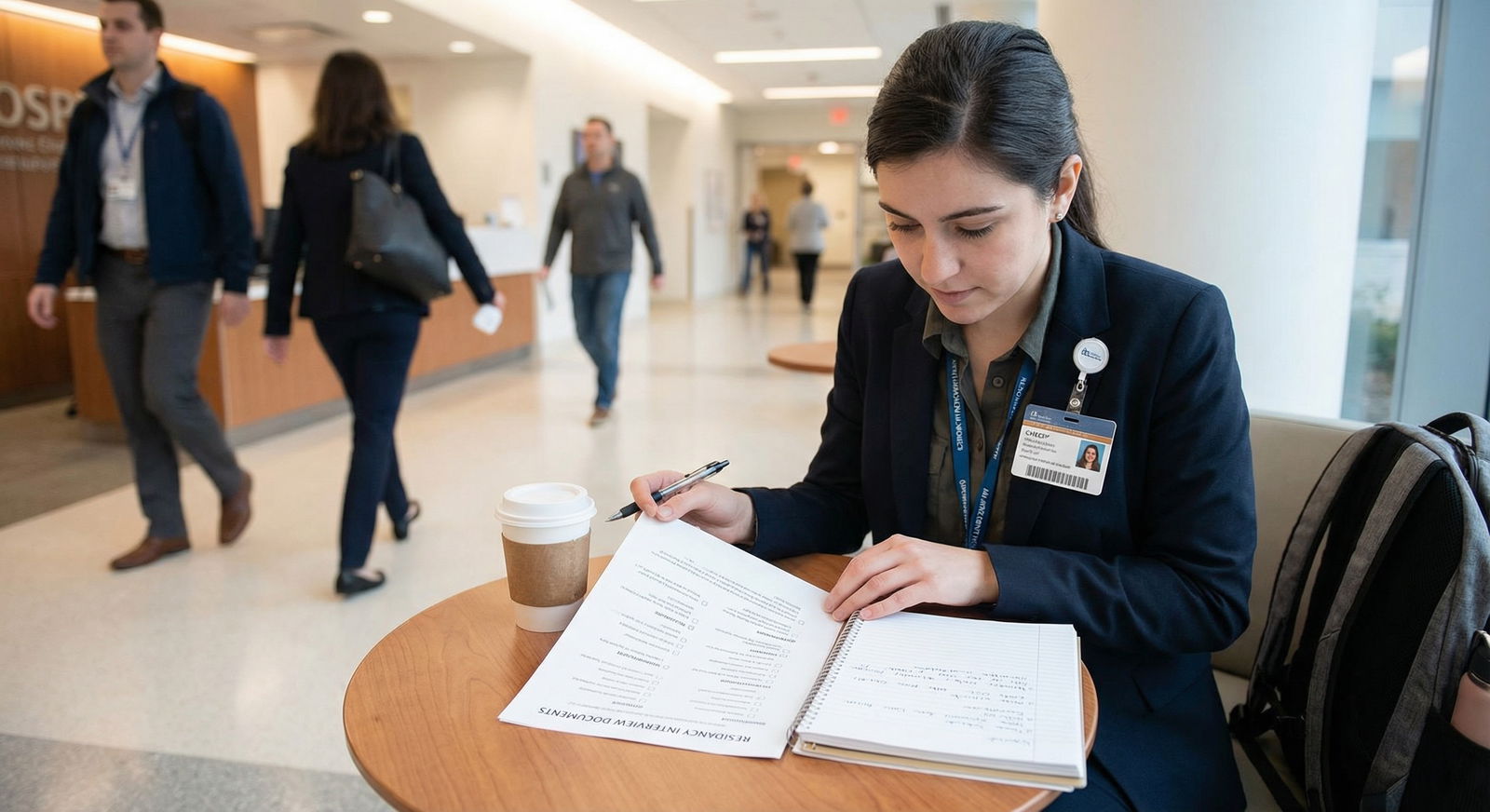
You wake up, check your email, and there it is: “We are pleased to invite you to interview…”
Excitement hits first. Then a different feeling: I have no idea what they’re going to ask. Or what I’m supposed to ask. Or how to not sound like everyone else.
You start googling “common residency interview questions,” end up with 60+ questions, and your brain taps out. You do not have time to script answers to everything for 12 different programs.
So you need a system. Not a giant spreadsheet. A simple framework that works for any residency interview day—academic vs community, Zoom vs in-person, prelim vs categorical.
Here is that framework: 5 questions you answer before interview day that will quietly prepare you for 90% of what matters.
They are:
- Who am I for this specialty?
- Why this program, specifically?
- What do I need to learn to make a smart rank decision?
- How do I want to be remembered?
- What can go wrong, and how am I going to handle it?
We will walk through each one like a checklist you can reuse for every interview.
1. “Who am I for this specialty?”
This is your core narrative. If you skip this, every answer you give will feel like improv. And not the good kind.
You are not just “a hard worker who loves teamwork.” Everyone says that. You need a tight, specialty-specific version of yourself that answers:
- Why this specialty.
- Why now.
- Why you are a good fit for the work as it actually exists, not your fantasy version.
Think of it as your internal one-page brief on yourself.
Step 1: Choose your 3 pillars
You need 3 identity pillars that define you as a future resident in this field.
Examples for internal medicine:
- Clinical reasoning + teaching + complex chronic care.
- ICU interest + data-driven + calm under pressure.
- Underserved care + primary care + Spanish-speaking.
For general surgery:
- Operative focus + technical repetition + resilience.
- Acute care + trauma interest + thrives on intensity.
For emergency medicine:
- Fast decision-making + teamwork in chaos + shift work tolerance.
Do not pick generic traits like “hard worker” or “team player” unless you pin them to something concrete:
- “Team player” → “I consistently take on the sign-outs that nobody wants and close the loop before I leave.”
- “Hard worker” → “I took over the awkward QI project, cleaned the data, and actually got it implemented on the wards.”
Write down exactly three. Not four. Not six. Three.
Those become your filter:
- Every story → highlights at least one pillar.
- Every answer → aligns with at least one pillar.
- Every “tell me about yourself” → frames around all three.
Step 2: Build 4–5 anchor stories
You do not need 50 stories. You need 4–5 well-structured stories you can flex for different questions.
Types to cover:
A clinical challenge
- Something unclear, complicated, or emotionally heavy.
- Shows your clinical reasoning + communication.
A conflict or difficult interaction
- Nurse, attending, co-resident, patient, family.
- Shows how you handle disagreement without being a doormat or a jerk.
A failure or setback
- Exam, rotation, research, personal.
- Shows you can take a hit, self-reflect, improve.
A leadership or initiative story
- Curriculum, clinic workflow fix, tutoring, QI.
- Shows ownership and follow-through.
A “this is why this specialty” story
- One moment or pattern that made things click for you.
Structure for each:
- Situation – one or two sentences.
- What you did – your actions and thinking.
- Outcome – what changed (for the patient, team, or system).
- Reflection – what you learned or how it shapes you now.
Do not memorize a script. Memorize beats:
- “Septic shock patient in ED who did not speak English, family conflict, code status confusion. I…” etc.
Step 3: Map stories to common questions
Take those 4–5 stories and map them:
| Story Type | Can Answer These Questions |
|---|---|
| Clinical challenge | Weakness, strength, difficult case, proud moment |
| Conflict story | Conflict, disagreement with superior, team issues |
| Failure/setback | Biggest failure, criticism, growth area |
| Leadership story | Leadership, initiative, QI, systems thinking |
| Why-this-specialty | Why this specialty, why now, long-term goals |
Now any time they lob a “Tell me about a time when…” question, you are not scrambling. You are just deciding which anchor story fits best and emphasizing the relevant angle.
2. “Why this program, specifically?”
Most applicants blow this one. “I love your commitment to teaching, strong clinical training, and diverse patient population…”
Translation: I visited your website for 45 seconds.
Your “why this program” needs to be granular enough that it would sound wrong if you said it to a different program.
Step 1: Do 20 minutes of targeted research
Not 3 hours. Twenty minutes per program, max, if you do it right.
Look for:
Program identity
- County vs quaternary referral center vs community.
- Heavy ICU vs heavy clinic vs balanced.
- Academic research powerhouse vs clinically focused.
Training structure details
- X+Y schedules? Night float? Early subspecialty exposure?
- Clinic continuity model?
- Special tracks (global health, hospitalist, medical education).
People and culture clues
- PD and APDs backgrounds.
- Resident bios—what they emphasize.
- Social media: what they post about (wellness, teaching, service).
Outcomes
- Where graduates go: fellowships vs hospitalist vs private practice.
- Any unique fellowships or partnerships.
Make notes. Do not over-organize; you are not writing a grant. Short bullets are enough.
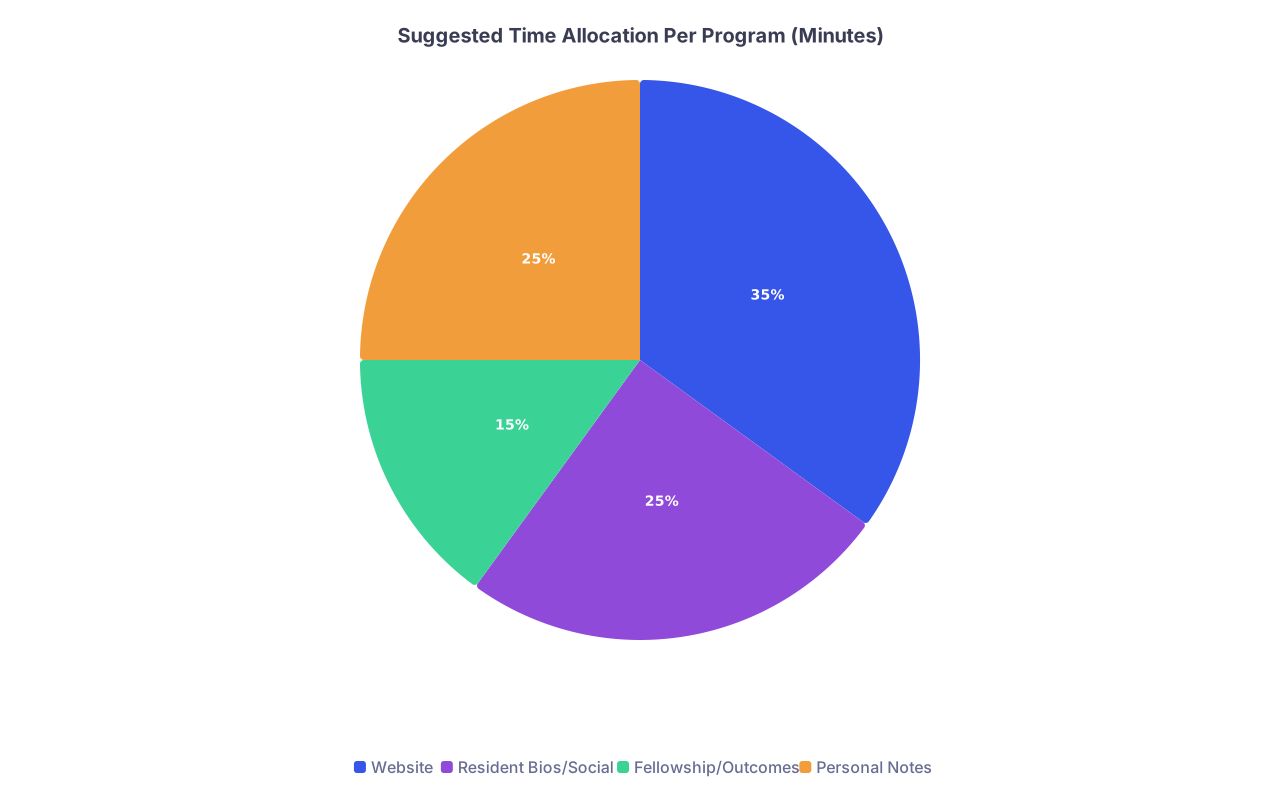
| Category | Value |
|---|---|
| Website | 7 |
| Resident Bios/Social | 5 |
| Fellowship/Outcomes | 3 |
| Personal Notes | 5 |
Step 2: Fill a 3-line “Program Fit Snapshot”
For each program, build a quick snapshot you can review the night before:
What they seem to care about
- Example: “Strong ICU exposure, research productivity, early subspecialty choices.”
Where I fit what they care about
- Example: “ICU sub-I, QI project in sepsis bundle, abstract at SCCM.”
2–3 specific reasons I am genuinely interested
- Example: “County population, Spanish-speaking continuity clinic, medical education track.”
Write it in plain language, not brochure-speak.
Now when you get:
- “Why our program?”
- “What interests you about training here?”
- “How do you see yourself fitting in?”
You are not improvising. You are plugging in details from your snapshot.
Step 3: Prepare program-specific questions that actually matter
Stop asking, “How would you describe the program culture?” They will give you the same answer every other program gives.
Better questions:
For residents:
- “If you could magically fix one specific thing about this program overnight, what would you pick?”
- “When interns struggle here, what are they usually struggling with?”
- “Who thrives here and who tends to be miserable?”
- “On a random wet Tuesday in January, what does your day actually feel like?”
For PD / APDs:
- “What changes have you made in the last 2–3 years that you are most proud of?”
- “What do you see as the next big challenge for this program in the next 5 years?”
- “If I matched here and did well, what doors would this open for me after residency (specific to my interests in X)?”
The goal: show you understand the program’s reality and that you are thinking like someone who will actually work there, not like someone collecting prestige points.
3. “What do I need to learn to make a smart rank decision?”
Interviews are not just about them judging you. You are also doing reconnaissance. If you walk away from five interviews and everything is “nice” and “supportive,” you learned nothing useful.
You should walk into each day with a short list of decisions you need to make about your training, then drive your questions and attention toward those.
Step 1: Identify your 4–5 non-negotiables
Yes, actual non-negotiables. Not 20 wish-list items.
Common examples (but you pick your own):
- You want to do fellowship X and need strong support (letters, case volume, research).
- You need to be within 2 hours of family for childcare or eldercare.
- You know you burn out on constant nights and need a sane schedule.
- You care more about operative volume than prestige.
- You need reliable mental health support because past history of depression/anxiety.
Pick 4–5 max that you will not compromise on. Then 3–5 “nice-to-haves.”
Step 2: Turn non-negotiables into interview probes
If you care about fellowship:
- “How many graduates in the last 3 years went into [your interest]?”
- “Who here would be the key mentors for someone aiming for [field]?”
- “How do you support residents applying to competitive fellowships—protected time, letters, interview flexibility?”
If you care about wellness in a real way:
- “On an average week, how many hours do interns actually work?”
- “How easy is it to schedule medical or therapy appointments during the year?”
- “What does coverage look like if a resident has a sudden crisis or emergency?”
If you care about hands-on experience:
- “How often are residents the primary operator vs assistant on [core procedure]?”
- “When does an intern first place central lines / intubate / run codes here?”
- “Have there been any changes in resident case volume in the last couple of years?”
You are trying to force reality to the surface rather than accept polished answers.
Step 3: Capture data the smart way
You will not remember details after 10+ interviews. Your brain will compress everything into “seemed nice” and “weird vibe.”
Create a simple scorecard for yourself. Example:
| Factor | Scale (1–5) | Notes (short) |
|---|---|---|
| Clinical volume | ||
| Teaching quality | ||
| Resident happiness | ||
| Fellowship support | ||
| Location / support | ||
| Schedule / lifestyle |
Immediately after the interview day, before you open Instagram or email:
- Fill this out.
- Write 3 bullet impressions:
- “What surprised me?”
- “What worried me?”
- “What excited me?”
This becomes gold when you build your rank list. I have watched people avoid bad fits because of one honest note they wrote in October and forgot about until February.
4. “How do I want to be remembered?”
If you think you are being judged primarily on how perfectly you answer questions, you are missing the point.
Most interviewers will talk about you later in one or two sentences:
- “She was the one who did that sepsis QI project and wants to do pulm/crit.”
- “He had that story about being an immigrant and wanting to serve similar patients.”
- “She seemed organized and asked sharp questions about X+Y.”
You need to decide your tagline or “core impression” in advance and then behave in a way that makes that impression easy to remember.
Step 1: Write your 1–2 line “tagline”
Format:
“[Role/identity] who [does X] and is aiming for [Y].”
Examples:
- “Primary-care-focused IM applicant who has real experience with underserved Spanish-speaking populations and wants to do academic primary care.”
- “Surgery applicant who is obsessed with operative skill acquisition and has actually studied how people learn technical tasks.”
- “Psych applicant who cares deeply about inpatient psych safety and wants to build a career at the intersection of addiction and policy.”
This guides:
- What you emphasize in your answers.
- What you mention when they ask about future goals.
- Which questions you ask them.
Step 2: Decide 3–4 “must-mention” points for each interview
These are non-negotiable facts you want at least one interviewer to hear:
Examples:
- “I am a first-gen college and med student; I mentor first-gen students now.”
- “I did a full extra research year in [field] with 2 first-author papers.”
- “I have a spouse and two kids and I am realistic about needing a program that has handled resident parents well.”
- “I speak [language] at a high level and want to use that clinically.”
You are not going to shoehorn them awkwardly. But you will keep an ear out for chances:
- “Tell me about yourself.”
- “What else should we know about you?”
- “Any other questions for me?”
You land them naturally.
Step 3: Calibrate your “energy” and interaction style
Programs are watching for:
- Would I want to work with this person at 3 a.m.?
- Will this person take feedback?
- Are they self-aware or delusional?
Decide in advance how you will show:
- Warmth – eye contact, short genuine responses in small talk, a couple of follow-up questions.
- Competence – clarity when describing clinical experiences, owning your role in patient care, not hiding behind “we” for everything.
- Self-awareness – specific ways you have grown, actual weaknesses that are under active repair (not “I am too detail-oriented”).
Avoid two extremes:
- Over-humble apology tour (downplays everything you have done).
- Over-confident monologue (sounds like you think residency is a formality).
5. “What can go wrong, and how am I going to handle it?”
Interview days rarely run perfectly. Tech problems. Awkward questions. Panel interviewer who clearly did not read your file.
If you rehearse only the “ideal conversation,” you will freeze when something breaks.
You need a short pre-mortem: assume a few things go wrong and prep your responses.
Step 1: Pre-plan responses to 6 uncomfortable questions
You will probably meet some version of:
“Tell me about this red flag in your application.”
(Low Step score, failed course/rotation, LOA, gap.)“What is your biggest weakness?”
(If you say “I care too much,” I cannot help you.)“Why did you get only Honors/HP in [core clerkship] but not [another]?”
“Why are you applying to both [two specialties]?” (if they can see this.)
“If you do not match in this specialty, what will you do?”
“Any questions for me?” at the end, when your brain is empty.
Your task:
- Write a direct, 3–5 sentence answer to each.
- Focus on:
- Owning the issue.
- Brief context (not a long sob story).
- Concrete steps you took to address it.
- Why it is unlikely to be a problem going forward.
Example for a failed Step 1 (before pass/fail era, but same pattern works for failed exam/course):
- “I failed Step 1 on my first attempt. That was the product of poor study strategy and trying to balance too many commitments. I met with academic support, cut back on nonessential activities, and used a structured question-based plan. I passed comfortably on the second attempt and then scored [X] on Step 2. The process forced me to build better systems for learning, which is what I used to do well on my third-year rotations.”
Clear. Not defensive. Not groveling.
Step 2: Have a tech and logistics protocol (for virtual and in-person)
Do not wing this. Create a repeatable checklist.
For virtual interviews (Zoom/Thalamus/Teams):
Day before:
- Test camera, mic, speakers on the actual platform.
- Log in to the platform once to check if there are any weird plug-ins or browser issues.
- Position your camera at eye level; check lighting (face not in shadow).
- Confirm backup internet source: phone hotspot, neighbor/friend’s Wi-Fi, or a quiet hospital/library spot.
- Email templates ready:
- “Internet disruption, logging back on in 5–10 minutes.”
- “Having trouble accessing the link, can you resend?”
Morning-of:
- Log in 15–20 minutes early to confirm everything still works.
- Close all other apps that use CPU or mic (Teams, Slack, streaming, random tabs).
- Put printed schedule + program notes + 1-page resume/CV by your side.
For in-person interviews:
Day before:
- Confirm directions, parking, and building entry (some hospitals are mazes).
- Pack:
- Extra copies of CV.
- Small notebook and pen.
- Water + light snack.
- Mints (not gum).
- Comfortable but professional shoes.
Morning-of:
- Arrive 20–30 minutes early. Hospitals are black holes for time.
- Assume security or badge pickup will take longer than you think.
Step 3: Script your “something went wrong” behavior
Things that may happen:
- Your Wi-Fi drops mid-answer.
- You mis-hear a question and answer something else.
- You blank on a question.
- They run late and you get rushed.
Your protocol:
Wi-Fi drop: Rejoin, apologize briefly once, do not over-explain.
“I am sorry, my connection briefly cut out, but I am back now.” Then continue.Mis-heard question: When you sense confusion, stop and clarify.
“Let me pause—I may have misunderstood. Were you asking more about [X] or [Y]?”Blanking:
- Buy 3–5 seconds: “That is a great question; let me think for a brief moment.”
- Use one of your anchor stories that roughly fits.
- Or be honest: “I am not sure I have a perfect example of that, but the closest is…”
Then give something close.
Running late/shortened time:
- Do not complain.
- Prioritize mentioning your 3–4 must-mention points.
- Ask 1 high-yield question instead of your full list.
The goal is not perfection. The goal is to show you handle friction like a functional adult.
Pulling It Together: A Simple 5-Question Prep Sheet
Here is how this looks in real life when you prep for a specific interview.
Night before each interview, you fill out a one-page prep sheet with sections for each of the 5 questions:
Who am I for this specialty?
- 3 pillars.
- 4–5 anchor stories (just titles to jog memory).
Why this program?
- Program identity in 2–3 bullets.
- How I fit that identity.
- 2–3 specific reasons I am actually interested.
What do I need to learn?
- My 4–5 non-negotiables.
- 4–6 targeted questions for residents and PD.
How do I want to be remembered?
- My 1–2 line tagline.
- 3–4 must-mention points.
What can go wrong?
- My 6 uncomfortable questions + short answers.
- Tech/logistics checklist (virtual or in-person).
- “If things go sideways, I will…” statement.
That’s it. One page. You review it in the morning in 10–15 minutes, not three hours.
To visualize how this framework spans your interview season:
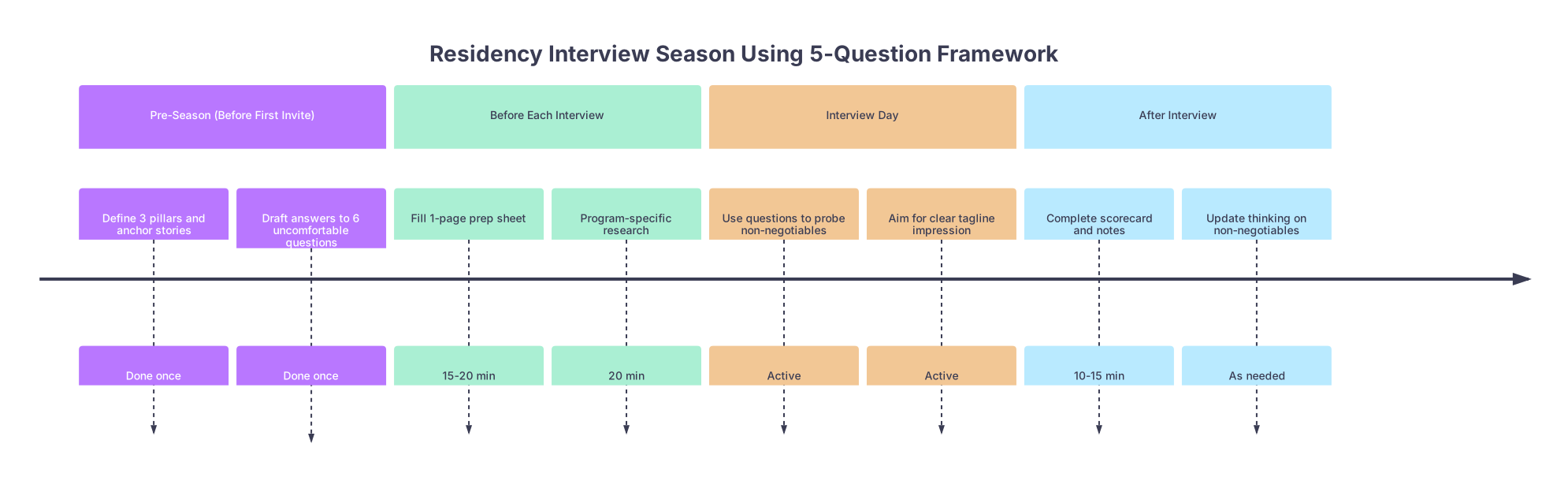
| Period | Event |
|---|---|
| Pre-Season (Before First Invite) - Define 3 pillars and anchor stories | Done once |
| Pre-Season (Before First Invite) - Draft answers to 6 uncomfortable questions | Done once |
| Before Each Interview - Fill 1-page prep sheet | 15-20 min |
| Before Each Interview - Program-specific research | 20 min |
| Interview Day - Use questions to probe non-negotiables | Active |
| Interview Day - Aim for clear tagline impression | Active |
| After Interview - Complete scorecard and notes | 10-15 min |
| After Interview - Update thinking on non-negotiables | As needed |
A Quick Word on Over-Preparation vs Real Life
I have watched applicants memorizing 20-page binders of answers. They sound over-rehearsed and unnatural. Programs notice.
This 5-question framework is the opposite: it constrains you to what actually matters and frees up your brain to be present.
You are not building a script. You are building:
- A narrative.
- A strategy for evaluating programs.
- A consistent way to show who you are under pressure.
One last visual to hammer this home:
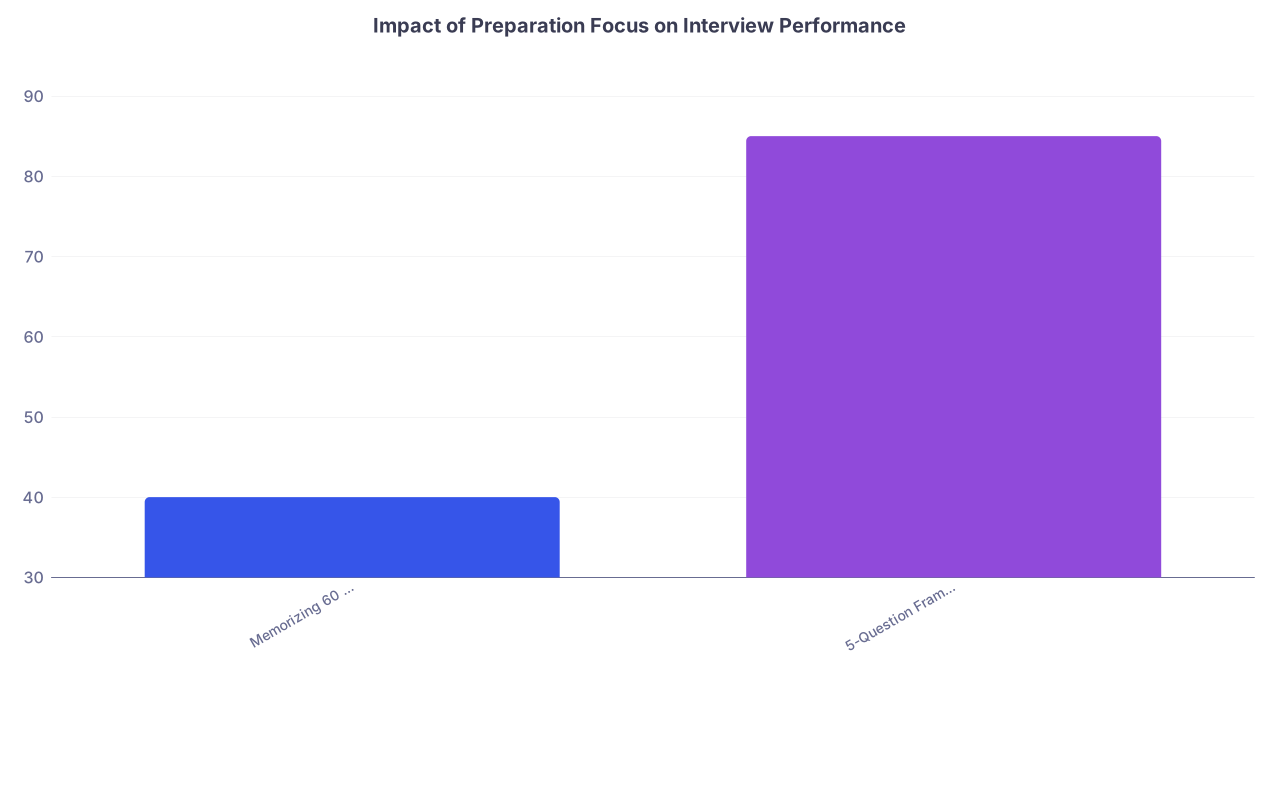
| Category | Value |
|---|---|
| Memorizing 60 Q&As | 40 |
| 5-Question Framework | 85 |
(Think of the numbers as “useful impact” out of 100. In reality, the gap is often even bigger.)
Key Takeaways
Use the 5 questions as your backbone:
Who am I for this specialty, why this program, what do I need to learn, how do I want to be remembered, and what can go wrong.Prepare once, reuse everywhere:
Build 3 pillars, 4–5 anchor stories, and answers to 6 uncomfortable questions; then adjust only the program-specific pieces for each interview.Interview days are two-way evaluations:
Show them a clear, memorable version of you, and aggressively gather the information you need to build a rank list that actually fits your life and career, not just your ego.