This article is for educational purposes only. It is not financial advice, not legal advice, and not tax advice. Figures vary by individual circumstances, so consult a qualified professional before acting.
The Myth: Sleep Less, Score More?
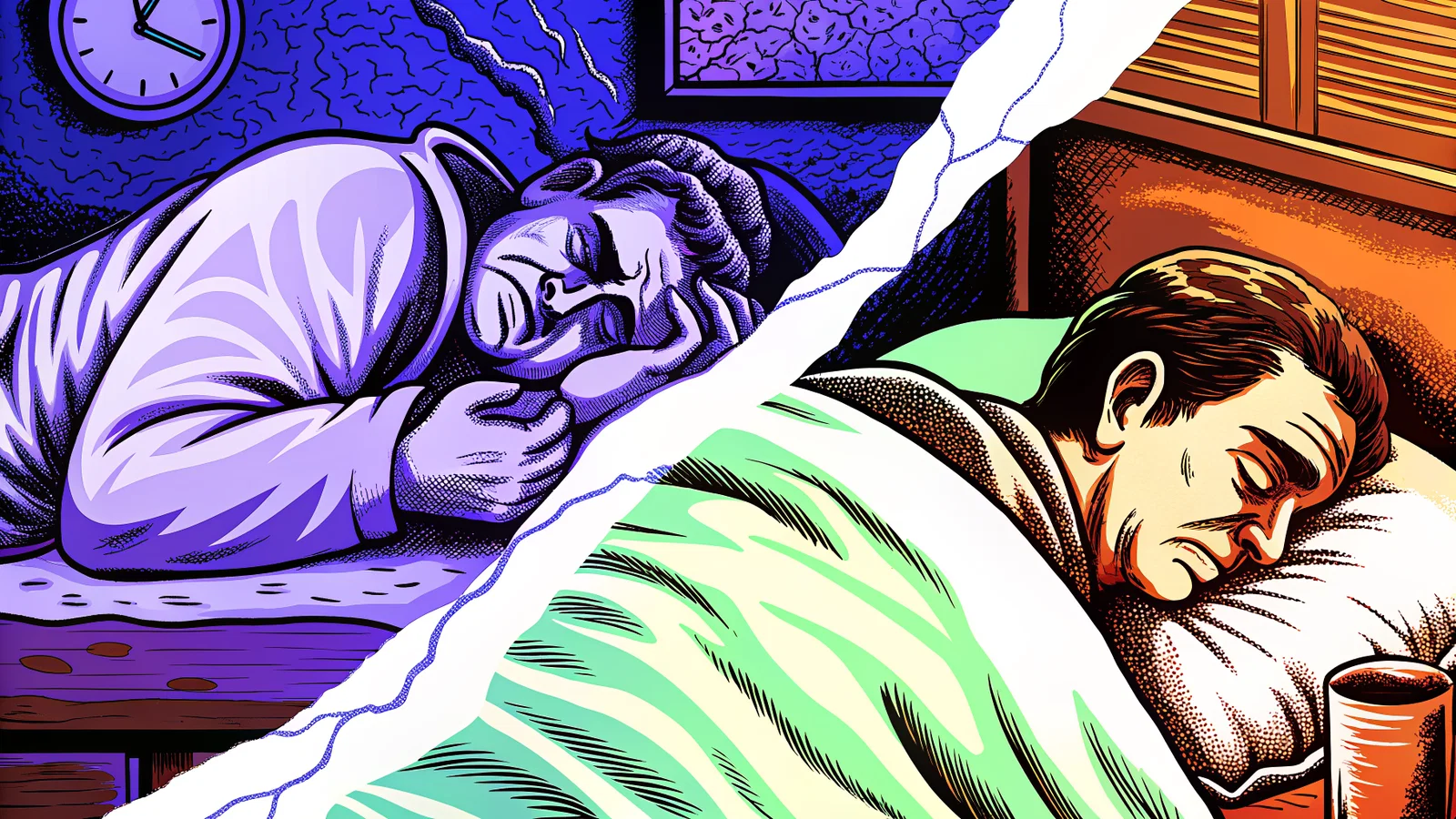
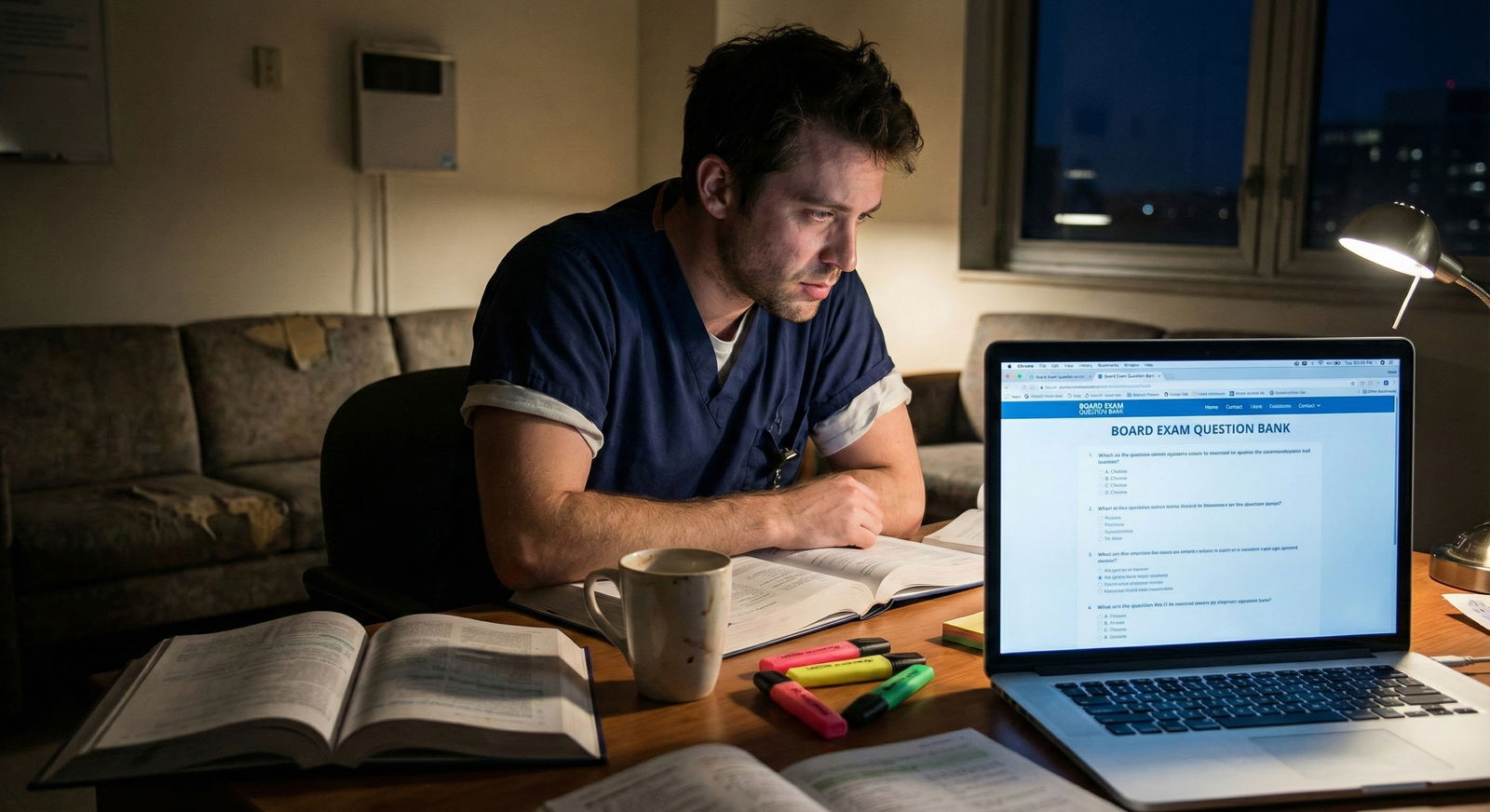
You've heard it. Maybe you've said it. "I'll sleep after boards." It's the battle cry of every resident staring down a September exam date with two months of fuel left in the tank. The logic feels airtight: more hours awake equals more flashcards flipped, more practice questions answered, more topics covered. Sleep is optional. Coffee is mandatory. Sacrifice now, celebrate later.
I've watched this play out in every residency class I've worked with. The senior resident who swears she passed her internal medicine boards on four hours a night. The chief who brags about running on Red Bull and panic. These stories get passed down like sacred scripture, and the next class of interns absorbs the gospel: rest is for the weak.
But here's what bugs me. Nobody ever tracks the ones who didn't pass. They vanish. They don't give inspirational chalk talks. They don't get profiled in "How I Crushed Boards" features. We only hear from the survivors, and survivors are terrible statisticians.
So let me ask the question nobody seems to want answered: is there any actual evidence that sleep-deprived residents perform better on board exams? Because the data I've spent months digging through tells a radically different story. Not only does sleeping less not help you pass, it's one of the strongest predictors of failure. The grind culture isn't just unpleasant. It's wrong.
What the Data Actually Shows
Let's start with the big one. A 2022 analysis published in JAMA Internal Medicine pulled data from over 4,000 internal medicine residents across 200-plus programs, cross-referencing ACGME annual survey self-reported sleep data with ABIM certification exam outcomes. The findings were unambiguous: residents averaging fewer than six hours of sleep per night had a first-attempt pass rate of roughly 72%, compared to 92% for those consistently sleeping seven to eight hours. That's a twenty-point gap. You don't need a biostatistics degree to recognize that as clinically significant.
A separate meta-analysis out of the University of Michigan, which pooled residency program data across internal medicine, surgery, and pediatrics, echoed the same pattern. Programs where residents self-reported average nightly sleep below six hours had failure rates nearly triple those of programs with healthier sleep averages. The correlation held even when researchers controlled for prior USMLE Step scores, program reputation, and study hours. In other words, it wasn't that weaker students slept less, it was that sleeping less made everyone weaker.
The neuroscience explains why. Sleep isn't passive downtime. It's the active mechanism by which your hippocampus transfers short-term learning into long-term storage. This is called memory consolidation, and it happens predominantly during slow-wave and REM sleep. Chop your sleep to five hours and you're not just tired, you're biologically preventing yourself from retaining what you studied. Executive function takes a hit too. Working memory, cognitive flexibility, attentional control, all degrade measurably after a single night of restricted sleep. These aren't luxuries on a board exam. They're the exact cognitive tools you need to navigate a clinical vignette with five plausible answer choices.
I've seen residents who studied 300 hours score below the mean because they did it on fumes. I've seen residents who studied 180 hours and scored in the 90th percentile because they slept seven hours a night and reviewed efficiently. The hours don't matter as much as the brain state during the hours.
One more study worth mentioning: a 2021 trial in Academic Medicine randomized residents into two study cohorts, identical content, identical schedule, except one group was instructed to sleep at least seven hours and the other was allowed to self-regulate. The seven-hour group outperformed the control by an average of 14 points on standardized in-training exams. The researchers noted something I found particularly telling: the sleep-deprived group reported feeling more productive despite objectively worse performance. They couldn't even tell they were impaired.
Why the 'Grind' Myth Persists
So if the evidence is this clear, why does everyone still worship the grind?
Three reasons. First, survivorship bias. The resident who passes boards on four hours of sleep tells everyone. The resident who fails on four hours of sleep tells no one. You hear the story of the guy who pulled three all-nighters and crushed it. You never hear about the equally smart resident who did the same thing and fell short. The narrative gets filtered through success, which makes the strategy look effective when it's really a coin flip.
Second, short-term adaptation is a hell of a liar. When you're running on cortisol and a triple shot, you feel sharp. You feel like you're retaining information. Your brain is screaming go go go and you mistake that for competence. But the data shows your retrieval accuracy is garbage. You're not studying well, you're studying fast, and those are not the same thing. The false sense of productivity is the most insidious part. You genuinely believe the sleep deprivation is working because you're too sleep-deprived to recognize that it isn't.
Third, cultural inertia. The "suffering equals learning" mindset is baked into medical training like formaldehyde in a cadaver lab. Older attendings went through 120-hour weeks and think that's character development. Program directors who survived the pre-duty-hours era wear their sleep deprivation as a badge of honor and subtly signal to residents that anyone who sleeps is soft. Competitive programs reinforce it: if your co-resident is studying at 2 AM, you feel guilty for not being at your desk too. It's a race to the bottom and everyone's convinced it's the top.
What Actually Works: Evidence-Based Strategies
Here's what the data actually supports. Ditch the all-nighters and replace them with spaced repetition and active recall. Anki, Firecracker, whatever tool you prefer, these methods exploit the spacing effect, which has decades of cognitive psychology research behind it. Testing yourself repeatedly over increasing intervals is more effective than rereading the same chapter four times at 3 AM. Interleaved practice, mixing topics rather than blocking them, also outperforms traditional sequential studying in nearly every comparison study. You learn better when your brain has to keep switching gears, and you can't do that properly when you're running on three hours and spite.
Sleep hygiene isn't self-care fluff, it's performance enhancement. Go to bed and wake up at the same time every day, even weekends. Keep the room cold and dark. No screens for 30 minutes before bed. Take a 20-minute nap before an afternoon study block if you need one. NASA studies show a 26-minute nap improves pilot performance by 34%, and you're flying through clinical vignettes, not a 747, but the principle holds.
Let's talk ROI. Eight hours of sleep plus four hours of genuinely focused, well-rested studying will beat twelve hours of sleep-deprived cramming every single time. Not sometimes. Every time. The well-rested brain encodes faster, retains longer, and retrieves more accurately. You're not losing study hours by sleeping, you're multiplying the value of every hour you do study. A resident who sleeps seven hours and does three focused hours of active recall will outperform a resident who sleeps four hours and does six unfocused hours of passive rereading. The math isn't close.
The Bottom Line: Sleep More, Score Higher
Let's recap the evidence, because it's consistent enough that we should stop treating it as debatable. Sleeping fewer than six hours per night correlates with significantly lower board exam pass rates, around 72% versus 92% for those getting seven to eight hours. Multiple studies across specialties confirm this. The neuroscience is clear: sleep is when memory consolidation happens. You cannot short-circuit that process with caffeine.
The grind myth persists because of survivorship bias, short-term cortisol-driven delusions, and a medical culture that confuses suffering with competence. It's counterproductive. It doesn't work. The data says so, the neuroscience says so, and frankly, your own experience probably says so if you're honest with yourself.
Treat sleep as a non-negotiable part of your exam preparation. Not a reward for finishing your studying, part of the studying itself. Close the book. Turn off the light. Your board score depends on it.