
The Importance of Feedback: Learning and Growing as a Resident
Introduction: Feedback as the Engine of Residency Growth
Residency marks the crucial transition from structured medical education to independent clinical practice. It is an intense, formative period where residents develop clinical skills, professional identity, and confidence in decision-making. Amid the demanding call schedules and expanding responsibilities, one factor consistently predicts meaningful growth and safe, high-quality patient care: effective feedback.
Within residency training, feedback is far more than a formality or a box to check in an evaluation system. It is a core educational process that shapes clinical skills development, professional behavior, and effective communication with patients and teams. Learning how to receive—and eventually give—feedback skillfully is fundamental to becoming a competent, reflective physician.
This article explores the importance of feedback in residency, how it supports learning, the different forms it can take, common challenges, and practical strategies to make feedback a powerful tool rather than a source of stress.
The Role of Feedback in Modern Medical Training
Feedback as the Bridge Between Performance and Improvement
In medical education, feedback is often defined as “specific information about the comparison between a trainee’s observed performance and a standard, given with the intent to improve the trainee’s performance.” Without feedback, residents may repeat the same mistakes, overestimate or underestimate their abilities, or fail to recognize patterns in their practice.
In the context of residency training, well-delivered feedback:
- Clarifies expectations and standards of care
- Reinforces effective habits and clinical reasoning
- Identifies gaps in knowledge, skills, or professionalism
- Guides residents toward targeted improvement plans
- Protects patients by rapidly correcting unsafe practices
1. Constructive Criticism as a Core Learning Tool
Residents encounter new diagnoses, procedures, and critical decisions daily. Feedback transforms these experiences into deliberate practice, where each patient encounter becomes an opportunity for refinement rather than repetition.
Constructive feedback should be:
- Specific – Focused on clear behaviors (“You did X”), not general traits (“You’re bad at Y”).
- Actionable – Offering concrete suggestions for change.
- Timely – Close enough to the event that details are still fresh.
- Balanced – Highlighting strengths as well as areas for growth.
Example: The Surgical Resident’s Journey
Imagine a PGY-2 surgical resident performing their first laparoscopic cholecystectomy as the primary operator. During the case, the attending notes that the resident’s camera handling is unsteady and that they are slow to recognize critical anatomical landmarks.
After the case, the attending might say:
“You maintained composure throughout, which is excellent. Where we can focus next is your camera control and identification of the critical view of safety. You tended to drift with the camera, which made the field unstable. For your next case, I’d like you to practice keeping the horizon level and making small, deliberate movements. Let’s also review the anatomy together on the video recording and outline three specific cues you should look for before clipping and cutting.”
This type of detailed, practical feedback:
- Reinforces what went well (composure, basic technique)
- Calls out specific behaviors to improve (camera control, anatomical recognition)
- Offers a clear path forward (video review, defined practice goals)
Over time, repeated cycles of feedback like this accelerate the resident’s procedural competence and confidence.
2. Feedback and the Culture of Continuous Improvement
Medicine evolves constantly: new guidelines, technologies, and therapies emerge every year. Residency is not just about learning current knowledge—it is about cultivating a mindset where seeking feedback and updating one’s practice is routine.
Fostering a Growth Mindset in Residency
A “growth mindset,” popularized by psychologist Carol Dweck, is the belief that abilities and intelligence can be developed through effort, strategies, and feedback—not fixed traits. In residency, a growth mindset shifts:
- “I’m bad at procedures” → “I haven’t mastered this yet; I need more practice and guidance.”
- “I got criticized” → “I received information that can help me improve.”
Residents with a growth mindset are more likely to:
- Ask for feedback proactively
- Interpret criticism as guidance, not personal attack
- Seek challenging cases and stretch assignments
- Reflect on their performance and adjust
Program leadership can support this mindset by framing feedback as an expected, routine part of professional life rather than a sign of failure.
Real-World Application: Peer-to-Peer Feedback
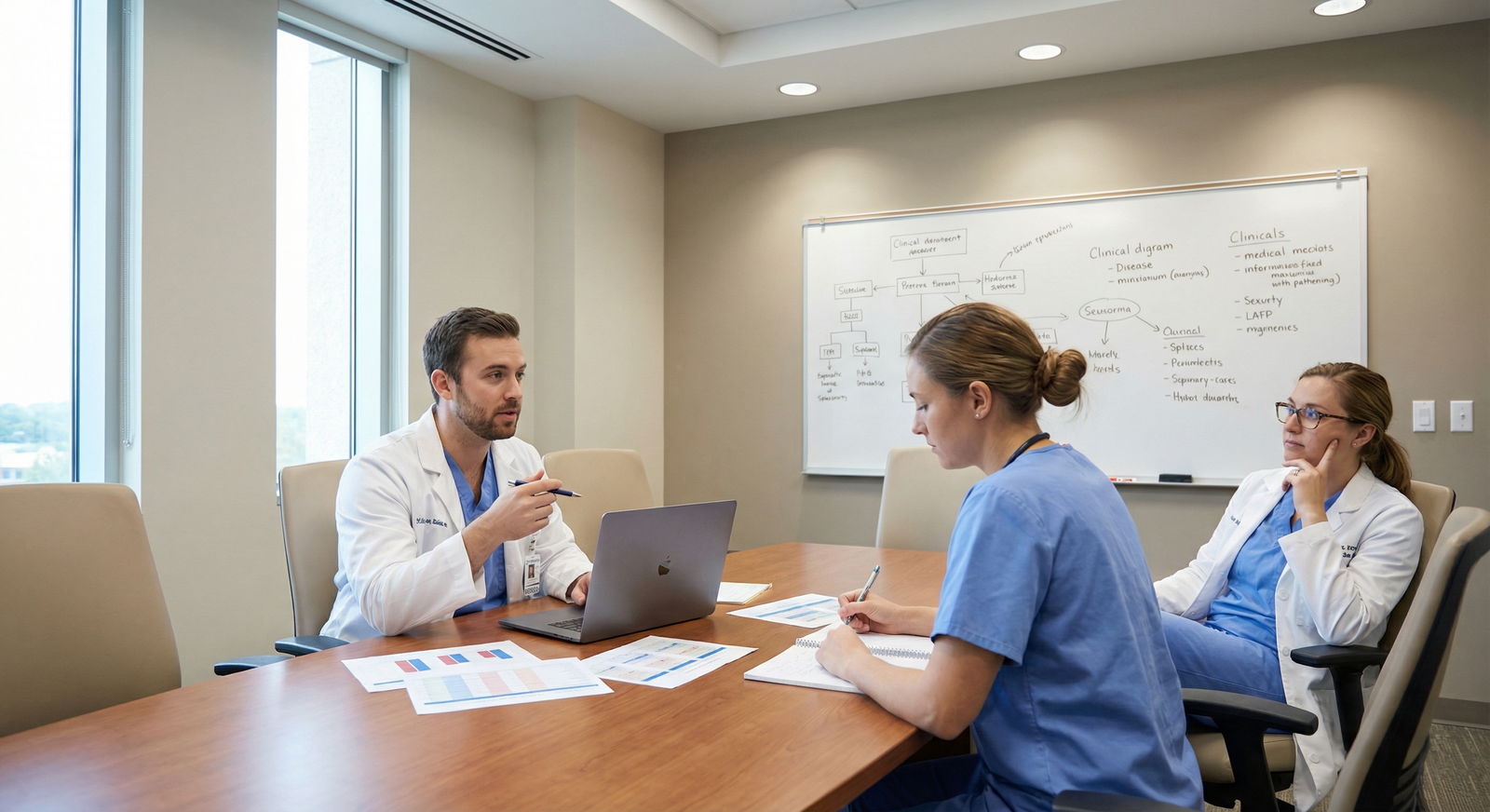
While attending feedback is essential, peer-to-peer feedback is an often underused but powerful learning tool. Residents share similar workloads and stressors, and they observe each other in ways faculty may not.
Examples of structured peer feedback activities:
- Case-based debriefs: After a challenging cross-cover night, two residents review what went well and what they might handle differently next time.
- Simulation sessions: During mock codes or procedure labs, residents provide each other with structured feedback using checklists.
- Presentation review: Before a noon conference talk, a co-resident reviews the slides, offers feedback on clarity, and coaches delivery.
Peer feedback not only enhances clinical skills but also strengthens teamwork, psychological safety, and a sense of shared growth within the residency cohort.
3. Enhancing Communication and Professionalism Through Feedback
Effective communication is a core competency in every residency program: residents must communicate clearly with patients, families, nurses, consultants, and each other. Feedback is crucial for identifying hidden communication blind spots.
Feedback on Patient-Centered Communication
Consider a resident who tends to use heavy medical jargon when explaining diagnoses. A supervising attending might say:
“Your medical explanation was accurate, but our patient looked confused. Next time, try using simpler language, and then ask the patient to repeat back what they understood. For example, instead of ‘myocardial infarction’, you can start by saying ‘heart attack’ and build from there.”
This specific feedback directly improves:
- Patient understanding and adherence
- Patient satisfaction and trust
- The resident’s effectiveness as a communicator
Case Study: Feedback and Patient Outcomes
A resident receives repeated feedback that they often interrupt patients early in the encounter. Initially, they feel defensive—they’re trying to be efficient on a busy service. But they decide to track their own behavior and set a concrete goal: wait at least 30–60 seconds before asking follow-up questions and avoid interrupting during the first patient narrative.
Over a month:
- The resident reports better rapport with patients
- Nurses note fewer calls about “confused” patients
- Patients express feeling more “heard” in post-visit surveys
This example illustrates how communication-focused feedback can translate directly into better clinical care and improved relationships with patients and the care team.
Different Methods of Feedback in Residency Training
Feedback in residency comes in multiple formats, each with unique strengths. Skillful residents learn to recognize, seek, and use all of them.
1. Formal Evaluations: Structured Insight from Supervisors
Formal feedback typically comes through scheduled performance reviews, end-of-rotation evaluations, milestone assessments, and Clinical Competency Committee (CCC) summaries.
Key features of formal evaluations:
- Multidomain – Assess clinical knowledge, clinical reasoning, procedural skills, professionalism, teaching, and teamwork.
- Documented – Feedback is recorded within institutional systems (e.g., MedHub, New Innovations).
- Benchmark-based – Often mapped to ACGME milestones or specialty-specific competencies.
- Periodic – Occur at defined intervals (e.g., end of block, semiannually, annually).
How to maximize formal evaluations as a resident:
- Review them proactively, not passively. Highlight recurrent themes.
- Request specific examples if comments are vague (“Can you give me a situation where I seemed disorganized?”).
- Translate comments into SMART goals (Specific, Measurable, Achievable, Relevant, Time-bound).
- Revisit past evaluations to track progress and adjust learning plans.
2. Informal, Real-Time Feedback: Learning in the Moment
Informal feedback happens in hallways, at the bedside, during sign-out, or in the OR—often minutes after a clinical encounter. This “on-the-spot” input can be especially powerful.
Examples:
- An attending corrects a physical exam technique (“Place your stethoscope here to better hear the murmur”).
- A senior resident advises on a more efficient prerounding workflow.
- A nurse suggests a clearer way to update families during visiting hours.
Why informal feedback matters:
- It is immediate, so context and details are fresh.
- It creates continuous, low-stakes learning opportunities.
- It can prevent bad habits from becoming ingrained.
To encourage informal feedback, residents can:
- Ask targeted questions: “Can you give me feedback on how I led that family meeting?”
- Create micro-debriefs: “Before we move on, what’s one thing I did well and one thing I can improve?”
- Normalize brief feedback during busy clinical days.
3. Peer Feedback: Leveraging the Resident Community
Peer feedback adds perspectives that faculty may never see. Co-residents witness:
- How you handle cross-cover calls at 3 a.m.
- Your teamwork in the ICU during a crisis.
- Your reliability on sign-out and responding to pages.
Effective peer feedback strategies:
- Use specific frameworks (e.g., “Start–Stop–Continue”: what you should start doing, stop doing, and continue doing).
- Set norms that prioritize respect, confidentiality, and mutual benefit.
- Focus on behaviors, not personality judgments.
- Offer both reinforcing and corrective feedback.
Example: After a code, a senior resident might say to an intern:
“You did a good job recognizing the arrest quickly and starting compressions. For next time, as the compressor, you can also call out loudly when you need a switch so we maintain high-quality CPR. Let’s practice that wording together.”
Common Challenges in Giving and Receiving Feedback
Even when everyone agrees on feedback importance, real-world feedback can be uncomfortable, misunderstood, or avoided altogether. Recognizing and addressing these barriers is essential for healthy residency training.
1. Fear of Negative Feedback and Psychological Safety
Many residents equate criticism with failure, which can lead to anxiety, avoidance, or superficial self-presentation (“impression management”) instead of honest learning.
Sources of fear:
- Concern about being labeled incompetent
- Worry that feedback will affect fellowship prospects or recommendations
- Past experiences of harsh or shaming feedback
Addressing these barriers:
- Programs should emphasize that feedback is expected, routine, and developmental—not punitive.
- Faculty should model vulnerability by sharing their own learning moments and mistakes.
- Residents can reframe feedback as data, not a verdict on their worth: “This is information I can use.”
Residents might also practice simple phrases to invite feedback while signaling openness:
- “I’m trying to improve my sign-out. What’s one thing I could do better?”
- “I’m still building my procedural skills—please tell me if you see anything I should adjust.”
2. The Impact of Delivery: How Feedback Is Communicated
Even accurate feedback can be harmful if delivered poorly. Harsh tone, public criticism, or vague comments can shut down learning and damage trust.
Characteristics of effective feedback delivery:
- Private when possible, especially for sensitive topics
- Respectful and calm, even when addressing serious issues
- Focused on observable behaviors, not character judgments
- Future-oriented: “Here’s how you can improve,” not “This was terrible”
Compare:
- Unhelpful: “You’re just not good at presenting.”
- Helpful: “Your presentations are thorough, but they run long and sometimes lose the main thread. Next time, start with a one-sentence summary, then present the most relevant details. Let’s practice one together now.”
Residents who experience poor feedback delivery can still sometimes salvage learning by:
- Asking clarifying questions (“Can you give me a specific example?”)
- Reflecting later and extracting actionable items
- Seeking a follow-up conversation in a calmer setting if needed
3. Time Constraints and Competing Priorities
Clinical services are busy, and both residents and attendings may feel there isn’t enough time for thoughtful feedback. As a result, feedback is postponed indefinitely—sometimes never given.
Strategies to integrate feedback despite time pressure:
- Use “micro-feedback” moments (1–2 minutes after key encounters).
- Schedule brief midpoint check-ins on long rotations.
- Incorporate feedback into existing structures (e.g., during pre-rounds, after sign-out, or at the end of rounds).
- Residents can prompt attendings: “Before we finish today, can you share one thing I should work on this week?”
Practical Strategies for Residents: Making Feedback Work for You
1. Actively Seeking and Structuring Feedback
Rather than waiting passively, residents can take control of their learning:
Be specific in your request:
- “Can you give me feedback on how I handled the diagnostic reasoning in that case?”
- “I’d love feedback on my leadership during rounds this week.”
Ask early in the rotation:
- “What are your expectations of me?”
- “If you notice anything I can improve, please tell me as we go, not just at the end.”
Request a midpoint check-in:
- “Could we spend 5 minutes at the halfway point of this rotation to review how things are going?”
2. Processing Feedback: From Emotion to Action
Receiving critique can sting, especially when you’re exhausted. A simple process can help transform emotional reactions into productive change:
- Pause and listen – Avoid interrupting or defending yourself immediately.
- Clarify – Ask for examples and concrete suggestions.
- Reflect – Later, note patterns: Does this align with other feedback you’ve received?
- Plan – Convert feedback into 1–3 specific goals with a timeframe.
- Follow up – Revisit with the feedback-giver or another mentor: “Here’s what I worked on—do you see improvement?”
3. Developing Your Own Feedback Skills
As you progress in residency, you will increasingly supervise medical students and junior residents. Your ability to give constructive feedback becomes part of your professional identity and leadership style.
Principles when giving feedback:
- Ask permission: “Is now a good time for some feedback?”
- Start with strengths to reinforce effective behaviors.
- Focus on a few key points, not a laundry list.
- Use specific, observable examples.
- Co-create an improvement plan: “What do you think would help you with this?”
This not only supports others’ learning but also deepens your own clinical reasoning and reflective practice.

Frequently Asked Questions About Feedback in Residency
1. What is the primary goal of feedback in residency?
The primary goal of feedback in residency is to support continuous learning and improvement in patient care. Feedback helps residents:
- Recognize their strengths and build on them
- Identify specific areas needing growth (clinical reasoning, procedures, communication, professionalism)
- Align their performance with program and specialty standards
- Develop habits of self-reflection and lifelong learning
Ultimately, effective feedback enhances both clinical skills development and patient outcomes.
2. How can residents create a supportive environment for feedback?
Residents can actively contribute to a feedback-friendly culture by:
- Modeling openness: asking for and responding constructively to feedback
- Using respectful, behavior-focused language when giving peer feedback
- Normalizing feedback as a routine part of team debriefs (“Let’s each share one thing we did well and one thing we’d change next time”)
- Demonstrating a growth mindset—treating challenges as learning opportunities rather than failures
- Showing appreciation when they receive helpful feedback (“Thank you, that’s really useful—I’ll work on that.”)
When residents consistently demonstrate that feedback is welcome, attendings and peers are more likely to offer it.
3. What should a resident do if they feel defensive or upset about feedback?
Feeling defensive is common and human. When this happens:
- Acknowledge your reaction silently – Notice it without acting on it in the moment.
- Listen through to the end – You may hear something valuable once the initial sting passes.
- Clarify, don’t argue – Ask for examples and suggestions rather than debating.
- Take time to reflect – Later, think about whether there is a kernel of truth you can use, even if delivery was imperfect.
- Seek a second perspective – Discuss with a trusted mentor or chief resident to help interpret and contextualize the feedback.
If feedback feels inappropriate, disrespectful, or unsafe, it is reasonable to discuss this with a program director, chief resident, or other trusted faculty member.
4. How does feedback directly impact patient care?
Feedback improves patient care by:
- Correcting unsafe or inefficient clinical practices early
- Sharpening diagnostic reasoning and decision-making
- Enhancing communication with patients and families, leading to better understanding and adherence
- Strengthening teamwork and handoffs, reducing errors and omissions
- Encouraging reflection on near-misses and adverse events to prevent recurrence
When feedback is embedded in daily clinical practice, patient care becomes safer, more efficient, and more patient-centered.
5. Is it beneficial for residents to actively seek feedback, or should they wait for scheduled evaluations?
Actively seeking feedback is highly beneficial and is viewed positively in modern medical education. Waiting only for scheduled evaluations can lead to missed learning opportunities and slower growth. Residents who proactively seek feedback:
- Demonstrate professionalism and motivation
- Gain real-time course corrections rather than retrospective commentary
- Build stronger mentoring relationships with faculty and senior residents
- Show fellowship programs and future employers that they are reflective, coachable clinicians
Even brief questions like “What’s one thing I can do better tomorrow?” can dramatically increase the quality and frequency of valuable feedback.
By embracing feedback as a central component of residency life—not just an obligation—residents can accelerate their development, strengthen their clinical and communication skills, and build a foundation for a lifetime of reflective, high-quality medical practice.