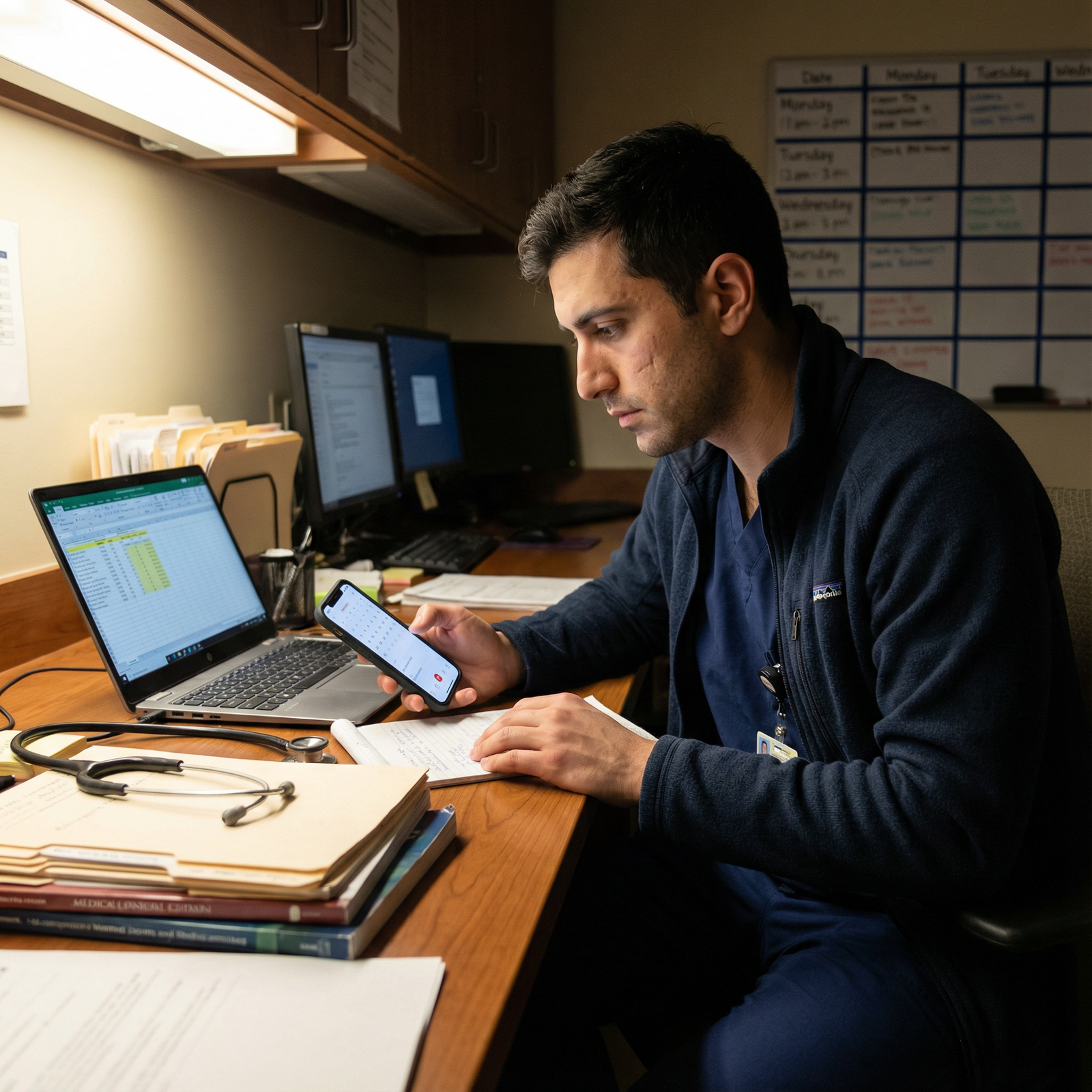
Introduction: Why Time Management Defines Your Residency Experience
Residency is often described as drinking from a firehose—relentless pages, long call nights, complex patients, and constant learning demands. The shift from the relative structure of medical school to the intensity of medical residency can feel disorienting, and without a strategy, your time, energy, and well-being can quickly erode.
Effective Time Management in Medical Residency is not about doing everything; it’s about doing the right things at the right time—while protecting your mental health, relationships, and future career goals. Strong time-management skills are foundational productivity hacks that not only help you get through the day, but also:
- Maximize learning on every rotation
- Support sustainable work-life balance
- Improve patient care and safety
- Reduce burnout and decision fatigue
- Create room for research, teaching, and career development
This guide expands on practical, evidence-informed time management strategies tailored to residents. You’ll find specific tools, scripts, and healthcare tips you can apply immediately—on wards, in clinic, during call, and at home.
The Importance of Time Management in Residency
Beyond Scheduling: Time Management as a Clinical Skill
Time management in residency is not a luxury; it’s an essential clinical skill. How you manage your time directly impacts patient outcomes, team dynamics, and your training trajectory.
Key reasons to deliberately improve your time management:
Maximizing Learning on Every Shift
You will not remember every patient, but you can design your day to ensure daily structured learning: reading, feedback, and reflection. Even 15–20 minutes of focused study anchored to real cases is worth hours of unfocused reading.Reducing Stress and Cognitive Overload
A chaotic, reactive day drains your cognitive resources. A simple plan—even if it changes—reduces anxiety because you always know your next step.Enhancing Patient Care and Safety
Organized residents close the loop: labs are followed up, imaging is reviewed, consults are clarified, and discharge plans are completed on time. Time management becomes a direct patient safety tool.Supporting Resilience and Work-Life Balance
When you intentionally schedule rest, exercise, and time with loved ones, you’re not being selfish; you’re protecting your capacity to provide high-quality care long term.Building a Professional Identity
Residents who are reliable, prepared, and on time are trusted with more responsibility, research opportunities, and leadership roles.
Hack 1: Master a Digital Calendar System
Digital calendars are the backbone of modern productivity hacks. Instead of holding everything in your head, offload your schedule into a system that works 24/7.
Choose and Set Up Your Calendar
Use one primary digital calendar (e.g., Google Calendar, Outlook, Apple Calendar) that syncs across your phone, tablet, and computer. Then:
Create Calendar Categories (Color-Coded):
- Rotations & shifts (inpatient, clinic, nights, call)
- Conferences & didactics
- Study time / board prep
- Personal commitments (family events, appointments)
- Wellness (exercise, therapy, hobbies)
Enter Your Rotation Schedule in Advance
As soon as you get your block or monthly schedule, enter:- Start and end times for shifts
- Call nights and post-call days
- Pre-rounding and sign-out times
This gives you a realistic picture of your capacity before you say “yes” to extra projects.
Time Blocking for Focus and Flexibility
Time blocking means assigning specific blocks to types of work rather than reacting all day:
- Morning (Pre-rounding/rounds): Patient updates, notes, orders, pages
- Late Morning/Early Afternoon: Procedures, family discussions, discharges
- Mid/Late Afternoon: Finish documentation, follow up labs, read about key cases
- Evening: Short, focused study block; then personal time or sleep
Example:
7:00–9:30: Pre-round & team rounds
10:00–12:00: Work on discharges and new admissions
13:00–14:00: Protected “documentation and follow-up” block
19:30–20:00: Focused board-style reading related to today’s patients
Use Reminders and Automation
- Set reminders for:
- Clinic start times
- Didactic conferences
- Deadlines: evaluations, research abstracts, licensing paperwork
- Automate recurring events:
- Weekly therapy or counseling
- Regular workouts
- Recurring team meetings or M&M conferences
This system keeps you aligned with responsibilities and makes it easier to maintain work-life balance amid unpredictable clinical demands.

Hack 2: Prioritize Ruthlessly with the Eisenhower Matrix
In residency, everything can feel urgent. The Eisenhower Matrix helps you systematically decide where to spend your limited time and attention.
The Four Quadrants
Urgent and Important (Do Now)
- Unstable patient changes
- STAT labs/imaging that change management
- Time-sensitive consults and discharges
Important but Not Urgent (Plan)
- Board prep and reading
- Research projects, QI initiatives
- Career planning and mentorship meetings
- Wellness activities (exercise, sleep, therapy)
Urgent but Not Important (Delegate or Streamline)
- Routine pages that could be handled by another team member
- Non-critical administrative tasks
- Emails that can be handled in batches
Neither Urgent nor Important (Limit)
- Endless social media scrolling
- Unstructured internet browsing
- Non-essential group chats during work/reading time
Weekly and Daily Implementation
Weekly Review (10–15 minutes):
- List your tasks and categorize them into the four quadrants.
- Schedule “Important but Not Urgent” tasks before they become crises.
- Identify what can be eliminated or minimized from Quadrant 4.
Quick Daily Triage:
- At the start of each day, ask:
- What is absolutely critical for patient care today?
- What 1–2 “important but not urgent” tasks will I protect time for?
- At the start of each day, ask:
This simple framework prevents your week from being consumed only by fires—you make progress on long-term goals even during busy rotations.
Hack 3: Use the Pomodoro Technique for Deep Focus
Residency rarely gives you long, uninterrupted blocks of time. The Pomodoro Technique—short, intense focus intervals followed by brief breaks—fits well into a resident’s fragmented day.
How to Use Pomodoro in Residency
Classic structure:
- Pick a specific task
- Work for 25 minutes (set a timer)
- Take a 5-minute break
- After 4 cycles, take a 15–30 minute break (when feasible)
Adapt for residency:
- Use 20–25 minute “bursts” for:
- Reading about today’s most complex patient
- Writing or polishing 2–3 notes
- Drafting an email to your mentor or updating your CV
- Take 3–5 minute breaks to:
- Stretch or hydrate
- Do 1–2 minutes of deep breathing
- Check essential messages, then refocus
Practical Examples
On a slower call night:
- 1 Pomodoro to clear your entire inbox of unfinished notes
- 1 Pomodoro to read guidelines on a disease you managed today
During a clinic no-show:
- 1 Pomodoro to complete board-style questions
- 1 Pomodoro to review your patient list and ensure all labs/consults are followed up
The point is not perfection—it’s protecting short, high-quality focus windows in a very interruptible environment.
Hack 4: Meal Planning and Prep as a Performance Tool
Nutrition is a core healthcare tip—for your patients and for yourself. Poor eating habits worsen fatigue, mood, and focus. Systematizing your meals is one of the highest-yield time management strategies.
Build a Resident-Friendly Meal System
Choose a Weekly Prep Day
Most residents use a weekend afternoon or post-call day. Aim for 1–2 hours.Batch Cook Core Components
Pick items that keep well and reheat easily:- Proteins: grilled chicken, tofu, lentils, turkey chili
- Carbs: brown rice, quinoa, whole-grain pasta
- Vegetables: roasted mixed veggies, salad kits, frozen veggies
Assemble Grab-and-Go Options
- Breakfast: overnight oats, yogurt + fruit, boiled eggs
- Lunch/Dinner: pre-portioned containers with protein, veg, and grain
- Snacks: nuts, string cheese, fruit, hummus with veggies, protein bars
Make It Realistic, Not Instagram-Perfect
Your goal is functional fuel, not gourmet dining. For example:
Sunday:
- Cook a large batch of brown rice, sheet-pan roasted vegetables, and marinated chicken.
- Portion into 5–6 containers for quick microwave meals.
Night before work:
- Pack 1–2 meals + snacks in your bag.
- Always have at least one backup non-perishable option (e.g., peanut butter packets, nuts, tuna packets).
This reduces impulsive cafeteria runs, saves money, and prevents going all day on coffee and sugar.
Hack 5: Design Routines That Protect Your Energy
Routines are powerful because they convert decisions into habits, conserving mental energy. In the chaos of residency, simple, consistent routines anchor your day.
Morning Routines: Start on Purpose, Not in Panic
Your morning routine will vary depending on nights, call, or day shifts, but even 10–15 intentional minutes help:
- Possible morning elements:
- 5–10 minutes of stretching or light movement
- Brief mindfulness/meditation or gratitude practice
- Quick review of top 3 priorities for the day
- Healthy breakfast or at least hydration and a protein snack
Example:
05:45 – Wake up, drink water
05:50 – 5 minutes of stretching / deep breathing
05:55 – Visual scan of today’s calendar and patient load
06:05 – Quick breakfast and pack lunch
06:20 – Leave for hospital
Evening Routines: Signal Your Brain to Power Down
Quality sleep is a core work-life balance tool. Build a short, consistent bedtime routine:
- Wind-down ideas:
- Set a “digital sunset” 30–60 minutes before bed (no clinical emails, no social media debates)
- Light reading (non-medical if possible)
- Brief journaling or reflection: “What went well today? What can I improve tomorrow?”
- Gentle stretching or breathwork
Even if your sleep hours are limited, improving sleep quality pays off in focus, mood, and clinical performance.
Hack 6: Delegate and Collaborate Intentionally
You cannot—and should not—do everything yourself. Delegation is not laziness; it’s a key productivity hack and leadership skill.
Delegation Within the Clinical Team
With Medical Students and Interns:
- Ask them to draft notes, follow up routine labs, or gather collateral history from family (with your supervision).
- Involve them in presentations or mini literature reviews on relevant cases.
With Nurses and Allied Health:
- Respect their expertise and collaborate on care plans.
- Clarify priorities: “The most urgent thing is getting this patient up and walking; can PT see them this morning?”
With Co-Residents:
- Trade coverage when one of you has a major exam or life event.
- Share responsibilities on research or QI projects, matching tasks to strengths.
Example of Effective Delegation
You’re on a busy ward day with an exam in two weeks:
- You handle unstable patients and complex family meetings.
- You ask a medical student to:
- Draft parts of the H&P for a stable admission
- Look up and summarize one guideline related to a patient’s condition
- You ask your co-resident if they can:
- Combine everyone’s feedback into a single slide deck for tomorrow’s case conference
You’re still responsible, but you’re not doing every piece alone.
Hack 7: Set Realistic, SMART Goals for Residency
Goals turn vague hopes into actionable steps. Well-structured goals prevent you from drifting through residency and help you say “no” strategically.
Use the SMART Framework
- Specific – Clear and concrete
- Measurable – You can track progress
- Achievable – Realistic with your schedule
- Relevant – Aligned with your long-term plans
- Time-bound – Has a deadline or timeframe
Examples:
- “Complete 50 board-style questions per week for the next 8 weeks.”
- “Submit one case report by the end of this academic year.”
- “Exercise for at least 20 minutes, 3 times per week, for the next month.”
Break Down Long-Term Goals
Identify Long-Term Goals
- Fellowship applications
- Chief residency
- Academic vs. community practice
- Research publications or QI leadership
Reverse Engineer into Milestones
- Yearly: letters of recommendation, CV updates, key projects
- Quarterly: one abstract or manuscript draft, one new teaching skill
- Monthly/Weekly: protected study time, meeting mentors, data collection
Track Progress
- Use a simple spreadsheet, a notes app, or project management tools (e.g., Notion, Trello, Todoist).
- Review monthly: What moved forward? What’s stuck?
Realistic, well-tracked goals prevent overcommitment and guide how you use your limited “discretionary” time.
Hack 8: Limit Interruptions and Create Focus Zones
Residency is inherently interrupt-driven: pages, calls, alarms, consult questions. You can’t eliminate interruptions, but you can reduce avoidable ones and protect some deep work time.
Strategies to Minimize Distractions
Designate Focus Time Windows
- For example, “From 13:00–13:30 I’m catching up on documentation; page me only for urgent issues.”
- Coordinate with your team so at least one person is designated “interruptible” while others focus.
Use Technology Wisely
- Activate “Do Not Disturb” or focus modes on your phone during:
- Study blocks
- Critical procedures
- Confusing sign-outs
- Batch-check messages instead of responding instantly to every notification.
- Activate “Do Not Disturb” or focus modes on your phone during:
Clarify Communication Norms
- With your team, discuss:
- Preferred channels (pager vs. phone vs. secure chat)
- What is “urgent” vs. “can wait 30–60 minutes”
- When not to contact each other (post-call protected time, sleep hours unless emergent)
- With your team, discuss:
Micro-Focus Strategies During Chaos
Even when the day is hectic, you can:
- Take 30 seconds to list your top 3 tasks on a sticky note.
- Finish one small, clearly defined task before switching to the next.
- Use checklists (for pre-rounding, sign-out, or discharges) to avoid mental clutter.
This is where time management blends into safety: fewer missed orders, fewer lost follow-ups, and clearer sign-outs.

Integrating Time Management with Work-Life Balance
Effective time management in residency is not solely about squeezing more tasks into your day; it’s about intentionally designing a sustainable, meaningful life.
Protect Non-Negotiables
Identify 2–3 non-negotiables that maintain your well-being:
- Sleep minimums (e.g., aim for 6–7 hours when not on call)
- Physical activity (even 10–20 minutes counts)
- Key relationships (weekly call with family, a date night, or a friend meetup)
Schedule these in your calendar like any other essential commitment.
Recognize Early Signs of Burnout
Warning signs may include:
- Emotional exhaustion and cynicism
- Loss of empathy for patients
- Chronic irritability or detachment
- Difficulty concentrating, making basic errors
- Feeling hopeless or trapped
If you notice these, it’s not a failure of character; it’s a signal that you need support and adjustments. Reach out to:
- Residency leadership or a trusted attending
- Program wellness resources or counseling services
- Peer support groups or mentors
Your time management strategies should serve your mental health, not erode it further.
Frequently Asked Questions (FAQs)
1. How many hours do residents typically work, and how does that affect time management?
In many programs, residents work around 60–80 hours per week, following institutional and ACGME duty-hour regulations. The combination of irregular schedules, nights, and call shifts makes Time Management critical. Because your “free” time is limited and fragmented, you must:
- Plan your week based on your rotation type
- Protect small blocks for rest and study
- Avoid overcommitting to projects during the heaviest rotations
Efficient time management helps you stay clinically sharp while still progressing toward long-term goals.
2. What are some quick, realistic meals I can prepare during a busy week?
Look for meals that are fast, portable, and reheat well. Examples:
- Breakfast:
- Overnight oats with fruit and nuts
- Greek yogurt with granola and berries
- Whole-grain toast with peanut butter and banana
- Lunch/Dinner:
- Stir-fries (frozen veggies + pre-cooked protein + sauce)
- Sheet-pan meals (chicken, potatoes, mixed veggies)
- Slow-cooker soups or chili divided into containers
- Snacks:
- Mixed nuts, trail mix
- Cheese sticks, yogurt
- Hummus with carrots or pita
Prepping even 2–3 meals per week can significantly improve your nutrition and save time.
3. How can I balance my personal life with the demanding hours of residency?
True work-life balance in residency is dynamic—it shifts by rotation and season. Helpful approaches:
- Treat personal commitments (family time, hobbies, exercise) as calendar events, not “optional extras.”
- Communicate openly with loved ones about your schedule and energy levels.
- Use lighter rotations to invest in relationships and self-care.
- Learn to say “no” to non-essential tasks or projects that don’t align with your priorities.
Balance isn’t equal time; it’s alignment between your values and how you use your limited time.
4. Can I realistically incorporate fitness into my residency schedule?
Yes, but it often looks different from pre-residency routines. Start small and be flexible:
- Short 10–20 minute workouts before or after shifts
- Bodyweight circuits or yoga at home on post-call days
- Walking meetings with co-residents or attendings when appropriate
- Taking the stairs, parking further away, or walking during breaks
Consistency matters more than intensity. Even modest physical activity improves sleep, mood, and cognitive performance.
5. How do I deal with burnout or feeling overwhelmed despite good time management?
Even with excellent productivity hacks, residency is demanding and can be emotionally taxing. If you feel overwhelmed:
- Acknowledge it early; don’t minimize your experience.
- Speak with your chief residents, program director, or a trusted attending.
- Use institutional wellness resources, employee assistance programs, or mental health services.
- Consider adjusting non-essential commitments (research load, extra shifts) during high-stress periods.
Time management is a powerful tool, but it’s not a cure-all. Pair it with support, boundaries, and professional help when needed.
By intentionally applying these time management strategies—digital calendars, prioritization frameworks, deep-focus techniques, meal prep, routines, delegation, and realistic goal-setting—you can transform residency from pure survival into structured growth. You’ll not only become more efficient, but also more present with your patients, your team, and your own life outside the hospital.