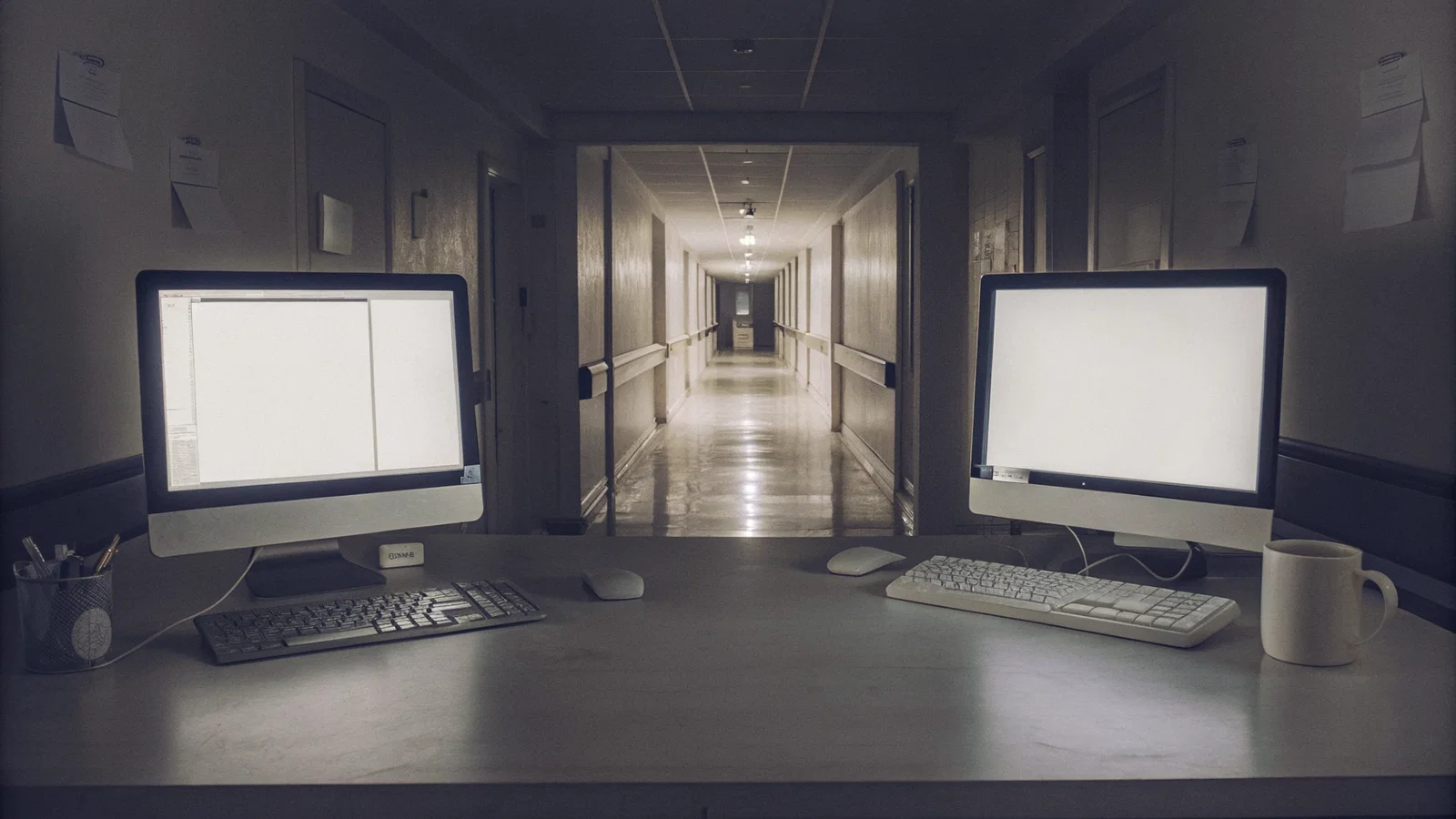
Three years into residency, I sat across from a program director during a feedback session. She did not mention my patient outcomes, my board scores, or my scholarly output. She asked me one question: "Why does your Epic workspace look like a filing cabinet exploded?" That single sentence rewired how I approach my entire clinical workflow.
Here is what most residents never learn until it is too late: your EHR is not just a documentation tool. It is a performance review that happens every single shift, in real time, without anyone telling you it is happening. Attendings, charge nurses, and even senior co-residents are constantly scanning your screen when you round, when you present, when you pause mid-workflow to look something up. The way your workspace is organized tells them exactly how you think. Messy tabs, scattered windows, twenty open patient charts you forgot to close, these are not innocent habits. They are diagnostic of how you manage cognitive load under pressure. And senior clinicians read that screen the way a radiologist reads a film.
How you manage these digital tasks directly influences how senior residents quietly rank your performance during high-pressure situations.
Let me break this down specifically.
The Screen That Speaks: Decoding Your Digital Presence
There is a perception gap that kills careers quietly. Junior residents think being "fast" means clicking quickly, hammering through notes, and churning out volume. Attendings know better. Fast is not the goal. Efficient is the goal. The resident who pre-charts for 45 minutes before rounds and still cannot answer a basic question about a medication trend is not working hard, they are working stupid. The resident who pulls up a complete picture in three clicks using a custom-built SmartPhrase summary is operating at a different altitude entirely.
I have watched this play out hundreds of times. The "pre-charting marathon" resident arrives at rounds exhausted, defensive, and unable to synthesize. They have read every note but retained nothing. Meanwhile, the "chart review macro" resident walks into rounds looking rested, speaks with clinical authority, and answers attending questions without fumbling through screens. Both residents spent similar total time on the EHR. Only one of them looks like a doctor who knows what they are doing.
Senior clinicians treat your EHR workspace as a mirror of your clinical logic. This is not a metaphor. When an attending glances at your screen during a mid-presentation question, they are checking whether your data architecture matches your clinical reasoning. A cluttered dashboard signals scattered thinking. A data-driven cockpit signals someone who has built systems, not just survived chaos.
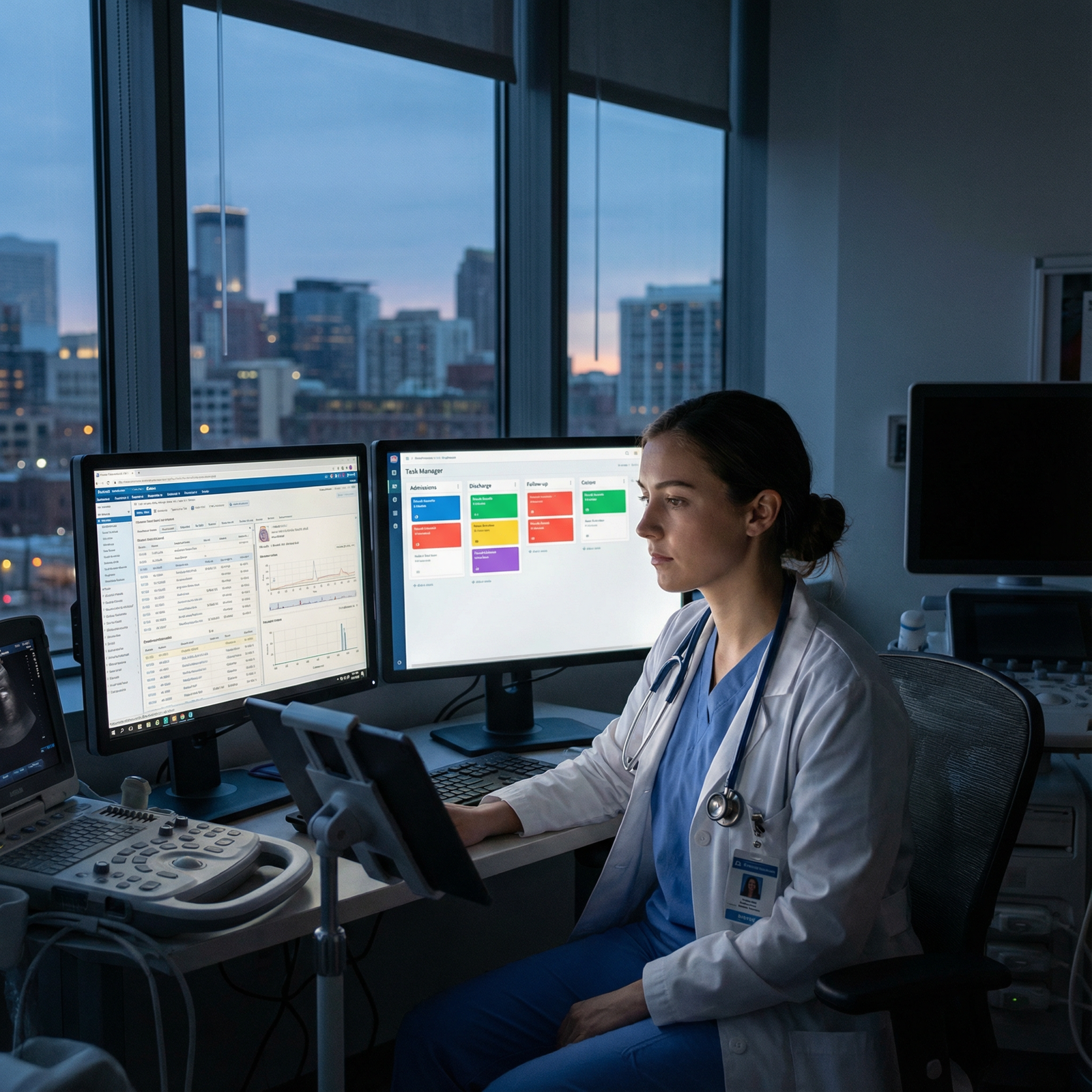
The difference between a cluttered dashboard and a data-driven cockpit is not about aesthetics. It is about information retrieval latency. Every second you spend hunting for a lab value, scrolling past irrelevant tabs, or re-opening a note you already reviewed is cognitive debt. That debt compounds across a 12-hour shift. By hour ten, the cluttered workspace resident is making decisions based on incomplete recall because they burned through their mental bandwidth on navigation. The cockpit resident has reserves left.
Ignoring these small, repetitive inefficiencies often leads to documentation and EMR workflows that quietly push you toward burnout by the end of the week.
The Anatomy of a High-Yield EHR Workflow
Scrolling is the enemy. Let me state that plainly. If your Epic or Cerner workflow involves scrolling through twenty tabs of historical notes to find the relevant two, you have already lost. The entire point of a high-yield workflow is that the right information surfaces before you consciously search for it.
Here is the architecture that separates amateurs from operators:
Custom tab configuration. Your default landing tab should not be "Summary." It should be whatever your specialty demands first. For internal medicine, that is recent vitals, active medications, and the last 24 hours of labs. For surgery, it is post-operative orders, drain output, and pain medication timing. Build your workspace around how you actually think, not how the EHR vendor thinks you should think.
Click-path reduction. Mouse movement is physics. Every unnecessary click adds latency. I have timed residents who take 14 clicks to pull up a basic medication list. A workflow-optimized resident does it in 4. That difference, multiplied across 20 patients per shift, is over an hour of pure wasted motion. This is not a skill issue, it is a configuration issue. If you have not mapped your most-used actions to keyboard shortcuts or speed buttons, you are doing the EHR equivalent of writing a note with a fountain pen in 2024.
Automated data pulls versus manual extraction. When I see a resident manually clicking into each lab value, copying it, and pasting it into a note, I see desperation. When I see a resident trigger a SmartPhrase that pulls the last 72 hours of relevant labs into a structured table, I see mastery. The difference is not effort. The difference is systems thinking.
SmartPhrases and DotPhrases as tactical weapons. These tools are misunderstood. Most residents use them as crutches, pre-written paragraphs they paste without thinking, hoping the attending will skim past the obvious template language. That is amateur hour. A tactical SmartPhrase is a dynamic tool. It has branching logic, auto-populated variables, and structure that adapts to the specific patient. When I see a resident with 30 carefully engineered SmartPhrases organized in a personal library, each one refined over months of use, I know I am looking at someone who treats documentation as a craft.
That workflow looks simple. It is deceptively so. Every node represents a decision point that an efficient resident executes in seconds. An amateur spends minutes at each node, second-guessing, re-reading, scrolling backward.
Quantitative Efficiency: Measuring Your Click-To-Insight Ratio
Let me get specific. The "click-debt" concept is something I teach every new resident I work with. Every click you make that does not directly advance your clinical understanding is debt. That debt accrues interest in the form of mental fatigue, error risk, and time stolen from patient interaction.
I have audited dozens of residents' workflow patterns using EHR time-tracking tools. The data is consistent. Residents with optimized workspaces complete chart review 40-60% faster than those with default configurations. More importantly, they report lower subjective cognitive load. The interface stops being an obstacle and starts being a tool.
Here is what the benchmarking looks like across specialties:
That curve is not linear. The first few workflow optimizations yield modest gains. The compound effect of five or more integrated features, custom tabs, SmartPhrases, keyboard shortcuts, problem-based navigation, automated summaries, creates exponential returns. This is why workflow optimization is not a "nice to have." It is the highest-yield skill you can develop in residency that nobody formally teaches.
The mental load cost is real and measurable. Studies from the AMA and Mayo Clinic have shown that poor EHR interface management correlates directly with physician burnout scores. This is not surprising. When your tools fight you for 12 hours a day, you internalize that fight as professional frustration. Residents with optimized workspaces report spending more time in direct patient care and less time "staring at the screen." That is the entire point.
To audit your own screen time, pull your EHR's usage analytics. Epic has the "Provider Efficiency Profile." Cerner has similar tools. Look at your average time per patient encounter. Compare it to your specialty's benchmark. If you are 30% above benchmark, you do not have a knowledge problem. You have a workflow problem.
Beyond the Interface: The Psychology of 'Quiet' Charting
Now we get into the part that separates senior residents from juniors. The technical workflow is table stakes. The psychological layer is where careers are made.
Visibility is a liability. During rounds, when the attending walks up to a patient's room, the last thing you want is to be visibly struggling at the terminal. "Struggling" does not mean typing slowly. It means having the wrong tab open, searching for basic information, or asking the bedside nurse to remind you of the patient's allergies. Every visible struggle chips away at the attending's confidence in your preparation.
The "quick-look" is an art. Senior residents develop the ability to pull up a chart, scan it for 60 seconds, and walk away with a complete clinical picture. This is not speed-reading. It is pattern recognition trained over hundreds of encounters. You learn which data points matter for which patient populations. A 200-page chart history becomes a five-screen summary because you know exactly where the signal lives.
Communicating clinical reasoning through the chart is a different skill than recording data points. When I read a resident's note, I can tell within two sentences whether they understood the patient or just transcribed the chart. The note that says "patient with NSTEMI, troponin 2.4, started on heparin and metoprolol, plan for cath tomorrow" tells me nothing. The note that says "67-year-old with NSTEMI and troponin trend suggesting ongoing ischemia; heparin initiated given NSTEMI protocol, metoprolol held due to borderline hypotension, cardiology consulted for risk-stratified approach to catheterization" tells me the resident understood the clinical logic. The chart is not just a record. It is a clinical argument.

Training your eye to scan efficiently is not glamorous work. It means sitting down for 30 minutes a week with old charts, deliberately practicing the 60-second review. It means identifying which sections you consistently under-use. It means building the muscle memory so that when you are post-call at 3 AM and your brain is running on caffeine, your eyes still know where to look.
Strategic Execution: Action Steps for Tomorrow's Shift
Enough philosophy. Here is what to do, starting tomorrow.
Phase 1: The Cleanup Audit. Open your EHR right now. Close every tab you do not actively use. Remove every dashboard widget that does not contribute to your daily workflow. Disable the notifications that interrupt your documentation flow. This takes 20 minutes. The cognitive dividend is permanent.
Phase 2: The Top 5 Rule. Identify the five clinical actions you perform most frequently, pulling labs, reviewing medications, writing progress notes, checking imaging, and reviewing prior encounters. Build custom shortcuts, SmartPhrases, or speed buttons for each one. Test them for a week. Refine them. This is the highest-yield habit you will develop in residency.
Phase 3: Feedback Loops. Ask a trusted attending or senior resident to shadow your screen navigation for one afternoon. Not your patient care, your documentation. You will be horrified at what they see. That horror is the beginning of mastery. Senior clinicians notice workflow inefficiencies immediately because they have spent years fixing their own.
Phase 4: Internalization. Run this optimization cycle every quarter. Workflows that worked in intern year are inefficient by chief year. The residents who grow are the ones who treat their EHR setup as a living system, not a one-time setup task.
Closing: The Unspoken Signal
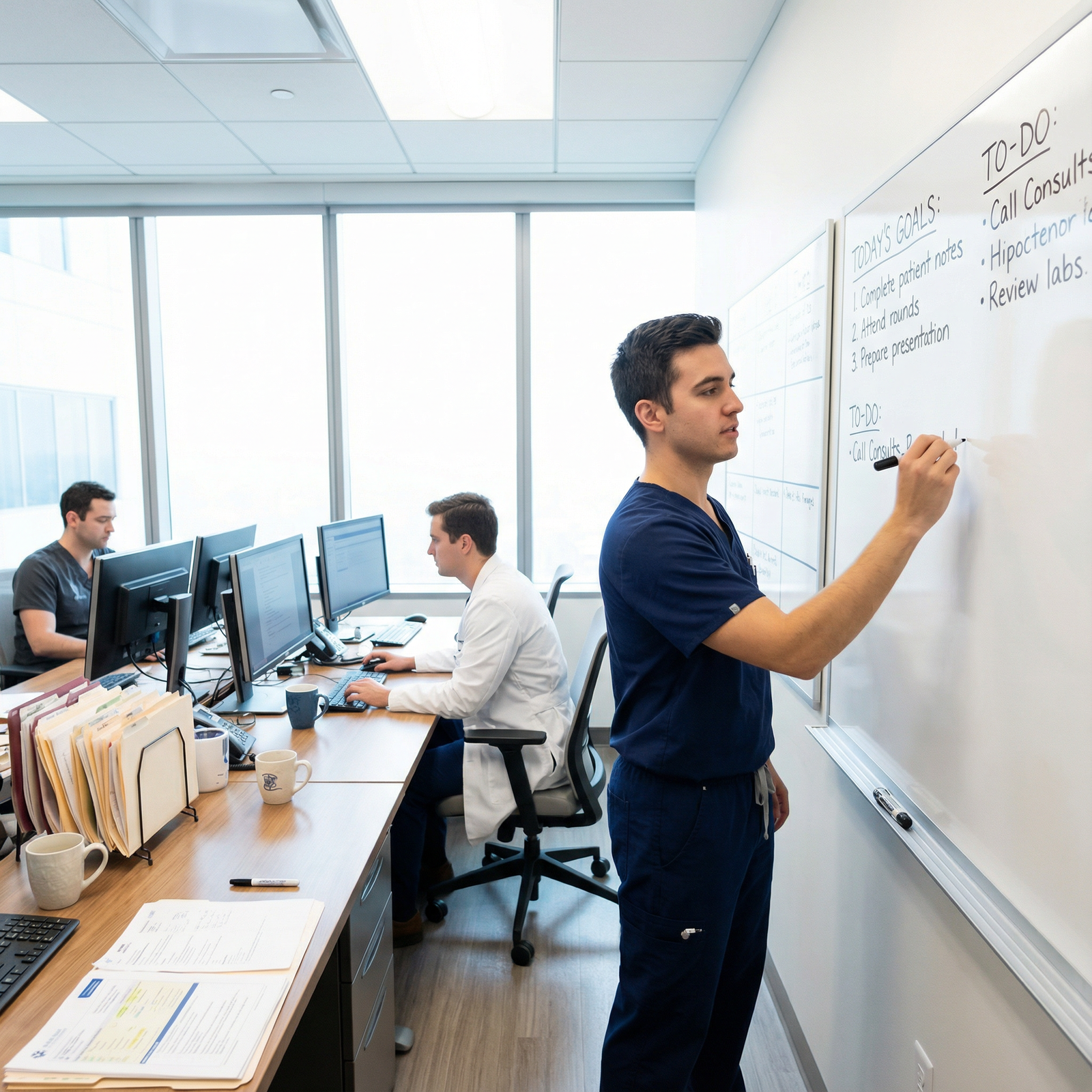
Your EHR workspace is not a neutral tool. It is a clinical statement. Every shift, it tells the people evaluating you whether you are a doctor who builds systems or one who survives chaos. The residents who understand this early accelerate their careers. The ones who ignore it spend their final year of training wondering why attendings seem to trust their co-residents more.
Master the workspace. Reduce the click-debt. Build the SmartPhrases. Train the eye. Do not wait for someone to teach this to you formally, nobody will. The seniors who could teach it are too busy using their own optimized workflows to notice that you are still hunting for the same lab value you searched for yesterday.
Tomorrow's shift is the first day of the rest of your clinical reputation. Make the screen count.