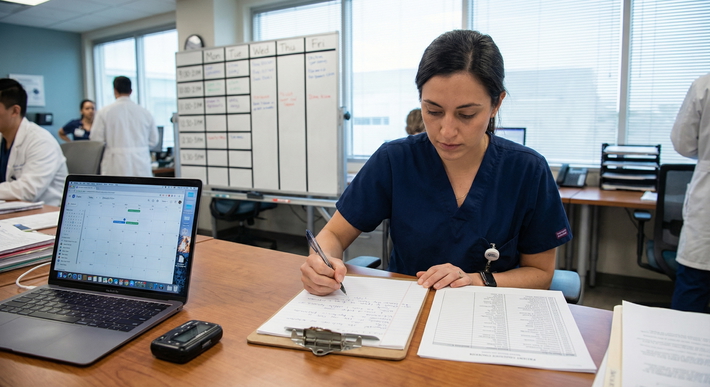
You're three hours into a night float shift. The pager lights up. It's a consult for a "possible electrolyte imbalance" on a stable floor patient whose last labs were drawn at 9 PM. The primary team wants you to "just take a look so we can document it." Your eyes burn. Your brain is already holding four active admissions and a crashing ICU transfer. You know this can wait until morning. But the myth whispers: If you say no, they'll think you're lazy. Your reputation tanks. Attendings will blackball you.
That myth is wrong. Dead wrong. Saying no to non-urgent consults at 3 AM does not ruin your reputation. It builds the right one. Here's how you handle it when you're actually in the hallway with the pager vibrating.
The 3 AM Reality Check: Understanding Urgency vs. Convenience
Before you respond, consider how the unwritten rules of calling your attending at 3 AM on call actually define your overnight autonomy.
True urgency in a hospital means the patient's trajectory can change in the next few hours if you don't act. Unstable vitals. New neuro deficits. Active bleeding. Impending airway issues. That's your job. Everything else is often administrative task-loading dressed up as clinical need.
I've watched residents destroy themselves taking every "can you just..." request because they confused being a pushover with being a team player. They're not the same. A team player protects the whole system's decision-making capacity. A pushover just absorbs other people's convenience and calls it professionalism. The hidden cost is real: every unnecessary midnight chart dive burns cognitive bandwidth you need for the next real emergency. Sleep-deprived judgment is slower, more error-prone, and more defensive. You start ordering tests "just in case" because you're too fried to think cleanly. That's how burnout compounds into actual patient risk.
Establish boundaries in the first months of residency, not after you're already hollowed out. Early on, people are still forming their mental model of who you are. If you train them that you'll always say yes, they will keep loading you. If you train them that you triage ruthlessly around patient safety, they adjust. Fast.
The resident who never says no looks helpful for about six weeks. Then they look exhausted, slow, and unreliable when a real crash hits. The resident who protects sleep and focus looks sharp when it counts. That's the reputation that sticks.
The Science of Saying No: How to Triage Consult Requests
You need a repeatable filter, not vibes. When the page comes in, run this sequence in your head before you even call back.
Always keep in mind that worried you'll look incompetent asking for help overnight is a common hurdle, but it is one you can overcome by focusing on patient safety rather than optics.
First question: Is the patient unstable right now? If yes, you go. No debate. If the nurse or mid-level is calling because the patient is hypotensive, hypoxic, or altered, you move.
If the patient is stable, ask the second question out loud to the caller: "What specific action do you need from me tonight that changes management before the day team arrives?" Force them to name it. Often they can't. "We just wanted cardio to be aware" is not a reason to wake you. "The potassium is 6.1 and we're giving insulin/glucose now, can you guide next steps" is a reason.
Here's the push-back script that works without burning bridges. Keep it short, clinical, and patient-centered:
"Thanks for the page. I've looked at the vitals and the last labs, patient is stable, no acute changes overnight. This looks like something the primary team can address on morning rounds without risk. I'll make sure it's on their radar at sign-out. If anything changes, new symptoms, vitals shift, page me immediately and I'll come."
That language does three things: it shows you actually reviewed the data, it centers the patient, and it leaves the door open so they don't feel dismissed. Floor nurses and APPs remember residents who treat them like colleagues instead of obstacles. They will protect you later when a real emergency hits and you need rapid help. Being curt or arrogant is what burns bridges. Being clear and fair does not.
If they push ("But the attending said to consult tonight"), ask one more clarifying question: "Is the attending concerned about something specific I'm missing, or is this more of a documentation preference?" Most of the time it collapses into the latter. Document the conversation in a brief note: "Discussed with primary team RN. Patient clinically stable. Deferred non-urgent electrolyte review to AM team. Advised to re-page for any change."
The Reputation Myth: Why Peers Actually Respect Boundaries
Surgeons and attendings who matter do not want a resident who says yes to everything. They want a resident whose brain still works at 4 AM. I've sat in enough morbidity conferences and faculty meetings to know this: the "yes-man" gets privately criticized for poor triage and wasted consults. The thoughtful gatekeeper gets trusted with more autonomy.
There's a clean difference between lazy and efficient. Lazy is ignoring the pager or giving a vague "I'll get to it." Efficient is assessing fast, deciding cleanly, and communicating the plan. One attending told me point-blank after I deferred a non-urgent midnight echo request: "Good. I hate it when residents rubber-stamp everything. Means they aren't thinking." That single sentence rewired how I saw reputation.
Document your reasoning every time you defer. Not defensive CYA paragraphs, just clean clinical logic. "VSS, no new symptoms, K 3.4 repleting PO, no EKG changes. Safe to defer formal consult until daytime team." When someone later questions the decision, the note does the talking. Defensive consult patterns (accepting everything "just in case") actually damage your reputation more because they signal you can't prioritize.
Look at how people actually score reliability when you force them to think about it:
The numbers aren't subtle. People respect judgment more than compliance.
Action Plan: The Morning After the 'No'
You deferred something. Now close the loop so it doesn't become a problem.
At morning sign-out or first contact with the primary team, own the conversation: "I got the page about Mr. Lopez's potassium at 3 AM. He was stable, no EKG changes, already repleting. I held formal consult so you could address it fresh on rounds with full context. Here's what I told the nurse." That follow-up turns a potential complaint into proof you were awake and thinking. Continuity of care is protected. Your name stays clean.
If a disgruntled attending tracks you down and disagrees with the triage, do not get defensive. Use this exact frame: "I appreciate the feedback. Walk me through what I should have weighted differently so I get it right next time." Most attendings calm down when they realize you're learning, not arguing. If they were truly wrong about urgency, you still gain by hearing their threshold. If you were wrong, you own it once, fix the gap, and move on. One deferred consult that later needed action will not define you. A pattern of never being able to say no will.
Build a short repertoire of phrases so you're not inventing language at 3 AM when your brain is mush:
- "I've reviewed the chart, patient is stable. This is safe to hold for the day team."
- "What changes in the next four hours if I don't see them right now?"
- "I'll come immediately if anything shifts. Otherwise I'll make sure it's handed off cleanly."
- "Help me understand the overnight urgency so I prioritize correctly."
Practice them once when you're awake. They become automatic.
Your move starting tonight: the next non-urgent page, run the two-question filter. Use the script. Document one clean sentence. Follow up in the morning. Do that five times and the myth dies. Your reputation becomes the resident who protects focus for real work, not the one who never sleeps and slowly stops thinking straight.
That's how you survive call without becoming a doormat or a ghost.