
It's 2:13 a.m. The page says: "Patient more confused. Please assess."
You open the chart. Psych history. Bipolar disorder. Lithium. Or valproate. Maybe both in the med list if the chart is messy and the medication reconciliation is worse. The day team signed out "a little off baseline." Nursing says the patient was talking normally at dinner and now can't sit up straight, is slurring words, and just vomited into an emesis bag.
This is where people screw up.
They call it "delirium from the infection." Or "hospital encephalopathy." Or the all-purpose lie: "probably baseline." Then they delay the toxic workup because the patient is technically still breathing and someone assumes the morning team can sort it out.
Don't do that.
If a patient on lithium or valproate develops acute altered mental status, you must treat toxicity as an active possibility until you've worked to exclude it. Not later. Not after rounds. Right then.
The red flags are usually sitting in plain view:
- Vomiting or diarrhea
- Tremor
- Ataxia
- Slurred speech
- Myoclonus
- Nystagmus
- Aspiration risk
- Abnormal vitals
- AKI or rising creatinine
- New interacting medications
- Known abnormal drug level, or no level checked at all
I've seen this go bad overnight because everyone agreed the patient was "just confused." That phrase gets patients hurt. Confusion is a symptom. Not an explanation.
On-Call Scenario: The "Confusion" Paging That Ends Badly
Here's the classic overnight trap.
A patient admitted for pneumonia has bipolar disorder and takes lithium at home. They've had poor PO intake all day, got ibuprofen in the ED, and their creatinine bumped from 0.9 to 1.6. At 11 p.m., they're "a little sleepy." At 2 a.m., they're newly disoriented, tremulous, unsteady, and vomiting. The page to you says only: "AMS."
Or the valproate version: older patient, seizure history, on divalproex, now lethargic and behaving strangely after a day of poor intake and progressive illness. Someone checked a valproate level earlier and it wasn't dramatic, so everybody relaxes. Bad move.
The mistake is not subtle. It's under-triaging altered mental status by assuming it's benign encephalopathy from "being sick" instead of considering medication toxicity early. Once you make that mental error, everything downstream gets delayed: holding the drug, ordering the right labs, calling for help, protecting the airway.
Start your overnight mindset with suspicion, not reassurance.
Ask yourself immediately:
- Is this sudden?
- Is there a neuro finding beyond "confused"?
- Is there GI loss or dehydration?
- Is kidney or liver function worse?
- Was a new interacting drug started?
- Has anyone actually checked the right labs yet?
If the answer is "I'm not sure," that's not reassuring. That's the warning.
Don't Make This Mistake: Assuming Confusion Isn't Toxic
AMS is toxic until proven otherwise in a patient on lithium or valproate. That's my position. You can still investigate infection, hypoxia, hypercarbia, stroke, sepsis, withdrawal, and all the usual causes. But if you mentally downgrade toxicity too early, you miss the reversible problem sitting in the med list.
The cognitive errors are painfully predictable:
- Anchoring on infection. "They have a UTI, so that explains it." No. It may explain some delirium. It does not excuse skipping a toxicity screen.
- Availability bias. Residents see lots of hypoxia and hypercarbia overnight, so every drowsy patient becomes a respiratory story.
- Baseline hand-waving. "Psych patients are hard to assess." Also nonsense. New ataxia, tremor, vomiting, and dysarthria are not personality traits.
- False reassurance from one lab. A "therapeutic" valproate level or an only modestly elevated lithium level can mislead you if the timing is wrong or the real problem is hyperammonemia.
What you need immediately is a targeted history. Fast. Not elegant. Useful.
Ask:
- When was the last dose?
- Any chance of double-dosing, nonadherence, or overdose?
- Recent vomiting, diarrhea, fever, poor intake, or dehydration?
- Any renal changes for lithium? Any hepatic dysfunction for valproate?
- Any recent illness that changed clearance?
- New meds:
- NSAIDs
- ACE inhibitors/ARBs
- Diuretics
- New anticonvulsants
- New antipsychotics
- Any seizures? Any aspiration? Any falls?
Don't be the resident who orders "AMS labs" and forgets to ask the last dose time. That's amateur hour. Timing matters. Interactions matter. Organ function matters. And your exam matters.
Lithium Toxicity Overnight: Pattern Recognition Without Guessing
Lithium toxicity has a look. Don't overcomplicate it.
What you'll often see:
- Tremor, often coarse
- Hyperreflexia
- Clonus
- Ataxia
- Dysarthria
- Nystagmus
- GI upset: nausea, vomiting, diarrhea
- Mental status changes ranging from mild confusion to stupor or coma
Sometimes the chart says "weak" or "sleepy" when the real clue is in the nurse's note: "patient unable to hold cup steady," "speech garbled," "nearly fell walking to bathroom." Read those details. They matter more than the lazy label of AMS.
The trap residents fall into is waiting for the lithium level before doing anything meaningful. Don't. Levels can lag behind clinical toxicity. Timing can be wrong. Units can be misunderstood. A level drawn at the wrong point after a dose doesn't rescue bad clinical judgment. If the patient looks toxic, act like they might be toxic.
Risk escalates fast with:
- AKI or CKD
- Dehydration
- Volume depletion from vomiting/diarrhea
- NSAIDs
- ACE inhibitors or ARBs
- Diuretics
- Recent dose increases
- Accumulation after acute illness
The overnight response should be systematic:
Stabilize first
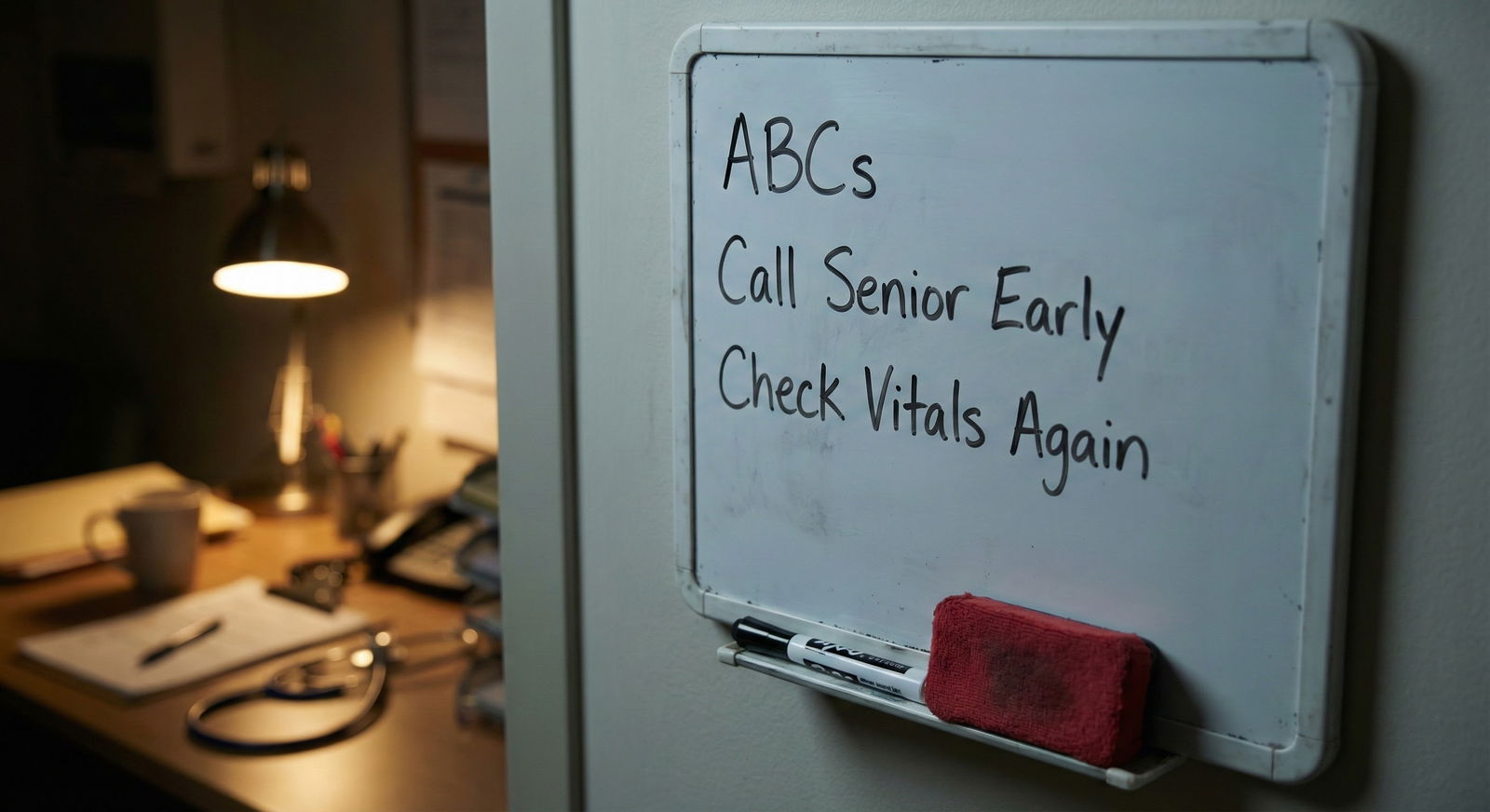
- ABCs
- Vitals
- Bedside glucose
- Assess airway protection
- Seizure precautions if neuro findings are significant
-
- Don't wait for permission from daylight.
- Document why.
Order the right workup
- BMP
- Creatinine
- Electrolytes
- EKG
- Lithium level with correct timing documented
- Consider CK if severe rigidity or prolonged immobility
- Consider VBG/ABG if respiratory contribution or severe illness is possible
Examine the nervous system like you mean it
- Tremor?
- Clonus?
- Hyperreflexia?
- Ataxia?
- Nystagmus?
- Dysarthria?
- Myoclonus?
- Seizures?
Reassess volume status
- Many patients need fluids if not contraindicated.
- But think, don't reflex. If they're in heart failure, don't mindlessly bolus them into pulmonary edema.
Escalate early
- Toxicology
- Nephrology if severe toxicity or dialysis is on the table
- ICU if airway, seizures, severe progressive neurologic impairment, or physiologic instability
I've seen a resident breathe a sigh of relief over a lithium level that "wasn't that high," while the patient had obvious ataxia, aspiration risk, and worsening renal failure. That's backwards. The patient is not the lab value. Treat the syndrome in front of you.
Valproate: Confusion Could Be Hyperammonemic Encephalopathy (Even With "Therapeutic" Levels)
This is the overnight miss I hate the most because it's so preventable.
A patient on valproate gets confused, lethargic, nauseated, or behaviorally off. Somebody checks the valproate level. It comes back "therapeutic." Everyone relaxes. Meanwhile the ammonia is elevated and the brain is telling you so.
Don't make that mistake.
Valproate-related encephalopathy can happen even when the valproate level doesn't look terrible. If the mental status change is unexplained, ammonia belongs in the workup. Period.
Red flags include:
- New confusion or lethargy
- Vomiting
- Altered behavior
- Somnolence
- Possible seizures
- Unexplained decline despite "reassuring" drug level
Why this gets missed:
- People trust the valproate level too much
- Ammonia isn't included in the first round of orders
- AMS gets lazily attributed to infection, psych disease, or "hospital delirium"
- The team doesn't connect encephalopathy to valproate if LFTs are not dramatically abnormal
Your immediate workup should include:
- Ammonia
- LFTs
- CBC
- INR
- CMP
- Glucose
- Seizure assessment if clinically relevant
- Additional infectious or respiratory workup as indicated by the bedside picture
Your management priorities overnight:
- Hold valproate until clarified
- Protect the airway if mental status is worsening
- Treat seizures if present
- Call early for help
- Toxicology
- Neurology
- Sometimes hepatology depending on the picture
- Address hyperammonemia per your institutional protocol
- This may include lactulose, rifaximin, levocarnitine, or other measures depending on the case and local practice
- Trend the patient, not just the lab
- Repeat neuro checks
- Watch for aspiration
- Watch for progression
Here's the blunt version: a normal-looking valproate level does not clear the drug from suspicion. If you remember one thing, remember that.

Side-by-Side Pitfalls: Lithium vs Valproate Workups You Must Not Botch
Don't mix these up. They overlap clinically, but the overnight emphasis differs.
Lithium: think renal/volume plus neurologic signs
You're looking hard at:
- Creatinine and renal function
- Electrolytes
- Volume status
- Timed lithium level
- EKG
- Tremor, clonus, hyperreflexia, ataxia, dysarthria, nystagmus
Valproate: think ammonia/hepatic effects plus encephalopathy
You're looking hard at:
- Ammonia
- LFTs
- INR
- CBC
- CMP
- Glucose
- Seizure assessment
- Airway risk from worsening encephalopathy
The process errors are maddening because they're so common:
- Drawing incomplete labs because "we already sent a drug level"
- Forgetting bedside glucose
- Forgetting the EKG
- Failing to document last dose time
- Leaving the medication active while "waiting to see"
- Not escalating despite abnormal neuro findings
- Writing "delirium likely multifactorial" as if that counts as management
It doesn't.
Stepwise On-Call Orders: The Minimum Safe Bundle for AMS on These Agents
If you're tired, busy, and getting hammered with pages, you need a minimum safe bundle you can remember under pressure. Here's mine.
Bedside first
- Full vitals
- Bedside glucose
- Quick airway assessment
- Pulse ox
- Neuro exam with actual details, not "grossly nonfocal"
- Seizure precautions if concerning findings
Medication action
- Hold lithium or valproate immediately if toxicity is on the table
- Document:
- Last known dose time
- Why you're holding it
- Relevant organ dysfunction or neuro findings
Core labs
For either suspected medication-related AMS:
- BMP/CMP
- Creatinine
- Glucose
- CBC
- Relevant drug level if indicated and timed correctly
For lithium concern, add emphasis to:
- Electrolytes
- Renal function
- Timed lithium level
- EKG
- Consider blood gas if clinically indicated
For valproate concern, add emphasis to:
- Ammonia
- LFTs
- INR
- Seizure evaluation as indicated
Don't stop at the tox thought
This matters. Toxicity may be the answer, but don't become so proud of catching it that you ignore everything else. If the bedside picture suggests infection, hypercarbia, stroke, hypoglycemia, or another parallel problem, evaluate that too. Good residents broaden early and narrow later. Bad residents fall in love with their first theory.
Escalation triggers
Call for help early if you see:
- Persistent or severe AMS
- Seizures or myoclonus
- Hyperthermia
- AKI or rising creatinine
- Markedly abnormal ammonia
- Abnormal EKG or arrhythmia
- Inability to protect airway
- Progressive neurologic findings
- Any concern that dialysis or ICU-level monitoring may be needed
And here's the part people resist because they don't want to seem dramatic: if you're worried, say you're worried. "I'm concerned for lithium toxicity with AKI and worsening ataxia." "I'm concerned for valproate-associated hyperammonemic encephalopathy despite a non-alarming drug level." That language protects the patient because it forces the team to hear the real issue.
Overnight medicine punishes vagueness. "A bit more confused" is how disasters get signed out.
Communication & Escalation: Protect the Patient and Yourself
A good handoff in this situation is short and sharp.
Include:
- The agent: lithium or valproate
- Last dose time
- Relevant renal or hepatic status
- Specific neuro findings
- Tremor
- Ataxia
- Myoclonus
- Dysarthria
- Nystagmus
- Initial labs ordered
- Whether the medication has been held
- Who you called
Consult wisely:
- Lithium concern: toxicology, nephrology, ICU if severe
- Valproate/hyperammonemia concern: toxicology, neurology, hepatology depending on context, ICU if airway or seizures are in play
And document your reasoning. Don't leave behind a useless note that says "patient confused, labs pending." Write what you saw and why you acted.
Confusion is not a diagnosis. It's a warning light.
So here's the reminder I want burned into your overnight brain: if a patient on lithium or valproate becomes acutely altered, don't assume it's harmless, don't hide behind "delirium," and don't wait for daylight to do the obvious workup. Hold the drug. Check the right labs. Examine the patient properly. Escalate early.
That's how you avoid the stupid miss.