Why “Malignant” Programs Matter So Much for Caribbean IMGs in EM–IM
Choosing a residency is high‑stakes for every applicant, but for a Caribbean medical school graduate targeting emergency medicine–internal medicine (EM IM combined), the cost of landing in a malignant residency program is even higher.
As a Caribbean IMG, you already face:
- Visa considerations and restrictions
- Greater scrutiny of your training background
- More limited flexibility to remediate gaps or transfer programs
A malignant residency program—one with a systematically unhealthy, abusive, or exploitative culture—can derail your career, delay board eligibility, or push you to leave medicine entirely. In a demanding five‑year combined emergency medicine internal medicine pathway, a toxic environment is amplified: more call, more services, more faculty, and higher burnout risk.
This guide focuses on how Caribbean IMGs targeting EM–IM can identify:
- Clear residency red flags
- Subtle toxic program signs
- Specific issues unique to EM–IM combined training
- Practical strategies to vet programs before ranking them
The goal is not to scare you away from ambitious training, but to help you distinguish a challenging but supportive program from a truly malignant one.
What “Malignant” Really Means in Residency
“Malignant” gets thrown around a lot, but not every hard‑working residency is malignant. EM and IM are intense specialties; an EM IM combined program will be especially demanding. You should expect:
- Long hours and high patient volumes
- Steep learning curves in both ED and inpatient settings
- Honest feedback and high expectations
- Rotations that feel exhausting but educational
A malignant residency program, by contrast, is defined not by workload alone but by persistent, systemic problems in how trainees are treated and supported.
Core Features of a Malignant Program
Common elements include:
Chronic disrespect or abuse
- Public humiliation as a “teaching” method
- Yelling, insults, or intimidation by attendings or senior residents
- Racist, xenophobic, or sexist comments that go unchecked
Lack of psychological safety
- Residents are afraid to ask questions, admit uncertainty, or call for help
- Reporting concerns leads to retaliation, bad evaluations, or schedule punishment
- “Don’t rock the boat” culture even when patient safety is at risk
Unsafe workload and poor supervision
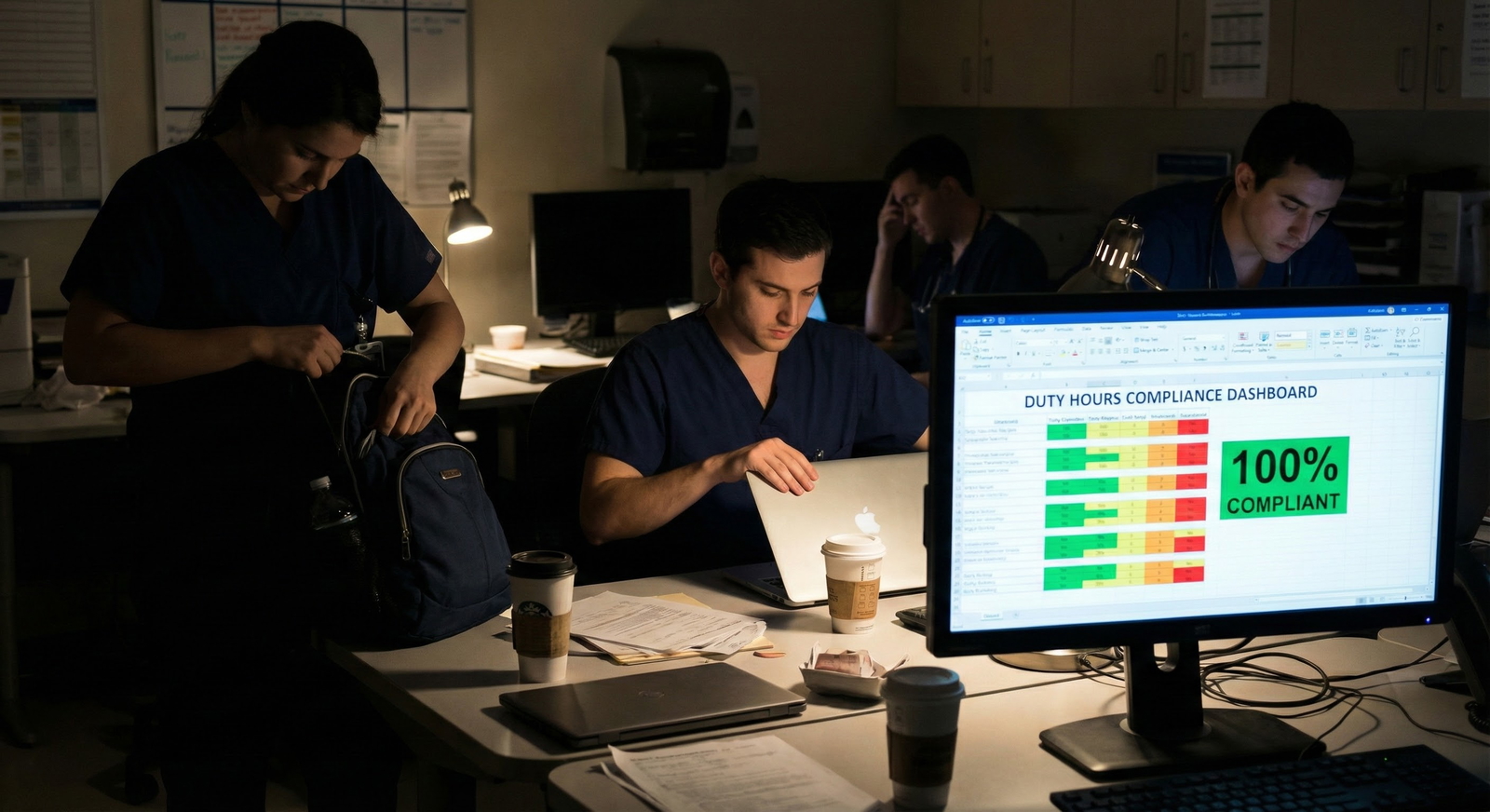
- Regular violation of duty hours with pressure to falsify logs
- Interns managing critically ill patients beyond competence without backup
- EM shifts with dangerously high patient loads per resident
Systematic exploitation
- Residents routinely doing non‑educational scut with no benefit
- Pressure to cover extra shifts without compensation or time off
- PGY‑1s acting as service fillers for chronic staffing gaps
Obstruction of career advancement
- Poor board pass rates with no remediation support
- Weak or non‑existent fellowship or job placement
- PD/leadership blocking letters of recommendation for those who want to leave
For a Caribbean medical school residency applicant, these issues are magnified: you often have fewer safety nets, less margin for visa disruption, and more to lose if your training is delayed or derailed.
Red Flags to Watch for as a Caribbean IMG Targeting EM–IM
Because EM–IM combined training crosses both emergency medicine internal medicine domains, you must look at both sides of the program: the EM department culture and the IM department culture, as well as how the combined track is treated.
Below are major residency red flags and toxic program signs, with special notes for Caribbean IMGs.
1. Concerning Match and Attrition Patterns
What to look for:
- High attrition (people leaving the program, switching, or “disappearing”)
- Carousel of EM IM combined residents in old photos vs. current numbers
- High numbers of “PGY‑X preliminary” or “former residents” without clear explanation
Specific questions to ask:
- “How many residents in the EM IM combined pathway have left in the last 5–7 years?”
- “Why did they leave? Where did they go?”
- “How many Caribbean IMGs have trained here, and what have their outcomes been?”
Red flags:
- Evasive or vague answers: “People leave for personal reasons” with no detail
- Faculty or residents clearly uncomfortable when this topic comes up
- Significant number of residents leaving in PGY‑1 or PGY‑2
For a Caribbean IMG, unexplained attrition is particularly concerning because:
- It can lead to visa complications if your training status changes
- You may struggle more to transfer due to IMG bias
- It suggests poor support for trainees who are perceived as “different”
2. Culture of Disrespect, Bias, or Hostility Toward IMGs
Caribbean graduates can thrive in supportive environments, but malignant programs often use IMGs as easy targets.
Red flag behaviors:
- Jokes or comments about “Caribbean schools,” “buying a degree,” or “not a real med school”
- Attendings who preferentially trust or support US MDs over IMGs
- IMGs consistently assigned heavier loads or less favorable rotations
- EM shifts where IMGs are given more low‑yield tasks (phone calls, paperwork) while others get procedures
Questions to ask current residents:
- “How does the program support international medical graduates?”
- “Are there any differences in expectations or opportunities between US grads and IMGs?”
- “Have you seen or experienced discrimination, and how does leadership respond?”
Look for:
- Specific examples of IMG success (chief residents, fellowship matches)
- Evidence that leadership is proud of its Caribbean IMG residents
- Willingness to discuss difficult past incidents and how they were handled
If you sense defensiveness or dismissiveness, consider it a major residency red flag.
3. EM–IM Combined Residents Treated as Second‑Class
In some institutions, the EM IM combined residents are genuinely the “glue” of the departments; in others, they are an afterthought.
Toxic program signs for combined residents:
- EM IM residents left out of EM or IM resident‑only retreats, wellness days, or meetings
- Schedules that constantly prioritize service coverage over EM IM educational goals
- No dedicated combined program director or clear advocate
- Confusion among attendings about what you’re “supposed to be” (e.g., “Are you IM or EM today?”)
- Combined residents routinely “floating” or plugging staffing holes across services
Ask directly:
- “Who is responsible for overseeing the EM–IM combined curriculum and mentoring?”
- “How integrated are the EM and IM departments for combined residents?”
- “Do EM–IM residents feel like they belong in both departments—or in neither?”
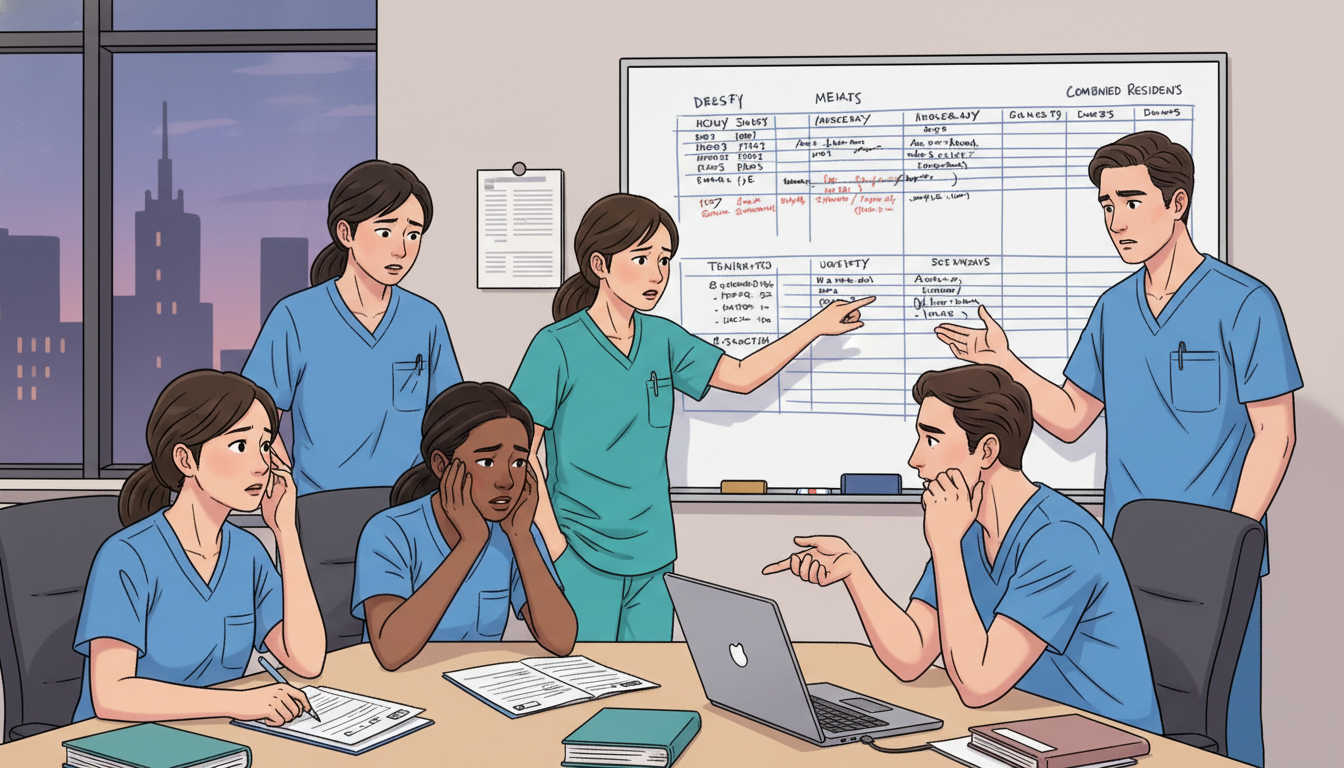
A malignant environment may use EM–IM residents as cheap, flexible labor, shuttling them between services with little regard for their long‑term growth.
4. Duty Hour Violations and Unsafe Workloads
High volume is part of EM and IM, but there’s a difference between intense training and chronic, unsafe exploitation.
Key areas for EM–IM:
- ED night shifts plus post‑call expectations on IM wards
- Cross‑coverage of multiple inpatient teams overnight
- Combined rotations where you cover both ED and floor responsibilities
Serious red flags:
- Residents regularly working >80 hours/week averaged over four weeks
- Pressure to “fix” or under‑report duty hours in the ACGME system
- Interns covering critical patients without senior backup
- EM shifts with extreme patient loads or insufficient attending supervision
Questions to ask:
- “How often do you log more than 80 hours a week?”
- “Have you ever been asked directly or indirectly to change your duty hour logs?”
- “What happens when someone reports a duty hour violation?”
In malignant programs, residents quickly learn that complaining equals retaliation—poor evaluations, bad schedules, or subtle blacklisting.
For Caribbean IMGs, this is doubly concerning, as you may fear that speaking up will reinforce negative stereotypes or risk your visa status.
5. Poor Education, Little Feedback, and Weak Board Outcomes
In a five‑year EM IM combined pathway, the educational structure must be intentional. If it feels like chaos, that’s dangerous.
Educational red flags:
- Didactics consistently canceled, rushed, or overshadowed by service
- Little to no simulation time in EM
- No structured ICU, ultrasound, or procedure training
- Residents learning mostly by “surviving” rather than being taught
Board‑related red flags:
- Low or unknown ABIM/ABEM board pass rates
- No dedicated board review or remediation plan for at‑risk residents
- Leadership minimizing poor outcomes: “Boards are your own problem”
As a Caribbean graduate, you may already feel pressure to “prove” your academic capability. A malignant residency program that neglects teaching and boards will hurt you disproportionately.
Ask specifically:
- “What are your ABIM and ABEM board pass rates over the last 5 years?”
- “How do you support residents who struggle with exams?”
- “How many EM–IM residents have failed to complete both boards on time?”
Vague or defensive responses → strong residency red flag.
6. Unprofessional or Inconsistent Leadership
Program leadership sets the tone. Malignant cultures often stem from:
- A disengaged program director rarely seen on the wards or ED shifts
- Frequent PD or APD turnover
- Blame‑focused meetings instead of system improvement
- Favoritism—some residents get protected, others get punished
Specific EM–IM concerns:
- Is there a dedicated EM–IM program director or just a name on paper?
- Are combined residents represented in key committees?
- Is anyone accountable when EM–IM specific issues (e.g., conflicting schedules) arise?
Questions to ask faculty/residents:
- “How approachable is the program director when problems arise?”
- “What’s an example of something the program did wrong and then fixed?”
- “How often does leadership solicit anonymous feedback—and act on it?”
An inability to name any meaningful improvement made in response to resident feedback is a quiet but important toxic program sign.
7. Lack of Support for Well‑Being, Especially for Underrepresented or IMG Trainees
Residency is stressful. The difference between a tough program and a malignant one often shows up in how the program handles:
- Burnout
- Personal crises
- Family or health issues
- Immigration/visa concerns
Red flags:
- Residents discouraged from taking sick days or mental health days
- No confidential mental health resources, or only lip service to wellness
- Trainees punished (formally or informally) for being ill or taking leave
- No meaningful support for visa issues (important for Caribbean IMGs on J‑1/H‑1B)
Ask directly as a Caribbean IMG:
- “Who helps with visa questions, renewals, or transitions?”
- “Have IMGs historically had any visa or credentialing problems here?”
- “What happens if a resident needs medical leave?”
You want to see concrete processes, not “We’ll figure it out” hand‑waving.
8. Reputation: “Everyone Knows” It’s Malignant
While gossip isn’t always fair, consistent negative feedback across sources deserves serious attention.
Where to look:
- Word‑of‑mouth from fellows or attendings at your rotation sites
- Senior residents or alumni from your Caribbean medical school
- Online forums (with caution): Reddit, SDN, specialty‑specific boards
- EM/IM faculty at your home or clinical teaching sites: “What have you heard about X?”
Patterns to watch:
- Multiple independent people warning, “That program is malignant. Be careful.”
- Specific stories about abuse, retaliation, or unsafe practices
- SGU residency match or other Caribbean school match lists showing few or no graduates going to that program despite its historical openness to IMGs
A single negative comment isn’t decisive. But repeated, consistent, detailed concerns across independent sources should make you pause.
How to Systematically Screen Programs as a Caribbean IMG
You can’t fully know a program until you’re in it—but you can massively reduce risk by being deliberate.
1. Before Applying: Strategic Research
- Study the program website critically
- Find EM–IM curriculum details, leadership names, and rotation maps
- Look for combined resident bios—where did they go after graduation?
- Check transparency metrics
- Are board pass rates, fellowships, and job placements listed openly?
- Review your Caribbean medical school residency match data
- For example, SGU residency match lists:
- Do their graduates go to this EM–IM program?
- Are outcomes from that program positive?
- For example, SGU residency match lists:
If a program has a reputation of being “IMG‑heavy” but has no clear track record of successful Caribbean IMG graduates, dig deeper.
2. During Interview Season: Ask Targeted Questions
Treat interviews and socials as a structured investigation, not just a sales pitch.
Questions for current EM–IM residents:
- “What’s the hardest part about being EM–IM here?”
- “Do you ever feel used more for service than education?”
- “If you had to choose again, would you still rank this program highly?”
Questions for categorical EM and IM residents:
- “How are EM–IM residents perceived in your department?”
- “Are there any tensions between EM–IM and the categorical tracks?”
Questions for leadership:
- “How has the program changed in response to resident feedback in the last 2–3 years?”
- “Can you share recent examples of wellness or support initiatives?”
- “What challenges has the program faced, and how were they addressed?”
Pay attention not just to what they say, but how they say it: body language, hesitation, tone.
3. Reading Between the Lines on Interview Day
Notice subtle cues:
Positive signs:
- Residents speak freely even when leadership is nearby
- Candid acknowledgment of weaknesses plus concrete plans to improve
- EM and IM attendings clearly know and respect EM–IM residents by name
- Diverse group of residents, including multiple IMGs in high‑visibility roles
Negative signs:
- Residents seem excessively guarded or overly enthusiastic in a rehearsed way
- No opportunities to speak privately with residents without faculty present
- EM–IM residents are absent from the interview day or hard to contact
- Atmosphere feels tense, with little joking or camaraderie

4. After Interviews: Creating a Red Flag Checklist
Right after each interview, write down impressions while they’re fresh. For each program, rate:
- IMG friendliness (1–5)
- Support for EM–IM combined residents (1–5)
- Workload/safety vibe (1–5)
- Leadership transparency (1–5)
- Overall wellness and culture (1–5)
Also note any specific concerns, such as:
- “Residents mentioned they’re ‘just surviving’ intern year.”
- “Two residents referenced people leaving, details unclear.”
- “PD avoided answering board pass rate question.”
When building your rank list, give serious weight to repeated red flags, even if the program seems prestigious or in a desirable location.
When Is It Just “Hard” vs. Truly Malignant?
EM–IM training will be tough everywhere. The goal is not to avoid hard work, but to avoid genuinely harmful environments.
You may be looking at a high‑volume, high‑acuity, but not malignant program if:
- Residents are tired but still proud and feel they’re growing
- Faculty push you, but with clear respect and constructive feedback
- Duty hours can be intense but are honestly tracked and addressed
- Leadership acknowledges stress and works to mitigate it
You are likely looking at a malignant residency program if:
- Residents openly tell you they feel unsafe or unheard
- You hear consistent stories of retaliation for speaking up
- EM–IM residents seem isolated, overused, or undervalued
- Board outcomes, attrition, and IMG support are clearly poor
As a Caribbean IMG, it’s tempting to rank any program that shows interest. But you are not powerless. It’s better to match a solid, non‑toxic categorical EM or IM program than to spend five years in a combined program that breaks you.
Actionable Takeaways for Caribbean IMGs Pursuing EM–IM
Clarify your priorities
- Is combined EM–IM essential, or would categorical EM or IM meet your goals?
- Are you willing to trade some prestige for a healthier culture?
Use your Caribbean network
- Ask recent SGU residency match or other Caribbean grads about specific programs.
- Seek out alumni in EM, IM, and EM–IM; ask for honest feedback.
Create a structured red‑flag screening process
- Apply the same list of questions and criteria to each program.
- Don’t disregard your gut feeling when enough objective concerns are present.
Remember your long‑term trajectory
- Malignant training can jeopardize your confidence, CV, and mental health.
- A supportive environment will help you develop into a strong, independent EM–IM physician, regardless of the program’s “brand name.”
FAQ: Malignant Programs and Caribbean IMGs in EM–IM
1. Are all high‑volume, urban EM–IM programs malignant?
No. High‑volume tertiary centers can be excellent training environments if supervision is strong, education is prioritized, and leadership is responsive. Volume and acuity are not the problem by themselves; the issue is how the program manages that pressure and treats its residents.
2. As a Caribbean IMG, should I avoid programs with no history of IMGs in EM–IM?
Not necessarily, but proceed carefully. Ask:
- Why haven’t there been IMGs previously?
- How prepared is the program to support visa issues and potential bias?
A program that is enthusiastic, transparent, and well‑resourced may still be a good fit, but you’ll want very clear answers on support structures and expectations.
3. How can I safely ask residents about toxicity during interviews?
Use indirect but pointed questions, such as:
- “What are the biggest challenges residents face here?”
- “Have there been any major changes in the program in response to resident concerns?”
- “If your best friend were applying, what would you tell them honestly about this program?”
Watch for hesitation, glances at faculty, or answers that feel scripted.
4. What should I do if I realize my program is malignant after I start?
If you determine that your program is truly malignant:
- Document specific incidents (dates, times, people, impact on patient safety or resident well‑being).
- Identify supportive mentors inside or outside the program.
- Contact your GME office, ombuds, or institutional wellness resources.
- Consider exploring transfer options with careful attention to visa implications.
For Caribbean IMGs, it’s critical to seek early advice from trusted faculty and possibly legal/immigration counsel before taking major steps.
Choosing an EM–IM combined pathway as a Caribbean IMG is ambitious and achievable—but it requires vigilance. By systematically evaluating residency red flags and toxic program signs, you can protect your career, your well‑being, and ultimately your ability to serve patients as the kind of emergency medicine internal medicine physician you set out to become.