
Why “Malignant” Programs Matter Even More for Caribbean IMGs in Urology
For a Caribbean IMG pursuing urology, the stakes of choosing the right residency program are exceptionally high. Urology is one of the most competitive specialties in the United States, and Caribbean medical school graduates already face additional hurdles: visa issues, bias against international schools, gaps in clinical exposure, and needing stronger metrics to be considered equivalent to U.S. MD seniors.
In that context, ending up in a malignant residency program—one that is systematically exploitative, disrespectful, or chronically dysfunctional—can derail your career:
- It can undermine your surgical confidence and operative skills
- It can damage your chances of fellowship or academic positions
- It can harm your mental health and physical safety
- It can make it harder to advocate for yourself as a Caribbean IMG in a high‑visibility field
This article is designed specifically for Caribbean IMGs in urology: how to recognize malignant residency programs, how to spot residency red flags during the urology match process, and how to strategically protect yourself—especially if you trained at a Caribbean school such as SGU, Ross, AUC, Saba, etc. We’ll also discuss how to interpret things like the SGU residency match list and how that can inform your program selection.
Understanding “Malignant” in the Context of Urology
What Do Applicants Mean by “Malignant”?
“Malignant residency program” is not an official ACGME category; it’s shorthand residents use for programs where the culture or structure systematically harms trainees. These are not places where people are merely “busy” or “demanding.” In a truly malignant environment, you see patterns of:
- Chronic disrespect and intimidation (yelling, humiliation, threats)
- Retaliation against residents who speak up
- Systematic overwork with unsafe duty hours and no real supervision
- Obstruction of career growth (poor operative autonomy, no letters, blocked research)
- High burnout and attrition, with residents leaving or being “pushed out” regularly
In urology, a malignant residency program can be even more damaging because:
- Urology is a small, tight-knit field; reputations spread quickly
- You depend heavily on faculty for advanced operative training and fellowship letters
- Early operative experiences and research opportunities heavily influence your trajectory
Why Caribbean IMGs Are Particularly Vulnerable
As a Caribbean IMG, you are often entering the urology match with:
- A less-known school brand in the eyes of some PDs
- A need for visa support if you are not a U.S. citizen or permanent resident
- Fewer home‑institution urology mentors
- More pressure to accept “any” spot, especially if it’s your only interview or offer
This combination may make you more willing to ignore toxic program signs because you feel you “can’t be picky.” But in urology, choosing a poisonous environment can be worse than taking another year to strengthen your application and reapply.
You want a program that:
- Trains you to be technically competent and confident
- Helps you secure solid fellowships or jobs
- Respects and advocates for international medical graduates
- Provides a culture where you can learn from mistakes without being destroyed by them
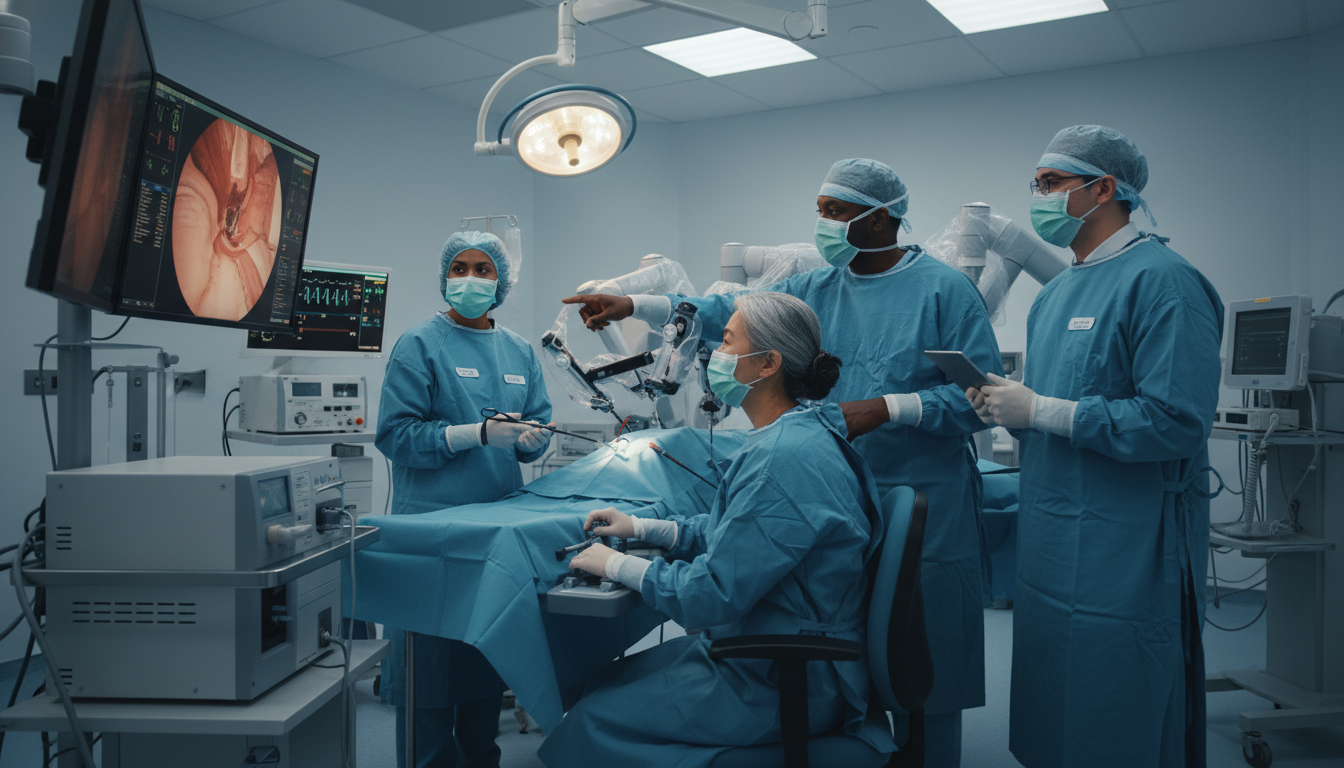
Core Residency Red Flags: How Malignancy Shows Up Day to Day
When you’re researching programs for the urology match—especially if you’re starting from a Caribbean medical school residency strategy—you need a structured framework for evaluating programs. Below are the main domains where malignancy tends to reveal itself and how they look in urology specifically.
1. Culture of Fear, Bullying, or Humiliation
Signs to watch for:
- Residents describe frequent yelling or public shaming by faculty or senior residents
- Mistakes are met with humiliation rather than teaching
- Residents joke about being “traumatized” or “terrified” of certain attendings, and it doesn’t feel like hyperbole
- You sense a tone of constant defensiveness—residents carefully watching their words around leadership
In a non-malignant but rigorous urology program, feedback can still be blunt and high standards demanding. The difference is:
- Feedback is specific, private, and tied to improvement
- Attendings show investment in your growth, not in asserting power
- Residents can acknowledge stress without fear of retaliation
For Caribbean IMGs, pay close attention to whether the harshness seems disproportionately directed at international graduates or at those with “non‑traditional” backgrounds.
2. Systematic Duty Hour Violations and Unsafe Workload
Urology is busy, and you will work hard anywhere. But malignant programs destroy boundaries and safety.
Red flags:
- Residents openly talk about regular 100+ hour weeks, not just occasional spikes
- Call is described as “soul‑crushing,” with no rest or backup support
- Residents routinely stay post-call for full days with no meaningful attempt at relief
- On interview day, faculty brag about “old-school” training or “we don’t believe in duty hours”
For a Caribbean IMG trying to prove themselves, it’s tempting to think “I’ll just out‑work everyone.” But if a program depends on residents violating duty hours to function, that’s structural toxicity, not a test of character.
3. Poor Supervision and Scapegoating
In urology, unsupervised procedures or poorly supervised clinics can be dangerous—for patients and for your licensing record.
Toxic program signs:
- Junior residents cover advanced cases without meaningful attending presence
- Residents talk about being “thrown to the wolves” in the OR or on complex consults
- When complications occur, there’s a pattern of blaming residents, especially juniors or IMGs
- No clear escalation process when a resident feels unsafe in the OR or on call
Healthy programs allow graduated autonomy but maintain clear supervisory structures and shared responsibility. You want the freedom to grow, but you also need protection when difficult cases go badly—which they inevitably will.
4. High Attrition and “Mysterious” Departures
Urology residencies are small (often 1–3 residents per year), so every departure matters.
Key red flags:
- Multiple residents have left or been “let go” in recent years
- These departures are poorly explained: “It just wasn’t a good fit,” “They had personal issues,” but no consistent, plausible story
- Residents talk about colleagues who left medicine altogether after training there
- The program has a reputation of “churning through” residents, especially those from non‑US MD schools
Some attrition can happen in any program, but recurrent, opaque attrition is a strong indicator of malignancy. As a Caribbean IMG, you do not want to be the next “quietly disappeared” trainee.
5. Lack of Advocacy and Career Support
In competitive specialties like urology, your program’s support can determine whether you match into fellowship or secure a strong job.
Warning signs include:
- Few or no fellows and limited exposure to subspecialty urology
- Residents getting weak or generic letters, especially for those not in the “favorite” group
- Faculty showing little interest in helping you present at conferences or publish
- Program leadership indifferent when residents express goals like fellowship or academic careers
For Caribbean IMGs, this is especially critical: you often need stronger objective output (research, presentations, letters) to be competitive for fellowships or academic positions. A program that doesn’t invest in this is a serious long‑term risk.
6. Disproportionate Problems for IMGs and Caribbean Graduates
Even in a generally solid program, malignancy can be selectively directed at IMGs or Caribbean graduates.
Possible signs:
- IMGs systematically get less operative time or fewer complex cases
- Rumors that “Caribbean grads here always struggle” but no clear support mechanisms in place
- Visa issues are handled late or poorly, putting residents at risk of losing status
- Offhand comments about “paper schools” or “second‑class training” directed at Caribbean medical school graduates
When you evaluate a program, try to get IMG-specific data:
- How many IMGs have trained there in urology in the last 5–10 years?
- Where did they go afterward (fellowship, practice type)?
- How does the program talk about those graduates?
How to Identify Toxic Program Signs Before You Rank
You can’t fully know a program until you train there, but you can dramatically reduce risk by being systematic. Use multiple information sources and look for patterns, not just isolated comments.
1. Start with Objective Data (But Don’t Stop There)
Some initial checks during your urology match research:
Case logs and surgical volume
- Ask on interview day or via email:
- What is the average case volume for a graduating resident?
- How is robotic, endoscopic, and open case exposure distributed?
- Very low volumes or extremely skewed case distribution may reflect poor structure or OR politics.
- Ask on interview day or via email:
Board pass rates (ABU qualifying and certifying exams)
- Repeated failures or high numbers of residents needing multiple attempts can indicate poor didactics or an unsupportive learning environment.
Fellowship placement and job outcomes
- Do graduates match into reputable fellowships?
- Are graduates consistently taking “any job they can get,” often in remote settings, without apparent choice?
Attrition
- Ask directly: “Have any residents left the program in the last 5 years?”
- Press gently for honest context.
These data don’t scream “malignant” by themselves, but they should push you to ask deeper questions.
2. Read Between the Lines During Interview Day
Interview days are marketing events, but cracks still show.
On the resident Q&A:
- Are residents loosely supervised during Q&A, or is leadership listening in while they talk?
- Do they seem able to answer candidly about hours, culture, and faculty?
- When asked about weaknesses of the program, do they give superficial answers or real reflections?
Body language and tone:
- Do residents look exhausted beyond normal for a busy specialty?
- Does anyone appear nervous when sensitive topics come up?
- Is there joking about “suffering” that feels more like a cry for help?
Subtle cues:
- An attending “joking” about how residents are “soft now” because of duty hours
- Heavy emphasis on “this is not a program for everyone” without explaining what that means educationally
- Vague or defensive responses to questions about attrition, board failures, or resident wellness
As a Caribbean IMG, you may be inclined to underweight these gut feelings. Don’t. If something feels off, assume there’s more you’re not seeing.
3. Use Off‑Line and Back‑Channel Information (Carefully)
Once you have your interview list, do targeted outreach:
Contact current or recent residents
- Preferably one-on-one by email or social media (LinkedIn, alumni networks, SGU residency match alumni groups, etc.)
- Ask permission for a quick phone/Zoom call to discuss their experience.
- Sample questions:
- “What surprised you most after starting?”
- “If you could change one thing about the program, what would it be?”
- “How are residents treated when they make errors?”
- “Have people left the program during your time? Why?”
- “As an IMG/Caribbean grad, would I feel supported here?”
Connect with Caribbean graduates in urology
- Use your school’s alumni office or Caribbean IMG communities (including SGU residency match alumni) to find urologists who trained in various programs.
- Ask explicitly:
- “Are there any programs you would strongly avoid?”
- “Any programs that are known to be malignant or especially unsupportive of IMGs?”
Online forums and social media
- Use with caution; individual posts may be biased or outdated.
- Look for recurrent themes about the same program across multiple years or platforms (e.g., repeated comments about bullying or residents disappearing mid-training).

Special Considerations for Caribbean IMGs in Urology
1. Interpreting Caribbean Medical School Residency Outcomes
If you’re coming from SGU or a similar school, the SGU residency match list (or your school’s equivalent) is a powerful data source:
- Identify urology matches from your school over the past 5–10 years.
- Note which programs have accepted multiple Caribbean IMGs.
- Reach out to those alumni for honest feedback about training quality, not just whether they matched.
Key questions to ask alumni:
- “How were Caribbean grads perceived at your program?”
- “Did any Caribbean or IMG residents struggle or leave?”
- “Would you recommend this program to another Caribbean grad?”
Knowing that a program has successfully trained Caribbean IMGs in urology—and that those graduates are satisfied with their training—is a strong positive sign.
2. Visa Sponsorship and Hidden Power Dynamics
As an IMG who may need a visa (J‑1 or H‑1B), visa control can become a leverage tool in malignant settings.
Red flags:
- Program is vague or inconsistent about visa policies
- Prior residents had visa delays or emergencies that leadership didn’t seem to prioritize
- You hear stories of residents feeling forced to tolerate mistreatment because they fear jeopardizing their visa
Before ranking:
- Get written confirmation from the GME office (not just verbal from a PD) about visa types they sponsor and any recurring issues.
- Ask current or former visa‑dependent residents how the program handles bureaucratic delays and advocacy.
3. Balancing Risk: One Offer vs Re‑Application
A hard reality: as a Caribbean IMG pursuing such a competitive field, you may end up with very few urology interviews or offers. The question arises: if your only option seems malignant, should you still take it?
There is no universal answer, but consider:
- Long‑term impact: A toxic program can produce weak training, poor letters, and reputational damage that follows you.
- Your mental health and safety: Chronic abuse is not a trivial cost.
- Alternative paths:
- Strengthen your application (research year, better exam scores, U.S. clinical experience) and reapply.
- Match into a preliminary surgery year at a supportive institution while continuing to pursue urology.
- Consider a related field (e.g., general surgery, interventional radiology) if your ultimate goal is a surgical/procedural career.
Before committing to a clearly malignant residency program—especially one with documented residency red flags—speak candidly with:
- A trusted urology mentor
- Caribbean IMG urologists who understand the nuances
- Your medical school’s dean or career advisor who has seen many match cycles
Your goal is not just any urology residency; it’s a training environment that will let you become the best urologist you can be.
Practical Checklist: Evaluating Urology Programs as a Caribbean IMG
Use this list during interview season and again before ranking.
Program Culture
- Residents describe respectful interactions with faculty
- No consistent stories of yelling, humiliation, or retaliation
- Residents feel comfortable giving honest answers about weaknesses
- Conflicts are managed through transparent, fair processes
Workload and Safety
- Duty hours usually within ACGME limits, occasional spikes only
- Post‑call days are usually honored
- Call schedule is heavy but not inhuman, and support is available
- Residents do not look chronically broken or fearful
Education and Supervision
- Structured didactics and regular teaching conferences
- Clear plan for gradual operative autonomy
- Attendings present and engaged for complex cases and complications
- Case logs for graduates are robust and balanced (endoscopy, robotics, open cases)
Outcomes and Support
- Recent board pass rates are acceptable
- Graduates secure decent fellowships or jobs that fit their goals
- Research opportunities exist and residents are supported to publish/present
- Program leaders actively advocate for residents (letters, networking)
IMG/Caribbean‑Specific Factors
- Program has successfully trained IMGs or Caribbean grads
- No pattern of IMGs being disproportionately criticized or pushed out
- Clear, consistent visa sponsorship with reliable GME support
- Alumni from Caribbean schools would choose the program again
If a program fails in multiple domains, especially around culture and safety, you are likely looking at a malignant residency program and should think very carefully before ranking it highly.
FAQs: Malignant Programs and the Urology Match for Caribbean IMGs
1. How can I distinguish a “demanding” program from a truly malignant residency program?
Demanding programs:
- Have high volume and long hours, but respect boundaries overall
- Provide strong supervision, especially early on
- Offer support and remediation if you struggle
- Maintain a culture where mistakes are learning opportunities
Malignant residency programs:
- Normalize chronic humiliation, intimidation, or fear
- Systematically violate duty hours without concern for safety
- Show patterns of scapegoating residents for system failures or complications
- Have recurrent attrition, board failures, or “mysterious disappearances”
Ask residents directly to describe how faculty handle complications and errors—that often reveals the true culture.
2. As a Caribbean IMG, should I ever rank a program that has clear residency red flags?
You should think very carefully. If red flags are mild and isolated, but the program seems willing to improve and supports IMGs, it may still be a reasonable choice—especially if it’s your only offer. However, if the program appears systematically malignant, with multiple core issues (abuse, chronic duty violations, IMG targeting, high attrition), it can do more long‑term damage than taking time to strengthen your application and reapply.
Discuss your specific situation with trusted mentors who understand the Caribbean medical school residency landscape and the competitiveness of urology.
3. Are community urology programs more likely to be malignant than academic ones?
Malignancy can occur in any setting—community or academic. Community programs may have fewer resources for research or fellowships, but some provide excellent operative training and supportive cultures. Conversely, some elite academic programs have reputations for toxic behavior that goes unchecked because of their prestige.
Evaluate each program on its own merits:
- Culture, supervision, and respect
- Case volume and breadth
- Outcomes for residents, especially IMGs
- Transparency about problems and willingness to improve
4. How can I use my Caribbean school’s match data (e.g., SGU residency match list) to avoid malignant urology programs?
Your school’s match list—such as the SGU residency match outcomes—is not just a brag sheet; it’s a research tool:
- Identify which urology programs have accepted multiple graduates from your school.
- Ask your dean’s office or alumni affairs to connect you with those graduates.
- Have candid conversations about:
- Training quality and operative exposure
- Culture and how Caribbean grads were treated
- Any known toxic program signs or red flags
- Whether they would recommend the program to you
Repeated negative feedback from your own school’s alumni is one of the clearest signals that a program may be malignant, especially towards Caribbean IMGs.
By approaching the urology match with a clear eye for residency red flags and malignant program behaviors—and by leveraging the experiences of Caribbean IMG alumni—you’ll be far better positioned to choose a residency that not only accepts you, but truly trains and supports you as a future urologist.