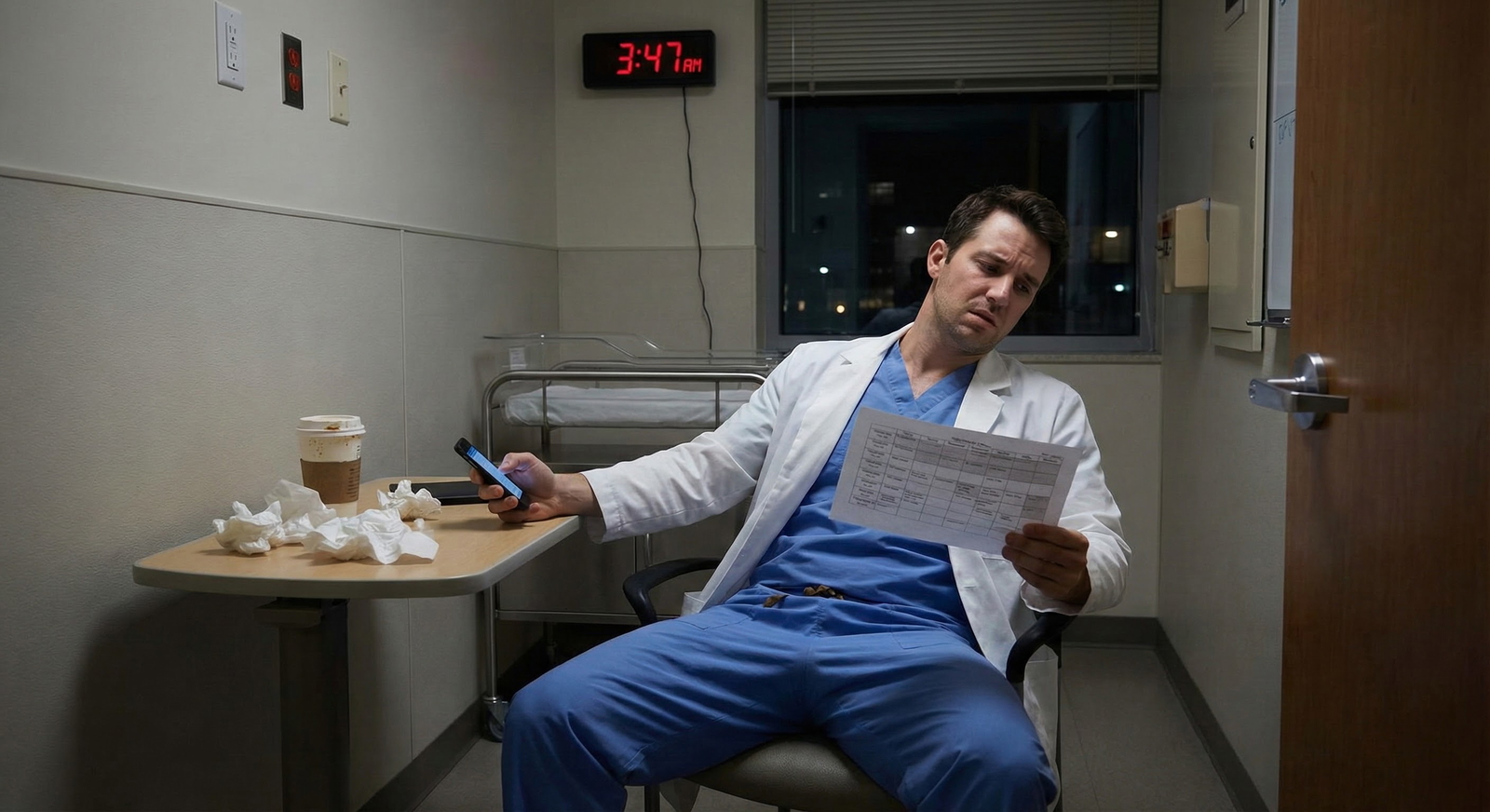
Why Malignant Programs Matter Even More for DO Graduates in Med-Psych
Combined Medicine-Psychiatry residency is an incredible pathway for physicians who see the whole patient—mind and body together. But as a DO graduate, you’re navigating two extra layers of complexity:
- The osteopathic residency match landscape and lingering bias in some programs.
- The hybrid nature of med psych residency (internal medicine + psychiatry), which can amplify both the strengths and weaknesses of a training environment.
A “malignant residency program” isn’t an official term, but residents commonly use it to describe a workplace that is chronically toxic, exploitative, unsafe, or psychologically damaging—well beyond normal residency stress. For DO graduates entering a medicine psychiatry combined program, avoiding malignant or toxic programs is critical, because:
- You’re committing to 5 years, not 3.
- You’re straddling two departments (medicine and psychiatry), doubling your exposure to potential dysfunction.
- Some programs may still harbor subtle or overt bias against DOs, which can worsen a toxic culture.
This article walks you through specific, practical red flags so you can better identify and avoid malignant programs—particularly if you are a DO graduate applying to med psych residency.
Understanding “Malignant” in the Context of Medicine-Psychiatry
The term “malignant” is overused and sometimes applied to any hard or high-volume program. That’s not accurate. Not all intense programs are malignant. A rigorous med psych residency can be demanding and still be supportive, fair, and educational.
What Actually Makes a Program “Malignant”?
Malignant or toxic programs often share these core characteristics:
- Chronic disrespect or humiliation as part of the culture (“teaching through shame”).
- Persistent violation of duty hour rules with pressure to underreport.
- Retaliation or punishment when residents speak up or ask for help.
- Educational neglect—using residents primarily as cheap labor.
- Lack of support during crises (medical errors, personal emergencies, mental health).
- High attrition (people leaving or being “counseled out” frequently).
In a medicine psychiatry combined program, these problems can be magnified because:
- You may be passed between departments with little accountability.
- Each side (medicine and psychiatry) can blame the other for issues.
- Communication breakdowns about schedules, expectations, or evaluations are more common.
So your goal isn’t just to find any med psych spot—it’s to avoid malignant programs that will erode your learning and well-being over 5 demanding years.
DO-Specific Considerations: Subtle Red Flags for Osteopathic Applicants
As a DO graduate, you may face challenges that MD peers do not. Some programs are fantastic for DOs; others may be technically open to DOs but practically unsupportive.
1. How to Gauge DO-Friendly vs DO-Tolerant vs DO-Hostile
Look for these patterns in the osteopathic residency match outcomes and current rosters:
DO-friendly programs
- Multiple DO residents currently in the program, ideally across several classes.
- DOs in leadership or chief roles.
- Faculty who are DOs, especially in leadership (PD, APD, core faculty).
- Website featuring DOs in photos, profiles, or alumni outcomes.
DO-tolerant programs
- One or two DOs total, often in older classes only.
- Program mentions “we accept DOs,” but all recent matches are MDs.
- Offhand remarks like, “We’ve had one DO and it worked out fine.”
DO-hostile or DO-skeptical programs
- No DOs in the current or recent resident cohorts.
- Repeated emphasis on “top tier” MD schools, Step scores, or “US allopathic graduates preferred.”
- Micro-comments in interviews: “So…you’re a DO. Why didn’t you go MD?” or “We usually match MDs, but you seem okay.”
A DO graduate residency experience in a DO-hostile or even DO-tolerant but unsupportive environment can feel profoundly isolating and unfair. That alone doesn’t always equal malignant—but combined with other toxic program signs, it’s a serious red flag.
2. Questions DO Applicants Should Ask (and How)
You don’t need to confront programs. Instead, ask neutrally worded, open-ended questions:
- “How have DO graduates done from your program in terms of fellowship and job placements?”
- “What kinds of osteopathic manipulative medicine (if any) are you open to integrating in patient care or teaching?”
- “What proportion of your incoming classes tend to be DOs vs MDs?”
- “Have your evaluation or remediation processes ever created challenges for DO grads—for example, any differences in expectations or support?”
Listen carefully for discomfort, deflection, or sudden changes in tone. That’s often more telling than the actual words.
Core Residency Red Flags: What Makes a Program Toxic or Malignant?
Toxic program signs fall into several categories. None of these alone proves a malignant residency program, but patterns matter—especially when multiple red flags cluster together.

1. Culture of Fear, Shame, or Retaliation
Red flags:
- Residents describe “teaching by humiliation” as normal.
- Stories of public shaming in rounds or conferences.
- Residents avoid speaking up in front of certain attendings to “stay off their radar.”
- Residents hint at or explicitly mention retaliation for complaints (bad schedules, poor evaluations, blocked letters).
In a medicine psychiatry combined setting, you might hear:
- “On medicine, it’s safe to ask questions, but psych is brutal” (or vice versa).
- “You just need to survive your ICU months; everyone gets destroyed.”
Punitive or fear-based cultures undermine learning and are particularly dangerous when you’re rotating through two departments with different power structures.
2. Duty Hours, Safety, and Chronic Overwork
Residency is busy by design, but outright abuse is different.
Red flags:
- Residents regularly exceed duty hours but laugh it off instead of acknowledging it as a problem.
- “We technically log 80 hours… but the real number is higher.”
- Strong hints to underreport hours or “adjust” logs.
- Frequent 28–30+ hour shifts on medicine with no post-call protection.
- Residents “pre-charting from home” or coming in significantly early or staying late to keep logs looking compliant.
In med psych combined programs, this might present as:
- “Medicine always runs us ragged; we use psych months to recover.”
- “Psych is so short-staffed that our caps don’t matter in reality.”
Duty hour violations plus a culture of silence is a major sign of a malignant residency program.
3. Education as a Low Priority
A tough program can be excellent if it remains education-centered. Malignant programs use residents chiefly as labor.
Red flags:
- Teaching conferences are frequently canceled for staffing needs.
- Attendings rarely or never teach at the bedside; they just sign notes.
- Little to no structured didactic curriculum that accounts for med psych training.
- Chief residents or senior residents do most of the teaching, with minimal faculty involvement.
- Residents struggle to get required experiences (e.g., specific psych subspecialties, ICU, addiction, C-L psychiatry).
In a medicine psychiatry combined program, assess whether both sides take education seriously:
- Are there dual-boarded med-psych attendings or faculty with genuine experience in integrated care?
- Is there a clear curriculum unique to medicine psychiatry combined, not just “you do whatever the categorical IM and psych residents do”?
4. Poor Communication, Disorganization, and Chaos
All programs have occasional scheduling mishaps, but chronic chaos is a bad sign.
Red flags:
- Rotation schedules arrive late or change constantly.
- Interns show up to rotations and no one knows they’re coming.
- Evaluations are late, missing, or nonspecific (“meets expectations” for everything).
- Mixed messages from medicine vs psychiatry leadership: different expectations, conflicting policies.
For med psych residents:
- Your combined identity is not recognized: “Are you IM or psych? We don’t know what to do with you.”
- Confusion about who advocates for you: IM PD or Psych PD? Or neither?
Chaos and lack of clear structure can quickly become malignant when residents are blamed for the system’s failures.
5. High Turnover, Attrition, or “Counseling Out”
Look at resident retention:
Red flags:
- Multiple residents have left the program in recent years.
- PGY-2 or PGY-3 classes are visibly smaller than PGY-1.
- Residents say things like: “We’ve had some people who weren’t a good fit,” but won’t elaborate.
- Rumors or half-told stories: “We had a DO who left…” or “Several people transferred out, but it’s complicated.”
Some attrition can be benign (family moves, switching specialties), but repeated loss of residents is concerning—especially if no one will explain transparently.
In medicine psychiatry combined programs, attrition is especially telling because applicants tend to be highly motivated and niche-focused. If people are still bailing out, something may be seriously wrong.
6. Lack of Support for Resident Well-Being and Mental Health
Residency is stressful. A non-malignant program recognizes that and builds supports.
Red flags:
- No clear access to mental health services that are confidential and free or low-cost.
- A culture where people say, “Don’t let them see weakness,” or “Asking for help is career suicide.”
- Residents describing significant burnout, depression, or anxiety, but leadership remains indifferent.
- Program response to a resident in crisis is mainly punitive (e.g., extended probation, threats of termination).
This is particularly concerning in a med psych residency, where you’re trained to care deeply about mental health. If your own program stigmatizes mental health struggles, that’s profoundly misaligned and a strong toxicity signal.
Medicine-Psychiatry–Specific Red Flags: Combined Program Pitfalls
Combined med psych residency has unique structural challenges. Some programs manage these well; others let them fester.
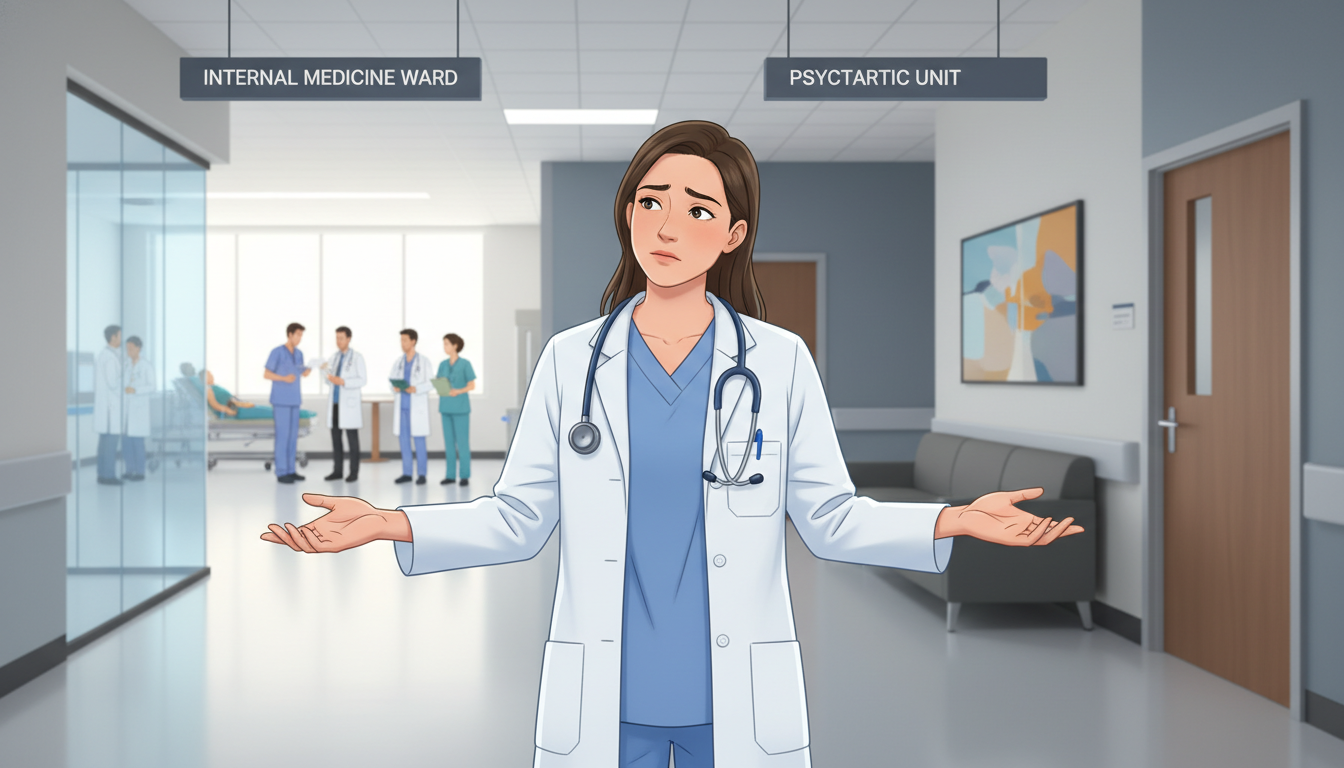
1. Two Departments, Zero Ownership
One of the most dangerous patterns in a medicine psychiatry combined program is diffused responsibility:
- Medicine says: “Psych runs the combined program.”
- Psychiatry says: “Medicine handles those logistics.”
- Residents feel owned by no one, with no clear advocate.
Red flags:
- No clearly identified combined program director with real authority.
- Your schedule, evaluations, or remediation plans are passed back and forth between departments.
- No regular, structured med-psych resident meetings with leadership.
- Residents say, “We basically fend for ourselves when departments disagree.”
2. Unequal Value: One Side Treats You as Second-Class
In some combined programs, one department is strong and supportive, while the other is indifferent or hostile.
Red flags:
- Medicine residents treat med psych residents as “half-psychiatrists” or less capable in acute care.
- Psychiatry residents or faculty question whether you’re “serious about psychiatry” because you’re also doing medicine.
- Call assignments place med psych residents in disproportionately undesirable roles (e.g., more nights, “float” duties) compared with categorical residents.
- Combined residents get less protected time for boards, research, or electives because “you owe time to both sides.”
Ask residents directly: “Do you feel equally valued in both departments?” Listen for hesitation.
3. Poor Integration of Educational Goals
Good med psych programs create a coherent experience—not just two parallel tracks.
Red flags:
- No explicit integrated curriculum on psychosomatic medicine, primary care psychiatry, or collaborative care.
- No faculty role models who actively practice integrated medicine and psychiatry.
- Your required rotations are just a patchwork of categorical IM and psych blocks, with no attention to combined identity.
- Little opportunity to work in integrated settings (e.g., C-L psychiatry with strong medicine input, integrated clinics, rehab psychiatry/medicine overlap).
A program can still be non-malignant yet underdeveloped, but poor integration often correlates with chronic neglect of combined residents’ needs—which can drift toward toxicity over years.
4. Boards, Evaluations, and Graduation Track Confusion
You must be board-eligible in both internal medicine and psychiatry. A malignant or poorly run program may fail to safeguard this.
Red flags:
- Residents unsure how many months of each specialty they will complete.
- Confusion about whether they’re on track to meet board requirements for both specialties.
- No one can clearly explain recent board pass rates for med psych residents.
- Residents feel pressured to prioritize one exam over the other because “no one here really cares if you pass both.”
This is especially important for DO graduates, who may also face COMLEX vs USMLE expectations. Ask:
- “How does the program support DO residents with board exams?”
- “Do you have experience helping DO grads succeed on ABIM and ABPN exams?”
How to Systematically Screen for Toxic Program Signs Before You Match
You can’t eliminate all risk, but you can heavily tilt the odds in your favor by using a structured approach before applying, during interviews, and ranking.
Step 1: Pre-Application Research
Check current and recent residents
- Look at the website and social media.
- Count how many DOs and how many combined vs categorical residents.
- Search LinkedIn for alumni: Are they completing both boards? Doing fellowships? Leaving early?
Talk to upperclassmen at your school
- Ask specifically: “Any medicine psychiatry combined programs you’d avoid?”
- DO graduates from your school who matched into med psych or related fields are gold mines of intel.
Online forums and crowdsourced tools
- Take all anonymous reports with caution—but pay attention to consistent negative themes.
- If multiple independent sources label a program “malignant residency program” or “toxic,” treat that seriously, even if you keep an open mind.
Step 2: High-Value Questions for Interview Day
When talking to residents and faculty, ask open-ended, neutral questions (they’re more likely to get honest-ish answers). Examples:
- “What changes have residents asked for in the last couple of years, and how has leadership responded?”
- “What are the toughest rotations, and how does the program support you during them?”
- “Has anyone left the program in the last 5 years? What were the circumstances?”
- “How does the program handle concerns about duty hours or workload?”
- “For DO graduates, how has the program supported them with exams, fellowship applications, or dealing with any bias?”
Listen carefully not only to content but tone and body language. If residents look around nervously before answering or stick to vague, rehearsed responses, that’s a flag.
Step 3: Sub-Internships and Away Rotations
As a DO graduate, away rotations in medicine psychiatry combined or related programs can be especially valuable—but also revealing.
During a rotation, observe:
- How do attendings correct mistakes? Calmly or with anger and shaming?
- How do nurses and staff talk to residents? Respectfully or dismissively?
- What happens at 4:45 pm on a busy day? Do attendings push to leave by 5 no matter what, dumping extra work on residents?
- Do residents feel safe saying “I don’t know” or “I need help”?
If you’re treated notably differently after someone notices you’re a DO, note that carefully.
Step 4: Post-Interview Reflection
After each interview or rotation, jot down:
- Green flags: supportive leaders, honest residents, clear structure, DOs thriving.
- Yellow flags: mild concerns, slightly defensive answers about hours or attrition.
- Red flags: clear evidence of duty hour violations, punitive culture, anti-DO sentiment, or residents who seem fearful.
When you form your rank list, heavily weight your gut impressions of safety and respect, not just prestige or location. Five years is a long time to spend in a malignant program.
Practical Advice for DO Graduates Targeting Med-Psych
Cast a balanced net.
Include a mix of:- Strong med psych programs known to be DO-friendly.
- A few categorical internal medicine and psychiatry programs as backups.
- Programs where you have personal connections (mentors, alumni).
Highlight your strengths as a DO.
- Emphasize holistic training, communication, and osteopathic principles that fit well with integrated med psych care.
- If you use OMM, talk about past experiences where it added value to complex patients, especially with comorbid pain, functional disorders, or psychosomatic presentations.
Be realistic about competitiveness without underselling yourself.
- Some programs that look fancy on paper may actually be malignant or unfriendly to DOs; don’t chase names blindly.
- A “mid-tier” but supportive, well-structured program is infinitely better than a prestigious but toxic environment.
Protect your long-term mental health.
- Start residency with a plan: personal physician, therapist, supportive relationships, and boundaries where possible.
- Remember that leaving a malignant program is sometimes necessary and honorable—your career is long, and your well-being matters more than a single training line on your CV.
FAQs: Identifying Malignant Programs in Medicine-Psychiatry for DO Graduates
1. How can I tell if a program is truly malignant vs just high-intensity?
Look beyond workload to culture and response:
- High-intensity but healthy programs: follow duty hours, provide support, teach actively, respond to resident feedback.
- Malignant programs: ignore or hide excessive hours, use shame, retaliate against complaints, and show high attrition. Ask residents: “Do you feel supported when things are hard?” Their hesitation is telling.
2. As a DO, should I avoid programs with no current DO residents?
Not automatically, but be more cautious. If there are no DOs in recent classes, ask:
- “Have you had DO residents in the past? How did they do?”
- “Are there structural reasons you haven’t matched DOs recently?”
If you sense bias or dismissiveness, treat this as a significant residency red flag—especially if combined with other toxic program signs.
3. Are medicine psychiatry combined programs more likely to be malignant than categorical ones?
Not inherently. Some med psych residency programs are exceptionally supportive and innovative. But the dual-department structure increases complexity:
- More chances for miscommunication, scheduling chaos, and unclear accountability.
- Higher risk that residents “fall through the cracks.”
You’re not at higher risk by default—but you must pay extra attention to how well-integrated and organized the combined program is.
4. What if I match into a program and later realize it’s malignant?
You still have options:
- Document concerns (duty hours, lack of supervision, harassment).
- Reach out to trusted mentors outside the program for perspective.
- Use institutional resources: GME office, ombudsman, HR, wellness offices.
- In severe cases, transferring programs or even taking a leave may be appropriate.
This is emotionally and logistically hard, but many physicians have successfully left toxic environments and built thriving careers. Prioritize safety and long-term health over “toughing it out.”
A medicine psychiatry combined residency can be one of the most fulfilling training paths in medicine—especially for DO graduates whose holistic lens fits naturally with integrated care. By learning to recognize residency red flags, asking the right questions, and weighing culture as heavily as prestige, you dramatically increase your chances of landing in a supportive, non-malignant program that will help you grow into the physician you want to be.