Understanding “Malignant” Programs in Diagnostic Radiology
For a DO graduate entering the diagnostic radiology match, identifying malignant residency programs is just as important as crafting a strong application. You are not only competing for a spot in the osteopathic residency match (now unified within ERAS/NRMP); you’re also choosing the professional environment that will shape your next 4–5 years and heavily influence your career.
In residency-speak, a “malignant residency program” refers to a toxic learning environment where residents are chronically overworked, under-supported, mistreated, or fearful of retaliation. Malignancy isn’t about being “demanding” or “high-volume” alone; it’s about a consistent pattern of behavior and systems that harm resident well‑being, education, and long‑term outcomes.
For DO graduates, the stakes can feel even higher. You may already be navigating biases in certain radiology residency programs, concerns about board exam pass rates (ABR vs COMLEX/USMLE dynamics), and uncertainty about how well you’ll be supported in fellowships and early practice. Identifying residency red flags early can help you avoid a toxic program and find a training environment that respects and develops you as an osteopathic physician and future radiologist.
This article will help you:
- Recognize common toxic program signs specific to diagnostic radiology
- Interpret radiology‑specific residency red flags in data, interviews, and resident interactions
- Understand how malignancy may uniquely affect DO graduates
- Apply practical strategies to evaluate programs throughout the application cycle
What “Malignant” Means in the Context of Radiology Residency
Diagnostic radiology is often perceived as a “lifestyle” specialty, but that perception can mask significant variability in culture. Some programs are supportive, educationally rich, and transparent. Others are rigid, punitive, or indifferent to resident well‑being. Understanding what constitutes true malignancy is key.
Core Features of a Malignant Residency Program
Across specialties, malignant programs tend to share several patterns:
Systemic disrespect and intimidation
- Faculty belittle residents in front of others
- PDs or chiefs use fear or humiliation as “motivation”
- Residents feel afraid to ask questions, log concerns, or report issues
Chronic overwork with unsafe workloads
- Persistent violation of duty hours with pressure to under-report
- Unrealistic reading room volumes for level of training
- Minimal time for independent study, board prep, or rest
Lack of educational priorities
- Service always trumps education—no protected didactics, constant interruptions
- Residents treated essentially as low-cost labor, not learners
- Little to no meaningful feedback or mentoring
Retaliation or fear of speaking up
- Residents who raise issues become targets—unfavorable call assignments, bad evaluations
- “Open door” policies exist on paper only; residents privately warn you not to complain
High turnover and instability
- Recurrent resignations, dismissals, or transfers
- Rapidly changing leadership without clear explanation
- Long-term “acting” PD or chair with no permanent replacement
Not every tough or high‑volume program is malignant. Some rigorous radiology residencies with high expectations are deeply supportive and produce excellent radiologists. The key distinction is whether the environment is:
- Challenging but supportive (high expectations, real teaching, safety to fail and learn)
vs. - Abusive or neglectful (fear-based, disorganized, and educationally hollow)
Radiology‑Specific Red Flags: What to Watch for as a DO Applicant
Diagnostic radiology has unique workflow, culture, and metrics that shape what malignancy looks like. Here are radiology‑specific residency red flags and how to interpret them—especially relevant for a DO graduate residency candidate.
1. ABR Board Pass Rates and Training Quality
For radiology, the ABR Core and Certifying Exams are high-stakes. While a single bad year can happen anywhere, chronically poor performance may signal deeper issues.
Red flags:
- Multi-year pattern of low or inconsistent ABR Core exam pass rates
- Residents express anxiety that “we’re not prepared for boards”
- Lack of structured board review, mock exams, or physics teaching
- Residents routinely staying late to catch up on work during scheduled conference time
How to investigate:
- Ask directly on interview day:
- “What have you done in response to any recent Core exam failures?”
- “How is physics integrated into the curriculum across all four years?”
- Look for transparency. A strong program with a bad year will explain what went wrong and how they fixed it. Evasive or defensive answers are concerning.
2. Call Structure and Workload Misalignment
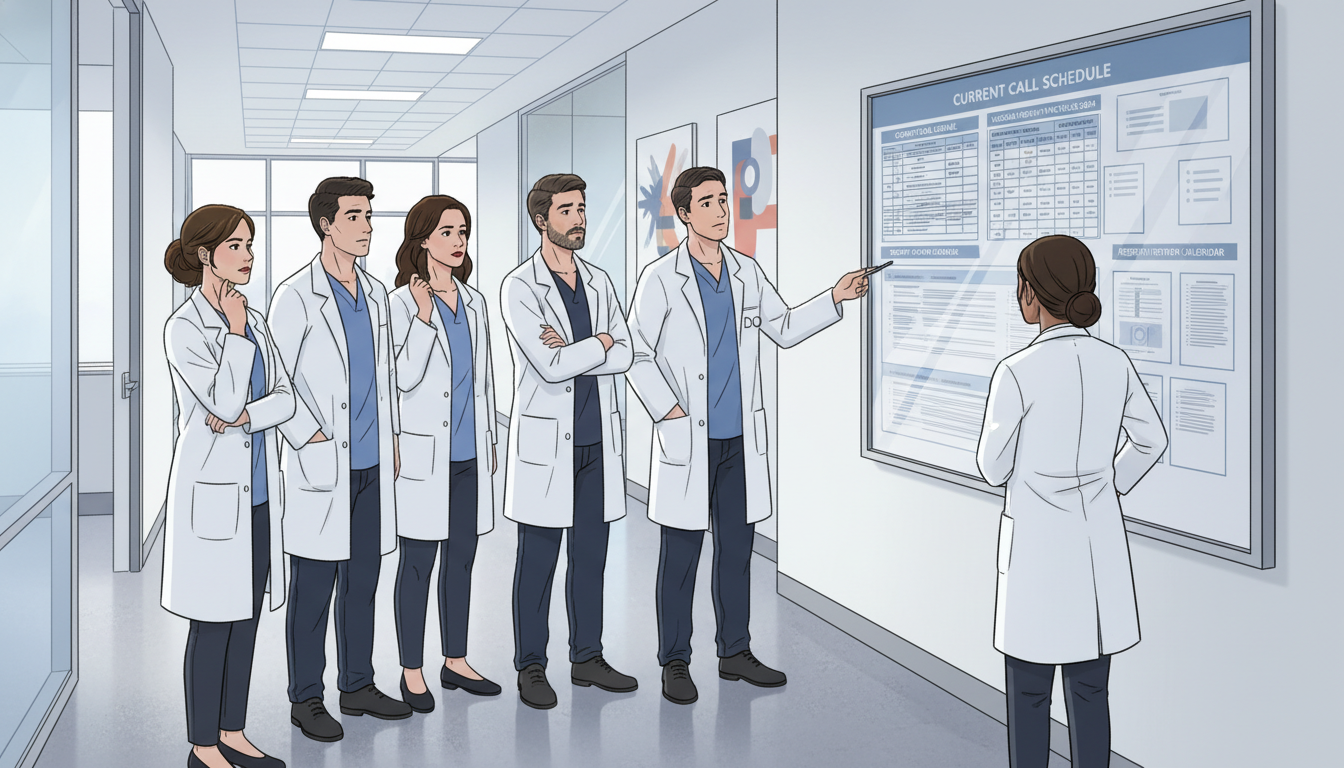
Radiology call is a major stressor and a common place where malignancy appears.
Potentially malignant patterns:
- Early, unsupervised call without adequate senior backup
- PGY-2 or early R1 residents pushed into high-volume solo night float with minimal support
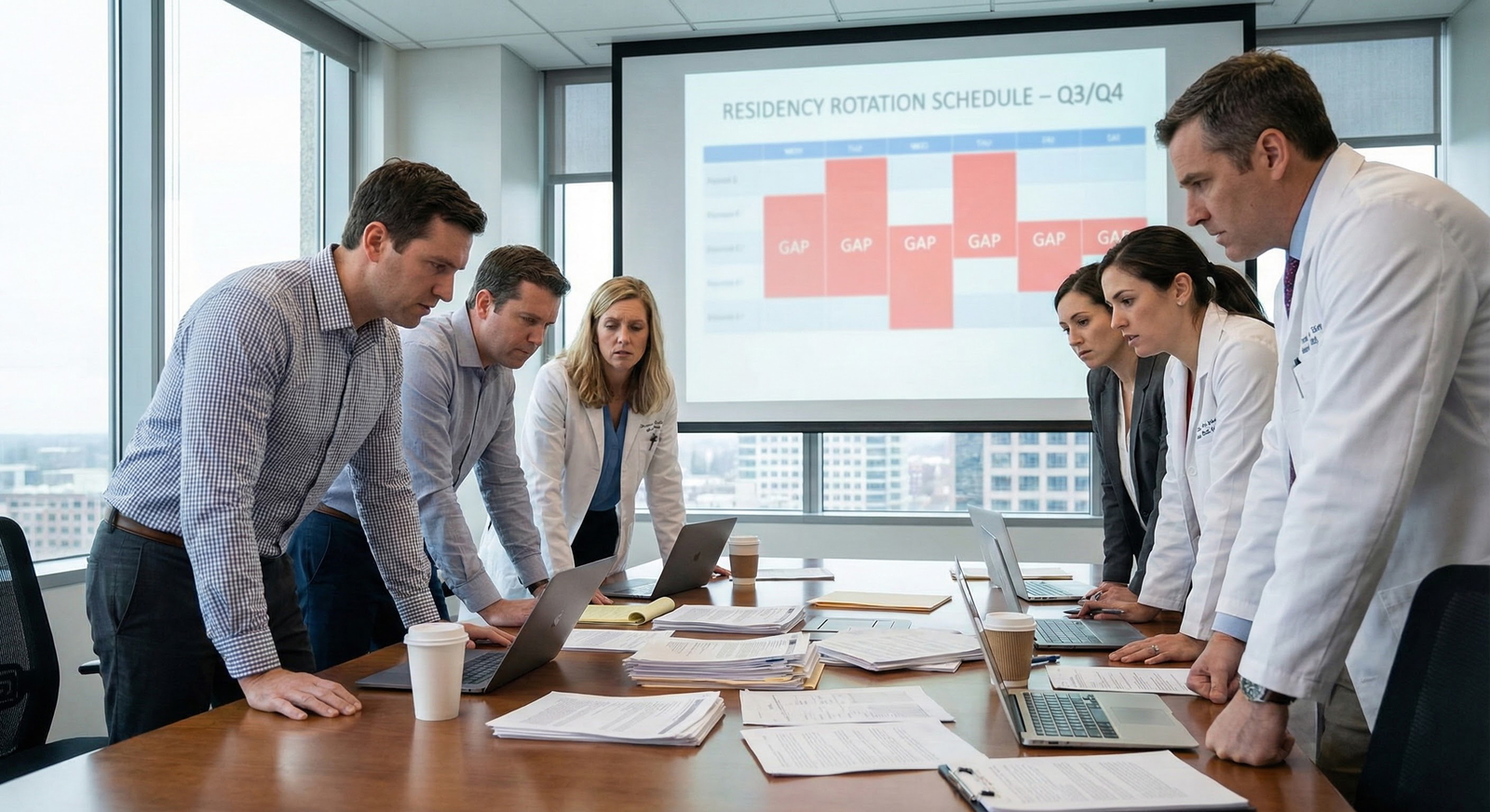
- Chronic understaffing leading to unsafe overnight workloads
- Residents expected to function as de facto attendings, signing out huge lists with minimal supervision
For a DO graduate who may already feel pressure to “prove themselves,” this can create disproportionate risk for burnout and medical error.
Key questions to ask residents:
- “How many studies do you typically read per night on call at your level?”
- “Is an attending always available and responsive for overnight questions?”
- “Has the call system changed recently? Why?”
- “Do you feel call is educational or just service?”
If residents describe call as “soul-crushing,” “unsafe,” or “the reason people leave,” those are clear toxic program signs.
3. Didactics Culture and Educational Priorities
Strong diagnostic radiology programs treat didactics as protected, sacred time. Malignant or dysfunctional programs don’t.
Toxic signs:
- Residents constantly pulled from conference for “service needs”
- No consistent schedule of subspecialty lectures (neuroradiology, MSK, body, IR, etc.)
- Physics content is sporadic or entirely resident-led without faculty oversight
- Residents depend heavily on external resources because “we don’t get much teaching here”
Ask specifically:
- “Are conferences protected? How often are you pulled out?”
- “Who usually gives didactics—staff, fellows, or mostly residents?”
- “Do you have a structured curriculum or is it more ad hoc?”
If multiple residents privately say, “You basically teach yourself,” that strongly suggests a program where service dominates and education is secondary.
4. Culture in the Reading Room
The reading room is the heart of a radiology residency. It’s where you learn to think like a radiologist. The micro‑culture here tells you a lot.
Malignant reading room patterns:
- Attendings routinely shame residents in front of technologists, nurses, or other staff
- Residents are clearly anxious about asking questions
- Senior residents refuse to review cases or seem irritated by juniors’ questions
- A “sink or swim” mentality is celebrated rather than acknowledged as problematic
Subtle positive signs (i.e., not malignant):
- Attendings pause to teach or ask “What do you think?” before dictating
- Residents look comfortable sitting next to staff and scrolling through cases
- Staff (techs, NPs, coordinators) greet residents by name and seem at ease
During second looks or away rotations, your best data will come from silently observing reading rooms across subspecialties—not just what you’re told in the formal tour.

How Malignancy Can Affect DO Graduates Specifically
Although the match is now unified, DO applicants may still encounter implicit bias or structural disadvantages in some programs. In a malignant or borderline-toxic environment, those vulnerabilities can be amplified.
1. Subtle (and Not So Subtle) Bias
Some radiology residency programs still strongly prefer MDs or have limited experience with DO graduates.
Concerning patterns for DO applicants:
- Only 1 DO resident in the last several classes—or none at all—despite a large program size
- Residents openly tell you: “We’ve never had a DO here before” and the tone is skeptical
- Faculty question osteopathic training, COMLEX exams, or your previous clinical experience
While lack of DOs alone is not proof of malignancy, it’s a yellow flag—especially if combined with:
- Poor understanding of COMLEX vs USMLE
- Dismissive comments about osteopathic schools or rotations
- Hesitancy to talk about how DOs have performed historically in the program
You want a program that sees you as a physician first, not as “the DO experiment.”
2. Unequal Opportunities for DO Residents
In some toxic environments, DO trainees may be:
- Steered away from competitive fellowships
- Given fewer research opportunities or discouraged from academic projects
- Left out of informal mentoring networks that benefit MD colleagues
On interview day or during away rotations, look for equity signals:
- Are DO residents (if present) thriving—getting fellowships, engaged in research, used as chief residents?
- Do attending radiologists talk about DO alumni with respect and concrete success stories?
If DO graduates are consistently underrepresented in leadership, research, or top fellowships, that suggests structural bias. Combined with other problems, this can turn a “difficult” program into a malignant one for you personally.
3. Vulnerability to Retaliation
Residents who are perceived as “outsiders” (including DOs, IMGs, or non-traditional trainees) can be more vulnerable in a malignant program where retaliation is common. This may show up as:
- Disproportionately negative evaluations when conflicts arise
- Less flexibility with leave or schedule accommodations
- Being blamed for systemic problems (“You’re just not at the same level as the MDs”)
You should not train in a program where your background is used against you when conflict occurs. During interviews, ask:
- “How does the program support residents from diverse training backgrounds?”
- “Can you describe how you handle remediation or struggling residents?”
Vague or defensive answers, especially paired with an absence of DO graduates, may be a strong warning.
Practical Strategies to Identify Malignant Radiology Programs
To avoid a malignant residency program, you need a structured approach that spans the entire osteopathic residency match process: researching programs, applying, interviewing, and making your rank list.
1. Pre‑Application Research: Data and Reputation
Start with objective data but interpret it in context.
Sources to review:
- FREIDA, program websites, and ACGME data
- ABR Core pass rates (often available on program or department pages; if not, ask)
- Resident rosters: look for DO representation, diversity, class size stability
- Any notable ACGME citations or probation history
Red flags in the data:
- Repeated ABR failures, especially if unacknowledged
- Frequent changes in program director over short periods
- Multiple unfilled positions in recent matches
- Sudden drop in case volume (e.g., losing hospital contracts or affiliations)
Reputation checks:
- Ask your home radiology faculty or advisors about specific programs
- Look at national societies (ACR, RSNA, subspecialty societies) and see where program leadership participates—engaged leaders are often better educators
- Use caution with anonymous online forums: look for patterns over time, not isolated rants
2. Away Rotations: Your Best View Behind the Curtain
If you’re serious about a specific diagnostic radiology match at a program, an away rotation is invaluable—especially as a DO graduate.
During your rotation:
- Rotate through multiple reading rooms (ER, neuro, body, chest) to sample culture
- Observe how attendings speak to residents and to each other
- Ask senior residents privately about:
- Call, workload, burnout
- PD responsiveness to concerns
- Any co-residents who’ve left or been dismissed—and why
Key things to track:
- Do you see real teaching at the workstation or just “read and move on”?
- Are residents comfortable disagreeing with faculty or offering different reads?
- Do residents seem exhausted, disengaged, or bitter?
- How often do you hear statements like: “It’s just 4 years, you can survive anything”?
- Survival language is a major residency red flag.
If, by the end of a month, you wouldn’t feel safe making a mistake in that environment, treat that as a serious concern.

3. Interview Day: Reading Between the Lines
Residency interviews are curated, but malignancy still leaks through if you listen closely.
What to ask faculty (PD, APD, chair):
- “What are you most proud of about your residents?”
- “What changes have you implemented in the last 2–3 years based on resident feedback?”
- “Can you describe how the program handles serious conflicts or complaints?”
- “How do you support DO graduates or residents from non-traditional backgrounds?”
Red-flag responses:
- Blaming residents for all prior issues: “We had a couple of bad apples; everything’s fine now.”
- No specific examples of changes in response to feedback
- Dismissive comments about wellness, work-life balance, or mental health
- Overemphasis on “we’re a family” without concrete details about support, structure, or transparency
- Sometimes, “family” language masks a culture where boundaries and professionalism are weak.
What to ask residents (without faculty around):
- “What are you not allowed to complain about here?”
- “If you had to pick one thing you’d change about the program, what would it be?”
- “Has anyone left the program during your time here? What happened?”
- “Do you feel safe reporting concerns, and do things actually change?”
Pay attention to facial expressions and hesitations. Residents may not speak freely, but discomfort, side glances, or “we should talk later” are data points.
4. Social Events and Off‑The‑Record Comments
Pre-interview dinners and post‑interview socials are where you may see the unfiltered culture.
Telling signs:
- Residents heavily drinking and making cynical or bitter jokes about the program
- One or two residents dominating the conversation while others look disengaged
- Inconsistent narratives: one resident says the program is extremely supportive; another jokes that “we’re all trapped here”
As a DO graduate, you might also pay attention to:
- Whether DO residents (if present) are invited and integrated into these events
- How residents talk about program leadership and how approachable they feel PD/APDs are
Treat compliments or complaints that are repeated by multiple people as more credible than one-off comments.
5. Ranking Programs: Weighing Malignancy vs. Opportunity
When you create your rank list, it’s tempting to prioritize prestige or fellowship outcomes above all else. But a malignant diagnostic radiology residency can derail your well-being, career satisfaction, and even your ability to pass boards.
Questions to guide your final rankings:
- Can I safely make a mistake here and expect support rather than humiliation?
- Do residents appear to be growing into confident, competent radiologists?
- Is there clear evidence that DO graduates have been fully supported and successful?
- Does the program communicate honestly about its weaknesses and how it is improving?
- If I’m having the worst week of my life, would I trust this leadership to treat me fairly?
If the answer to these is “no,” you should think carefully before ranking that program highly—no matter its name or location.
Putting It All Together: A Checklist for DO Applicants in Diagnostic Radiology
Here is a concise, practical checklist you can adapt as you evaluate programs. For each program, ask:
Program Structure & Outcomes
- Stable leadership (PD in role ≥ 2–3 years, no repeated abrupt changes)
- Transparent ABR Core exam pass rates; any issues addressed with clear remediation plan
- Reasonable case volumes and call responsibilities for level of training
- Adequate mix of cases and strong subspecialty exposure
Educational Environment
- Protected didactics; residents rarely pulled away for service
- Structured physics and Core exam preparation
- Faculty who visibly teach at the workstation and in conference
- Residents feel they can ask questions and admit uncertainty
Culture & Well-Being
- Residents appear genuinely satisfied, not just “surviving”
- No consistent stories of bullying, humiliation, or retaliation
- Leadership is responsive to feedback and can name specific changes made
- Reasonable attention to wellness: time off, vacations honored, mental health resources
DO-Friendliness
- History of DO residents in the program (ideal but not mandatory)
- DO alumni are in strong fellowships or positions, if present
- No disparaging comments about osteopathic training or COMLEX
- Clear, respectful answers when you ask about DO applicants and support
If a program fails multiple sections of this checklist—especially culture and well-being—it may be a malignant residency program, and you should think twice before ranking it.
FAQs: Malignant Radiology Programs and DO Applicants
1. As a DO, should I automatically avoid programs that have never had DO residents?
Not automatically, but approach cautiously. Lack of DO graduates is a yellow flag, not a guarantee of toxicity. Ask directly how the program views DO applicants, whether they’ve ever interviewed or ranked DOs, and how they support residents from diverse backgrounds. If their answers are vague, dismissive, or they seem unfamiliar with DO training and exams, you may be better off focusing on programs with a clearer track record of supporting DOs.
2. Is a high-volume, high‑reputation radiology residency inherently malignant?
No. Some of the strongest diagnostic radiology match destinations combine high volume with excellent education and healthy culture. Malignancy is less about volume and more about how the program handles volume—do attendings teach, protect conferences, and support residents, or is everyone drowning with no regard for well‑being? If residents look engaged and supported, a rigorous program can be a fantastic training environment.
3. What if I only realize a program is malignant after I match?
If you discover you’re in a toxic program:
- Document problems factually (dates, events, duty hour violations, harassment).
- Use internal resources: chief residents, PD, GME office, ombuds, HR.
- If the environment remains unsafe or abusive despite attempts to address it, explore transferring with the help of trusted faculty and your school’s GME advisors.
- Protect your mental health—use counseling services, peer support, and national physician wellness resources.
It’s far better to identify a malignant residency program before ranking, but you are not powerless if problems emerge later.
4. How can I balance avoiding malignancy with maximizing my chances of matching into radiology as a DO?
For a DO graduate residency applicant, the diagnostic radiology match can be competitive, but you should not feel forced to accept clearly malignant environments. Strategies:
- Build a broad, realistic list that mixes academic, community, and hybrid programs.
- Include DO‑friendly programs with a track record of supporting osteopathic graduates.
- Prioritize culture and training quality over “brand name.”
- Use away rotations strategically to verify that your top choices are healthy environments.
Your goal is not just to match, but to thrive—to become a competent, confident radiologist in a program that respects your background and supports your future.