Why “Malignant” Anesthesiology Programs Matter More Than You Think
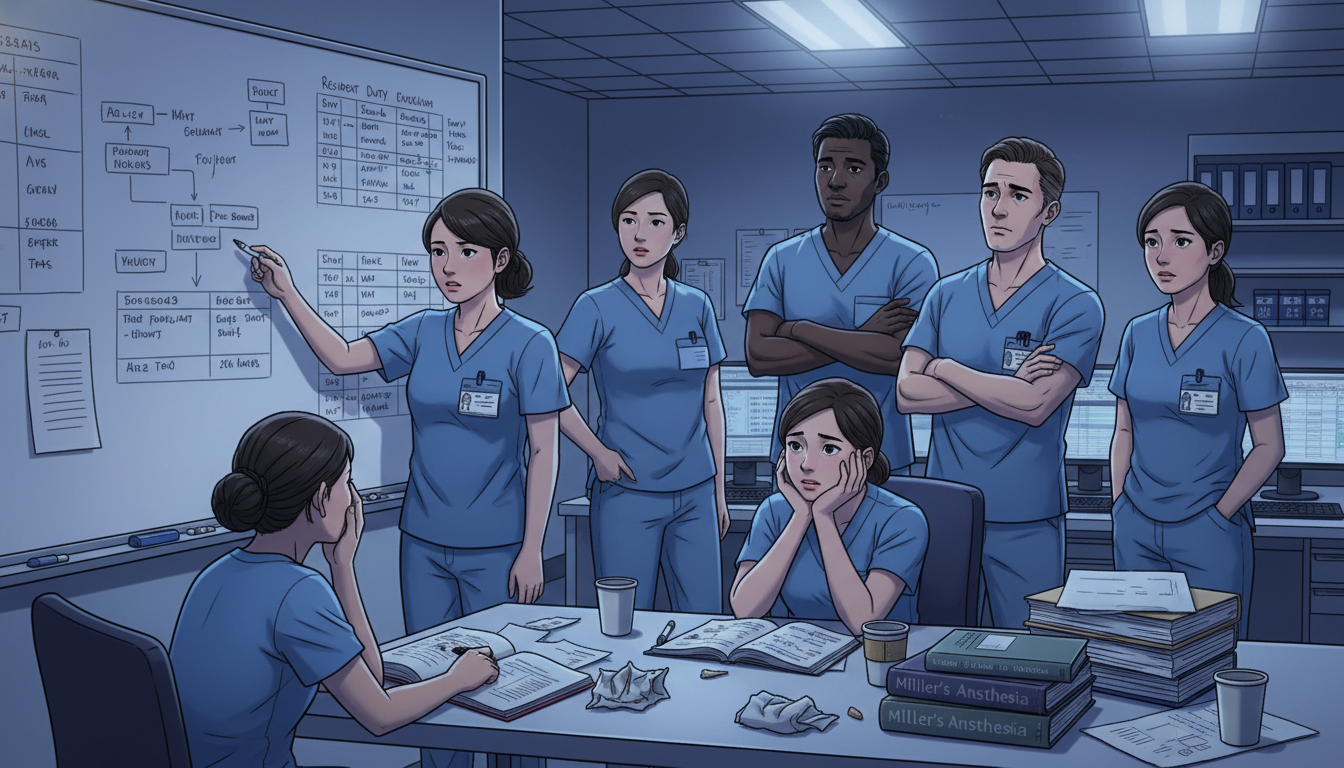
Choosing an anesthesiology residency is about much more than matching into a big name or a preferred city. Hidden behind impressive websites and glossy recruitment brochures, some programs harbor cultures and structures that can harm your training, mental health, and career. These are often called “malignant” residency programs—places where systemic dysfunction, exploitation, or abuse are normalized.
In anesthesiology, where patient acuity is high and error margins are slim, a toxic program can have consequences that extend beyond your own well‑being to patient safety and your long-term competence as an attending.
This guide will help you:
- Understand what “malignant” actually means in the context of anesthesiology residency
- Recognize specific residency red flags before you rank a program
- Learn what to ask on interview day and how to interpret what you see and hear
- Use resources and strategies to protect yourself during the anesthesia match
- Know what you can do if you realize a program is malignant after you start
What Makes a Residency Program “Malignant”?
“Malignant” is not an official ACGME term. Residents often use it to describe a program that:
- Systematically prioritizes service over education
- Ignores or punishes resident concerns
- Normalizes fear, humiliation, or retaliation
- Fails to meet ACGME and duty hour requirements
- Leaves residents feeling unsafe, unsupported, and trapped
This is more than just “busy” or “high volume.” Many excellent anesthesiology residencies are intense and demanding but still supportive and educational. A malignant residency program, in contrast, has chronic, systemic issues that erode education, wellness, and patient care.
Key dimensions that distinguish a strong but rigorous program from a malignant one:
Culture:
- Healthy: High expectations + psychological safety + mentorship
- Malignant: Fear, shaming, scapegoating, chronic anxiety
Education vs Service:
- Healthy: Deliberate teaching, protected didactics, faculty invested in growth
- Malignant: Residents treated as cheap labor, little interest in education
Safety and Support:
- Healthy: Encouraged to ask for help, graduated autonomy, protected fatigue mitigation
- Malignant: Discouraged from calling for help, shamed for not knowing, chronic unsafe workloads
Responsiveness to Problems:
- Healthy: Feedback mechanisms exist and lead to real changes
- Malignant: Retaliation, gaslighting, or stonewalling when concerns are raised
Core Red Flag Domains in Anesthesiology Residencies
Below are the most important toxic program signs to evaluate during the anesthesia match process, with anesthesiology-specific details and examples.
1. Culture of Fear, Humiliation, and Retaliation
Anesthesiology is stressful by nature, but you should not feel afraid of your own colleagues and faculty.
Red flags:
- Residents describe specific attendings known for:
- Yelling in the OR
- Public humiliation during cases
- Intentionally “pimping until you break” or making you cry
- Residents say things like:
- “Just don’t ever get on Dr. X’s bad side.”
- “We’ve learned who not to call unless it’s absolutely life or death.”
- Stories of residents being:
- Punished with worse schedules after complaining
- Threatened with poor evaluations or being “not graduated on time” for raising concerns
- A culture where:
- Errors are punished harshly instead of used as learning opportunities
- People are blamed rather than systems being examined
What this looks like in anesthesiology:
- A CA‑1 is berated in front of the whole OR team for asking a question about vasopressor dosing.
- A resident who reports an unsafe attending is suddenly assigned only the most difficult rooms with minimal help.
- Residents whisper about which faculty will “destroy you” in oral exams or performance reviews.
What to look for / ask:
- “How does the program handle medical errors or near misses?”
Watch if the answer focuses on learning and debriefing—or on punishment and shame. - “Have you ever felt unsafe speaking up about a concern?”
A meaningful pause or forced enthusiasm is worrisome.
2. Duty Hours, Call, and Workload: Numbers That Don’t Add Up
Anesthesiology residents are busy. But there is a difference between a challenging workload and chronic, unsafe overwork.
Red flags:
- Duty hours:
- Residents openly admit to regular duty hour violations
- Officially “we meet duty hours,” but off the record you hear:
- “We just don’t log accurately.”
- “You’ll hear this everywhere, but we’re expected to be ‘flexible’ with hours.”
- Call / night structure:
- Frequent 24‑hour calls without adequate post‑call relief
- Residents routinely staying late past the scheduled end (“staying until the list is done” every day)
- Post‑call days often not truly off (pressure to stay for rooms, “help out,” or attend didactics)
- Clinical load:
- Multiple high-acuity rooms without adequate attending backup
- Chronic understaffing of CRNAs or attendings, shifting burden to residents
- Call schedules that look unreasonable for the number of residents on the roster
Anesthesia-specific examples:
- CA‑1s doing regular 24‑hour call early in the year without adequate backup or transitioning.
- Trainees frequently doing cases late into the night and still expected to arrive by 5:30–6:00 AM the next morning.
- ICU or OB anesthesia rotations with unremitting overnight work and little rest.
What to look for / ask:
- “How often do you have to stay more than 2–3 hours past your scheduled day?”
- “Do residents feel comfortable logging duty hour violations honestly?”
- “What time do you usually get out of the hospital post‑call?”
If multiple residents laugh or look at each other before answering, pay attention.
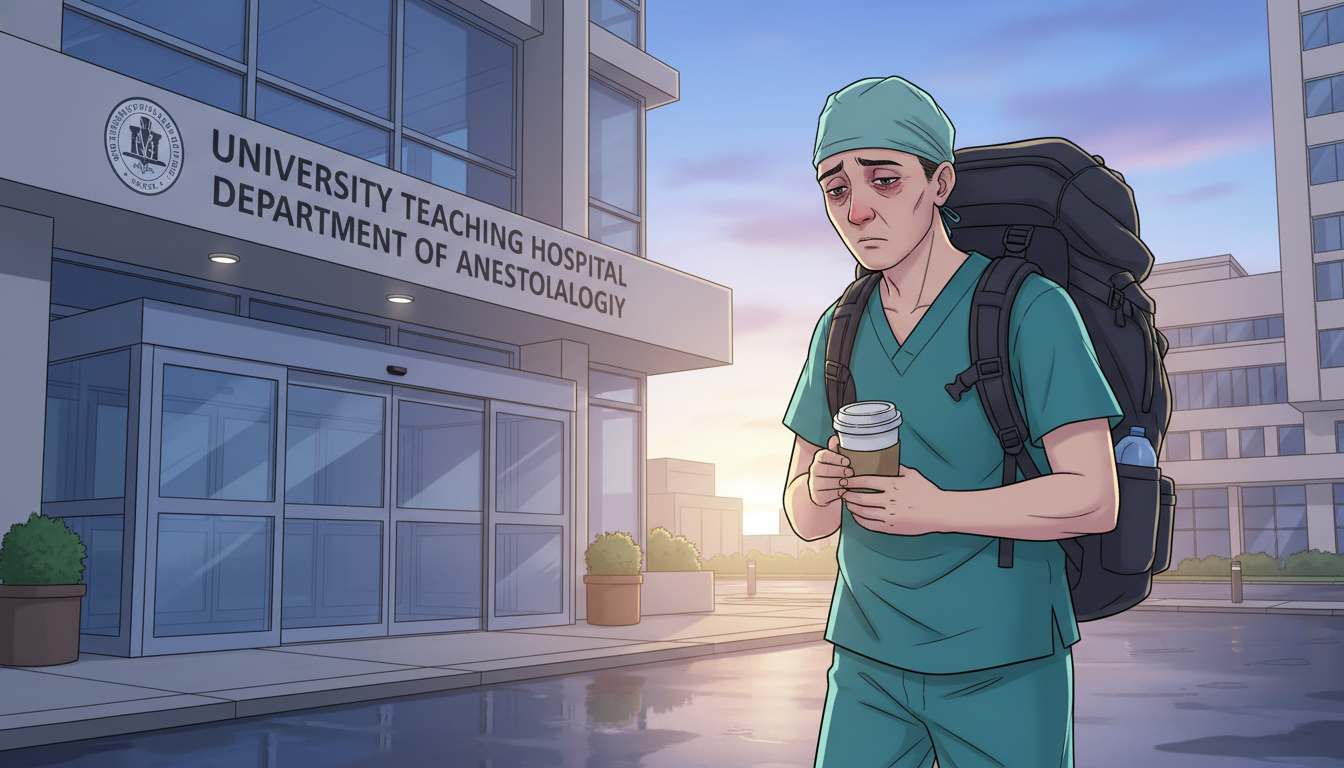
If residents insist hours are “totally fine,” but they look visibly exhausted and you notice dark humor about living at the hospital, consider that a silent red flag.
3. Education vs. Service: Are You a Trainee or Labor?
In a strong anesthesiology residency, you are primarily a learner, even when you are working hard. In a malignant residency program, you’re treated primarily as cheap, easily replaced labor.
Red flags:
- Didactics:
- Repeated cancellation of lectures due to “service needs”
- Didactic time not truly protected; residents regularly pulled out of conferences for cases
- Case assignments:
- Junior residents stuck doing mostly ASA I–II short cases, no plan for progression to complex cases
- Senior residents used mainly to cover service gaps instead of building advanced skills (e.g., cardiac, complex neuro, regional, transplant)
- Supervision:
- Attendings who disappear from the OR or are chronically unavailable to teach
- Minimal feedback on performance, no structured evaluations or milestones discussions
- Boards and exams:
- Poor track record on ABA BASIC or ADVANCED exam, with no clear remediation or structured plan
- No practice oral exams, mock OSCEs, or structured board prep
Anesthesia-specific signs of healthy vs toxic service balance:
Healthy:
- Residents regularly assigned to:
- Regional blocks with supervision
- Complex cases as CA‑2/CA‑3 with progressive autonomy
- Dedicated time in subspecialty rotations (cardiac, peds, pain) with appropriate teaching
- Faculty who explain their plans and ask for your reasoning:
- “Walk me through your plan for induction here.”
Malignant:
- You mostly supervise CRNAs or cover multiple sites with little opportunity to actually do cases or procedures yourself.
- Residents say:
- “If something needs to get done, they’ll just put a resident on it.”
- “We don’t have time for lectures; the ORs come first.”
What to look for / ask:
- “How often are didactics cancelled due to clinical demands?”
- “Who usually staffs the most complex cardiac or thoracic cases—residents or fellows/CRNAs?”
- “As a CA‑3, what does your typical day look like? Do you feel like you’re really practicing at an attending‑like level?”
4. Outcomes and Trajectory: Are Graduates Thriving or Just Surviving?
A program’s culture shows up most clearly in what happens to its residents over time.
Red flags:
- High attrition:
- Multiple residents leaving the program or switching specialties over the last few years
- PGY gaps in the resident list (e.g., no CA‑3s or multiple missing spots)
- Board performance:
- Chronic poor ABA BASIC or ADVANCED pass rates
- Program is vague or defensive when discussing board statistics
- Fellowship and job placement:
- Few residents securing competitive fellowships or desirable jobs
- No data or examples available when you ask about career outcomes
- Alumni engagement:
- Few alumni involved as faculty or mentors
- Limited involvement of recent grads in teaching or recruitment
What to look for / ask:
- “Have any residents left the program or switched out in the last 3–5 years? What were the circumstances?”
- “How many residents failed the BASIC/ADVANCED exam in the last few years, and what support did they receive?”
- “Where did recent graduates go for fellowship or practice?”
Well-run programs will share numbers and context transparently, including what they did to improve. Evasive or defensive answers are strong residency red flags.
5. Morale, Wellness, and Support Systems
Burnout is a known risk in anesthesiology. A good program acknowledges this and builds infrastructure to help; a malignant one ignores or worsens it.
Red flags:
- Visible burnout:
- Residents look chronically exhausted, flat, or disengaged on interview day
- You hear frequent dark or cynical humor about “just surviving”
- Wellness programs:
- Wellness discussed only superficially (“We have pizza sometimes”)
- No accessible mental health resources, or residents say they don’t feel comfortable using them
- Support during crises:
- Residents who experience major life events (illness, family death, childbirth) receive unsupportive or punitive responses
- Culture of silence:
- No one can identify a trusted safety net person (PD, APD, chief, ombuds) they would go to in a crisis
- Residents say, “We just get through it” rather than describing actual support systems
Anesthesia-specific stressors to ask about:
- “How does the program support residents after a difficult case, like a bad outcome in the OR or ICU?”
- “What happens if a resident is struggling—clinically, emotionally, or academically? Are there formal and informal supports?”
- “Have there been suicides, serious incidents, or major crises in recent years, and how did leadership handle them?”
(You may not always get direct answers, but tone and body language will tell you plenty.)
A high-acuity specialty demands a culture where debriefs, peer support, and nonpunitive responses to distress are the norm.

6. Leadership, Transparency, and Resident Voice
Leadership sets the tone. Even very busy, high-volume anesthesiology programs can be excellent if the leadership is responsive, transparent, and resident-focused.
Red flags:
- Program leadership:
- Program director (PD) rarely seen in ORs or resident areas
- Residents report that feedback “goes nowhere” or backfires
- Frequent turnover of PDs, APDs, or key staff
- Governance:
- No resident participation in key committees (e.g., curriculum, wellness, or OR management committees)
- Town halls or feedback sessions are performative, not followed by action
- Communication:
- Schedule changes, policy changes, and evaluations are opaque or last-minute
- Residents find out about major decisions only after they’re finalized
What to look for / ask:
- “How often do you interact with the PD in a meaningful way?”
- “Can you describe a change that happened because residents spoke up?”
- “If you had a serious concern about faculty behavior or patient safety, who would you go to, and what would realistically happen?”
If residents cannot name a single meaningful change that resulted from their feedback, you’re likely looking at a system that is not responsive—and possibly malignant.
How to Detect Malignant Anesthesiology Programs During the Match Process
You can’t rely on websites or formal presentations alone. Use a structured strategy before, during, and after interviews.
Before Interviews: Research and Reconnaissance
Online forums and databases (with caution):
- Reddit, Student Doctor Network (SDN), specialty-specific Discords
- Look for consistent patterns over multiple years (e.g., repeated reports of toxic culture, high attrition)
- Avoid overreacting to single anecdotes, but note recurring themes
Program websites and public data:
- Look at:
- Resident lists (are there gaps in PGY classes?)
- Board pass rates if publicly listed
- Case volume and subspecialty offerings
- Compare the number of residents to:
- Or volume
- ICU/OB volume
- Subspecialty caseload Extremely high volume with relatively few residents can mean heavy service demands.
- Look at:
Talk to recent grads or fellows:
- Ask anesthesiology fellows or attendings at your home institution about reputations
- “Are there any anesthesia programs you’d recommend I be cautious about, and why?”
During Interviews: Listen to What’s Said—and What’s Not
Use resident socials and Q&A time to go beyond scripted answers.
Key questions to ask residents:
- “What are the biggest weaknesses of this program?”
Look for honest, nuanced responses—not “everything is perfect.” - “Have you ever felt unsafe in the OR or on call?”
- “How often do you work post‑call, realistically?”
- “Do you feel comfortable going to your leadership if you’re struggling?”
- “Are there any attendings who are widely considered ‘difficult’ or unsafe?”
Observe:
- Body language when difficult topics (hours, wellness, certain faculty) are mentioned
- Whether residents talk freely among themselves when faculty are not present
- How mixed the resident sentiment is; 100% uniformly upbeat can be as suspicious as universally negative
After Interviews: Compare Notes and Patterns
Right after each interview, jot down:
- What residents said about:
- Duty hours
- Education
- Wellness & support
- Culture of feedback
- Anything that felt:
- Off, rehearsed, or inconsistent
- Surprisingly negative or reluctant
When making your rank list, pay more attention to patterned concerns than to single comments. If two or three different sources hint at the same problems (e.g., high attrition, hostile faculty, chronic overwork), treat that seriously.
What If You Match Into a Malignant Anesthesiology Program?
Despite careful vetting, some residents discover problems only after starting. If you find yourself in a potentially toxic environment:
1. Clarify the Reality
- Talk to multiple co-residents across classes.
- Distinguish between:
- “We’re busy and tired” (normal in many good programs)
- “We are scared, unsupported, and punished for speaking up” (malignant)
2. Use Internal Resources First
- Program leadership: PD, APDs, chief residents
- Institutional resources:
- GME office
- Designated Institutional Official (DIO)
- Ombuds or confidential reporting systems
- Employee assistance / mental health services
Frame concerns around education, patient safety, and ACGME compliance, not personalities alone.
3. Document and Protect Yourself
- Keep a contemporaneous log of:
- Duty hour violations
- Unsafe events
- Abusive incidents
- Emails or schedules showing patterns
- If retaliation is a concern, consider discussing anonymously via GME or a trusted mentor outside the program.
4. Explore External Avenues (If Necessary)
If serious issues persist despite attempts to fix them internally:
- Talk confidentially to:
- A trusted faculty member at another institution
- Specialty mentors (ASA connections, for example)
- If systemic ACGME violations exist (duty hours, supervision, safety):
- Residents can file a complaint with the ACGME; this can be done confidentially.
- In rare, severe cases:
- Consider transfer options, ideally after CA‑1 year or with your PD’s support (when possible).
Leaving or reporting a program is a serious decision; seek advice from multiple, trusted sources before acting.
Balancing Red Flags With Reality: No Program Is Perfect
Every anesthesiology residency has flaws. A single problematic attending, a rough rotation, a temporarily heavy call schedule—these do not necessarily make a program malignant.
When evaluating residency red flags, consider:
- Frequency: Is the issue a rare event or daily reality?
- Breadth: Does it affect just one rotation or the entire program?
- Response: Did leadership respond constructively or defensively when it was raised?
- Trajectory: Are things getting better, worse, or staying the same?
You’re looking for a program where:
- You will be trained safely and thoroughly
- You can ask for help without fear
- Your voice matters in shaping the program
- Graduates emerge competent, confident, and employable
If a program fails these basic tests, think very carefully before ranking it highly, no matter its brand name or location.
FAQs: Malignant Programs in Anesthesiology
1. Does a “malignant” reputation always mean I should avoid a program?
Not always. Some programs carry reputations based on older eras or isolated incidents and have since changed leadership and culture. Look at recent resident experiences, leadership changes, and trends over the last 3–5 years. However, if multiple recent sources describe ongoing toxicity, your best move is usually to avoid ranking that program highly.
2. Are community anesthesiology residencies more likely to be malignant than academic ones?
Not inherently. Malignant traits come from culture and leadership, not from being community vs. academic. Some community programs are outstanding, with strong teaching and supportive cultures. Some prestigious academic centers have significant systemic issues. Evaluate each program based on the red flag domains, not its label.
3. How do I tell busy-but-good apart from malignant during interview day?
Busy-but-good programs:
- Are transparent about being high volume and demanding
- Show clear structures for teaching, wellness, and support
- Have residents who appear tired but proud and positive about their training
- Provide concrete examples of how they protect learning and duty hours
Malignant programs:
- Downplay or deflect questions about hours or culture
- Have residents who seem afraid to speak candidly
- Lack clear answers about education, wellness, or response to concerns
- Show patterns of attrition, poor board outcomes, or high resident distress
4. If I’m already in a malignant anesthesiology program, will it ruin my career?
It doesn’t have to. Many residents complete training in difficult environments and go on to excellent careers. Steps that help:
- Seek mentors inside and outside your institution
- Prioritize clinical competence and exam performance
- Use GME and wellness resources as needed
- If the environment is truly harmful and unchangeable, discreetly explore transfer options
Your residency is important, but it is not the final word on your ability to become a skilled, compassionate anesthesiologist.
Thoughtful evaluation of programs during the anesthesia match can help you avoid truly toxic environments and choose a place where you can grow, learn, and thrive—both as a physician and as a person.