Why Identifying Malignant Emergency Medicine Programs Matters
Choosing an emergency medicine residency is one of the most consequential decisions you will make as an MD graduate. For most applicants, the focus is on matching at all—especially in a tightening allopathic medical school match environment for EM. But where you match matters just as much as matching itself.
A malignant residency program is one where the culture, systems, or leadership routinely harm resident education, wellbeing, or professional development. These aren’t simply “hard” or “high-volume” programs; they are toxic environments where residents are undervalued, exploited, or unsafe.
For an MD graduate residency applicant in emergency medicine, avoiding malignant training environments is critical because:
- EM is already a high-stress specialty with high burnout risk.
- You will depend heavily on faculty support for letters, fellowships, and job placement.
- The culture of your residency often shapes how you practice and how long you stay in the field.
This article will help you recognize residency red flags, with a specific focus on emergency medicine. You’ll learn:
- What truly distinguishes a malignant or toxic program from a rigorous yet supportive one
- Concrete toxic program signs to watch for at every step: website, interviews, socials, and away rotations
- How EM-specific issues (shift structure, ancillary support, department politics) manifest in the EM match
- Questions to ask and strategies to verify what you’re seeing
- A practical checklist and FAQ to guide your final rank list decisions
Malignant vs. Demanding: Understanding the Difference
Not every difficult residency is malignant. In emergency medicine, you can expect:
- High patient volume and clinical intensity
- Nights, weekends, and holidays
- Emotional cases, trauma, and death
- Steep learning curves and high expectations
A demanding but healthy program typically has:
- Strong supervision and mentorship
- Reasonable adherence to duty hour standards
- Clear educational goals and feedback
- Leadership that listens, adapts, and supports residents
- Graduates who feel prepared and still recommend the program
A malignant residency program goes beyond “tough.” Hallmarks include:
- Systemic disregard for resident wellbeing and safety
- A culture of intimidation, shaming, or retaliation
- Dishonesty about workload, schedules, or metrics
- Exploitative use of residents as cheap labor rather than learners
- Persistent patterns of resident attrition, burnout, or failure
Core Features of Malignancy
When assessing EM programs, look across three domains:
Culture and Leadership
- Is there psychological safety?
- Is feedback respectful or punitive?
- How are mistakes handled—learning opportunities or blame games?
Workload and Resources
- Is the workload sustainable given staffing and support?
- Are residents routinely pushed beyond safe limits?
- Does the department invest in resident education or just service needs?
Transparency and Outcomes
- Are they honest about schedule, patient volume, and expectations?
- Do graduates match into fellowships or jobs they want?
- Is there unexplained resident turnover or frequent transfers?

Global Residency Red Flags: What Any MD Graduate Should Watch For
Regardless of specialty, certain patterns often signal a toxic program. As an MD graduate evaluating an allopathic medical school match in EM, you should be especially alert to these.
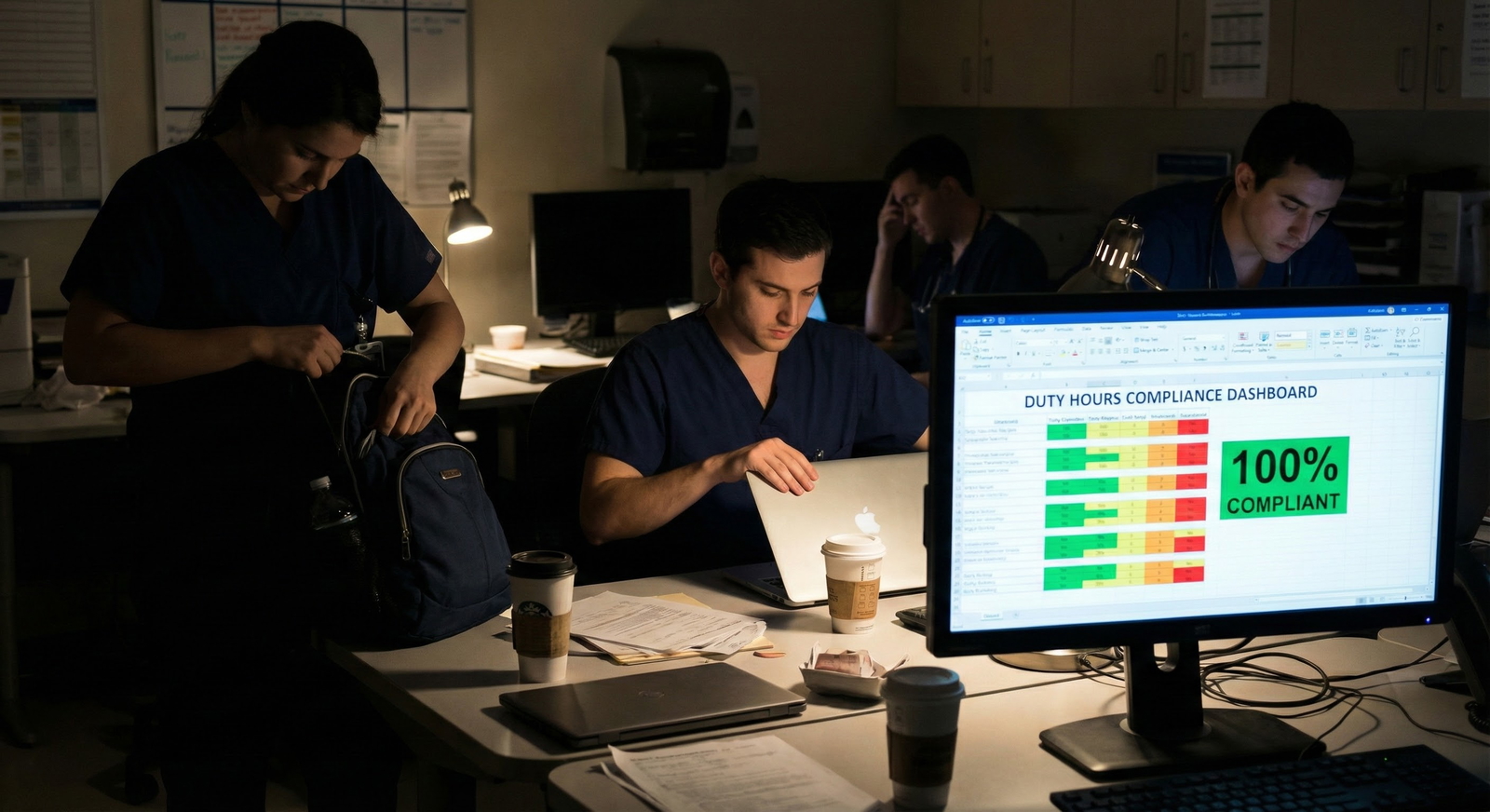
1. Chronic Duty Hour Violations and Underreporting
What to watch for:
- Residents casually mention working “16–18 hour shifts in the ED” or “back-to-back 14s” regularly.
- You hear phrases like, “We all just underreport; it’s what you do to keep the ACGME off our backs.”
- No clear system for schedule oversight or fatigue mitigation.
Why it’s malignant:
- It suggests leadership prioritizes service over safety.
- Systemic underreporting shows a culture of dishonesty and fear.
- Prolonged fatigue in EM directly compromises patient safety and your learning.
Questions to ask:
- “How does the program monitor and address duty hour violations?”
- “Are residents comfortable reporting violations without negative repercussions?”
Healthy programs will describe a clear, non-punitive process and concrete recent improvements.
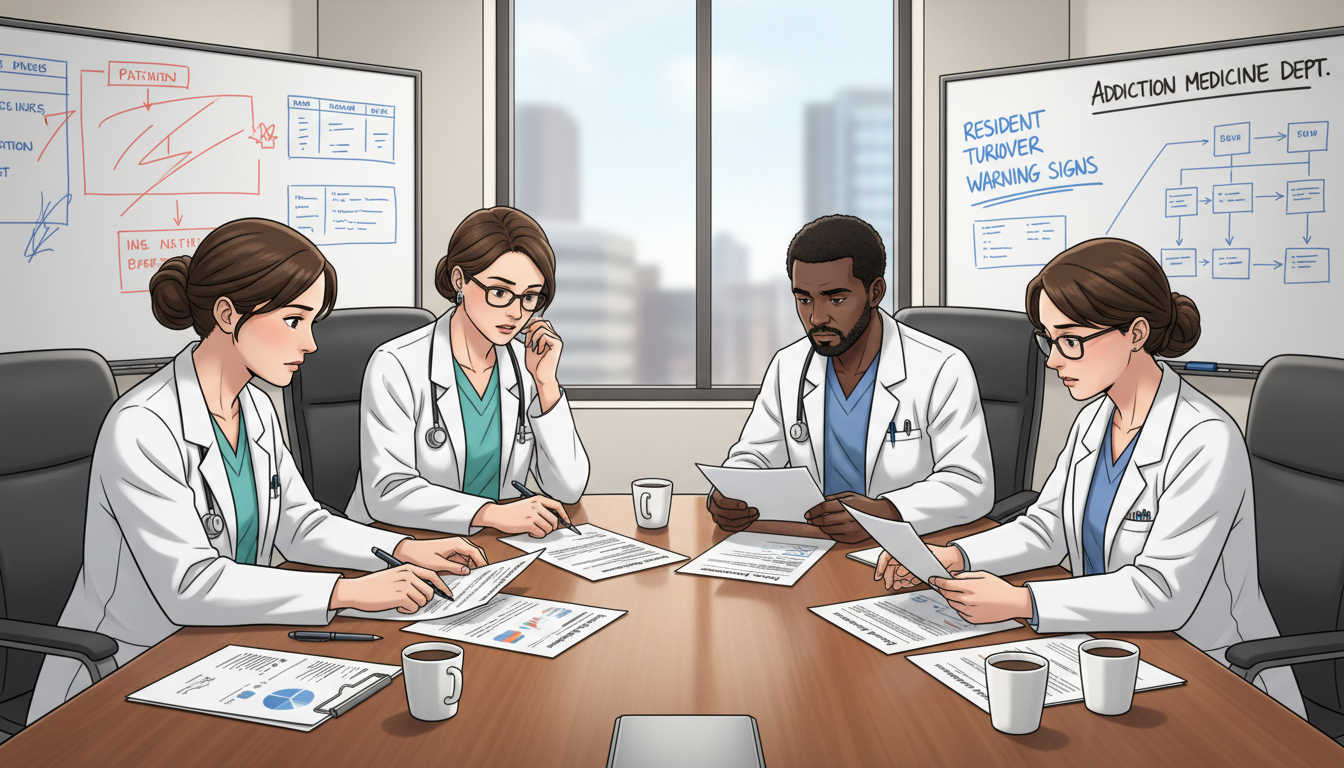
2. High Resident Attrition or Transfers
What to watch for:
- Vague answers about residents who “left for personal reasons” without specifics.
- Multiple vacant resident spots or recent mid-year PGY transfers.
- You don’t see many senior residents on interview day or at socials.
Why it’s malignant:
- Not every attrition is a red flag, but patterns are.
- High turnover often reflects poor support, excessive service load, or toxic leadership.
- Transparency matters: healthy programs can openly discuss what happened and what changed.
Questions to ask:
- “Have there been residents who transferred or left the program in the last 3–5 years? What did you learn from those situations?”
- “What changes, if any, did leadership make after those events?”
You’re not looking for perfection; you’re looking for honesty and reflection.
3. Culture of Fear, Shaming, or Public Humiliation
What to watch for:
- Residents describe attendings who “destroy people” or “love to pimp until you break.”
- Stories of public call-outs in front of patients, nurses, or colleagues.
- A sense of tension or anxiety when attendings enter the room.
Why it’s malignant:
- Psychological safety is fundamental to learning and patient safety.
- Fear and shame discourage residents from asking questions or disclosing errors.
- Over time, this culture can cause depression, burnout, and impaired performance.
Red flag phrases overheard:
- “Don’t ever get on Dr. X’s bad side.”
- “Just keep your head down for three years; then you’re free.”
4. No Real Mechanism for Resident Feedback
What to watch for:
- Vague responses: “We’re always open to feedback,” but no structured method.
- Chiefs or residents say: “We’ve been bringing up the same issue for years, nothing changes.”
- No resident representation on key committees (e.g., Clinical Operations, Education).
Why it’s malignant:
- A program that does not evolve based on resident input is likely stagnant or resistant.
- It often reflects a top-down, authoritarian leadership style.
- You will spend years in this system; your voice should matter.
Ask specifically:
- “How has resident feedback changed the program in the last year or two?”
- “Can you give examples of policies or schedules that improved because of resident input?”
No examples = major concern.
5. Lack of Support for Struggling Residents
What to watch for:
- Binary language: “You make it or you don’t; we’re not hand-holders.”
- No mention of remediation plans, academic coaching, or wellness resources.
- You ask about support after a bad outcome, and the answer is a shrug.
Why it’s malignant:
- Everyone struggles at some point in residency—clinically, emotionally, or personally.
- Programs that stigmatize struggle instead of supporting remediation foster shame and concealment.
- In EM, where bad outcomes are inevitable, supportive debriefing is essential.
Emergency Medicine–Specific Toxic Program Signs
Emergency medicine has unique operational challenges. Certain issues may be more common in EM and are especially important as you navigate the EM match.
1. Unsafe Patient Volumes and Boarding Pressures
Red flags:
- Residents are routinely responsible for too many active patients (e.g., 14–20 at once).
- Boarding crisis with admitted patients stuck in the ED for 24+ hours, but no adjustment in expectations.
- Residents are always “running behind,” charting hours after shift, with no buffer.
Why this matters:
- Unsafe volumes lead to errors, moral injury, and burnout.
- If attending/resident ratios and ancillary support don’t adapt to volume, residents are being used as buffers for systemic problems.
Targeted questions:
- “What is a typical patient load per resident per shift?”
- “How does staffing adjust when the ED is overwhelmed or boarding is severe?”
Look for specific systems (flex shifts, backup call, faculty stepping in) rather than “We just power through.”
2. Inadequate Supervision or Overly Autonomous Practice
Two extremes can be malignant:
Under-supervision (dangerous autonomy)
- Interns “running their own pod” alone overnight.
- Attendings physically absent or covering multiple sites.
- Delayed or minimal chart review.
Over-control (stifling autonomy)
- Attendings re-order every test, override every plan.
- Little opportunity for independent decision-making by PGY-2/3.
- Residents feel like scribes or order entry rather than physicians.
Healthy EM training gradually increases autonomy, with immediately available supervision and clear escalation pathways.
Questions to ask:
- “What kind of patients do interns see? When do they call attendings?”
- “By senior year, what decisions can you make independently?”
- “Have residents ever felt unsafe with their level of responsibility?”
3. Toxic ED–Hospital Relationships
The ED sits at the center of hospital operations. Dysfunction up- or downstream hits residents first.
Signs of trouble:
- Constant war stories about battles with hospitalists, consultants, or administration.
- Consultants routinely delay or refuse evaluations, while EM takes the blame.
- EM residents describe being caught in the middle with little support from ED leadership.
Why it matters:
- Poor interdepartmental relationships amplify stress and delay care.
- Malignant programs rarely protect their residents from political fallout.
- Residents may be blamed for system failures beyond their control.
Questions to ask:
- “How does the ED leadership advocate for residents when there are interdepartmental conflicts?”
- “Have there been recent system improvements that made resident workflow easier?”
If residents laugh darkly and say, “We just survive,” pay attention.
4. Exploitation of EM Residents for Non-EM Work
Red flags:
- EM residents serve as routine “admission officers,” doing workups that should belong to inpatient teams.
- Frequent “float” assignments to non-ED units (hallway medicine, inpatient coverage) without educational value.
- Residents repeatedly pulled from conference or educational time to cover staffing gaps.
Why it’s malignant:
- Your core mission is to become a competent emergency physician, not hospital labor.
- Pulling from protected time shows how the program values service vs. education.
- Over time, these patterns erode both your learning and morale.
Ask clearly:
- “Is protected didactic time truly protected?”
- “Are residents ever pulled from conference or education to cover staffing?”

How to Detect Malignant Programs During the Application and Interview Process
As an MD graduate entering the allopathic medical school match for EM, you have limited time and data. Here’s how to systematically gather real information and interpret residency red flags.
Step 1: Pre-Interview Research and Pattern Recognition
Use the program’s own materials to look for inconsistencies.
Website & Public Data Review
Resident roster and photos
- Is it up to date? Are there missing PGY classes or obvious gaps?
- Does the resident cohort seem stable over multiple years?
Graduation outcomes
- Do they list where graduates go (jobs, fellowships)?
- Repeated “locums” or vague “community practice” with no details is not always bad—but if nobody lists specific positions, it suggests weak career support.
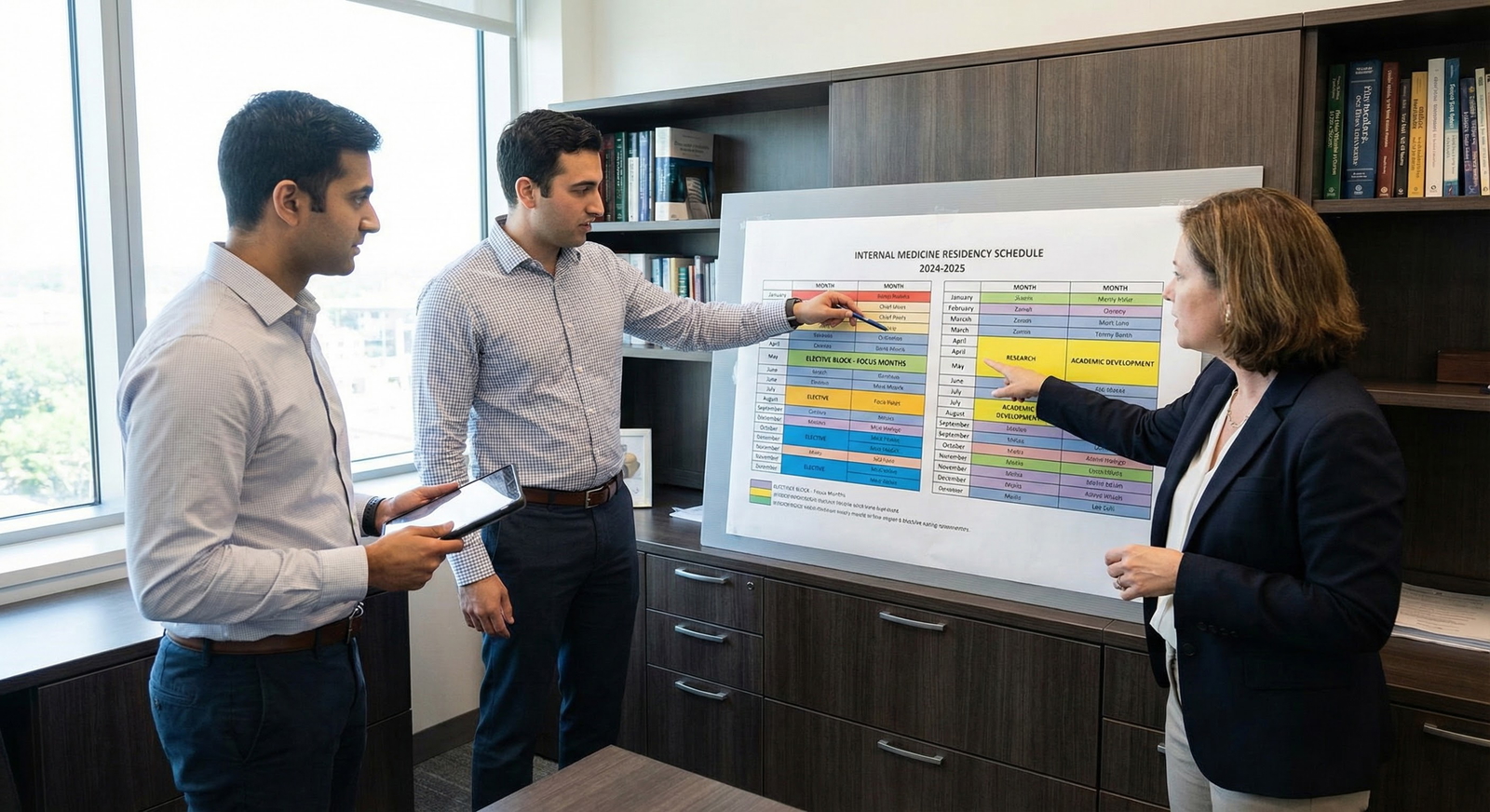
Schedule and curriculum transparency
- Look for specific EM rotation details, shift numbers, and off-service rotations.
- Vague statements like “ample clinical exposure” without specifics can signal hiding a heavy, poorly controlled workload.
Glassdoor, Reddit, SDN, EMRA resources
- Single negative reviews might not mean much; repeated similar complaints matter.
- Pay attention to recurring comments about culture, retaliation, or chronic under-staffing.
Step 2: Away Rotations and Sub-I’s
As an EM applicant, a home or away rotation is your best window into reality.
On rotation, look for:
- How attendings address residents and staff in front of you.
- Whether residents appear chronically exhausted or apathetic, not just busy.
- How conflicts, disagreements, or errors are handled when they arise.
Example scenarios:
- An attending calmly debriefs a near-miss with you and the resident, emphasizing what to learn = healthy.
- An attending yells at a resident in front of the patient and belittles them = toxic.
If residents warn you privately (“We’re not supposed to say this, but be careful ranking us”), take it very seriously.
Step 3: Interview Day—Reading Between the Lines
Interview days are highly curated, but culture still leaks through.
During formal sessions:
- Pay attention to how the PD and APDs speak about residents:
- Are residents described as “our colleagues” and “future partners” or as “workhorses” and “coverage”?
- Listen for defensiveness:
- If a question about wellness is met with eye rolls or “We don’t have those issues here,” that’s worrisome.
During resident-only sessions:
Ask specific, behavior-based questions:
- “Tell me about a time when the program leadership changed something because residents raised a concern.”
- “What happens if you need to call out sick on short notice?”
- “How does the program respond if someone is struggling clinically or personally?”
Watch for:
- Long pauses, nervous laughter, or changed topics when you ask about support, wellness, or attrition.
- Inconsistencies between different residents’ answers.
If one senior resident says, “This place is great, I love everything,” but multiple juniors look uncomfortable or give more cautious answers, don’t dismiss that discrepancy.
Step 4: Post-Interview Communication and Transparency
After interview day, some programs will communicate more; others will stay silent (both can be fine). What matters is how they communicate.
Positive signals:
- Clear information about schedule structure, benefits, and expectations when you ask.
- Honest acknowledgment of challenges (“Our ED sees a lot of boarding, but here’s how we protect residents…”).
Negative signals:
- Evasive answers to direct questions about resident attrition or prior complaints.
- Attempts to minimize or dismiss concerns without explanation:
- “Oh, that’s just one disgruntled former resident.”
- “Everyone complains about hours; that’s residency.”
Practical Strategies and Final Checklist for Ranking EM Programs
Once interviews end, you’ll need to reconcile your own experiences with what you’ve heard and read. This is where structured reflection helps.
Building Your Personal Red Flag Scale
For each program you’re considering ranking, rate the following from 1 (no concern) to 5 (severe concern):
Culture and Psychological Safety
- Did residents seem comfortable and honest?
- Any reports of humiliation, fear, or retaliation?
Workload and Safety
- Are patient loads and shifts intense but structured, or chaotic and excessive?
- Any patterns of duty hour violation underreporting?
Leadership Responsiveness
- Clear examples of changes based on resident feedback?
- Do you trust the PD/APDs after speaking with them?
Attrition and Outcomes
- Any unexplained resident departures?
- Transparent fellowship/job placement?
ED-Specific Operations
- Boarding, volume, consultant relationships.
- Ancillary support (nurses, techs, scribes, RTs).
Programs with multiple scores of 4–5 in these categories are very likely to be malignant or trending that way.
“Gut Check” vs. Evidence
Your intuition matters, but pair it with concrete observations:
- Positive gut feeling + neutral data → Likely safe.
- Neutral gut feeling + multiple red flags → Reconsider ranking high.
- Bad gut feeling + any significant red flags → Strongly consider moving down or off your list.
Remember: you’re not just trying to survive residency; you want to thrive and enter EM with the skills and mindset to sustain a career.
Example: Comparing Two Hypothetical EM Programs
Program A
- Residents acknowledge high volume but describe strong camaraderie and supportive faculty.
- One resident transfer in past 5 years, clearly explained (family relocation).
- PD can list three major changes made in response to resident feedback.
- Some boarding issues, but there is a backup call system and protected conference time.
Program B
- Residents look exhausted and guarded on Zoom; responses about culture are vague.
- Two recent residents left “for personal reasons,” with no detail.
- Multiple mentions of working “off the clock” to finish charts.
- PD dismisses a question about wellness with: “EM isn’t for the weak.”
Both might get you “good numbers” and “lots of procedures,” but Program B shows classic malignant patterns. Even if the name is stronger, it may not be worth the personal and professional cost.
FAQs: Identifying Malignant EM Residency Programs
1. Is a “malignant residency program” the same as a high-volume, high-acuity program?
No. High volume and high acuity are not inherently malignant and can be excellent for training if:
- Supervision is strong
- Patient loads per resident are manageable
- Leadership protects rest, education, and wellness
- Residents feel supported, not exploited
Malignancy is about culture, safety, and honesty, not clinical intensity alone.
2. Should I avoid a program completely if I hear about one bad experience online?
Not automatically. One negative review could reflect:
- An isolated incident
- A poor fit between that individual and the program
- Old issues that have since been addressed
However, if multiple independent sources—rotators, online forums, your EM advisor—describe similar concerning patterns (toxic culture, unsafe volumes, retaliation), take it seriously. Use your interviews and resident conversations to confirm or refute what you’ve read.
3. How much weight should I give to resident attrition when deciding my rank list?
Resident attrition is a significant data point, but context matters:
- One departure in several years, transparently explained, is not necessarily a red flag.
- Repeated departures or transfers, especially with vague explanations, warrant concern.
- If residents say, “We’ve lost a few people, but leadership really reflected and changed X, Y, Z,” that’s different from, “People just leave; it is what it is.”
When in doubt, ask directly and see how honest and specific the response is.
4. If I suspect a program is malignant but it’s my “best shot” at matching in EM, what should I do?
This is a difficult, highly individual decision. Consider:
- Your flexibility in specialty choice: Would you be happier in another field at a healthier program than in EM at a clearly toxic one?
- Degree of malignancy: Mild concerns vs. clear patterns of abuse, dishonesty, or unsafe care.
- Long-term impact: Malignant programs can cause burnout, depression, and early exit from EM.
Many advisors would argue it’s better to be at a supportive, well-run program in another specialty than to endure a truly toxic EM environment. Talk with your EM advisor or dean confidentially about your situation.
Identifying malignant programs requires more than reading websites or counting procedures. As an MD graduate entering the emergency medicine residency landscape, your goal is to find a program that challenges you clinically while protecting your safety, integrity, and growth. Use the signs, strategies, and questions in this guide to navigate the EM match with clarity—and to avoid the malignant training environments that can derail both your career and your wellbeing.