
Why “Malignant” Programs Matter So Much for US Citizen IMGs in Family Medicine
For a US citizen IMG (American studying abroad), matching into a family medicine residency can feel like finally reaching safe harbor after years of uncertainty. But not all programs provide a healthy, supportive training environment. Some are what residents call “malignant”—toxic programs where fear, disrespect, overwork, and lack of support are the norm rather than the exception.
For an American studying abroad who may already feel vulnerable in the match process, landing in a malignant residency program can:
- Damage mental health and well-being
- Limit learning and procedure opportunities
- Hurt board pass rates and fellowship chances
- Make it harder to transfer, finish training, or even stay in medicine
This guide is designed specifically for US citizen IMGs targeting a family medicine residency. It will help you:
- Understand what “malignant” really means in the FM context
- Recognize subtle and obvious residency red flags during interviews and pre-match research
- Ask smart, targeted questions to detect toxic program signs
- Protect yourself from being exploited as “cheap labor” or a numbers-filler
- Make a realistic, strategic rank list that balances safety with program quality
What Does a “Malignant” Family Medicine Residency Program Look Like?
“Malignant residency program” is not an official ACGME term. It’s resident slang for a training environment that is systematically unhealthy. Programs exist on a spectrum—from outstanding, to average, to mildly dysfunctional, all the way to clearly toxic.
For family medicine, which often markets itself as “family-like,” the contrast between the branding and reality can be striking. A malignant FM program may look collegial on paper but feel abusive or chaotic in practice.
Core Features of a Malignant Program
While every situation is different, malignant programs often share these patterns:
Culture of fear and intimidation
- Frequent public shaming, yelling, or humiliation of residents
- Attendings or leadership calling residents “lazy,” “stupid,” or “replaceable”
- Residents fearful of speaking up about safety or wellness
Chronic duty hour violations and unsafe workload
- Regular 80+ hour weeks without accurate reporting
- Pressure to falsify duty hours in the ACGME system
- Unsafe patient loads or impossible-to-complete tasks on call
Lack of educational focus
- Service always trumps learning (you are labor, not a learner)
- Rounds that are purely about throughput, with no teaching
- Didactics frequently cancelled or replaced by “coverage”
Retaliation and punishment
- Residents punished for calling in sick or reporting concerns
- “Problem resident” label used on those who ask for help or accommodations
- Threats about non-renewal of contracts used as leverage
High resident turnover and burnout
- Multiple resignations, transfers, or non-renewals in recent years
- PGY-2 or PGY-3 classes much smaller than PGY-1
- Residents appearing exhausted, demoralized, or scared to talk
Questionable professionalism and ethics
- Pressure to bill inappropriately or cut corners
- Attendings or co-residents openly disrespectful of patients or staff
- Blaming and shaming instead of systems-based problem-solving
Why US Citizen IMGs Are Particularly Vulnerable
As a US citizen IMG, you may be:
- Eager to match anywhere in the US after uncertainty abroad
- Less familiar with US hospital culture and red flags
- More willing to accept poor conditions “just to get a spot”
- Financially invested and worried about losing your visa-independent chance to practice (even though you don’t need visa sponsorship, re-applying is costly and stressful)
Some malignant programs specifically target US citizen IMGs or other IMGs because:
- You don’t require visa paperwork
- You might feel you have fewer options and are less likely to complain
- They may assume you’ll tolerate worse conditions to remain in the US system
Knowing this, you need to be especially intentional in evaluating programs and not just grateful for any interview or offer.

Concrete Red Flags to Look for Before and During Interview Season
Identifying a toxic program begins before you ever set foot on campus. Use every stage—research, communication, and interviews—to watch for residency red flags.
1. Pre-Interview Research: What You Can Spot from Home
A. Program Stability and Accreditation
Red flags:
- Recent probation or ACGME citations, especially around:
- Duty hours
- Supervision and patient safety
- Learning environment or professionalism
- Multiple program director or chair changes in a short period
- Sudden drop in fill rate through the main match, relying heavily on SOAP
Where to find information:
- ACGME public program search (to see accreditation status trends)
- FREIDA and program websites (look for statements about “undergoing restructuring” or “new leadership”—not always bad, but worth probing)
- NRMP data (if publicly discussed, or patterns visible in fill rates)
B. Board Pass and Retention Rates
Healthy programs are transparent about their outcomes.
Red flags:
- No publicly available board pass rates or a vague statement like “we regularly exceed the national average” with no numbers
- Multiple years where more than one resident did not complete the program
- Alumni list missing entire classes or greatly reduced class sizes (suggesting withdrawals or non-renewal)
Positive signs:
- Clear, multi-year board pass statistics
- High retention from PGY-1 through graduation
- Alumni happily placed in community jobs, hospitalist roles, or fellowships
C. Online Reputation and Resident Voices
No program will have a perfect online record, but patterns matter.
Sources:
- Reddit (r/medicalschool, r/IMGreddit, r/Residency, r/FamilyMedicine)
- Student Doctor Network (SDN) forums
- Doximity residency navigator (read comments, not just rankings)
- Specialty listservs or private applicant groups
Red flags in comments:
- Repeated mentions of bullying, retaliation, or toxic leadership
- Descriptions of residents as “miserable,” “burned out,” or “always quitting early”
- Multiple posts about duty hour violations or “being forced to lie”
Interpret with caution—one angry post is not conclusive. But consistent, specific complaints from different users over years should carry weight.
2. Email and Communication Clues: How the Program Treats You Now Is How They’ll Treat You Later
How the program interacts with you as an applicant often foreshadows how they treat residents.
Red flags:
- Extremely delayed or no responses to reasonable questions
- Last-minute cancellations of interviews without explanation or apology
- Disorganized communication: wrong date/time links, mixed up names, sending confidential information to wrong recipients
- Unprofessional tone from coordinator or leadership
These may reflect:
- Overburdened staff in a chaotic system
- Lack of respect for residents’ time and well-being
You’re not expecting concierge-level service—but basic courtesy and organization are minimum standards.
3. Interview Day Warning Signs: Reading Between the Lines
On interview day, you’ll see the program’s curated version of itself—but you can still pick up key signals.
A. The Way Residents Talk (and Don’t Talk)
Current residents are your most valuable source of information.
Pay attention to:
- Do they feel free to answer questions candidly?
- Are residents present without faculty around?
- Do they glance at leadership before answering or seem guarded?
Red flags:
- Residents speak in rehearsed clichés: “We’re like family” (with forced smiles and no specifics)
- No one can give a concrete answer about typical hours or call
- When you ask, “What would you change about the program?” they say, “Nothing, everything’s perfect” or dodge the question
- Residents you meet are mostly interns; upper levels seem mysteriously unavailable
Healthy answers are nuanced: “I like X, but Y can be hard. However, we’ve been working on…” That honesty is good.
B. Leadership Style and Attitude
Program leadership sets the culture. Watch for:
Red flags:
- PD or faculty speak disparagingly about:
- Other specialties
- Former residents (calling them “weak,” “entitled,” or “couldn’t handle it”)
- IMGs as a group
- Leadership emphasizes “resilience” and “thick skin” without mentioning mentorship, wellness, or system support
- Jokes about “this is a sink-or-swim program” or “if you’re not willing to suffer, this isn’t for you”
Positive signs:
- Specific examples of how they’ve responded to resident feedback
- Clear, detailed explanation of how they protect duty hours and education
- Respectful language about residents as professionals and colleagues
C. The “Family” Narrative vs. Reality
Family medicine prides itself on collegial culture. But malignant programs often overuse the “we’re a big family” line to mask deeper problems.
Ask yourself:
- Do residents actually seem to enjoy each other’s company?
- Are there concrete examples of social support (e.g., coverage for illness, protected times for major life events)?
- Do they describe systems (not just vibes) that uphold wellness?
If “family” is the only selling point, with no specifics on curriculum, teaching, or professional development, dig deeper.
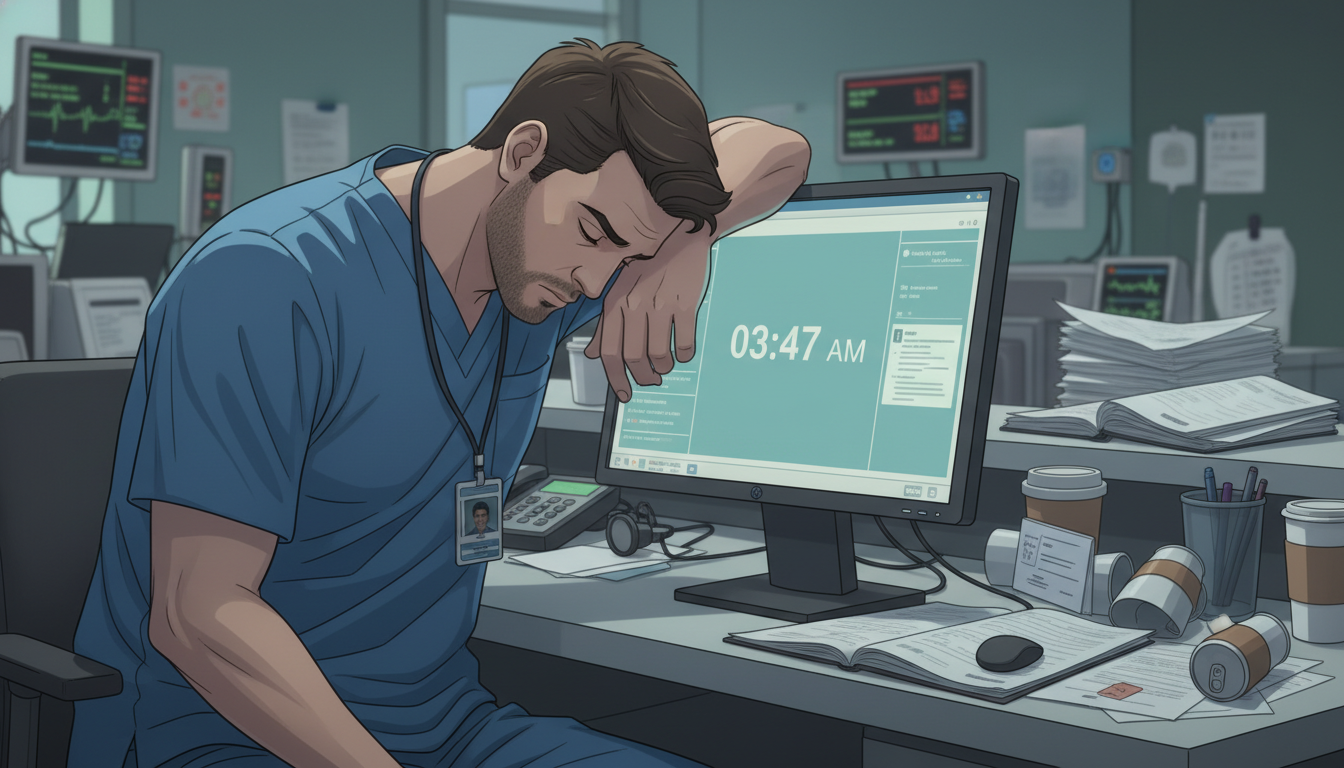
Subtle but Critical Toxic Program Signs: Details You Must Probe
Some of the most telling residency red flags are not flashy; they are buried in schedules, rotations, and expectations. As a US citizen IMG, examine these closely.
1. Duty Hours, Call, and Workload
Family medicine does involve busy inpatient, OB, and clinic blocks—but chronic overwork is not normal or acceptable.
Questions to ask residents:
- “How often do you actually log more than 80 hours in a week?”
- “Have you ever felt pressured to under-report hours in MedHub/New Innovations?”
- “On inpatient blocks, what is your max census? How many patients overnight?”
- “How often do you get your post-call day truly off?”
Red flags:
- Residents laugh nervously or say, “We’re creative with our duty hours”
- “Technically we’re within 80, but…” followed by stories of no breaks, work-at-home charting, or constant pages
- Culture that glorifies staying late and coming in on days off
2. Supervision and Patient Safety
You are there to learn safely. Lack of supervision is a major toxicity marker.
Questions:
- “Who is in-house overnight: attending, senior resident, both?”
- “Have you ever felt unsafe managing a patient without adequate backup?”
- “How does the program respond to patient safety events?”
Red flags:
- Interns routinely left alone with complex admissions
- Seniors covering multiple services unsafely
- Fear of raising safety concerns because of retaliation
3. Education vs. Service
Any residency needs service, but malignant programs use residents as cheap labor, with minimal commitment to education.
Ask:
- “How often are didactics cancelled?”
- “Are residents pulled from conference to cover floor calls or clinic?”
- “Do you have protected time for board prep, OSCEs, procedures?”
Red flags:
- Didactics frequently cancelled “because we’re short-staffed”
- No protected teaching rounds; only disposition-focused huddles
- Residents say, “We learn by just being thrown in; there’s not much structured teaching”
4. Treatment of IMGs and US Citizen IMGs Specifically
As a US citizen IMG, you occupy a specific niche: you are IMG but not visa-dependent. Be alert to how the program talks about and treats IMGs.
Questions:
- “What proportion of residents are IMGs? US grad vs IMG?”
- “Are evaluations and opportunities the same for IMGs and US grads?”
- “Have IMGs here obtained chief positions, fellowships, or academic roles?”
Red flags:
- Two-tier system where IMGs:
- Rarely become chief residents
- Are assigned heavier workloads or less desirable rotations
- Are subtly blamed for “lowering the program’s reputation”
- Comments like “We used to be all US grads before we had to start taking IMGs”
Positive signs:
- IMGs in leadership positions
- Success stories of IMGs matching into fellowships or landing strong jobs
- Clear statement that selection is based on performance, not degree origin
5. Handling of Leave, Illness, and Life Events
Residency is intense, but you still have a life—illness, pregnancy, family needs, and emergencies happen.
Ask:
- “What happens if someone gets sick mid-rotation?”
- “How has the program handled parental leave?”
- “Is there backup or jeopardy call?”
Red flags:
- Residents discouraged from calling in sick (“We’re a small program; everyone just pushes through”)
- Stories of residents coming in with COVID/flu because of pressure
- No clear, written policy on leave or accommodations
Practical Strategies for US Citizen IMGs: Protect Yourself Without Sabotaging Your Match
Avoiding malignant programs does not mean you must only rank top-tier academic centers. Many excellent community family medicine residency programs train US citizen IMGs superbly. Your goal is a supportive, educational, safe environment—at any prestige level.
1. Use a Structured Evaluation Framework for Each Program
Create a simple spreadsheet and rate programs (1–5) on key domains:
- Culture & wellness (resident happiness, support, mental health resources)
- Education quality (didactics, attending teaching, procedures, OB, inpatient)
- Workload & hours (realistic vs rumored; honesty of residents)
- Leadership & responsiveness (PD accessibility, handling of concerns)
- IMG-friendliness (opportunities and respect for IMGs / US citizen IMGs)
- Red flag severity (none, mild, moderate, severe)
If a program scores high on red flag severity, consider ranking it very low or not at all, even if it seems like a safe FM match option.
2. Ask Direct but Professional Questions
You can ask about toxic program signs without sounding confrontational. Sample wording:
- “How does the program ensure compliance with duty hour regulations?”
- “Can you share an example of resident feedback that led to a tangible change?”
- “Have there been any recent ACGME citations, and how were they addressed?”
- “What are typical board pass rates over the last 3–5 years?”
- “How does the program support residents who are struggling clinically or personally?”
Healthy programs will answer clearly. Malignant ones will deflect or become defensive.
3. Trust Patterns, Not Single Comments
As a US citizen IMG, you might worry about being “too picky” and ignoring a chance to match. Balance is essential:
- One slightly negative comment ≠ a malignant program.
- Multiple concerns across different sources (residents, online posts, data) = pay attention.
If three residents independently hint at burnout, high turnover, and lack of support, believe them.
4. Don’t Let Fear of Not Matching Force You into a Toxic Environment
For US citizen IMGs, family medicine residency remains one of the more accessible pathways. Many programs actively value the diversity and life experience you bring.
If you clearly identify a malignant residency program:
- It is often safer long-term not to rank it highly (or at all), even if it feels like a “backup.”
- Matching into a severely toxic environment can lead to:
- Failure to complete training
- Long-term mental health consequences
- Burnout and leaving medicine
Discuss your list with advisors, mentors, or IMG support communities. Sometimes, reapplying with stronger credentials is better than surviving a malignant program.
5. Leverage Your Strengths as an American Studying Abroad
As an American studying abroad, you bring valuable advantages:
- Native familiarity with US culture and communication style
- Often stronger spoken English and cultural comfort with US patients
- Personal networks in the US for mentorship and support
Use these to:
- Build relationships with faculty who can advocate for you
- Seek out alumni from your medical school who matched in FM
- Network within national organizations (AAFP, state chapters) to learn program reputations
These contacts can provide off-the-record insights into which programs to avoid.
When You Suspect a Program Is Malignant but Still Need Options
Sometimes you’ll encounter programs with mixed signals: not obviously toxic, but concerning enough to worry you.
Questions to Clarify Your Decision
- Are the issues mainly growing pains (e.g., new PD, recent expansion) or deep cultural problems (bullying, retaliation)?
- Are residents able to advocate effectively and create change?
- Are there mentors you trust who would go to bat for you there?
- Would this program likely allow you to safely complete training and pass boards?
If the answers lean positive and your other options are limited, you might still rank it—but not above clearly healthier programs.
Considering Transfers
Sometimes people start a program and only then realize the environment is malignant. While transferring is complicated, it is not impossible.
Factors that help:
- Good evaluations and no professionalism concerns
- Supportive letters from at least some faculty
- Clear, documented concerns about the current program’s environment
But avoiding such situations in the first place, especially as a US citizen IMG, is far better than relying on the possibility of transferring later.
FAQs: Identifying Malignant Family Medicine Programs as a US Citizen IMG
1. Are malignant programs more common in community family medicine than in academic centers?
Not necessarily. Malignant residency programs can exist in both community and academic settings. Community programs may be more vulnerable to staffing shortages and financial pressure, which can create overwork. Academic programs can suffer from rigid hierarchies and toxic faculty dynamics. Evaluate each program individually rather than assuming one category is safer.
2. As a US citizen IMG, should I accept more red flags just to secure an FM match?
No. While it’s important to be realistic about competitiveness, especially as an American studying abroad, you should not ignore severe toxic program signs such as chronic duty hour violations, bullying, and retaliation. These can derail your career and harm your health. It’s better to rank a reasonable number of solid, non-malignant programs and, if necessary, reapply than to be trapped for three years in a truly toxic environment.
3. How many red flags are “too many” for a family medicine residency program?
There’s no exact number, but consider severity and pattern:
- Mild issues (e.g., occasionally cancelled didactics, some growing pains) are common and not disqualifying.
- Multiple serious concerns—unsafe workloads, culture of fear, poor board pass rates, repeated ACGME problems—should push the program low on your rank list or off it entirely.
When multiple independent sources describe the same serious problems, treat that as a strong warning.
4. What if current residents seem happy, but online forums call the program malignant?
This discrepancy happens. Possible explanations:
- The program has improved recently under new leadership.
- Residents feel watched or are afraid to speak honestly.
- Online posts may be outdated, biased, or from a non-representative group.
In this case:
- Ask specific, pointed questions about issues raised online.
- Look for objective data (board pass rates, attrition, ACGME history).
- Ask to speak one-on-one with residents off-camera or outside official sessions if possible.
Make your decision based on the totality of evidence, not one source alone.
By recognizing residency red flags early and using a structured, skeptical approach, you as a US citizen IMG can avoid malignant programs and find a family medicine residency where you are respected, challenged, and supported—setting you up for a sustainable, fulfilling career in primary care.