Residency is demanding everywhere—but not every program is unhealthy. In medicine-pediatrics (med peds), where residents juggle two full specialties, the risk of burnout is amplified when a training environment is poorly structured or truly “malignant.” Understanding how to identify malignant residency programs and recognize toxic program signs before ranking is essential for your well-being, learning, and long-term career satisfaction.
This guide focuses specifically on med peds residency programs and how to recognize residency red flags during the application, interview, and ranking process.
1. What Does “Malignant” Mean in a Med Peds Residency?
The term malignant residency program is informal but widely used. It generally describes a program whose culture or structure repeatedly harms residents’ well-being, learning, or careers. Importantly, “hard” does not equal “malignant.”
High-intensity but healthy programs may:
- Have long hours and challenging rotations
- Hold residents to high academic and clinical standards
- Provide honest feedback, including pointing out deficiencies
- Expect strong professionalism and reliability
A malignant med peds residency often features:
- Systemic disrespect or intimidation
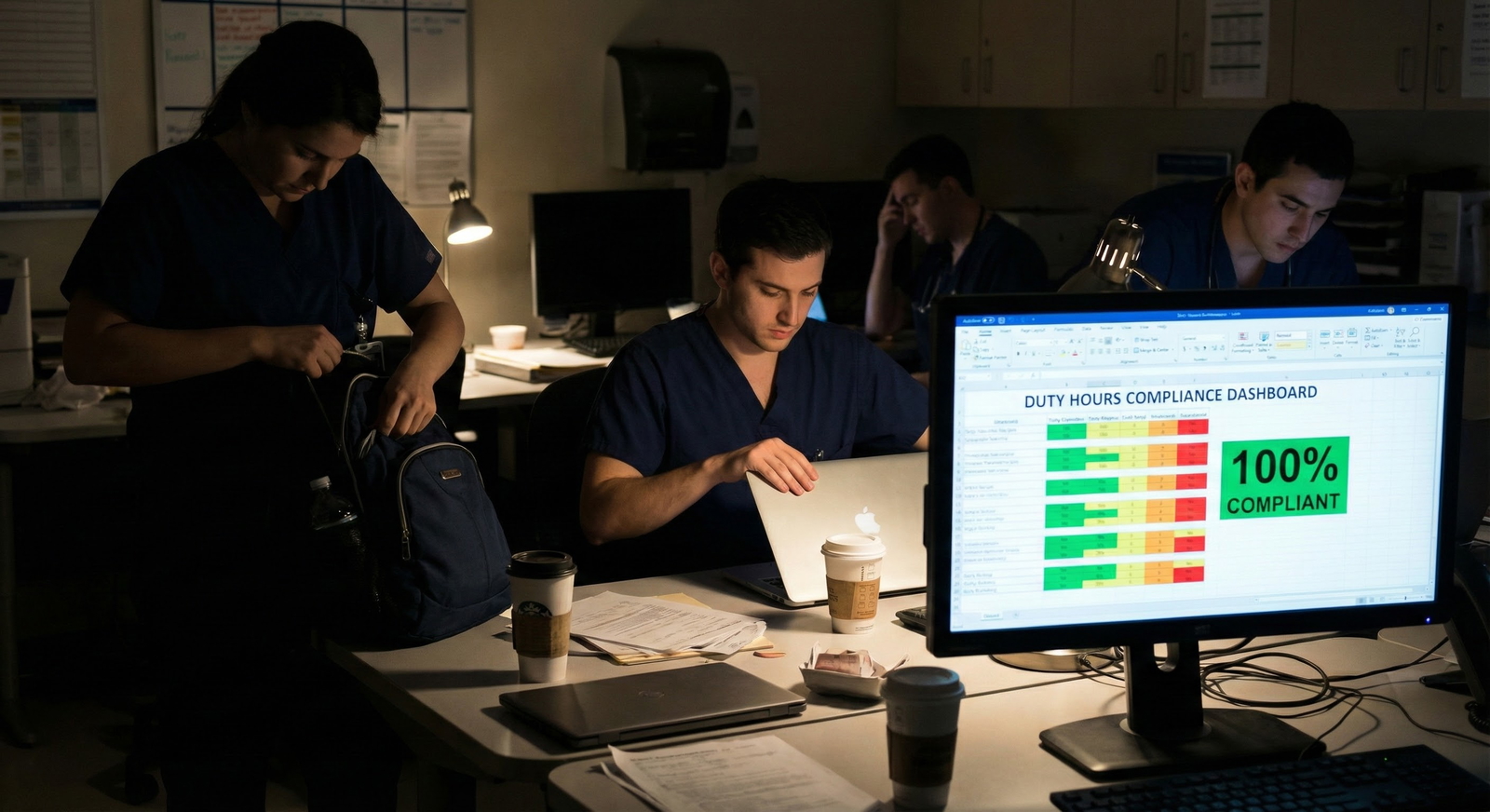
- Chronic duty hour violations without remediation
- Retaliation or subtle punishment when residents speak up
- Poor educational value with heavy service over learning
- Little or no support for wellness or mental health
- Lack of transparency about outcomes or major issues
In med peds, malignancy can be more complex because you are embedded in two parent departments (internal medicine and pediatrics) plus combined continuity experiences. A program might be:
- Healthy in pediatrics but toxic in medicine
- Strong in medicine but disorganized and neglectful in med peds identity
- Or overall disjointed in how the four years are coordinated
Your goal is not to find a perfect program—none exist—but to avoid environments where structural or cultural toxicity is normalized.
2. Core Toxic Program Signs in Med Peds
Below are practical, observable toxic program signs you can look for in any medicine pediatrics match process—on paper, online, on interview day, and when speaking with current residents and alumni.
2.1 Culture of Fear, Intimidation, or Shaming
A hallmark of malignant programs is a culture where residents feel unsafe raising concerns.
Red flags:
- Residents use phrases like “don’t make waves,” “just keep your head down,” or “you learn quickly not to speak up.”
- Faculty or chiefs are described as “explosive,” “humiliating,” or “you never know which version you’ll get.”
- Stories of public shaming at sign-out, morning report, or M&M (e.g., “they tore me apart in front of everyone”).
- Attendings frequently yell, demean, or swear at residents, nurses, or staff.
- Errors are handled with blame and punishment instead of root-cause analysis and learning.
- Residents talk about retaliation after raising duty hour concerns, safety issues, or mistreatment.
In med peds specifically:
- Residents are criticized or shamed for needing help managing the complexity of dual training.
- Switching between medicine and pediatrics services is accompanied by blaming (“you should already know this,” “med peds always falls behind”).
- Combined residents are labeled as “less committed” or “just here to survive four years.”
What to ask residents:
- “How comfortable do you feel speaking up about concerns—workload, mistreatment, duty hours?”
- “Can you share a time a resident raised an issue? How did leadership respond?”
Watch for hesitation, vague answers, or guarded body language.
2.2 Chronic Duty Hour Violations and Unsafe Workloads
Every program will have busy rotations and occasional bad stretches. Malignancy emerges when overwork and unsafe conditions are routine and unaddressed.
Clear residency red flags:
- Residents regularly work 90–100 hours/week without these episodes being framed as unusual or problematic.
- Pre- or post-call “documentation time” isn’t counted toward duty hours.
- Systematic underreporting or implicit pressure to “adjust” duty hour logs.
- Frequent >24-hour call shifts (in programs where this shouldn’t be happening) or 16–20 hour “admission shifts” every few days.
- Inadequate cross-coverage at night leading to unsafe patient-to-resident ratios.
- Multiple stories of residents falling asleep driving home or having near-miss accidents.
Unique med peds pitfalls:
- Poor coordination of rotation schedules leads to:
- Little recovery time between heavy medicine and heavy pediatrics blocks.
- Serial ICU or night-float rotations across both departments without adequate recovery.
- Combined residents repeatedly used as “gap-fillers” for both programs, increasing their total workload relative to categorical peers.
- Longitudinal med peds clinics scheduled immediately after 28-hour calls or heavy night shifts in either department.
What to ask:
- “Which rotations consistently push duty hour limits?”
- “How does the program handle it when duty hours are violated?”
- “Compared to the categorical medicine and pediatrics residents, how does your workload feel?”
You are not looking for zero violations—those don’t exist—but for honest acknowledgment and systematic solutions.

2.3 Poor Education: Service Over Learning
All residencies require service; the concern is when education is systematically sacrificed.
Toxic program signs related to education:
- Morning report, noon conference, and didactics are frequently canceled for “clinical needs.”
- Residents routinely required to skip teaching for scut work—transporting patients, drawing routine labs, endless paperwork that could be delegated.
- Little to no protected didactic time, or attendings do not respect that protected time.
- Lack of structured curriculum in core med peds topics (chronic disease across lifespan, transition of care, complex care coordination).
- On ICU or ward rotations, residents function like advanced interns indefinitely, with limited stepwise autonomy or procedural opportunities.
- Poor or absent feedback; evaluations are generic, delayed, or perfunctory.
Med peds–specific concerns:
- No coherent combined curriculum—only piecemeal exposure through separate medicine and pediatric conferences.
- Minimal attention to transition medicine, adolescent to adult care, adult congenital diseases, or complex care populations.
- Med peds residents rarely or never have opportunities in outpatient settings that span age ranges (e.g., transition clinics, complex care clinics).
- Combined clinics exist on paper but are constantly canceled or used as overflow scheduling to plug gaps.
Questions to ask:
- “Do you feel your educational needs are prioritized over service? When do you feel most like a learner versus a cog in the system?”
- “How often are you allowed to attend didactics without interruption?”
- “What specific med peds–focused teaching do you get that categorical residents don’t?”
Programs that are transparent about limitations but clearly working to improve are very different from those that minimize or normalize poor education.
2.4 Disorganized or Neglected Med Peds Identity
Because med peds is a combined specialty, the program must intentionally nurture a coherent identity and structure. If not, training can feel fragmented and unsupported.
Red flags:
- No clear, accessible med peds program director—only the categorical IM and peds PDs are visible.
- Residents talk about “being owned by no one”—constantly bounced between departments without advocacy.
- Poor communication between the medicine and pediatrics departments:
- Misaligned rotation start dates.
- Overlapping call responsibilities.
- Lost or double-booked residents between services.
- Med peds residents routinely left off important emails, scheduling updates, or educational opportunities.
- Sparse or nonexistent med peds-specific advising, career guidance, or mentorship.
Identity and culture flags:
- Residents feel socially split: “I never quite feel like part of the medicine group or the pediatrics group.”
- Med peds residents joked about as “floaters,” “free labor,” or “utility players” rather than as a specialty with its own value.
- Lack of alumni engagement or combined role models in leadership (e.g., no med peds faculty in leadership positions, no med peds presence in combined clinics).
Ask specifically:
- “How visible and involved is your med peds program director?”
- “How well-coordinated are schedules between medicine and pediatrics?”
- “Do you feel you have a coherent med peds identity here, or do you feel split?”
A program can be very busy yet healthy if the med peds structure is clearly defined, respected, and supportive.
2.5 Systemic Burnout, Depression, and Turnover
Residency is stressful, and burnout is common across specialties. However, a malignant program rarely acknowledges or addresses this meaningfully.
Concerning patterns:
- Multiple residents leaving the program, switching programs, or stepping off clinical duties each year.
- A culture of “survival”—residents repeatedly describe their mindset as “just get through it” rather than “I’m growing.”
- Little to no mental health support, or stigmatizing language about using counseling or wellness resources.
- Stories of residents receiving formal or informal pushback for taking medical leave, parental leave, or accommodations.
- Residents frequently tearful or visibly exhausted on interview day, with jokes about “smiling for one day a year.”
Important nuance:
One or two residents needing leave or transferring programs does not automatically equal malignancy. Life happens. The red flag is when:
- Leadership blames the resident rather than analyzing systemic factors, and/or
- High turnover is normalized or trivialized.
Questions to ask:
- “Have any residents left the program or needed extended leave in recent years? How did the program handle that?”
- “What wellness resources are truly accessible, and do people actually use them?”
Listen for whether the response centers compassion and system adjustments, or defensiveness and blame.
3. Detecting Red Flags Before You Rank: Practical Strategies
You cannot perfectly evaluate a program from the outside, but there are concrete tactics to better gauge the medicine pediatrics match options you are considering.
3.1 Pre-Interview Research
Before interview day, look beyond the program’s website.
Where to look:
- ACGME and program website:
- Look for citations or probation history, especially repeated or serious issues related to duty hours, supervision, or resident support.
- Check how many total residents and med peds slots they have vs. how many are currently filled—unfilled PGY levels may signal attrition.
- Public forums and social media:
- Take anonymous reviews with caution, but recurring themes (e.g., “brutal call schedule,” “toxic leadership”) across several years are worth noting.
- Alumni social media (LinkedIn, Twitter/X) can reveal where graduates go and whether they remain professionally tied to the program.
- Program materials:
- Assess clarity and transparency around med peds structure, combined clinics, and educational curricula.
- Excessively polished but vague language without specifics may suggest image over substance.
Key clue:
If you cannot easily find med peds-specific information (curriculum, leadership, current residents, clinics), that may indicate the program is an afterthought rather than a core priority.
3.2 Interview Day: What to Watch and What to Ask
Interview day is a snapshot, often curated, but you can still gather substantial information.
Observe:
- Resident body language and tone:
- Do residents appear genuinely comfortable with one another and with faculty?
- Do they joke, share real stories, and gently tease the program—even while overall positive?
- Or do group sessions feel tense, overly scripted, or dominated by one or two voices?
- How leadership talks about challenges:
- Programs that are safe and reflective will openly describe challenges and specific steps taken to improve.
- Malignant or insecure programs may deny problems outright, over-defend, or quickly pivot from any question about workload, wellness, or past issues.
Targeted questions (examples):
To residents:
- “What has improved in the program in the last few years? What still needs work?”
- “On your hardest days, what makes you want to stay—or think about leaving?”
- “How does the program handle it when someone is struggling academically, clinically, or personally?”
To program leadership:
- “How do you monitor resident workload, burnout, and duty hours? Can you give examples of changes made as a result?”
- “Can you describe how the medicine and pediatrics departments coordinate around med peds scheduling and curriculum?”
- “Have there been any significant ACGME citations or resident grievances in the last 5 years, and how have you addressed those?”
You are not trying to trap anyone; you are evaluating whether the program is self-aware, transparent, and responsive.

3.3 Off-the-Record Conversations and Back-Channel Insight
Informal conversations can reveal what the official interview day won’t.
Ways to gather honest perspectives:
- Virtual or in-person second looks:
- Less scripted settings often lead to more candid reflection.
- Contacting recent alumni:
- Ask the program to connect you with recent graduates, or find them via alumni networks/social media.
- Alumni are more willing to discuss systemic issues honestly—they’re less vulnerable to retaliation.
- Talking to your own institution’s faculty:
- Ask med peds or categorical IM/peds faculty if they know the program’s reputation.
- Be aware of personal bias, but patterns of concern mentioned by multiple independent faculty carry weight.
Questions for alumni/back channels:
- “If you were choosing again, would you pick this med peds residency?”
- “What kind of resident thrives here, and who really struggles?”
- “Were there any major issues you felt you couldn’t talk about as an applicant?”
Look for congruence or stark discrepancy between what you hear officially and unofficially.
4. Differentiating Tough-but-Healthy from Truly Malignant
All med peds residencies are intense; your goal is to distinguish unavoidable difficulty from preventable, systemic harm.
4.1 Signs of a Tough but Healthy Program
Even if working hours are long, a program may still be a good place to train if you see:
- Transparent leadership: Candid about problems, open about plans and limitations, invites feedback.
- Psychological safety: Residents report they can speak up without fear of retaliation.
- Real mentorship: Accessible med peds faculty who know residents personally and advocate for them across departments.
- Systems-level improvements: Residents can point to concrete changes made in response to surveys or feedback (schedule redesigns, adding a night float, dedicated wellness days, enhanced staffing).
- Balanced identity: Med peds residents feel they belong to both departments and have a distinct combined home.
- Strong outcomes: Graduates match well into fellowships or land satisfying primary care/hospitalist/comprehensive care roles they wanted.
In such programs, residents may say:
- “It’s hard, but I feel supported.”
- “They listen when we ask for changes.”
- “My co-residents and faculty are the best part—I couldn’t do this without them.”
4.2 Signs a Program May Be Truly Malignant
Patterns that should give you serious pause, especially if multiple are present:
- Residents consistently warn you, even subtly, with phrases like:
- “If you’re tough enough, you’ll be fine.”
- “It’s survivable but not for everyone.”
- Blame and dismissal from leadership:
- “Residents these days just don’t want to work.”
- “Honestly, the ones who leave just couldn’t cut it.”
- No meaningful improvements despite long-standing concerns:
- Residents describe the same problems year after year with no structural changes.
- Fear of speaking openly:
- Residents insist on talking away from faculty, and their tone shifts dramatically from official sessions.
- Med peds as an afterthought:
- Few combined clinics, minimal med peds identity, and no evidence of long-term investment in the combined program.
When in doubt, prioritize your safety, mental health, and educational growth. There is no prestige or perceived opportunity worth enduring four years in a malignant environment.
5. How to Use Red Flags When Ranking Programs
Once interviews are over, you’ll need to reconcile your impressions, data, and instincts.
5.1 Weighing Red Flags vs. Personal Priorities
Consider both objective concerns and your gut sense:
- Make a list for each program:
- Strengths (education, mentorship, location, family support, specific clinics).
- Concerns (culture, workload, med peds identity, leadership transparency).
- Distinguish between:
- “This is hard but I can see how I would grow here,” and
- “This feels unsafe, unsupported, or dehumanizing.”
Give extra weight to:
- Systemic disrespect or fear
- Repeated stories of retaliation or cover-ups
- Multiple data points suggesting the same problem (duty hours, attrition, toxic culture)
5.2 Using the Medicine Pediatrics Match Strategically
In the medicine pediatrics match, you may have a mix of:
- Larger academic med peds programs
- Smaller community-based combined programs
- Programs stronger on one side (medicine vs. pediatrics)
Actionable tips:
- Avoid ranking any program high if you have serious, consistent concerns about malignancy—even if it offers a “big name” or desirable city.
- If you must include a program with possible red flags (because of geographic or personal reasons), consciously rank:
- Safer, slightly less “glamorous” programs above any that feel toxic.
- Trust that your long-term career success depends more on solid training in a supportive environment than on prestige.
Remember: you are not obligated to rank every program where you interviewed. If you strongly suspect a program is malignant, it is reasonable to leave it off your list entirely.
6. If You End Up in a Problematic Program
Despite careful research, some residents discover serious issues only after starting.
Early steps if you suspect your program is unsafe or malignant:
- Document specific incidents with dates, times, people involved, and impact on patient care or resident well-being.
- Use institutional channels:
- Speak with chief residents, med peds PD, or associate PDs you trust.
- Use anonymous reporting systems if available.
- Seek external support:
- Talk to GME office, ombudsman, or wellness/mental health services.
- Reach out to mentors at your medical school or in national med peds organizations (e.g., MPPDA, NMPRA) for advice.
- Consider transfer only if necessary:
- Transfer is challenging but possible in severe situations involving safety, harassment, or unresolvable toxicity.
- Use objective documentation and support from trusted faculty if you pursue this.
No residency is perfect, but you are entitled to respectful treatment, basic safety, and a genuine educational experience.
FAQ: Identifying Malignant Med Peds Residency Programs
1. Are there any absolute residency red flags that should make me not rank a program at all?
Yes. Consider not ranking a program if you hear credible, consistent reports of:
- Systemic harassment, discrimination, or retaliation
- Chronic, unaddressed duty hour violations with safety risks
- Leadership dismissing or belittling resident concerns
- Severe educational neglect (e.g., no meaningful supervision, routine coverage of dangerous patient loads)
One isolated story is not enough, but converging evidence from multiple residents, alumni, and mentors is.
2. How do I differentiate between a resident who is just unhappy and a truly malignant residency program?
Look for patterns and consistency, not individual anecdotes. If one resident is negative while others acknowledge challenges but are generally positive, it may reflect a poor personal fit. If:
- Multiple residents independently share similar serious concerns
- Alumni and back-channel sources echo those concerns
- Leadership minimizes or denies any issues
then it’s more likely you’re seeing true toxicity rather than an isolated experience.
3. Does choosing a “less intense” program mean I’m sacrificing training quality?
Not necessarily. Many excellent med peds programs are rigorous without being malignant. Quality training depends on:
- Thoughtful supervision and graduated autonomy
- Solid med peds–specific curriculum and clinics
- Reasonable workloads that still allow learning and reflection
- A culture that supports feedback and well-being
Intense for the sake of intensity, with little support or structure, does not create better physicians—it just creates more burned-out ones.
4. How important is a visible med peds identity when choosing a program?
For combined training, it is very important. A strong med peds identity usually correlates with:
- A dedicated med peds program director and core faculty
- Specific med peds clinics and combined educational experiences
- Peer support among med peds residents
- Advocates who can navigate between medicine and pediatrics on your behalf
Lack of a cohesive med peds home is not always malignant, but it often leads to disorganization, added stress, and a sense of “falling through the cracks.” Prefer programs that clearly prioritize med peds as a specialty, not just as extra slots in medicine and pediatrics.
By approaching the medicine pediatrics match with a clear understanding of toxic program signs and residency red flags, you greatly improve your chances of spending four formative years in a setting that challenges you, supports you, and ultimately helps you become the physician you want to be.