
Why “Malignant” Programs Matter in Med-Psych
Combined medicine-psychiatry training attracts applicants who value complexity, whole-person care, and systems-level thinking. You’re often drawn to the interface between hospital medicine and mental health, to caring for people with severe mental illness and major medical comorbidities, and to careers that are unconventional and flexible.
That’s exactly why identifying a malignant residency program is so important in medicine-psychiatry combined training. The right program can launch a career in integrated care, consultation-liaison, primary care for serious mental illness, addiction, or leadership roles. The wrong one can leave you burned out, undertrained in one or both disciplines, and stuck in a toxic environment with little support.
This guide breaks down:
- What “malignant” really means in the residency context
- Unique vulnerabilities and risks in med psych residency programs
- Specific residency red flags to look for before ranking programs
- How to interpret what you see on interview day versus what’s hidden
- Practical strategies to investigate and protect yourself
- What to do if you realize a program is malignant after you match
Throughout, the focus is on medicine-psychiatry combined training, where you must navigate two departments, two cultures, and sometimes two very different standards of resident support.
What Does a “Malignant” Med-Psych Residency Program Look Like?
In residency culture, “malignant residency program” usually refers to a training environment that is chronically harmful to residents’ well-being, professional development, or both. It goes beyond “this rotation is hard” or “our call is heavy.” It’s about the overall system.
Core Features of a Malignant or Toxic Program
While each program has its own personality, malignant programs usually share several features:
Culture of Fear and Blame
- Residents are publicly shamed or humiliated for mistakes.
- Incident reviews feel punitive rather than educational.
- People are afraid to bring up safety concerns or ask for help.
Chronic Disregard for Duty Hours and Wellness
- Systematic duty hour violations not just in crises, but routinely.
- Pressure to falsify work hours or “just not log that.”
- Punitive reactions to illness, pregnancy, or mental health needs.
Retaliation and Lack of Psychological Safety
- Residents who speak up about problems are punished (bad evaluations, poor references, losing opportunities).
- Faculty or leadership dismiss concerns as “weakness” or “not being a team player.”
Systematic Educational Neglect
- Residents function as cheap labor with little real teaching.
- Little supervision, inconsistent attending presence, or no feedback.
- Residents graduate feeling underprepared for independent practice or boards.
Abusive or Exploitative Behavior
- Yelling, personal insults, or harassment is normalized.
- Sexual harassment, discrimination, or bullying is minimized or ignored.
- Residents lack safe channels to report abuse.
In medicine-psychiatry combined programs, malignancy can also show up as neglect or marginalization of the dual-boarding track:
- Med-psych residents treated as “extra bodies” on internal medicine or psychiatry services
- No coherent med-psych identity or faculty champions
- Training that meets the letter but not the spirit of combined education
Unique Red Flags in Medicine-Psychiatry Combined Training
A standard list of residency red flags applies across specialties, but medicine-psychiatry combined programs have specific vulnerabilities. You’re navigating:
- Two departments (internal medicine and psychiatry)
- Two sets of ACGME requirements
- A smaller cohort (sometimes a single resident per class)
- Variable institutional understanding of what med psych residency is
Below are med-psych–specific toxic program signs to watch for.
1. Weak or Fragmented Program Identity
A healthy medicine psychiatry combined program has a clear vision for how it trains and uses its dual-board residents. A malignant or at-risk one often doesn’t.
Warning signs:
- Faculty or residents in either department say, “I’m not really sure what med-psych residents do” or “We don’t really have a med psych residency; they just rotate around.”
- The program cannot clearly explain how your training will integrate medicine and psychiatry (beyond listing rotations).
- No med-psych–specific conferences, clinics, or case discussions.
- Residents describe themselves as “basically just IM” or “basically just psych” with very little dual-identity.
Why it matters:
You risk graduating as a “jack of two trades, master of neither,” underprepared for complex interface work and less competitive for unique med-psych roles.
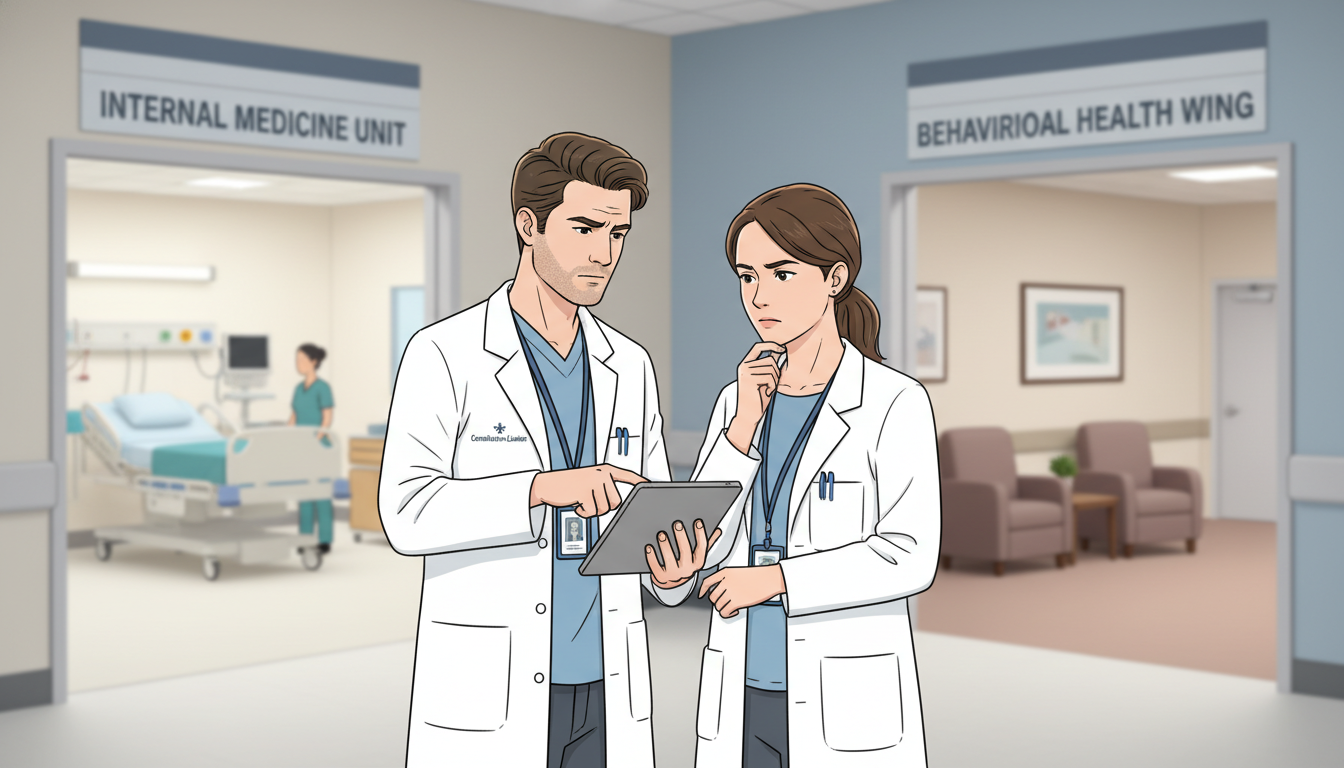
2. Poor Coordination Between Medicine and Psychiatry
Combined training relies on strong collaboration between IM and psychiatry. In malignant programs, you’ll see siloed or adversarial departments.
Warning signs:
- Schedules are chaotic; medicine and psychiatry chiefs struggle to even know where med-psych residents are supposed to be.
- Repeated rotation conflicts (e.g., two services both expecting you at once, or last-minute changes that wreck continuity).
- Faculty from one department publicly question the value of the other: “Psych doesn’t work as hard,” or “Medicine doesn’t get mental health.”
- Residents talk about feeling “pulled apart” or punished for trying to balance both worlds.
Practical test question to ask residents:
“How smoothly do medicine and psychiatry coordinate your schedule and expectations? What happens when there’s a conflict between the two?”
If residents pause, laugh nervously, or give vague answers, take that seriously.
3. Disproportionate Service Load on One Side
A healthy med psych residency balances internal medicine and psychiatry exposure. A malignant or at-risk program may over-rely on med-psych trainees to patch service gaps.
Common patterns:
- Heavy use as interns/upper levels on medicine wards to cover staffing gaps, with minimal med-psych–specific learning.
- On psychiatry, med-psych residents are used primarily for medically complex patients, but without supervision tailored to dual skill-building.
- Call schedules mirror categorical IM or psych schedules exactly, with no consideration of integrated workload or burnout.
Key question:
“Do you feel the balance of medicine and psychiatry training is respected, or do you feel used to fill whichever service is in crisis?”
A malignant answer is: “We’re constantly pulled to whichever side is short-staffed, and there’s not much protection.”
4. Chronic Identity Confusion and Administrative Neglect
Med-psych residents often fall between administrative cracks in toxic programs.
Red flags:
- No clear “home base” or dedicated program coordinator; you’re passed back and forth between IM and psych admins.
- Your performance evaluations get lost or are incomplete because no one owns your global evaluation.
- You’re excluded from key emails, meetings, or opportunities because you’re not clearly “owned” by either department.
- Program leadership can’t articulate how your milestones and board eligibility are tracked over five years.
This is more than an annoyance; it can jeopardize graduation and board certification if not managed properly.
5. Minimal Dedicated Med-Psych Faculty and Mentorship
Every med psych residency should have at least a few core faculty who are deeply invested in combined training (ideally themselves dual-boarded). Malignant programs treat med-psych as a side project, not a serious pathway.
Warning signs:
- No dual-boarded faculty, or only one who is overextended and rarely available.
- No regular med-psych didactics or journal clubs.
- Residents say they “piece together” their identity and career path alone.
- No clear structured mentorship, especially for med-psych–relevant careers (e.g., CL, integrated primary care, SMI medicine).
If residents struggle to name a primary med-psych mentor they actually meet with, consider it a residency red flag.
Classic Toxic Program Signs: How They Show Up in Med-Psych
Beyond med-psych–specific issues, you must also evaluate general indicators of a toxic or malignant residency program. Here’s how standard red flags play out in combined training.
1. High Resident Turnover, Transfers, or Leaves
Resident attrition is one of the most powerful indicators of a problematic environment.
Ask specifically:
- “How many residents have transferred out in the last 5–7 years? Why?”
- “How many took leave for non-academic reasons and did they return?”
In a malignant med psych residency, you might hear:
- Med-psych residents switching to categorical IM or psych due to lack of support.
- Residents quietly leaving after PGY-2 or PGY-3, sometimes mid-year.
- Faculty rationalizing this as “They just realized med-psych wasn’t for them,” without introspection about program culture.
One or two departures over several years isn’t necessarily alarming. A pattern absolutely is.
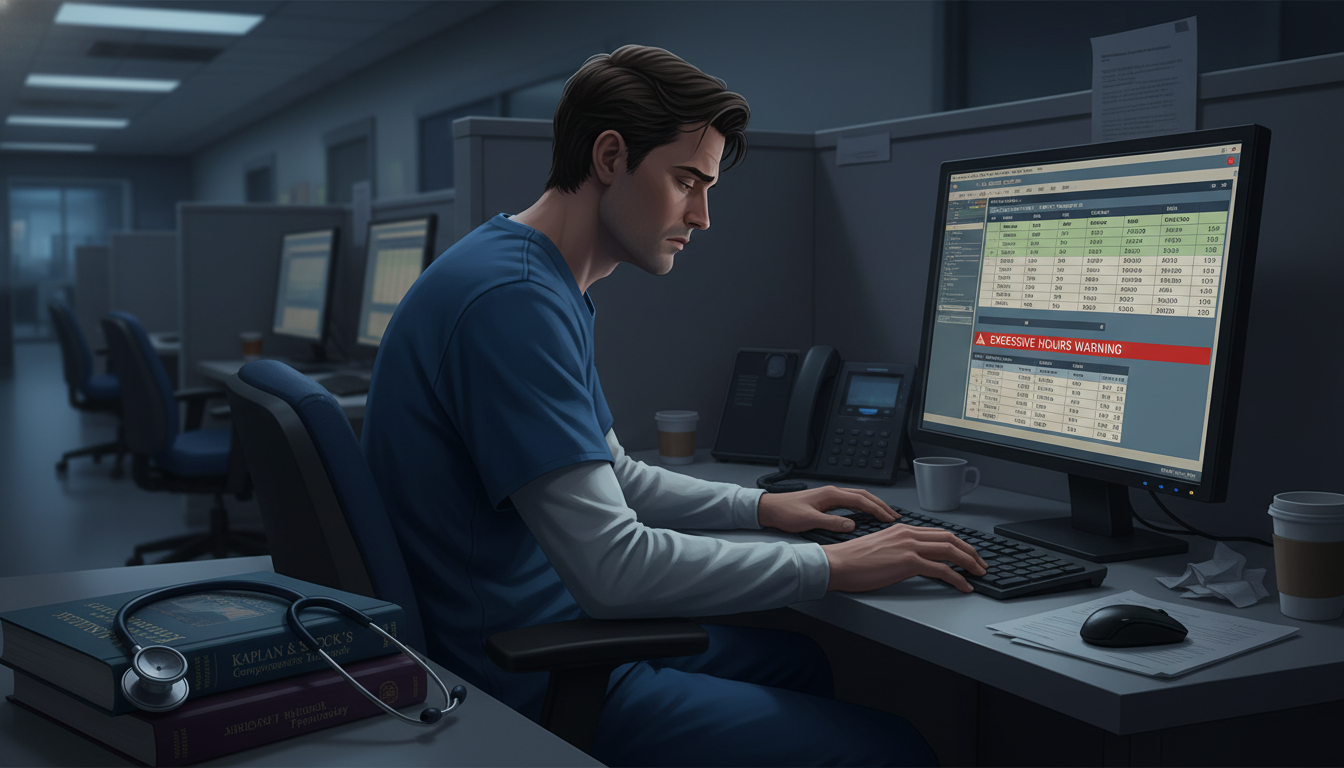
2. Recurrent Duty Hour and Workload Problems
Every resident will occasionally stretch duty hours during a crisis, but persistent violations without systemic fixes are a major warning sign.
In med-psych programs, this may appear as:
- Heavy night float or ICU loads on the medicine side combined with demanding psychiatry rotations, with no global oversight of total fatigue.
- Being expected to “make up” lost time on the other service after a heavy stretch, compounding burnout.
- Leadership downplaying concerns: “You’re med-psych; you should be able to handle it.”
Probe specifically:
- “How often do you exceed duty hours?”
- “What happens when someone reports a violation?”
- “Does your program ever tell you not to log certain hours?”
If residents hint at being pressured not to report accurately, that’s a hallmark of a malignant residency program.
3. Degrading or Unprofessional Behavior from Faculty
Toxic program signs also include patterns of disrespect —
Examples:
- Attending physicians mocking psychiatry patients on medicine rotations, or vice versa.
- Residents being called “snowflakes,” “lazy,” or “weak” for expressing safety or fatigue concerns.
- Public shaming during rounds, especially in front of patients, nurses, or other staff.
- Faculty joking that med-psych residents are “confused” or “couldn’t choose” as a way to diminish the specialty.
A single unpleasant attending is not the same as a malignant environment. Look for culture: do residents feel supported when they raise concerns about such behavior? Or are they told to “just get used to it”?
4. Thin Educational Content and Poor Board Support
A combined medicine-psychiatry program must adequately prepare you for two sets of boards. A malignant program may under-resource your didactics or treat board prep as your private problem.
Red flags:
- No structured plan for both ABIM and ABPN board preparation (e.g., review courses, dedicated didactic time, or practice exams).
- Residents frequently delaying or failing one or both boards.
- Minimal protected time for conferences; residents routinely pulled from teaching to cover service.
Ask:
- “How many med-psych graduates have passed both boards on their first attempt in the last 5 years?”
- “How does the program support dual-board preparation?”
Vague answers, or clear evidence of multiple failures without a remediation plan, should lower a program on your rank list.
5. Poor Handling of Mistakes, Conflict, or Feedback
In a healthy system, errors and conflicts become opportunities for system improvement. In malignant programs:
- Morbidity & mortality or case conferences are blame-focused.
- Residents are singled out publicly instead of issues being de-identified.
- Constructive feedback is rare; evaluations are either punitive or non-specific.
- Internal medicine and psychiatry each blame the other department for systemic problems that affect med-psych residents.
Med-psych residents are particularly vulnerable if each department assumes the other is responsible for problem-solving. If residents say, “When there’s a problem, everyone just shrugs and says it’s the other department’s issue,” that’s a strong warning.
How to Spot Problems Before You Rank: Practical Strategies
You can’t fully know a program until you train there, but you can significantly reduce risk by systematically gathering data about residency red flags.
1. Prepare Targeted Questions for Interview Day
Don’t rely on generic “How do you like the program?” questions. Tailor questions to med-psych and malignancy detection.
To residents:
- “How does the program respond when a resident is struggling—academically, personally, or with burnout?”
- “Have there been any major resident-led changes in the past few years? What were they and how did leadership respond?”
- “Do you feel equally supported on medicine and psychiatry? Are there rotations where med-psych residents consistently feel unsafe or mistreated?”
- “How often do you see your program director and core med-psych faculty?”
- “If you had to choose again, would you choose this med psych residency?”
To faculty/program leadership:
- “How do you ensure med-psych residents aren’t just used to plug gaps in coverage?”
- “What changes have you made in response to past ACGME surveys or resident feedback?”
- “Can you describe a time when a resident raised a serious concern and how it was addressed?”
You’re listening not just to content but to tone, transparency, and consistency across people.
2. Read Between the Lines During Resident Interactions
On interview day, residents are often cautious, but their nonverbal cues and what they don’t say can be revealing.
Look for concerning signs such as:
- Residents appear unusually exhausted, anxious, or guarded—even on a “showcase” day.
- Only chief residents or hand-picked “happy” residents are allowed to interact with applicants.
- Residents avoid answering direct questions or give canned, rehearsed responses.
- When you ask about wellness or duty hours, the room goes quiet, or someone changes the subject.
Compare impressions from the med-psych residents to categorical IM and psych residents. If med-psych residents seem isolated or less enthusiastic than their categorical peers, consider why.
3. Use Public and Semi-Public Information Wisely
No single data point is definitive, but patterns matter.
Sources:
- ACGME resident/fellow survey outcomes (if programs share highlights; you can ask directly).
- Word of mouth from recent graduates, fellows, or faculty at your home institution.
- Alumni contact—ask programs if you can speak with recent med-psych graduates.
- Online forums: take anecdotal reports with caution but do look for consistent narratives.
Questions to quietly investigate through your network:
- “Have you heard anything about resident turnover or culture there?”
- “How is their reputation on the medicine side? On the psychiatry side?”
4. Pay Attention to Structural Commitments
Look at structural indicators of program stability and investment:
- Dedicated med-psych leadership: Is there a clearly identified program director and associate directors with protected time?
- Long-term faculty presence: Have med-psych leaders been in place for years, or is leadership in constant turnover?
- Niche development: Are there specialized med-psych units, integrated clinics, or consultation services that indicate institutional commitment?
- Class size and growth: A very small program isn’t necessarily malignant, but rapid expansion without added resources can be a risk.
If med psych appears like a small add-on the institution barely understands, the risk of neglect is higher.
5. Trust Your Instincts, But Anchor Them in Data
Your gut reaction matters, especially if you sense fear or silencing among residents. Still, back it up with specific observations:
- “I noticed residents didn’t answer when I asked about duty hours.”
- “There was no mention of board pass rates or how they support dual board prep.”
- “Nobody could explain how med-psych residents’ schedules are coordinated between departments.”
Use these concrete notes when building your rank list to balance emotion with evidence.
If You Match into a Malignant Program: Protecting Yourself
Despite your best efforts, you may realize after starting that your med psych residency is more toxic than you expected. You still have options and strategies.
1. Clarify the Nature and Scope of the Problem
Differentiate between:
- Challenging but fixable issues (e.g., a tough ICU rotation, a difficult attending, administrative hiccups early in the year), and
- Systemic malignancy (sustained abuse, retaliation, disregard for resident well-being, or educational neglect).
Talk discreetly with:
- Trusted senior residents (including categorical IM and psych residents).
- Your med-psych program director or associate director.
- A faculty mentor you trust on either side.
Ask about history: has this been going on for years, or is it a transitional period with clear improvement efforts underway?
2. Use Formal Support Channels
If you’re facing serious issues:
- Document specific incidents: dates, times, people involved, impact on patient care or education.
- Use program evaluations and ACGME surveys honestly; they do drive oversight.
- Know your institution’s GME office, ombuds, or wellness director; they often provide confidential support and can intervene.
In medicine psychiatry combined programs, it can help to:
- Engage both department chairs or vice chairs if either side is especially problematic.
- Identify allies in each department who understand med-psych and can advocate for you.
3. Explore Transfer Options if Necessary
If the environment is truly malignant and not improving, transferring may be warranted.
Steps usually include:
- Speaking confidentially with your program director and GME.
- Reaching out to other med-psych or categorical programs to assess possibilities (transfers are difficult but do happen).
- Preserving your professional reputation by staying factual, not inflammatory, when describing your reasons.
Transferring from med-psych to categorical internal medicine or psychiatry is also sometimes an option; many PGY-2 or PGY-3 residents choose this path when the combined track isn’t working, regardless of malignancy.
4. Focus on Personal Safety and Sustainability
In any challenging environment:
- Prioritize sleep, medical care, and mental health; seek therapy or support if needed.
- Build a support network outside the toxic program culture—friends, family, mentors at other institutions, or online communities of med-psych trainees.
- Remember that residency is time-limited. Even in a difficult program, strategic planning can position you to graduate competent and move on to a healthier environment for fellowship or practice.
Putting It All Together: A Practical Checklist
When assessing a med psych residency for malignancy or toxicity, consider the following key domains:
Culture & Safety
- Do residents feel safe to speak up?
- Are mistakes treated as learning opportunities, or grounds for shame and punishment?
Coordination & Identity
- Is there smooth collaboration between medicine and psychiatry?
- Do med-psych residents have a clear identity and home?
Workload & Duty Hours
- Are duty hours respected across both departments?
- Are med-psych residents used primarily for service coverage?
Education & Career Development
- Are there robust didactics, med-psych–specific teaching, and dual-board preparation?
- Do recent graduates achieve the kind of careers you envision?
Resident Outcomes
- What is the rate of attrition, transfer, or early burnout?
- Do residents seem genuinely satisfied and proud of their training?
If a program raises concerns in multiple domains, especially with consistent stories from different people, consider it a significant residency red flag when building your rank list.
Frequently Asked Questions (FAQ)
1. Are all demanding or high-acuity med psych programs “malignant”?
No. Some of the strongest medicine-psychiatry combined programs are intensely challenging but also deeply supportive. High volume, busy call, or complex patients do not equal malignancy if:
- Duty hours are respected overall
- Residents have strong supervision and teaching
- Feedback is constructive, not punitive
- Leadership listens and responds to concerns
Hard work in a learning-rich, respectful environment is very different from exploitation in a toxic program.
2. How much weight should I give to one negative online comment about a program?
Single anonymous comments—positive or negative—should be interpreted cautiously. Instead of focusing on isolated posts, look for:
- Repeated themes across different sources and years
- Consistency between what you read and what you observe on interview day
- Whether the program acknowledges past issues and describes specific improvements
If multiple independent sources describe similar problems (e.g., bullying, chronic duty hour violations, or severe lack of coordination), that pattern should influence your ranking more heavily.
3. What if a med psych program seems great on psychiatry but weak or toxic on medicine (or vice versa)?
This is a common scenario. You must assess both halves because you are responsible for two full specialties.
Ask yourself:
- Can I get a safe, solid foundation in the weaker department despite its flaws?
- Do I see committed mentors and leadership actively working to improve issues?
- Will this imbalance limit my future practice (e.g., if medicine is weak, will I still feel comfortable managing complex medical illness in psych settings)?
If one side is truly malignant—systemically abusive, neglectful, or unsafe—it can poison your entire experience, even if the other side is excellent. In that case, you may be better served by a more balanced program, even if it’s less flashy.
4. Is it ever worth ranking a program that has some red flags?
Almost every residency has imperfections. Some “red flags” may represent temporary transitions (e.g., leadership change, new EMR, recent expansion). Consider ranking a program with some concerns if:
- Issues are openly acknowledged by residents and leadership.
- There’s clear evidence of ongoing improvement.
- The med-psych identity and educational mission are strong.
- You have reasons (geographic, family, career niche) that make it a particularly good fit otherwise.
However, if multiple domains show serious problems—especially cultures of fear, retaliation, or pervasive neglect of med-psych training—it is usually safer to rank that program lower or not at all.
Identifying malignant programs in medicine-psychiatry requires both a general understanding of toxic residency program signs and a nuanced appreciation of what makes combined training unique. By asking targeted questions, listening critically to residents and faculty, and watching for patterns across departments, you can protect yourself and choose a med psych residency that will challenge you, support you, and help you thrive in one of medicine’s most dynamic specialties.