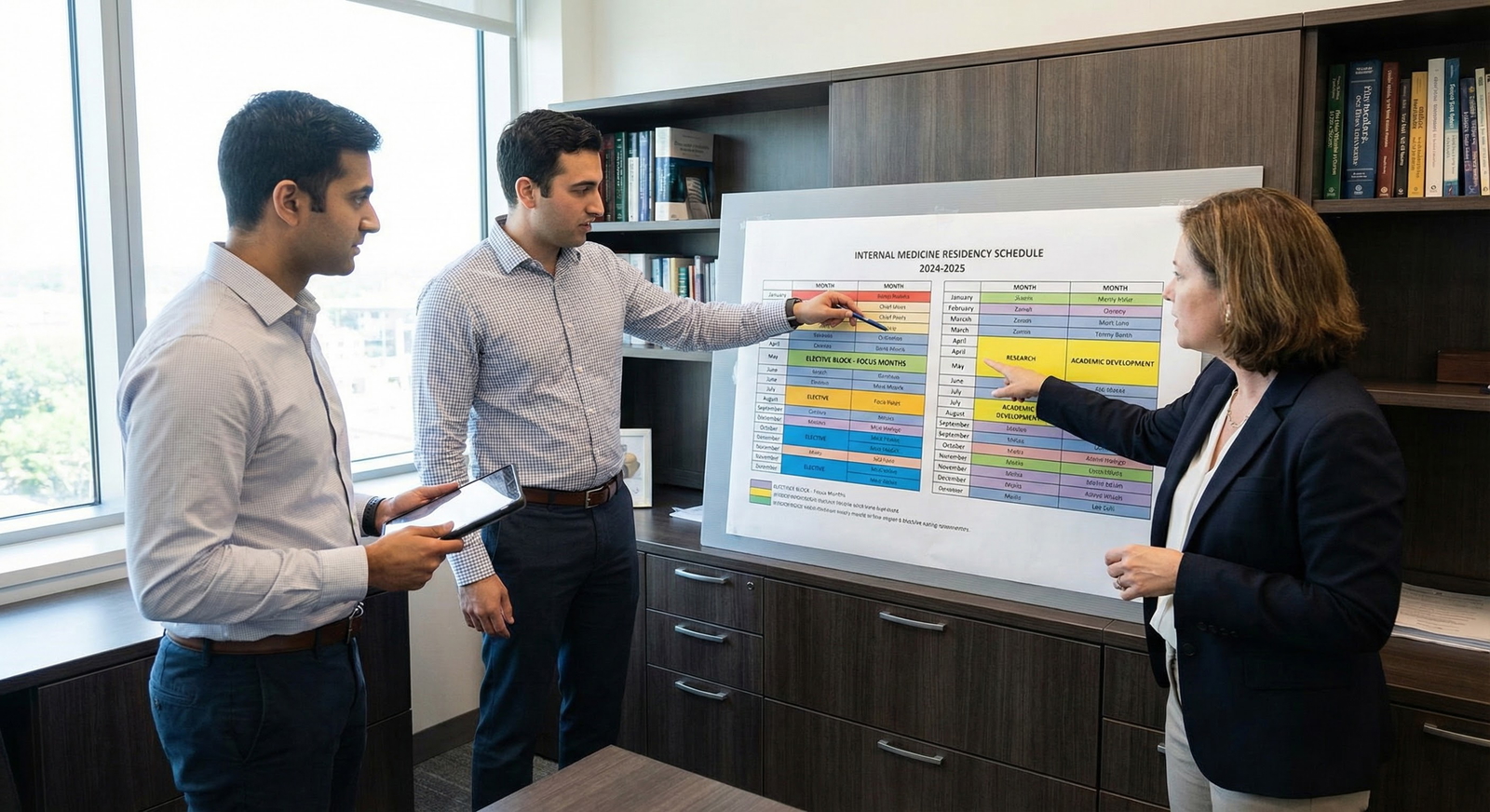
Understanding Malignant Neurosurgery Programs as a US Citizen IMG
For a US citizen IMG or American studying abroad, matching into neurosurgery residency is already among the most competitive paths in medicine. The stakes are high, the training is long, and the culture of your future program will profoundly shape both your career and your personal life. In this context, avoiding a malignant residency program is just as important as landing a spot in a strong neurosurgery residency.
“Malignant” is informal but widely used to describe programs where the culture is consistently harmful, exploitative, or psychologically unsafe. For neurosurgery—a high-intensity, high-risk specialty—this can translate into physical burnout, emotional trauma, and even career derailment.
This article is tailored specifically for US citizen IMGs targeting neurosurgery. You’ll learn how to recognize toxic program signs, interpret subtle residency red flags during your application and interview season, and make safer choices before submitting your rank list.
What Does “Malignant” Actually Mean in Neurosurgery?
A malignant neurosurgery residency program isn’t just “hard” or “demanding.” All neurosurgery residencies are intense. Malignancy refers to how that intensity is managed, how residents are treated, and whether the program systematically disregards resident well-being or integrity.
Key Features of a Malignant Program
Common characteristics include:
Systemic Disrespect and Hostility
- Regular public humiliation, belittling, or yelling at residents or medical students
- Sarcasm and ridicule normalized as “teaching”
- Residents routinely blamed for systemic failures beyond their control
Chronic Exploitation of Labor
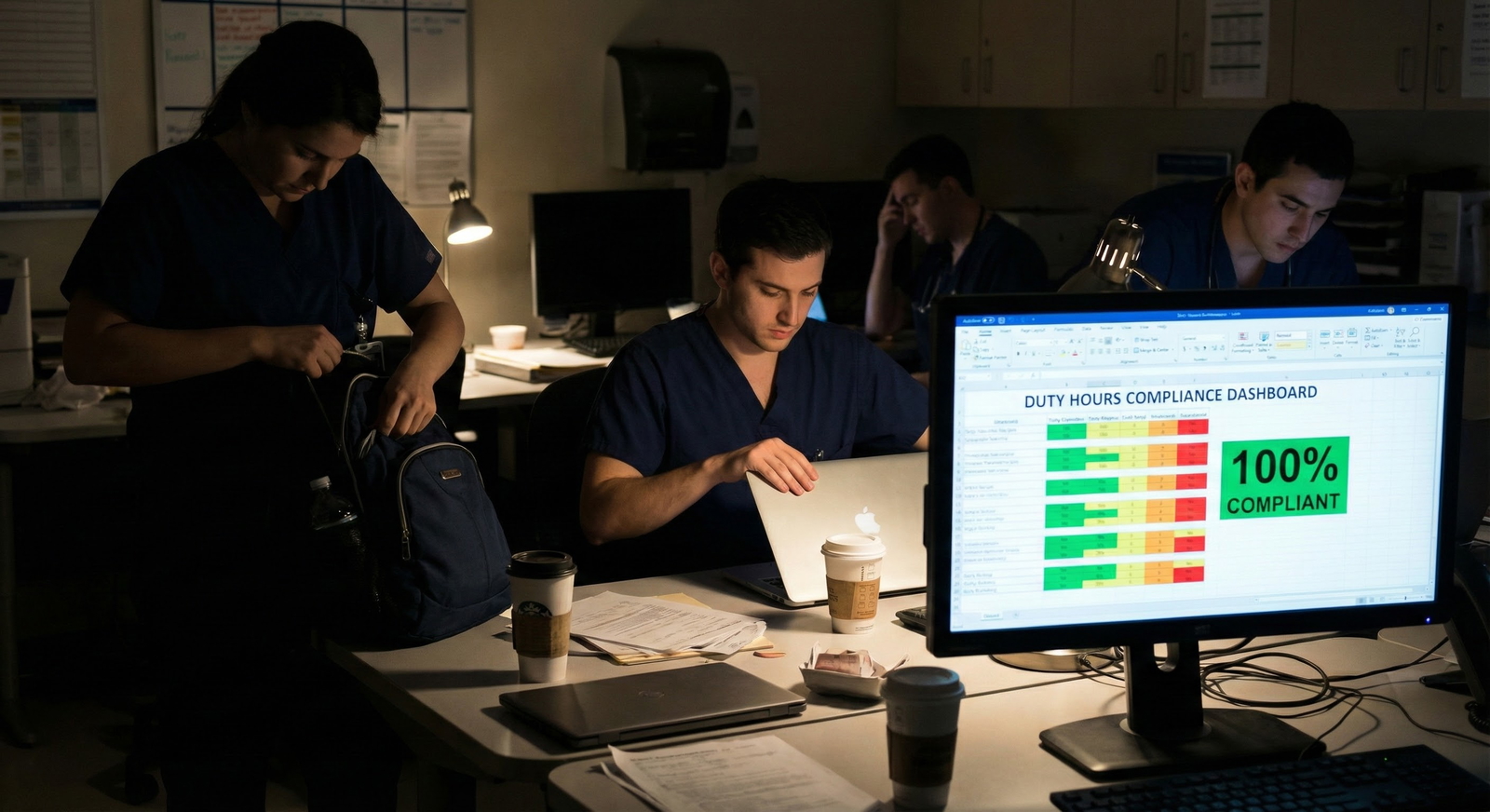
- Consistent violation of duty-hour rules, with pressure to falsify logs
- Residents expected to work post-call regularly without rest
- Heavy scut work with little educational value—clerical tasks taking precedence over operative experience
Retaliation and Fear Culture
- Residents afraid to report safety concerns or mistreatment
- Retaliation (poor evaluations, lost cases, hostile schedules) when residents speak up
- Threats about contracts, future careers, or letters of recommendation
Poor Educational Environment
- Little structured teaching; didactics frequently canceled for service needs
- Residents used as workforce rather than trainees
- Inconsistent or unsafe supervision in the OR or ICU
Unstable or Dishonest Leadership
- Program director turnover every few years, or frequent faculty departures
- Broken promises regarding operative experience, research support, or vacation
- Patterns of gaslighting—telling residents “everything is fine” despite obvious dysfunction
Distinguishing “Hard but Fair” from Malignant
Some neurosurgery programs are extremely demanding yet fundamentally supportive. For a US citizen IMG, that nuance matters.
A hard but healthy neurosurgery residency will typically:
- Enforce high standards and tight schedules, but:
- Offer real mentorship and advocacy
- Encourage asking for help
- Treat mistakes as learning opportunities instead of personal failures
- Honor time off as much as possible, within clinical realities
A malignant program will:
- Use high stress as justification for abuse
- Label suffering as a rite of passage or “it was worse in my day”
- Shame residents for basic human needs (sleep, family, health)
- View trainees as expendable rather than as future colleagues
Your goal is not to avoid challenge; it is to avoid systems that grind you down and endanger your well-being or career.

Why US Citizen IMGs Are Particularly Vulnerable
Being a US citizen IMG or American studying abroad adds specific dimensions to the risk of ending up in a malignant neurosurgery residency program.
Fewer Program Options, Higher Pressure
- Neurosurgery has very limited residency positions nationwide.
- As a US citizen IMG, you may get fewer interview invitations than US MD seniors, even with strong scores and research.
- This limited pool can push applicants to:
- Overlook clear toxic program signs
- Rank any program that offers them a spot, regardless of culture
- Accept narratives like “this is just how neurosurgery is”
You cannot control the competitiveness of neurosurgery, but you can control your willingness to accept severe dysfunction as inevitable.
Vulnerability Around Sponsorship, Contracts, and Power Dynamics
Even though you’re a US citizen (so no visa sponsor needed), you may:
- Feel less empowered to speak up about problems, fearing:
- “IMG bias” or stereotypes
- Being seen as “ungrateful” for having matched
- Have fewer strong advocates within US academic neurosurgery, especially if:
- Your medical school has limited ties to US neurosurgery departments
- You have fewer mentors willing to intervene if things go wrong
Toxic programs can exploit this imbalance. They may assume you will tolerate more mistreatment because you have “fewer options.”
Limited Insider Knowledge
An American studying abroad often:
- Misses informal back-channel information that US students get:
- Honest commentary from upperclassmen who rotated at different programs
- Quiet warnings from deans or advisors about specific hospitals
- Relies more on:
- Program websites
- Official presentations
- Polished interview-day messaging
Malignant residency programs know how to look great on paper. As a US citizen IMG, you need stronger skills in reading between the lines.
Clear Red Flags: How to Spot Toxic Neurosurgery Program Signs
During your application cycle, step back and actively assess residency red flags rather than just trying to impress programs. Below are signs you should treat very seriously, especially if multiple appear together.
1. Resident Culture and Morale
Listen carefully to what residents say—and what they avoid saying.
Serious red flags:
- Residents look visibly exhausted, anxious, or on-edge during interviews or social events
- They hesitate, glance at each other, or change the subject when asked about:
- Program leadership
- Duty hours
- OR autonomy
- Wellness or support
- Residents subtly indicate:
- “We’re like a family… a very tough one” in a strained or forced way
- “You just have to push through” with no mention of support or growth
- “We’ve had some challenges with leadership, but things are definitely improving” without specifics
Ask direct but neutral questions:
- “How often are you actually relieved post-call?”
- “How approachable is the program director if you have concerns?”
- “Have any residents left the program in the last few years? Why?”
If answers are vague, evasive, or clearly rehearsed, treat that as a warning.
2. Resident Attrition and Outcomes
In neurosurgery, resident attrition is a powerful indicator of program health.
Concerning patterns:
- More than one or two residents leaving the program over a short period (e.g., 5–7 years), especially at later PGY levels
- Residents switching out of neurosurgery entirely, not just transferring to another program
- Lack of transparency about where recent graduates ended up (fellowships, positions)
On interview day or via email, you can ask:
- “How many residents have left the program in the last 5–10 years?”
- “Can you share what they did afterward?”
If the program avoids or downplays this information, proceed carefully.
3. Duty Hours and Unrealistic Expectations
All neurosurgery residencies are busy; the difference is whether leadership respects boundaries.
Red flags:
- Residents openly acknowledge regular 100+ hour weeks
- Jokes like:
- “You basically live here”
- “We don’t really count hours—we just do what needs to be done”
- Implicit or explicit pressure to under-report hours to maintain compliance
Probe by asking:
- “Do you feel comfortable accurately reporting your duty hours?”
- “Have there been any ACGME citations related to duty hours or supervision?”
- “How often are you post-call and still in the hospital the next evening?”
A malignant residency program may proudly frame chronic overwork as a badge of honor.
4. Supervision and Safety in the OR and ICU
For a high-risk field like brain surgery residency, poor supervision can be dangerous for you and your patients.
Red flags:
- Residents hint that they are left alone with unstable neurosurgical patients or complex cases beyond their training level
- Stories of being pressured to “just figure it out” without backup
- No consistent attending coverage overnight for serious emergencies
You can ask:
- “What is the level of attending involvement overnight for emergent cases?”
- “Have you ever felt unsafe or unsupported in a clinical situation?”
If residents brush these off with gallows humor or awkward laughs, take note.
5. Leadership Style and Stability
Program culture is heavily shaped by the chair and program director.
Red flags in leadership:
- Multiple program directors in the last 5–7 years
- Stories or hints that the chair is:
- Volatile, intimidating, or punitive
- Frequently at odds with GME or other departments
- A pattern of faculty unexpectedly leaving the program
Ask:
- “How long has the current program director been in place?”
- “How long have most of the core faculty been here?”
- “What’s the relationship like between residents and leadership?”
If residents say “we mostly stay out of their way,” that’s not a good sign.
6. Educational Commitment vs. Service-Heavy Culture
Neurosurgery training must balance service and education. Malignant programs often skew heavily toward service at the expense of learning.
Red flags:
- Didactics frequently canceled, poorly attended, or pushed aside for administrative tasks
- Minimal structured feedback or evaluation; you’re “just supposed to know” if you’re doing well
- Limited or tokenized simulation, bootcamps, or skills training
Ask:
- “How protected is didactic time?”
- “How is feedback given on your operative performance?”
- “What resources do you have for board preparation?”
If the focus is always on coverage rather than development, you’ll stagnate, not grow.
Subtle Warning Signs on Paper and Online
You can start screening for toxic program signs long before interview day—through program websites, forums, and data sources.
1. ACGME and GME History
Search for:
- ACGME citations or probation history
- News articles or institutional press releases about:
- Residency restructuring
- Overhaul of leadership
- Lawsuits involving residents
While past issues are not always disqualifying, a pattern of recurring problems should give you pause.
2. Inconsistent or Outdated Public Information
Red flags:
- Website lists faculty who have clearly left (you discover this on PubMed, LinkedIn, or recent conference rosters)
- Missing or vague details about:
- Case volume
- Resident research time
- Call schedules
- No clear description of resident wellness supports, counseling services, or remediation policies
Programs that care about their residents typically present clear, transparent information.
3. Word-of-Mouth and Reputation
For an American studying abroad, this part is harder but still accessible.
Strategies:
- Contact alumni from your med school in other US specialties who rotated or matched at neurosurgery-heavy institutions
- Reach out (professionally) to neurosurgery residents via:
- Student neurosurgery societies
- Virtual open houses
- Conferences or webinars
- Ask neutral questions like:
- “Which programs have particularly supportive cultures for residents?”
- “Are there any programs you’d strongly avoid, especially as a US citizen IMG?”
If the same few programs consistently come up with cautionary comments, listen carefully.
4. Match and Fellowship Patterns
Look at:
- Where graduates match for fellowships
- Whether there’s a sudden drop in fellowship placement prestige
- Gaps in recent classes (e.g., no PGY-3 for two years) suggesting attrition or replacement difficulty
Programs that struggle to retain residents or place them in fellowships may have deeper structural or cultural issues.
Strategic Advice for US Citizen IMGs: Balancing Risk, Reality, and Opportunity
You may only have a handful of neurosurgery interviews. That doesn’t mean you have to accept any residency at any cost. Use a structured framework to protect yourself while still maximizing your chances to match.
Step 1: Define Your Non-Negotiables
Before interviews begin, write down:
- Absolute deal-breakers, such as:
- Documented history of severe abuse or harassment
- Multiple residents leaving in mid-training without transparent explanation
- Clear violation of duty-hours with pressure to hide it
- Strong preferences, such as:
- Stable leadership with at least 3–5 years in current roles
- Formal mentorship for US citizen IMG trainees
- Documented graduated responsibility in the OR
This makes it easier not to rationalize obvious red flags later out of fear of not matching.
Step 2: Use Every Interaction as Data
During away rotations, interviews, and virtual sessions:
- Observe how faculty treat:
- Residents
- Nurses and OR staff
- You, as a student or applicant
- Notice:
- Are questions encouraged or shut down?
- Are mistakes discussed calmly or met with anger?
- Do residents take even a brief moment for teaching, or are they constantly in crisis mode?
A malignant program’s true nature often surfaces in micro-interactions, not in formal presentations.
Step 3: Ask Direct, Specific Questions
Rather than asking, “Is this a supportive program?” ask:
- “If a resident is struggling clinically or personally, what is the structured process to support them?”
- “Can you describe a time when a resident advocated for change and how leadership responded?”
- “How often does the GME office interact with your program, and what kind of feedback have they given recently?”
Specific questions are harder to answer with generic, polished responses.
Step 4: Protect Yourself During Ranking
When rank list time comes:
- Do not rank any program you truly believe is unsafe or malignant, even if it’s your only neurosurgery interview.
- Consider:
- Whether you would rather:
- Go unmatched in neurosurgery this year and strengthen your application, or
- Spend 7 years in a damaging brain surgery residency environment that could compromise your health, professionalism, or career trajectory
- Whether you would rather:
For some US citizen IMGs, a realistic strategy may involve:
- Ranking only neurosurgery programs you believe are at least “hard but fair”
- Having a backup specialty where you’d be content and safe, if your neurosurgery options appear malignant or very limited
There is no universal answer, but knowingly entering a toxic system carries serious personal and professional risks.
Step 5: Build Mentorship and Advocacy Early
Because you may have less institutional leverage as a US citizen IMG:
- Proactively cultivate mentors in neurosurgery:
- Through research collaborations
- Virtual networking
- National societies (AANS, CNS, section on tumors, trauma, spine, etc.)
- Ask trusted mentors to:
- Give honest opinions about programs on your list
- Help interpret subtle warning signs
- Intervene if you find yourself in a harmful environment after matching
Mentors can see dynamics you cannot and may have heard candid feedback from prior residents.
Frequently Asked Questions (FAQ)
1. As a US citizen IMG, should I avoid any neurosurgery program labeled “malignant” on forums?
Treat online labels as smoke, not proof of fire:
- Use them as prompts to investigate further:
- Ask about attrition
- Ask about leadership changes
- Ask residents about culture and support
- Some reputations are outdated; some understate real problems. Do not rely solely on anonymous comments, but do not ignore consistent negative patterns either.
2. What are the biggest residency red flags I should never overlook, even with limited options?
Top non-negotiable red flags include:
- Multiple residents leaving mid-training without a clear, benign explanation
- Systematic duty-hour violations with pressure to misreport
- Routine public humiliation or yelling as a “teaching method”
- Unsafe supervision (residents regularly left alone with complex neurosurgical emergencies) If you see more than one of these, seriously reconsider ranking that program.
3. How can I get honest information when residents may be afraid to speak openly?
Try:
- Asking one-on-one, off-camera (if virtual) or in a private corner in person
- Using neutral, non-leading questions:
- “If your sibling were applying here, what would you want them to know?”
- “What’s one thing you’d change about the program if you could?”
- Reaching out to recent graduates via email or LinkedIn for a short, confidential conversation
Patterns across multiple conversations are more reliable than a single comment.
4. If I matched into a malignant neurosurgery residency, do I have any options?
Yes, but they can be complex:
- Start by documenting serious issues (e.g., harassment, unsafe clinical expectations)
- Seek confidential support from:
- Your institution’s GME office
- A trusted faculty mentor
- Physician wellness or ombudsman services
- In extreme situations:
- Transferring programs
- Switching specialties
- Involving external regulatory bodies may be options
If you suspect significant abuse or danger, do not navigate it alone—seek guidance from experienced mentors or legal counsel where appropriate.
Identifying malignant programs is critical, especially for a US citizen IMG navigating a highly competitive neurosurgery residency landscape. Use structured observation, targeted questions, and mentorship to distinguish between genuinely rigorous training and toxic program signs. Protecting your safety and development now is an investment not only in your future career as a neurosurgeon, but also in your longevity, integrity, and capacity to care well for your patients over a lifetime.