Why “Malignant” Matters: The Stakes for Caribbean IMGs in OB‑GYN
For a Caribbean IMG aiming for an Obstetrics & Gynecology (OB GYN) residency in the US, choosing the right program is as important as earning the interview or the match itself. A strong, supportive training environment can launch your career; a malignant residency program can derail it through burnout, poor training, and even jeopardized board eligibility.
“Malignant” is a loaded word in medical training culture. There is no official definition, but most residents use it to describe programs where:
- Systemic disrespect and intimidation are normalized
- Education is secondary to service with unsafe workloads
- Leadership is unresponsive or retaliatory
- Wellness, personal life, and psychological safety are disregarded
As a Caribbean medical school graduate (including from schools like SGU, AUC, Ross, Saba, etc.), you may feel pressure to accept “any” OB GYN offer. That mindset can make you vulnerable to toxic program signs and red flags that U.S. MD/DO seniors are more likely to avoid. Your goal is not simply an obstetrics match; it is a sustainable, high‑quality residency that prepares you for the long career ahead.
This guide will help you identify malignant programs specifically from a Caribbean IMG lens, with practical, actionable strategies you can use before, during, and after interview season.
Understanding “Malignant” vs. “Tough but Fair” in OB‑GYN
OB GYN is, by nature, an intense specialty:
- Unpredictable hours and frequent nights
- High‑stakes emergencies (e.g., postpartum hemorrhage, shoulder dystocia)
- Emotional intensity around birth, loss, and complex ethics
- A surgical and procedural load that demands stamina and precision
A “tough but fair” program:
- Has high expectations but provides supervision and teaching
- Pushes residents, but leadership is approachable and responsive
- Uses feedback for growth, not humiliation
- Protects duty hours and addresses workload when it becomes unsafe
A malignant residency program:
- Uses fear, shame, and punishment as primary motivators
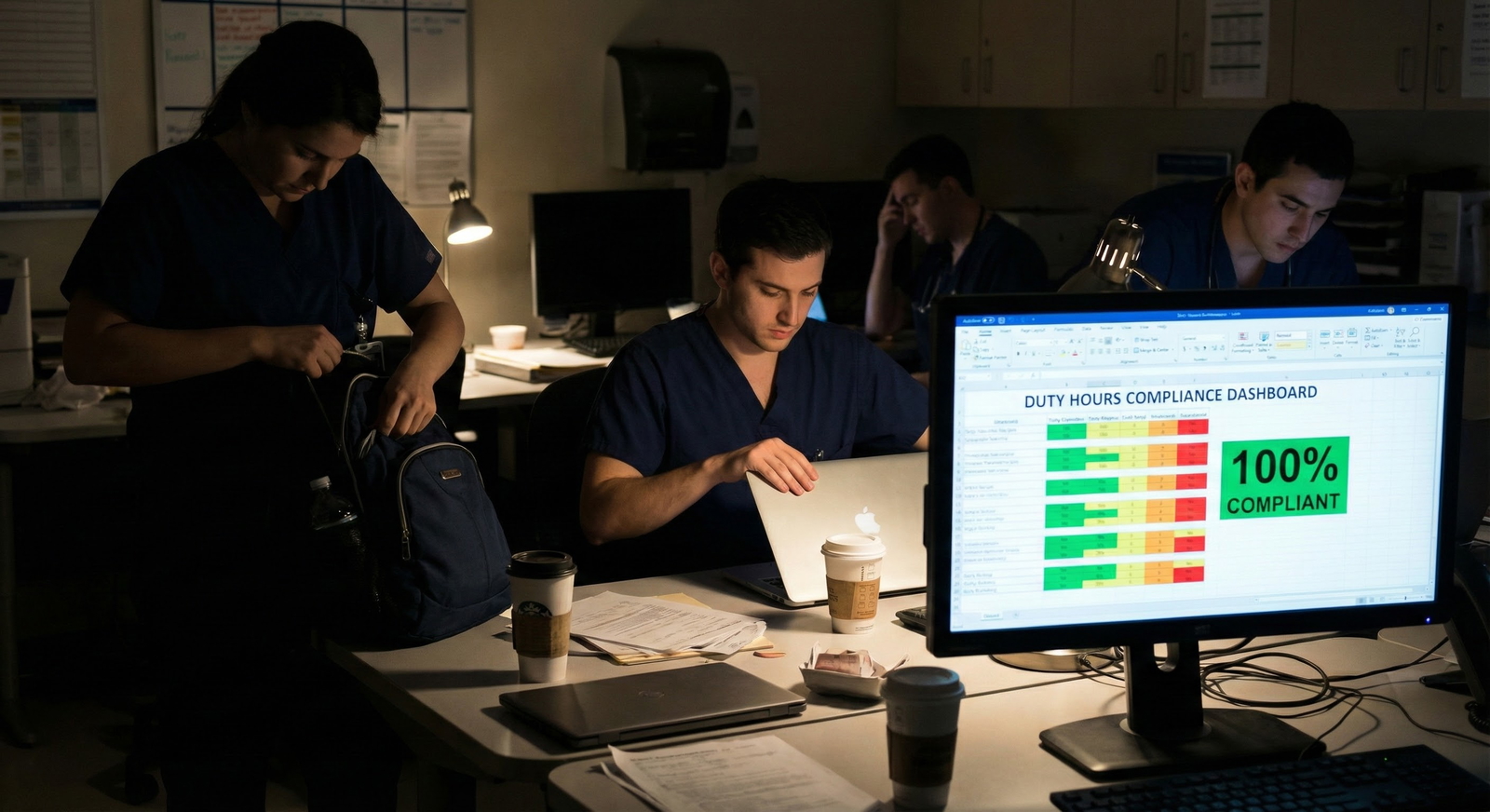
- Ignores or manipulates duty hour reporting
- Tolerates or rewards bullying behavior from faculty or senior residents
- Treats residents as cheap labor instead of learners
For Caribbean IMGs, especially those from a Caribbean medical school aiming for an OB GYN residency, the difference can be life‑changing. Malignant programs can:
- Make it harder to pass CREOGs and ABOG boards due to poor teaching
- Damage your mental health and confidence
- Limit your future fellowship or job options if training is suboptimal or your reputation suffers by association
Understanding these distinctions is the foundation for recognizing residency red flags as you navigate the SGU residency match (or any Caribbean IMG match) into obstetrics.
Structural Red Flags: What the Data and Policies Reveal
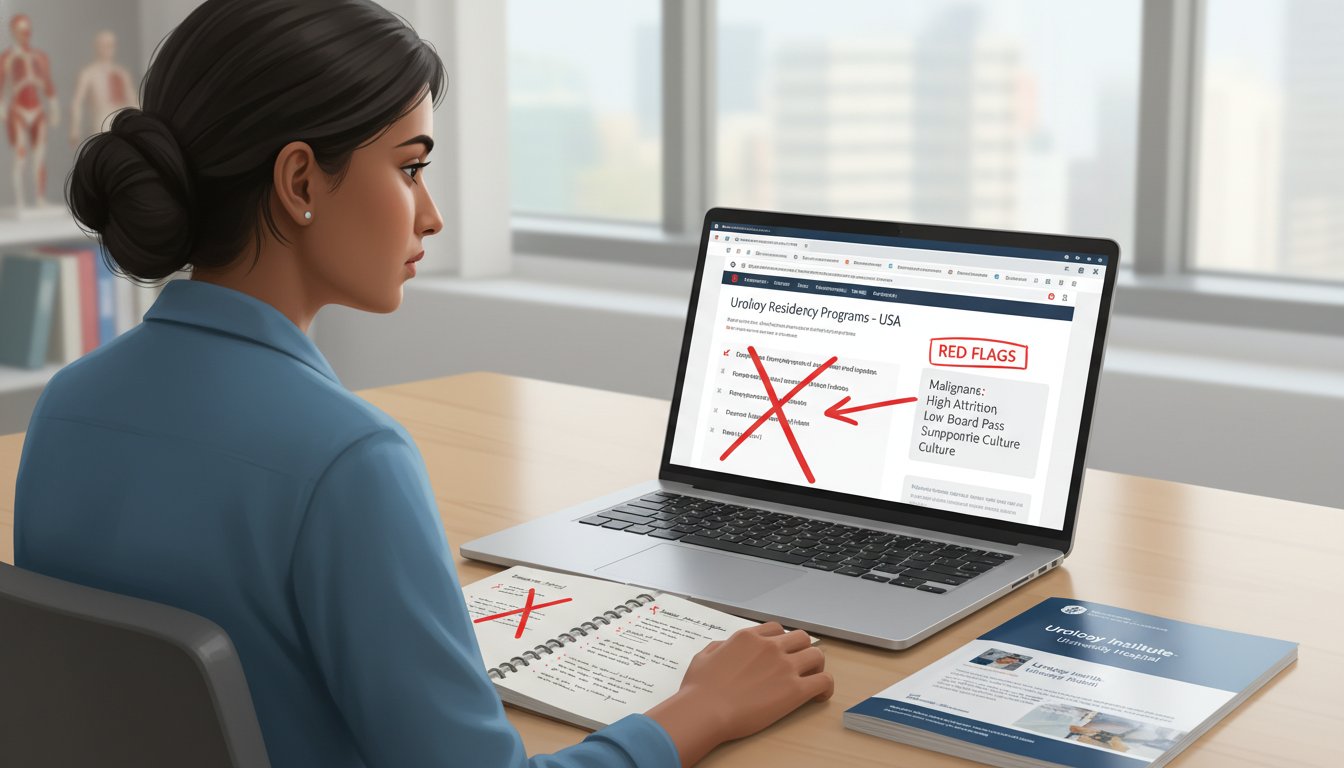
Before you ever set foot on campus, you can detect warning signs from program structure, outcomes, and policies. These are especially critical for Caribbean IMGs with fewer interview slots—you cannot afford to waste time and energy on truly toxic programs.
1. Board Pass Rates and Accreditation Concerns
Key questions:
- What is the ABOG written and oral board pass rate over the last 5 years?
- Has the program had ACGME citations, warnings, or probation?
Red flags:
- Consistently low board pass rates (e.g., far below national OB GYN averages)
- Vague or evasive answers about board performance
- Recent or ongoing ACGME citations related to:
- Resident supervision
- Duty hour violations
- Educational content
- Resident mistreatment
Why it matters: Malignant programs often prioritize service over education. Poor board performance can be an indirect marker that residents are overworked, under‑taught, or burned out.
Action step: During interviews or emails, directly ask:
“What have you done in the last 3 years to support residents’ ABOG board preparation, and what are your recent pass rates?”
Evasive responses are themselves data.
2. Duty Hours and Service vs. Education
OB GYN is busy, but there are limits. A malignant program may:
- Routinely violate 80‑hour work limits
- Disable or discourage accurate duty hour reporting (“Just keep it under 80”)
- Assign excessive “scut work” (transporting patients, endless phone calls) without educational value
Clues to look for:
- Residents joke about “real hours not matching what we log”
- You hear phrases like “We don’t believe in 80‑hour weeks here”
- No protected time for didactics, simulations, or CREOG review
- Frequent cross‑coverage of multiple services with no back‑up
Caribbean IMG‑specific angle: Programs that over‑rely on IMGs and have a reputation for “taking anyone” may do so because the workload drives away U.S. grads. This can be a subtle sign of malignant culture, not just IMG‑friendliness.
3. Attrition and Transfers
High attrition should trigger immediate concern, especially in a four‑year OB GYN residency.
Ask directly:
- “How many residents have left the program in the last 5 years, and why?”
- “Have any residents transferred out recently?”
Red flags:
- Vague answers like “Personal reasons” with no detail
- Multiple PGY‑2, PGY‑3, or PGY‑4 spots unexpectedly unfilled
- A pattern of residents leaving for “family reasons” that seems oddly frequent
While individual situations are private, a pattern of unexplained departures often signals deeper toxicity.

Cultural and Interpersonal Red Flags: How People Treat Each Other
Once you interact with a program—on virtual open houses, social media, or interviews—the culture becomes more visible. This is where many malignant residency program traits are exposed.
1. Disrespect, Shaming, and Public Humiliation
OB GYN training can be direct and intense, but it should never be demeaning.
Red flag behaviors:
- Faculty or seniors openly belittling residents in front of patients or staff
- Stories of “pimping” that cross into humiliation or sarcasm
- Residents warning you about specific faculty known for “destroying people” on rounds
- Blaming residents rather than analyzing systems when errors occur
Example scenario:
During an interview dinner, a PGY‑3 casually mentions that a certain attending “makes interns cry at least once a week, but that’s how you learn here.” That is not rigorous teaching—that’s abusive culture.
2. Anti‑IMG Bias and Microaggressions
As a Caribbean IMG, you must evaluate whether the environment is not only non‑malignant but also non‑discriminatory.
Subtle toxic program signs:
- Leadership speaks about IMGs as “risky” or “less capable”
- Residents joke about Caribbean medical schools or specific schools like SGU, Ross, or AUC
- Disproportionate surveillance or criticism of IMG residents compared to U.S. grads
- Comments like:
- “We’ve had some IMG issues in the past” without contextualizing
- “We tend not to rank many IMGs” in a dismissive tone
Healthy alternative:
Programs that welcome Caribbean IMGs emphasize:
- Equal expectations and support
- Clear remediation processes based on performance, not pedigree
- Alumni success stories that include IMGs, including from Caribbean medical schools
3. Retaliation and Lack of Psychological Safety
A malignant residency program often punishes residents who speak up.
Watch for:
- Residents reluctant to answer honestly when faculty are near
- Stories of residents “getting in trouble” after reporting duty hour violations or mistreatment
- Fear around giving “negative” feedback on ACGME surveys
- GME or program leadership dismissing previous concerns as “complaining” or “weakness”
Questions to ask residents privately:
- “If you were struggling or burned out, how safe would you feel asking for help?”
- “Has anyone ever been punished, formally or informally, for raising a concern?”
If you sense that people are choosing their words extremely carefully or give non‑answers, consider that a significant residency red flag.
Training Quality and Educational Red Flags in OB‑GYN
A non‑malignant program isn’t just kind—it must also be competent. For Caribbean IMGs, you need both: a supportive environment and a solid operative and clinical foundation to overcome any perceived bias when applying for jobs or fellowships.
1. Surgical and Obstetric Experience
OB GYN residents must graduate with robust experience in:
- Vaginal deliveries, including complicated labors
- Cesarean sections
- Gynecologic surgeries (open, laparoscopic, and often robotic)
- Emergency management (ectopic pregnancy, hemorrhage, eclampsia)
Red flags:
- Residents consistently unable to meet ACGME case minimums
- Attendings frequently “scrubbing out” residents for mid‑level providers or fellows
- Senior residents admitting they do not feel comfortable managing common procedures independently
- Disproportionate case allocation away from juniors without explanation
Questions to ask:
- “Do chiefs feel ready for independent practice on graduation?”
- “How are surgical cases allocated between residents, fellows, and mid‑levels?”
If the answer is that residents constantly lose cases to others, your training may suffer.
2. Didactics, Simulation, and CREOG Preparation
Educational structure separates a strong, demanding program from a malignant “service‑only” one.
Healthy indicators:
- Protected weekly didactic time, actually honored
- Regular simulation sessions (shoulder dystocia, postpartum hemorrhage, operative skills)
- Structured CREOG review with faculty involvement
- Residents given time and support to attend conferences or take courses
Red flags:
- Didactics routinely canceled “because we’re too busy”
- No structured board or CREOG preparation
- Residents discouraged from attending conferences due to coverage concerns
- Lack of formal mentorship for research or career planning
Malignant residency programs often use resident manpower to solve hospital staffing issues, sacrificing education.
3. Handling of Errors and Near‑Misses
Every OB GYN resident will face complications and adverse events. The program’s response distinguishes a learning culture from a toxic one.
Supportive approach:
- Morbidity & Mortality (M&M) conferences focused on system improvement
- Faculty sharing their own mistakes to normalize learning
- Formal debriefing after traumatic events (e.g., maternal death, fetal demise)
Malignant approach:
- M&M as a “blame and shame” event
- Publicly associating outcomes with a resident’s “incompetence”
- No psychological support or debriefing after serious events
For a Caribbean IMG, being scapegoated or blamed can intersect with bias and severely harm your confidence and future advocacy.

How to Detect Malignant Programs as a Caribbean IMG: A Step‑by‑Step Strategy
You will never have perfect information, but you can significantly reduce risk by using a systematic approach before committing your rank list.
Step 1: Pre‑Interview Recon
Use online resources, but interpret carefully:
ACGME and FREIDA:
- Check accreditation status
- Look at resident complement, case logs (if available), and program structure
Program website and social media:
- Look for transparency about curriculum, wellness, and board performance
- Note how diverse their residents appear and whether IMGs are visibly included
Unfiltered testimonials:
- Reddit, SDN, specialty Facebook groups, and Caribbean IMG forums
- Ask senior SGU residency match alumni (and other Caribbean grads) privately about specific programs
Caution:
One angry post does not equal a malignant program. Look for patterns across multiple independent sources.
Step 2: Targeted Questions During Interviews
Ask questions that require specific, practical answers. Examples:
- “When the service gets overwhelming, how does leadership respond?”
- “Can you share an example of a time a resident raised a concern and what changed afterward?”
- “What proportion of your residents are IMGs, and how do you support their unique needs?”
- “What’s the average number of C‑sections and hysterectomies for a graduating chief?”
- “How do you protect didactic time when L&D is busy?”
Evaluate not just the content, but the tone:
- Defensive, irritated, or vague = caution
- Honest acknowledgment of challenges plus concrete solutions = healthier culture
Step 3: Read Between the Lines of Resident Interactions
Informal resident interactions (pre‑interview social, virtual meet‑and‑greet, or post‑interview chats) are often the most revealing.
Green flags:
- Residents openly discuss both strengths and weaknesses
- Camaraderie and humor that don’t rely on mocking each other
- Clear respect for program leadership even when acknowledging issues
Red flags:
- Residents look to each other nervously before answering tough questions
- You notice a script: identical, overly positive talking points
- No one admits to any real problems, which is unrealistic in any busy OB GYN program
For Caribbean IMGs, ask directly:
- “Have Caribbean grads succeeded here? Any OB GYN fellowship matches for IMGs?”
- “Have you seen differences in how IMG and U.S. grads are treated?”
Silence or overly vague answers should concern you.
Step 4: Analyze the Interview Day Experience
On interview day, malignant programs may inadvertently expose themselves through disorganization or culture.
Concerning patterns:
- Interviews repeatedly rescheduled or poorly coordinated
- Faculty openly complaining about workload or residents during your Zoom or in‑person tour
- Hostile or dismissive interviewers (e.g., questioning why you went to a Caribbean medical school in an accusatory way)
- No chance to speak privately with current residents
While a chaotic day alone may not equal malignancy (especially in COVID/flu season), combined with other red flags it becomes more worrisome.
Step 5: Slow Down Before Certifying Your Rank List
When the pressure of the obstetrics match is intense, especially for a Caribbean IMG, it’s tempting to think:
“Any OB GYN spot is better than a SOAP into something else.”
This is not always true.
Ask yourself for each program:
- Could I safely work here for 4 years?
- Do I believe I will be taught, not just used?
- Would I feel comfortable asking for help if I were struggling?
- Would I be proud—or embarrassed—to tell future colleagues where I trained?
If a program seems truly malignant, consider ranking it low or not at all, even if it feels risky. Psychological and professional harm from a toxic program can be much harder to repair than spending another year strengthening your application.
Special Considerations for Caribbean IMGs in OB‑GYN
1. Balancing “IMG‑Friendliness” With Quality
Programs that accept many Caribbean IMGs are not automatically malignant; many are excellent and proud of their diverse residents. However:
- Some low‑reputation programs exploit IMGs because they believe you have fewer options
- They may use Caribbean graduates to staff extremely busy services with little oversight
Assess both:
- Track record of SGU residency match (and other Caribbean schools) into good careers
- How those alumni talk about their experience (reach out via LinkedIn or school alumni networks)
2. Visa and Contract Vulnerabilities
If you require a visa (J‑1 or H‑1B):
- Ask how many residents they currently sponsor
- Ask what happens if visa issues arise mid‑training
In a malignant residency program, visa‑dependent residents may fear speaking up, worried they could be dismissed or not renewed. That power imbalance can intensify toxicity, especially for Caribbean IMGs.
3. Backup Planning Without Panic
If you identify multiple residency red flags in all your OB GYN options:
- Talk to trusted mentors (Caribbean faculty, SGU residency match advisors, alumni) about:
- Ranking strategy
- The wisdom of reapplying vs. accepting a high‑risk match
Consider:
- Doing a strong preliminary medicine or surgery year while applying again
- Strengthening your CV with research, U.S. electives, or improved scores
- Targeting less malignant, mid‑tier programs over “any OB GYN spot”
Your career is 30–40 years long; sacrificing 1–2 years to avoid a truly toxic training environment may be worth it.
FAQ: Identifying Malignant OB‑GYN Programs as a Caribbean IMG
1. Is a program that takes many Caribbean IMGs automatically a red flag?
No. A program that regularly matches Caribbean medical school graduates can be a positive sign—it indicates they value diverse backgrounds and are familiar with your training. The key is to differentiate between:
- IMG‑friendly and supportive: Transparent training, strong outcomes, alumni success
- IMG‑dependent and exploitative: High workload, high attrition, poor supervision, dismissive attitudes toward IMGs
Use the strategies above—board pass data, resident attrition, and candid conversations—to parse the difference.
2. If I sense some red flags but still get an offer, should I rank that program highly just to match into OB‑GYN?
Not automatically. Consider:
- Severity of red flags: Occasional chaos vs. systemic abuse and retaliation
- Your personal resilience and support system
- Alternative options: Strong preliminary year, reapplication strategy, other specialties
If multiple independent sources describe a program as malignant, it may be safer to rank it low or not at all, even as a Caribbean IMG under match pressure.
3. How can I safely ask current residents about toxicity without making them uncomfortable?
Use open, non‑leading questions that allow them to share as much as they feel comfortable:
- “How does the program respond when residents are overwhelmed?”
- “What’s one thing you wish you could change about the program?”
- “Have there been any concerns about mistreatment or burnout, and how were they addressed?”
If they trust you, they’ll hint or be more direct. Pay attention to body language, hesitations, and what they avoid saying.
4. I already matched to a program and now realize it might be malignant. What can I do?
You still have options:
- Document concerns (emails, schedules, duty hour logs) objectively
- Use institutional resources:
- GME office
- Ombudsperson
- Wellness and counseling services
- Seek mentorship from trusted faculty outside your program if possible
- Connect with Caribbean IMG or OB GYN advocacy networks for guidance
If the situation is truly unsafe or abusive, transferring or changing specialties may be necessary. Before making any decision, confidentially consult with a GME representative, legal counsel (if needed), and mentors who understand both IMG and OB GYN landscapes.
Choosing an OB GYN residency as a Caribbean IMG is not just about securing any obstetrics match—it is about protecting your future as a physician and a person. By recognizing malignant residency program traits, understanding nuanced toxic program signs, and using a deliberate, informed strategy, you can dramatically increase your chances of matching into a program that challenges you, teaches you, and respects you.