Why Malignant Programs Matter So Much for Non‑US Citizen IMGs
For a non‑US citizen IMG aiming for a nuclear medicine residency in the United States, choosing the right program is more than just finding good training. Your visa status, career trajectory, well‑being, and chances of staying in the US all depend on the environment you enter. A malignant residency program—one that is chronically toxic, exploitative, or unsafe—can be especially damaging for a foreign national medical graduate.
Nuclear medicine is a small, highly specialized field. Word travels fast. A single bad program can:
- Block your ability to secure strong letters for fellowships or jobs
- Put your visa status at risk through poor administrative support
- Lead to burnout, depression, or even leaving the specialty
- Make it harder to transfer or recover your professional reputation
This guide is designed specifically for the non‑US citizen IMG interested in nuclear medicine residency. It will help you identify toxic program signs, recognize residency red flags, and avoid landing in a malignant residency program, especially during the nuclear medicine match process.
Understanding “Malignant” vs. “Demanding” Programs
Not every difficult or high‑expectation program is malignant. Being able to distinguish between challenging but supportive and truly toxic is critical.
What Is a “Malignant” Residency Program?
A malignant program is one where systemic behaviors or policies consistently harm residents’:
- Physical and mental health
- Education and career development
- Professional autonomy and dignity
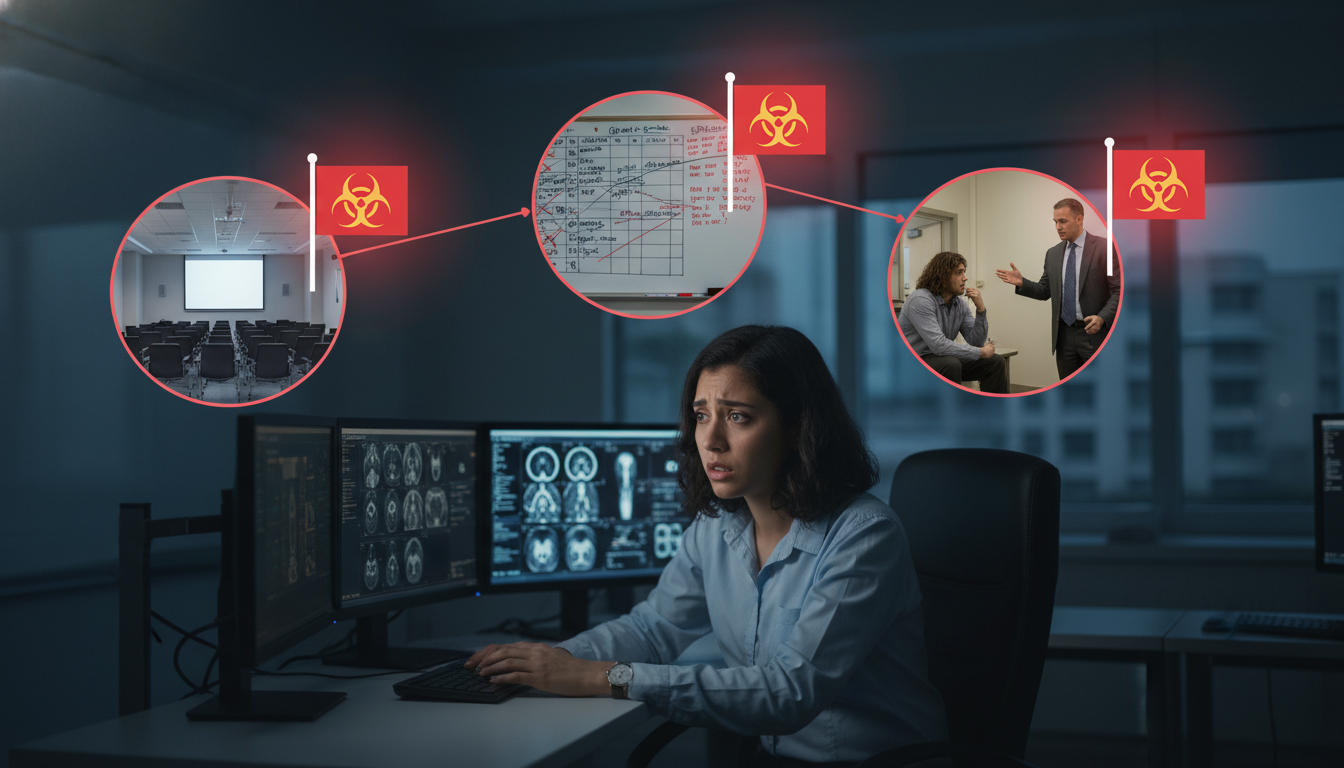
Malignancy usually shows up as a pattern, not a single bad incident. Examples include:
- Persistent bullying or humiliation by faculty
- Retaliation against residents who raise concerns
- Chronic ACGME violations (duty hours, supervision, etc.)
- A culture of fear, secrecy, and silence
- High rates of resident attrition, probation, or resignation
Nuclear Medicine: Unique Vulnerabilities
Nuclear medicine has features that can mask or amplify malignancy:
- Small program size: Many nuclear medicine residencies have 2–6 residents; one toxic attending or PD can dominate the entire culture.
- Cross‑department dependence: You often rotate through radiology, cardiology (nuclear cardiology), oncology, and radiation safety/physics. Poor relationships with these departments can undermine your training.
- Subspecialty reputation: In a small field, a single negative narrative—especially if you’re a non‑US citizen IMG—can follow you for years.
- Less public scrutiny: Compared to large internal medicine or surgery residencies, nuclear medicine programs may have fewer online reviews, making it harder to see problems from the outside.
As a non‑US citizen IMG, you are often more vulnerable because your immigration status, financial investment, and ability to transfer are more constrained. That’s why you must be meticulous in detecting toxic program signs before you rank programs.
Core Red Flags: How to Spot a Malignant Nuclear Medicine Program
This section focuses on concrete residency red flags you can detect through websites, interviews, social media, and direct conversations.
1. Inconsistent or Vague Information About Visa Sponsorship
For a non‑US citizen IMG or foreign national medical graduate, visa clarity is non‑negotiable.
Red flags:
- Website says “We consider all applicants” but no explicit mention of J‑1 or H‑1B.
- Contradictions between website, GME office, and what residents tell you.
- PD answers visa questions vaguely:
- “We’ll see what we can do.”
- “It depends on the year.”
- History of changing visa policies mid‑training.
- No dedicated GME person or coordinator who understands immigration processes.
Why this may be malignant:
Programs that are disorganized or indifferent about visas can jeopardize your status. Malignant programs sometimes use visa dependence to control residents, making them feel they cannot speak up for fear of losing sponsorship.
What to ask directly:
- “Do you currently sponsor J‑1? H‑1B? Both?”
- “How many of your current residents are on visas, and which type?”
- “Has any resident had visa issues or delays in the past 5 years?”
- “Who is responsible for visa paperwork—the program or GME office?”
If answers are evasive or inconsistent, treat this as a serious red flag.
2. Unstable Leadership and High Resident Turnover
Leadership stability is crucial in a small field like nuclear medicine.
Red flags:
- Frequent turnover of Program Director (PD) or department chair in the last 3–5 years.
- Residents leaving the program, transferring, or switching specialties with no clear academic reason.
- Multiple residents on leave, on probation, or “pursuing other opportunities” without context.
- Recent or ongoing ACGME citations that aren’t transparently explained.
How to investigate:
- Check the program’s website archive (e.g., via the Wayback Machine) to see how often PD names change.
- Look at past residents on LinkedIn or institutional websites—do many show “1 year” then move elsewhere?
- Ask senior residents privately:
- “Have any residents left voluntarily or been counseled out in the last few years?”
- “How long has the current PD and chair been in place?”
Why it may be malignant:
High turnover often signals deeper dysfunction: conflicts with leadership, poor educational structure, or a hostile culture.
3. Culture of Fear, Blame, or Humiliation
This is a classic marker of a malignant residency program.
Red flags:
- Residents look visibly anxious when attendings walk into the room.
- Common stories of residents being shouted at, humiliated in front of staff, or punished for honest mistakes.
- Attendings described as “brilliant but difficult,” “old‑school,” or “you just need thick skin.”
- Residents say they avoid reporting issues because “nothing changes” or they fear retaliation.
- No clear, safe mechanism to escalate concerns beyond the PD.
In nuclear medicine, this may show up as:
- Being publicly attacked for missing a subtle finding on PET/CT or myocardial perfusion scans.
- “Teaching” that is essentially berating residents for not memorizing every radiotracer nuance.
- Residents being forced to stay late to redo reports as punishment.
Questions to ask residents:
- “How is feedback usually given here?”
- “If you disagree with an attending’s read, how is that handled?”
- “Have you seen residents punished for honest errors?”
- “If you had a serious concern, who would you feel safe speaking to?”
If residents dodge these questions or give nervous laughter, assume there are issues.
4. Poor Educational Structure and Service Overload
Nuclear medicine training must balance clinical volume, didactics, physics, and research. A malignant program often hides behind “we’re busy” to justify neglecting education.
Red flags:
- Scheduled conference time routinely canceled or replaced with service work.
- Minimal or no formal physics teaching, or rushed 1–2 week “review” before boards.
- No protected time for board prep, research, or scholarly activities.
- Residents mostly doing repetitive tasks (e.g., just myocardial perfusion scans or bone scans) with little exposure to advanced PET/CT, theranostics, or rare tracers.
- No clear curriculum outlining which competencies you must achieve by each year.
As a foreign national medical graduate, you may feel pressured to be “grateful” and accept low‑quality education just to stay in the US. Do not underestimate how damaging this can be when applying for fellowships or academic positions.
Targeted questions:
- “How many hours of scheduled didactics per week actually occur?”
- “How is physics taught and integrated?”
- “Do you have exposure to theranostics (e.g., Lu‑177, I‑131, PRRT) and advanced PET tracers?”
- “What percentage of your time is reading studies vs. rotating through other departments?”
If residents say they are mostly doing tech‑level tasks or administrative work, that’s a major residency red flag.
5. Questionable ACGME Compliance and Patient Safety
Nuclear medicine has unique safety demands—radiation exposure, radiopharmacy handling, and regulatory compliance.
Red flags:
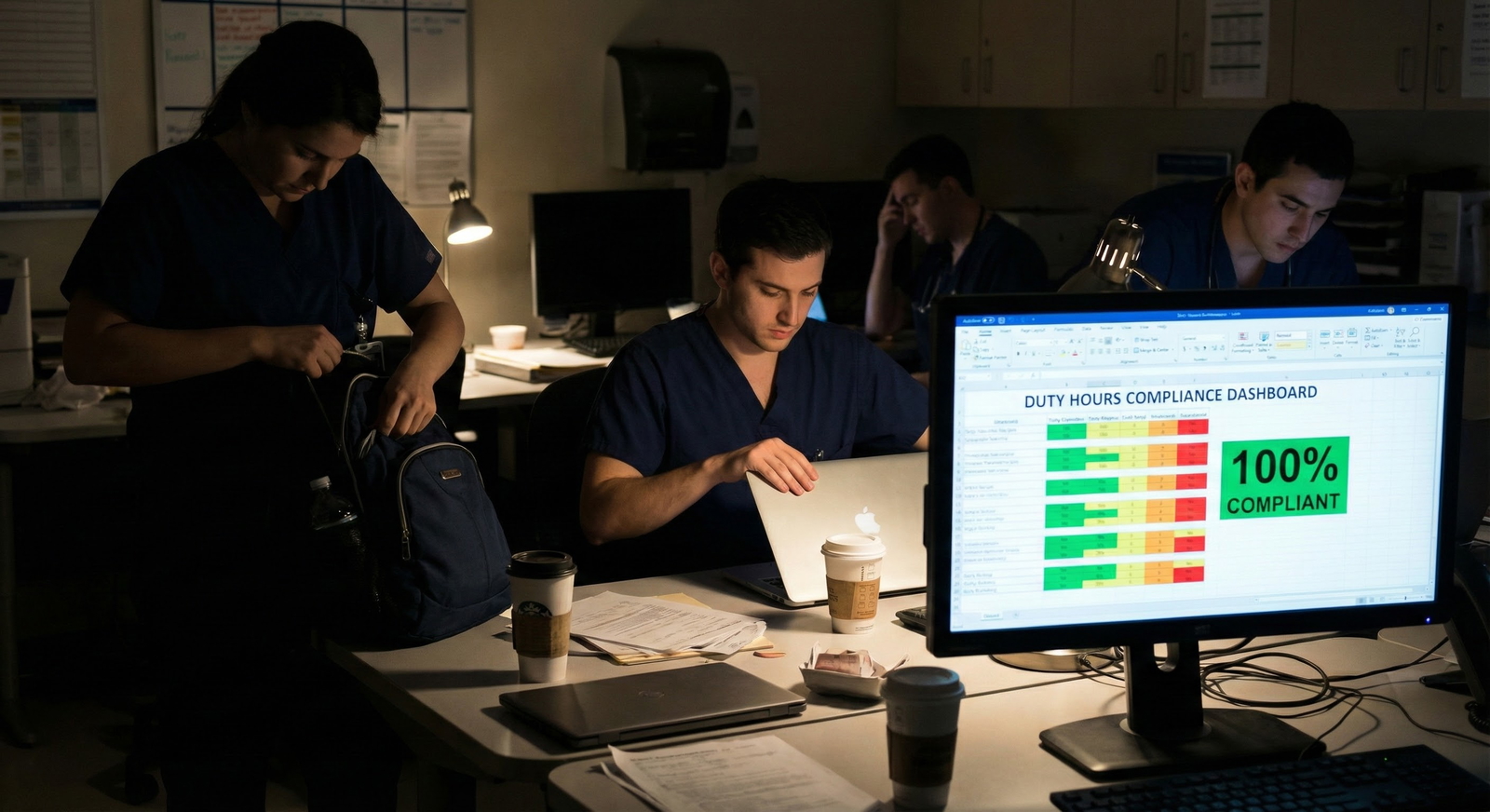
- Residents pressured to work beyond duty hours without logging it.
- No formal radiation safety training or dose monitoring explained to residents.
- Informal practices that violate regulations (e.g., improper handling of radiopharmaceutical waste, lax patient isolation for I‑131 patients).
- Lack of direct supervision when performing new procedures or interpreting complex scans.
- Residents told to sign reports they don’t feel comfortable with.
These signs suggest not only malignancy but also serious risk to your professional license and future practice.
Key questions:
- “How are duty hours tracked? Are you ever asked not to report them accurately?”
- “What formal radiation safety training and monitoring do residents get?”
- “Is there always an attending available for immediate questions?”
- “How are near‑misses or safety events handled?”
If safety concerns are brushed off or minimized, reconsider ranking this program.
Special Considerations for Non‑US Citizen IMGs in the Nuclear Medicine Match
As a non‑US citizen IMG entering the nuclear medicine match, your risk‑benefit calculus is different from US graduates. You face specific vulnerabilities that malignant programs can exploit.

1. Visa Leverage and Power Imbalance
Your visa is your lifeline. Programs know this, consciously or unconsciously.
How malignant programs exploit this:
- Implied threats: “If you can’t handle the schedule, many other applicants would love this spot.”
- Delayed paperwork: Creating anxiety and forcing compliance.
- Discouraging transfers: “No other program will pick up your visa.”
- Discouraging reporting issues to the GME or ECFMG sponsor.
Self‑protection strategies:
- Keep all visa‑related emails and documents organized and backed up.
- Clarify your ECFMG/ECFMG‑EVSP support if on J‑1, and know your rights.
- Have a backup plan (e.g., research positions, alternative programs) if a situation becomes unbearable.
- Maintain contact with mentors outside the program who can advocate for you.
2. Discriminatory Attitudes Toward IMGs or Foreign Nationals
Sometimes the malignancy is subtle: a pattern of disrespect, exclusion, or bias against IMGs.
Red flags:
- Residents or attendings making jokes about accents, “foreign schools,” or your home country.
- IMGs consistently assigned more call, scut work, or undesirable rotations.
- Non‑US graduates rarely promoted to chief resident roles or supported for competitive fellowships.
- Program boasts about “diversity” but current roster is 90% US MDs from similar backgrounds.
Questions to probe culture:
- “How many of your current or recent residents were IMGs?”
- “Are IMGs supported to apply for fellowships or academic positions?”
- “Have there been any incidents related to discrimination or bias, and how were they handled?”
Look for specific examples of IMG success, not vague statements like “we welcome everyone.”
3. Lack of Career Support After Residency
For a foreign national medical graduate, the time after residency may be even more critical than the residency itself. You may need a job that can sponsor H‑1B or a waiver.
Red flags:
- Program has no clear understanding of visa issues for post‑residency employment.
- Career guidance limited to “You’ll figure it out” or “Most people stay local” with no specifics.
- Few alumni profiles or unclear job outcomes (“private practice somewhere”).
- Residents are left to independently arrange all electives, research, and networking for fellowships.
Essential questions:
- “Where have recent graduates gone—fellowships, jobs, academia vs. private practice?”
- “What support do you provide for job or fellowship applications?”
- “Do graduates typically obtain positions compatible with their visa status?”
If they cannot name recent alumni outcomes, assume weak career support.
4. Isolation and Lack of Support Network
As a non‑US citizen IMG, you may have no family in the US and limited local support. A malignant environment can worsen isolation and affect your mental health.
Red flags:
- No structured mentorship system.
- Residents discouraged from attending professional meetings due to “coverage issues.”
- No formal wellness, counseling access, or awareness of IMG‑specific stressors.
- Dismissive attitude toward burnout or mental health (“this is residency; everyone suffers”).
Healthy signs to look for:
- Assigned mentor separate from the PD.
- Funded conference attendance for residents presenting research.
- Encouragement to join the Society of Nuclear Medicine and Molecular Imaging (SNMMI) and other professional networks.
- Residents openly discussing how they support each other.
Concrete Strategies to Detect Toxic Program Signs Before You Rank
It’s not enough to know the residency red flags; you need a stepwise strategy during the nuclear medicine match cycle.
Step 1: Pre‑Interview Research
Program websites & ACGME data
- Check ACGME for any recent citations or probation status.
- Compare curriculum details with other programs (rotations, conferences, call structure).
Alumni tracking
- Use LinkedIn to trace graduates’ careers. Look for discontinuities (short stays, unexplained gaps).
Online forums and word of mouth
- Use platforms like Reddit, Student Doctor Network, or IMG‑specific communities carefully. Anecdotes may be biased, but patterns across multiple sources are informative.
Make a spreadsheet listing each nuclear medicine residency, noting visa stance, leadership stability, and any concerning reports.
Step 2: Maximizing the Interview Day
Use the interview to probe deeply for malignant features.
Tactics:
- Ask specific, behavior‑based questions rather than “Is the program supportive?”
- Phrase sensitive questions in third person:
- “How does the program handle it when a resident struggles academically?”
- “Can you share an example of a resident raising a concern and how it was addressed?”
- Observe non‑verbal cues and how quickly residents answer. Hesitation or glances at faculty can be telling.
Targeted questions for nuclear medicine:
- “What proportion of your time is spent on PET/CT, SPECT, theranostics, and hybrid imaging?”
- “Do you have consistent access to advanced tracers (e.g., PSMA PET, amyloid imaging)?”
- “How often is didactic teaching canceled for clinical volume?”
- “How does cross‑department collaboration work with radiology and cardiology?”
Step 3: Post‑Interview Resident Contact
If the program permits, request to speak with one or two residents privately after the interview day.
Ask questions such as:
- “What is one thing you wish you had known before joining?”
- “Has anyone in your class or recent classes left the program, and why?”
- “Is there anything about this program that worries you for the future?”
- “Do you feel safe giving honest feedback to leadership?”
If they hesitate or decline to talk without faculty present, consider this a concern.
Step 4: Reading Between the Lines on Communication
Pay attention to:
- Response times from the coordinator and PD
- Extremely delayed or disorganized communication can reflect broader dysfunction.
- Tone and clarity
- Defensive or vague responses to simple questions (duty hours, visa, alumni outcomes) suggest hidden issues.
- Sudden changes
- Last‑minute interview rescheduling, unclear instructions, or poor organization on interview day can hint at internal chaos.
Step 5: Gut Feeling + Objective Data
Combine:
- Your emotional impression (Did you feel respected? Welcomed as a non‑US citizen IMG?)
- Objective markers (ACGME standing, alumni outcomes, visa clarity)
- Consistency across resident and faculty narratives
If something feels seriously wrong, do not ignore it only because you “need any spot.” Sometimes not matching is safer than entering a malignant residency that can derail your career and immigration path.
When You Realize a Program Is Malignant After You Match
Despite all precautions, some residents discover only after starting that the program is genuinely toxic.
Immediate Steps
Document everything
- Keep a dated record of incidents: unsafe practices, harassment, retaliation, duty hour violations.
Seek allies early
- Identify at least one trusted attending, faculty mentor, or chief resident.
- Contact your GME office, resident council, or ombudsperson.
Protect your immigration status
- For J‑1: stay informed with ECFMG/ECFMG‑EVSP, and never hide serious program issues from them.
- For H‑1B: consult your institution’s immigration office if considering transfer.
Explore transfer options
- Reach out discreetly to other nuclear medicine or radiology programs.
- Consider transitional solutions (research post, observerships) while seeking a safer training environment.
Prioritize mental health
- Use institutional counseling, peer support, and external networks (e.g., IMG support groups).
- Burnout and depression are common in malignant environments; acknowledging this is a sign of strength, not weakness.
Remember: your professional integrity and well‑being are more important than any single program.
FAQs: Malignant Nuclear Medicine Programs and Non‑US Citizen IMGs
1. As a non‑US citizen IMG, should I accept a questionable program just to secure a visa and US training?
Not automatically. While visa status is critical, a truly malignant residency program can damage your health, reputation, and long‑term career more than a delay in training. Compare your options: research positions, another match cycle, or alternative specialties may be safer than enduring a toxic environment that could end in dismissal or burnout.
2. How can I tell if a program’s lack of advanced technology (like PET/MR or theranostics) is a red flag for malignancy?
Limited technology alone doesn’t equal malignancy; some smaller centers still offer excellent teaching. It becomes a red flag when combined with other issues: weak didactics, no effort to arrange away rotations at more advanced centers, and dismissive attitudes when you ask about board preparation and job competitiveness. Good programs acknowledge limitations and actively help residents compensate.
3. What if residents tell me, “Don’t mention problems in your interview, the PD doesn’t like it”?
This is a strong residency red flag. It suggests a culture where feedback is unsafe and where leadership may retaliate against dissent. Programs that discourage honest questions, especially in the relatively low‑stakes setting of interviews, are much more likely to be malignant once you are dependent on them as a resident.
4. Are small or newer nuclear medicine programs more likely to be malignant?
Not necessarily. Some small or new programs are very supportive, with close mentorship and strong clinical exposure. However, they may be more vulnerable if a single leader is toxic or if infrastructure (GME support, physics faculty, radiation safety) is underdeveloped. For these programs, scrutinize leadership stability, resident satisfaction, and external collaborations even more carefully.
By systematically evaluating programs for toxic program signs, especially around visa clarity, leadership stability, educational quality, safety culture, and IMG support, you can dramatically reduce the risk of entering a malignant environment. As a non‑US citizen IMG pursuing nuclear medicine, you have already overcome major barriers; you deserve a residency that respects your contributions and sets you up for a sustainable, successful career.