Why Malignant Programs Matter for US Citizen IMGs in Addiction Medicine
For a US citizen IMG, choosing the right addiction medicine fellowship—or the primary residency that precedes it—is one of the most consequential career decisions you will make. Addiction medicine is a demanding, emotionally intense field that already carries higher rates of burnout, secondary trauma, and moral distress. When you add a malignant residency program or toxic fellowship environment on top of that, the risk to your mental health, training quality, and long‑term career satisfaction multiplies.
A “malignant” program is more than just “tough” or “high‑volume.” It usually features patterns of:
- Systemic disrespect or abuse
- Chronic overwork without educational benefit
- Retaliation against those who speak up
- Lack of support, mentorship, or safety
As an American studying abroad (US citizen IMG), you are particularly vulnerable to these dynamics. You may feel pressure to “take any spot,” worry about visa issues for colleagues, or feel less empowered to question the culture. But you deserve a training environment that is safe, ethical, and supportive—and that sets you up for a strong addiction medicine fellowship later.
This guide breaks down toxic program signs, specifically in the context of addiction medicine, and gives you concrete strategies to identify residency red flags before you match.
Understanding “Malignant” vs. “Demanding but Healthy” Programs
Not every difficult training environment is malignant. Some programs are intense but still supportive and educational; others are toxic regardless of work hours or prestige.
What Makes a Program “Malignant”?
A malignant residency program typically shows persistent, predictable patterns of:
Psychological or emotional abuse
- Humiliation during rounds or conferences
- Public shaming for honest mistakes
- Derogatory comments about residents, IMGs, or addiction patients
Systematic disregard for well‑being
- Chronically unsafe patient loads
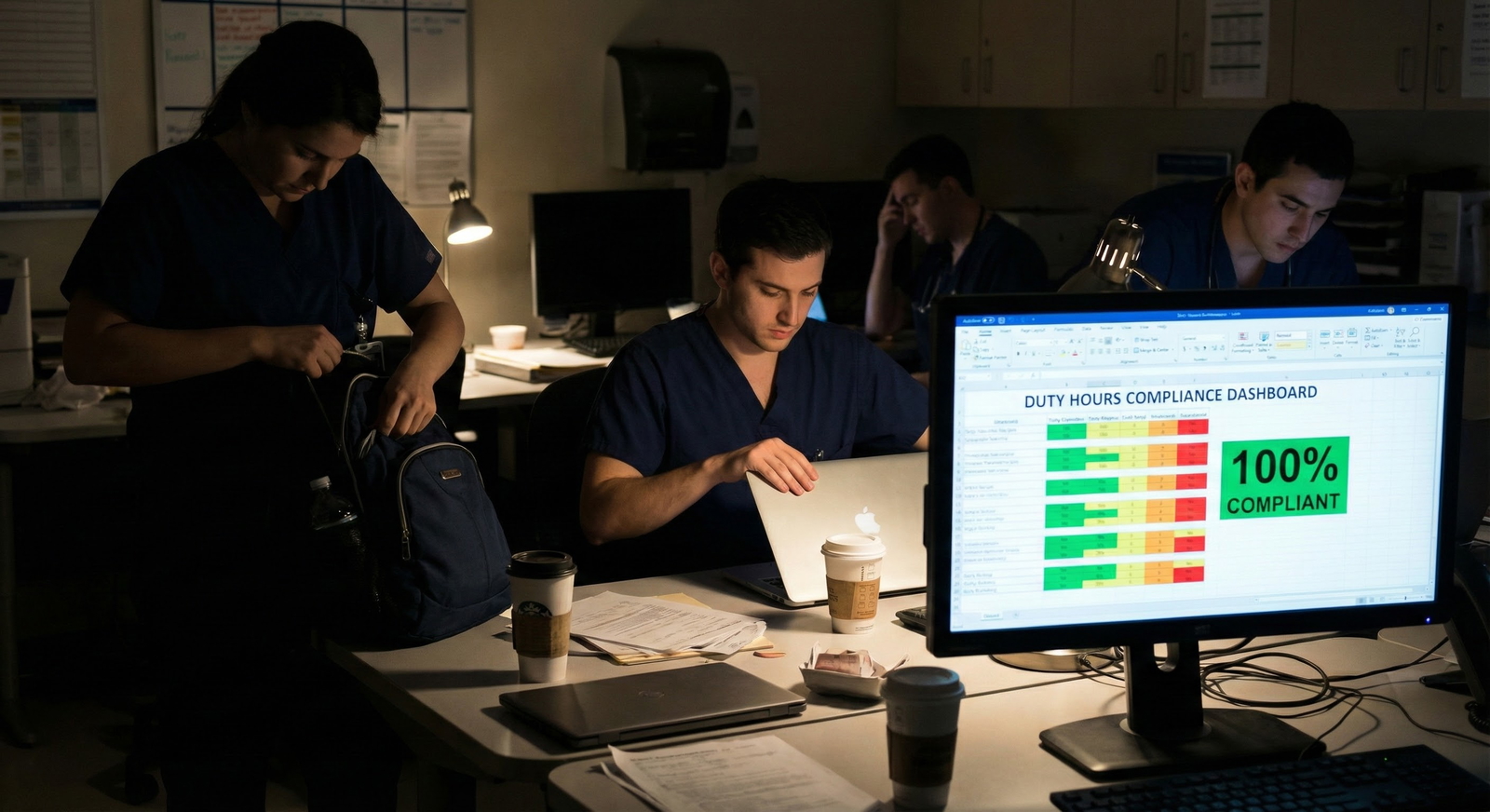
- Pressure to falsify duty hours
- No meaningful response when residents raise safety concerns
Retaliatory culture
- Residents who speak up get poor evaluations, bad schedules, or threatened non-renewal
- Graduates are discouraged from reporting to the ACGME or NRMP
Educational neglect
- Little to no supervision in complex cases
- Attendings unavailable or uninterested in teaching
- Residents used as cheap labor rather than learners
Demanding but Healthy Programs
In contrast, a demanding but healthy program may have:
- High patient volume but robust supervision
- Busy call schedules but transparent duty hour tracking
- Strong expectations but structured feedback and remediation pathways
- Direct communication but no humiliation or abuse
When evaluating residency red flags, your goal is not to avoid all challenge—it is to avoid toxic systems that normalize harm.
Unique Vulnerabilities for US Citizen IMGs and Addiction Medicine Trainees
Why US Citizen IMGs Are at Higher Risk
As a US citizen IMG, you occupy a nuanced position:
- You are a US national, but your medical education is foreign
- You may feel you have “fewer options” and must accept worse conditions
- You might worry about stigma related to being an American studying abroad
- You may be unfamiliar with subtle cultural norms in US training environments
Programs that are less IMG‑friendly or have underlying bias may:
- Consistently rate IMGs lower on vague “professionalism” or “communication” metrics
- Give IMGs more scut work and fewer learning opportunities
- Speak dismissively about IMGs behind closed doors—or in front of you
These may not show up in official statistics but can be detected through targeted questions and careful observation.
Why Addiction Medicine Adds Another Layer
Addiction medicine—whether as a primary specialty fellowship or as a track within psychiatry, internal medicine, or family medicine—creates unique stressors:
- High emotional burden: overdose deaths, relapse, stigma from other clinicians
- Patients with complex social needs: housing instability, legal issues, co‑occurring psychiatric illness
- Interdisciplinary conflict: disagreements between addiction medicine specialists and other services about pain control, MAT (medication‑assisted treatment), or discharge planning
In a healthy addiction medicine training environment:
- Attendings model non‑stigmatizing language
- The team supports each other emotionally
- There are formal debriefings after traumatic cases
In a malignant environment:
- Staff openly disparage patients (“drug seekers,” “frequent flyers”)
- Trainees are left alone to handle emotionally intense encounters
- Residents who express distress are told to “toughen up” or “this is just medicine”
As a future or current addiction medicine physician, you want to train in a culture that aligns with patient‑centered, evidence‑based, and humane care.

Core Toxic Program Signs: What to Look for Before You Match
Below are high‑yield toxic program signs you should systematically evaluate, with emphasis on addiction medicine‑relevant issues.
1. Culture of Disrespect and Stigma
Red flags:
- Attendings or staff use disrespectful language about:
- Patients with substance use disorders (“junkies,” “addicts” as labels, “lost causes”)
- IMGs or specific medical schools
- Residents describe rounds as “public beat‑downs” or “pimp‑sessions from hell”
- Jokes about mental health, suicide, or “weakness” when someone mentions burnout
Why it matters in addiction medicine:
If a program is comfortable dehumanizing patients with substance use disorders, it will likely devalue your interest and expertise in addiction medicine. It also signals they may dehumanize you when you are under stress.
Questions to ask:
- “How does the program handle stigmatizing language about patients, especially those with substance use disorders?”
- “Can you tell me about a time when a resident raised concerns about how a patient was spoken about? How was it handled?”
2. Chronic, Unsafe Workload with No Learning Benefit
Red flags:
- Residents allude to “80 hours is a fantasy” and laugh nervously
- Multiple residents independently say, “We’re here just to keep the service running”
- Addictions consultation or inpatient units consistently understaffed, with residents essentially running the service alone
- Night float or call described as “survival mode,” with little supervision
Why it matters for addiction medicine:
Addiction consults are often complex: polypharmacy, co‑occurring mental illness, withdrawal management, legal/ethical issues around capacity. You need supervision, not just volume.
Questions to ask:
- “What’s a typical day/week like on the addiction medicine rotation or consult service?”
- “Who is available for backup at night for complex substance withdrawal or MAT decisions?”
What to verify:
- Duty hour violations are not automatically malignant, but if everyone hints they’re routine and expected—and no one mentions efforts to fix them—that’s concerning.
3. Poor Supervision and Limited Educational Focus
Red flags:
- Residents manage severe withdrawal, complicated MAT titrations, or dual‑diagnosis cases with minimal attending input
- Fellows (if you’re applying to addiction medicine fellowship) describe spending most of their time on “service work” with no structured teaching
- Didactics are repeatedly canceled for clinical demands, especially in addiction‑related topics
- Morbidity & Mortality (M&M) is used as a blame session, not a learning forum
In an IMG‑unfriendly environment:
US citizen IMGs may be given even less supervision (“they should be grateful to be here”), which undermines both safety and education.
Questions to ask:
- “How often do attendings join bedside teaching on addiction consults?”
- “What percentage of scheduled teaching actually happens? What gets canceled most often?”
- “Do IMGs and US grads have equal access to key educational experiences?”
4. Lack of Interest in Resident Well‑Being and Mental Health
Red flags:
- No confidential mental health resources for residents or fellows—or nobody knows how to access them
- Residents roll their eyes when wellness initiatives are mentioned (“We get pizza instead of fixing the schedule”)
- When asked about a difficult case (e.g., patient overdose death), residents say, “We just moved on” with visible discomfort
- People hint that seeking therapy could harm your evaluation or fellowship prospects
Why this is critical in addiction medicine:
You will see trauma, overdose, relapse, and stigma regularly. A healthy program must support processing these experiences.
Questions to ask:
- “How did the program handle the emotional impact of overdose deaths or patient suicides?”
- “Are residents/fellows able to seek mental health care confidentially without fear it will affect evaluations?”
5. Retaliation and Fear of Speaking Up
Red flags:
- Residents speak in hushed tones when discussing problems
- No one is willing to criticize the program even mildly, or they look at each other before answering
- You hear stories of residents being labeled “unprofessional” for raising safety or supervision concerns
- Low‑performing or dissatisfied residents quietly “disappear” from the program without clear explanations
Why it’s particularly dangerous for IMGs:
As a US citizen IMG, you may already feel like you’re on thinner ice. A retaliatory culture compounds this and can restrict your ability to advocate for yourself or your patients, especially in ethically complex addiction cases.
Questions to ask:
- “Can you share an example of a resident raising a concern that led to a concrete change?”
- “How does the program handle conflicts between residents and faculty?”
Look for specific stories, not generic reassurances.
6. High Turnover, Probation, or Negative Reputation
Red flags:
- Multiple residents transfer out each year
- Addiction medicine fellowship has trouble filling spots or has frequent mid‑year departures
- Recent or current ACGME probation, especially for issues like supervision, duty hours, or professionalism
- Local word‑of‑mouth reputation describes it as a “sink or swim” or “brutal” program
Due diligence steps:
- Search online forums (e.g., Reddit, specialty groups, SDN) for consistent patterns, not isolated complaints
- Ask current residents tactfully: “Have there been residents who chose to leave? What were the reasons?”
- For addiction medicine fellowships, look at fellowship alumni: Are they in strong positions, or is the pipeline unclear?
Addiction Medicine–Specific Red Flags: Clinical and Cultural
Beyond general malignancy, addiction medicine adds its own set of signals that the environment may be misaligned with your values and training needs.
1. Resistance to Evidence‑Based Treatments
Red flags:
- Attendings regularly block or discourage MAT (buprenorphine, methadone, naltrexone) for non‑clinical reasons (“We don’t want those patients here”)
- Stigma against harm reduction strategies (naloxone distribution, safe syringe programs, safer use education)
- Pressure to “detox only” without offering long‑term treatment options
Questions to ask:
- “How often are residents or fellows initiating buprenorphine or methadone on inpatient services?”
- “What is the program’s stance on harm reduction, and how is that reflected in training?”
2. Fragmented Care and Poor Interdisciplinary Collaboration
Red flags:
- Addiction medicine service is marginalized, consulted late, or ignored
- Hostility from other services when addiction teams recommend MAT or non‑opioid alternatives
- Social work, psychology, and peer recovery specialists are underutilized or absent
Why it matters:
Addiction medicine is inherently interdisciplinary. You want a place where your future specialty is respected and integrated, not treated as an afterthought.
3. Ethical Corners Cut in Substance Use–Related Care
Red flags:
- Inadequate consent processes for urine drug screens, toxicology, or involuntary holds
- Coercive practices (e.g., “You only get pain meds if you agree to rehab”)
- Minimal training on legal frameworks (involuntary commitment, mandated reporting, prescribing regulations)
Questions to ask:
- “How are ethical issues around capacity, involuntary treatment, and mandated reporting taught and supervised?”
- “Do fellows participate in policy discussions or advocacy related to addiction care?”

Practical Strategies to Protect Yourself as a US Citizen IMG
1. Research Deeply Before Applying or Ranking
Website vs. reality: Program websites are marketing tools. Focus instead on:
- ACGME citations (public information)
- Fellowship fill rates, especially for addiction medicine fellowship programs
- Resident demographics: Are IMGs represented in a healthy range?
Network strategically:
- Reach out to other US citizen IMG residents or fellows in addiction medicine via LinkedIn or alumni networks
- Ask your medical school’s recent grads which programs to avoid
2. Use the Interview Day Wisely
During interviews (virtual or in‑person), you are also interviewing them.
Ask targeted questions such as:
- “As a US citizen IMG, what support would I have to navigate any transition challenges?”
- “How does the program ensure equitable treatment and opportunities for IMGs and US grads?”
- “Can you describe the culture of feedback—how often is it given and in what manner?”
- “What formal resources are in place for residents or fellows processing emotionally difficult patient outcomes?”
Pay attention not just to the content, but the tone:
- Do people become vague or defensive?
- Do different residents give conflicting descriptions?
- Does anyone privately warn you to “run” or “think carefully”?
3. Observe Nonverbal Cues and Micro‑Cultures
During informal sessions, group socials, or resident Q&A:
- Do residents seem comfortable around faculty, or anxious and guarded?
- Is there laughter and mutual support, or tension and silence?
- Do addiction‑interested residents or fellows appear integrated and respected, or marginalized?
For virtual interviews, look for:
- Whether residents voluntarily stay late to answer questions
- The way they talk about their toughest rotations—only about suffering, or also about learning and support?
4. Analyze the Schedule and Addiction‑Related Rotations
Ask for or look at:
- Formal addiction medicine rotations: Are they elective or required? Well-structured or an afterthought?
- Call schedules: Are addiction services primarily covered during the day with good supervision?
- Continuity clinics: Do you get to follow patients longitudinally in MAT programs or recovery clinics?
A program that values addiction medicine usually:
- Has clear goals and objectives for addiction rotations
- Offers faculty mentors in addiction medicine
- Tracks outcomes like board pass rates for addiction medicine fellowship graduates
5. Leverage Post‑Match and Pre‑Start Windows (If You Suspect Problems)
If you have already matched and begin to suspect malignancy:
- Document concerns early: Keep contemporaneous notes about unsafe situations, missed supervision, or harassment
- Know your resources:
- Program’s Graduate Medical Education (GME) office
- Designated institutional official (DIO)
- ACGME resident/fellow complaint process
- Protect your mental health: Seek confidential support outside the program if needed (e.g., therapist unaffiliated with the institution)
If the situation becomes untenable, transfers are possible, though challenging. Talk with trusted mentors—ideally outside your institution—before making major decisions.
Balancing Risk and Opportunity as a US Citizen IMG
You may feel pressure as a US citizen IMG to accept any residency or fellowship that offers you a position, particularly in competitive paths like addiction medicine fellowship. But:
- A toxic training environment can derail your career more than a year of additional preparation or reapplying
- Burnout or moral injury from a malignant residency program may push you away from addiction medicine entirely, despite your initial passion
Aim for programs that are:
- Challenging but supportive
- Honest about weaknesses and actively improving
- Aligned with modern, evidence‑based approaches to substance use treatment
- Respectful toward IMGs, viewing you as valued colleagues, not second‑class trainees
You are not “lucky just to be here.” You bring unique strengths as an American studying abroad—adaptability, cross‑cultural skills, and perseverance. Choose an environment that recognizes and cultivates those strengths while preparing you to be an exceptional addiction medicine physician.
FAQs: Identifying Malignant Programs in Addiction Medicine
1. As a US citizen IMG, should I ever rank a program that seems slightly toxic if it’s my only chance?
If a program shows mild concerns (e.g., heavy workload, still‑developing addiction curriculum) but is not abusive, it may be reasonable to rank it—especially if you have limited options. However, if you observe clear signs of abuse, retaliation, or gross neglect of supervision, it is often wiser to rank that program low or not at all. A truly malignant environment can cause lasting harm to your mental health and career trajectory.
2. How can I distinguish between honest “we’re improving” and excuses for a malignant culture?
Look for specific, measurable changes:
- “We had an ACGME citation for supervision two years ago; we responded by adding an in‑house attending at night. Resident surveys have improved since.” (Positive sign)
- Versus: “Yeah, people complain sometimes, but it’s just residency. We all went through it.” (Concerning sign)
Healthy programs acknowledge problems and describe concrete solutions; malignant programs minimize, deflect, or blame residents.
3. Are addiction medicine fellowships ever malignant, or is this mostly a residency issue?
Any training program—residency or fellowship—can be malignant. In addiction medicine fellowships, malignancy may look like:
- No supervision for high‑risk prescribing decisions
- Overuse of fellows to cover general psychiatry or internal medicine services
- Lack of respect from the broader institution for addiction care
- No attention to the emotional impact of overdose deaths or relapse
Use the same framework of residency red flags—culture, supervision, retaliation, and workload—when evaluating addiction medicine fellowships.
4. What is one practical step I can take right now to avoid malignant programs?
Create a personal checklist of red flags and “must‑haves” (e.g., no public shaming, evidence‑based addiction care, IMG‑friendly environment, access to mental health support). Use this list during research, interviews, and ranking discussions. Writing your criteria down in advance helps you resist the pressure to rationalize clear red flags later on.
By combining self‑awareness, targeted questions, and careful observation, you can significantly reduce the risk of entering a malignant training environment—and position yourself for a thriving, meaningful career in addiction medicine as a US citizen IMG.