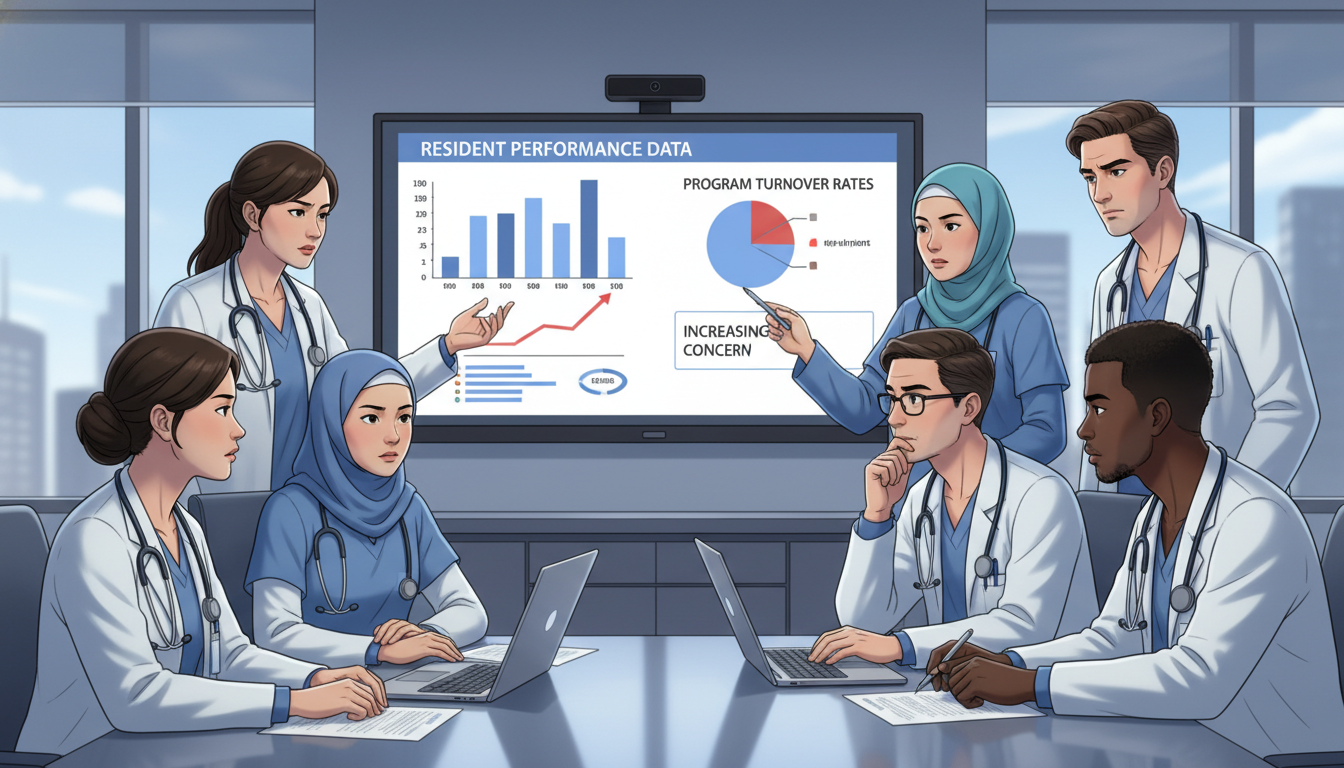
Residency is demanding in every specialty, but cardiothoracic surgery (CTS) is uniquely intense. As an international medical graduate (IMG), you’re already navigating visa issues, cultural adjustment, and unfamiliar systems. The last thing you need is to land in a program with serious, hidden problems—especially one where residents keep leaving.
This IMG residency guide will help you recognize resident turnover red flags and understand what they may mean about program problems in cardiothoracic surgery. While no program is perfect, a pattern of residents leaving the program is rarely random. Interpreting those patterns correctly can protect your training, your visa status, and your long‑term career in heart surgery.
Understanding Resident Turnover in Cardiothoracic Surgery
Resident turnover simply means residents are not staying in the program as expected. In cardiothoracic surgery residency (integrated I-6 or traditional pathway), this can take several forms:
- Residents transferring to another CTS program
- Residents switching to another specialty (general surgery, vascular, anesthesiology, etc.)
- Residents taking extended leaves and not returning
- Residents being dismissed or “asked to resign”
- Unfilled senior positions due to prior departures
Not all turnover is bad. Some is normal and even healthy. The key is to distinguish isolated, well‑explained cases from recurrent, poorly explained patterns.
Normal vs. Concerning Turnover
Potentially normal or neutral situations:
- A single resident transfers because of family or geographic reasons
- A resident decides to pursue a different specialty (with support from faculty)
- One non-renewal of contract over many years, transparently explained as performance-related and rare
- A temporary gap in upper-level coverage due to maternity/paternity leave or serious illness
Concerning patterns:
- Multiple residents leaving the same program within a few years
- Entire “generations” of residents missing from the roster
- Residents leaving without clear, consistent explanations
- Faculty or leadership avoiding the topic or becoming defensive when asked
- A pattern of IMGs leaving or being dismissed disproportionately
In cardiothoracic surgery, where training is lengthy, technically demanding, and tightly supervised, persistent turnover is often a symptom of systemic issues that can directly impact your heart surgery training experience.
Why Resident Turnover Matters So Much for IMGs
Every residency applicant should care about turnover, but for an international medical graduate in CTS, the stakes are higher.
1. Visa and Immigration Stability
If your program has chronic turnover, it may indicate:
- Poor support for IMGs (leading to failure or burnout)
- Inadequate administrative support (including visa processing)
- Chaotic leadership (late contracts, mishandled paperwork)
For you, that can mean:
- Stress about visa renewals or unexpected gaps
- Pressure to “accept” problematic conditions because changing programs is harder on a visa
- Risk of being trapped in a toxic environment because transferring is more complex for an IMG
2. Training Continuity and Case Volume
Cardiothoracic surgery depends on:
- Gradual skill acquisition over many years
- Continuity with mentors and faculty
- Reliable, structured progression of responsibility
High resident turnover can disrupt:
- Case assignment: Fewer mid-level or senior residents may shift cases unevenly, sometimes away from juniors
- Learning structure: Constant backfilling leads to “patchwork” rotations and unpredictable exposure
- Operative autonomy: Faculty may limit autonomy if they feel residents are unstable or undertrained due to prior turnover
For an IMG already adapting to a new system, this instability can delay your development as a heart surgeon.
3. Reputation and Future Opportunities
Programs with chronic turnover often become known for:
- Weak training environment
- Poor support systems
- Difficult culture or leadership
Being associated with such a program can affect:
- Fellowship opportunities (advanced adult cardiac, congenital, transplant)
- Job offers, especially in competitive cardiac centers
- How strongly faculty can advocate for you if they themselves are burned out or disengaged
For an IMG trying to establish credibility in a new country, your program’s reputation is especially important.

Concrete Turnover Red Flags During the Application and Interview Process
You can detect many resident turnover warning signs before you ever rank a program. Below are specific, practical things to look for as an IMG applying to cardiothoracic surgery residency.
1. Inconsistent Resident Rosters
When researching programs:
- Compare the list of residents on the program website across:
- Current academic year
- Past website snapshots (use the Internet Archive “Wayback Machine”)
- Public sources (Doximity, LinkedIn, institutional newsletters)
Red flags:
- Entire PGY classes missing or significantly smaller than others
- Residents listed for only 1–2 years, then disappearing without graduation
- A sudden increase in “preliminary” or “non-designated” residents filling gaps in upper years
- No clear explanation of where prior residents went (e.g., fellowship, other programs)
Example:
You see an I-6 CTS program that should have 6 PGY-3 residents, but only 2 are listed. The website gives no explanation, and recent alumni lists do not show where the missing residents went. This pattern strongly suggests multiple residents leaving the program or being dismissed.
2. Vague or Evasive Answers About Departed Residents
During interviews and virtual Q&A:
- Ask directly—but tactfully—about prior turnover. For example:
- “How stable has resident retention been over the past 5–10 years?”
- “Have any residents transferred or left the program, and what were the main reasons?”
- “What changes has the program made when residents have left, to improve training?”
Red flag responses:
- “We don’t really talk about that.”
- “People just realized this specialty wasn’t for them.” (repeated several times)
- “We’ve had a few issues, but everything is fine now.” (no details, no concrete changes described)
- Conflicting stories between faculty and residents
Healthier responses:
- Specific, consistent explanations (e.g., family relocation, career shift to anesthesia)
- Clear acknowledgment of past program weaknesses and concrete steps taken to fix them (new PD, schedule reform, added wellness support)
- Residents and faculty telling the same story independently
3. Visible Stress and Burnout Among Current Residents
Turnover rarely happens in isolation. It often reflects a broader culture of:
- Excessive workload
- Poor supervision
- Lack of psychological safety
- Chronic understaffing
As you interact with current residents, especially in cardiothoracic surgery where stress is high:
Observe:
- Do residents look exhausted beyond what’s typical for surgery?
- Do they speak about training with pride—but also with realism—or mostly with cynicism or fear?
- Are they comfortable sharing both positives and challenges, or do they seem guarded, watching faculty reactions during Q&A?
- Do they joke constantly about residents quitting or “surviving” instead of learning?
Subtle IMG-specific angle:
Ask IMGs in the program specifically:
- “How has the program supported you with visas, onboarding, and cultural adaptation?”
- “Have IMGs stayed here long-term or tended to leave?”
If IMGs show visible hesitation or quickly change topics, consider that a resident turnover red flag for international graduates in particular.
4. Frequent Leadership Changes and Chaotic Communication
Leadership instability often correlates with resident turnover:
- Program Director (PD) changes every 1–3 years
- Chief of CTS or Chair of Surgery recently replaced or frequently rotating
- Lack of clear vision for the program’s future direction
Indicators:
- Residents say, “We’ve had three PDs in the last five years.”
- Faculty express uncertainty about upcoming changes in structure or case allocation.
- Website and interview materials are outdated, inconsistent, or incomplete.
This instability can mean you’re entering a “transition zone” where policies on evaluation, remediation, and promotion are changing unpredictably—dangerous if you’re an IMG dependent on consistent support.
5. Over-Reliance on Non-Resident Providers to Fill Gaps
In cardiac and thoracic surgery, the team may include NPs, PAs, fellows, and rotating residents. This is normal. It becomes concerning when:
- Core CTS residents are few, but service demands are high
- Fellows or advanced practice providers perform most of the key cases that residents would typically do
- Lower-level CTS residents rarely get to scrub primary on key index cases because “fellows need numbers” or “service coverage is tight”
Look for:
- Very small CTS resident cohorts relative to service volume
- Senior positions being filled by rotating general surgery residents instead of CTS residents because prior cohorts left
- Case logs (if shared by residents) that seem weak for their level
In this environment, turnover often reflects an underlying mismatch between service demands and training design.

Distinguishing Harsh Training from Truly Toxic Programs
Cardiothoracic surgery is not gentle. There will be long hours, high-stakes decisions, sudden emergencies, and intense feedback. Not every difficult experience signals program problems. The challenge is separating:
- Intense but educationally sound training
from - Destructive, unsafe culture that drives residents away
Characteristics of Intense but Healthy CTS Training
- High expectations are paired with structured teaching and supervision
- Feedback is direct, sometimes blunt, but grounded in specific behaviors and skills, not personal attacks
- Senior residents and faculty are demanding in the OR but willing to teach, debrief, and support
- Residents are tired but still speak with pride and ownership about their development
- Program leadership acknowledges stress and works to address systemic issues (schedule adjustments, added support staff, mental health resources)
In such environments, turnover is usually low, and when it happens, it’s clearly explained and addressed.
Characteristics of Truly Toxic CTS Programs
Red flags that often correlate with high resident turnover:
- Public humiliation and personal insults framed as “old-school teaching”
- Inconsistent expectations—residents punished for not meeting standards that were never clearly explained
- Residents afraid to call attendings at night, even when patient safety is at risk
- A culture where speaking up about workload, mistreatment, or safety leads to retaliation
- IMGs disproportionately targeted for criticism, denied opportunities, or failed for vague reasons like “not a good fit”
If, during interviews or away rotations, you hear multiple stories of residents:
- “Walking on eggshells all the time”
- Being “weeded out” intentionally
- Leaving mid-year or disappearing from the program with no transparent explanation
You are likely looking at a program where residents leaving the program is a chronic pattern, not random events.
How IMGs Can Safely Investigate Turnover Before Ranking
As an IMG applying in cardiothoracic surgery, you should approach this like a structured quality-improvement project on your own future.
1. Ask Targeted, Neutral Questions
When speaking with residents or faculty, frame questions in a non-accusatory way:
- “How has resident retention been over the last 5–10 years?”
- “When residents have left, what have been the main reasons?”
- “What kinds of changes has the program made in response to resident feedback?”
- “Can you describe how the program supports residents who are struggling?”
Listen not just to the content but to:
- Body language
- Hesitations
- Whether residents look to faculty before answering
2. Use Multiple Information Channels
Combine:
- Official data (website, program presentations)
- Unofficial conversations (residents off-camera, alumni you contact via email or LinkedIn)
- Online reputation (forums, but interpret cautiously)
For cardiothoracic surgery:
- Look at which fellows at top centers come from which residencies. Chronic absence of graduates from a program can sometimes hint at underlying quality issues.
3. Pay Special Attention to IMG Experiences
As part of your IMG residency guide, specifically focus on:
- How many current or recent residents are IMGs?
- Have IMGs in the program completed training successfully?
- Do IMGs have similar case logs and fellowship outcomes as US grads?
- Have any IMGs left the program early or been non-renewed?
You can ask:
- “Have there been any differences in outcomes or retention between IMGs and US grads here?”
- “How does the program ensure IMGs receive equitable opportunities and support?”
If the answer is vague or defensive, consider that a resident turnover red flag for IMGs.
4. Look for Protective Structures
Programs that understand the risk of burnout and turnover often have built-in safeguards:
- Regular, confidential resident surveys with documented changes made in response
- Open-door policy with PD and department chair
- Clear remediation pathways (coaching, extra support) before non-renewal or dismissal
- Wellness resources, especially in high-intensity rotations (ICU, transplant, long bypass days)
If residents say, “When we bring concerns, leadership really listens and has made changes,” that significantly reduces the risk that program problems will drive residents away.
What to Do If You Suspect High Turnover but Like Other Aspects of the Program
You may encounter a program with:
- Excellent case volume and world-class faculty
- Strong research and reputation
- But a history of several residents leaving recently
For cardiothoracic surgery, these high-profile programs can be very tempting. Here’s how to think strategically as an IMG:
1. Clarify the Nature and Timing of Turnover
Ask:
- “Were the residents who left clustered around a particular leadership transition or schedule change?”
- “What specific reforms have been made since those departures?”
- “How has retention been in the last 2–3 years specifically?”
If the program can clearly show:
- Past problems → Concrete changes → Recent improved stability
this may be acceptable risk, especially with strong mentorship.
2. Identify Potential Allies and Mentors
As an IMG, you need:
- At least one senior faculty member invested in your success
- Senior residents (ideally including another IMG) who can guide you
- A PD who is available and approachable
You might ask:
- “Who tends to serve as primary mentors for IMGs in the program?”
- “How does mentorship work in this residency?”
If no one can answer this clearly, or IMGs seem isolated and unsupported, reconsider.
3. Consider Your Personal Risk Tolerance
Your decision should factor:
- Visa dependence and options if you need to transfer
- Financial and family responsibilities
- Your backup plans if cardiothoracic surgery at that institution turns out to be untenable
Sometimes, a slightly less prestigious but more stable and supportive program may be a safer and ultimately more successful environment for an international medical graduate.
FAQ: Resident Turnover and Red Flags for IMGs in Cardiothoracic Surgery
1. How much resident turnover is acceptable in a cardiothoracic surgery program?
Occasional turnover is normal—one resident leaving every several years for personal or career reasons is usually not alarming, especially if transparently explained. What should concern you is repeated turnover over short periods (e.g., multiple residents leaving within 3–5 years, missing PGY classes, or multiple unexplained departures). When patterns appear, ask how the program responded and whether retention has improved since.
2. As an IMG, should I avoid any program where a resident has left recently?
Not automatically. One recent departure can reflect an individual’s unique situation. Instead of avoiding on principle, investigate the context: why that resident left, what support was offered, and what changes (if any) were made afterward. If the program is transparent and consistent in its explanation, a single departure may not be a major red flag.
3. Are high operative volumes worth tolerating a program with known turnover issues?
High case volume is essential in heart surgery training, but not at the cost of your safety, mental health, or visa stability. A program with huge volume but toxic culture may produce good surgeons—but often at the expense of high burnout and attrition. As an IMG, your ability to transfer is more limited, so you should prioritize stable, supportive training environments with adequate volume, rather than maximal volume in a dysfunctional program.
4. How can I discreetly learn about program problems or residents leaving the program?
Use a multi-step approach:
- Check resident rosters over time on archived web pages
- Ask open-ended questions during interviews and second looks
- Contact recent graduates or former fellows on LinkedIn or via email
- Speak with current residents outside formal sessions if possible
You don’t need to ask, “Is your program toxic?” Instead, ask about retention, response to feedback, support for struggling residents, and IMG outcomes. Patterns in these answers will often tell you what you need to know.
Recognizing resident turnover warning signs is a critical skill for any applicant, but especially for the international medical graduate pursuing cardiothoracic surgery residency. By approaching each program like a careful diagnostic workup—looking for patterns, context, and underlying causes—you can avoid serious program problems and choose a training environment that supports your growth as a future heart surgeon.