Why Identifying Malignant Residency Programs Matters for IMGs
For any applicant, joining a malignant residency program can be damaging. For an international medical graduate (IMG), the consequences are often worse: visa complications, limited ability to transfer, and higher risk of burnout or failure to complete training.
A “malignant residency program” is an informal term for a training environment that is chronically unsafe, abusive, or exploitative. Not every “tough” program is malignant—demanding training can still be supportive and fair. But a malignant or toxic residency program can:
- Undermine your confidence and learning
- Increase risk of mental health issues and burnout
- Complicate board exam success and fellowship prospects
- Jeopardize your immigration status if you’re on a visa
- Damage your professional reputation through unfair evaluations or termination
This IMG residency guide will help you recognize residency red flags early—before you sign your contract—and give you concrete strategies to investigate programs, interpret feedback, and protect yourself during the residency application and interview process.
Understanding “Malignant” vs. Just “Demanding”
Before looking for toxic program signs, it’s important to distinguish:
Challenging, high-volume, but healthy programs
- Long hours but reasonable supervision
- Feedback can be tough but respectful and goal-oriented
- Program leadership responds to concerns and improves over time
- Graduates feel well-trained and generally positive
Malignant residency programs
- Pattern of disrespect, humiliation, or bullying
- Unsafe workloads with no effort to improve
- Retaliation against residents who speak up
- Dishonesty about schedule, pay, or program outcomes
- High rate of attrition, dismissals, or probation
A malignant program is about culture and patterns, not a single bad rotation or an isolated negative review.
Why IMGs Are at Particular Risk
As an international medical graduate, you may be more vulnerable to toxic programs because:
- Visa dependence – Being on a J-1 or H-1B makes it harder to leave a bad program.
- Information gaps – You may not have U.S. clinical experience or mentors who know local reputations.
- Cultural and language challenges – May be misused as excuses to blame you for systemic issues.
- Power imbalance – Some malignant programs specifically recruit IMGs they assume are less likely to complain.
Recognizing residency red flags early is a key self-protection strategy in your residency match and applications.
Major Residency Red Flags to Watch For
This section breaks down the most important warning signs into categories. A single red flag doesn’t always mean “avoid,” but multiple concerning signs should make you very cautious.
1. Structural and Outcome Red Flags
These are measurable aspects of the program that often reflect deeper problems.
a. High resident attrition and dismissals
- Frequent residents leaving mid-training “for personal reasons”
- Multiple residents on probation or dismissed in recent years
- Graduating classes with noticeably fewer residents than they started with
Most healthy programs have very low attrition. If you repeatedly hear stories of residents leaving, failing boards, or being “pushed out,” that’s a serious concern.
b. Poor board pass rates
- ABIM/ABFM/ABS/etc. board pass rates significantly below national averages
- Residents needing multiple attempts to pass
- Program leadership minimizing or blaming residents for low pass rates
Low board pass rates can mean inadequate teaching, poor supervision, or an unsupportive learning environment.
c. Unfilled positions or heavy reliance on off-cycle recruitment
- Program frequently has unfilled spots in the Match
- Many residents are “off-cycle” or came from outside the main Match
- Program aggressively advertises for last-minute spots every year
Sometimes this is benign, but often unfilled positions reflect a bad reputation among applicants or recent problems with accreditation.
d. ACGME or accreditation concerns
- Recent ACGME citations or warnings (especially for “duty hours,” “clinical supervision,” or “patient safety”)
- Rumors or public records of probation or program closure
- PD or faculty turnover following ACGME visits
You can search ACGME public data, but much is spread through word of mouth. Ask directly if you suspect changes: “Have there been any recent changes following ACGME feedback?”
2. Culture, Behavior, and “Soft” Toxic Program Signs
These are often more revealing than official statistics.
a. Normalization of disrespect or humiliation
Warning signs during interview or open house:
- Attendings, fellows, or senior residents publicly belittling others
- Jokes about “weak” residents or “weeding people out”
- Pride in “pimping” that feels more like humiliation than teaching
- Residents appear fearful or overly careful with their words when faculty are near
If you hear statements like “We only keep the strongest; some people just can’t handle our culture,” treat it as a major red flag, not a compliment.
b. Bullying and retaliation stories
Current or former residents mention:
- Being yelled at, cursed at, or shamed in front of patients
- Evaluations used as punishment for speaking up
- Chiefs or PDs retaliating against residents who raise concerns
- Residents feeling pressure not to report mistreatment to GME or ACGME
Even one concrete story of retaliation should carry more weight than polished program marketing.
c. Lack of psychological safety
- Residents are unwilling to answer honestly when asked, “Do you feel supported?”
- They deflect or change the subject when asked about program problems
- They only open up in private, away from faculty, and clearly fear being overheard
An honest, supportive program doesn’t need residents to be afraid of speaking in general terms about challenges.
3. Schedule, Workload, and Duty Hour Violations
Every residency is busy, but malignant programs show distinct patterns.
a. Chronic, uncorrected duty hour violations
- Residents working far beyond 80 hours/week or 28+ hour calls on a regular basis
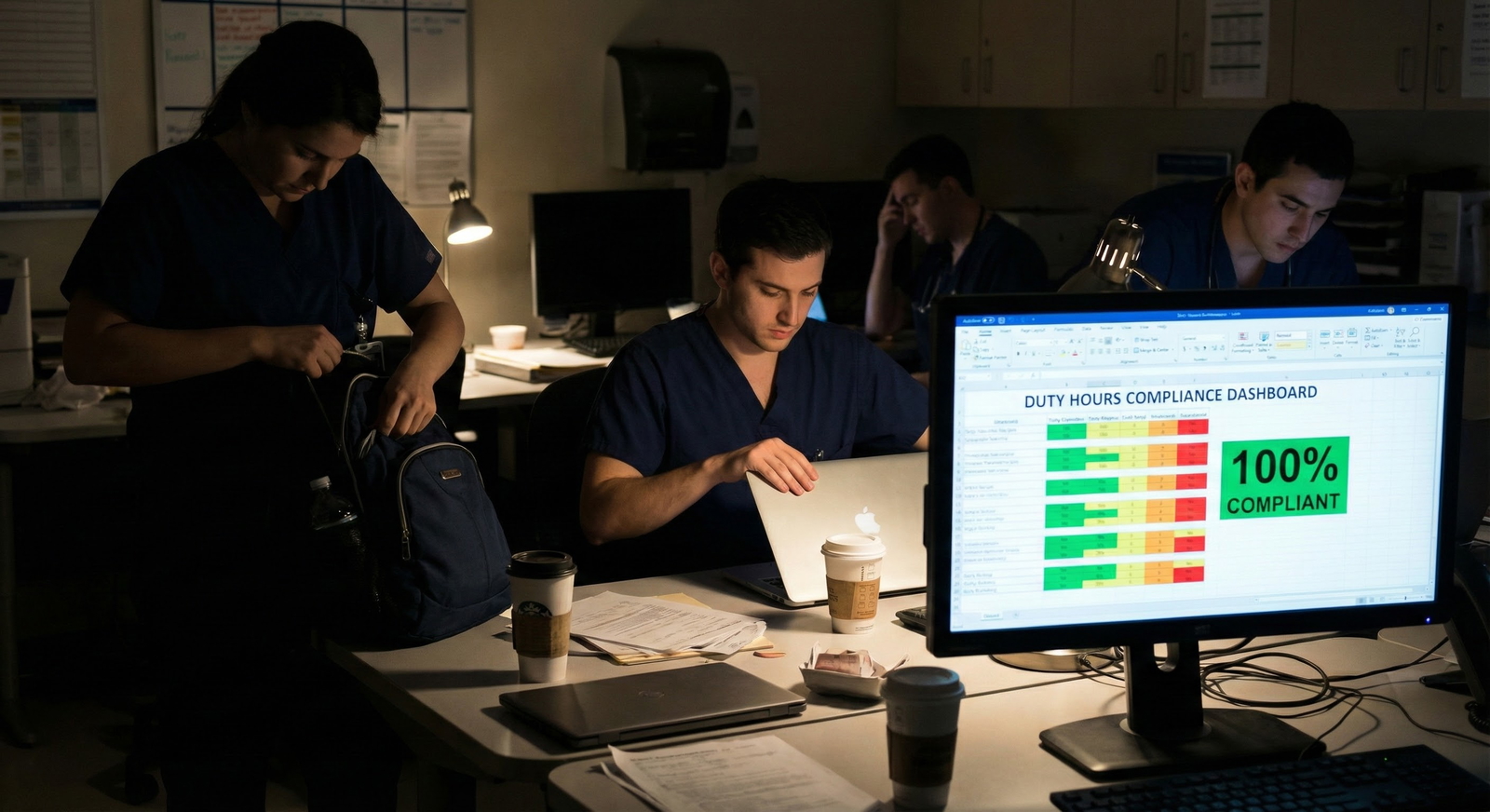
- Logging fewer hours than worked because they are “encouraged” to under-report
- Residents say, “We technically log 80 hours, but you’re really here 100+”
Pressure to falsify duty hours is a major residency red flag. It indicates leadership values image over resident safety.
b. Unsafe patient loads and inadequate supervision
- Interns carrying extremely high census (e.g., >15–20 complex inpatients alone)
- Night float covering unreasonable numbers of patients without backup
- Limited or absent in-house attending presence for high-risk services (ICU, ED)
- Residents called to perform advanced procedures without available supervision
As an IMG, you may especially be vulnerable if attendings assume you “should be able to handle it” based on your prior experience.
c. No protected time for education
- Noon conference or teaching regularly interrupted by pages and scut work
- Frequent cancellations of academic half-days due to service demands
- Residents feel they must choose between seeing patients and attending teaching
Strong programs protect at least some structured learning time, even in busy settings.

4. IMG-Specific Red Flags and Exploitative Behaviors
Some malignant residency programs appear outwardly fine but treat IMGs very differently from US graduates.
a. Two-tier system: IMGs vs. US grads
Warning signs:
- IMGs consistently assigned to the hardest rotations, nights, or undesirable schedules
- IMG residents rarely get leadership roles (chief, QI projects, teaching opportunities)
- PD or faculty make negative generalizations about IMGs (“They’re here to work hard”)
- Promotions, awards, or letters of recommendation skew heavily toward US grads despite similar performance
Ask current IMG residents directly: “Do you feel you’re treated differently than US grads?”
b. Visa issues used as leverage
Common malignant patterns:
- Threats like “If you don’t do X, we may not renew your contract and your visa…”
- Delays in processing J-1 or H-1B paperwork, causing anxiety and instability
- Lack of clear support if a resident needs to change status or transfer
- No dedicated staff or GME office support for visa logistics
A healthy program recognizes that visa status is a vulnerability and actively supports IMGs, not exploits them.
c. Minimal academic support for IMGs
- No structured orientation to the US system (documentation, coding, communication)
- Dismissive comments about language or accent instead of offering support
- Board preparation resources not adapted for those trained outside the US
- Feedback limited to “You need to improve communication” without concrete guidance
Supportive programs often have:
- IMG-specific orientation and coaching
- Clear expectations documents and sample notes
- Faculty or senior residents who volunteer as IMG mentors
d. History of IMG “scapegoating”
Ask about how the program handles struggling residents. Red flags:
- Multiple stories in which the struggling resident was an IMG
- Leadership describes problems mainly in terms of “culture fit” or “communication” without acknowledging system failures
- No examples of remediation success stories, only failures
Healthy programs can describe specific, structured remediation plans and successful outcomes, not just dismissals.
How to Research Programs and Detect Red Flags Before You Rank
This section gives you concrete strategies for your IMG residency guide toolbox—ways to gather reliable information and interpret what you find.
1. Pre-Application Research: Screening for Malignant Programs
Before applying widely, you can filter out higher-risk programs.
a. Check basic data
- ACGME / FREIDA / program websites
- Look for: board pass rates, number of residents, graduation rate, fellowship match outcomes
- Unusually small graduating classes relative to starting class size may indicate attrition.
b. Online reviews and forums (use carefully)
Sources:
- Reddit (e.g., r/Residency, r/medicalschool)
- Student Doctor Network (SDN)
- Specialty-specific forums or WhatsApp groups
Interpretation tips:
- One angry review is not proof, but repeated similar complaints about bullying, duty hours, or dishonesty are concerning.
- Look for patterns: “toxic program signs,” “malignant,” “everyone leaves,” “run away.”
c. Word-of-mouth through mentors
Ask:
- Faculty from your home country who trained in the U.S.
- Physicians at your observership or externship sites
- Recently matched IMGs from your school
Questions to ask:
- “Are there any programs in [specialty/region] that are known to be malignant or toxic?”
- “Have you heard of residents leaving or warning others about specific programs?”
2. During Interview Season: What to Watch and What to Ask
The interview and pre-interview communication give you valuable clues.
a. Communication and organization
Potential red flags:
- Interview invitations or schedules sent last minute, then repeatedly changed
- Poor coordination on interview day, multiple technical issues with no backup plan
- Contradictions between what PD says and what residents say about schedules or curriculum
- Unanswered emails about important questions (visa sponsorship, salary, benefits)
Disorganization alone doesn’t prove malignancy, but combined with other issues it suggests deeper problems.
b. Behavior of faculty and leadership
Notice:
- Do they speak respectfully about current and former residents?
- Do they acknowledge program weaknesses honestly?
- Are they defensive when asked about duty hours or resident wellness?
- Do they seem to value education, or only patient volume and service?
Example question:
“What are some things you’ve changed in the last few years in response to resident feedback?”
Supportive leaders will give specific examples of changes that improved resident experience.
c. Resident-only sessions: your most valuable data
When you meet residents without faculty present, ask targeted questions. Examples:
- “Have any residents left the program in the last 5 years? Why?”
- “How often do you actually work over 80 hours, not just what’s in MedHub/New Innovations?”
- “Have you ever felt pressure to under-report your duty hours?”
- “Do you feel comfortable reporting mistreatment or harassment? Has anyone done so?”
- “How are IMGs treated here? Do you feel you have the same opportunities as others?”
- “If you had to choose again, would you rank this program highly?”
Pay attention to:
- Long pauses, nervous laughter, residents looking at each other before answering
- Very generic answers (“We’re busy, but it’s fine”) with no specifics
- Residents contradicting what’s on the website/brochure about schedule or education
d. Residents’ body language and tone
Even if words are positive, watch for:
- Flat affect, exhaustion, or hopelessness when they talk about work
- Jokes about “not sleeping” or “living in the hospital” that seem more resigned than proud
- Residents warning you indirectly: “This place is not for everyone,” “You must be very tough to survive here”
One tired resident is normal; a group that looks defeated is not.

3. Post-Interview: Analyzing and Ranking with Safety in Mind
After interview season, compare notes and impressions carefully.
a. Create a “red flag checklist” for each program
Include:
- Resident attrition stories
- Duty hour concerns
- Culture issues (bullying, lack of support)
- IMG-specific warnings (differential treatment, visa leverage)
- Dishonesty or contradictions between different sources
Rate severity (e.g., 0–3) and see which programs accumulate higher scores.
b. Weigh training quality vs. safety
A mid-tier but safe, supportive program is far better than a “prestigious” yet malignant residency program. For IMGs, prestige will not compensate for:
- Burnout
- Failure to graduate
- Termination or non-renewal
Ask yourself:
- “Can I realistically learn and grow in this environment?”
- “If something goes wrong, will this program help me or blame me?”
c. Consider your visa and transfer options
If you’re on a visa:
- Malignant programs are much riskier because transferring is complicated.
- Prioritize programs with:
- Strong GME/HR support for visas
- History of retaining IMGs successfully
- Transparent policies about contract renewal and remediation
Avoid ranking any program highly if your intuition and evidence suggest a toxic environment—no matter how desperate you feel. Matching into a malignant program can be worse than not matching and reapplying with stronger credentials.
What to Do If You’re Already in a Malignant Program
Sometimes, despite your best efforts, you land in a toxic residency program. You still have options, although they can be complex for IMGs.
1. Clarify What You’re Experiencing
Try to distinguish between:
- Normal stress of residency
- Fatigue, steep learning curve, adjustment to U.S. system
- Systemic toxicity
- Bullying, threats, chronic duty hour violations, discrimination, retaliation
Document specific incidents with dates, times, names, and witnesses. This may be essential if you seek help later.
2. Seek Internal Support First (When Safe)
Potential allies:
- Chief residents you trust
- Other IMGs in the program
- Program coordinator (often more approachable than leadership)
- Graduate Medical Education (GME) office
- Institutional ombudsperson or wellness office
Approach tactfully:
- Focus on patient safety and educational concerns, not personal conflict alone.
- Ask for advice on how others have handled similar situations.
3. Know Your Rights and External Resources
- ACGME has policies on duty hours, supervision, and resident mistreatment.
- Some institutions have anonymous reporting systems.
- Professional societies sometimes offer confidential guidance for residents.
For IMGs on visa:
- Changing programs may require coordination with ECFMG (for J-1) or immigration attorneys (for H-1B).
- Documented toxicity and unsafe conditions can sometimes support transfer requests.
4. Decide: Improve, Endure Strategically, or Plan Exit
Depending on severity:
- Mild-to-moderate issues: Work with allies to advocate for improvements while protecting yourself.
- Severe toxicity or abuse: Focus on mental health and safety. Consider:
- Requesting rotation changes
- Seeking formal mediation
- Exploring transfer opportunities
- Consulting legal or immigration experts if needed
Your well-being and long-term career matter more than any single program’s opinion of you.
Practical Summary for IMGs: A Stepwise Strategy
Before applying
- Use this guide as a screening tool.
- Avoid programs with known malignant reputations or repeated negative reports.
Before and during interviews
- Prepare a list of questions on culture, workload, and IMG support.
- Actively observe resident body language and tone.
- Look for contradictions between different sources of information.
Before ranking
- Make a red-flag score for each program.
- De-prioritize any program with significant concerns, even if it seems “prestigious.”
- Remember: a safe, supportive program is the foundation of your entire career.
If matched into a concerning program
- Document experiences and seek allies early.
- Use institutional resources and know your ACGME rights.
- Protect your mental health and consider transfer if the environment is truly toxic.
By combining objective data with careful observation and thoughtful questioning, you can significantly reduce the risk of landing in a malignant residency program.
FAQ: Malignant Residency Programs and IMGs
1. How can I tell the difference between a tough but good program and a truly malignant residency program?
Look for patterns rather than isolated anecdotes. A tough but good program will:
- Be honest about workload and acknowledge challenges
- Show evidence of responding to resident feedback (schedule changes, added support)
- Have strong board pass rates and low attrition
- Have residents who, despite being tired, would choose the program again
A malignant program will show repeated signs of disrespect, unsafe workloads, poor outcomes, and fear of speaking up.
2. Are community programs more likely to be malignant than university programs for IMGs?
No. Both community and university programs can be excellent or toxic. Malignancy is about culture and leadership, not the program type. Some community programs are incredibly supportive of IMGs, while certain university programs may have prestige but poor resident culture. Judge each program individually using the residency red flags described above.
3. As an IMG, should I still apply to a program if I’ve heard it might be toxic?
If multiple independent sources (residents, forums, mentors) point to serious toxic program signs—chronic duty hour violations, bullying, retaliation, high attrition—it’s often better not to apply, especially if you need visa sponsorship. If you still apply (due to few options), use the interview to aggressively clarify concerns and be prepared to rank it low or not at all if red flags are confirmed.
4. What can I do if I realize my program is malignant but I’m on a visa and feel stuck?
You’re not completely trapped, but you must move carefully:
- Document specific incidents (dates, names, impact on patient care and your health).
- Seek confidential guidance from GME, an ombudsperson, or a trusted mentor.
- Contact ECFMG or an immigration attorney to understand transfer implications.
- Prioritize your mental and physical health; use counseling services if available.
In some cases, residents successfully transfer to other programs; in others, they strategically complete training while minimizing exposure to the most toxic elements. Your safety and long-term well-being remain the top priority.
By approaching your residency search with clear eyes and a structured strategy, you greatly reduce the chance of ending up in a malignant residency program and increase your odds of thriving as an international medical graduate in the U.S. healthcare system.