Why “Malignant” Residency Programs Matter So Much for IMGs in Anesthesiology
For an international medical graduate (IMG) pursuing anesthesiology residency in the U.S., choosing the right program is just as important as matching itself. A “malignant residency program” is one with a chronically toxic culture, persistent mistreatment, or an unsafe learning environment that harms residents’ well‑being, education, and career trajectory.
As an IMG, you may face additional vulnerabilities: visa dependence, being far from family, navigating a new health system, and sometimes implicit bias. These factors can make a malignant program especially damaging—and harder to escape.
This IMG residency guide focuses specifically on anesthesiology and will help you:
- Understand what “malignant” really means in practice
- Recognize concrete residency red flags before you rank a program
- Interpret what you see on interview day and during virtual interactions
- Ask the right questions—without raising suspicion
- Protect your career and mental health if you land in a toxic program
Throughout, we’ll highlight practical examples and anesthesia‑specific scenarios you’re likely to encounter.
What Is a “Malignant” Residency Program in Anesthesiology?
A malignant residency program is more than just “strict” or “high volume.” It’s a program where the culture consistently neglects resident well‑being, disregards educational needs, and tolerates—or encourages—abuse, intimidation, or unethical behavior.
Core Features of Malignant Programs
Across specialties, malignant programs tend to share several traits:
Chronic resident mistreatment
- Verbal abuse, public humiliation, or shaming
- Threatening evaluations or visa status as punishment
- Blaming residents for systemic failures (staffing, scheduling, EMR issues)
Unsafe workloads and lack of support
- ACGME duty hour violations as the norm, not the exception
- Inadequate supervision, especially at night, in complex cases, or for new CA‑1s
- Pressure to prioritize service over patient safety
Educational neglect
- Little to no protected didactic time
- Residents treated mainly as cheap labor rather than learners
- Minimal preparation for boards or for independent practice
Retaliation and fear culture
- Residents afraid to report issues or speak honestly
- History of residents leaving, being pushed out, or failing boards
- Program leadership more focused on image than on solving problems
Anesthesia‑Specific Signs of Malignancy
Anesthesiology has unique features that can magnify toxicity. In a malignant anesthesia residency:
You are left alone in unsafe OR situations
Example: A new CA‑1 is assigned to a high‑risk cardiac or trauma case with an “on‑paper” attending who is physically absent for long periods, unreachable, or covering multiple ORs beyond safe limits.Service overwhelms learning
- Chronic understaffing means residents are used to “plug holes” in the OR schedule.
- Cases are assigned based on service demands—not educational needs (e.g., never getting cardiac or neuro exposure until late in training).
Blame culture around complications
- Residents are publicly blamed or shamed for adverse events without proper debriefing or systems analysis.
- Morbidity and mortality (M&M) conferences are punitive instead of educational.
Toxic interaction with surgeons or ICU teams
- Surgeons regularly yell at or belittle anesthesia residents; leadership looks the other way.
- ICU rotations where anesthesiology residents are treated as outsiders or “extra hands” rather than part of the team.

Key Residency Red Flags for IMGs: What to Watch for Before You Rank
You will never see a program advertise itself as “malignant.” But patterns emerge if you know what to look for. Below are practical residency red flags, with special attention to how they affect IMGs.
1. Poor or Evasive Communication About IMGs and Visa Support
As an international medical graduate, your relationship with the program is partly framed by your visa status. How a program talks about and handles this is revealing.
Signs of trouble:
- Vague or changing statements about visa sponsorship
- Website says “J‑1 and H‑1B considered,” but coordinators or PDs give inconsistent answers when you ask.
- No transparent data on IMG residents
- They cannot (or will not) tell you how many current residents are IMGs, how many are on visas, or how often they have successfully sponsored visas.
- Subtle or explicit bias against IMGs
- Comments like:
- “We prefer U.S. grads; IMGs struggle with our workflow.”
- “We’ve had problems with visas in the past, so we’re cautious now.”
- Comments like:
Why this matters:
Visa instability can be weaponized in malignant environments—implicitly or explicitly. Programs that are vague about your immigration security may be more willing to exert pressure or retaliate.
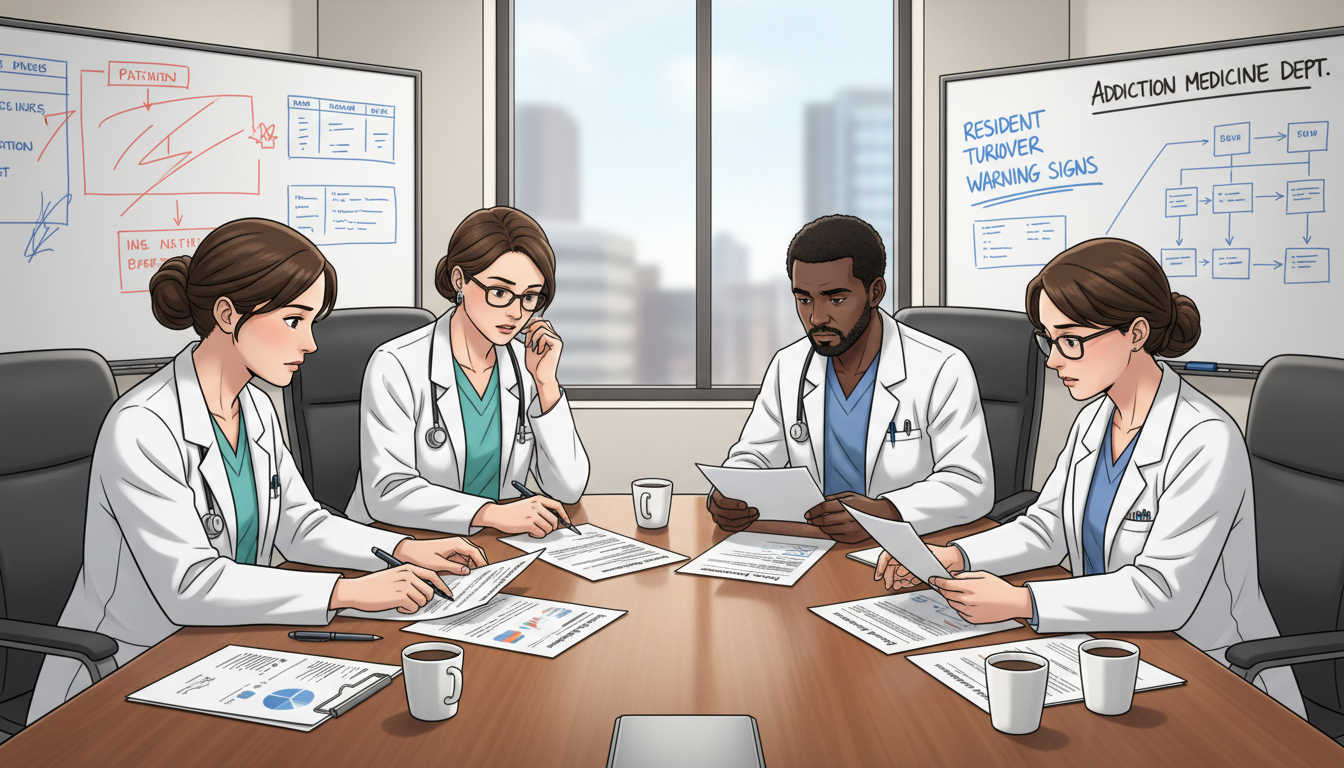
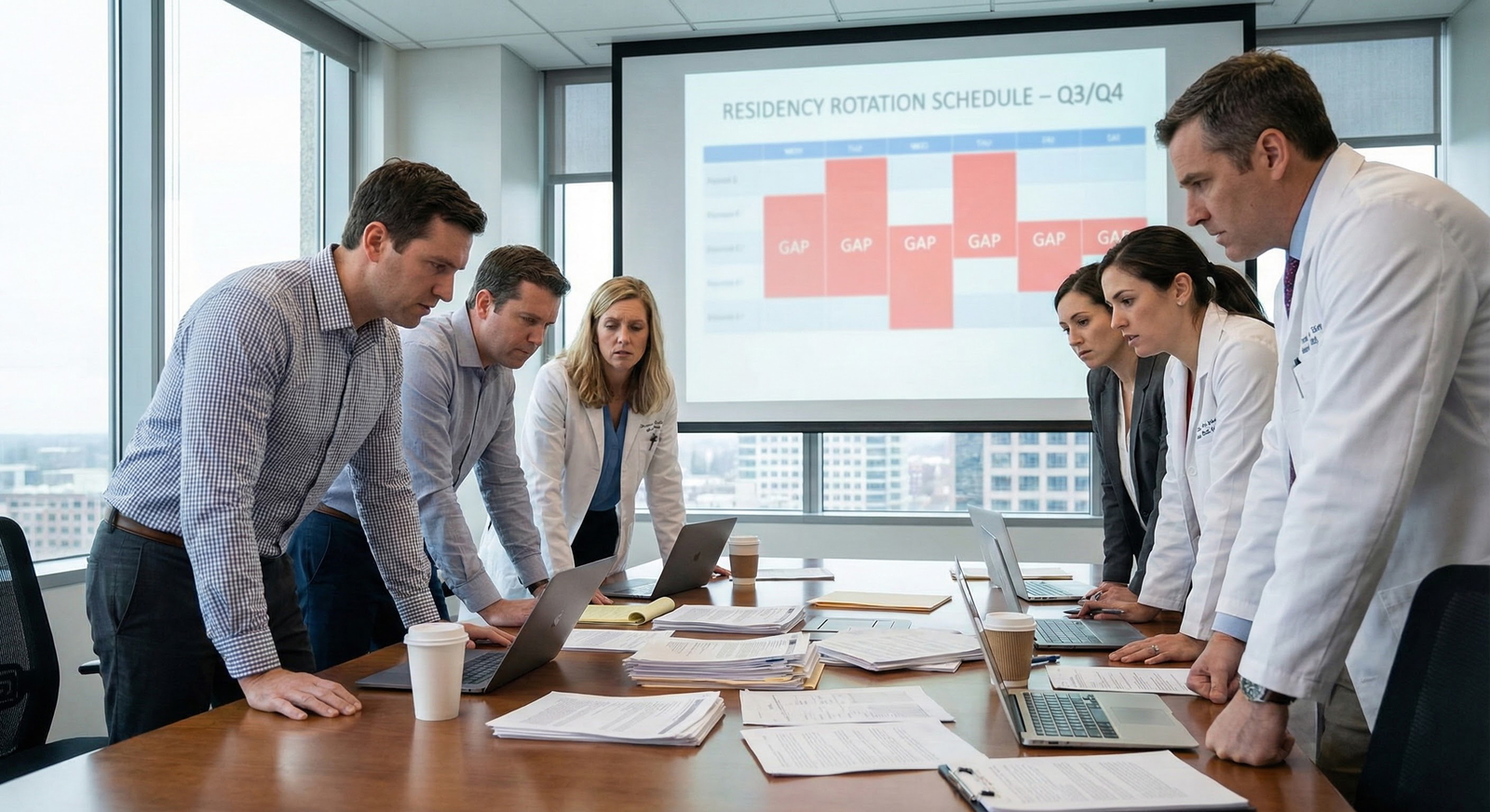
2. High Turnover, Residents Leaving, or Unexplained Gaps
Look carefully at the residency roster on the program website and slides during the interview session.
Red flags:
- Multiple missing residents in the PGY‑2 through CA‑3 classes with no explanation (transfers, resignations, dismissals).
- A pattern of one or more residents per year “unable to continue,” especially if you hear vague explanations like “personal reasons.”
- Residents who openly say, “We’ve had some people leave, but we can’t really talk about it…”
Questions you can ask safely:
- “Have there been any recent changes in class size or resident complement?”
- “How stable has your resident cohort been over the last 5 years?”
- “How often do residents transfer out, and what are the typical reasons?”
If the answers are evasive, shift, or feel uncomfortable, that’s a warning sign for a potentially toxic program.
3. Duty Hour Violations and Unrealistic Workload
Working hard is normal in residency; being chronically exploited is not.
Concerning patterns:
- Residents consistently talk about 80+ hour weeks, frequent 24‑hour calls, or “we basically live here” in a non‑joking way.
- Pressure not to log actual duty hours or “just keep it under 80” to avoid ACGME issues.
- Frequent “come back post‑call” expectations—for cases, meetings, or didactics—despite being technically off duty.
- “Home call” that functions like in‑house call, with constant pages and minimal sleep, yet not counted or respected as true work time.
Anesthesia‑specific workload flags:
- Regularly covering multiple sites at night (e.g., OR + OB + ICU) without backup.
- Chronic “board runner stress” with unmanageable OR schedules and minimal attending support, especially for junior residents.
- Residents commonly doing pre‑ops, OR cases, and post‑op checks with no protected breaks, even on long days.
4. Weak Educational Structure and Little Protected Time
In a malignant residency program, education is secondary—sometimes an afterthought.
Watch for:
- Didactics frequently canceled for service coverage or calls.
- Little structure to the curriculum: vague talk like “we learn a lot on the job” with no mention of modules, lecture series, or board prep.
- No mention of coaching for BASIC and ADVANCED exams, and no data shared on board pass rates.
- Case assignment based purely on staffing needs instead of a structured progression from basic to advanced anesthesia concepts.
Questions to ask:
- “How often are didactics canceled or interrupted for service needs?”
- “What dedicated resources do you provide for ABA BASIC and ADVANCED exam prep?”
- “How do you ensure junior residents get appropriate supervision and case complexity?”
If residents hesitate or look at each other before answering, that can be telling.
5. Culture of Fear, Intimidation, or Retaliation
Toxic program signs often show up more in tone than in formal policy.
Clues from residents:
- Residents repeatedly say “off the record…” or “I shouldn’t say this, but…” then share concerns about leadership or mistreatment.
- They emphasize “Just keep your head down and you’ll be fine” or “You don’t want to be on X person’s bad side.”
- Fear of giving honest feedback: annual surveys or ACGME surveys are seen as risky rather than protected.
Clues from faculty and leadership:
- Program director or chair blames prior residents for problems:
- “We had a few problematic residents who brought our reputation down.”
- Dismissive comments about mental health:
- “We’re tough here; if you can’t handle it, maybe anesthesia isn’t for you.”
- No clear, trusted mechanism to report abuse, or the GME office is seen as powerless.
For IMGs, note any comments that subtly question your abilities because of where you trained—this can feed into a power imbalance that malignant leadership exploits.
6. Unprofessional Behavior in the OR and ICU
The OR is an intense environment, but there is a line between high standards and humiliation.
Red flags:
- Staff or attendings yelling, swearing, or mocking residents in front of the team.
- Surgeons or CRNAs regularly undermining residents’ decisions without constructive teaching.
- Residents report that “Everyone knows” some surgeons or attendings are abusive, but nothing changes.
- Safety concerns are dismissed: “Just push more propofol, don’t argue,” or “We don’t delay cases here.”
Programs that tolerate OR bullying are often malignant in other ways as well.

How to Spot a Malignant Anesthesiology Program During Interviews (Including Virtual)
Interviews—especially in the era of virtual recruitment—are your best chance to detect residency red flags. You need a strategy.
1. Prepare Targeted Questions About Culture and Safety
Have a short, consistent list of questions you ask at every program; patterns in answers will stand out.
Examples tailored to anesthesiology and IMGs:
- “How are new CA‑1s supported in their first weeks in the OR?”
- “On a busy call night, how many sites might a single resident be responsible for? What backup is available?”
- “How does the program support residents who are struggling—either clinically or personally?”
- “Can you share examples of changes made in response to resident feedback in the last 2–3 years?”
- “How many current residents are IMGs or on visas, and how are their needs supported?”
Programs with healthy cultures usually give specific recent examples. Malignant programs tend to stay vague: “We’re like family” or “We just figure it out.”
2. Read Between the Lines When Talking to Residents
Current residents often signal more with what they don’t say or how they say it.
Positive signs:
- Residents openly discuss strengths and weaknesses, with nuance.
- Multiple residents independently mention supportive leadership or specific positive faculty.
- They joke about hard days but still seem proud and relatively content.
Concerning signs:
- Residents appear tense, guarded, or keep glancing at faculty during Q&A.
- They say “We’re very busy, but we survive” without specifying what supports are in place.
- When asked about wellness, they answer in very generic terms: “We have an EAP number somewhere,” “We get pizza sometimes.”
During virtual interviews, pay attention to whether you’re ever allowed to speak with residents without faculty present or listening. If resident-only rooms don’t exist or feel monitored, that’s a strong warning sign.
3. Examine Objective Data: Case Mix, Board Pass Rates, and Fellowships
A program can be demanding and still be excellent, but malignant programs often have weak outcomes despite the high stress.
Ask programs (or review their website) for:
- ABA BASIC and ADVANCED board pass rates
- Look for consistent success; occasional dips can be explained, chronic low rates are concerning.
- Case numbers and diversity
- Do residents meet or exceed ACGME case minimums?
- Are there adequate cardiac, pediatric, OB, and regional experiences?
- Fellowship and job placement
- Where do graduates go? Are they competitive for good academic or private practice positions?
If residents seem overworked but still underprepared (few fellowships, weak board performance), that mismatch is a critical red flag.
4. Notice How the Program Responds to Hard Questions
When you ask about turnover, duty hours, or prior complaints:
Healthy programs will:
- Acknowledge issues that existed and describe concrete steps taken to improve.
- Share examples of schedule changes, added faculty, or wellness initiatives.
Malignant or defensive programs might:
- Minimize everything: “We’ve never had any problems, everyone’s very happy here.”
- Blame ACGME, hospital administration, or “lazy residents” rather than examining their own culture.
- Shift quickly back to talking points: “Anyway, we have great case volume!”
How a program handles criticism is often more revealing than the criticism itself.
Special Considerations for IMGs: Power Dynamics, Visas, and Protection
Because of visa dependence and sometimes limited U.S. experience, IMGs may be more vulnerable to malignant residency programs. Here’s how to protect yourself.
1. Understand the Visa–Power Relationship
In a toxic program, leadership may use your visa status—implicitly or explicitly—to control behavior:
- “If your performance doesn’t improve, we may not be able to continue your sponsorship.”
- Discouraging transfers by warning, “You might risk losing your visa if you try to leave.”
Actionable steps:
- Before ranking, clarify exactly which visa types are supported, how many current residents are sponsored, and whether anyone has had visa issues in the past.
- During orientation (if you match), find out who in GME handles visa matters and learn your rights and timelines independent of the program.
2. Build an External Support Network Early
Do not rely solely on your program for mentorship and protection.
- Join national organizations:
- ASA (American Society of Anesthesiologists) and, if relevant, subspecialty societies (SCA, SPA, etc.).
- Seek mentorship outside your program:
- Through IMG networks, alumni from your medical school, or national mentorship programs.
- Connect with other IMGs in your institution or city, even in other specialties—they often understand visa and cultural challenges deeply.
External mentors are more likely to give you honest guidance if your program becomes hostile or unsupportive.
3. Know Your Rights and Formal Resources
Even in malignant residency programs, there are typically guardrails you can use:
- Institutional GME Office:
- Handles duty hour violations, harassment, safety concerns.
- Some have anonymous reporting channels.
- ACGME Resident/Fellow Survey:
- Anonymous; programs are penalized if red flags repeatedly appear.
- Compliance and HR offices:
- Address discrimination, harassment, and retaliation.
If you ever feel your safety, licensure, or visa status is threatened unfairly, seek confidential advice early—from GME, an ombuds, or outside mentors.
If You End Up in a Toxic or Malignant Program: Concrete Steps
Even with careful research, some residents land in a malignant residency program. This is not your fault—and you still have options.
1. Document Patterns, Not Just Incidents
Keep a private, secure log of concerning events:
- Dates, times, locations
- Who was involved and what was said or done
- Impact on patient care, your education, or your well‑being
Documentation helps you:
- See patterns (e.g., same attending repeatedly verbally abusing IMGs)
- Provide specific examples if you report issues
- Protect yourself against misrepresentation
2. Use Internal Channels Strategically
Start with the least confrontational, most constructive approach that you feel safe with:
- Talk to a trusted chief resident or senior.
- Approach an APD or PD you believe might be sympathetic, focusing on patient safety and educational concerns rather than personalities.
- If attending misconduct is involved, ask how formal reporting works.
If your concerns involve program leadership themselves or are ignored, escalate to:
- The GME office or designated ombuds
- Institutional wellness or professionalism committees
3. Consider Whether Staying or Transferring Is Best
Factors to weigh:
- Severity of mistreatment or safety concerns
- Impact on your mental health and learning
- Your visa type and flexibility
- Availability of transfer positions in anesthesiology or a related specialty
If you pursue a transfer:
- Engage mentors outside your program for strategy and honest feedback.
- Be factual, not emotional, when describing your reasons to potential new programs (focus on misalignment in training goals, persistent duty hour or safety issues).
Some residents choose to stay but strategically minimize harm—seeking external rotations, research, and networking to maintain competitiveness for fellowships or jobs while finishing training.
Balancing High Expectations vs. Malignancy: Not Every Tough Program Is Toxic
Anesthesiology is a demanding specialty. High‑volume, academically rigorous programs can feel intense without being malignant.
Healthy high‑expectation programs often:
- Are transparent about workload and explain why it’s structured that way.
- Provide strong supervision, clear feedback, and a culture of continuous learning.
- Take resident feedback seriously and adjust schedules or policies when problems arise.
- Have good board pass rates, strong fellowship matches, and residents who feel proud, not broken.
Malignant programs:
- Use “this is a tough program” as an excuse for chronic violations and disrespect.
- Have residents who are exhausted, fearful, and often underperforming on exams despite high workloads.
- Avoid accountability and blame others (residents, ACGME, “the new generation”) for persistent problems.
Your goal is not to avoid hard work; it’s to avoid unnecessary harm that does not improve your education or patient care.
FAQs: Malignant Anesthesiology Programs and IMGs
1. How can I tell if a program is truly malignant vs. just demanding?
Look for clusters of residency red flags rather than isolated issues:
- Multiple residents missing or having left in recent years
- Chronic duty hour violations, especially if under‑reported
- Evasive answers about program problems or turnover
- Residents speaking guardedly, clearly afraid to criticize
- Poor board pass rates and weak fellowship/job placements despite high stress
- Widespread reports of bullying, intimidation, or discrimination
A single red flag may be manageable; multiple consistent red flags suggest a malignant residency program culture.
2. Are there extra risks for IMGs in malignant programs?
Yes. As an international medical graduate, you may:
- Depend on your program for visa sponsorship, giving leadership more leverage
- Have fewer local support systems
- Face implicit bias about your prior training and abilities
These factors may increase your risk of being targeted or feeling unable to speak up. For this reason, scrutinize any anesthesia match option that shows toxic program signs—especially around visa consistency, IMG support, and fair evaluations.
3. Is it safer for IMGs to rank only “IMG‑friendly” anesthesiology programs?
“IMG‑friendly” does not automatically mean “healthy” or “non‑malignant.” However, programs with a strong history of training IMGs often:
- Better understand visa logistics
- Have more peer support for IMGs
- May be more deliberate in providing structured orientation to the U.S. system
Still, apply the same critical lens: examine culture, duty hours, resident turnover, and educational quality. Do not assume IMG‑friendliness protects you from malignancy.
4. What if I suspect a program is malignant but it’s my only realistic chance to match?
This is a difficult situation, especially for IMGs. Consider:
- Severity of the red flags: Some issues are tolerable, others are dangerous.
- Your personal resilience, support systems, and long‑term goals.
- Whether this program might still give you the foundation you need for boards and eventual practice.
If you decide to rank and later match there:
- Enter with eyes open and boundaries clear.
- Build external mentorship and support immediately.
- Monitor your health and learning—if the environment is truly unsafe or abusive, you may still have options to transfer or seek institutional support.
Choosing an anesthesiology residency as an IMG is not just about matching anywhere; it’s about matching where you can grow, stay safe, and build a sustainable career. By understanding malignant residency programs, learning how to recognize toxic program signs, and asking the right questions, you position yourself not only to succeed in the anesthesia match—but to thrive during and after training.