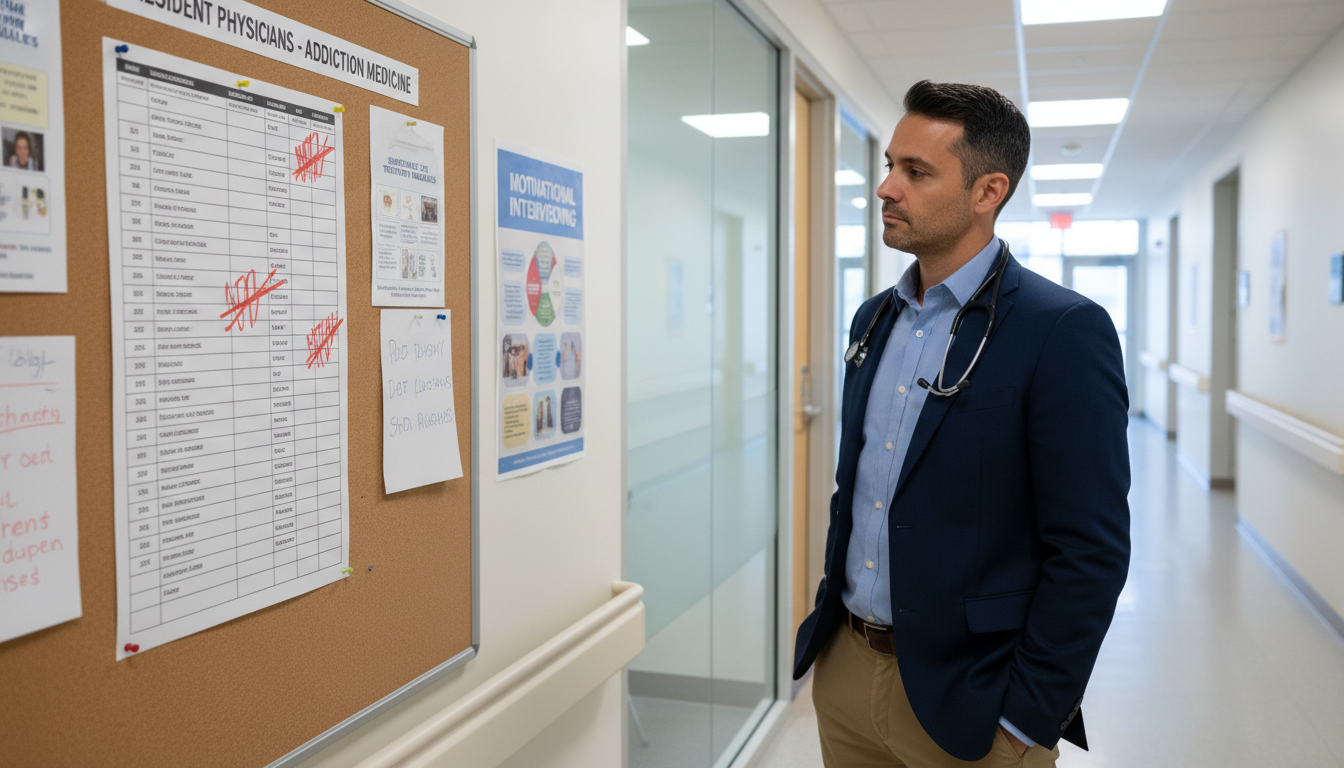
Understanding Resident Turnover: Why It Matters So Much for IMGs in Addiction Medicine
Resident turnover is when trainees leave a program before completion—because they resign, transfer, are not renewed, or are dismissed. For an international medical graduate (IMG) pursuing addiction medicine, understanding turnover is not a minor detail; it can shape your training quality, visa stability, board eligibility, and future career.
This IMG residency guide focuses on addiction medicine programs and the warning signs that resident turnover may indicate deeper program problems. While every program will have some movement over time, patterns of residents leaving program—especially in small, specialized fields like addiction medicine—can be a major resident turnover red flag.
Addiction medicine fellowships are often small (sometimes 1–4 fellows per year). Losing even one fellow can represent 25–100% of a class. For an IMG, this carries added risk:
- Visa sponsorship may be tied to a stable training spot.
- You may have fewer peer mentors and more workload.
- A chaotic environment can affect your ability to meet training requirements for certification.
- Program reputation—and future job prospects—can be impacted.
Your goal is not to avoid any program with past turnover, but to differentiate normal attrition from systemic dysfunction. This article will help you read between the lines, ask better questions, and protect your training and career.
Normal vs Concerning Turnover: What’s “Expected” in Addiction Medicine?
Before labeling anything a red flag, it’s important to recognize when turnover might be understandable or even neutral.
Examples of “Normal” or Explainable Turnover
Some departures are not necessarily signs of program problems:
Personal or family reasons
- A fellow leaves to care for an ill family member in another country.
- A fellow’s partner is relocated and they transfer closer to home.
Career redirection
- A resident realizes they want general psychiatry instead of addiction medicine and returns to a psychiatry track.
- A fellow chooses a research-only path and leaves clinical training.
Immigration or visa issues not caused by the program
- Unexpected policy change in the fellow’s home country.
- Delays or denials unrelated to the institution’s practices.
Rare disciplinary or professionalism issues
- One trainee with documented performance or professionalism problems over many years.
These events, especially if rare and well-explained, do not automatically mean a program is unhealthy.
When Turnover Becomes a Red Flag
In addiction medicine, because cohorts are small, patterns matter more than absolute numbers. Be concerned when you see:
- Multiple fellows leaving within a few years (e.g., 2–3 fellows out of 6–8 over 3 years).
- Repeated non-renewals of contracts without clear, objective explanations.
- Transfers to other addiction medicine fellowships rather than to other specialties.
- Residents leaving program mid-year more than once over a few-year period.
- Lack of transparency: faculty or residents become vague or defensive about past departures.
For IMGs, even “explainable” turnover can still mean destabilization of visa support or supervision. Always consider how turnover affects you, not only why it happened.

Core Resident Turnover Warning Signs in Addiction Medicine Programs
Below are the most important resident turnover red flags to evaluate. None of them, alone, proves a toxic environment—but multiple signs together should make you very cautious, especially as an IMG.
1. Vague or Evasive Answers About Past Residents
During interviews or pre-match communication, pay close attention to how program leadership and current fellows talk about former trainees.
Concerning patterns:
You ask, “Have any fellows left the program early in the last 5 years?” and get:
- “Not that I remember,” from multiple people (but the website or grapevine suggests otherwise).
- “Things happen, but we don’t really talk about that.”
- “We can’t discuss that because of confidentiality,” without offering any general context or reassurance.
Faculty change the subject, become uncomfortable, or give inconsistent stories.
Why this matters for IMGs:
Evasion often indicates unresolved tension—sometimes involving unfair evaluations, poor support, or chaotic expectations. As an IMG in addiction medicine, you depend heavily on a program that is:
- Clear about expectations.
- Honest about its challenges.
- Willing to discuss how it has improved.
You do not need names or private details, but you should expect general patterns and explanations (e.g., “We had one fellow who realized addiction psychiatry was a better fit and transferred; another left for family reasons abroad”).
2. High Turnover of Faculty and Core Leadership
Fellows often leave an addiction medicine fellowship because the environment is unstable, not only because of workload. Faculty turnover is a strong indirect indicator.
Warning signs:
- Multiple addiction medicine faculty have left in the last 2–3 years.
- Several program directors or associate program directors in quick succession.
- Current fellows cannot clearly describe who is in charge or who will be there next year.
- There are frequent interim leaders “acting” in key roles.
Specific risk to IMGs:
- Visa paperwork and evaluations require reliable leadership; frequent changes can delay critical documents.
- Changes to rotation sites or curriculum midway through training can affect your ability to meet board-eligibility requirements, especially if the fellowship is newly accredited.
- An unstable leadership team often struggles to advocate for fellows in hospital politics, funding, or clinical scheduling.
Ask:
- “How long has the program director been in this role?”
- “Have there been significant faculty changes in addiction medicine in the last 3–5 years?”
- “Are any major changes planned for the near future?”
Stable leadership is not a guarantee of quality, but unstable leadership almost always adds risk.
3. Overreliance on Fellows to “Keep the Service Running”
Addiction medicine is often under-resourced, with high volumes of patients and significant administrative tasks (prior authorizations, insurance issues, coordination with rehab and community programs). Some service is expected—but too much is a classic cause of resident burnout and turnover.
Red flags in workload and service balance:
- Fellows describe themselves as “indispensable” to routine clinical operations (detox unit cannot run without them, consult service collapses if a fellow is out).
- No protected time for education (didactics regularly canceled because of clinical demands).
- Fellows frequently cover multiple sites with minimal supervision.
- “Being on call all the time” or frequent last-minute calls to cover gaps.
- Fellows talk more about survival and staffing issues than about learning and mentorship.
Why this drives fellows away:
- Little time to develop specialty skills (psychotherapy, motivational interviewing, complex pharmacotherapy for substance use disorders).
- Emotional burden of addiction work becomes unsustainable without structured support.
- Residents may feel the program values service over training, prompting some to leave.
For IMGs in particular:
- Visa requirements mean you may not feel free to leave even if conditions are poor—creating a risk of exploitation.
- Exhaustion and burnout can impair your ability to pass board exams or secure strong letters of recommendation.
- A program overly focused on service may not provide the level of substance abuse training you expected when applying to an addiction medicine fellowship.
Ask concrete questions:
- “How often are didactics canceled due to clinical needs?”
- “What percentage of your week is dedicated to structured learning vs direct service?”
- “Have any fellows left due to workload or burnout in recent years?”
4. Poor Communication, Disorganization, and Constant “Crisis Mode”
Every program has busy days and unexpected challenges. However, persistent chaos is a serious resident turnover red flag.
Examples of structural dysfunction:
- Schedules are released late or frequently changed with little warning.
- Rotations change mid-year with no clear explanation.
- Evaluation processes are unclear; feedback is sporadic or only negative.
- No clear written policies on remediation, leave, or grievances.
- Rotations or clinics suddenly lose accreditation or contracts, forcing emergency rearrangements.
In addiction medicine, where rotations can span inpatient detox, consult liaison services, outpatient MOUD clinics, and community rehab collaborations, good organization is particularly important. Disorganization can mean:
- Missed exposure to key learning areas (e.g., you never get time in an OTP or intensive outpatient program).
- Difficulty tracking required numbers (buprenorphine inductions, inpatient consults, etc.).
- Stressful conflict with external partners (judicial systems, public health departments).
How this leads to residents leaving programs:
- Chronic uncertainty increases stress; fellows feel they are “always on edge.”
- Trainees worry about meeting board requirements and future job readiness.
- Miscommunication can cause serious patient care errors, sometimes blamed on fellows.
As an IMG, you may already be navigating cultural and language adjustments; a chaotic environment will magnify these challenges.
Ask:
- “Can I see a sample rotation schedule?”
- “How far in advance are schedules finalized?”
- “How are concerns or problems in rotations usually addressed?”
Listen for whether answers sound systematic and stable—or improvisational and crisis-driven.
5. Patterns of Conflict, Grievances, or “Problem Trainees”
Some programs describe every resident who leaves as “not a good fit” or “unprofessional.” One or two cases over many years may be reasonable. But recurring stories about “problem trainees” can reveal a blaming culture rather than supportive remediation.
Indicators of a problematic culture:
- Multiple examples of fellows placed on remediation or probation.
- Several residents leaving program after conflicts with leadership.
- Workroom gossip about recent or current trainees’ shortcomings during your visit.
- Faculty minimize systemic issues by emphasizing personal failings of prior fellows (“They just couldn’t handle the work”).
In addiction medicine, where trauma, stigma, and burnout are common, a supportive culture is crucial. A program that is quick to blame residents instead of examining systemic issues often has:
- Poor emotional support and debriefing around difficult cases, overdoses, or patient deaths.
- Inadequate supervision for high-risk clinical decisions.
- Limited willingness to adapt schedules, caseloads, or support after complaints.
For IMGs, the risks are amplified:
- You may be more vulnerable to misunderstandings around communication style, hierarchy, or documentation expectations.
- A punitive environment rather than a coaching one can threaten your visa status if your contract is not renewed.
- You may feel less comfortable raising concerns about discrimination or unfair treatment.
Ask:
- “How does the program handle residents who are struggling clinically or personally?”
- “Have any fellows required formal remediation in recent years? What supports were provided?”
- “Is there a process to report mistreatment or concerns anonymously?”
6. Weak Support for IMGs and International Medical Graduates Feeling “Isolated”
As an IMG, you need more than generic wellness lectures. You need recognition of:
- Visa and immigration constraints.
- Cultural and communication differences with patients and staff.
- Different previous training systems and documentation norms.
Warning signs specific to IMGs:
- No recent IMGs in the program, or a pattern of IMGs leaving before graduation.
- Lack of familiarity with visa options or frequent errors/delays in immigration paperwork.
- No structured support for language or communication challenges (e.g., documentation feedback, presentation coaching).
- Dismissive attitude toward IMGs’ prior experience (“We’ll teach you to do it the American way; forget what you learned before”).
In addiction medicine, you frequently engage in:
- Sensitive conversations about stigma, trauma, and relapse.
- Legal and regulatory issues around controlled substances.
- Complex systems (insurance, courts, probation, child welfare).
Without proper orientation and support, IMGs can be unfairly judged, misunderstood, or under-evaluated—making it more likely they become part of the residents leaving program statistic.
Ask direct questions:
- “How many IMGs have you trained in the last 5–10 years?”
- “Has any IMG fellow left early or failed to complete the fellowship?”
- “Who helps with visa documentation and immigration questions?”
If the program becomes vague or visibly uncomfortable with these questions, be cautious.

How to Investigate Resident Turnover Before You Rank Programs
You cannot rely only on official presentations. To identify resident turnover warning signs, use multiple information sources and compare them.
Step 1: Study Public Data and Program Materials
Program website and brochures
- Look for lists of current and past fellows.
- Gaps in graduation years or missing trainee lists can suggest turnover.
- Check if alumni outcomes are clearly stated—vague or extremely short lists may indicate few graduates or reluctance to show patterns.
ACGME or accreditation status (if applicable)
- New programs can be wonderful, but lack a track record—higher risk for IMGs.
- Any history of probation or warning status (if visible or discussed) is relevant.
Online forums and reviews
- Platforms where residents discuss programs (specialty forums, social media groups).
- Be cautious: anonymous comments can be biased. Use patterns, not single stories.
Red-flag signals in public data:
- Repeated mentions of residents leaving program early.
- Lack of transparency about class size and alumni outcomes.
- Conflicting information between website and what you’re told in person.
Step 2: Ask Specific Questions on Interview Day
Prepare a small list of precise, neutral questions. For example:
For program leadership:
- “In the last 5–7 years, how many fellows started the addiction medicine fellowship, and how many completed it?”
- “Have any fellows transferred to other programs or left before graduation? Are you able to share, in general terms, why?”
- “How does the program use feedback from fellows to improve the training environment?”
- “Have there been any major changes in leadership, curriculum, or rotation sites recently?”
For current fellows (ideally without faculty present):
- “Have any fellows left the program during your time here?”
- “On a typical week, do you feel you are more of a service provider or a learner?”
- “Have there been times when workload felt unmanageable? How did leadership respond?”
- “If you could change one thing about this program, what would it be?”
Pay attention not only to answers, but how they are delivered: hesitation, forced positivity, or dismissive jokes about burnout can be revealing.
Step 3: Read Between the Lines of Resident Behavior
Observations on interview day can sometimes tell you more than prepared speeches.
Positive signs:
- Fellows appear relaxed, speak openly, and acknowledge both strengths and weaknesses.
- Alumni return to give talks or join meet-and-greet sessions—indicating ongoing goodwill.
- Faculty and fellows interact with mutual respect and humor.
Concerning signs:
- Fellows are not available to speak with applicants, or you only see one carefully selected fellow.
- Residents give extremely short or vague answers (“Everything is fine; we’re very busy, but it’s good”).
- You overhear comments about recent departures or conflicts, but no one will discuss them directly.
Step 4: Follow Up After Interviews
If something feels off:
Send a polite email asking for clarification:
“During the interview, I heard there had been some recent changes in fellow staffing. As an IMG considering visa sponsorship, I want to understand program stability. Could you share, in general terms, how often fellows have left the program early in recent years and how that affected training?”Ask to speak with a fellow by phone or video if you didn’t get adequate time on interview day.
If the program becomes defensive or refuses to discuss turnover at all, that itself is valuable information.
Practical Ranking Strategy for IMGs: Balancing Risk and Opportunity
Not all red flags mean you must remove a program from your rank list, especially if you have limited options as an international medical graduate. Use a risk–benefit approach.
Consider Each Program Along Three Dimensions
Educational Quality
- Depth and breadth of substance abuse training (MOUD, co-occurring disorders, harm reduction, community settings).
- Presence of addiction medicine role models and research opportunities.
- Board-eligibility track record.
Environmental Safety and Stability
- History and transparency of resident turnover.
- Leadership stability, workload, and support systems.
- IMG friendliness and visa reliability.
Personal Fit and Life Factors
- Location, cost of living, family needs.
- Long-term career goals (academic vs community, research vs clinical).
A program with minor red flags but excellent addiction medicine clinical exposure might still be a reasonable choice—especially if leadership is honest and actively improving. However, multiple strong red flags (frequent departures, opaque explanations, chaotic organization, blaming culture) should push that program lower on your list or off it.
When a “Dream Location” Has Turnover Concerns
For IMGs, geographic preferences can be strong (family nearby, supportive community). But a weak program in a perfect city can damage your career more than a strong program in an unfamiliar place.
Ask yourself:
- Would I rather be slightly farther from family for 1–2 years, but complete a solid addiction medicine fellowship with good support?
- Or risk my visa, board eligibility, and mental health in a program with repeated resident turnover red flags?
Often, the safer and more supportive program is the better long-term choice—even if the location is not ideal.
Frequently Asked Questions (FAQ)
1. As an IMG, should I avoid any addiction medicine program that has ever had a resident leave?
No. A single fellow leaving over many years—especially for clearly explainable reasons (family emergency, career change)—is not automatically concerning. What you should avoid is:
- Repeated residents leaving program early.
- Vague or conflicting explanations about why.
- Patterns of faculty blaming trainees instead of addressing systemic issues.
Focus on the pattern, transparency, and program response, not just the fact that turnover occurred.
2. How can I tell if resident turnover is due to program problems or just bad luck?
Look for:
- Frequency: How many departures over how many years?
- Consistency of explanation: Do faculty and fellows provide coherent, overlapping stories?
- Program response: Have they changed anything (schedules, supervision, support) in response?
If a program can clearly describe what happened, acknowledge lessons learned, and outline specific improvements, the turnover may represent growth rather than ongoing dysfunction.
3. What special questions should IMGs ask about turnover and visas?
As an international medical graduate, you should directly ask:
- “Have any IMG fellows had visa problems or needed to leave early due to immigration issues?”
- “Who handles visa paperwork, and how experienced are they?”
- “If a fellow needs to take leave (for illness, pregnancy, or other reasons), how does that affect visa status?”
Programs that regularly train IMGs should be able to answer these clearly and confidently. If they seem unsure or dismissive, be cautious.
4. I matched into a program and only later learned there have been residents leaving early. What can I do now?
After matching, your goal is to protect yourself and advocate for a safe experience:
- Identify trusted mentors early (within or outside the program).
- Clarify expectations in writing: rotations, evaluation criteria, work hours, and leave policies.
- Document your clinical activities and feedback.
- Use institutional resources (GME office, ombuds, wellness services) if serious issues arise.
- If the environment becomes unsafe or threatens your training, speak to GME leadership about options—including transfer—while being mindful of visa constraints.
Even in a challenging program, proactive communication and external support can help you complete training successfully.
Understanding resident turnover warning signs is essential for any applicant, but especially for the international medical graduate entering addiction medicine. Use this IMG residency guide as a framework: analyze the pattern of residents leaving program, evaluate leadership stability, probe workload and culture, and ask explicit questions about IMG support and visas. By recognizing red flags early, you can choose a fellowship that not only trains you well in substance use treatment but also respects you as a trainee, a physician, and an international professional building a life and career in a new system.