Applying to diagnostic radiology in the U.S. as an international medical graduate (IMG) is a major investment of time, money, and emotional energy. One of the most under-discussed but critical topics is resident turnover—when residents repeatedly leave or are dismissed from a program. High or unexplained turnover can be a powerful warning sign that a program has deeper structural, cultural, or educational problems.
This IMG residency guide focuses specifically on resident turnover warning signs in diagnostic radiology and how to interpret them as you prepare for the diagnostic radiology match. You will learn which patterns suggest serious program problems, what questions to ask, how to read between the lines as an IMG, and how to protect yourself from landing in a toxic environment.
Understanding Resident Turnover in Diagnostic Radiology
Resident turnover is more than just a number. To assess it intelligently, you need to understand what “normal” looks like in radiology, and when turnover should trigger concern.
What Is Resident Turnover?
Resident turnover includes:
- Residents resigning or transferring to another radiology program or another specialty
- Residents dismissed or non-renewed for academic, professionalism, or other reasons
- Residents going on extended leave (e.g., never seen around, not replaced on the schedule) in a pattern that suggests deeper issues
- Repeated vacant positions in certain classes (e.g., only 3 residents where 4 are approved)
Some turnover happens everywhere, but concerning turnover is usually:
- Frequent – occurs almost every year or affects multiple classes
- Clustered – multiple residents leave within a short time frame
- Unexplained or secretive – nobody gives a clear, consistent story
What “Normal” Turnover Might Look Like
In a healthy diagnostic radiology residency program, over a 3–5 year period you might see:
- 0–1 resident leaving for personal or family reasons
- Rare dismissal for extreme professionalism or persistent academic issues
- Clear explanations from leadership and residents when asked in an appropriate way
Occasional change is not by itself a resident turnover red flag. Life happens: spouses relocate, people realize radiology is not the right specialty, or personal crises occur. A strong program absorbs these without disrupting education or morale.
Why Turnover Matters More for IMGs
As an international medical graduate, you face additional vulnerabilities:
- Visa dependency – Losing a position may mean losing visa status
- Limited mobility – Transferring to another radiology program is difficult, especially mid-training
- Less informal intel – You have fewer local contacts to warn you about problematic programs
- Higher scrutiny – Struggling in a weak system may be misattributed to you rather than to program problems
Because of this, you must pay close attention to resident turnover warning signs and not assume “any match is a good match.”
Major Resident Turnover Red Flags in Radiology Programs
Certain patterns are especially worrisome for anyone pursuing the diagnostic radiology match—most of all for IMGs.
1. Multiple Residents Leaving the Program in Recent Years
This is the single clearest warning sign.
Red flag pattern:
- 2 or more residents leaving in a 3-year period
- Turnover across different PGY levels (e.g., R1 and R3)
- Positions left unfilled or repeatedly re-advertised
- Graduating classes smaller than planned without clear explanation
Why this matters in radiology:
Diagnostic radiology relies on stable, tiered classes:
- Senior residents teach juniors how to read complex cases
- Call scheduling assumes full classes for fair workload
- Subspecialty exposure often depends on adequate resident coverage
When residents are leaving, the result can be:
- Heavier call for remaining residents
- Missed rotations or reduced subspecialty time
- Burnout spreading across multiple classes
What to ask (politely):
- “Have there been any residents who left or transferred in the last few years?”
- “If so, were those mostly for personal reasons or program-related reasons?”
- “Were those positions backfilled, and how did that affect call and workload?”
Listen for hesitations, vague answers, or conflicting stories from different people.

2. Residents Seem Afraid to Talk Openly
Body language and tone can reveal more than words.
Concerning signs:
- Residents look around nervously before answering questions
- They insist on speaking only in the presence of faculty
- Answers feel rehearsed or overly positive (“Everything is perfect here, we are so happy”)
- When you ask about past residents leaving, they abruptly change the subject
- You’re told, “We’re not allowed to talk about that”
In a healthy program, even if there were past issues, residents can still:
- Acknowledge challenges
- Explain how things have improved
- Discuss turnover in a factual, non-fearful way
Additional IMG-specific questions:
- “As an international medical graduate, do you feel comfortable giving honest feedback to leadership?”
- “Have IMGs who struggled been supported, or has anyone felt targeted?”
When residents cannot safely share honest experiences, it suggests a culture of fear and poor psychological safety—both strong program problems indicators.
3. Repeated Recruitment of Off-Cycle or Transfer Residents
Seeing 1 transfer resident is not necessarily a problem. But a pattern of repeated off-cycle recruitment can be a red flag that residents leaving program is a common event.
Warning signs:
- Program frequently advertises mid-year openings
- Multiple residents in your tour group mention they are transfers
- Current residents say things like, “We’ve had several people leave in the last few years, so they keep recruiting replacements”
Ask specifically:
- “Do you commonly have open positions for transfer residents?”
- “What usually leads to those openings?”
A transparent explanation might be: “We had one resident with an unexpected family situation and one who switched to another specialty; this isn’t typical for us.”
A concerning explanation might be: “We’ve had quite a few people leave, but administration can explain better,” followed by silence or discomfort.
4. Leadership Instability with Parallel Resident Turnover
Some leadership change is normal. But frequent, recent, and unexplained leadership turnover combined with residents leaving is a strong resident turnover red flag.
Take note if:
- The program director has changed more than once in 3–4 years
- Multiple core faculty have left recently
- Residents mention, “We’ve had a lot of changes, we’re still figuring things out,” but can’t describe a clear plan
- There is no stable associate program director or chief resident structure
In diagnostic radiology, stable leadership is crucial to:
- Maintain consistent case exposure and rotations
- Keep up with ACGME requirements and board prep
- Coordinate imaging volume, teaching, and call schedules
Instability at the top often spills over into:
- Confusing requirements
- Inconsistent evaluations
- Poor remediation structure if you struggle—especially risky for IMGs
5. Chronic Overwork and Burnout Without Acknowledgment
Radiology can be busy, especially on call or during night float. But chronic, unaddressed burnout can drive residents away.
Watch for:
- Residents doing constant “cleanup” of unattended reads
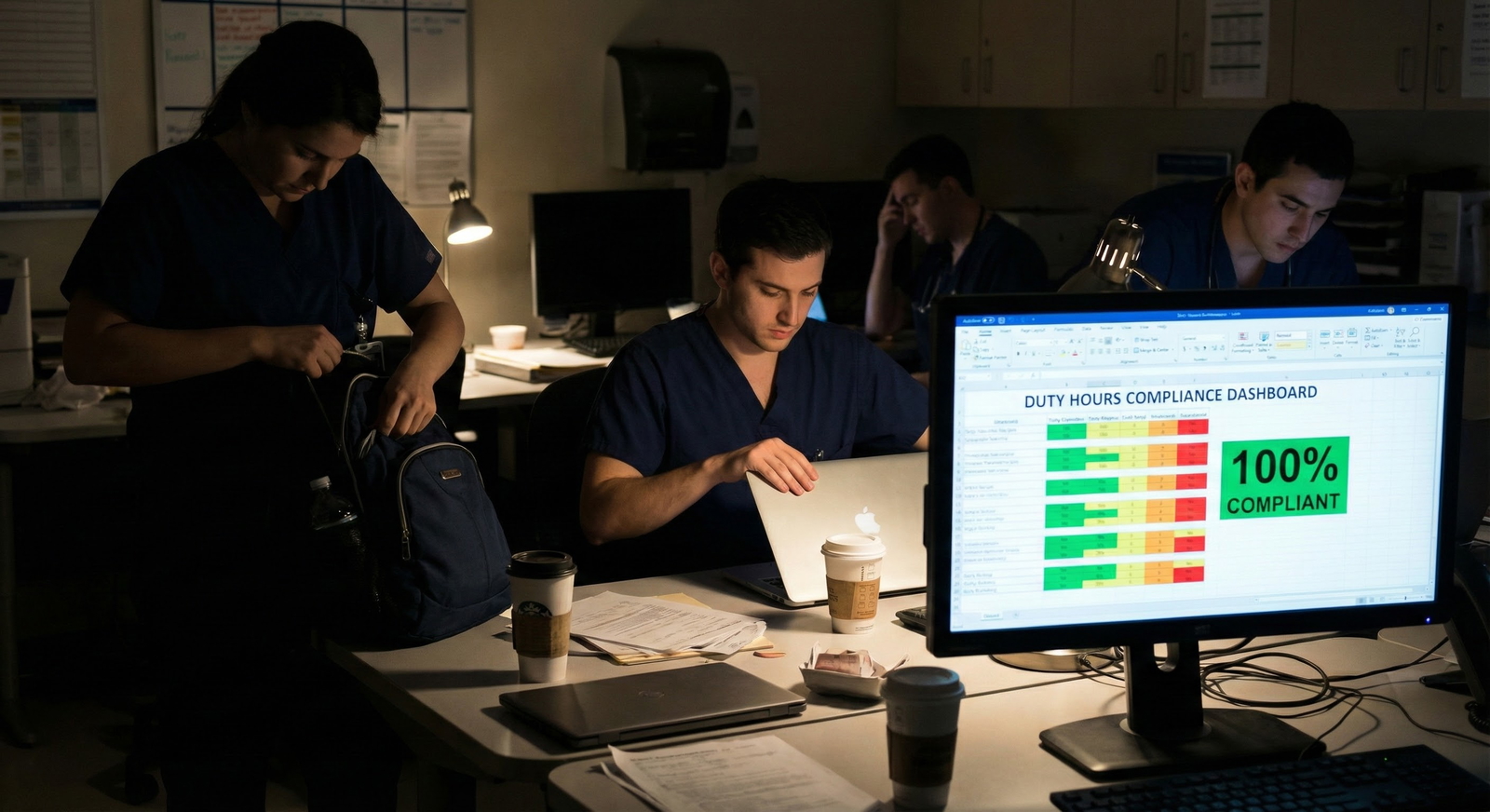
- Regularly staying late every day without educational benefit
- Describing call as “brutal” or “unsafe”
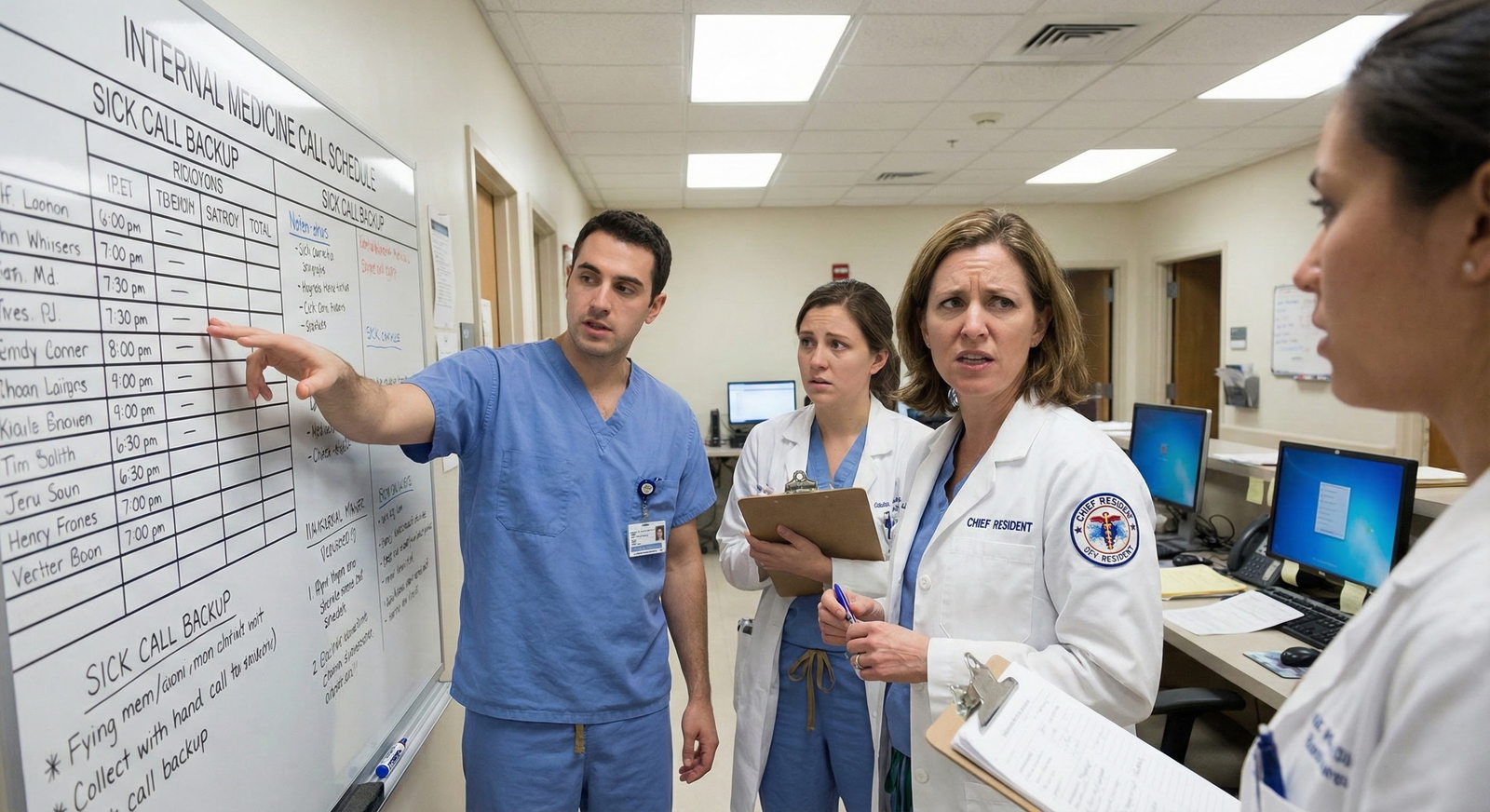
- No system for backup coverage when someone is sick or overwhelmed
Ask:
- “How often do you stay after your shift is scheduled to end?”
- “Do you have backup call if the volume is overwhelming?”
- “Have any residents left due to workload or burnout?”
A big warning sign is when residents clearly seem exhausted but say, “We just push through. That’s how it is here,” and there’s no sense that leadership is trying to improve it.
How to Investigate Turnover During Interviews and Virtual Interactions
As an IMG, you must be strategic, especially if you’re interviewing virtually or from abroad. You may not have as many informal sources, so your skill at detecting subtle resident turnover warning signs becomes even more important.
Learn to Read the Class Structure
Before or during the interview:
Check the website carefully
- How many residents are listed per year vs. how many positions are advertised in ERAS?
- Are there missing faces, or classes of uneven size (e.g., R2 has 2 residents, R3 has 5, R4 has 3)?
Ask directly (in a neutral tone)
- “How many residents are in each class currently?”
- “Is that the usual size, or have there been changes?”
Differences may indicate residents leaving program earlier, transferred, or dismissed.
Use Pre-Interview and Post-Interview Communications
Many programs offer:
- Pre-interview social events with residents
- Informal resident-only Q&A sessions
- Opportunities to email or message current residents
These are ideal for asking turnover-related questions in a respectful, non-accusatory way.
Examples:
- “Have there been any residents who transferred or left the program recently? How was that handled?”
- “If you had to do it over, would you choose this program again? Why or why not?”
- “What improvements have been made recently in response to resident feedback?”
Listen not only to the content of answers but also to tone and consistency between residents.
Asking About IMG-Specific Turnover
As an international medical graduate, focus specifically on IMGs’ experiences:
- “Have IMGs in this program had any unique challenges?”
- “Have any IMGs left the program, and if so, what were the main reasons?”
- “How does the program support IMGs who may need additional help early on (e.g., with communication, documentation, or cultural adaptation)?”
If you hear that multiple IMGs have left and explanations are vague or framed as “they just weren’t a good fit” without specifics, consider that a significant resident turnover red flag.

Differentiating Manageable Issues from Serious Program Problems
Not all signs of residents leaving program mean you must automatically reject the program. As an IMG, you need to balance risk with opportunity, especially if you have a limited number of interviews.
When Turnover Might Be Less Concerning
Turnover may not be a deal-breaker if:
- The reasons were clearly personal (spouse relocation, family illness, change of specialty), and multiple residents independently confirm this
- Leadership acknowledges the departures and describes specific changes made in response
- Residents, despite acknowledging the issue, say they would still rank the program highly
- There is no pattern of residents leaving for the same reason (e.g., all from call stress or toxic attendings)
Example:
“We had one resident leave last year because their partner matched on the opposite coast. Another changed to interventional neurology after realizing that was their passion. The program helped both transition, and those are the only two in the past 5 years.”
This may be acceptable, especially at otherwise strong programs.
When Turnover Should Make You Very Cautious
Be especially wary when several red flags combine:
- Multiple residents leaving in successive years
- Residents reluctant to discuss details
- Leadership instability plus uneven class sizes
- Descriptions of “toxic,” “unsupportive,” or “unapproachable” attendings
- No clear system for remediation or feedback
Example situation (high risk for IMG):
The program has had 2–3 residents leave in the past 3 years. Residents talk about constant criticism, no feedback until evaluations, and at least one IMG dismissed “for not progressing,” but no specific remediation plan is described. Residents seem anxious when asked about it.
In this scenario, your margin for error as an IMG is very small. A program that cannot remediate struggling residents effectively is a major danger.
Actionable Strategies for IMGs to Protect Themselves
Knowing the warning signs is not enough; you need a plan to act on them as you navigate the diagnostic radiology match.
1. Do Independent Research Before Ranking
- Search for the program name plus terms like:
- “resident left program,” “transfer position radiology,” “off-cycle PGY-3 radiology”
- Review:
- Recent FREIDA updates for resident count and program director data
- Program social media for clues (sudden disappearance of resident photos, unbalanced class photos, repeated “welcome new resident” posts mid-year)
- Ask alumni or attendings from your home country who trained or practiced in the U.S. for informal impressions, especially about resident turnover red flag reputations.
2. Prepare a “Red Flag Checklist” for Each Program
During and after interviews, document:
- Number of residents per class
- Known residents who have left in the last 5 years
- Leadership changes (PD, APD, Chair)
- Resident attitudes about:
- Call
- Teaching
- Professionalism and respect
- IMG support
Score each program informally (e.g., Low / Moderate / High concern) and use this when building your rank list.
3. Consider Your Personal Risk Tolerance
Some IMGs may accept more risk if:
- They have very few interviews
- They urgently need U.S. training for visa or career reasons
- They have strong resilience and adaptability
Others may choose to rank fewer but safer programs, preferring to reapply rather than risk a toxic environment where residents frequently leave or are dismissed.
Ask yourself:
- “If this program turned out to be as bad as the red flags suggest, could I afford the consequences (personally, financially, and professionally)?”
- “Would I rather risk not matching this year than match into a severely problematic program?”
4. Plan an Exit Strategy—Just in Case
Even with careful evaluation, you might still land in a program where residents are leaving and the environment is unhealthy.
As an IMG, protect yourself by:
- Keeping your CV updated from day one of residency
- Building genuine relationships with supportive faculty
- Understanding your visa options early (J-1 vs. H-1B implications if you leave a program)
- Learning about ACGME policies regarding transfer and program closures
- Documenting concerns factually and professionally if serious issues arise
While you should not plan to fail, you should plan to be prepared—especially if you see signs of more residents leaving or a deteriorating culture once you start.
FAQs: Resident Turnover Warning Signs for IMGs in Diagnostic Radiology
1. How many residents leaving a radiology program is “too many”?
There is no absolute number, but as a guideline:
- One resident leaving over several years may be normal
- Two or more within 3–4 years, especially with unclear explanations, suggests you should investigate closely
- Multiple residents leaving across different classes, combined with leadership turnover or cultural problems, is a strong resident turnover red flag
Always look at patterns over time, not just one event.
2. Should I still rank a radiology program that has had residents leave?
It depends on:
- Why they left (personal vs. program-related)
- How transparent and consistent the explanations are
- Whether the program has made clear improvements afterward
- Your own risk tolerance and number of other offers
If turnover appears related to program culture, lack of support, or unsafe workload—especially affecting IMGs—it may be safer to rank that program lower or not at all, even if it seems like your only diagnostic radiology option.
3. As an IMG, how can I ask about turnover without sounding negative?
Use neutral, professional language:
- “I’m very interested in understanding how the program supports residents over time. Have there been any residents who transferred or left in recent years, and how did the program handle that?”
- “How stable have the resident classes and leadership been over the past few years?”
- “What changes has the program made based on resident feedback?”
The goal is to signal that you are mature, thoughtful, and focused on long-term success—not that you are looking for gossip.
4. Are programs with high IMG representation automatically safer for IMGs?
Not necessarily. A program with many IMGs may:
- Be very supportive and experienced in IMG needs
- Or rely heavily on IMGs in an unsustainable way, with high turnover or dismissals when problems arise
Focus on:
- Whether IMGs graduate successfully and on time
- The tone of how residents and faculty describe IMGs (“we value diverse perspectives” vs. “they’re just grateful to be here”)
- Whether any IMGs have left or been dismissed and what support was offered
High IMG representation alone is not a guarantee of safety; you still need to watch closely for general and IMG-specific resident turnover warning signs.
Understanding resident turnover is essential in any IMG residency guide, but it is particularly critical for IMGs targeting diagnostic radiology residency positions in the U.S. By recognizing the early indicators of program problems, asking targeted questions, and honestly assessing your own risk tolerance, you can navigate the diagnostic radiology match more safely and avoid programs where residents leaving program is a recurring pattern.
Your goal is not just to match—but to thrive, graduate, and build a sustainable career in radiology. Paying attention to resident turnover warning signs is one of the smartest investments you can make in that future.