
International medical graduates pursuing vascular surgery already face a steep learning curve—new healthcare systems, cultural adjustments, and high clinical expectations. One of the most overlooked threats to a successful training experience is resident turnover: when multiple residents leave, transfer, take extended leaves, or go “off-cycle.” For an IMG, joining a program with serious resident turnover problems can derail not only your training but also your visa, career timeline, and long‑term goals.
This IMG residency guide will walk you through how to recognize resident turnover warning signs specifically in vascular surgery programs, why turnover happens, and how to investigate these issues before you rank a program.
Understanding Resident Turnover in Vascular Surgery Programs
Resident turnover refers to any situation where residents do not progress through and complete the program in the expected manner. In an integrated vascular program, this can be especially telling because the cohorts are small and the training length is long (typically 5–7 years depending on pathway).
What Counts as “Turnover”?
In vascular surgery residency, turnover can include:
- Residents resigning or transferring to another program
- Residents dismissed or non‑renewed (not advanced to the next PGY level)
- Residents repeatedly taking a leave of absence or going “off cycle”
- Residents extending training significantly (beyond expected graduation date)
- Multiple residents in one class no longer present (for any reason besides a planned research year)
A single departure over many years does not automatically equal a bad program. But patterns—especially recent ones—are a resident turnover red flag and may signal deeper program problems.
Why Turnover Matters More for IMGs
For an international medical graduate, the consequences of joining a program with high resident turnover are amplified:
- Visa risk: Dismissal, non‑renewal, or prolonged leave can threaten your visa status.
- Limited transfer options: Transferring vascular surgery programs is far more difficult than in some other specialties due to limited slots.
- Narrow job market: Vascular surgery is highly specialized; incomplete training can make career recovery very hard.
- Lower margin for error: As an IMG, you may rely heavily on your residency for U.S. recommendations, networking, and long‑term sponsorship.
Because of this, identifying resident turnover warning signs should be a core part of your vascular surgery residency selection strategy, not an afterthought.
Concrete Warning Signs: How to Spot Resident Turnover Problems
Many applicants assume resident turnover is hidden, but in reality, most programs show clues—if you know where and how to look. Below are specific, actionable signs an IMG should pay attention to.
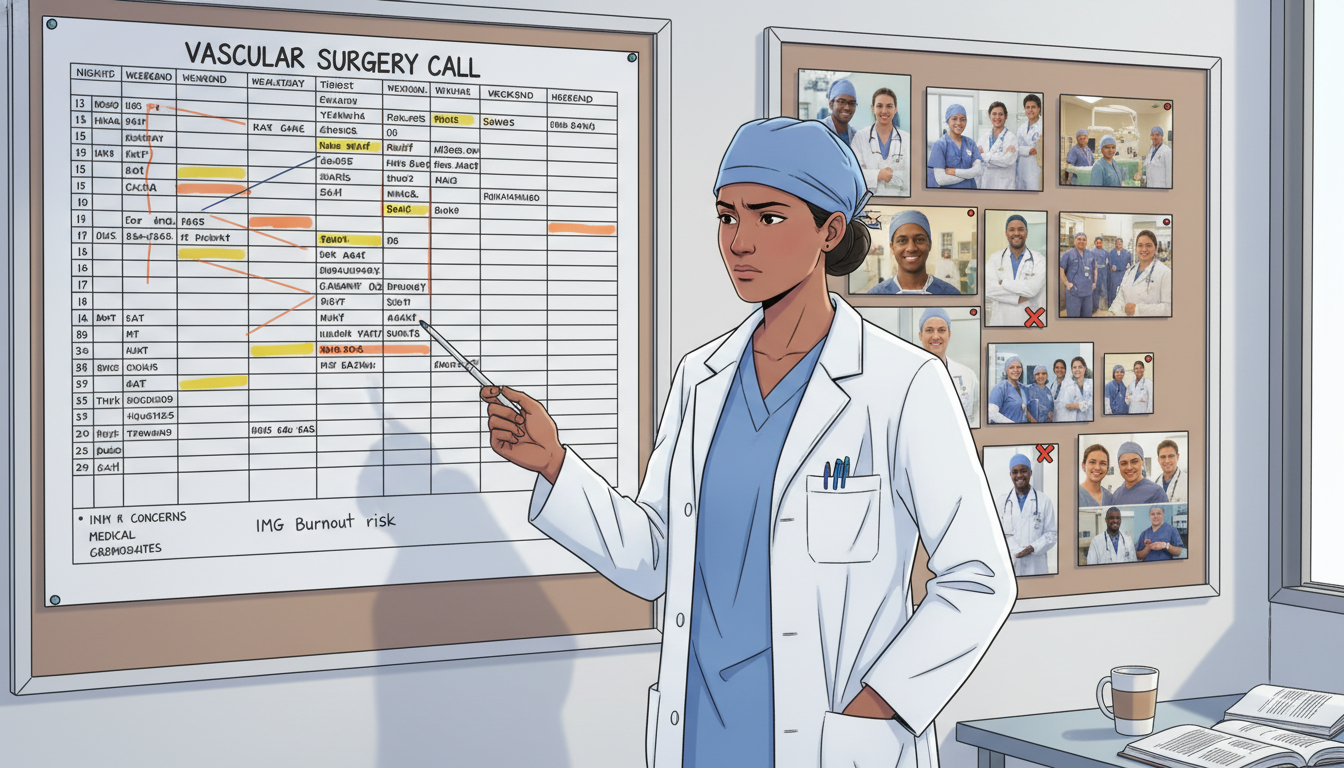
1. Inconsistent Resident Lists on the Website
One of the simplest and most powerful checks:
- Visit the program’s website.
- Look at the current residents section.
- Compare across multiple years (use web archives if possible, like the Wayback Machine).
Red flags:
- Missing PGY levels: e.g., no PGY‑3 or only one resident when there should be two or three.
- “Gaps” in classes: a program that typically takes two residents per year now shows only one for a given year.
- Recently updated photos or names where former residents are suddenly gone without explanation.
- Statements like “We are currently recruiting to fill an unexpected vacancy” repeated multiple times across years.
While some changes are normal (e.g., family relocation, personal reasons), multiple unexplained gaps suggest residents leaving the program, and that pattern deserves attention.
2. Frequent Off-Cycle Positions or Mid-Year Vacancies
Vascular surgery integrated programs are usually filled in the NRMP Match, with residents starting in July. Watch carefully for:
- ERAS or program website advertising off‑cycle PGY‑2 or PGY‑3 spots more than once every few years.
- Social media posts about “unexpected vacancies” or “mid‑year openings” on a recurring basis.
- Program coordinators mentioning they are “rebuilding” multiple times over recent years.
One unexpected vacancy might be benign. Chronic vacancies across consecutive years strongly suggest residents leaving the program or being dismissed.
3. Residents Avoiding Direct Answers During Interview Day
During interviews, pay attention not just to what is said, but how it’s said. When you ask residents about turnover, note:
- Evasive answers: “Every program has its challenges,” without giving examples or details.
- Inconsistent stories: One resident says a colleague left for family reasons; another says it was performance-related.
- Visible discomfort: Eye contact avoiding, nervous laughter, or quickly changing the subject.
- Overly rehearsed responses: Statements that sound scripted, like “We don’t like to dwell on the past; we focus on moving forward.”
If residents cannot clearly explain what happened when multiple residents left, that may suggest tension, fear of speaking up, or program pressure not to discuss problems.
4. High Attrition in Small Cohorts
In vascular surgery, even one or two residents leaving can dramatically alter the training environment because classes are small. You should become especially cautious if you see:
- More than one resident leaving from the same class.
- Two or more residents from different PGY levels leaving within three to four years.
- Repeated mentions of “prior residents who didn’t make it” or “we’ve had a lot of changes recently.”
When multiple people independently decide to leave a small, competitive specialty like vascular surgery, the burden of proof shifts. You should assume there may be serious program problems until you see credible reassurance.
5. Pattern of Residents Going into Different Specialties
Sometimes you will hear that residents “switched to general surgery,” “moved into interventional radiology,” or even left training entirely. A single career change may reflect true preference. But patterns can indicate that:
- Residents are unhappy with case volume, autonomy, or culture.
- The program selects residents poorly, then doesn’t support them well.
- Stress, burnout, or poor mentorship are pushing residents out of vascular surgery altogether.
From an IMG perspective, career switching is far harder due to visa and credential constraints. You want a program where most people who start vascular surgery complete vascular surgery.
Digging Deeper: How to Investigate Turnover Before You Rank
Recognizing a resident turnover red flag is only the first step. You then need to carefully investigate the context, reliability of explanations, and whether you personally would still feel safe joining that environment as an international medical graduate.
1. Ask Direct, Specific Questions
During interviews, pre‑interview dinners, or virtual socials, ask questions that are clear and focused:
- “In the last 5–7 years, how many vascular surgery residents have left the program before graduating?”
- “Can you share the reasons why residents have left—were they primarily personal, academic, or related to the program?”
- “How does the program respond if a resident is struggling or thinking about leaving?”
- “Has any IMG in your program left early, been dismissed, or had major difficulties? How was that handled?”
Note both the content and tone of the response. Programs that are stable and transparent typically answer confidently and with specific examples. Programs with unresolved issues often give vague or defensive replies.
2. Compare Faculty and Resident Narratives
Talk to multiple groups:
- Program director and associate program director
- Current residents (preferably at different levels)
- Fellows (if present)
- Program coordinator
You might hear:
- Faculty: “We’ve only had one resident leave due to personal reasons; it was unfortunate but not related to the program.”
- Senior resident: “We had three people leave in the last few years. Two said it was family issues, but they were also really overwhelmed with workload.”
When the stories don’t align, treat that inconsistency as its own warning sign.
3. Use Alumni and Off-the-Record Contacts
Find former residents using:
- Institutional alumni pages
- LinkedIn and Doximity
- Personal networks, mentors, or attendings who may know them
- Social media (Twitter/X, Instagram, specialty forums)
Politely reach out:
“I’m an IMG applicant considering the vascular surgery residency at [Program]. I noticed some class changes on their website and would really appreciate your honest perspective on the training environment and resident support there. Anything you can share, even briefly, would mean a lot.”
Former residents who left or transferred often provide the most candid insight into program problems, including toxic culture, poor support, or chronic under‑staffing.
4. Look Beyond Turnover: Associated Red Flags
High resident turnover rarely exists in isolation. When residents are leaving a program, you often also see:
Excessive workload or unsafe call structure
- Residents regularly staying post‑call beyond duty hours
- No genuine post‑call relief
- Chronic violation of ACGME work‑hour rules
Poor operative experience
- Low vascular case volume relative to expectations
- Seniors struggling to meet case minimums
- Fellows taking most complex cases, limiting resident autonomy
Toxic culture
- Yelling, humiliation, or unprofessional behavior normalized
- Disproportionate criticism of IMGs or accents
- Blame culture instead of systems‑based improvement
Lack of support for struggling residents
- Residents “disappearing” after poor performance or exam failures
- No structured remediation; instead, quiet dismissal or pressure to resign
- Fear of seeking help for mental health or burnout
For an international medical graduate, these conditions can be particularly dangerous. Without strong support, cultural and language differences may be misinterpreted as incompetence, making you more vulnerable to being labeled a “problem resident.”
Special Considerations for IMGs in Programs With Past Turnover
Not all programs with previous residents leaving are inherently bad. Sometimes a program goes through leadership changes or addresses past issues successfully. The key for an IMG applicant is determining whether:
- The problems that caused residents leaving the program are honestly acknowledged.
- There is clear evidence that changes have been implemented and are working.
- The environment is safe and supportive specifically for international medical graduates.
1. Evaluate Leadership Transparency
A strong sign is when leadership proactively addresses the issue:
- “We did have several residents leave around [years]. We recognized problems with workload and supervision, and we’ve changed our call schedule, hired additional faculty, and implemented early mentoring.”
- “We previously struggled with supporting residents who were struggling. Now we have a formal remediation process, and a recent struggling resident successfully graduated.”
Contrast this with:
- “Those residents just weren’t a good fit; we prefer not to discuss it.”
- “It was personal for them.”
- “Every program has some turnover.”
Programs that cannot describe specific, structural changes may not have truly learned from past failures.
2. Check for Objective Improvement
Ask for evidence or look for signs that changes are real:
- Additional vascular faculty or advanced practice providers hired.
- Improved case numbers or more balanced distribution across resident levels.
- Changes in call schedules or duty hour monitoring.
- Stable, fully filled classes in the most recent 3–4 years.
- Good board pass rates and low rates of non‑renewal.
If the program describes improvements but still has recurring residents leaving the program, be very cautious.
3. IMG-Specific Safety Questions
As an international medical graduate, you must protect yourself from visa and career instability. Ask:
- “How many IMGs have trained here in vascular surgery? Have any had major issues completing the program?”
- “What is your process if a resident on a visa is struggling academically or clinically?”
- “Have you ever had to terminate or not renew a resident who was on a J‑1 or H‑1B visa? How was immigration status handled?”
- “Are there faculty members who specifically mentor IMG residents?”
Safe programs can:
- Describe a clear, humane process.
- Demonstrate familiarity with visa considerations.
- Point to successful IMG alumni.
Risky programs may:
- Have never trained an IMG in vascular surgery.
- Be vague about how they would handle visa‑related issues.
- Emphasize “we hold everyone to the same standard” without acknowledging the additional logistical vulnerability of IMGs.

How to Balance Risk and Opportunity When Ranking Programs
You might find that some of your top-choice vascular surgery programs have had residents leaving in past years. That doesn’t automatically mean you should avoid them, but it does mean you must rank strategically.
1. Categorize Programs by Turnover Risk
After interviews and research, place programs into broad categories:
Low concern:
- Little or no recent resident turnover
- Clear, stable classes
- Consistent, confident answers from residents and faculty
- Good track record with IMGs (if applicable)
Moderate concern:
- One or two past residents left, with plausible explanations
- Leadership acknowledges and explains what changed
- Current residents generally satisfied and feel supported
- Some uncertainty but no clear pattern of residents leaving the program
High concern:
- Multiple residents leaving across several years
- Inconsistent or evasive explanations
- Evidence of ongoing program problems (toxic culture, poor support, workload)
- No clear plan for IMG support or prior negative stories involving IMGs
Use this framework to weigh risk versus the perceived benefits (location, prestige, operative volume, etc.).
2. Consider Your Personal Risk Tolerance
Some IMGs:
- Have strong backup options in their home country.
- Are early in their careers and prepared to pivot.
- Have personal or financial safety nets.
Others:
- Have limited options to restart training if the program collapses.
- Support family members financially.
- Would face significant hardship returning home without U.S. credentials.
Your level of acceptable risk should directly influence how high you rank a program with known resident turnover red flags.
3. Prioritize Stability Over Prestige
For an IMG in a long, demanding specialty like vascular surgery, a stable, supportive training environment often matters more than “famous name recognition.” A less prestigious integrated vascular program where graduates consistently complete training and obtain jobs may be safer than a high‑profile center with a history of residents leaving the program early.
Ask yourself:
- “Where am I most likely to graduate on time, with strong skills and supportive mentors?”
- “Where have residents like me (including IMGs) been successful?”
- “Which programs make me feel like a valued trainee rather than a risk?”
4. Use Your Rank List as a Safety Net
When building your rank list:
- Place safe, stable programs above those with unexplained, recurring turnover, unless there are extremely compelling reasons.
- Avoid ranking any program purely because it is in a popular city or famous hospital if you have serious concerns about resident safety or retention.
- If you remain uncertain, discuss your impressions with trusted mentors—especially those familiar with U.S. training and vascular surgery.
Frequently Asked Questions (FAQ)
1. Is one resident leaving a vascular surgery residency always a red flag?
No. One resident leaving over many years can happen for neutral or personal reasons (family relocation, partner match change, health issues). The concern grows when you see patterns—multiple residents leaving, especially within a short time frame, or “missing” residents across several PGY levels. Always ask for context and see if the explanation is consistent and credible.
2. How can I safely ask about residents leaving the program during interviews without offending anyone?
Phrase your questions neutrally and from a learning perspective:
- “Could you share how often residents leave or transfer from your program and how you’ve supported them?”
- “Have there been changes made after any residents left, and what did the program learn from those experiences?”
This frames your interest as wanting to understand the program’s culture and support systems, not as an accusation.
3. As an IMG, should I avoid any vascular surgery program that has ever had turnover?
Not necessarily. Focus on how the program handled those situations and what has changed since. If leaders are transparent, improvements are concrete, and current residents feel well supported—including IMGs—then prior turnover may not be a deal‑breaker. Your goal is to avoid programs with ongoing, unexplained, or poorly managed turnover patterns that put your visa and career at risk.
4. What if residents I talk to seem scared to speak honestly about turnover?
Fear itself is a significant warning sign. If multiple residents appear uncomfortable, evasive, or give clearly rehearsed answers when you ask about residents leaving the program, interpret that as a potential indicator of a culture where speaking up is unsafe. In such settings, if you later encounter problems as an international medical graduate, you may have limited avenues for support. Consider ranking such programs cautiously—or not at all—if you have safer alternatives.
By learning to recognize and thoughtfully analyze resident turnover warning signs, you place yourself in a far stronger position as an international medical graduate applying to vascular surgery. A stable, transparent, and supportive training environment is not a luxury; it is essential protection for your visa, your surgical career, and your long‑term future in the specialty.