
Understanding Resident Turnover: Why It Matters So Much for IMGs in IR
As an international medical graduate (IMG) pursuing interventional radiology (IR), you’re already navigating a high‑risk, high‑reward path. On top of visas, credentialing, and adapting to a new system, you must make one of the most important choices of your career: where to train.
One of the strongest signals about a program’s health is resident turnover—who leaves, how often, and why.
In IR, where training is long, intense, and dependent on mentorship and procedural volume, high resident turnover is rarely a coincidence. When multiple residents leave a program, it often reflects deeper program problems: toxic culture, poor leadership, lack of support, or unstable workloads. For an IMG, these issues carry extra risk: visa concerns, fewer backup options, and limited local support.
This IMG residency guide will walk you through resident turnover warning signs specific to interventional radiology, how to interpret them, and how to protect yourself during the IR match.
1. What Resident Turnover Really Means in Interventional Radiology
Turnover vs. Normal Transitions
Not every resident who leaves a program indicates trouble. Some reasons are benign, even positive:
- A resident switches from IR to diagnostic radiology because they discovered they prefer DR.
- A trainee transfers due to family relocation (spouse match, caregiving needs).
- A resident extends training for research or a combined track, not due to distress.
However, certain patterns of residents leaving the program or frequent IR resident turnover should raise questions:
- Multiple residents leaving within a few years
- Residents leaving mid-year or abruptly
- Several residents switching out of IR into completely different fields
- Vacant IR training positions that are “quietly” filled or left unfilled
In a competitive, highly sought-after specialty like interventional radiology, high turnover is not normal. Most residents fight hard to stay unless there’s a serious problem.
Why Turnover Is Especially Dangerous for IMGs
For an international medical graduate, the stakes are even higher:
- Visa dependency: Losing a training spot may mean losing visa status.
- Limited transfer options: Some programs are hesitant to accept transfers, especially mid-year.
- Financial and relocation costs: Moving countries or cities again may be impossible.
- Reputation and references: Leaving a program can complicate future applications if not well-managed.
Because of this, IMGs must be especially attentive to resident turnover red flags during the IR match process.
2. Direct Turnover Red Flags: What You Should Actively Look For
Some signs are obvious once you know to ask about them. These are red flags you can (and should) try to verify during interviews, social events, or by researching online.

2.1 Multiple Residents Leaving in a Short Timeframe
Warning pattern:
- Two or more IR residents have left the program in the past 3–4 years.
- The program avoids discussing it, or offers vague explanations.
Why it matters in IR:
IR training spots are limited and competitive. When several residents have left or transferred out, it suggests serious program problems—curriculum deficiencies, leadership conflict, unsafe workload, or deeply negative culture.
Questions to ask (tactfully):
- “In the past few years, have any residents transferred out of IR or changed specialties?”
- “What tends to happen when a resident is struggling—how does the program support them?”
- “Have there been any changes in program leadership or structure related to resident feedback?”
You’re not just interested in whether residents left—you want to know how the program handled it and whether they are open and transparent about it.
2.2 Chronic Vacancies or Sudden Expansion
Warning pattern:
- The program has open IR positions that were not filled in past years.
- They’ve recently added several new IR positions but do not clearly explain how they will handle case volume, call coverage, and training quality.
- You see “unexpected vacancy” posts online or in professional forums.
Why it matters:
In IR, case volume and hands-on experience are everything. If the program is chronically understaffed or suddenly over-expanded, residents may:
- Get overworked to cover service gaps.
- Receive poor supervision due to overstretched attendings.
- Face internal conflicts over case allocation (who scrubs which procedure).
What to ask:
- “Have all IR positions been consistently filled during the last few cycles?”
- “You’ve expanded your IR resident complement—how has the case volume and attending coverage changed to support this?”
- “If a position is vacated, how does that affect call and workload for remaining residents?”
If answers are defensive, vague, or dismissive (e.g., “We just make it work”), consider that a resident turnover red flag.
2.3 Residents Switching Away from IR Completely
It’s one thing if a resident steps back from IR into diagnostic radiology (DR) for lifestyle or interest reasons. It’s another if multiple residents leave IR entirely—e.g., switching to internal medicine, anesthesiology, or non-clinical paths in the middle of training.
Why this is serious:
- IR is usually a destination specialty; people rarely “fall into it.”
- When residents abandon IR after starting, it often indicates:
- Poor mentoring or guidance before heavy call or complex cases
- Burnout from unrealistic workload
- Perceived lack of safety or supervision during procedures
- Toxic or humiliating teaching culture
If you hear about several residents leaving the program and the specialty, treat it as a major IR match warning sign.
Sample questions:
- “Have residents ever decided that IR wasn’t the right fit and moved to another pathway? How did the program handle that?”
- “What does the program do to ensure residents are supported during the demanding IR call years?”
You’re listening for whether the story sounds like individual misfit or systemic dysfunction.
3. Indirect Warning Signs: Clues Hidden in Culture and Behavior
Not every program will openly say, “We’ve had residents leave.” More often, you’ll pick up on subtle patterns in what people say—or don’t say.
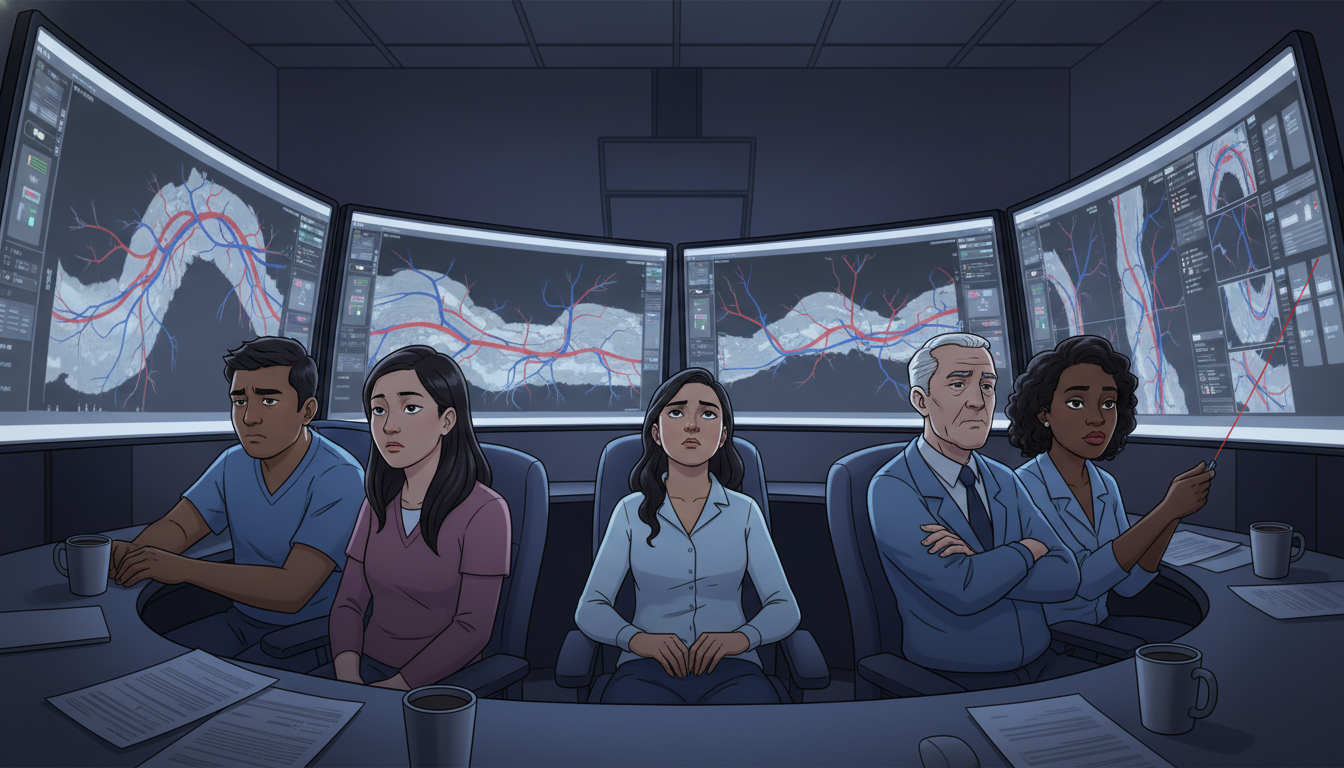
3.1 Residents Avoiding Direct Answers
When you ask residents about duty hours, call, or past turnover, watch their body language and tone as much as their words.
Concerning behaviors:
- Residents glance at each other before answering, as if checking what’s “safe” to say.
- They give general, non-specific responses:
- “Yeah, it’s busy, but it’s fine.”
- “Call’s manageable… you get used to it.”
- When you ask about residents who left, they quickly change the subject or say, “It’s complicated,” but never explain.
This pattern often indicates fear of retaliation, poor psychological safety, or pressure from leadership to “present a unified front”—all potential program problems.
3.2 Discrepancies Between Faculty and Resident Narratives
Compare what program leadership tells you with what current residents say privately.
Warning patterns:
- Program director: “We have a very supportive environment; no one ever leaves.”
- Residents (separately): “We had a resident transfer a few years ago, but we’re not supposed to talk about it.”
or
- Faculty describe a reasonable workload and strong wellness initiatives.
- Residents describe frequent unreported work-hour violations, unsafe post-call expectations, or constant last-minute schedule changes.
When the official story and lived experience do not match, believe the residents—especially the junior ones.
3.3 Overly Defensive or Blaming Explanations
If you ask about residents leaving and leadership responds with:
- “They just couldn’t handle the workload; IR isn’t for everyone.”
- “We have very high standards—some people aren’t cut out for this.”
- “We had a problem resident; they were lazy or problematic.”
These are red flags that the program:
- Lacks insight into its own role in resident struggles
- Uses shaming or blaming rather than support
- May be quick to push residents out rather than invest in remediation or wellness
For an IMG, who may need extra transition support, such a culture can be dangerous.
4. Structural Risk Factors: When Turnover Is a Symptom of Deeper Problems
Some resident turnover is the visible tip of a larger iceberg. Certain structural features of an IR program make turnover more likely—even if you don’t yet see it on the surface.
4.1 Instability in Program Leadership
Frequent changes in IR program director, section chief, or key faculty over a short span can dramatically affect training quality.
Why it matters:
- Shifting expectations and policies create confusion and stress.
- New leaders may have different teaching priorities or tolerance for workload.
- Political conflict within the department often spills onto residents.
Questions to ask:
- “How long has the current program director been in their role?”
- “Have there been any recent major changes in IR leadership or structure?”
- “How are resident feedback and concerns incorporated into program decisions?”
Rapid or repeated leadership turnover, combined with any resident loss, is a strong resident turnover red flag.
4.2 Disorganized Curriculum or Call Structure
Programs where residents are constantly “filling in gaps” instead of following a structured curriculum are at higher risk of burnout and subsequent turnover.
Red flags include:
- IR residents regularly doing service coverage that is not educational (e.g., unrelated off-service scut work).
- No clear plan for progressive responsibility in procedures.
- Call schedules that change week-to-week without notice.
- Residents often coming in on days off to “catch up” on cases.
In IR, where cases can run late and emergencies are common, some unpredictability is normal—but chaos is not.
4.3 Lack of Formal Support for Struggling Residents
Every training program will have residents who struggle at some point—academically, technically, or personally. Healthy programs:
- Have clear remediation pathways.
- Offer mentoring, wellness support, and sometimes schedule adjustments.
- Treat struggles as shared challenges, not personal failures.
Unhealthy programs:
- Rely on fear and shame to “motivate” residents.
- Document heavily for dismissal rather than improvement.
- Have a history of residents leaving under stress or threat of non-renewal.
For IMGs, who may face added stressors (cultural adaptation, language nuances, family overseas), lack of structured support is a serious risk factor for residents leaving the program.
5. IMG-Specific Strategies: Protecting Yourself Before and After You Match
As an international medical graduate targeting interventional radiology, you need a deliberate strategy to evaluate programs and protect yourself from unstable training environments.
5.1 Using the IR Match Process to Your Advantage
During interviews and pre-interview socials, focus on questions that reveal turnover history and culture without sounding confrontational.
Targeted questions you can safely ask:
About workload and sustainability
- “How does the program prevent resident burnout, especially around heavy IR call?”
- “What happens if someone feels overwhelmed or needs help with workload?”
About transparency and communication
- “How are problems in the program communicated to residents, and how can residents safely give feedback?”
- “Can you share an example of a recent change that came directly from resident feedback?”
About historical turnover (indirectly)
- “Have there been major changes in the program structure or leadership in the last few years, and how did that affect residents?”
- “How long have most residents stayed in the program, and what have graduates gone on to do?”
You’re not demanding a list of everyone who ever left. You’re assessing openness, attitude, and consistency of answers.
5.2 Doing Background Research Before Ranking
Beyond official websites and interview days, use external sources:
- FREIDA and NRMP data: Look at program size, fill rates, and any reported changes over time.
- Professional forums and social media: While not always reliable, consistent themes (e.g., “heavy service load,” “lots of people leaving”) deserve attention.
- Alumni LinkedIn profiles: See how many IR graduates there actually are and where they ended up. Long gaps or very few graduates relative to the number of positions may signal a program problem.
For an IMG residency guide approach, make a spreadsheet where you track for each IR program:
- Leadership stability
- Case volume and call expectations
- Any known resident turnover events
- Visa sponsorship clarity (H-1B vs J-1 and history of supporting each)
5.3 Asking IMG-Specific Questions
You must also gauge how the program historically treats IMGs and visa holders, as this interacts with turnover risk.
Key questions:
- “How many current or recent IR residents are international medical graduates?”
- “How experienced is your GME office with J‑1 or H‑1B sponsorship?”
- “If a resident faces visa delays or issues, how does the program typically handle that?”
Programs with no IMGs in IR are not automatically bad, but they may be less prepared to support your specific needs. If there is a history of residents leaving the program due to visa or administrative issues, that is an important red flag to recognize early.
5.4 What to Do If You Discover Turnover Issues After Matching
Sometimes, despite careful research, you only recognize resident turnover warning signs after you have already matched.
Actions you can take:
Document Objectively:
- Keep a written record of duty hours, unsafe situations, and key communications.
- Save emails related to schedule changes, evaluations, or concerns.
Use Internal Resources First:
- Speak with your program director and/or associate program director.
- Involve the Designated Institutional Official (DIO) or GME office if needed.
- Ask about mentorship, wellness support, or formal remediation if you’re struggling.
Understand Policies Before Considering Transfer:
- Learn your institution’s policy on non-renewal, remediation, and grievances.
- If you are on a visa, understand the implications of transfer or dismissal on your immigration status.
- Seek advice from trusted faculty or, if needed, an immigration attorney with GME experience.
Protect Your Long-Term Reputation:
- Be professional and factual in all communications, even under stress.
- Avoid venting about the program publicly or on social media; it rarely helps and can hurt you.
You deserve a safe, educational environment. If your IR program clearly has repeated resident turnover red flags, your priority is to stabilize your status and seek a path—within or outside that program—that preserves your training and visa security.
6. Balancing Risk and Opportunity: When a Red Flag Might Be Survivable
Not every concern should eliminate a program from your rank list. The key is understanding degree and pattern.
6.1 When a Program with a Past Problem Might Still Be a Good Choice
Sometimes a program:
- Had a difficult period with leadership conflict and a resident leaving.
- Responded with major structural changes, increased supervision, and genuine culture improvement.
- Is transparent about what happened and what they’ve done differently since.
In such cases, honest acknowledgment + concrete corrective steps can be a positive sign. A program that has learned from failure may be safer than one that pretends it has never had issues.
Signs of healthy recovery:
- Residents freely discuss past issues and speak positively about current conditions.
- Leadership openly mentions changes made in response to resident feedback.
- No ongoing pattern of residents leaving after the changes.
6.2 When IMGs Should Be Extra Conservative
As an IMG, you generally cannot afford the same level of trial and error as some U.S. grads. You may want to be especially cautious if you see any combination of:
- Multiple residents leaving the program in the last few years
- Inconsistent or defensive explanations about those departures
- Chaotic schedule, high unacknowledged workload, or poor supervision
- History of visa complications or weak institutional support for IMGs
- Leadership instability plus negative feedback from current residents
In that context, even if the program offers excellent case volume or a prestigious name, remember: you can’t benefit from prestige you don’t survive to complete.
Choose places where:
- Residents stay and graduate on time.
- Current trainees speak with guarded optimism, not resignation or fear.
- The culture respects trainees as learners, not just workforce.
These are the environments where an international medical graduate in interventional radiology can truly thrive.
Frequently Asked Questions (FAQ)
1. Is any resident turnover automatically a red flag?
No. One resident leaving over many years, especially for clear personal reasons (family move, spouse match, change of specialty interest), is not automatically concerning. What you should worry about are patterns:
- Multiple residents leaving in a short period
- Abrupt mid-year departures
- Vague, defensive, or blaming explanations from leadership
Always look at context and consistency of the program’s story.
2. As an IMG, should I avoid programs that have never trained international graduates?
Not necessarily, but you should proceed carefully. A program that has never trained an IMG might still be supportive, but you must verify:
- Whether the institution reliably sponsors your needed visa type
- The GME office’s familiarity with immigration timelines and requirements
- The openness of leadership to adapting communication or support to your needs
If this is combined with other resident turnover red flags, you may want to prioritize programs with a demonstrated IMG track record.
3. How can I ask about resident turnover without sounding confrontational?
Focus on support and structure rather than accusations. For example:
- “How has the program evolved over the past few years based on resident feedback?”
- “Can you describe how the program handles situations when a trainee is struggling or considering a change?”
- “What changes have you made to improve wellness or sustainability of the IR call schedule?”
These questions invite storytelling and transparency, which can reveal turnover history whether or not it’s explicitly named.
4. What if a highly prestigious IR program has some red flags—should I still rank it?
Prestige, name recognition, and research opportunities are important, but they cannot compensate for a truly unsafe or unstable environment. If red flags are mild, clearly historical, and paired with convincing evidence of improvement, you might still rank the program reasonably high.
If the red flags are current, serious, and unacknowledged—especially with residents leaving the program in recent years—consider ranking more stable, resident-centered programs above it, even if they are less famous. For an international medical graduate, program stability and culture often matter more than brand name for long-term success.
By applying these principles, you’ll be better equipped to interpret resident turnover warning signs in interventional radiology programs, recognize true program problems, and choose a training environment where you can build the career you’ve worked so hard to pursue.