Why Identifying Malignant OB GYN Programs Matters for US Citizen IMGs
For a US citizen IMG or American studying abroad, matching into OB GYN is already an uphill battle—competitive scores, fewer interview offers, and the constant need to prove you belong. The last thing you need after all that effort is to land in a malignant residency program that undermines your training, health, and career prospects.
In obstetrics & gynecology, malignant programs are more than just “tough” or “high volume.” They show patterns of:
- Exploitation (excessive hours, unpaid work, unsafe expectations)
- Disrespect (bullying, humiliation, bias)
- Dishonesty (misleading about case volume, fellowship outcomes, or duty hours)
- Neglect of education and well-being
For a US citizen IMG, these issues can be amplified by vulnerability: visa timelines for some classmates, fewer local support systems, and a pervasive fear of “rocking the boat.” Learning to recognize residency red flags early—before ranking programs—is critical.
This guide focuses specifically on OB GYN residency and the experience of a US citizen IMG or American studying abroad. You’ll learn how to:
- Distinguish tough-but-supportive programs from truly toxic ones
- Spot malignant behavior during virtual and in-person interviews
- Decode resident body language, program cultures, and online data
- Ask strategic questions that reveal how a program really operates
- Protect yourself when you have few interview offers and feel you “can’t be picky”
What “Malignant” Really Means in OB GYN Training
Tough vs Malignant: Understanding the Difference
OB GYN is inherently demanding: nights, emergencies, OR marathons, and emotionally charged cases. A non-malignant but rigorous program still:
- Follows duty hour rules (with occasional exceptions that are addressed and corrected)
- Treats residents with respect
- Supports learning and growth
- Responds to feedback and concerns
A malignant residency program, by contrast, has structural and cultural toxicity that persists over time.
Core features of a malignant OB GYN program:
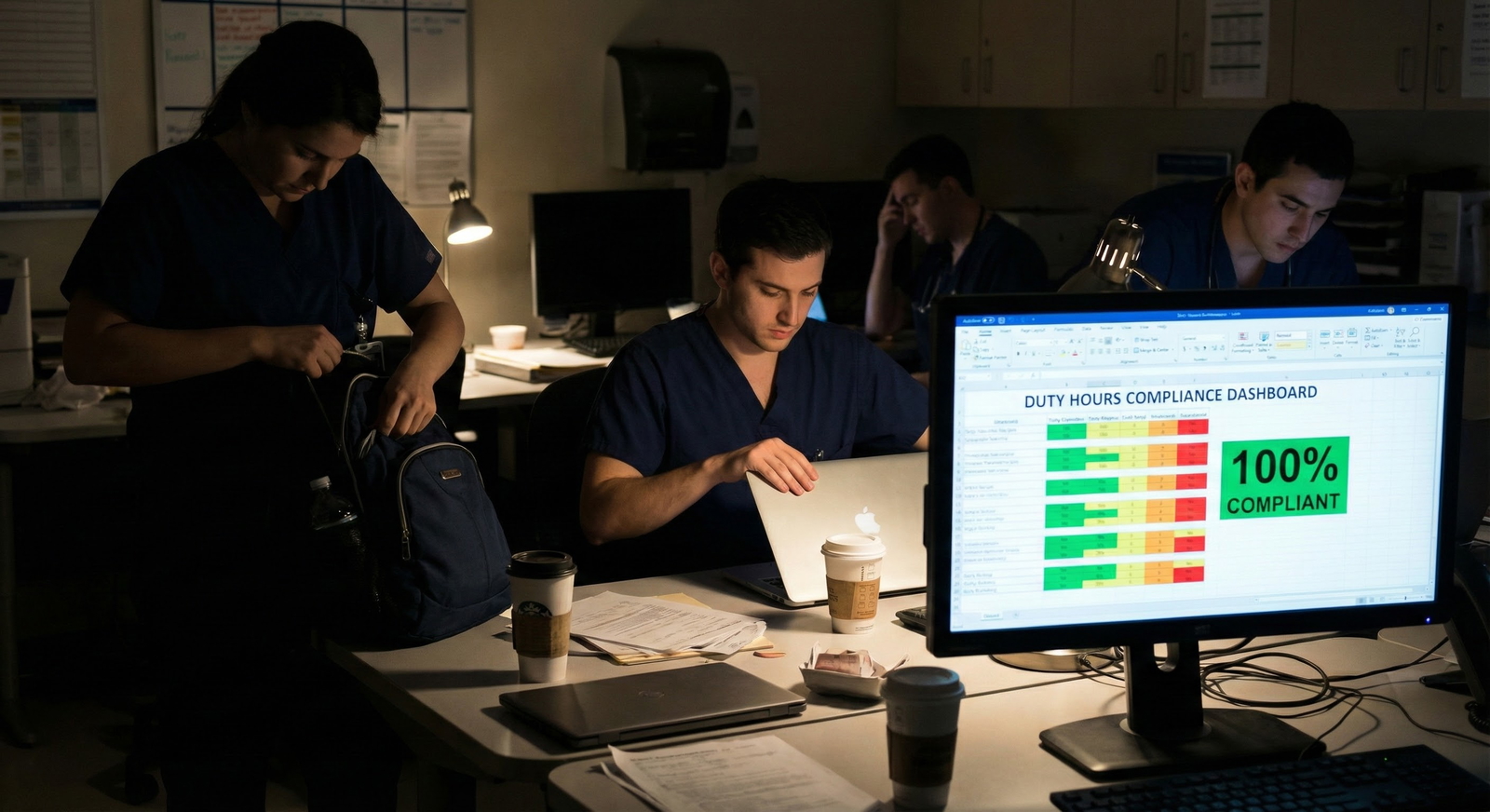
Chronic duty hour violations that are normalized
- Interns regularly working 90–100 hours/week
- Pressure not to log hours accurately
- Leadership dismisses exhaustion as “part of the culture”
Bullying and humiliation as “teaching” tools
- Attendings or senior residents yelling or belittling in the OR or on L&D
- Public shaming when residents don’t know an answer
- Residents described as “weak” or “not cut out for OB” instead of being coached
Poor educational structure
- Didactics constantly canceled for service coverage
- Little protected teaching time
- Minimal feedback or mentorship; you’re expected to “figure it out”
Lack of psychological safety
- Residents afraid to ask questions, call for help, or admit mistakes
- Retaliation (or fear of retaliation) for speaking up about safety, workload, or mistreatment
Ethically concerning practices
- Unsafe supervision levels (e.g., junior residents doing complex surgeries alone)
- Pressuring residents to misrepresent documentation or outcomes
- Cutting corners in patient care “to get things done”
For a US citizen IMG in OB GYN, an otherwise decent program can become effectively malignant if:
- IMGs are systematically given worse schedules or fewer surgical opportunities
- They are excluded from leadership roles, research, or fellowship opportunities
- Their concerns are dismissed or attributed to “cultural differences”
Key Residency Red Flags: Before, During, and After Interviews
1. Pre-Interview Screening: Red Flags in Public Data
Long before interview day, malignant or toxic program signs often show up in publicly available information.
A. ACGME and ABMS Data
- Continual ACGME citations or probation
- One citation is not necessarily a disaster; patterns are.
- Frequent mentions of duty hour or supervision violations are concerning.
- Low board pass rates
- For OB GYN, consistently low written or oral board pass rates can indicate poor teaching, poor selection, or both.
B. Resident Turnover and Attrition
Look for:
- Multiple residents listed as “past residents” with incomplete training
- Several PGY-2 or PGY-3 spots unfilled or filled off-cycle
- Alumni pages that show unexplained gaps
High attrition is one of the strongest residency red flags for a malignant environment.
C. Reputation in Forums and Word-of-Mouth
For a US citizen IMG, online spaces like Reddit, SDN, and specialty-specific Discord servers can be crucial. Patterns to watch for:
- Multiple anonymous posts describing bullying, unsafe autonomy, or chronic hour violations
- Repeated mentions of “toxic culture,” “no support,” or “burnout factory”
- Comments specifically noting IMGs being treated worse or excluded
One or two negative comments may not mean much—but consistent, detailed stories over time are hard to ignore.
2. Interview Day: What Malignant Culture Looks and Feels Like
Interview day—virtual or in-person—is your best chance to “take the temperature” of the program.
A. Faculty Behavior
Red flags in how faculty speak and act:
- Openly bragging about how “brutal” their program is
- Joking about residents crying or quitting as a badge of honor
- Dismissing ACGME duty hour rules as “for weaker programs”
- Interrupting or talking over residents in front of you
- Making disparaging comments about IMGs, DOs, or other schools
For a US citizen IMG, pay attention to subtle signals:
- Questions emphasizing “We pride ourselves on US MD-level rigor—can you keep up?”
- Minimizing your experiences abroad or suggesting they’re less valid
- Vague or evasive when you ask about IMG support or success stories
B. Resident Demeanor and Body Language
Residents are your best window into real culture.
Warning signs from residents:
- They look visibly exhausted or demoralized
- Dark circles, flat affect, low energy, and no effort to “sell” the program
- They speak in guarded or scripted ways
- Repeating the same generic phrases
- Glancing at faculty before answering
- You sense fear or resignation more than pride
- “It’s hard, but you just get through it”
- “We’re a family… a very tough-love family” said with a forced laugh
Listen for consistent mentions of:
- “We don’t really log hours accurately”
- “You’ll definitely grow a thick skin here”
- “Intern year is survival—PGY2 is when you start to learn”
C. Structure of the Day
Look at how the day is designed:
- No time alone with residents (faculty always present)
- No Q&A where residents can speak freely
- No mention of wellness, mental health resources, or support systems
- Little or no discussion of educational structure (just “service” talk)
Programs that are proud of their culture will go out of their way to showcase resident satisfaction and safety.
3. The Resident Q&A: Questions That Reveal Toxic Program Signs
Ask targeted questions to distinguish a demanding but healthy program from a malignant one. Especially as a US citizen IMG, you want to know:
A. Duty Hours and Workload
- “In a typical week on L&D or nights, how many hours are you actually in the hospital?”
- “How often do you approach or exceed 80 hours? What happens when that occurs?”
- “Do you feel any pressure not to log violations?”
Concerning answers:
- “Everyone works more than 80 hours; we just don’t log it.”
- “The chief asks us to delete logged violations.”
- “We’re expected to stay until everything is done, no matter when.”
B. Supervision and Safety
- “When you’re on call, how available are your attendings for help?”
- “Have you ever felt unsafe or that you had too much responsibility without backup?”
Red flags:
- Residents doing major surgeries without an attending available
- Interns managing complex L&D situations with little guidance
- Statements like “You learn by trial by fire—no one holds your hand here”
C. Culture, Mistreatment, and Feedback
- “If someone is yelling, belittling, or humiliating a resident, how is that handled?”
- “Have residents ever brought concerns to leadership? What happened afterward?”
- “What’s one thing about this program that you wish you could change?”
Toxic answers:
- “We just learn to deal with attendings who yell.”
- “If you complain, your life will be harder.”
- “We’ve raised issues, but nothing really changes.”
D. Questions Specific to US Citizen IMGs
As an American studying abroad, ask directly:
- “How many IMGs are currently in the program?”
- “How have IMGs historically done with boards and fellowship placement?”
- “Do IMGs have equal access to OR cases, research, and leadership roles?”
- “Have any US citizen IMGs joined recently? What has their experience been like?”
Concerning patterns:
- IMGs clustered in the most difficult rotations or services
- No clear examples of IMGs in chief positions or matching into fellowships
- Vague or dismissive answers like “We don’t really distinguish between IMGs and AMGs” without concrete evidence of inclusion
Specialty-Specific Red Flags in OB GYN
OB GYN has its own flavor of malignant behavior because of the nature of the work: high-risk, overnight emergencies, and complex OR cases. Watch for these specialty-specific warning signs.
1. Exploitative Labor on L&D and Gyn Onc
- Residents consistently doing multiple 28+ hour calls per week
- Unrelenting L&D coverage with minimal rest or backup
- Residents covering too many services at once (e.g., L&D, ED consults, and postpartum simultaneously)
Ask: “How often are you truly overwhelmed on call with no realistic backup, and what happens then?”
2. Surgical Case Hoarding by Fellows or Attendings
A malignant OB GYN program may:
- Allow fellows to take nearly all the complex cases, leaving residents with skin closure and very junior tasks
- Have “favorites” who get all the good OR exposure
- Provide little structured progression of surgical responsibility
Ask for specifics:
- “By the end of PGY-2, what cases are you typically primary on?”
- “How are cases distributed if there are fellows present?”
3. Disrespect for Reproductive Health and Patient-Centered Care
Even if your own views vary, watch for:
- Attendings or residents making disparaging comments about patients, especially those with unplanned pregnancies, substance use, or limited resources
- Dismissive attitudes toward patient autonomy and informed consent
- Ethical discomfort reported by residents that leadership ignores
A program that dehumanizes patients often dehumanizes residents, too.
Special Considerations for US Citizen IMGs and Americans Studying Abroad

1. Power Dynamics and Fear of Being Disposable
US citizen IMGs often feel they have fewer options and must accept any offer. Some malignant programs exploit that:
- Over-recruiting IMGs into service-heavy roles with minimal career development
- Threatening residents implicitly with non-renewal if they speak up
- Using IMGs as “workhorses” rather than trainees
Ask yourself:
- Are there multiple IMGs? How are they doing?
- Does the program leadership highlight IMG successes proudly, or avoid the topic?
2. Visa Issues and Perceived Leverage (Even if You Don’t Need One)
Even if you don’t require a visa as a US citizen IMG, you may be:
- Lumped together with non-citizen IMGs in leadership’s mindset
- Viewed as “less likely to transfer” or complain, due to fewer US connections
- Assumed to be grateful for any spot, so less likely to push back
Be attentive to any hints that IMGs are treated as second-class residents.
3. Letters, Ratings, and Future References
Malignant programs can harm your prospects long-term:
- Weak or lukewarm letters from unsupportive faculty
- Poor reputations affecting fellowship applications
- Gaps or remediation that require explanation in future interviews
US citizen IMGs often depend heavily on strong advocacy to overcome bias. A malignant program is unlikely to fight for you.
Strategies to Protect Yourself When You Have Few Interviews
Very often, US citizen IMGs in OB GYN feel they can’t be picky. So how do you balance risk?
1. Clarify Your “Hard No” Red Flags
Non-negotiable red flags that typically justify ranking a program low or not at all:
- Normalized falsification of duty hours
- Known pattern of bullying and humiliation with no accountability
- ACGME probation or major issues specifically around resident mistreatment or supervision
- Clear evidence of discrimination against IMGs, women, or minorities
If you see multiple of these in one place, the program is likely malignant.
2. Differentiate “Harsh but Honest” from “Malignant and Denying”
Some programs will admit:
- “We work hard. Our L&D is insane. You will be tired. But we protect your education and we fix issues when they arise.”
Contrast that with:
- “Residents these days just complain too much; we all worked 120 hours in our training.”
Look for humility and responsiveness vs dismissal and glorification of suffering.
3. Use Backchannel Information Wisely
- Reach out to recent graduates on LinkedIn or via email (politely and discreetly).
- Ask for candid impressions of workload, culture, and IMG experiences.
- If multiple independent sources express strong concerns, take it seriously.
4. Building a Safer Rank List
Across your list:
- Rank supportive, mid-tier, or smaller programs higher than big-name programs with malignant reputations.
- Value healthy culture, mentorship, and safety over prestige; OB GYN fellowship and job prospects depend heavily on your network and your well-being.
- If there is one program with extreme malignant red flags, consider ranking it last or omitting it entirely, even if you have few interviews. Being unmatched and reapplying may be safer than enduring a chronically toxic environment.
If You End Up in a Malignant Program: Survival and Exit Strategies
Sometimes, despite your best efforts, you may match into a toxic OB GYN residency program.
1. Prioritize Safety and Documentation
- Keep a confidential log of serious incidents (dates, people involved, what happened).
- Save any relevant emails or messages showing patterns of bullying, duty hour pressure, or unethical requests.
- If patient safety is at risk, follow institutional channels (risk management, compliance office).
2. Seek Allies Early
- Identify at least one supportive faculty member or senior resident who can advise you.
- Connect with your medical school’s GME dean or advisor—even as a graduate, they can sometimes advocate or guide you.
- National organizations (ACOG, APGO, AMA) may have mentorship programs or ombuds resources.
3. Consider Transfer if Necessary
Transfers are difficult but not impossible:
- Start by stabilizing your performance and well-being in the current program.
- Quietly inquire with trusted mentors about potential openings at other institutions.
- A clear narrative helps: “The case volume and patient population are outstanding, but there are persistent issues with supervision and mistreatment that haven’t improved despite formal feedback.”
4. Protect Your Well-Being
Malignant environments can cause:
- Burnout
- Depression and anxiety
- Moral injury
Use:
- Institutional mental health services (preferably confidential and outside your department)
- Peer support networks—especially other US citizen IMGs who understand your specific pressures
- Boundaries, rest when possible, and realistic expectations: your goal is to get through safely and preserve your career options.
FAQs: Malignant OB GYN Programs and US Citizen IMGs
1. Is it better to rank a malignant OB GYN program or risk going unmatched as a US citizen IMG?
This depends on how malignant the program is and your personal circumstances. Generally:
- If red flags include chronic abuse, falsified duty hours, and unsafe supervision, strongly consider ranking it very low or not at all.
- If the program is just very demanding but honest, it may still be worth ranking, especially if alternatives are limited.
Discuss your specific situation with a trusted advisor or mentor who knows your application strength.
2. How can I tell if IMGs are actually supported at a program?
Look for concrete evidence:
- IMGs among chief residents or in leadership roles
- Recent IMGs successfully matching into fellowships or strong jobs
- Residents describing how IMGs are integrated and supported
- Program leadership able to name and celebrate specific IMG success stories
Vague statements like “We treat everyone the same” without details are less reassuring.
3. Are community OB GYN programs less malignant than big academic centers?
Not necessarily. Both academic and community programs can be healthy or toxic. However:
- Some smaller or community programs may offer more personal mentorship and less malignant hierarchy.
- Some large academic programs may have robust wellness resources and protections but also complex power dynamics.
Evaluate each program individually, focusing on culture, supervision, fairness, and how residents talk about their daily life.
4. What are the biggest single red flags I should never ignore?
Across many OB GYN programs, the most serious residency red flags are:
- Persistent duty hour violations with pressure not to log them
- Pattern of bullying, humiliation, or discrimination that residents say “never changes”
- Multiple recent resignations or transfers from the same PGY class
- Residents saying they would not choose the program again if they had a choice
If you observe more than one of these, especially as a US citizen IMG, think very carefully about where you place that program on your rank list.
By learning to identify malignant residency program characteristics early, you protect not just your match outcome, but your long-term career and well-being. For a US citizen IMG in OB GYN, strategic awareness, candid questions, and careful interpretation of residency red flags can make the difference between surviving residency and truly thriving in it.