
Residency is challenging everywhere—but not every hard program is harmful. For Caribbean IMGs pursuing otolaryngology (ENT), learning to distinguish between demanding but supportive training and genuinely malignant programs can protect your career, your mental health, and sometimes your license.
This guide focuses on how Caribbean medical school residency applicants in otolaryngology can identify malignant residency programs, especially when they have limited in-person exposure in the U.S. We’ll unpack red flags, how they specifically affect IMGs, and how to gather reliable information before you rank a program.
Understanding “Malignant” in the Context of ENT Residency
In resident culture, a “malignant” residency program is one where the environment is consistently abusive, unsafe, or exploitative. It’s not about being “hard” or “busy”—it’s about being toxic, retaliatory, or chronically unsupportive.
Malignant vs. just “rigorous”
A rigorous but healthy ENT residency program typically has:
- High surgical volume and demanding calls
- Attending surgeons who push you, but also teach and debrief
- Clear expectations with honest feedback
- A culture where mistakes are learning points, not grounds for humiliation
- Graduates who match into good fellowships or land solid jobs
A malignant program, on the other hand, often features:
- Normalized bullying, yelling, or public humiliation
- Weaponized evaluations and fear of retaliation
- Systemic duty hour violations brushed under the rug
- Little concern for education—residents function as cheap labor
- Chronic burnout, depression, and residents warning students to “run”
For an otolaryngology match, especially coming from a Caribbean medical school, you already face extra hurdles (visa, bias, limited home program exposure). The worst thing you can do is finally secure a position—only to discover you’ve joined a toxic program that may derail your training, damage your reputation, or drive you to resign.
Unique Vulnerabilities of Caribbean IMGs in the Otolaryngology Match
Otolaryngology is one of the most competitive specialties. As a Caribbean IMG, you may be at higher risk of tolerating red flags because “getting in anywhere” feels like a win. It’s crucial to recognize how your position in the otolaryngology match can intersect with malignant residency program dynamics.
Why Caribbean IMGs can be targeted or exploited
Perceived “less mobility”
Programs may assume you’re less likely to transfer or complain because:- You’re on a visa (J-1 or H-1B)
- You lack a strong stateside network
- You worry that “burning bridges” will damage future opportunities
Visa leverage
Malignant programs may use your immigration status as leverage:- “If you can’t handle this, we can find someone else who wants the visa.”
- Delaying visa paperwork or threatening non-renewal as punishment.
Bias against Caribbean medical school graduates
Some malignant programs admit IMGs but treat them as second-class residents:- Less OR time, more scut work
- More scrutiny for the same mistakes
- Fewer letters of recommendation and less support for fellowships
Lack of transparent information
You may not have:- Home ENT faculty to warn you about programs with bad reputations
- Senior residents from your school in ENT to provide honest feedback
- A robust alumni network to cross-check residency red flags
All of this means you must be extra intentional about screening for toxic program signs and protecting yourself before, during, and after the match.
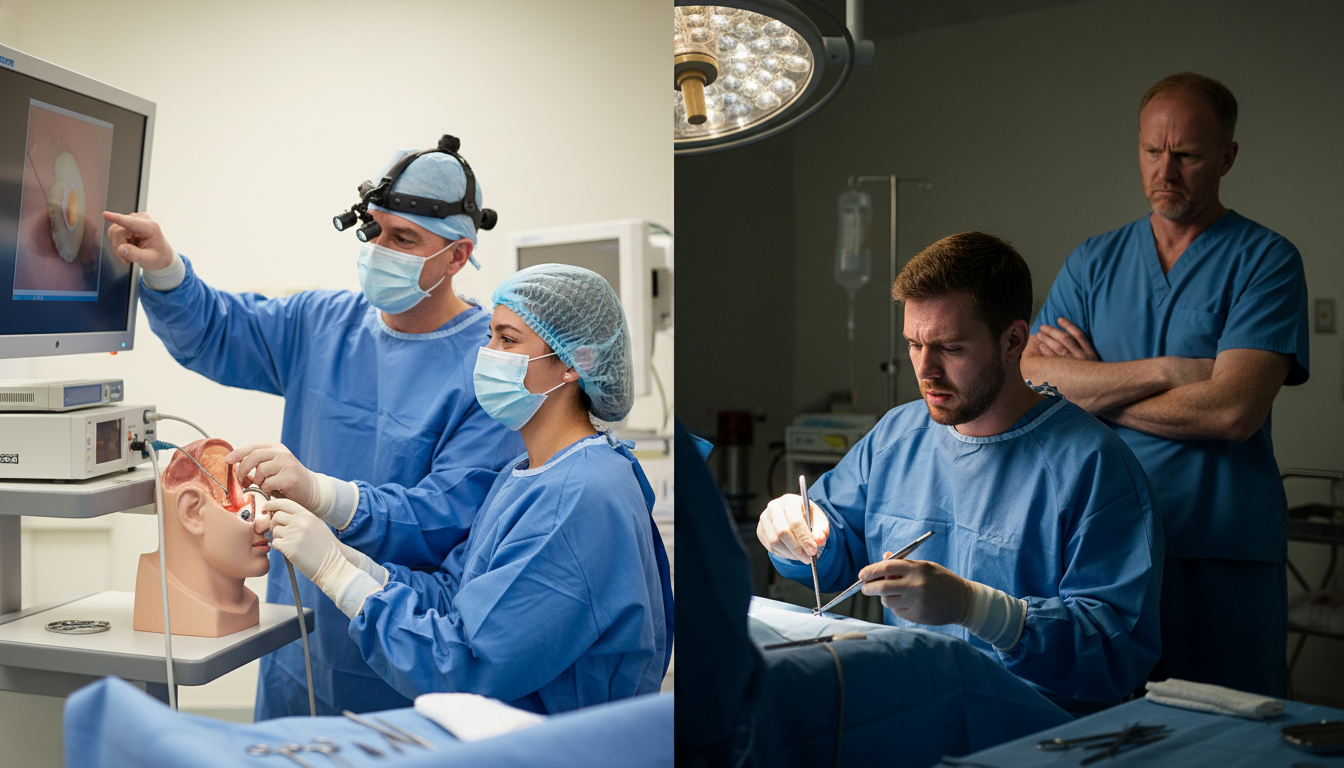
Core Toxic Program Signs in ENT: What Malignancy Looks Like Day-to-Day
Many red flags are common across all specialties, but some play out uniquely in ENT residency, where the work is highly procedural and hierarchy-heavy.
1. Exploitative workloads and systemic duty hour violations
Normal in ENT:
- Long days, early starts, late cases
- Tough call months (especially at trauma centers)
- Occasional 80-hour weeks during peak times
Malignant behavior:
- Chronic, unreported duty hour violations (90–100+ hour weeks as the norm)
- Pressure to falsify duty hours:
- “Don’t log that; you’re making the program look bad.”
- “Everyone stays late; just mark 80 hours.”
- Repeated 24+ hour shifts without adequate rest
- One or two residents carrying the clinical burden for everyone else
Questions to ask residents on interview day:
- “How often do you truly hit or exceed 80 hours per week?”
- “Has anyone ever asked you to adjust your duty hours in MedHub/New Innovations?”
- “What happens when the service is short-staffed—does leadership step in or just expect you to ‘make it work’?”
If multiple residents pause, look to each other, or answer vaguely—this may indicate a toxic program sign.
2. Abusive communication and public humiliation
The OR and clinic can be stressful, but there’s a line between sharp feedback and abuse.
Red flags in communication:
- Regular yelling, cursing, or throwing instruments in the OR
- Attending surgeons using humiliation as a teaching tool:
- “Are you even a real doctor?”
- “This is why IMGs don’t belong in ENT.”
- Residents routinely cry in the call room after cases or clinics
- Nurses and staff tell you, “Everyone knows Dr. X is toxic, but nothing changes.”
In a malignant residency program, this behavior is:
- Frequent
- Tolerated by leadership
- Downplayed when raised formally (“That’s just their style.”)
As a Caribbean IMG, this may be weaponized further:
- Snide comments about your school or training pathway
- Lower expectations coupled with higher criticism
- Exclusion from complex cases “because you’re not ready,” without a plan to get you there
Ask residents:
- “How do attendings typically respond when someone makes an error in the OR?”
- “If you’re struggling, who can you talk to without fear of being labeled weak?”
If residents laugh nervously, say “You just have to develop thick skin,” or warn you about specific “notorious” attendings with no evidence of remediation, take note.
3. Poor educational structure and using residents as cheap labor
A strong otolaryngology residency should have:
- Organized didactics: tumor boards, airway conferences, temporal bone labs
- Clear rotation goals and case logs reviewed regularly
- Gradual autonomy in the OR with senior-level responsibility near graduation
Toxic programs treat you as service coverage first, learner second (or not at all).
Malignant indicators:
- Didactics constantly canceled because “clinic is too busy”
- Residents spending most of their day in:
- Transporting patients
- Pure clerical work that could be done by non-physician staff
- Endless floor work while fellows and attendings operate
- Seniors rarely scrub; fellows and attendings perform most cases
- Chief residents graduating with weak case numbers in key ENT procedures
This can severely impact your fellowship prospects and surgical confidence. Pay attention to:
- “Do you have protected educational time? Is it truly protected?”
- “How often are didactics canceled due to service demands?”
- “Do senior residents consistently act as primary surgeon on major cases?”
If the SGU residency match or other Caribbean IMG match lists show graduates from a program rarely entering competitive ENT fellowships (pediatrics, otology, facial plastics) despite claiming strong training, consider why.
4. Toxic hierarchy, retaliation, and lack of psychological safety
A powerful marker of malignancy is what happens when people speak up.
Warning signs:
- Residents tell you explicitly:
- “Never complain; it only makes things worse.”
- “We had someone report an attending—now they’re on the program’s ‘bad list’.”
- Leadership discourages direct feedback or anonymized surveys:
- “Our culture is fine; people who struggle just don’t belong in surgery.”
- Residents whisper or change tone when faculty walk by on interview day
- Anyone who has left the program is described as:
- “Weak,” “not a team player,” or “couldn’t hack it,”
instead of exploring systemic issues
- “Weak,” “not a team player,” or “couldn’t hack it,”
As a Caribbean IMG, the fear of:
- Losing a visa
- Being blacklisted in a small specialty
can make retaliation especially dangerous.
Key questions:
- “Has anyone ever left the program early? Why?”
- “How does leadership handle conflicts between residents and attendings?”
- “Are you comfortable bringing concerns directly to the PD or chair?”
If you get vague answers like “Things are better now” with no specifics, that’s a subtle residency red flag.
5. High resident turnover, resignations, or repeat unmatched spots
Programs rarely advertise this openly, but patterns matter.
Red flags to look for:
- Multiple PGY-2 or PGY-3 residents have left in the last 5 years
- Frequent recruitment off-cycle to fill dropped positions
- NRMP data or word-of-mouth indicates:
- Program regularly doesn’t fill
- They scramble or SOAP into open ENT spots
In otolaryngology, where spots are limited, persistent unfilled positions can indicate:
- A damaged reputation within the specialty
- Residents quietly warning students away
- A history of malignant residency program behavior
How to investigate:
- Ask residents: “Have people left the program? What were their reasons?”
- Search online forums (with caution) for:
- “[Program name] ENT toxic”
- “[Program name] otolaryngology malignant”
- Check alumni lists from the program’s website—do some residents vanish midway with no listed graduation?
Any hospital can have a single tough year; you’re looking for consistent patterns.

Practical Strategies to Identify Malignant ENT Programs as a Caribbean IMG
Because you may lack a robust home network in the U.S., you need a deliberate approach to screening programs.
1. Leverage alumni and Caribbean IMG networks intentionally
If you’re from SGU or another Caribbean medical school, your Caribbean medical school residency network is critical.
Action steps:
- Use:
- Your school’s clinical deans and advisors
- Alumni databases
- LinkedIn searches: “Otolaryngology resident [program name]” + your school name
- Reach out with a concise message:
- Who you are (Caribbean IMG from X school)
- Your interest in ENT
- Specific question: “Would you be open to a brief, honest conversation about your program culture and training environment?”
Ask directly but respectfully about:
- How supportive leadership is
- Whether any residents have left recently
- If they’d choose the same program again
Caribbean IMG alumni are often more candid about how IMGs are treated at their institutions.
2. Use interview day strategically: What to observe and what to ask
Whether virtual or in-person, ENT interviews can be glossy and tightly scripted. Your job is to listen between the lines.
Red flag observations:
- Residents appear:
- Exhausted, guarded, or overly rehearsed
- Afraid to show dissatisfaction, even in “no faculty present” rooms
- Faculty dominate the conversation; residents speak little
- Q&A time is short, rushed, or cut off
High-yield questions to ask residents:
- “What is something you wish you could change about the program?”
- “Who advocates for residents when there is conflict?”
- “Tell me about a time a resident struggled—how did the program respond?”
- “On your hardest rotation, what helps you get through it?”
- “How often do residents hang out together or support each other outside the hospital?”
Compare answers across multiple residents. Inconsistencies or visible tension often reveal hidden residency red flags.
3. Analyze program data beyond the brochure
Look at the numbers and outcomes:
Case logs & operative exposure
- Ask on interviews: “Do seniors feel fully prepared for independent practice?”
- If possible, talk to recent graduates about whether they felt technically ready.
Fellowship placements
- Does the program consistently place graduates into reputable fellowships (neurotology, head and neck, pediatrics, facial plastics)?
- If no one gets competitive fellowships despite “strong training,” ask why.
Research and mentorship
- Does the program offer genuine scholarly support or just lip service?
- Are IMGs included in high-yield projects, or sidelined?
Board pass rates
- Poor or fluctuating board pass rates can reflect weak educational structure.
A chronically disorganized, unsupportive environment can be a form of non-obvious malignancy that quietly undermines your career, even without overt abuse.
4. Decode online reviews and “toxic program” lists cautiously
Reddit, SDN, and specialty forums often mention malignant residency programs and toxic program signs. Treat them as smoke, not definitive fire.
How to use them wisely:
- Look for patterns across years and platforms, not single rants
- Pay particular attention when:
- ENT faculty or fellows (not just students) criticize a program
- Comments mention issues that align with what residents hinted at on your interview
If a program appears on multiple “malignant” or residency red flags threads, and your independent conversations echo similar concerns, think very carefully before ranking it.
How to Protect Yourself if You Land in a Malignant Program
Despite your best efforts, you might match somewhere that turns out to be toxic. This is not a personal failure—and you still have options.
1. Document and protect your professional record
If you start noticing malignant behaviors:
- Keep a confidential log (at home, not on work devices):
- Dates, times, people present
- Specific incidents (e.g., being forced to falsify duty hours, verbal abuse)
- Impact (patient safety concerns, emotional distress, educational harm)
- Save emails or messages that:
- Show unreasonable expectations
- Document your attempts to seek help
This record can be crucial if you eventually:
- Request a transfer
- Need legal or institutional support
- Apply elsewhere and must explain gaps or program exits
2. Use institutional resources early
Most hospitals have:
- GME office and DIO (Designated Institutional Official)
- Employee assistance programs (EAP) for mental health
- Ombudsperson or grievance channels
For a Caribbean IMG, especially on a visa:
- Learn your rights around:
- Harassment
- Duty hour protections
- Safety concerns
- If possible, consult legal or immigration counsel before making major moves that could affect your status.
It’s better to seek help early than wait until burnout, health collapse, or a major clinical incident occurs.
3. Consider lateral transfer or specialty pivot if necessary
In extreme cases, leaving is healthier than staying—even in a competitive specialty like ENT.
Options may include:
- Lateral transfer within otolaryngology:
- Rare, but possible if another program has an opening and you maintain good references from at least some faculty.
- Transition to another specialty:
- General surgery, anesthesia, internal medicine, or even non-surgical fields, depending on your goals and situation.
If you’re SGU or another Caribbean graduate, work proactively with:
- Your original school’s dean’s office
- Trusted mentors & letter writers
- Alumni who have successfully navigated similar transitions
While stepping away from ENT can be painful, staying in a truly malignant residency program long enough to fail or be terminated can be far more damaging long term.
Balancing Risk: When “A Spot Is Better Than No Spot” Is Actually Wrong
For many Caribbean IMG applicants, especially in competitive specialties like otolaryngology, the temptation is to rank every program that offers an interview. But not every ENT residency is worth the risk.
You might consider not ranking or ranking very low a program if:
- Multiple independent sources repeatedly describe it as malignant
- Residents clearly warn you off, even subtly (“I wouldn’t come here if I had a choice again.”)
- There is a documented pattern of:
- Resident resignations
- Poor fellowship placement
- Abusive attendings with no disciplinary action
It can be preferable to:
- Go unmatched and strengthen your application for a later cycle
- Pivot to a more supportive specialty
than to spend years in a toxic residency that may push you out broken and without a board-eligible path.
For a Caribbean medical school residency graduate, your first residency experience shapes your reputation in the U.S. system. Protect it fiercely.
FAQs: Malignant ENT Programs & Caribbean IMG Applicants
1. How can I tell if a program is malignant before I even get an interview?
Use pre-interview screening:
- Check if the program frequently has unfilled ENT positions or off-cycle vacancies.
- Ask your Caribbean school’s advisors and alumni about residency red flags at specific institutions.
- Look at alumni trajectories—is there a pattern of people not finishing the program?
- Browse ENT forums; if a program is repeatedly labeled “toxic” across years, treat that as a major caution sign.
2. Are community ENT programs more likely to be malignant than academic ones?
Not necessarily. Malignancy is cultural, not structural:
- Some community programs offer excellent, hands-on training with a tight-knit, supportive team.
- Some academic centers with big names harbor toxic hierarchies and abusive attendings protected by prestige.
Evaluate each program individually using the signs discussed, regardless of community vs academic status.
3. What if my only ENT interview is at a program with some red flags?
You’ll need to balance:
- Severity of the red flags (mild concerns vs serious abuse/duty hour issues)
- Your personal resilience, visa situation, and alternative career paths
Consider:
- Ranking it, but preparing early for self-protection and documentation if you match there
- Or choosing not to rank it if credible sources describe clearly malignant behavior (chronic abuse, retaliation, unsafe patient care), recognizing you might need to reapply or pivot specialties.
Discuss this honestly with mentors who understand otolaryngology match dynamics and Caribbean IMG realities.
4. Does an SGU residency match list that includes a certain ENT program mean that program is safe for Caribbean IMGs?
Not automatically. The SGU residency match or similar lists only show that previous graduates have matched there—it does not guarantee:
- Healthy culture
- Fair treatment of IMGs
- Adequate surgical training
Use those lists as starting points for networking, not quality stamps. Contact those alumni directly and ask candidly about the program environment and how they were treated as Caribbean IMGs.
Being a Caribbean IMG in the otolaryngology match is challenging, but you’re not powerless. By learning to identify malignant residency programs and toxic program signs early, you can make deliberate, informed decisions that protect your well-being and your long-term career in ENT.