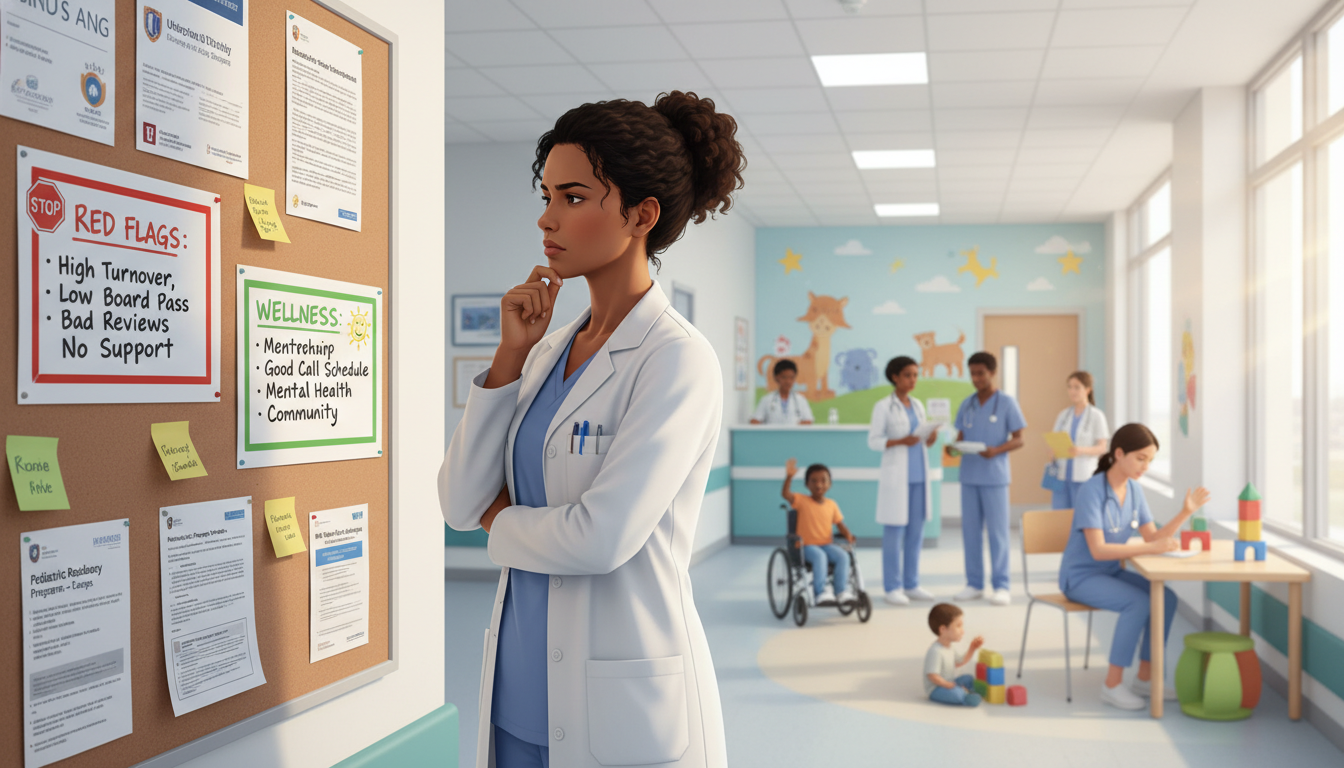
Identifying malignant programs is one of the most important—and most overlooked—skills in the residency application process, especially if you are a US citizen IMG applying in pediatrics. As an American studying abroad, you may feel extra pressure to rank any program that offers you an interview, or to ignore your concerns because “at least they take IMGs.” That mindset can put you at serious risk of ending up in a toxic environment that harms your education, your physical health, and your mental well‑being.
This article walks you through how to identify malignant residency programs, with a pediatrics‑specific lens and a focus on the unique position of the US citizen IMG. You’ll learn how to spot residency red flags, what questions to ask, how to interpret subtle signals during interviews, and how to balance your desire to match with your need for a safe, supportive training environment.
Understanding “Malignant” in Pediatrics Residency
“Malignant residency program” is not an official term, but residents and applicants use it to describe programs with:
- Systemically toxic culture
- Chronic exploitation of residents
- Dishonesty about workload, hours, or outcomes
- Lack of psychological safety for speaking up
- Poor educational value despite heavy workload
In pediatrics, this can feel especially disorienting because the specialty is generally known as “friendly” and “supportive.” That reputation can make it harder to believe—or admit—that a peds program might be abusive or unsafe.
Why US Citizen IMGs Are Especially Vulnerable
If you are a US citizen IMG (American studying abroad), you often:
- Feel you have fewer options than US MD seniors
- May be told explicitly, “You should just be grateful for any offer”
- Worry that raising concerns will label you as “difficult”
- Rely more heavily on virtual information and less on word‑of‑mouth
Programs that are malignant sometimes exploit this vulnerability by:
- Emphasizing “we’re IMG friendly” while ignoring culture and support
- Using residents as cheap labor for service-heavy hospitals
- Expecting unconditional gratitude and compliance instead of mutual respect
Your goal is not just to match into pediatrics residency—it’s to match into a program where you can learn, grow, and stay healthy for three or more critical years of your life.
Core Toxic Program Signs: What “Malignant” Looks Like in Real Life
You will not find a warning label that says “malignant residency program.” Instead, you’ll see a pattern of residency red flags across several domains: culture, workload, education, and transparency.
1. Culture and Psychological Safety
A malignant residency culture is usually defined by fear, blame, and hierarchy.
Key toxic program signs in culture:
Residents are afraid to speak honestly
- On interview day, residents give rehearsed, vague answers.
- When you ask about challenges, everyone says “It’s busy, but fine,” and quickly changes the topic.
- No one is willing to name a single concrete area for improvement.
Public shaming or humiliation
- Attendings “pimp” in a way that feels mocking or cruel.
- Residents whisper about “embarrassing” mistakes in front of the team.
- Nurses or consultants are openly disrespectful and no one intervenes.
Retaliation for feedback
- Stories of residents being “blacklisted” for raising concerns.
- A culture where people warn you: “Just keep your head down and get through.”
Blame instead of systems thinking
- When adverse events happen, everyone blames the intern instead of examining staffing, supervision, or systemic issues.
Pediatrics-specific angle:
Because pediatrics is so family‑centered and emotionally intense, lack of psychological safety has additional costs—you may feel guilty, anxious, or inadequate while also managing sick children and distressed parents.
2. Workload, Hours, and Exploitation
Every residency is hard. Long hours and fatigue are expected. What separates a malignant program is chronic, unsafe overwork that the program normalizes or hides.
Common residency red flags with workload:
Systematic duty hour violations
- Residents consistently exceed 80 hours/week.
- Post‑call days are not honored.
- Compliance is documented as “fine” but residents describe staying much longer to finish tasks.
“Just sign the hours; don’t create problems”
- Pressure to falsify ACGME duty hour logs.
- Leadership discourages honest reporting, saying it “triggers audits.”
Unbalanced service-to-education ratio
- “Scut” dominates: paperwork, calls, transport, repeated administrative tasks.
- Minimal time for teaching, reading, or reflection.
- Residents are primarily used as low‑cost workforce to cover RVU‑generating services.
No backup when things get unsafe
- One resident covering far too many patients (e.g., 40+ on nights).
- No reliable “jeopardy” or backup call system for illness or emergencies.
- Residents work while very sick because “there’s no one else.”
Example:
On nights, a PGY‑1 covers the NICU, newborn nursery, and the general peds floor alone, while the senior is simultaneously cross‑covering PICU and admissions. This might sound like “great exposure,” but in practice it’s unsafe for patients and residents, and often indicates a malignant level of understaffing.
3. Education and Supervision: Are You Actually Being Trained?
A malignant pediatrics residency often sacrifices education for service.
Warning signs:
Minimal teaching from attendings
- Didactics frequently canceled due to “service needs.”
- Attendings rarely round at the bedside; residents are left to figure everything out alone.
Poor supervision
- Interns handle critical patients (e.g., PICU level) without accessible attending backup.
- Residents say, “We call the attending, but they’re annoyed, so we just try to manage.”
Weak board preparation
- No structured approach to PRITE/ITE or ABP board exam prep.
- Low board pass rates that are brushed off as “a resident problem.”
“You’ll learn by drowning” mentality
- Seniors tell you, “We all suffered; it made us strong.”
- Program leadership valorizes being overwhelmed instead of building sustainable learning structures.
4. Communication, Transparency, and Turnover
Malignant programs often show a consistent pattern of withholding or distorting information.
Key red flags:
High resident attrition
- Multiple residents leave or are “transferred” each year.
- The explanation is always vague: “Wasn’t a good fit” or “Personal reasons.”
- Sudden gaps in certain PGY classes that no one talks about.
Defensiveness about weaknesses
- When asked what they’re working to improve, faculty or leadership cannot name a single concrete issue.
- Honest questions are met with discomfort or deflection.
Inconsistent stories
- Faculty say one thing; residents say something very different.
- What’s written on the website doesn’t match what’s said on interview day.
Lack of wellness or support infrastructure
- No clear policy for leave (parental, medical, mental health).
- Residents don’t know how to access counseling, or it’s clearly stigmatized.
5. IMG‑Specific Red Flags
For a US citizen IMG, there are a few additional malignant residency program characteristics to watch for:
Different rules for IMG vs. US grads
- IMGs consistently assigned heavier service rotations or more call.
- IMGs discouraged from applying for chief or leadership roles.
Conditional respect
- Subtle comments about “foreign schools” or “needing to prove yourself more.”
- Faculty publicly introducing you as “our IMG” instead of simply “our resident.”
Limited career support
- No structured guidance for fellowships, especially for IMGs.
- A pattern of IMGs not matching into competitive fellowships while US grads do.
These are strong signs you’re seen as replaceable labor rather than as a trainee the program is invested in.

How to Spot Residency Red Flags as a US Citizen IMG
Knowing what a malignant program looks like is only half the battle. You also need concrete strategies to detect these issues during the peds match process, often with limited in‑person contact.
1. Pre‑Interview Research: What You Can Learn Before You Apply
As an American studying abroad, you may not have local word‑of‑mouth, but you still have tools:
A. Data Sources to Check
ACGME and FREIDA
- Look at number of residents, program changes, and citations.
- Frequent leadership changes can indicate instability.
Program websites
- Are there updated resident rosters and clear information?
- If several years of residents are missing or unnamed, ask why.
Board pass rates and fellowships
- Some programs list ABP pass rates or graduate outcomes.
- Chronic low pass rates without explanation can be a warning.
B. Reputation and Word‑of‑Mouth
Current residents and recent grads
- Use LinkedIn, hospital websites, or alumni networks to find residents—especially US citizen IMGs—at the program.
- Politely request a 15–20 minute call:
“I’m a US citizen IMG applying in pediatrics and strongly considering your program. Could I ask a few honest questions about your experience?”
Online forums (with caution)
- Places like Reddit or specialty-specific forums can highlight patterns.
- Use them as signals, not verdicts; confirm with direct conversations.
2. During the Interview: Questions That Reveal Culture and Safety
Your questions can be powerful diagnostic tools. Some examples tailored to pediatrics:
To residents:
- “What are some things the program is actively trying to improve right now?”
- Healthy programs give specific, concrete examples.
- “In the last year, has anyone taken medical or mental health leave? How was that handled?”
- Watch for discomfort, avoidance, or stories of punishment.
- “How easy is it for you to call an attending at 2 am for help?”
- A safe answer: “Very easy, they expect us to call.”
- “When things go wrong—like an error or bad outcome—what happens next?”
- Look for mention of M&M as learning vs. blame or shame.
- “Do you feel comfortable giving honest feedback to leadership?”
- Pay attention not just to the words, but the tone and body language.
To leadership or program directors:
- “What’s your philosophy on resident wellness and duty hours?”
- Beware of answers that minimize the issue: “This is residency; wellness isn’t a priority.”
- “How do you support residents who might be struggling academically or personally?”
- Healthy answer: a clear process, early support, no stigma.
- “Can you describe a recent significant change the program made in response to resident feedback?”
- Look for real, not cosmetic, changes.
3. Red Flags in How the Interview Day Feels
Beyond answers, the overall atmosphere is telling:
- Residents look exhausted, anxious, or guarded.
- Residents repeatedly say, “It’s busy, but good exposure,” without elaborating.
- PD or faculty dominate resident Q&A, not letting residents speak freely.
- Questions about culture get replaced with discussions of case volume and prestige only.
If interviews are virtual, small cues still matter:
- Do they include a “residents‑only” session without faculty?
- Are residents given enough time and space to talk?
- Does anyone acknowledge that the peds match can be stressful, especially for IMGs, and offer honest support?
Practical Case Examples: Is This Program Malignant or Just Busy?
It can be hard to distinguish between a tough but good program and a truly toxic one. Here are a few pediatrics‑specific scenarios.
Scenario 1: High Volume, Low Malignancy
A large urban children’s hospital with very high patient volume:
- Residents admit many patients on call, often late into the evening.
- Everyone acknowledges, “This is a very busy program.”
- Duty hours are close to the limit, but logs are honest, and leadership frequently adjusts schedules to stay compliant.
- Residents openly mention “We pushed for more night float coverage last year, and the program changed the schedule.”
- Residents share both positives and negatives without fear.
Interpretation:
This is likely a demanding but supportive program, not malignant. You will work hard, but culture and safety appear intact.
Scenario 2: “We Don’t Track Hours Here”
A mid‑sized program with mixed reviews online:
- When asked about hours, a chief resident says:
“We don’t really obsess over duty hours; you just stay until the work’s done.” - Residents share informally that regularly hitting 90+ hours/week is “normal,” but the logs show everyone at 70–75 hours.
- When asked how they manage this, a PGY‑2 mutters, “You’ll see,” and looks uncomfortable.
- Faculty emphasize, “This is how real pediatrics is practiced; if you can’t handle it, maybe this isn’t for you.”
Interpretation:
This is a classic malignant red flag scenario: normalized overwork, pressure to falsify logs, and an unsupportive response to reasonable concerns.
Scenario 3: IMG Heavy but Hierarchical
A community hospital program that markets itself as “IMG friendly”:
- Majority of residents are IMGs, including several US citizen IMG trainees.
- Residents match into solid but not top‑tier fellowships.
- Workload is moderate, but:
- US grads are placed preferentially on subspecialty rotations.
- IMGs report being consistently scheduled into heavier inpatient blocks.
- Leadership says, “We rely on our IMGs; they are very hardworking.”
Interpretation:
This program may not be universally malignant but shows unequal treatment and potential exploitation of IMGs—a serious concern, especially for your long‑term career.

Balancing Peds Match Strategy with Self‑Protection
As a US citizen IMG, you might feel you can’t afford to be picky. That doesn’t mean you should ignore clear signs of a toxic residency program.
1. Ranking Strategy: When to Move a Program Down—or Off—Your List
Use a simple, structured approach:
Green light programs (rank higher):
- Residents are candid and mostly satisfied, even while acknowledging challenges.
- Leadership is transparent about weaknesses and shows concrete improvement efforts.
- Coverage, supervision, and wellness systems are clear and respected.
- IMGs (including US citizen IMG residents) are doing well and feel supported.
Yellow light programs (rank with caution):
- Some concerns, but no obvious dealbreakers.
- Culture appears mixed—some residents thriving, others struggling.
- Workload heavy but no clear safety violations or deception.
- Consider where they fall relative to your alternatives.
Red light programs (strongly consider leaving off rank list):
- Repeated, credible reports of:
- Systematic duty hour violations with pressured falsification.
- Humiliating or abusive teaching.
- Retaliation against residents who speak up.
- High unexplained attrition.
- Consistent discomfort or fear among residents talking about the program.
- Clear patterns of IMG exploitation or discrimination.
If you have no other interviews, this is a deeply personal decision. Some applicants still choose to rank clearly malignant programs because they feel any match is better than no match. Before you do:
- Talk to trusted mentors—ideally those who understand the peds match and IMG pathways.
- Consider your mental health history, support system, and coping resources.
- Ask residents privately, “If you could go back, would you choose this program again?”
Their answers can be illuminating.
2. What If You End Up in a Toxic Program Anyway?
Even with careful screening, some malignant patterns only emerge once you start.
If you find yourself in a toxic pediatrics residency program:
- Document everything: duty hour violations, unsafe situations, inappropriate comments.
- Use internal channels:
- Chief residents, program director, or designated ombudsperson.
- GME office and institutional wellness or compliance offices.
- If issues are severe and unresolved, explore:
- ACGME Resident/Fellow Complaints process.
- Discussing transfer options with trusted faculty or mentors.
Remember: staying in a malignant environment at all costs is not a requirement for being a good pediatrician. Protecting your safety and integrity is part of professional responsibility.
3. Building Your Support System as a US Citizen IMG
Because you may not have a strong local network in the US, start early:
Connect with:
- Alumni from your international school who matched into pediatrics.
- US citizen IMG interest groups or social media communities.
- National pediatric organizations and virtual mentorship programs.
During residency:
- Identify at least one trusted faculty mentor not directly evaluating you.
- Maintain connections outside your program for perspective and career advice.
This network becomes crucial if you need honest feedback about whether a red flag is “normal tough residency” or “truly malignant.”
FAQs: Malignant Pediatrics Programs for US Citizen IMGs
1. How can I tell if a pediatrics residency is just busy versus truly malignant?
Busy programs:
- Admit they are demanding.
- Enforce duty hour rules and adjust schedules when violations occur.
- Encourage early communication when residents feel overwhelmed.
- Maintain psychological safety and offer real educational value.
Malignant programs:
- Normalize chronic overwork, often above ACGME limits.
- Pressure residents to falsify duty hour logs.
- Punish or shame those who speak up.
- Rely heavily on residents as labor with little meaningful teaching.
The difference is how leadership responds to workload, not the workload alone.
2. As a US citizen IMG, can I afford to avoid malignant programs, or should I take any pediatrics position I get?
You should be strategic, not desperate. Being a US citizen IMG does mean your options may be more limited, but your physical and mental health are not expendable. Rank programs by combining:
- Safety and culture (non‑negotiable basics)
- Educational quality and supervision
- Your overall competitiveness and number of interviews
If a program shows multiple, severe red flags—especially around safety, honesty, and retaliation—it may be safer long‑term to rank it low or not at all, even as an IMG. Discuss your specific situation with a mentor who understands the peds match.
3. Should I directly ask if a program has ever been reported to ACGME or had citations?
You can ask, but frame it professionally:
- “Are there any ACGME citations or recent major changes that applicants should be aware of, and how have you addressed them?”
A healthy program will acknowledge past issues and explain what they did to improve. If leadership becomes defensive or refuses to answer, that itself is a warning sign. Combine this with what you hear from residents to build a fuller picture.
4. How much weight should I give to online reviews or negative comments on forums?
Use online reports as starting points, not final verdicts:
- Look for patterns across multiple sources rather than single angry posts.
- Confirm with:
- Private conversations with current or recent residents.
- Your own observations during interview day.
- How leadership responds when you ask about known concerns.
If multiple independent sources—including current residents—describe similar toxic program signs, take it seriously, even if the program’s website paints a rosy picture.
For a US citizen IMG pursuing pediatrics residency, your path to the peds match involves more than just getting a position—it’s about choosing an environment where you can become the pediatrician you want to be. Learning how to recognize malignant residency programs and interpret residency red flags empowers you to protect your well‑being, maximize your educational experience, and build a sustainable, fulfilling career in caring for children and their families.