
Preliminary surgery can be a powerful stepping stone to a categorical surgery spot or another competitive specialty, but it can also become a nightmare if you end up in a malignant residency program. For a non-US citizen IMG or foreign national medical graduate, the stakes are even higher: your visa, career trajectory, and financial stability can all be affected by the quality of your prelim surgery residency.
This article walks you through how to identify malignant programs, interpret toxic program signs, and protect yourself before ranking programs or signing a contract.
Understanding the Preliminary Surgery Year for Non-US Citizen IMGs
Before identifying a malignant program, you must understand the unique structure and goals of a preliminary surgery year.
What is a preliminary surgery residency?
A preliminary surgery residency is:
- A one-year (PGY-1) position, usually without guaranteed continuation to PGY-2
- Designed for:
- Applicants hoping to transition into a categorical general surgery spot
- Applicants planning to apply to other surgical specialties (e.g., ortho, neurosurgery, ENT, urology, integrated plastics, vascular)
- Applicants who need a clinical year for advanced programs (e.g., radiology, anesthesia) or to strengthen their profile
Key differences from categorical positions:
- No guaranteed continuation: You may not have a job after June 30.
- Limited control over rotations: Often heavier service and call schedules.
- Variable support: Some programs invest heavily in prelims; others treat them as disposable labor.
Why non-US citizen IMGs are particularly vulnerable
As a non-US citizen IMG, you face additional risks:
- Visa dependence (J-1 or H-1B where available)
- Limited ability to change programs mid-year
- Financial pressure from relocation, exam fees, and often supporting family abroad
- Less informal knowledge about US surgical culture and residency red flags
- Greater risk of exploitation if you feel unable to speak up for fear of termination or visa issues
That’s why recognizing toxic program signs early—before applying, interviewing, or ranking—is critical.
What Makes a Residency Program “Malignant”?
The term “malignant residency program” commonly refers to a training environment where:
- Education is secondary to service, or absent
- Residents are abused, humiliated, or exploited
- Program leadership is unresponsive or retaliatory
- Duty hour violations and unsafe practices are common and normalized
- Trainees, especially prelims and IMGs, are disposable
A program does not have to be perfect to be good. Surgery is demanding everywhere. But malignant programs consistently show patterns of:
- Systemic disrespect
- Chronic violations of policy
- Lack of transparency
- High burnout and attrition
For a foreign national medical graduate in a highly competitive environment like surgery, malignancy can translate into:
- No meaningful operative experience
- Poor evaluations and lack of letters of recommendation
- No pathway to categorical positions or fellowship
- Visa uncertainty or early termination without support
Core Toxic Program Signs in Preliminary Surgery
Below are key domains and residency red flags you should carefully assess as a non-US citizen IMG looking at prelim surgery residency options.
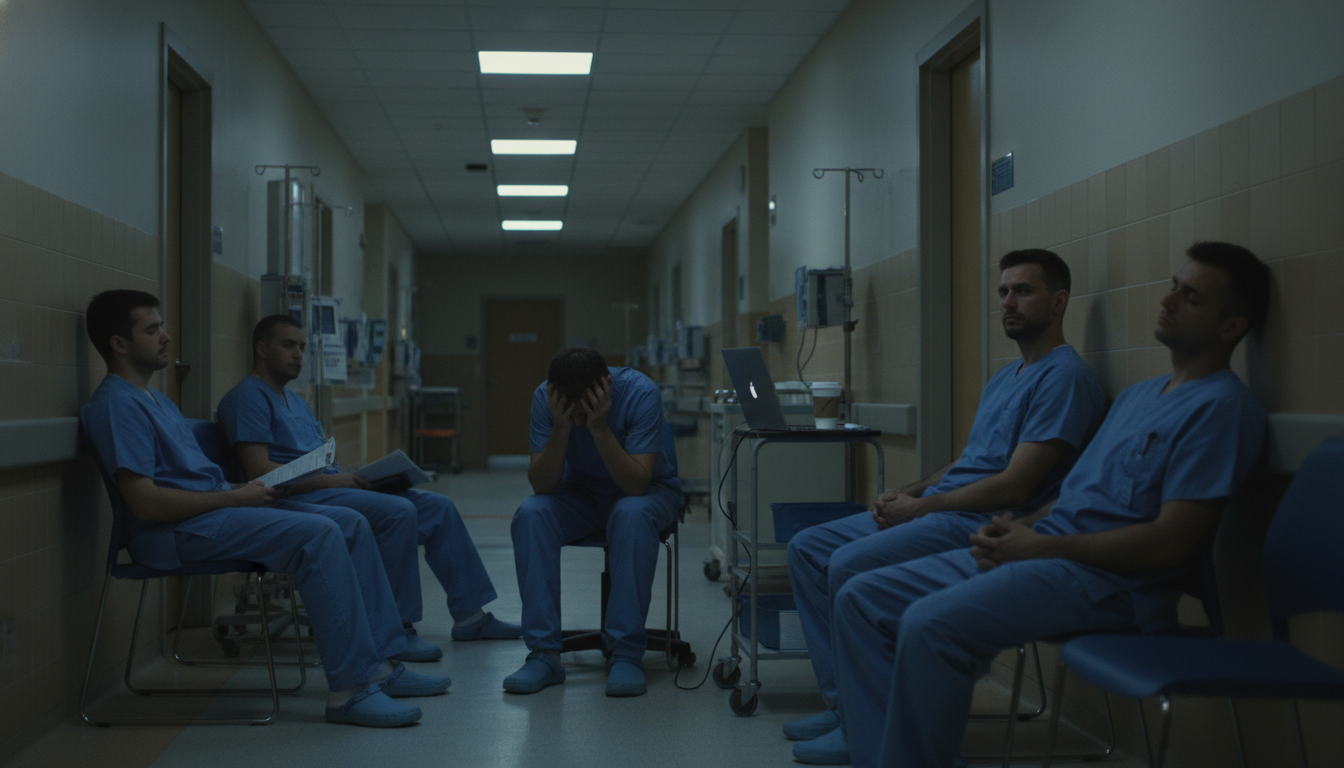
1. How the program treats prelims vs categoricals
In many programs, prelims and categoricals share rotations, call, and conferences. In malignant ones, prelims are clearly second-class citizens.
Red flags:
- Prelims consistently:
- Cover the heaviest call or “scut-heavy” rotations
- Are excluded from OR opportunities while categoricals operate
- Have fewer or no research or elective opportunities
- Faculty or seniors make comments like:
- “You’re just a prelim; you don’t need cases.”
- “We don’t invest much in prelims because they usually leave.”
- Prelims are the first to be blamed for:
- Floor issues
- Documentation errors
- “Service needs” without educational justification
Questions to ask residents:
- “Do prelims get similar OR exposure to categoricals at the PGY-1 level?”
- “Are prelims included in academic activities, morbidity & mortality, and conferences?”
- “Have prelims from this program successfully matched into categorical surgery or other specialties?”
2. Educational culture vs service overload
Every surgical residency is service-heavy, but malignant programs ignore or dismiss the educational mission.
Red flags:
- Repeated cancellations of teaching conferences due to “service needs”
- No protected time for:
- Weekly academic half-day
- Skills lab
- Simulation
- Rounds are purely task-focused with no bedside teaching
- When asked about education, residents say:
- “We’re too busy to learn.”
- “You learn by surviving.”
- Lack of feedback—either no evaluation at all or only punitive feedback
For a non-US citizen IMG, limited exposure to thoughtful teaching can worsen:
- Transition to US-style documentation and communication
- Familiarity with ACGME competency expectations
- Ability to adapt quickly to US OR culture and systems
3. Duty hours, call burden, and safety
High volume and long hours are reality in surgery, but malignant programs normalize clear ACGME violations and pressure residents to stay silent.
Red flags:
- Residents consistently admit to:
- Working >80 hours/week on average
- Frequent >24+4 hour stretch violations
- Rare true post-call days
- Residents say things like:
- “We never log duty hours accurately.”
- “You’ll be asked to underreport.”
- Prelims frequently:
- Work more nights or “orphan rotations” with little supervision
- Stay late post-call to finish floor tasks or notes
- Residents appear:
- Chronically sleep-deprived
- Suffering recurrent errors or near-misses due to fatigue
Ask directly:
- “How are duty hours monitored and enforced?”
- “Do you feel comfortable honestly reporting hours?”
- “What happens when someone raises a concern about workload or safety?”
4. Culture of respect vs humiliation and fear
Surgery is historically hierarchical, but modern programs are actively working to create psychologically safe environments. Malignant programs still rely on humiliation and intimidation.
Red flags:
- Residents report attending surgeons:
- Publicly yelling, insulting, or cursing at residents or staff
- Throwing instruments or slamming equipment in anger
- Using personal attacks instead of constructive feedback
- Fear-based culture:
- Residents fear asking questions to avoid being “pimped to death” or shamed
- Residents say they avoid certain attendings or ORs due to toxic behavior
- Reporting mechanisms exist on paper but are never used due to fear of retaliation
- Prelims, IMGs, or women are targeted more frequently for:
- Ridicule
- Harsh criticism
- Unfair evaluations
This environment is particularly damaging to foreign national medical graduates, who may:
- Feel less secure speaking up due to accent, cultural differences, or visa dependence
- Be misjudged as “less competent” due to communication style
- Receive less support when targeted
5. Career support, letters, and outcome transparency
The primary reason many applicants pursue a preliminary surgery year is to:
- Strengthen their CV
- Obtain meaningful US letters of recommendation
- Improve chances of matching into a categorical or advanced spot
Malignant programs often show:
- No tracking of where prelims end up
- No structured feedback on how to reach categorical positions
- Faculty who refuse or delay writing letters
- Residents saying:
- “I have no idea what happened to most of the prelims.”
- “No one really helps prelims with next steps; you’re on your own.”
Green flags:
- Program provides a list of recent prelim graduates and their outcomes:
- “Prelim 2022: one into categorical gen surg here, one into anesthesia at X, one into radiology at Y…”
- Explicit discussion in interviews:
- “We are committed to helping our prelims move forward, and here’s how…”
- Program director (PD) or chair:
- Meets with prelims early in the year to discuss goals and realistic plans
- Helps them network for openings or research positions
Specific Red Flags for Non-US Citizen and IMG Applicants
As a non-US citizen IMG, you must evaluate additional dimensions beyond the usual residency red flags.

1. Visa sponsorship clarity and honesty
Visa-related concerns are non-negotiable. A program that is vague or evasive about visas is a major risk.
Red flags:
- Inconsistent or unclear statements about sponsoring:
- J-1 vs H-1B
- Changes “under review” with no timeline or historical context
- Program says:
- “We’ve never had a non-US citizen IMG, but we’re sure we can figure it out.”
- “We can discuss visa stuff after you match.”
- No dedicated GME or institutional support person for visa processing
- History of:
- Delayed visa processing leading to late starts for prior residents
- Residents having to hire their own lawyers to fix program mistakes
Key questions to ask:
- “Do you sponsor J-1 visas for preliminary surgery residents? What about H-1B?”
- “Have you had non-US citizen IMGs in prelim positions in the last 3–5 years?”
- “Did any of them have visa delays or issues? How were those handled?”
- “If a prelim transitions to a categorical spot here or elsewhere, do you assist with visa extensions or transfer paperwork?”
If answers are vague or defensive, treat this as a major warning sign.
2. Attitudes toward IMGs and foreign national graduates
Bias against IMGs still exists in some places, especially in highly competitive surgical fields.
Red flags:
- Faculty or residents make comments such as:
- “We prefer US grads; IMGs are usually behind.”
- “We haven’t taken many IMGs; they don’t fit our culture.”
- The program has:
- No recent non-US citizen IMG residents
- Only a token or single IMG who seems isolated or unsupported
- IMG residents:
- Are rarely in leadership roles (chief, committee positions)
- Are less likely to receive strong cases or research opportunities
Try to speak directly with IMGs at the program:
- “Do you feel treated any differently as an IMG or non-US citizen?”
- “Have you encountered bias, and how did the program respond?”
- “Have you been able to get strong letters, research, or fellowship opportunities?”
3. Lack of structured support for system navigation
Non-US citizen IMGs often require additional support for:
- Understanding US healthcare documentation
- Learning EMR systems
- Adapting to US communication norms (pages, consults, escalation)
- Managing licensing exams, Step 3, and state license requirements
Red flags:
- No orientation tailored to IMGs or residents new to the US system
- No guidance on:
- Step 3 timing
- US licensing pathway
- Future applications to categorical programs
- Residents express:
- “You just figure it out as you go.”
- “There’s no real mentoring for prelims, especially IMGs.”
Green flags include:
- Assigned mentors (ideally someone familiar with IMG challenges)
- Clear guidance on exam timing and US documentation standards
- Dedicated orientation for EMR, orders, and US hospital policies
4. Exploitative use of prelims
Malignant programs often use prelims—especially IMGs—as cheap, replaceable labor.
Red flags:
- High ratio of prelim to categorical residents, e.g.:
- 10 prelims and 2 categoricals per year
- Prelims almost never:
- Get promoted to categorical spots
- Transition to meaningful positions at other institutions
- Prelims do:
- Most of the floor work, consults, and night float
- Very few index operations or major cases
- Residents or faculty say:
- “Prelims keep the service running.”
- “Prelims are good workhorses.”
If the program cannot clearly describe how they invest in prelims, it’s likely a red flag.
How to Research and Recognize Malignant Programs Before You Rank
You cannot rely only on what’s said on interview day. Malignant programs often present very well when you’re being recruited. You must gather independent, honest information.
1. Use objective data sources
While no single data point is definitive, several hints may appear in public information.
Check:
- ACGME website:
- Accreditation status
- Any “warning” or special review flags
- Program websites:
- Number of prelim vs categorical residents
- Recent graduates and outcomes
- Faculty and leadership stability
- NRMP data and forums (with caution):
- Sudden large changes in fill rates or positions
- Reputation discussed in online communities
Signs to investigate further:
- Frequent leadership turnover (new PD every 1–2 years)
- Loss of accreditation or “continued accreditation with warning”
- Large increase in prelim positions without increase in faculty or cases
2. Pay attention to what residents actually say
The most valuable insight comes from informal conversations with current or recent residents.
Strategies:
- During interview socials or breaks, ask:
- “What would you change about the program if you could?”
- “How does the program respond when residents are struggling?”
- “How often do residents leave early or transfer?”
- Ask specifically about prelims:
- “How are prelims integrated into the team?”
- “Where did recent prelims go after this program?”
- Read between the lines:
- Long pauses, nervous laughter, or very generic answers can be telling.
- If residents look at each other before answering, or change subjects quickly, be cautious.
If residents consistently say they are “too busy” to talk or you are rarely allowed to interact with them unobserved, that itself is a warning sign.
3. Follow up with alumni and off-the-record contacts
If possible:
- Find alumni (especially former prelims or IMGs) on:
- Institutional profiles
- Specialty interest groups
- Send polite messages:
- Introduce yourself and ask if they’d be willing to share informal impressions.
- Ask specific questions about:
- Culture
- Duty hours
- Attitudes toward IMGs
- Support for career progression
They may be more honest than current residents who are still dependent on the program.
4. Analyze the interview day and communication style
Programs reveal themselves by how they treat applicants.
Concerning patterns:
- Interviews are disorganized, with last-minute schedule changes and poor communication.
- Program coordinators:
- Take long to answer basic questions
- Seem overwhelmed or disengaged
- PD or faculty:
- Show up late
- Appear uninterested in your goals
- Make dismissive remarks about applicants or other programs
- No time is allocated to discuss:
- Prelim outcomes
- Educational structure
- Wellness and support systems
For a foreign national medical graduate, also note:
- Are they prepared to answer visa questions confidently?
- Do they have clear knowledge of institutional policies?
- Are they respectful when you bring up visa or IMG-related concerns?
Strategic Advice: Balancing Risk, Opportunity, and Your Long-Term Goals
Not every imperfect program is malignant. As a non-US citizen IMG applying to prelim surgery residency, you may have fewer options and must weigh trade-offs realistically.
1. Distinguish “hard but fair” from truly malignant
Many excellent surgery programs are:
- Intense
- Demanding
- High-volume
But they still:
- Respect residents
- Follow duty hour rules (with occasional exceptions, not chronic)
- Invest in education
- Support resident career goals
Your goal is not to avoid every challenging program, but to avoid toxic environments where you are unsafe or exploited.
Ask yourself:
- “Is the hardship primarily due to high clinical volume and complexity, or due to poor organization, disrespect, and neglect?”
- “Do residents appear proud of their training despite the workload?”
2. Prioritize programs that are transparent about prelim outcomes
When ranking programs:
- Favor programs that clearly share:
- Where their prelims matched afterward
- How they support prelims during application cycles
- Examples of non-US citizen IMG prelims who succeeded
- Ask the PD:
- “Can you share how your recent prelims, particularly non-US citizen IMGs, have progressed after their year here?”
Concrete data is more valuable than vague assurances.
3. Consider your broader career plan
Before committing to a preliminary surgery year, clarify:
- Are you aiming for:
- Categorical general surgery?
- Another surgical specialty?
- An advanced non-surgical specialty (e.g., radiology, anesthesia)?
- Do you absolutely need a prelim surgery position, or would a transitional year or prelim internal medicine be safer and more supportive?
- Are you willing to:
- Take a research year or observership first to gain stronger letters?
- Reapply instead of accepting a clearly malignant position?
Sometimes the strongest move for a foreign national medical graduate is to avoid a known toxic environment, even if it means delaying direct entry into residency.
4. Plan for worst-case scenarios
If you end up in a program that turns out to be malignant:
- Know your institutional ombuds or GME office contact.
- Document:
- Duty hour violations
- Abusive incidents
- Unfair evaluations
- Seek mentors:
- Within surgery
- In other supportive departments
- Explore:
- Transfers
- Early communication with the ECFMG and visa sponsor if necessary
- Legal or advocacy support in extreme cases
Although difficult, some residents successfully transition out of harmful programs and continue into rewarding careers.
FAQs: Malignant Preliminary Surgery Programs for Non-US Citizen IMGs
1. Is it ever worth accepting a malignant prelim surgery program just to get into the US system?
Generally, no. If multiple independent sources describe the program as abusive or unsafe, it can damage your mental health, professional reputation, and future chances at a categorical spot. For a non-US citizen IMG, a toxic year may leave you with poor evaluations and weak letters, which can be worse than waiting a year, doing research, or seeking a more supportive non-prelim position.
2. How can I tell if a program is hiding residency red flags on interview day?
Watch for limited contact with residents, heavily scripted answers, and evasiveness around duty hours or prelim outcomes. If no one can clearly say where recent prelims went, or if residents seem afraid to talk openly, assume problems exist until proven otherwise. Follow up with alumni or external contacts to verify.
3. Are community programs more likely to be malignant than university programs?
Not necessarily. Many community programs offer excellent operative exposure and supportive environments. Malignancy can occur in both academic and community settings. Focus on concrete indicators: resident treatment, education vs service balance, respect for duty hours, support for IMGs, and transparent preliminary outcomes.
4. What specific questions should a foreign national medical graduate always ask about visas?
At minimum, ask:
- “Do you sponsor J-1 (and/or H-1B) visas for preliminary surgery residents?”
- “How many non-US citizen IMGs have you sponsored in the last 3–5 years?”
- “Have any residents had visa delays? How did the institution help?”
- “If a prelim transitions to a categorical spot here or elsewhere, do you assist with visa extensions or transfers?”
If the program cannot answer these clearly, prioritize safer options.
Being deliberate and analytical now can protect you from serious problems later. As a non-US citizen IMG entering a preliminary surgery year, your power lies in asking specific questions, seeking uncensored information, and recognizing the toxic program signs that distinguish demanding but fair programs from truly malignant ones.