
Understanding “Malignant” Programs in EM‑IM
For an MD graduate interested in an Emergency Medicine-Internal Medicine (EM IM combined) residency, the stakes of choosing the right program are high. You are signing up for five demanding years that span two high-intensity specialties—emergency medicine internal medicine training is inherently stressful even in supportive environments. In a malignant residency program, that baseline stress is amplified by systemic dysfunction, disrespect, or exploitation.
“Malignant” is informal language, but residents, fellows, and faculty use it commonly to describe training environments that are:
- Consistently unsafe, abusive, or exploitative
- Resistant to feedback or improvement
- Prioritizing service over education without transparency
- Emotionally or psychologically damaging to residents
This article focuses on how an MD graduate can identify residency red flags while evaluating EM‑IM combined training, with particular attention to the unique structure and vulnerabilities of these programs.
We will cover:
- What “malignant” really looks like in practice
- Specific toxic program signs to watch for in EM‑IM
- How to research programs before applying and ranking
- What to ask during interviews and away rotations
- How to interpret mixed signals and protect yourself
Throughout, remember: no residency is perfect, but consistent patterns of disrespect, dishonesty, or disregard for safety are serious residency red flags.
What “Malignancy” Looks Like in an EM‑IM Combined Program
Beyond “Tough” or “Demanding”
Every allopathic medical school match graduate expects residency to be challenging. Long hours, steep learning curves, and emotionally intense cases are part of EM and IM. Malignant programs are not simply demanding—they are chronically unhealthy and often unethical.
In an EM‑IM combined setting, this can manifest in ways specific to dual training:
- Constantly being treated as “cheap labor” who fills schedule gaps in both departments
- No one “owning” your education—EM and IM each assume the other is responsible
- Poor coordination of schedules leading to missed educational opportunities or violations of duty hours
- A culture of “you signed up for five years, so you should be able to handle anything” used to justify abusive conditions
Core Features of Malignant Residencies
Across specialties, malignant residency program characteristics often include:
Chronic Disrespect and Humiliation
- Routine public shaming of residents
- Yelling, name-calling, or personal attacks
- Teaching through intimidation, not coaching
Excessive, Uncompensated Service Work
- Frequent last-minute schedule changes without explanation
- Being pulled from educational activities repeatedly to cover service
- Administrative tasks or scut work overshadowing clinical learning
Lack of Psychological Safety
- Residents afraid to report concerns due to retaliation or blacklisting
- Punishment for calling in sick or seeking mental health care
- No confidential or effective route to address harassment or discrimination
Dishonesty and Data Manipulation
- Misleading reporting of duty hours, patient caps, or supervision
- Pressure to “fix” documentation to protect the program
- Board pass rates or attrition discussed vaguely or defensively
Resistance to Feedback
- Dismissing resident feedback as “entitlement”
- No evidence of change after prior concerns
- Faculty or leadership turnover attributed only to “fit” or “performance,” never to systemic issues
In an EM‑IM program, you may see all of these amplified by dual-department politics.
EM‑IM–Specific Vulnerabilities: Where Malignancy Hides
Because EM‑IM combined training requires tight collaboration between two departments, breakdowns in structure and communication can turn into malignant features faster than in single-specialty programs.
Red Flag #1: You Feel “Homeless” in Both Departments
Strong EM‑IM combined programs give you:
- A clear EM‑IM program director or associate PD
- A defined cohort (even if small) with specific mentorship
- Formalized presence in both EM and IM educational structures
Toxic program signs related to identity and belonging:
- Residents repeatedly say, “We’re kind of orphans,” or “We don’t really belong anywhere.”
- EM‑IM residents rarely attend EM conferences or IM noon conferences because schedules are not protected.
- You hear, “We just plug the EM‑IM residents wherever we need them most.”
Ask yourself: If I have a problem that’s truly unique to EM‑IM, who could advocate for me? If that answer is unclear, that’s a serious residency red flag.
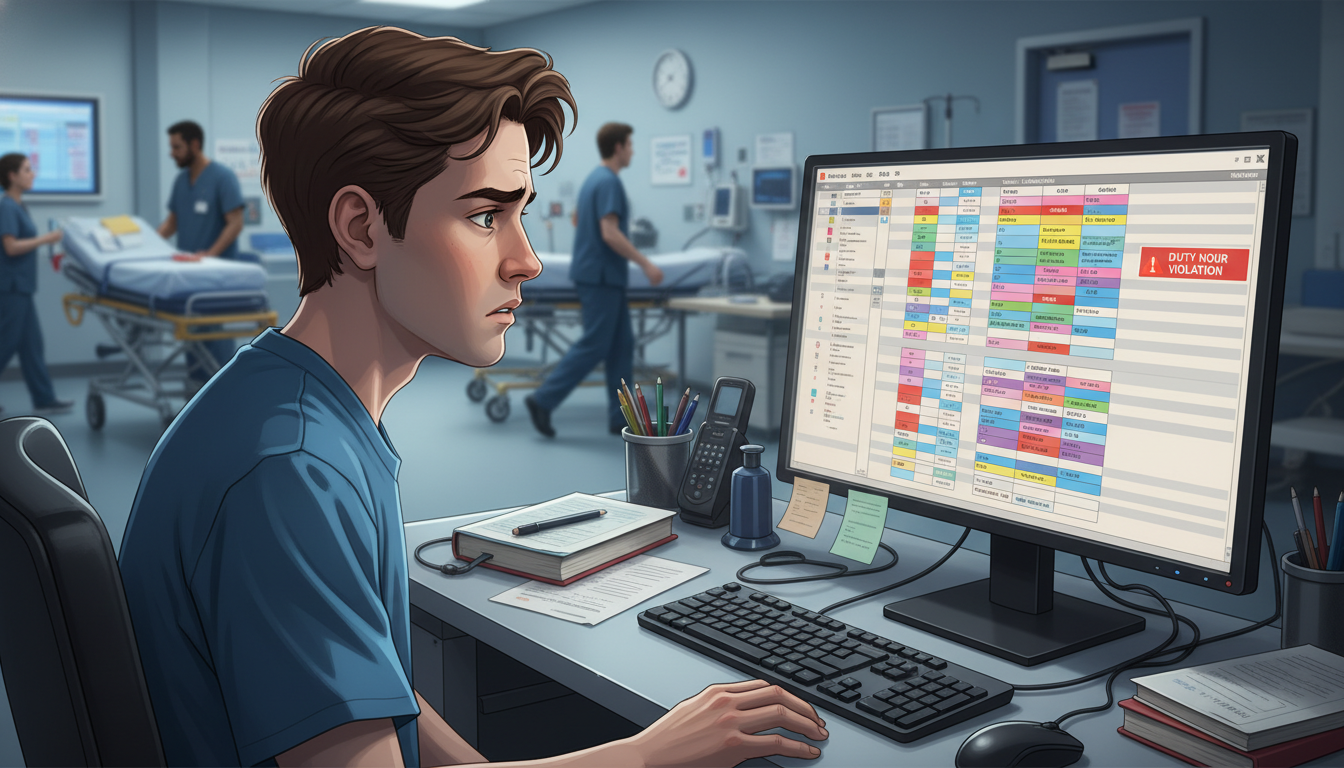
Red Flag #2: Chronic Schedule Chaos and Duty Hour Games
All residencies have occasional schedule chaos. In EM‑IM, the combined structure adds complexity. A concerning pattern looks like:
- Frequent last-minute calls: “You’re now on nights starting tomorrow,” or “You’re being moved from the MICU to ED coverage without notice.”
- Residents consistently exceeding 80 hours/week or flipping between days and nights with unsafe turnaround times.
- Inconsistent or impossible expectations when switching from ED shifts to full inpatient months.
Malignant programs may normalize duty hour violations:
- Residents are told, “Don’t log that—you’ll get the program in trouble.”
- A culture of “If you can’t handle this, maybe you’re not cut out for EM‑IM” when discussing workload.
Healthy, high-volume EM‑IM programs may still be intense, but they:
- Track duty hours honestly
- Adjust schedules proactively
- Encourage transparency instead of concealment
Red Flag #3: Educational Identity Eclipsed by Service
In a well-run EM‑IM program, your role is learner first, workforce second. Warning signs that service dominates education:
- EM‑IM residents regularly covering extra ED shifts “because we’re versatile” without corresponding educational benefit.
- Being used to plug holes on ward services or admitting teams whenever census rises, at the cost of conferences or subspecialty electives.
- Lack of protected time for:
- EM didactics and SIM
- IM noon conferences
- Board review or EM‑IM–specific sessions
In malignant settings, leadership may glorify this imbalance:
- “Our residents are the hardest-working in the hospital.”
- “We train you to be tough; that’s our culture.”
- “You’ll thank us later for how much we make you work.”
Ambition in training is fine; exploitation is not.
Red Flag #4: Poor Outcomes for EM‑IM Residents
Look specifically at outcomes for the EM‑IM track, not just categorical EM or IM:
- Board pass rates: Are EM‑IM residents consistently passing both EM and IM boards?
- Fellowship and job placements: Do graduates match into competitive fellowships (e.g., critical care, ultrasound, cardiology) or secure desired jobs?
- Attrition: Have EM‑IM residents transferred, dropped to categorical status, or left medicine?
Malignant programs may:
- Refuse to discuss attrition or explain it vaguely as “personal issues” without details.
- Highlight a few star graduates while sidestepping patterns of burnout or board failure.
- Avoid sharing aggregate data with applicants.
A single resident leaving is not definitive. Patterns over years matter—especially in a small EM‑IM cohort.
Red Flag #5: Culture of Contempt or Division Between EM and IM
Dual departments can create dual loyalties—or dual resentments. Red flags include:
- EM faculty disparaging IM (“You’ll be happier once you’re out of those slow medicine months”) or IM faculty disparaging EM (“You guys just triage and turf”).
- Residents being mocked for their dual identity: “Make up your mind—are you ED or medicine?”
- Siloed cultures with limited cross-department respect, making your dual role emotionally draining.
Healthy programs celebrate EM‑IM as a bridge, not a burden. Malignant programs weaponize departmental rivalries and let residents absorb the fallout.
How to Research EM‑IM Programs Before You Apply
Use Multiple Data Sources, Not Just Word of Mouth
As an MD graduate approaching the allopathic medical school match, you should treat program research like a clinical workup: gather data, look for consistency, and avoid overreacting to a single anecdote.
Key sources:
Official Program Websites and ACGME Data
- Program structure, rotation schedules, and call expectations
- EM‑IM–specific leadership and curriculum description
- ACGME citations or status (if accessible through public channels or institutional reports)
Resident and Alumni Lists
- How many EM‑IM residents per year?
- Are alumni listed with their current positions?
- Do EM‑IM graduates stay on as faculty (a good sign) or disappear entirely (potentially concerning)?
Third-Party Platforms and Forums
- Student Doctor Network (SDN), Reddit r/medicalschool / r/residency, specialty-specific forums
- Look for:
- Repeated mentions of toxicity or support over several years
- Patterns involving leadership changes or service expectations
- Be cautious: anonymous reports can be biased, but consistent themes across sources carry weight.
Your Medical School’s Graduate Medical Education Office
- Ask if recent grads matched at your target programs
- Request private, honest feedback from alumni about culture, support, and malignant features
Key Pre-Application Questions to Ask Yourself
When reviewing each EM‑IM program, reflect on:
- Is EM‑IM clearly integrated or just “bolted on”?
- Is there documented support for wellness, mental health, and fatigue mitigation?
- Are duty hours, supervision, and evaluation processes transparent?
If basic structural information about the EM‑IM track is missing or vague while the categorical EM or IM pages are robust, that’s an early soft red flag.
Interview and Rotation Strategies to Detect Toxic Programs
The interview day is curated, but if you know what to look for, you can still detect residency red flags.
During Interview Day: Pay Attention to What’s Not Highlighted
Resident Interactions
- Do EM‑IM residents seem relaxed, candid, and collegial?
- Are they allowed to speak to you without faculty hovering?
- Is there visible camaraderie between EM and IM residents?
Program Director Tone
- When you ask about duty hours, wellness, or resident support, is the response:
- Detailed and specific?
- Defensive or dismissive (“We’re not that kind of program”)?
- How are concerns and grievances handled? Is there a documented process?
- When you ask about duty hours, wellness, or resident support, is the response:
Schedule Transparency
- Do they show you a sample EM‑IM schedule by PGY year, including:
- EM shifts and IM ward months
- ICU time, electives, and continuity clinic
- Are night float, cross-coverage expectations, and holiday schedules clearly explained?
- Do they show you a sample EM‑IM schedule by PGY year, including:
A malignant residency program will often gloss over details or answer in platitudes: “We follow ACGME guidelines,” without giving concrete examples.
High-Yield Questions to Ask EM‑IM Residents
You are not accusing; you are gathering data. Consider asking:
- “How does your schedule compare to categorical EM and IM residents in terms of hours and intensity?”
- “When you have a conflict between an EM and IM requirement, who advocates for you?”
- “Have there been any recent changes in leadership or structure? What prompted them?”
- “Do you feel comfortable calling in sick? What happens if you do?”
- “How often do residents miss conference for service coverage?”
Pay attention not just to answers, but to body language:
- Long pauses, nervous laughter, or vague reassurances like “It’s fine, we all survive,” can be subtle toxic program signs.
- If multiple residents independently mention the same concern—e.g., “We’re always pulled into extra ED shifts during our IM months”—take that seriously.
Evaluating Away Rotations and Sub‑I Experiences
If you do an away rotation or sub‑internship with an EM or IM department that hosts EM‑IM residents, use that time deliberately:
- Watch how attendings speak to residents under stress. Is there support or shaming?
- Notice whether residents stay well past shift end regularly with no acknowledgment.
- Ask junior residents about transition from medical school to residency: “What surprised you the most?”
If possible, ask specifically to work with or shadow EM‑IM residents. Direct exposure often reveals whether they are:
- Overburdened compared to peers
- Marginalized or central to the team
- Supported by faculty, or left to fend for themselves

Interpreting Mixed Signals and Making Safe Rank Decisions
No program is perfect. You’ll likely hear some complaints about every residency you consider. The key is to differentiate:
- Normal, fixable pain points in rigorous training
vs. - Systemic, unaddressed toxicity that defines the culture
Yellow Flags vs. Red Flags
Yellow flags (watch closely, but not necessarily disqualifying):
- High volume and hectic ED or wards with tired residents who still speak positively overall.
- Recent leadership turnover with clear communication about changes.
- Some schedule inefficiencies acknowledged as ongoing improvement work.
Red flags (strong reason to rank low or not at all):
- Multiple residents independently describe the program as “toxic,” “malignant,” or “soul-crushing.”
- Stories of retaliation for speaking up about safety, harassment, or abuse.
- Chronic duty hour violations, hidden or normalized.
- EM‑IM residents regularly missing required conferences or educational experiences without mitigation.
- A culture of mockery, intimidation, or fear.
For an MD graduate in the allopathic medical school match, one malignant residency program on your rank list can significantly alter your career satisfaction and mental health trajectory. It is better to rank fewer, safer programs than to include one you strongly suspect is malignant solely to “increase odds.”
When You Hear Conflicting Accounts
You may encounter situations where:
- One resident is glowing; another warns you privately.
- Online forums list a program as “malignant,” but your interview day seems positive.
- An older grad says it was toxic, but current residents say it’s much improved.
Strategies:
Ask about the timeline of change.
- “I heard the program went through a difficult period a few years ago—what has changed since then?”
- Look for concrete changes (new PD, added faculty, new wellness initiatives), not just “We’re working on it.”
Check for alignment between narrative and structure.
- If they claim burnout has improved, do you see increased staffing, better schedules, more support?
- If they say EM‑IM is now well integrated, is there documentation of EM‑IM–specific curriculum and leadership?
Weigh recency heavily.
- Recent interns and junior residents often have the clearest read on current culture.
- Alumni from 7–10 years ago might be describing a very different era.
Protecting Yourself: Practical Steps and Mindset
Mindset: You Are Not “Weak” for Avoiding Toxic Environments
Some applicants fear they’re being “soft” if they prioritize culture over prestige. In reality:
- A supportive EM‑IM environment allows you to learn more, grow faster, and sustain your career longer.
- Surviving a malignant residency program does not make you a better physician; it simply increases your risk of burnout, depression, and leaving clinical practice.
Choosing against a malignant or toxic program is professional self-preservation, not avoidance of hard work.
Concrete Action Steps
Create a Red Flag Checklist
- Before interview season, list:
- Deal-breakers (e.g., chronic duty hour violations, retaliation for reporting)
- Major concerns (e.g., poorly integrated EM‑IM track)
- Acceptable challenges (e.g., high volume but with good support)
- Use it systematically after each encounter.
- Before interview season, list:
Debrief with Trusted Mentors
- Discuss your impressions with EM and IM faculty who know you well.
- Ask them to help you interpret ambiguous signs and weigh risk vs benefit.
Document Your Impressions Immediately
- After each interview or rotation, jot down:
- What residents said (verbatim if possible)
- Your emotional reaction walking out
- Perceived strengths and red flags
- This will be invaluable when ranking programs later.
- After each interview or rotation, jot down:
Don’t Ignore Your Gut
- If you leave a program feeling anxious, demeaned, or “not okay,” honor that reaction.
- Conversely, a place where you feel respected and seen—even if intense—may be a good fit.
Frequently Asked Questions (FAQ)
1. Is it better to attend a prestigious but potentially malignant EM‑IM program or a less well-known but supportive one?
Supportive almost always wins. In emergency medicine internal medicine, your clinical skills and resilience emerge from the quality of training, not name recognition alone. A malignant residency program can damage your mental health, erode confidence, and limit your performance—even if the institution is “top tier.” Fellowship directors and employers increasingly value strong letters and solid performance over brand names.
2. How can I tell if a program is just “hard” versus truly malignant?
Look for patterns:
- Hard but healthy: High volume, tired residents, but:
- They still describe faculty as supportive.
- Duty hours are tracked honestly.
- Concerns lead to changes.
- Malignant:
- Residents describe fear, humiliation, or retaliation.
- Chronic duty hour violations are minimized or hidden.
- EM‑IM residents feel expendable or invisible. Intensity + respect + transparency = challenging but safe. Intensity + fear + dishonesty = malignant.
3. As an MD graduate, will avoiding malignant programs hurt my chances in the allopathic medical school match?
No. You increase your risk of long-term harm by ranking programs with clear residency red flags. The NRMP’s data show that applicants who rank a sufficient number of programs in their specialty generally match, and many excellent EM‑IM and categorical programs are not malignant. Focus on building a broad list of reasonable, non-toxic options rather than clinging to one or two potentially malignant programs for perceived prestige or geography.
4. What should I do if I only realize a program is malignant after I’ve started?
First, prioritize your safety and well-being:
- Use institutional channels: program leadership, GME office, ombudsperson, or resident union (if available).
- Seek confidential support from mental health professionals and trusted mentors.
- If needed, explore transfer options to another program or, in some cases, a pathway to shift from EM‑IM to categorical EM or IM. Transferring is complicated but not impossible. Many PDs understand that some training environments are harmful and will not hold it against you if you approach the process professionally and honestly.
By approaching your EM‑IM residency search with clear eyes and structured evaluation, you can avoid malignant programs and choose a training environment that challenges you clinically without damaging you personally. Your goal is not just to survive five years—it is to build a sustainable, fulfilling career at the intersection of emergency medicine and internal medicine.