Why “Malignant” Programs Matter Even More for Non-US Citizen IMGs
For a non-US citizen IMG pursuing Emergency Medicine-Internal Medicine (EM-IM combined), choosing the right residency is not just about prestige or geography—it can determine whether you finish training, maintain your visa status, and ultimately practice in the US.
A malignant residency program is one where systemic toxicity—chronic disrespect, fear-based culture, unsafe workloads, poor education, and zero support—overshadows training. A “toxic” or malignant environment is hard on any resident, but for a foreign national medical graduate on a visa, the stakes are higher:
- You may feel less able to speak up or complain.
- Transferring programs can threaten your immigration status.
- You may lack family support locally.
- You may be more vulnerable to discrimination and exploitation.
This article focuses on identifying malignant residency programs and specific residency red flags for non-US citizen IMGs applying to Emergency Medicine-Internal Medicine (EM IM combined) programs.
Understanding Malignant vs. Simply “Demanding” Programs
Not all intense or high-volume programs are malignant. EM-IM combined residencies are inherently demanding: long hours, frequent transitions between ED and inpatient services, and steep learning curves. A strong but healthy program may feel exhausting yet still be supportive and educational.
A malignant residency program, in contrast, shows patterns like:
- Chronic disrespect, bullying, or public shaming
- Blatant disregard for duty hour rules and resident safety
- Retaliation when residents speak up
- High rates of resident burnout, leaves of absence, or attrition
- Systemic discrimination (including against IMGs and visa holders)
- Poor or dishonest communication from leadership
Key idea: Intensity + support = rigorous, but healthy.
Intensity + fear + disrespect = malignant.
Core Toxic Program Signs: What EM-IM Applicants Should Watch For
Below are major toxic program signs especially relevant to EM-IM combined applicants. These apply both to standalone emergency medicine and internal medicine tracks, but in combined programs the risks are amplified because you’re navigating two departments and two cultures.
1. Culture of Fear, Blame, and Public Humiliation
What it looks like:
- Attendings or senior residents routinely yell at or belittle interns.
- Residents are publicly shamed in front of staff, nurses, or patients.
- Complications or errors are treated as moral failures rather than learning opportunities.
- Morbidity & Mortality (M&M) conferences feel like punishment sessions, not teaching sessions.
Red flags during your interview day:
- Residents describe their attendings as “scary” or “you just don’t want to get on their bad side.”
- When you ask, “How does the program respond when a resident makes a mistake?” residents pause, look at each other, or give very vague answers.
- Faculty heavily emphasize “we hold residents to a very high standard” but never mention support, coaching, or remediation.
Why this is dangerous for non-US citizen IMGs:
- You may already feel insecure about language, documentation styles, or unfamiliar systems.
- A fear-based culture increases your risk of hiding errors rather than addressing them early.
- You may be less likely to seek help if you are worried about negative evaluations affecting your visa or future job.
Good signs instead:
- Residents say things like, “Attendings are tough but fair,” or “We debrief difficult cases, and they help us improve.”
- M&M is described as constructive, with a systems-based focus rather than blaming individuals.
2. Chronic Duty Hour Violations and Unsafe Workloads
Emergency medicine internal medicine combined training is naturally time-intensive. But consistent duty hour violations and unsafe coverage patterns are serious residency red flags.
Red flag patterns:
- Residents report regularly staying 3–4+ hours past shift end, not occasionally but routinely.
- Cross-covering large numbers of critically ill patients (e.g., one resident covering multiple ICUs overnight).
- ED shifts consistently extend far beyond scheduled hours due to poor staffing or unrealistic expectations.
- Interns or juniors doing work that should be done by seniors or attendings with little supervision.
- Residents say they “don’t bother logging duty hours honestly because program leadership ignores it or discourages it.”
Questions to ask:
- “How often do you stay more than an hour past the end of your ED or ward shift?”
- “Are duty hours monitored, and what happens if they’re repeatedly violated?”
- “Has the program ever been cited by the ACGME for duty hour or supervision issues?”
For non-US citizen IMGs:
- Chronic overwork increases errors and burnout, which can lead to remediation or dismissal.
- Visa-related appointments or paperwork might be impossible to attend if schedules are inflexible.
- A culture that ignores ACGME standards can signal deeper structural problems and lack of resident advocacy.
Green flags:
- Leadership acknowledges occasional busy periods but emphasizes system-level strategies (float shifts, backup coverage, night float).
- Residents feel comfortable reporting duty hour violations without fear of retaliation.
3. High Attrition, Transfers, or Silent Gaps in Resident Classes
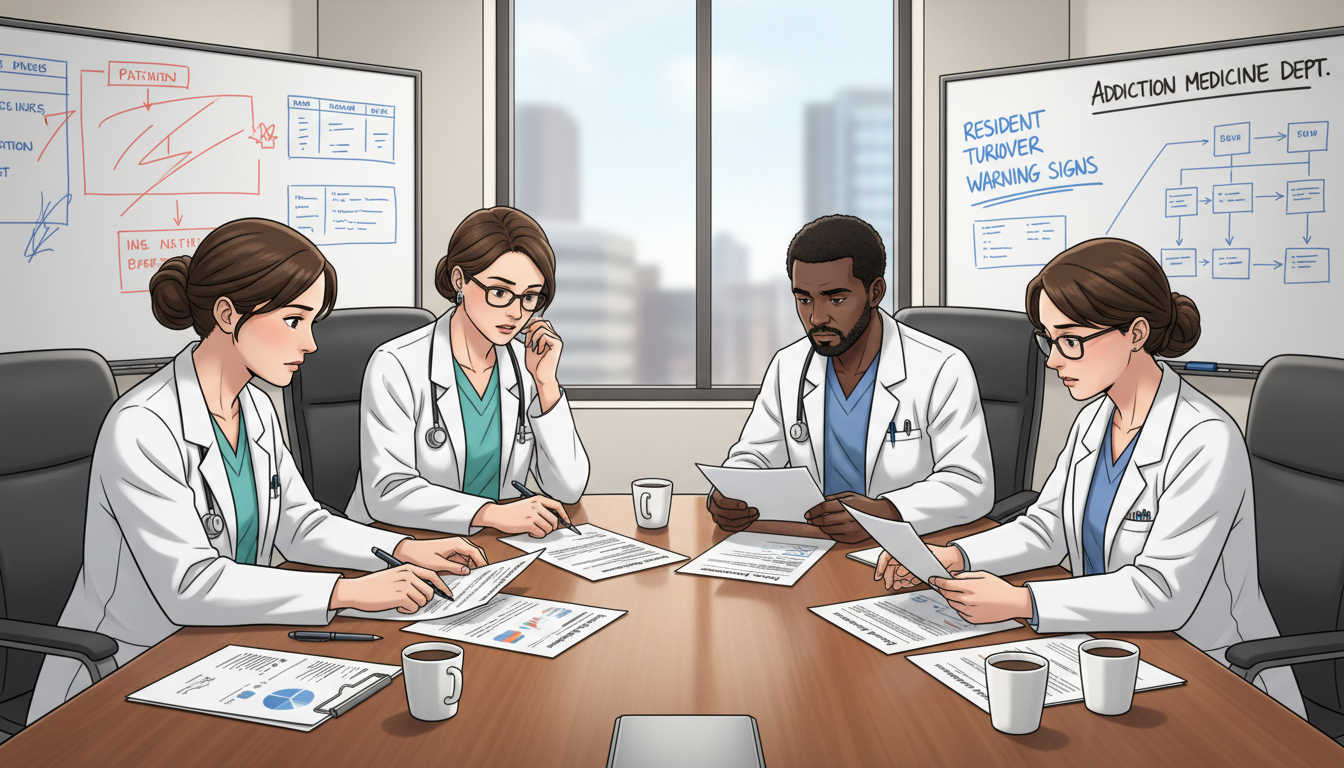
One of the clearest signs of a malignant residency program is a pattern of residents leaving, being dismissed, or going on prolonged leave without transparent explanations.
What to watch for:
- Multiple EM-IM residents missing from mid-level or senior classes (e.g., “We have 4 interns, 2 second-years, and 1 third-year…”).
- Residents hesitate or stutter when explaining why people left.
- Faculty avoid or minimize questions about attrition: “Residency just isn’t for everyone.”
Specific questions to ask (and how to interpret answers):
“Have any residents left the EM-IM program in the last 3–5 years? Why?”
- Healthy answer: Honest, specific, non-defensive (e.g., “One switched to anesthesia for lifestyle reasons; one returned home for family illness.”)
- Concerning answer: “People move on,” “I’m not sure,” or obvious discomfort and change of topic.
“How often do residents go on leave or extend residency due to burnout, wellness, or remediation?”
- A single case over many years is not necessarily alarming; repeated patterns are.
“Do residents ever transfer from EM-IM to categorical EM or IM?”
- It’s not inherently bad if a few switch by preference, but if many are “escaping” combined training due to poor support, that’s a warning sign.
For foreign national medical graduates:
- Transferring programs can be complicated with H-1B or J-1 visas, and sometimes not feasible.
- If many residents are leaving or being dismissed, the program may not be supportive enough for someone adapting to a new system, culture, and immigration constraints.
4. Poor Education and Minimal Supervision in High-Risk Settings
EM-IM combined programs place you at the front line of both acute and chronic care. At a toxic EM or IM environment, you might be pushed far beyond your competence level without backup.
Signs of poor educational structure:
- Residents describe most of their time as “scut work” with little teaching: calling consults, chasing labs, arranging follow-up, with minimal bedside teaching.
- In the ED, attendings are rarely present, or they sign charts without seeing patients.
- On inpatient IM services, residents are expected to manage complex patients with minimal attending rounds or supervision.
- Didactics are frequently canceled due to staffing demands, or residents say they never have protected time.
Questions to ask:
- “How often are didactics canceled for service needs?”
- “Is there protected conference time in both EM and IM?”
- “When you feel out of your depth in the ED or on the wards, how easy is it to get help from seniors or attendings?”
Non-US citizen IMG-specific concerns:
- You may be less familiar with US malpractice risk and standards of documentation. Poor supervision puts you at legal risk.
- Inadequate teaching can jeopardize board exam performance and fellowship competitiveness later.
Positive signs:
- Residents consistently describe attendings as approachable and present.
- There is clear structure: simulation sessions, ultrasound training, joint EM-IM conferences, robust feedback systems.
- Didactics are truly protected; pages and ED coverage are handled by backups during conference.

EM-IM–Specific Red Flags: The Double Culture Problem
Combined emergency medicine internal medicine programs depend on collaboration between two departments. Dysfunction in that relationship is a unique source of toxicity.
1. EM and IM Departments Don’t Communicate or Respect Each Other
What this looks like:
- EM faculty treat EM-IM residents as second-class compared to categorical EM residents.
- IM faculty consider EM-IM residents “always rotating somewhere else” and exclude them from leadership roles or continuity clinics.
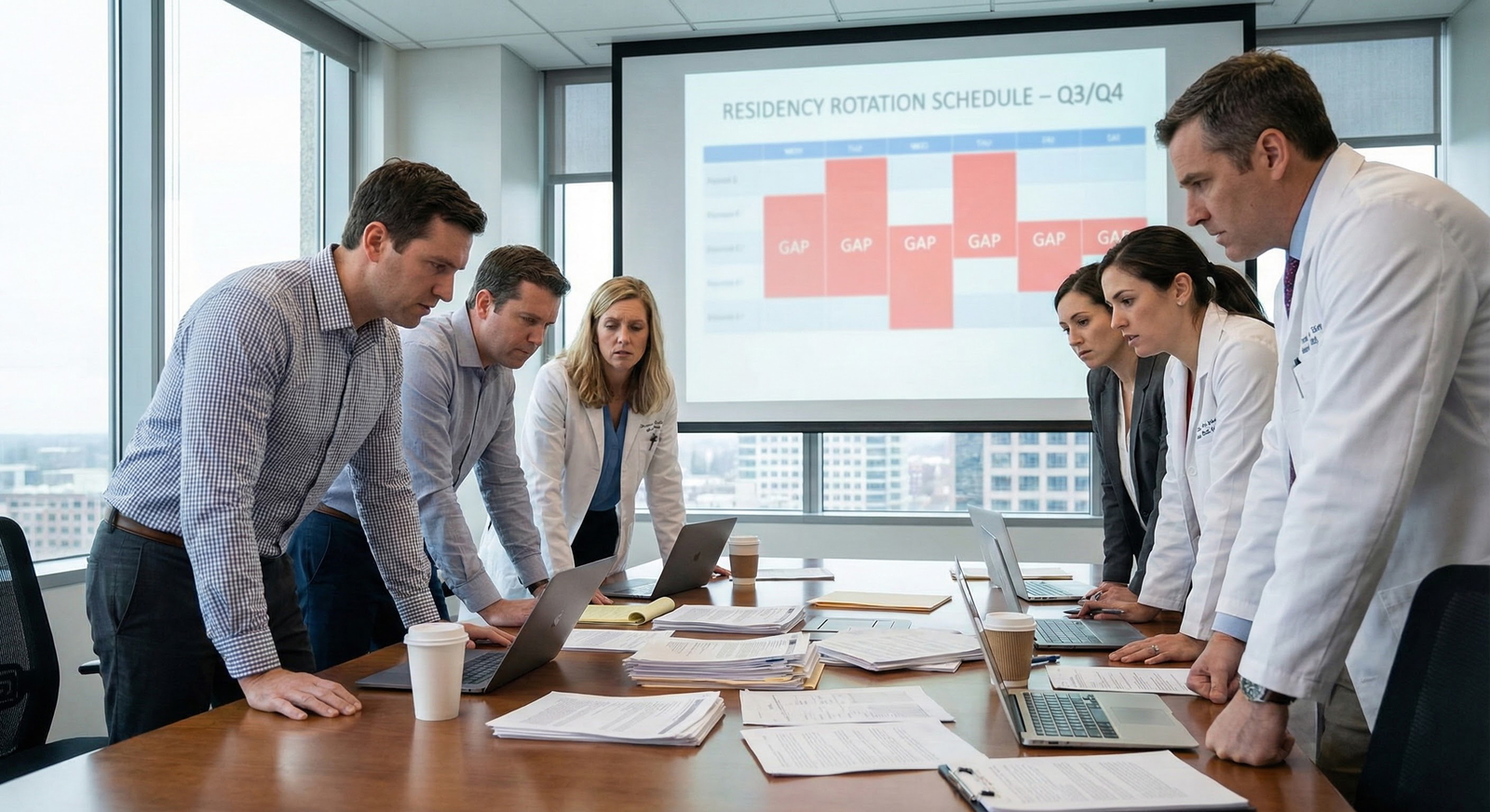
- Schedules are constantly changing last minute because EM and IM leadership don’t coordinate.
- Residents feel they have “two bosses” with conflicting expectations and little mediation.
Questions to ask:
- “How do EM and IM leadership coordinate your schedule and evaluations?”
- “Do you feel like a full member of both departments?”
- “Are there EM-IM specific leadership roles (chief resident, liaison, curriculum reps)?”
Red flags in responses:
- Residents laugh nervously or say, “We’re the stepchildren of both departments.”
- No EM-IM chief or formal EM-IM advisor.
- Faculty from each side complain about the other even in front of applicants.
2. Lack of EM-IM Mentorship and Career Guidance
Malignant programs often neglect combined residents’ unique career paths (e.g., critical care, administration, global health, academic leadership).
Signs of neglect:
- No EM-IM faculty or recent graduates with combined careers to model.
- Residents are left to “figure out” combined board prep logistics (both ABEM and ABIM).
- No structured guidance on how to use dual training—for example, in ED observation units, ED-ICU, hospital leadership, or complex care clinics.
Questions to ask:
- “Who mentors EM-IM residents for fellowship and career planning?”
- “Where have recent EM-IM graduates gone (jobs, fellowships)?”
- “Do you have EM-IM-specific academic or QI projects?”
For non-US citizen IMGs:
- You may need even more guidance on navigating visas for fellowships, job sponsorship, and understanding where EM-IM is most valued.
- A program with no track record of helping foreign national medical graduates into fellowships or jobs is riskier.
3. Being Used as “Utility Players” Without Clear Educational Benefit
In malignant environments, EM-IM residents may be treated as flexible labor to plug staffing holes:
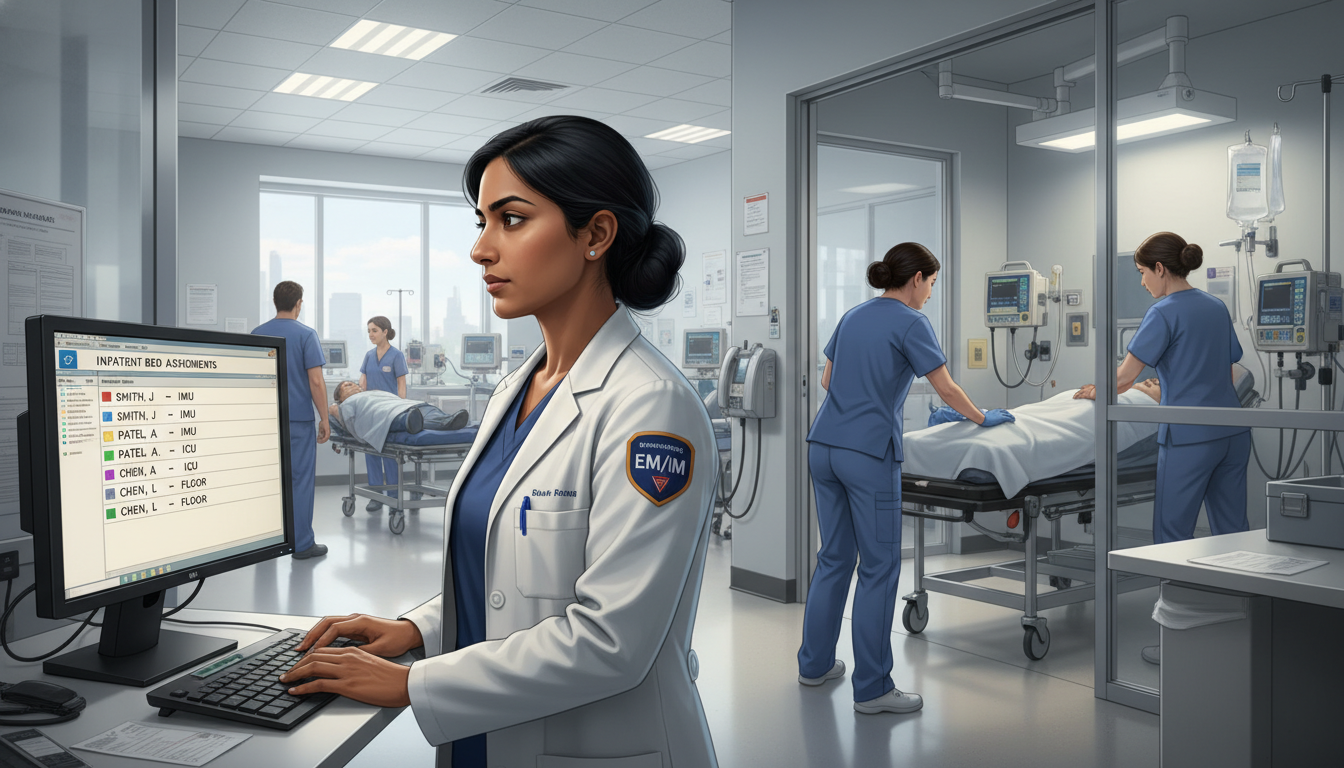
- Frequently “floated” between EM and IM to cover gaps, often at short notice.
- Placed on extra nights or high-volume ED shifts without corresponding learning goals.
- Asked to “cover” categorical residents’ rotations rather than following a planned EM-IM curriculum.
Questions to ask:
- “Are EM-IM residents ever used as backup coverage when services are short-staffed?”
- “How much schedule stability do you have month-to-month?”
- “Is your combined curriculum clearly laid out for all five years?”
If residents complain about chronic last-minute changes and being “sent wherever they need bodies,” that is a toxic program sign.
Visa, Bias, and Power Dynamics: Extra Red Flags for Non-US Citizen IMGs
As a non-US citizen IMG, there are additional layers of vulnerability. A program can look reasonably functional on the surface but be malignant for IMGs specifically.
1. Inconsistent or Evasive Answers About Visa Support
Programs may say they “consider” non-US citizen applicants but be vague about concrete support.
Ask directly:
- “Do you currently have residents on J-1 or H-1B visas?”
- “How many non-US citizen IMGs are in the program right now?”
- “Who in the GME office helps with visa processing and immigration questions?”
Red flags:
- “We haven’t sponsored in a few years, but it shouldn’t be a problem.”
- No current visa-holding residents despite a large program size.
- Residents on visas are unaware of who handles their immigration issues and appear stressed or confused.
A malignant residency program may:
- Delay paperwork, causing visa stress or lapses.
- Implicitly pressure you to stay silent about abusive conditions because of your visa dependence.
- Treat your immigration questions as an annoyance.
2. Patterns of Discrimination or Microaggressions
Discrimination can be overt or subtle:
- Jokes about accents, medical school location, or “where you’re really from.”
- IMGs consistently assigned more scut work, fewer procedures, or fewer leadership roles.
- Non-US citizen IMGs rarely selected as chiefs, even in large cohorts.
- Residents quietly warn you that some attendings “don’t like IMGs” or “are tough on accents.”
Questions to ask (ideally in resident-only spaces):
- “How are IMGs treated here compared to US graduates?”
- “Have there been any issues with discrimination or harassment, and how did leadership respond?”
Healthy programs will:
- Acknowledge that bias occurs everywhere.
- Show examples of how they addressed specific issues.
- Have IMGs in leadership roles and fellowship placements.
3. Lack of Support for Nonclinical Challenges
You may face unique struggles: banking, driver’s license, taxes, cultural adjustment, or supporting family abroad.
Signs of a supportive program:
- Orientation or handouts tailored for international residents (SSN, credit, housing, transportation).
- GME office familiar with J-1 waiver options and long-term planning.
- Senior IMGs who help new residents with practical life issues.
Signs of a malignant or neglectful program:
- “We expect residents to figure that out themselves.”
- No awareness of the additional stress burden carried by foreign national medical graduates.
- Dismissing your needs as “extra work” or “not our responsibility.”
How to Detect Residency Red Flags Before You Match
You cannot directly label a “malignant program” from a website or one interview day. But you can collect multiple data points.
1. Do Pre-Interview Research
- Check ACGME and board pass rates
- Repeated board failures without a global explanation (e.g., “new exam format that year”) may reflect poor education or resident support.
- Look at program size and stability
- Frequent changes in program directors or sudden drops in class size are concerning.
- Search for news or online reviews cautiously
- Online forums (e.g., Reddit, SDN) may contain biased information, but if multiple independent sources describe the same issues—especially about being a malignant residency program—pay attention.
2. Ask Targeted Questions on Interview Day
Prepare a list before each EM IM combined interview. Ask different people the same question and compare their answers.
Examples:
- “What changes has the program made in response to resident feedback over the last 2–3 years?”
- “Have there been any recent ACGME citations or site visits, and what did you learn from them?”
- “How does the program handle underperforming residents? Are there formal remediation pathways?”
If leaders become defensive or residents look fearful answering these questions, that’s informative.
3. Use Resident-Only Sessions Wisely
The most honest information usually emerges when faculty are not present.
How to phrase delicate questions:
- “If your best friend were applying, what would you tell them to be cautious about here?”
- “What has made you think about leaving, if anything?”
- “How safe do you feel raising concerns about schedules, bullying, or discrimination?”
Observe nonverbal cues: eye contact, hesitation, nervous laughter, or sudden silence among residents can reveal more than the words themselves.
4. Follow Up After Interviews
You can send polite follow-up emails to residents or coordinators with specific questions you forgot to ask. For anonymity and candor, some applicants also:
- Reach out to recent graduates via LinkedIn.
- Ask their medical school advisors if they know alumni at the program.
- Attend virtual Q&A sessions or second-look events to observe interactions again.
If multiple independent people warn you about the same toxic program signs, take it seriously—even if the hospital is famous or in a desirable city.
Balancing Risk: When to Rank or Avoid a Borderline Program
Non-US citizen IMGs sometimes feel pressure to rank any program that is visa-friendly, even if it seems problematic. You must balance:
- Risk of not matching vs.
- Risk of matching to a malignant program that harms your mental health, career, and immigration status.
Consider avoiding or ranking very low any EM-IM program where you see multiple strong red flags, such as:
- Obvious culture of fear and humiliation
- High attrition or mysterious resident disappearances
- Chronic duty hour abuse and ACGME citations
- Clear anti-IMG attitudes or lack of visa support
- No EM-IM mentorship and chaotic dual-department coordination
If you must rank a borderline program due to limited options:
- Try to identify potential allies (supportive residents, specific faculty, GME office).
- Clarify visa details in writing (type of visa, support for renewals, typical timelines).
- Have a mental plan for self-care, external mentorship (e.g., virtual IMG networks), and documentation of any serious issues.
Frequently Asked Questions (FAQ)
1. How can I tell the difference between a “tough” EM-IM program and a truly malignant one?
A tough EM-IM program will be busy and demanding but still:
- Respects residents as professionals and learners.
- Enforces duty hours most of the time and addresses violations.
- Responds constructively to feedback.
- Has transparent communication about any past problems.
A malignant residency program adds fear, disrespect, dishonesty, and neglect to the workload. If residents are scared to speak, frequently disappear, or describe the culture as “survival mode,” that goes beyond toughness.
2. As a non-US citizen IMG, should I ever rank a program that seems somewhat toxic?
This depends on your risk tolerance and alternative options. If you have several decent programs, strongly consider not ranking a clearly malignant one. If your list is very short, you might cautiously rank a program that has some issues but not major, systemic problems.
If you do rank such a program:
- Make sure visa support is reliable.
- Understand policies for remediation, evaluation, and appeal.
- Plan for external mentors (former attendings, IMG networks, online communities) to help you navigate difficulties.
3. What if residents give me conflicting information about a program?
This is common. People experience the same environment differently.
To interpret conflicting signals:
- Look for patterns: Are multiple people independently mentioning the same concerns?
- Consider seniority: Chiefs and PGY-3+ may have a broader perspective on systemic issues.
- Pay attention to body language and emotional tone, not just words.
- If things feel “off,” trust your instincts and weigh that program more cautiously.
4. How relevant are online “malignant program lists” for EM-IM residencies?
They can be a starting point but are often:
- Outdated
- Based on a small number of anecdotes
- Influenced by personal conflicts or expectations
Use them as one data point only. Confirm or refute what you read through:
- Your own interview experiences
- Conversations with current residents and recent graduates
- ACGME data and board pass rates
- Input from trusted mentors
If multiple independent sources, including your own observations, align with an online reputation for being a malignant residency program, be very cautious.
Choosing an EM-IM combined program as a non-US citizen IMG is a high-stakes decision. By deliberately searching for toxic program signs and weighing residency red flags specific to your situation, you can greatly reduce the risk of ending up in a malignant environment and instead find a program that challenges you, supports you, and prepares you for a sustainable, rewarding career.