Why “Malignant” Programs Matter Even in Clinical Informatics
Clinical informatics has a reputation for being forward‑thinking, collaborative, and less physically exhausting than many traditional clinical specialties. However, “malignant” or toxic programs absolutely exist—even in this relatively new specialty. For a US citizen IMG or American studying abroad, the stakes are especially high: you often have fewer backup options, more visa/logistics costs (even if you don’t personally need a visa, your IMG background may be scrutinized), and less informal access to insider information.
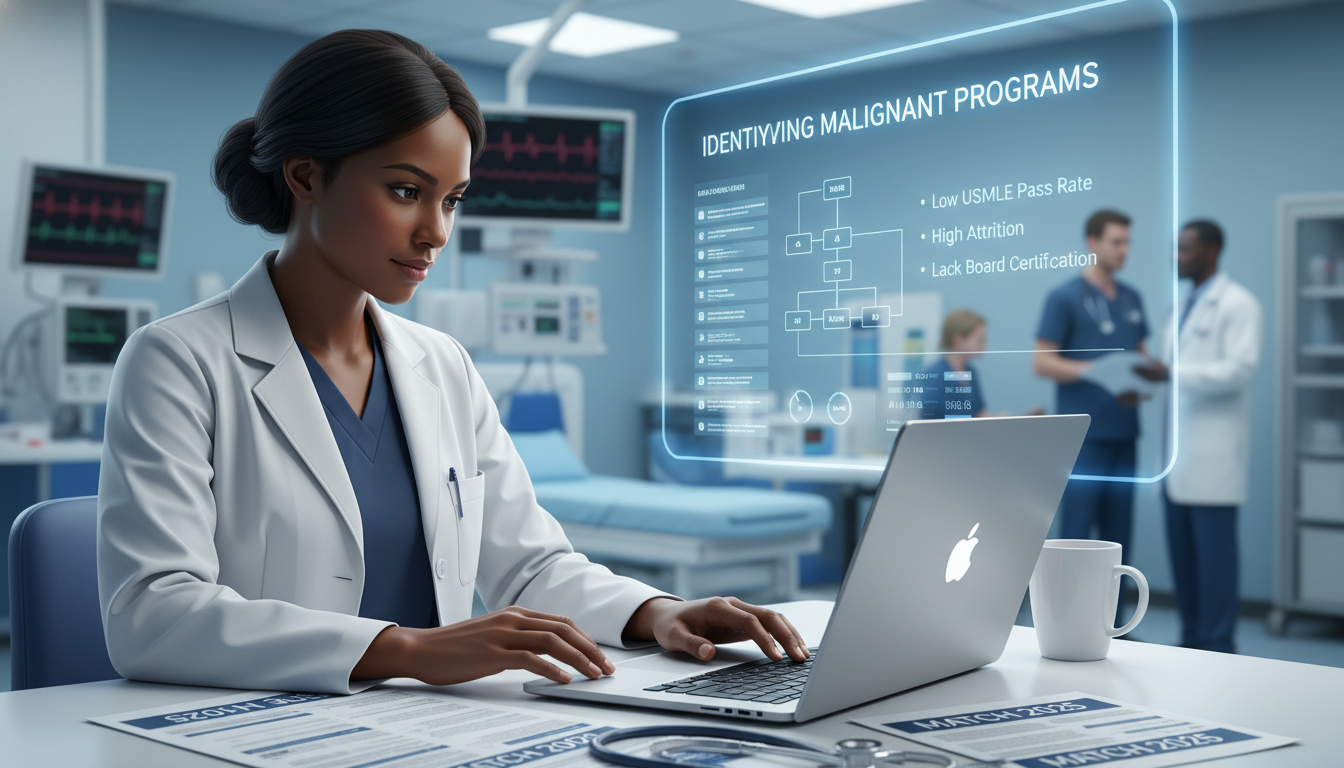
In this context, learning how to spot residency red flags and toxic program signs is a core survival skill, not optional. A malignant residency program doesn’t just make you unhappy; it can derail your career, damage your reputation, and undermine your long‑term goals in clinical informatics, health IT training, and even future fellowship opportunities such as a clinical informatics fellowship or data science roles.
This article focuses on:
- How malignant behavior uniquely appears in clinical informatics environments
- Specific residency red flags for US citizen IMGs and Americans studying abroad
- How to extract honest information before ranking programs
- Concrete examples and scripts you can use when talking with current residents and faculty
What “Malignant” Means in the Context of Clinical Informatics
Beyond Abuse: The Informatics-Specific Version of Toxicity
In many traditional specialties, a malignant residency program is synonymous with open verbal abuse, chronic duty hour violations, and punitive behavior. In clinical informatics, toxicity can be more subtle, often wrapped in the language of “innovation,” “startup culture,” or “high expectations.”
Common malignant patterns in clinical informatics programs include:
Exploitative Work Masquerading as “Opportunity”
- You are constantly told you’re getting “amazing exposure” to health IT, yet your time is spent doing:
- Endless EHR build tickets
- Data extraction grunt work
- Unpaid “consulting” on clinical workflow issues
- Little true education, mentorship, or project ownership.
- You are constantly told you’re getting “amazing exposure” to health IT, yet your time is spent doing:
Invisible Overwork
- Because much work is desk‑based, duty hours are easier to manipulate.
- Residents regularly:
- Join evening/early morning calls with vendors or IT teams
- Do weekend “go‑live” support far beyond scheduled time
- Are expected to be reachable on email/Slack 24/7 “just in case.”
Lack of Educational Structure
- Clinical informatics should have:
- Structured didactics (informatics theory, data standards, usability, interoperability)
- Protected project time
- Clear competency milestones
- Malignant programs leave residents to “figure it out,” then blame them for not knowing enough.
- Clinical informatics should have:
Unethical or Questionable IT Practices
- Pressuring residents to:
- Work on projects that may skirt privacy or data security rules
- Sign off on decisions they don’t fully understand
- Promote or defend vendor products irrespective of clinical impact.
- Pressuring residents to:
For a US citizen IMG, these patterns can be compounded by subtle bias—being treated as more “expendable,” given less support, or used primarily as cheap labor because you “should be grateful for the spot.”
Unique Vulnerabilities of US Citizen IMGs in Clinical Informatics
Why Your Background Changes the Risk Calculation
As a US citizen IMG or American studying abroad, you occupy a complicated space: you have US citizenship (or permanent residency) but completed medical school outside the US. In a competitive, niche area like clinical informatics, this can make you particularly vulnerable to malignant programs.
Key vulnerabilities:
Fewer Comparable Programs
- Clinical informatics as a specialty (and clinical informatics fellowship paths) are still relatively small.
- For residencies with a strong informatics focus (e.g., internal medicine, EM, pathology with integrated informatics) or combined pathways, the number of programs is limited.
- Malignant programs know that applicants may feel “I can’t be picky.”
Dependence on Reputation and Networking
- Informatics career paths heavily rely on:
- Mentors who can vouch for your technical and clinical strengths
- Strong letters from health IT leaders
- Collaborative publication and implementation project histories
- Toxic programs often hoard opportunities for favorites—often graduates of US schools—leaving IMGs with weak portfolios.
- Informatics career paths heavily rely on:
Hidden Bias and Stereotyping
- You may face:
- Lower initial expectations (“They probably don’t understand US healthcare systems”)
- Less trust with leadership‑facing projects or speaking roles
- Fewer chances to represent the program at conferences, despite interest and capability.
- You may face:
Over‑Reliance on “Any Match Is Good” Mentality
- Especially for a niche interest like health IT training and eventual clinical informatics fellowship, many IMGs are told to accept any spot that offers tangential exposure.
- Malignant programs use this desperation to:
- Ignore residents’ learning goals
- Overload them with non‑educational tasks
Core Residency Red Flags: General and Informatics-Specific
Even before you get to niche health IT issues, start with the classic malignant residency program red flags. Then layer on informatics‑specific warning signs.
Classic Toxic Program Signs (Applicable to Any Specialty)
Residents Look Exhausted, Defensive, or Guarded on Interview Day
- They avoid direct answers to “How is the workload?”
- They laugh off issues: “Well, every program has its problems, right?” without specifics.
- They won’t talk freely unless they’re away from faculty.
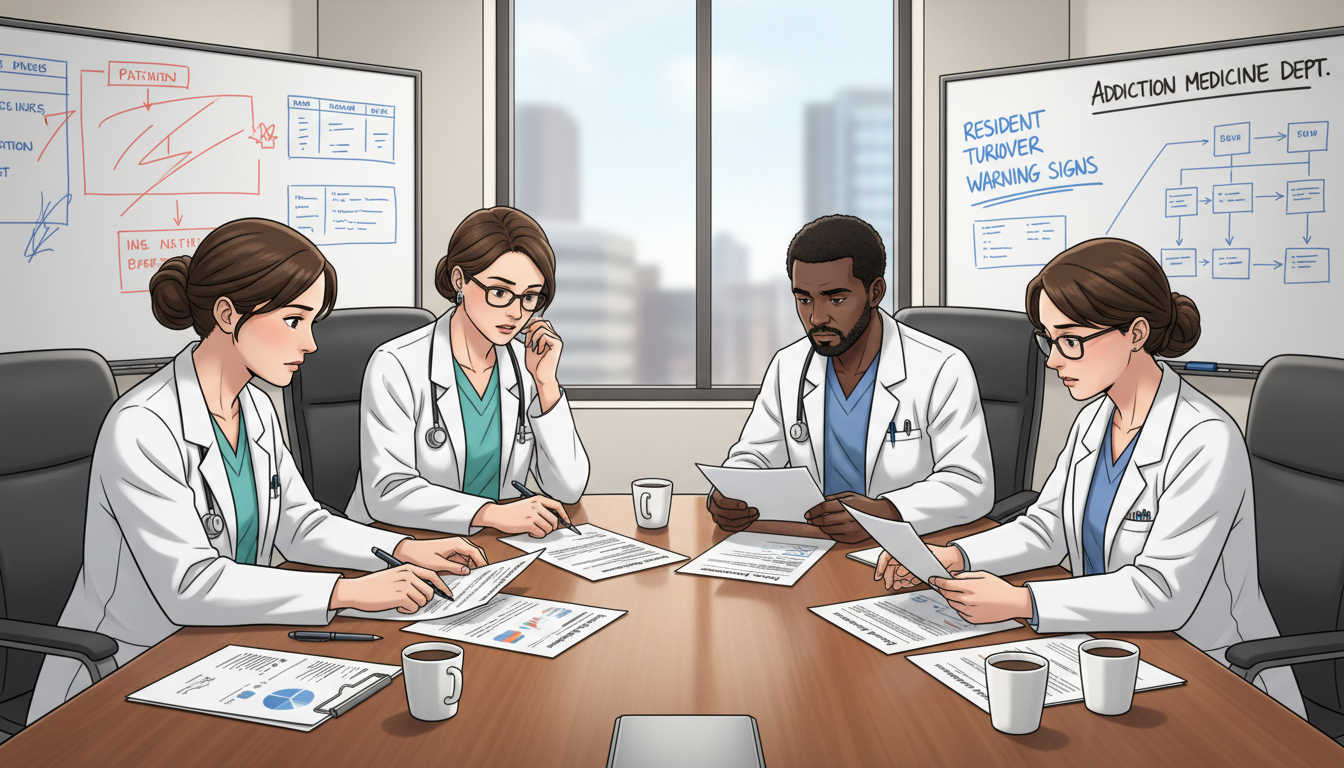
High Turnover or Non‑Renewal of Residents or Fellows
- Residents transfer out or do not complete training.
- Graduates warn away applicants, or none show up to recruitment events.
- The program explains this vaguely (“They weren’t a good fit”) without detail.
Program Leadership Dominates Every Conversation
- Residents never speak without faculty present.
- PD or chair interrupts residents’ answers or “corrects” them frequently.
- Overly rehearsed or scripted answers during Q&A.
Lack of Transparency About Duty Hours, Call, or Expectations
- Evasive answers about:
- Typical weekly hours
- Weekend responsibilities
- Holiday coverage
- They say, “We don’t really track that; we just do what needs to be done.”
- Evasive answers about:
Poor Board Pass Rates or Weak Outcomes
- For your core residency (e.g., IM, EM, Path, etc.), poor or inconsistent board pass rates.
- Graduates do not secure desirable jobs or fellowships, and the program blames them, not the system.
Informatics-Specific Red Flags
Clinical informatics has its own flavor of toxicity. Pay attention to these residency red flags:
No Clear Informatics Curriculum
Ask directly:- “What is the formal informatics curriculum? Is there a syllabus?”
- “Who directs the informatics education, and how is it evaluated?”
Red flag answers:
- “We mostly learn on the job.”
- “We’re very flexible; residents can do whatever they want informatics‑wise.” (Often code for no structure, no accountability.)
- “You’ll pick things up as you go during projects.”
Informatics Rotations Are Vague or Overly Service‑Oriented
- Rotations described as “helping the EHR team” or “supporting go‑lives” without explicit educational objectives.
- You’re expected to:
- Be on support calls routinely
- Manage ticket triage
- Cover administrative work for IT staff
- Little mention of:
- Data standards (FHIR, HL7)
- Clinical decision support design
- Human factors/usability
- Data governance & privacy
Vendor-Driven Rather Than Patient- or Safety-Driven Culture
- Leadership constantly emphasizes pleasing vendors or executives over improving patient care.
- Residents are used as “free QA testers” for new EHR features with no acknowledgement or authorship on resulting work.
- Discussions about conflict of interest or data ethics are absent.
No Residents Involved in Real Scholarly Projects
- Ask: “Which publications or presentations in informatics have residents led in the last 2–3 years?”
- Red flags:
- No recent resident‑first‑author work.
- A single superstar story used repeatedly, but no evidence of consistent resident success.
- Faculty take most first‑author spots while residents do background work.
Informatics Faculty Spread Too Thin or Largely Absent
- Only one informatics‑trained faculty member supports multiple services, projects, and teaching, with no real time for mentoring.
- Faculty are described as “busy executives” who “you’ll see whenever you can catch them.”
- Informatics conferences or seminars occur rarely or only when “time allows.”
Program Markets “Informatics” Without Substance
- Many programs use “informatics” as a buzzword to attract applicants without true infrastructure.
- Red flags:
- The website has aspirational language but very few concrete examples (no curriculum outline, no project titles, no faculty bios).
- Residents struggle to explain exactly what informatics they actually do.
How to Investigate Programs as a US Citizen IMG
You can’t rely solely on official websites or interview‑day presentations. You need a deliberate strategy to detect toxic program signs.
Step 1: Pre‑Interview Research
Scrutinize the Program Website for Informatics Depth
Look for:- Named informatics faculty with clear roles
- Defined informatics rotations or electives
- Evidence of informatics research or QI projects
- Connection to a clinical informatics fellowship or equivalent health IT training programs
If the “informatics” section is:
- Tiny
- Vague
- Or completely absent from the resident handbook
That’s an early yellow flag.
Check Resident Backgrounds and Career Paths
- Are there IMGs among current or recent residents?
- Have any US citizen IMGs successfully:
- Matched into clinical informatics fellowship
- Taken leadership roles in EHR or data teams
- Secured jobs in health IT or data science?
Very few IMG successes doesn’t automatically mean malignancy, but consistent absence plus vague explanations is concerning.
Review Publicly Available Data
- ACGME accreditation status and any citations
- Board pass rates for the core specialty
- Hospital reputation for IT implementation (e.g., HIMSS EMRAM score, EHR transitions)
Programs struggling with chaotic EHR transitions sometimes overburden residents to “fix everything.”
Step 2: On Interview Day – Questions That Reveal Red Flags
Prepare a few targeted questions to current residents and faculty. As a US citizen IMG, you should also test for cultural and educational fit.
Questions for Residents
- “How much of your informatics time is protected versus clinical or service work?”
- “Can you describe a recent informatics project that a resident led from start to finish?”
- “How does the program support residents who want to pursue clinical informatics fellowship?”
- “Are there any issues with people being overworked during go‑lives or major IT projects?”
- “As someone with a non‑US medical school background, have you felt fully supported here?”
Listen not only to the content, but tone:
- Long hesitations, nervous laughter, “Well, it depends…” can signal discomfort.
- If multiple residents independently warn “This place isn’t for everyone,” probe carefully.
Questions for Faculty and Program Leadership
- “How do you balance service needs for IT projects with resident education?”
- “What percentage of residents in the last 5 years have gone into informatics‑related careers or fellowships?”
- “How are residents involved in decision‑making about EHR changes or IT initiatives?”
- “Can you show me a sample informatics rotation schedule or learning objectives?”
Red flag responses:
- Deflecting: “You’ll learn a ton here; we don’t want to box residents in with rigid structures.”
- Vague placement of responsibility on residents: “Motivated residents find their own projects.”
- Over‑emphasis on system needs: “We’re all hands on deck when IT calls, education or not.”
Step 3: Off‑Cycle and Off‑Record Information
Reach Out to Recent Graduates (Especially IMGs)
- Ask honest questions:
- “Would you choose this program again?”
- “Did you feel your career in informatics was truly supported?”
- “How did the program handle conflict, burnout, or residents who struggled?”
- Ask honest questions:
Use Professional and Social Networks Carefully
- Look in:
- AMIA (American Medical Informatics Association) student/trainee groups
- Specialty‑specific IMG forums
- LinkedIn or X (Twitter) networks of clinical informatics professionals
Don’t spread rumors, but note consistent themes. If multiple unrelated people describe bullying leadership, chronic overwork, or informatics “in name only,” take that seriously.
- Look in:
Observe How they Treat You as a US Citizen IMG Applicant
- Are your questions taken seriously or brushed off?
- Do they:
- Confuse you with needing a visa
- Make subtle remarks about “needing to adjust to US systems” without asking about your experience
- Are you offered similar interviewing opportunities (e.g., time with the informatics director) as US‑school applicants?
Distinguishing High-Intensity from Malignant in Informatics
Not every demanding or chaotic program is malignant. Clinical informatics work can legitimately be high‑pressure, especially during:
- EHR go‑lives
- System downtimes or cybersecurity incidents
- Rapid implementation of new regulatory requirements
You need to distinguish healthy high‑intensity from systemic toxicity.
Features of Healthy High-Intensity Programs
Transparency:
- “The next 6 months will be challenging with our EHR transition; here is exactly how we’re protecting your education and time.”
Reciprocity:
- When residents help with major projects, they receive:
- Authorship on papers, posters, or internal reports
- Protected time later
- Recognition in evaluations and references
- When residents help with major projects, they receive:
Support Systems:
- Access to wellness resources, schedule adjustments after heavy weeks, and a culture where raising concerns is safe.
Educational Integrity:
- Even during busy periods, core informatics teaching remains prioritized.
Features of Truly Malignant Informatics Programs
Chronic Crisis Mode:
- Everything is presented as urgent, all the time.
- Residents are repeatedly asked to “step up” without recovery time.
Blame Culture:
- When IT projects fail or are delayed, residents are blamed for “not being proactive,” “not understanding the system,” or “not being a team player.”
Gaslighting About Workload:
- Residents who raise concerns about overwork or lack of learning are told:
- “This is just how informatics is.”
- “If you can’t handle this, you can’t be in health IT.”
- Residents who raise concerns about overwork or lack of learning are told:
Inequity in Opportunity Distribution:
- Certain residents (often US‑MD/DO graduates or “favorites”) get all high‑visibility projects, while IMGs handle repetitive, low‑recognition tasks.
Protecting Your Career and Making a Safe Rank List
Once you’ve gathered information, you need to translate it into ranking decisions that protect your long‑term goals in clinical informatics.
Prioritize Culture and Mentorship Over Buzzwords
As a US citizen IMG focused on clinical informatics:
Strong Culture Beats Fancy Branding
- A smaller, less famous program with:
- Supportive leadership
- Authentic informatics teaching
- Faculty who respect and mentor IMGs
Is worth far more than a “big name” malignant residency program.
- A smaller, less famous program with:
Look for Concrete Informatics Infrastructure
- Does the program:
- Have regular informatics conferences or journal clubs?
- Provide access to data analysts, IT staff, and project managers who like teaching?
- Offer integrated exposure to areas like interoperability, CDS design, human factors, and analytics?
- Does the program:
Confirm Paths to Next Steps
- Ask about:
- Past graduates going into clinical informatics fellowship
- Residents who took leadership roles in hospital IT or quality
- Support for AMIA membership, attending informatics conferences, or doing certificate courses.
- Ask about:
Red Flags That Should Push a Program Lower on Your List
Particularly concerning combinations:
- No defined informatics curriculum plus heavy emphasis on “helping IT”
- Residents unable or unwilling to describe typical weekly work
- Evidence of repeated resident burnout or attrition without clear remediation changes
- Patterns of dismissing IMGs’ questions or experiences
- Leadership that frames any criticism as disloyalty or lack of resilience
If you notice multiple such signs, it is safer to rank that program low—or not at all—even if it seems like your “only shot” at informatics exposure. You can often develop informatics skills via:
- Electives, research, and QI projects at non‑informatics‑branded programs
- Post‑residency certificates, part‑time roles in health IT, and later pursuit of a clinical informatics fellowship
Being stuck for years in a malignant environment is far more damaging than taking a slightly less fancy path.
FAQs: Identifying Malignant Programs for US Citizen IMGs in Clinical Informatics
1. As a US citizen IMG, should I ever rank a program I suspect is malignant?
If you have credible signs of systemic toxicity—high resident attrition, lack of curriculum, exploitative IT workload, chronic disrespect for trainees—avoid ranking the program if at all possible. If your list is very short, seek additional advice from mentors, but remember: no match is often better than years in a harmful environment that may compromise your career and wellbeing.
2. How can I tell if a program’s “informatics focus” is real or just a marketing term?
Ask for specifics:
- A written informatics curriculum or syllabus
- Example resident projects with outcomes (posters, publications, implementations)
- Named informatics faculty and their time commitment to teaching
- Past graduates who pursued informatics‑related careers
Vague answers or reliance on a single anecdote are warning signs.
3. Are informatics-heavy programs more or less likely to be malignant than traditional ones?
Neither inherently. However, informatics‑heavy programs may hide overwork under flexible, non‑clinical tasks, making abuses less visible (no obvious call schedules or duty hour logs). Evaluate them with the same rigor as any other program, but add attention to how they handle project workload, after‑hours IT demands, and realistic educational outcomes.
4. What if I only discover a program is toxic after I match?
Document experiences objectively (emails, schedules, project duties), seek allies among residents and faculty, and:
- Use official channels (GME office, ombuds, ACGME resident surveys)
- Look for transfer options if things are truly unsafe or unfixable
- Continue building your informatics skills through self‑study and external projects when possible
Your long‑term career is still salvageable; many informatics leaders have navigated difficult training environments successfully, but early recognition and proactive steps help limit damage.
By systematically examining culture, curriculum, workload, and outcomes—through the lens of your unique position as a US citizen IMG—you can greatly reduce the risk of landing in a malignant residency program and instead secure a training environment that truly advances your future in clinical informatics and health IT.