Why Med-Peds Program Culture Matters Even More for Non‑US Citizen IMGs
For a non-US citizen IMG, choosing a medicine-pediatrics (med peds) residency is not just about board pass rates and fellowship outcomes. Your visa status, cultural adjustment, and financial vulnerability all make the culture and safety of a program absolutely critical.
A malignant residency program is one where residents routinely feel unsafe, disrespected, or exploited. These are often toxic programs that ignore ACGME rules, mistreat residents, or neglect education in favor of service. For a foreign national medical graduate, especially on a visa, the consequences can be severe: immigration risk, burnout, career delays, and even needing to repeat residency.
This article will help you:
- Understand what “malignant” means in the med peds context
- Recognize specific toxic program signs and residency red flags
- Interpret what you hear (and don’t hear) on interview day
- Use targeted strategies as a non-US citizen IMG to protect yourself
- Ask smart questions that uncover hidden problems
1. What Does a “Malignant” Med-Peds Program Look Like?
“Malignant” is a strong word, but residents use it for a reason. It doesn’t just mean “busy” or “demanding.” Many excellent med peds programs are extremely busy yet healthy and supportive. A malignant program is characterized by chronic, systemic dysfunction that harms residents.
Core Features of a Malignant Program
Most malignant programs share several of these traits:
Chronic disrespect and intimidation
- Frequent yelling, shaming, or public humiliation
- Retaliation against residents who raise concerns
- Blaming individuals for systemic issues (e.g., staffing, EMR problems)
Abusive workload with no protection
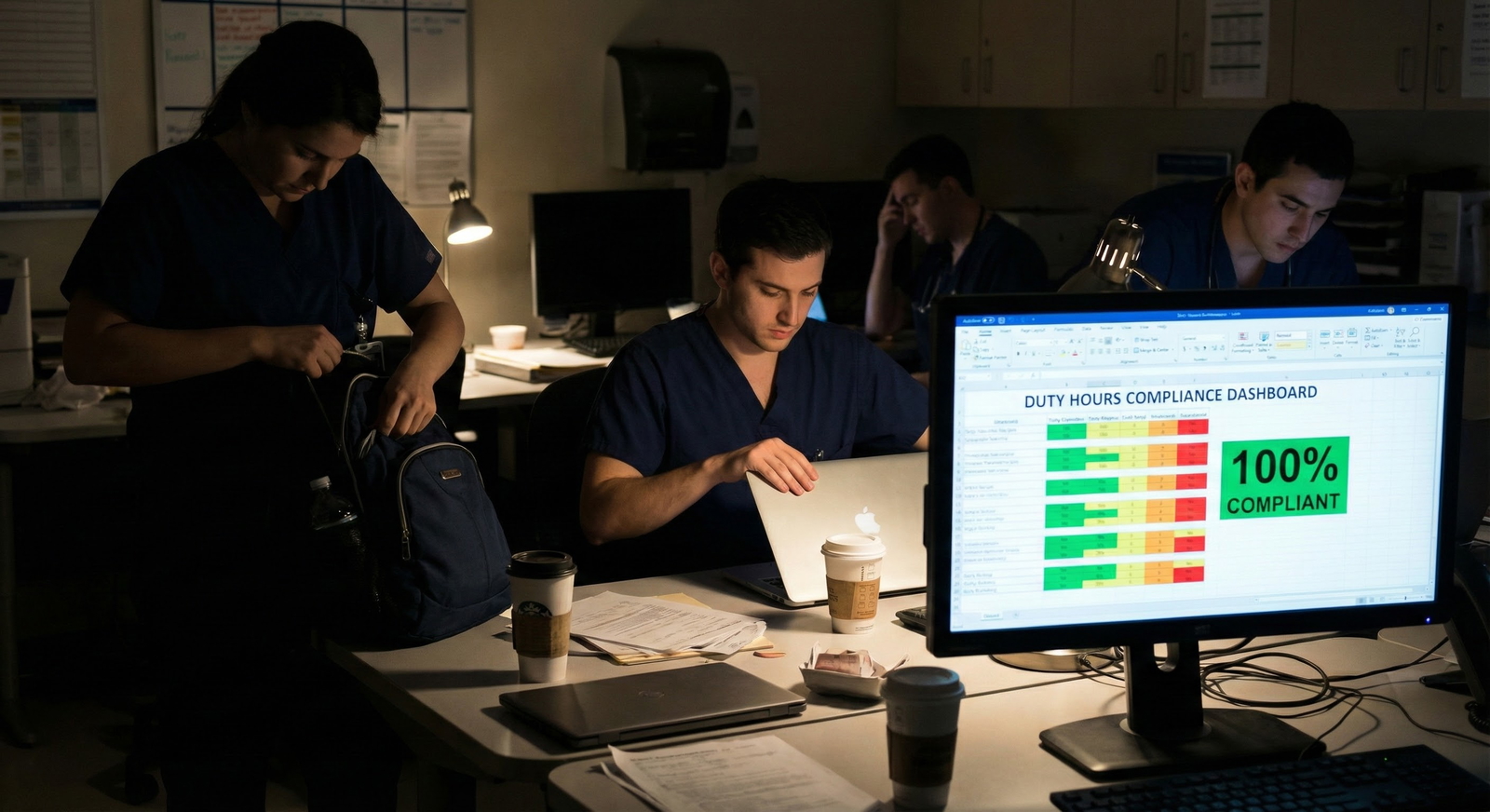
- Systematic violation of work-hour rules
- Residents pressured to lie on duty-hour reporting
- No backup when people are sick, on leave, or overwhelmed
Obstructed education
- Lectures frequently canceled because “you’re needed on the floor”
- Little to no bedside teaching or feedback
- Residents treated mainly as cheap labor rather than trainees
Unsafe clinical environment
- Consistent understaffing of nurses, residents, or attendings
- Residents covering unsafe numbers of patients
- Poor supervision, especially at night or in high-acuity settings
Punitive culture
- Residents punished for errors rather than taught
- Threats about contracts, evaluations, or letters if you “complain”
- Residents afraid to use wellness days, sick leave, or report fatigue
For medicine-pediatrics specifically, watch for:
- One side (medicine or pediatrics) clearly disliking med peds residents
- Med peds residents treated as “extra coverage” or “floaters”
- Identity confusion: Are you seen as full members of both departments, or as outsiders everywhere?
2. Unique Vulnerabilities of Non-US Citizen IMGs
As a non-US citizen IMG or foreign national medical graduate, malignant residency programs pose additional risks beyond burnout.
Visa Dependence and Immigration Risk
If you’re on a J-1 or H-1B visa:
Your legal status is tied to the program.
Leaving a toxic program is not as simple as walking away. If you resign or are terminated:- You may have very limited time to find another sponsoring institution
- You risk visa issues, gaps in training, or having to leave the country
Some toxic programs exploit this.
- Implied or explicit statements like:
- “If you complain, remember we control your visa sponsorship.”
- “You’re lucky to be here; many foreign grads would take your spot.”
- Deliberate delays or confusion about visa paperwork to maintain leverage
- Implied or explicit statements like:
Any hint that the program uses visa dependence as control is a major residency red flag.
Cultural and Communication Barriers
Non-US citizen IMGs may be:
- Less familiar with US labor protections and ACGME rules
- Less comfortable escalating concerns up the chain of command
- More hesitant to report abuse, fearing retaliation or being labeled “difficult”
- Less familiar with US-style feedback, documentation, and professionalism expectations
Malignant programs may weaponize these differences:
- Framing normal cross-cultural learning curves as incompetence
- Targeting IMGs for remediation without adequate support
- Unequal treatment in evaluations, schedules, or promotions
Financial and Family Considerations
- Relocation costs, visa fees, and lost income opportunities can be significant.
- You may be sending money home or supporting family across borders.
- Repeating residency or moving programs is financially and emotionally costly.
Because of these vulnerabilities, careful pre-match screening of programs is especially important for non-US citizen IMGs in med peds.
3. Major Residency Red Flags: How to Spot Toxic Program Signs
Not all difficult aspects of residency are red flags. Long hours, night shifts, and high patient volumes can exist in healthy programs. Focus on patterns that show chronic disrespect, poor supervision, lack of transparency, or exploitation.

A. Culture and Leadership Red Flags
Lack of Psychological Safety
- Residents look nervous or guarded when answering program-culture questions.
- They glance at faculty before responding.
- Answers sound rehearsed: “We’re like a big family” with no specifics.
High Turnover and Quiet Departures
- Several residents left the program or transferred in the past few years.
- When you ask why, answers are vague: “Personal reasons” or “It wasn’t a good fit.”
- Multiple gaps in the resident roster without clear explanations.
Blame-Oriented Response to Problems
- When asked about challenges, leaders blame residents (“people just weren’t resilient enough”) rather than acknowledging system issues and changes made.
No Clear Resident Voice
- Residents lack meaningful participation in program evaluation or committees.
- There is no anonymous mechanism to give feedback without fear.
B. Workload, Duty Hours, and Coverage
Persistent Duty-Hour Violations
- Residents casually mention “We log 80 hours, but it’s actually more.”
- Hints that people are pressured to under-report hours.
- Call schedules that obviously violate ACGME rules (e.g., 28+ hour shifts plus clinic the next day).
No Backup or Coverage System
- When residents get sick, others are forced to double-cover.
- No clear system for jeopardy or backup coverage.
- Sick calls are discouraged: “No one really calls in sick unless it’s extreme.”
Excessive Service Over Education
- Residents describe “scut-heavy” rotations with:
- Constant floor work, transport, or clerical tasks
- Minimal teaching rounds or case discussions
- Attendings rarely present in person
- Residents describe “scut-heavy” rotations with:
C. Education Quality and Med-Peds Identity
Unbalanced or Neglected Side (Medicine vs Pediatrics)
- Med peds residents say: “We’re basically medicine residents who do some peds” or vice versa.
- One department rarely sees med peds as equals.
- Med peds residents get fewer procedural opportunities on one side.
Frequent Cancellation of Educational Sessions
- Morning reports and noon conferences regularly canceled for “patient care demands.”
- Residents consistently unable to attend academic half-days.
- No protected time for board review or scholarly projects.
Lack of Clear Feedback and Mentorship
- Residents say evaluations are generic and not helpful.
- Few med peds–trained faculty; minimal role models in combined career paths.
- No structured mentorship for fellowship or career planning.
D. IMG- and Visa-Specific Red Flags
For the non-US citizen IMG, the following are particularly concerning:
Inconsistent or Vague Visa Answers
- Program leadership is unsure about J-1 vs H-1B policies.
- Past patterns of sponsorship are unclear or undocumented.
- You get different answers from different people about visa support.
Unequal Treatment of IMGs
- IMGs more often placed on heavy-service rotations.
- IMGs less likely to get leadership roles or teaching responsibilities.
- Subtle comments: “US grads tend to be more independent” or “We have to watch IMGs more closely.”
History of Problematic Incidents Involving IMGs
- Rumors or online reports of IMGs being dismissed or remediated without clear support.
- Public shaming of language/communication issues instead of coaching.
E. Online Reputation and Data Red Flags
Low Board Pass Rates or Gaps in Reported Outcomes
- NBME/ABIM/ABP pass rates significantly below national average over several years.
- Program website does not list grad destinations or fellowships.
Highly Negative Anonymous Reviews (With Consistent Themes)
- Repeated comments about:
- Poor leadership
- Bullying culture
- Unsafe patient loads
- Always interpret online reviews with caution, but consistent patterns matter.
- Repeated comments about:
Recent or Ongoing ACGME Citations
- Program has been on warning or placed on probation.
- ACGME letters (if available) mention concerns about supervision, duty hours, or resident wellbeing.
4. How to Investigate Med-Peds Programs as a Non-US Citizen IMG
You can’t rely solely on program websites or interview-day presentations. You need a systematic approach to gather real information.

A. Before You Apply: Screening the Program List
Check Visa and IMG Policies Up Front
- Confirm whether they sponsor J-1, H-1B, or both.
- Look at past classes:
- Do they actually have non-US citizen IMGs, or just say they “consider” IMGs?
- If no IMG residents in recent years, ask yourself why.
Review Program Size and Structure
- Smaller med peds programs (2–3 residents/year) can be excellent but more vulnerable to coverage problems.
- See if there is:
- Dedicated med peds leadership
- A clear structure for med peds continuity clinic
- Reasonable rotation balance between medicine and pediatrics
Search for Accreditation or News Issues
- Google “[Program name] residency ACGME warning,” “probation,” or “lawsuit.”
- Use forums and review sites cautiously, looking for patterns, not single complaints.
B. During Interviews: Questions That Reveal Culture
Ask targeted, open-ended questions that invite specifics rather than generic claims.
Questions for Residents
“What are the hardest parts of training here, and how has the program tried to improve them?”
- Look for real problems + real solutions, not denial.
“Have any residents ever transferred or left the program in the last 3–5 years? What happened?”
- Vague or uncomfortable answers are concerning.
“How often do you feel pressured to under-report duty hours or skip breaks?”
- Any acknowledgment of pressure is a strong red flag.
“As a med peds resident, do you feel equally supported on both medicine and pediatrics?”
- Pay attention if one side clearly feels hostile or disorganized.
“How are non-US citizen IMGs supported? Are there specific challenges you’ve seen them face here?”
- Healthy programs will acknowledge challenges and describe supportive systems.
Questions for Program Leadership
“Can you describe your current policies and track record regarding J-1/H-1B sponsorship?”
- Look for confident, precise answers, not confusion.
“How do you monitor and respond to resident burnout or stress?”
- Do they describe wellness in terms of pizza parties, or in terms of workload changes, schedule redesign, and mental health access?
“Can you share any changes made recently based on resident feedback?”
- Healthy programs can name specific, resident-driven improvements.
“What systems are in place if a resident needs medical leave, parental leave, or remediation?”
- Look for structured, humane processes—not hints of punishment or shame.
C. Observing Non-Verbal Cues and Atmosphere
During interview day (even virtually):
- Are residents relaxed and authentic, or tense and guarded?
- Do they speak openly about negatives, or avoid them completely?
- When you ask a difficult question, do program leaders become defensive?
If things feel “off,” trust that signal and investigate further.
5. Balancing Risk and Opportunity: Ranking Strategy for IMGs
You may not have unlimited interview offers, especially as a non-US citizen IMG applying to med peds. Sometimes you will feel pressure to rank any program that offers you a position. It’s important to balance realism with self-protection.
A. When a Program Should Be an Automatic “No”
Consider not ranking a program (even if it’s your only interview) if you see:
- Clear patterns of abuse or humiliation
- Pressured lying about duty hours
- Explicit visa-related threats or manipulation
- Persistent safety concerns (e.g., unsupervised high-acuity care)
- Documented probation combined with persistently negative resident sentiment
In these cases, the personal, professional, and immigration risks may outweigh the benefit of “matching anywhere.”
B. When a Program Is Tough but Not Malignant
Some programs are intensely busy but still healthy:
- Residents say “It’s hard, but we learn a lot and feel supported.”
- Leadership acknowledges issues and shows evidence of active improvements.
- Duty hours are close to the limit but not chronically violated.
- Residents feel free to seek help without retaliation.
These can be very good training environments if you have strong coping strategies and support.
C. Personal Risk Tolerance and Long-Term Goals
Consider:
- Your health history, family situation, and resilience limits
- Your need for a particular visa type (e.g., H-1B vs J-1)
- Future fellowship plans and whether the program has a track record in your area of interest
Sometimes choosing a smaller, supportive community program over a high-prestige but borderline-toxic program is the wiser long-term decision—especially when your immigration status is on the line.
D. Use Multiple Data Sources
Before ranking:
- Revisit any resident you connected with and ask follow-up questions by email.
- Talk to med peds faculty or advisors at your home institution who know US training culture.
- Connect with senior IMGs on social media or professional networks who trained or rotated at that program.
6. Practical Action Plan for Non-US Citizen IMGs
To make this guidance actionable, here is a step-by-step plan you can follow.
Step 1: Build Your Med-Peds Program Shortlist
- Focus on programs with:
- Clear med peds identity (dedicated PD or APD, med peds clinic)
- Visible IMG representation in recent classes
- Documented visa sponsorship history
Step 2: Do a Red Flag Pre-Screen
For each program:
- Check:
- ACGME status
- Board pass rates
- Resident bios (look for diversity, IMGs, non-US citizens)
- Search for:
- “[Program name] residency toxic,” “malignant,” “overworked,” or “IMG”
- Repeated negative themes more than isolated complaints
Remove programs with serious, consistent warning signs from your active target list if you have sufficient alternatives.
Step 3: Prepare Your Question List Before Interviews
Create two sets:
- Resident-focused: culture, workload, education, real experience
- Leadership-focused: visa policies, remediation, wellness, structural support
Practice asking questions clearly and confidently. If needed, rehearse with a mentor or friend to minimize accent-related misunderstandings or hesitations.
Step 4: Debrief After Each Interview
Right after the interview day, write down:
- How residents seemed (body language, openness)
- Direct quotes that concerned or reassured you
- Any inconsistency between what residents and leadership said
- How the program discussed IMGs and visa policies
Rank programs provisionally while your memory is fresh, then revisit the list later.
Step 5: Use Your Network Wisely
- Reach out to:
- Alumni from your school who matched in med peds
- Non-US citizen IMGs already in US training (LinkedIn, national IMG groups)
- Ask for factual experiences, not gossip:
- “What were the best and hardest parts of training at X?”
- “How were visa issues handled?”
- “Would you choose the same program again?”
FAQs: Malignant Med-Peds Programs and Non-US Citizen IMGs
1. How can I tell the difference between a busy program and a truly malignant one?
A busy program:
- Admits it’s demanding
- Has leadership that actively works on improving workload
- Respects duty-hour rules or makes genuine efforts to comply
- Ensures supervision and a safety net when residents struggle
- Encourages honest feedback without retaliation
A malignant program:
- Normalizes chronic exhaustion and rule-breaking
- Blames residents for systemic problems
- Uses fear, shame, or visa threats to control behavior
- Ignores or punishes feedback
- Shows patterns of resident attrition or transfers
Listen not just to what people say, but how they say it, and whether actions back up their words.
2. Is it ever better to stay home than match into a clearly toxic program?
For many non-US citizen IMGs, yes. Matching into a clearly malignant residency program can result in:
- Severe burnout or health problems
- Visa complications if you need to leave or are dismissed
- Gaps in training and the need to restart residency elsewhere
- Damaged confidence and negative evaluations that affect future jobs or fellowships
If the only offer you have is from a program with multiple strong red flags, it may be wiser to:
- Improve your CV (US clinical experience, exams, research)
- Reapply in a future cycle
- Expand to more IMG-friendly, less competitive programs, and locations
3. Should I directly ask, “Is your program malignant or toxic?”
No one will say “yes,” even if the answer is true. Instead, ask specific, behavior-based questions, such as:
- “What changes have you made in response to resident feedback in the last few years?”
- “How often do residents need to stay beyond their scheduled shifts?”
- “Have any residents left or transferred, and what support was given?”
- “How does the program handle conflicts between residents and attendings?”
Specific questions produce specific answers. Evasive, defensive, or overly rehearsed responses are more informative than a simple “no, we’re not malignant.”
4. As a non-US citizen IMG, should I prioritize visa sponsorship over program culture?
You need both: reliable visa sponsorship and a reasonably healthy culture. However, be cautious about accepting poor treatment just because a program offers H-1B or seems “IMG friendly.” Consider:
- Some J-1-only programs have excellent training and strong IMG support.
- A supportive culture can compensate for some logistical challenges.
- A toxic environment can jeopardize your visa anyway if you burn out or struggle.
Ideally, you want a med peds residency that:
- Has a clear, documented history of sponsoring your visa type
- Demonstrates respectful, transparent leadership
- Shows balanced support for medicine and pediatrics
- Has IMGs who genuinely appear satisfied and not fearful
Choosing a medicine-pediatrics residency as a non-US citizen IMG is a major life decision. By recognizing malignant residency program behaviors, understanding toxic program signs, and actively screening for residency red flags, you can protect your wellbeing, your visa status, and your long-term career in both medicine and pediatrics.