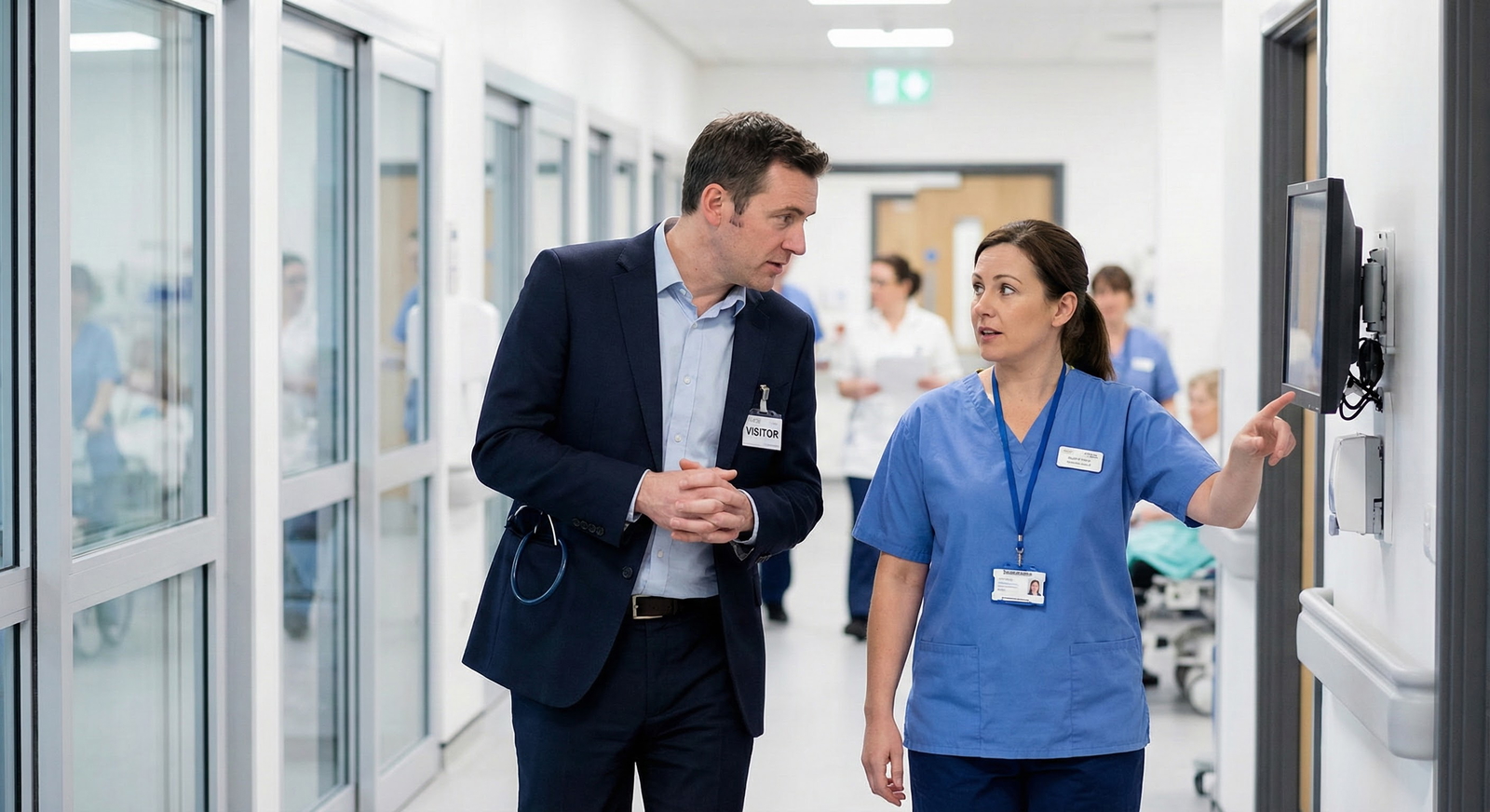
Why “Malignant” Programs Matter—Especially for US Citizen IMGs in Rad Onc
Radiation oncology is a small, high-stakes specialty. Positions are limited, faculty are well-known nationally, and your training environment can shape not only your skills but also your reputation and mental health. For a US citizen IMG or American studying abroad, the pressure is even higher: you may feel you need to “take whatever you get” in the rad onc match, especially in a competitive cycle.
That mentality is dangerous.
A malignant residency program—colloquially, a toxic program—can damage your confidence, harm your mental health, derail your career goals, and in extreme cases lead to remediation, non-renewal, or even having to reapply elsewhere. Understanding residency red flags and toxic program signs is not a luxury; it’s a core part of your application strategy.
This article will walk you through:
- What “malignant” actually means in radiation oncology
- Why US citizen IMGs are uniquely vulnerable to these environments
- Concrete red flags to watch for—before, during, and after interviews
- How to research programs quietly and effectively
- How to ask the right questions and interpret answers
- What to do if you realize a program is malignant after you match
Throughout, the focus is practical: how you, as a US citizen IMG in radiation oncology, can protect yourself while still maximizing your chances in the rad onc match.
What Makes a Radiation Oncology Residency “Malignant”?
“Malignant” is a charged word. Residents use it broadly to describe programs that are:
- Chronically disrespectful
- Unreasonably punitive
- Dishonest or misleading
- Exploitative of resident labor
- Indifferent to education and wellness
This isn’t about a busy rotation or a tough attending; those are part of training. A truly malignant residency program has systemic patterns that harm residents.
Key features of malignant programs in radiation oncology include:
1. Culture of Fear and Punishment
- Residents are afraid to ask questions or admit they don’t know something.
- Support is replaced with shaming, yelling, or public humiliation.
- Minor mistakes lead to formal write-ups, threats of non-renewal, or probation.
- Residents use phrases like “walking on eggshells” or “we just hope not to be noticed.”
In rad onc, where you’re dealing with complex planning, contouring, and multidisciplinary care, a fear-based culture discourages the very questions that prevent clinical errors.
2. Education in Name Only
- Didactics are regularly canceled—often replaced by service demands.
- No structured contouring curriculum, weak physics teaching, and minimal feedback.
- Residents often say they “learn by trial and error” rather than through guided teaching.
- Board pass rates are poor or unstable, but this is downplayed by leadership.
Radiation oncology requires deep, longitudinal learning: imaging, physics, biology, treatment planning. A malignant program sees residents primarily as workforce, not as learners.
3. Exploitative Workload Without Support
- Residents routinely stay late contouring or planning because attendings delay reviews.
- No protected time for research, studying, or professional development.
- Service schedules push residents into 60–80 hour workweeks despite ACGME rules.
- When residents raise concerns, they’re labeled “not resilient” or “not team players.”
In a small specialty like rad onc, this can be subtle: a malignant program may technically meet duty hour rules but still leave you chronically exhausted and unsupported.
4. Systemic Dishonesty and Retaliation
- Recruitment promises aren’t honored (e.g., research time, rotations, case mix).
- When residents speak up about unfairness or safety issues, they’re punished.
- Leadership is secretive about accreditation issues, resident departures, or board outcomes.
- Residents are pressured not to share concerns with applicants.
In rad onc, reputations spread quickly. Programs that try to control the narrative often have something serious to hide.

Why US Citizen IMGs Are at Higher Risk in Malignant Programs
Being a US citizen IMG or American studying abroad adds unique vulnerabilities:
1. Perceived Desperation and Leverage
Program leadership may assume:
- You have fewer options in the rad onc match.
- You’ll tolerate more mistreatment just to secure a spot.
- You’re less likely to complain or report issues.
In unhealthy cultures, this can translate into unequal treatment—more call, fewer opportunities, less support.
2. Visa Factors for Non-Citizen Peers Spill Over
Even as a US citizen IMG, you may be lumped with other IMGs in leadership’s mind:
- Programs already anxious about visa issues may generalize that anxiety to all IMGs.
- Biased assumptions about language, communication, or “fit” can surface.
- You might be treated as “less secure” or more expendable.
In a malignant residency program, this kind of bias is more likely to go unchecked.
3. Limited Home-Institution Advocacy
As an American studying abroad, you often:
- Don’t have a home US rad onc department to advocate for you if problems arise.
- Lack strong networks of faculty who can quietly intervene or advise.
- May not fully understand ACGME rules or your rights as a resident before you start.
Toxic programs often exploit informational asymmetry—you don’t know what’s normal, so you accept bad conditions as “just how residency is.”
4. Heightened Fear of Losing Training Position
Because rad onc is small and competitive, US citizen IMGs often feel:
- They can’t risk being labeled “difficult” or “a complainer.”
- They must accept poor treatment or unfair evaluations to survive.
- If they lose a position, they may never re-enter the field.
Malignant programs thrive on this fear; they count on residents believing they’re trapped.
Concrete Residency Red Flags: Before, During, and After Interviews
You cannot fully know a place without working there, but you can detect many toxic program signs if you pay attention across three phases: pre-interview research, interview day, and post-interview follow-up.
A. Pre-Interview Research Red Flags
1. Accreditation and Board Pass Concerns
- Recent ACGME citations or probation (check the ACGME public site and program website).
- Unexplained gaps in graduating classes or sudden changes in resident numbers.
- Below-average or unstable physics/clinical board pass rates—especially if not addressed openly.
For radiation oncology, consistent board success is a major marker of program health.
2. Resident Turnover and Silent Alumni
- Residents who leave mid-training without clear reasons.
- Graduates who don’t list the program on LinkedIn or minimize its mention.
- Alumni who avoid public association with the department.
A single departure is not definitive; a pattern is a problem.
3. Inconsistent Case Mix or Clinical Breadth
- Public case volume data suggesting unusually low numbers for core disease sites.
- No clear access to brachytherapy, SRS, SBRT, pediatrics, and special procedures.
- Websites that heavily market technology but say little about resident experience.
Malignant programs often hide behind shiny machines while neglecting day-to-day training.
B. Interview Day Red Flags
Your direct observations and off-script moments are the best indicators. Watch for the following:
1. Residents Appear Guarded, Tired, or Mismatched
- They seem anxious with faculty present, careful with their wording.
- When given chances to speak privately, they remain vague and avoid specifics.
- The residents you meet look extremely fatigued or burnt out.
- Cultural or personality mismatch is obvious—no one seems like “your people.”
As a US citizen IMG, ask yourself: “Do I see someone like me thriving here, or just surviving?”
2. Overemphasis on “Family” and “Tough Love”
Phrases to treat cautiously:
- “We’re like a family here; we tell it like it is.”
- “We don’t believe in hand-holding.”
- “This is not the place for sensitive people.”
- “We’ve had issues with residents who just weren’t resilient enough.”
Used once, these might be benign. Used repeatedly, they often signal an excuse for poor behavior.
3. Vague or Defensive Answers to Specific Questions
Malignant programs avoid transparency. Examples:
- You ask about duty hours; answer is: “We meet ACGME requirements,” without details.
- You ask about a resident who left; answer is: “They just weren’t a good fit,” with no elaboration.
- You ask about feedback; answer: “If you’re doing something wrong, you’ll hear about it.”
You want structured answers, not evasive ones.
4. Inconsistent Stories Between Residents and Faculty
Notice when narratives don’t line up:
- PD says, “You’ll have one day a week of protected half-day for research,” but residents say, “Sometimes we get protected time, but usually clinic is too busy.”
- Faculty boast about formal contouring teaching, residents say it “depends on the attending” or “we just squeeze it in whenever we can.”
In a healthy program, residents and leadership tell essentially the same story.
5. Micromanaged Resident Interactions
Be cautious when:
- Residents are not allowed to meet you without faculty present.
- There’s no dedicated resident-only Q&A session.
- Residents seem to look to faculty for approval before answering.
Programs that fear residents speaking freely often have serious internal problems.
C. Post-Interview Follow-Up Red Flags
After interviews, as you reflect and communicate with programs:
- Pressure to commit or “signal” strong interest in ways that feel uncomfortable.
- Implicit or explicit violation of NRMP rules (e.g., asking if you’ll rank them first).
- Overly aggressive emails or calls from leadership implying you should rank them highly “because you’re an IMG and we’re giving you a chance.”
Respectful interest is normal. Emotional manipulation or guilt is not.

High-Risk Scenarios Specific to Radiation Oncology
Certain patterns in rad onc warrant extra caution because of the specialty’s structure.
1. Single-Resident-Per-Year Programs with High Turnover
In a program that takes only one resident per year:
- If more than one resident in recent years has left, that’s a serious signal.
- You may have limited peer support—if the culture is bad, you’re isolated.
- You’re dependent on a small group of attendings; if any are malignant, you can’t easily avoid them.
As a US citizen IMG, be particularly wary if:
- The program hasn’t had a US grad match in years, or
- The prior IMGs matched there and later disappeared from the website.
2. Overreliance on One or Two “Big Name” Faculty
Some departments revolve around a famous chair or national leader:
- If that person has a reputation for volatility or harsh behavior, it may permeate the culture.
- If all major cases and research funnel through them, you’ll have little flexibility.
- You may feel pressure to tolerate bad behavior “for the sake of your career.”
Ask residents specifically how approachable that person is and how they handle conflict.
3. Weak Dosimetry or Physics Support
In rad onc, staffing structure significantly affects residents’ day-to-day experience:
- Understaffed dosimetry or physics often means residents take on non-educational scut: manual plan adjustments, running between machines, tech-level tasks.
- Malignant programs normalize this and label it “great experience,” when it’s actually poor infrastructure.
Healthy programs protect resident roles as learners, not cheap labor.
4. Disorganized Clinics and Chronic Workflow Chaos
Signs include:
- Constant last-minute schedule changes.
- Frequent treatment delays due to poor coordination.
- Blame culture when things go wrong (“Whose fault is this?” rather than “How do we fix the system?”).
For an IMG who may already feel under scrutiny, chaotic systems can lead to unfair blame and punitive evaluations.
How to Do Quiet, Effective Reconnaissance as a US Citizen IMG
You need data beyond what programs show you. Here’s how to gather it safely and strategically.
1. Use Your IMG and US Networks
- Talk to alumni from your international school who matched in rad onc or related fields.
- Join online communities (e.g., rad onc forums, IMG-focused groups) and ask specific, non-gossipy questions like:
- “Any insights on educational culture and supportiveness at [Program X]?”
- “How do residents at [Program X] feel about workload and attendings’ teaching style?”
- Reach out to US-based mentors from away rotations or research experiences; many will share candid impressions privately.
2. Contact Recent Graduates, Not Just Current Residents
Current residents may fear retaliation. Graduates (within the last 3–5 years) are often more open.
When reaching out (by email or LinkedIn):
- Introduce yourself briefly as a US citizen IMG interested in rad onc.
- Ask targeted, neutral questions such as:
- “Were there any aspects of the program culture you wish you had understood better before matching?”
- “How did the department respond to resident feedback or concerns when you were there?”
- “Would you choose the same program again?”
You’re listening for hesitation, guarded responses, or strongly negative themes.
3. Read Between the Lines in Program Materials
On program websites, note:
- If wellness content feels generic and superficial.
- Whether they publish detailed curriculum, case numbers, and board outcomes, or keep it vague.
- If faculty bios emphasize clinical and research excellence but say nothing about teaching.
Programs proud of their resident culture will highlight it with specifics and real examples, not just buzzwords.
4. Evaluate Rotations and Away Experiences Critically
If you do a rad onc elective at a program:
- Watch how attendings correct mistakes: teaching vs. shaming.
- See how residents talk when doors are closed.
- Notice whether you feel safe asking questions, or if you’re constantly anxious.
Your emotional experience during a rotation is a preview of residency life there. Trust your instincts.
Asking the Right Questions—and Interpreting the Answers
You can’t say “Is your program malignant?” directly, but you can ask questions that reveal a lot.
Questions for Residents
Ask in a private setting when possible:
“What happens when someone is struggling—clinically, academically, or personally?”
- Green flag: Mentions of mentorship, tailored support, remediation plans, and non-punitive approaches.
- Red flag: “You just have to keep up,” or stories that sound like shaming or isolation.
“Can you recall a time a resident made a serious mistake? How did faculty respond?”
- Green flag: Focus on systems improvement, patient safety, and learning.
- Red flag: Talk of public humiliation, threats, or punitive evaluations.
“How comfortable do you feel giving feedback to faculty or leadership?”
- Green flag: Concrete examples of feedback leading to positive changes.
- Red flag: Hesitation, laughter, “We don’t really do that here.”
“What’s one thing you’d change about the program if you could?”
- Green flag: Specific, bounded issues (e.g., more elective time, updated equipment).
- Red flag: Vague answers, or “It’s perfect” (no program is).
Questions for Program Leadership
“How do you respond when a resident is not meeting expectations?”
- Look for clear, structured remediation pathways, not vague statements like “We expect everyone to pull their weight.”
“Have you had residents leave the program in the last several years? What did you learn from those experiences?”
- Honest acknowledgment with reflection is a green flag.
- Defensiveness or blame-shifting (“They weren’t a good fit”) is concerning.
“How do you ensure that US citizen IMGs or other IMGs feel supported and integrated in the program?”
- Green flag: Specific mentoring structures, success stories, and recognition of unique challenges.
- Red flag: “We treat everyone the same,” with no nuance.
“What specific changes have you made in the past 2–3 years based on resident feedback?”
- Green flag: Concrete examples.
- Red flag: Struggling to name any.
Strategically Ranking Programs as a US Citizen IMG
You might worry: “If I avoid malignant programs, will I match at all?” The key is to balance realism with self-protection.
1. Build a Broad but Thoughtful Rank List
- Include a range of programs: academic, community, different regions.
- Don’t include a program you would be devastated to attend for four years, regardless of prestige.
- Remember: It is better to reassess your path than to commit to a clearly toxic environment that could end your career or health.
2. Weigh Culture as Heavily as Prestige
In a small field like radiation oncology:
- A supportive mid-tier program will often set you up for a stronger career than a malignant top-tier one.
- Strong letters from faculty who know and respect you matter more than name recognition alone.
- Your mental health and confidence will influence your performance far more than program brand.
3. Consider the “Could I Ask for Help Here?” Test
For each program on your list, ask:
- “If I fell behind or had a personal crisis, would I feel safe asking for help here?”
- “Would I be treated as an adult learner—or as a problem to be contained?”
If the honest answer is no, rank that program with extreme caution—or not at all.
4. Talk It Through with Trusted Mentors
Before certifying your rank list:
- Review your top choices with mentors, especially those in rad onc.
- Explicitly mention your concerns about malignancy and red flags.
- Ask if they’ve heard whispers or know residents there.
Your mentors may have backchannel insights you don’t.
If You Discover Malignancy After You Match
Sometimes, despite your best efforts, you may land in a toxic program. For a US citizen IMG, this can feel devastating—but you still have agency.
1. Document, Don’t Just Endure
- Keep a private, contemporaneous log of serious incidents: dates, what happened, who was present.
- Save emails that demonstrate unreasonable expectations, harassment, or retaliation.
- Maintain records of evaluations, feedback, and your responses.
This is essential if you later need to approach GME leadership, the DIO (Designated Institutional Official), or, in rare cases, legal counsel.
2. Seek Internal Allies
Look for:
- A trusted faculty member respected by residents.
- The program’s ombudsperson, if available.
- Your institution’s GME office or DIO.
- A faculty mentor from a different department who can advise you.
Approach with specific examples and a request for guidance, not just general complaints.
3. Protect Your Professionalism
Even in a malignant program:
- Maintain punctuality, documentation, and communication standards.
- Seek feedback in writing when possible.
- Build relationships with multiple attendings—don’t rely solely on one person.
Your professional record travels with you; keep it as strong as possible.
4. Consider Transfer Only After Careful Planning
Transferring out of a rad onc residency is challenging but not impossible:
- Talk discreetly with trusted mentors outside your institution.
- Explore whether switching to another specialty (e.g., internal medicine, prelim) is a better option if rad onc opportunities are limited.
- Be honest but measured when explaining your reasons: focus on lack of fit and educational concerns, not personal attacks.
Your goal is to preserve your training and future without burning every bridge.
FAQs: Malignant Radiation Oncology Programs for US Citizen IMGs
1. As a US citizen IMG, should I ever rank a program I suspect is malignant?
You should avoid ranking programs with strong, consistent red flags if at all possible. A mildly imperfect program is different from a truly toxic environment. If a program shows clear signs of being malignant (chronic resident turnover, fear-based culture, evasive answers about mistreatment), it is usually safer to leave it off your list—even if that means ranking fewer programs.
2. How can I tell if warnings I hear are real vs. just personality clashes?
Look for patterns from multiple sources:
- If one person calls a program toxic but others describe it as supportive, this may reflect a mismatch.
- If several unrelated people (residents, graduates, mentors) share similar negative experiences, that’s more reliable.
- Prioritize specific examples over vague complaints. “They retaliated when I reported duty hour violations” is more meaningful than “I didn’t vibe with them.”
3. Are smaller community rad onc programs more likely to be malignant?
Not inherently. Some small or community-based programs are excellent, supportive environments with strong mentorship. However, in any small program:
- You’re more vulnerable if one or two key faculty are difficult.
- Peer support is limited if there are few residents per class.
- Any cultural problem is magnified.
Evaluate small programs with the same criteria: transparency, resident voice, response to mistakes, and genuine commitment to education.
4. If I’m already in a malignant program, will speaking up ruin my chances of future jobs or fellowships?
Not necessarily—but approach this strategically:
- Start by seeking confidential guidance from trusted mentors or your GME office.
- Focus on patient safety and educational quality rather than personal grievances.
- When applying for fellowships or jobs later, frame your experience professionally: emphasize what you learned, how you grew, and why you sought a healthier environment.
Programs and employers understand that malignant residencies exist. Many will respect how you navigated a difficult situation—especially if you remained professional and patient-centered throughout.
For a US citizen IMG pursuing radiation oncology, the stakes are high, but so is your value. You bring resilience, adaptability, and often rich clinical experiences from abroad. You deserve a program that recognizes that value, supports your growth, and treats you as a developing colleague—not expendable labor.
Use the signs, questions, and strategies in this guide to protect yourself from malignant programs and position yourself for a training environment where you can genuinely thrive.