Understanding “Malignant” Urology Residency Programs
For an MD graduate pursuing urology residency, the allopathic medical school match process is already high‑stakes and competitive. On top of board scores, research, and letters, you also have to evaluate something that’s harder to quantify: program culture.
Within urology, residents commonly refer to particularly hostile or dysfunctional programs as “malignant.” A malignant residency program is one where the environment is consistently unsafe, abusive, exploitative, or unsupportive to trainees—far beyond normal “tough” training.
This article focuses on helping you, as an MD graduate targeting urology, identify residency red flags that may signal a malignant or toxic environment, particularly during the urology match process. While no program is perfect, your goal is to distinguish:
- Challenging but supportive programs (high expectations, good training, fair treatment)
from - Truly toxic programs (chronic disrespect, intimidation, neglect of education, unsafe workloads)
We’ll walk through:
- How “malignancy” shows up specifically in urology residency
- Concrete toxic program signs to watch for on interview day and beyond
- How to research programs quietly and effectively
- How to interpret ambiguous or mixed signals
- How to protect yourself during the allopathic medical school match as a urology applicant
What Makes a Urology Program “Malignant”?
A malignant urology residency is less about one bad rotation and more about patterns: long‑standing issues that affect multiple classes of residents and shape the program culture.
Key dimensions include:
- Psychological safety: Can you ask questions, admit mistakes, or seek help without humiliation or retaliation?
- Respect and professionalism: How consistently are residents treated by attendings, fellows, staff, and leadership?
- Workload and staffing: Are expectations compatible with ACGME guidelines, patient safety, and basic human needs?
- Educational integrity: Is the program actually structured around resident learning, or are you primarily a low‑cost workforce?
- Responsiveness to feedback: When problems are raised, does leadership address them, or blame residents?
A malignant program typically scores poorly across several of these domains, often with a long history of attrition or resident dissatisfaction.
Why This Matters Especially in Urology
The urology match is competitive and relatively small; programs and faculty often know each other. This has several implications:
- Culture is amplified: In small departments, a single toxic attending or PD can dominate the atmosphere.
- Limited escape routes: Transferring between urology programs is rare and complicated. Starting in the wrong place can have lasting consequences.
- Reputation travels: Malignant programs may quietly be known in the field, but that information is rarely public.
- Power dynamics are pronounced: Letters and recommendations from your program leadership will heavily influence your fellowship/job prospects in an already tight‑knit specialty.
Your goal as an MD graduate is not to find a “perfect” program—none exist—but to avoid environments where the risk to your well‑being and career trajectory is unacceptably high.
Core Residency Red Flags: Signs of a Malignant or Toxic Program
Below are common toxic program signs grouped into practical categories. One of these alone may not be decisive, but multiple red flags—especially across different domains—should prompt serious concern.

1. Resident Morale and Behavior
How residents act and what they say (or don’t say) during your visit is one of the most powerful indicators of program culture.
Red flags:
- Flat or anxious affect: Residents look exhausted, guarded, or uncomfortable around faculty and PDs. Laughter and casual conversation shut down when leadership appears.
- Inconsistent stories: A chief says “We work really hard but faculty are supportive,” while a junior privately describes being yelled at daily and is looking to transfer.
- Fear of speaking honestly: When you ask questions, residents say, “We love it here, everything is great,” in a rehearsed tone, and avoid specifics. They may glance at each other or staff before answering.
- High turnover or attrition: More than one or two residents have left in recent years, or classes are missing residents (“We don’t talk about that” when you ask why).
- Visible burnout: Multiple residents appear sleep‑deprived, emotionally drained, or express regret such as “If I could do it again, I might not choose urology” or “I’d never send my kid here.”
What to look for instead:
- Residents who acknowledge challenges but can also point to meaningful support, mentorship, and growth.
- Natural, unscripted joking or camaraderie among residents—even if they are tired.
- Specific examples of PD and faculty listening to resident concerns.
2. Program Leadership and Culture
Leadership sets the tone. A malignant residency program often has leadership that is authoritarian, unapproachable, or dismissive of resident welfare.
Red flags:
- Negative comments about residents: PD or chair openly complains about residents being “lazy,” “entitled,” or “not like we were back then.”
- Pride in “breaking” residents: Phrases like “We train the toughest residents in the country,” “If you can survive here, you can survive anywhere,” or “We don’t believe in hand‑holding.”
- Lack of transparency: Evasive answers about duty hours, attrition, board pass rates, or fellowship placement. Data is outdated or not provided.
- Minimizing wellness and DEI: “We’re too busy for wellness stuff,” or dismissive comments about diversity initiatives or reporting mechanisms for harassment.
- History of conflict with GME/ACGME: Hints of citations or probation that are minimized or blamed on residents rather than used as learning opportunities.
What to look for instead:
- Leaders who own problems: “We had a duty hour issue two years ago, here’s what we changed and how we monitor it now.”
- A clear, consistent philosophy of training that values both excellence and humanity.
- Multiple faculty—not just one champion—who seem invested in resident growth and education.
3. Duty Hours, Workload, and Call Structure
Urology is demanding by nature: emergencies, long cases, and early cases are common. But even in a busy program, expectations should be safe, legal, and sustainable.
Red flags:
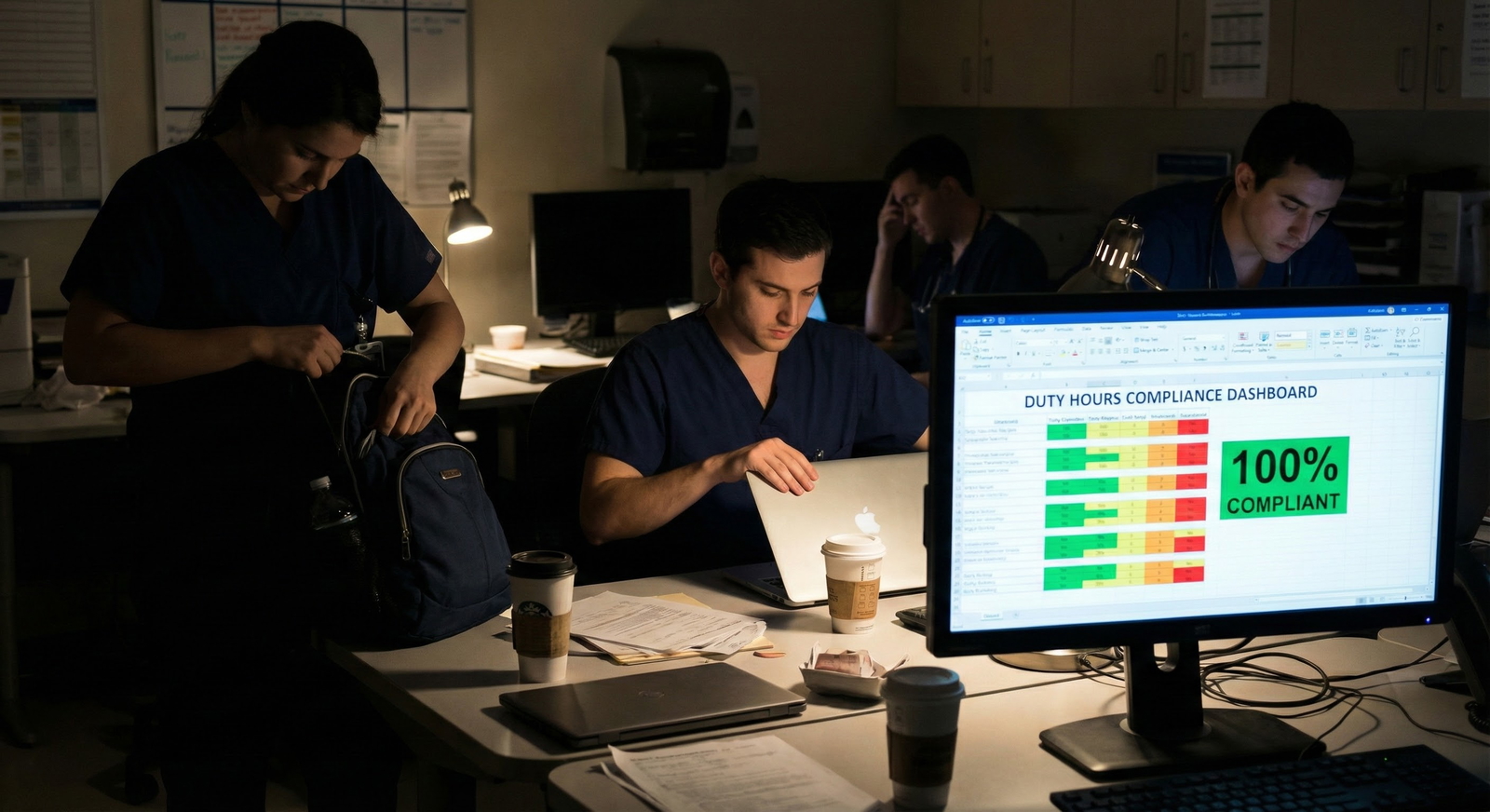
- Routine violation of duty hours: Residents hint that ACGME rules are routinely ignored, or say, “We just fix our hours in MedHub so we don’t get in trouble.”
- Unpredictable, unsafe call: Home call that functionally becomes in‑house call, q2 or q3 call patterns with inadequate post‑call time, or a single resident covering unmanageable volumes.
- No backup for emergencies: Junior residents left alone to manage emergencies they’re not comfortable with, with attendings slow to respond or angry when called.
- No systemic response to overwork: When asked about high‑volume stretches, residents say, “We just suck it up,” rather than describing cross‑coverage, float systems, or call redistribution.
What to look for instead:
- Acknowledgment that urology can be intense, but with clear systems to protect rest, safety, and fairness (night float, protected post‑call days, backup call pools).
- Residents who say, “It’s busy, but we rarely break duty hours, and if we do, it’s documented and addressed.”
4. Educational Priorities vs. Service Needs
A program can be extremely busy and still be educational. The question: does the program fundamentally see you as a learner or as cheap labor?
Red flags:
- Frequent cancellation of teaching: Conferences, didactics, or simulation regularly canceled for clinical work—and no protected time to make up for it.
- Unrealistic expectations for self‑teaching: “You learn in the OR; we don’t really do didactics,” especially if combined with poor operative autonomy or limited case variety.
- Service > education in the OR: Residents consistently scrub out to “go write notes” or “clean up the list,” while fellows stay in the case.
- Poor board preparation: No structured curriculum for in‑service or boards, low or variable board pass rates that leadership brushes off.
What to look for instead:
- Protected teaching time that actually happens and is encouraged by faculty.
- Clear graduated responsibilities and opportunities for operative autonomy in core urologic procedures.
- Residents who can describe how the program prepares them for the urology board exam and early practice.
5. Professionalism, Respect, and Safety
This is where malignant programs often become unmistakable. Patterns of disrespect, harassment, or unprofessional conduct—especially when tolerated by leadership—are serious red flags.
Red flags:
- Yelling, public shaming, or humiliation: Stories (or live examples) of attendings screaming at residents in the OR, making demeaning comments, or mocking questions.
- Harassment or discrimination: Repeated sexist, racist, homophobic, or otherwise discriminatory remarks that residents describe as “just how Dr. X is.” Lack of safe ways to report issues.
- Retaliation culture: Residents fear speaking up; complaints about bullying or unfair treatment supposedly “followed someone for years.”
- Unsafe clinical practices: Stories of being forced to perform beyond competence without adequate supervision, or being discouraged from reporting medical errors.
What to look for instead:
- A culture where professionalism is enforced consistently, including among high‑volume or revenue‑generating attendings.
- Residents who can give examples of when they raised a concern—and leadership responded constructively.
- Visible diversity among residents and faculty, with a sense that diverse trainees are valued, not just present.
6. Outcomes: Fellowship, Jobs, and Career Support
Even if the day‑to‑day feels manageable, you need to know whether the program positions you well for the next step.
Red flags:
- Weak or inconsistent placement: Graduates struggle to match into fellowships they want, or into competitive jobs, without a clear explanation (e.g., niche regional market).
- Lack of mentorship: Residents describe “figuring it out on our own” when applying for fellowship or jobs, with little faculty guidance or advocacy.
- Leadership turnover: Frequent PD or chair changes without transparent rationale can indicate deeper institutional instability.
What to look for instead:
- A track record of residents matching into a range of fellowships and practice settings that align with their goals.
- Several attendings who actively mentor residents in research, fellowship planning, and job negotiation.
- Graduates who speak positively about staying connected to the program.
How to Detect Malignancy During Urology Interviews
Spotting a malignant residency program requires a deliberate strategy. Don’t just passively absorb the interview day; actively test the program.

1. Use Targeted, Open‑Ended Questions
Ask residents questions that invite nuance rather than yes/no responses:
- “What’s something your program has improved or changed in the last 1–2 years based on resident feedback?”
- “Tell me about a time when you felt really supported by leadership—and a time when you wish support had been better.”
- “On your hardest rotation, what does a typical week look like, including call?”
- “How are mistakes handled here? Can you ask for help without being yelled at?”
- “If you had to pick one thing you’d change about the program, what would it be?”
Answers that are consistently vague, defensive, or oddly rehearsed (“We’re great, nothing to change”) are concerning.
2. Observe Interactions in Real Time
Body language and tone often tell you more than words:
- Watch how attendings talk to residents in hallways, conferences, and the OR (if observership is part of the day).
- Notice if residents appear relaxed and authentic around PD or if they stiffen and become performative.
- Listen to how staff (nurses, OR techs) speak about residents: respectful teamwork vs. constant tension and blame.
3. Make Use of the Social Events
Pre‑interview dinners or virtual socials are one of your best chances to get authentic insight.
Tips:
- Talk to residents from different PGY years. Chiefs often feel loyalty to the program; interns may be too new to see patterns. Mid‑level residents (PGY‑3/4) often give the clearest picture.
- Ask about class cohesion: “What’s the vibe among your residents? Do you hang out outside of work?”
- Notice if residents contradict each other or share similar, independent narratives about strengths and weaknesses.
4. Ask Indirect, Comparative Questions
Residents may be reluctant to label their own program as malignant. Instead, ask questions that let them compare:
- “How does your call schedule compare to your friends’ at other urology programs?”
- “How do your case numbers and autonomy compare to your peers who matched elsewhere?”
- “If your best friend were applying to urology, would you strongly encourage or strongly discourage them from ranking this program highly?”
Ambivalence or hesitation at these comparative questions is informative.
5. Follow Up After Interview Day
If you’re seriously interested but have concerns:
- Reach out to a resident you connected with and ask if they’d be open to a brief, candid conversation.
- Ask focused questions: “On interview day, we didn’t get much detail on duty hours. Can you share what your last three call months looked like in practice?”
- If the vibe shifts dramatically once you’re off the official schedule, listen to that.
Pre‑Interview Research: Quiet Ways to Screen Programs
You can start filtering out potential malignant programs before you ever set foot on campus.
1. Talk to Trusted Faculty and Recent Graduates
Your home institution is one of your best sources of “off the record” intel.
- Ask your urology mentors: “Are there any urology residency programs you’d strongly caution me about?”
- Talk to recent grads who matched in urology: “Looking back, were there any programs you realized were toxic only after you interviewed?”
- Emphasize that you’re seeking patterns, not isolated gossip: “I’m trying to avoid truly malignant environments, not just hard‑working programs.”
In many cases, malignant urology programs are known within the specialty but never publicly labeled as such.
2. Analyze Objective Data (With Caution)
- Case logs and ACGME data (if available): Very low operative numbers may indicate service burden without adequate training.
- Board pass rates: Repeated poor performance with no clear remediation plan is a warning sign.
- Public ACGME citations or probation: Not all citations equal malignancy—but citations related to duty hours, supervision, or educational structure deserve scrutiny.
3. Online Forums and Social Media
Places like Reddit, Student Doctor Network, and specialty‑specific forums often mention residency red flags, especially about malignant programs. Use them thoughtfully:
- Look for consistent themes across multiple posts and years, not single bitter comments.
- Cross‑check what you read with other sources (faculty, residents, interview experience).
- Be aware that strong programs with high expectations can also attract occasional negative posts.
4. Watch for Structural Warning Signs
Certain structural features don’t prove malignancy but should trigger closer examination:
- Very small programs (1 resident per year) with high clinical volume and minimal mid‑level or fellow support.
- Recent expansion in resident numbers without corresponding growth in faculty or infrastructure.
- Frequent leadership turnover (PD or chair changes every few years) with vague explanations.
Differentiating “Tough but Good” from Truly Malignant
As an MD graduate, you may be willing—even eager—to work hard for excellent training. The tricky part is differentiating robust challenge from toxic harm.
Here’s a side‑by‑side comparison:
| Domain | Tough but Good Urology Program | Malignant/Toxic Urology Program |
|---|---|---|
| Workload | Busy, high‑volume, some long weeks; duty hours mostly respected; occasional crunches openly acknowledged and addressed | Chronic overwork, routine duty hour violations, no systemic attempts to redistribute or mitigate |
| Culture | High expectations with constructive feedback; attendings push residents, but with respect and clear teaching | Frequent yelling, humiliation, or belittling; fear‑based motivation; errors punished rather than used as learning |
| Education | Protected conferences that mostly happen; active board prep; strong case volume with graduated autonomy | Didactics often canceled; resident used mainly as scut worker; limited autonomy or lopsided case mix |
| Leadership | Approachable PD, responds to feedback; acknowledges past issues and explains concrete fixes | Dismissive, authoritarian leadership; blames residents; denies or minimizes clear problems |
| Resident Sentiment | “It’s hard, but I’m becoming a strong urologist and I feel supported” | “I feel trapped and burned out; I warn students away from coming here” |
Your threshold will depend on your own values, resilience, and personal situation. But if you see multiple malignant‑column patterns across several domains, consider ranking that program lower or leaving it off your list.
Strategy During the Urology Match as an MD Graduate
Because the urology match (run by the AUA) happens earlier than the NRMP, your decisions come under time pressure. A few strategic points:
Do not let prestige blind you
Big‑name institutions sometimes harbor malignant cultures. A famous brand will not compensate for years of mistreatment or burnout.Aim for a balanced rank list
Combine strong, supportive mid‑tier programs with a few reach programs you’ve vetted carefully. Don’t rank a place highly just because “it’s the best name I might get.”Prioritize safety and culture over minor differences in research or prestige
In urology, a solid, humane program where you can learn, operate, and thrive will serve you far better than a malignant “top 5” department.If something feels off, take it seriously
Your intuition is a data point—especially if it aligns with other warning signs. You are signing up for 5–6 years of your life; you are allowed to walk away from environments that don’t respect that.
Frequently Asked Questions (FAQ)
1. As an MD graduate, should I ever completely avoid ranking a program?
Yes. If you have strong, specific evidence that a urology residency is a malignant residency program—chronic duty hour violations, multiple residents leaving, documented harassment with no remediation—consider leaving it off your rank list, even if it is prestigious. Matching into a truly toxic environment can be harder to recover from than not matching that cycle and applying again with a better strategy.
2. How can I ask residents about toxicity without putting them in an uncomfortable position?
Use open‑ended, non‑leading questions that allow residents to calibrate their level of honesty:
- “What types of residents tend to be happiest here?”
- “What’s the most challenging part of training in this program?”
- “If you could change one thing about the culture or workload, what would you change?”
If a resident wants to signal problems, they usually will—through word choice, tone, or examples—without you directly asking, “Is this a malignant program?”
3. Is it okay if I end up in a program that’s just “okay” but not amazing?
Absolutely. Many MD graduates match into solid, non‑famous programs that are neither perfect nor malignant. If you have reasonable case volume, support from faculty, decent board preparation, and a non‑toxic environment, you can build an excellent urology career. The priority is to avoid a truly harmful environment; beyond that, much depends on how you use your opportunities.
4. Are online rumors about malignant programs in urology trustworthy?
They can be useful signals, but not definitive evidence. Look for patterns: if multiple independent sources and time points all describe similar toxic program signs (e.g., bullying by a specific attending, extreme call burden, residents leaving), take it seriously. Then confirm through your own observations and conversations with faculty and residents. Do not dismiss consistent negative reports outright, but also don’t let a single anonymous comment overshadow all other data.
By approaching the urology match with an informed, skeptical, and intentional mindset, you can greatly reduce the risk of landing in a malignant residency program. Focus on patterns, ask targeted questions, and remember: you are not just trying to match; you are choosing where to spend some of the most formative years of your life and career.