Why Malignant Programs Matter Even More for Non‑US Citizen IMGs
For a non-US citizen IMG, choosing the wrong residency program is not just an uncomfortable three-year experience—it can jeopardize your entire career, immigration status, and financial stability. A malignant residency program (often called a toxic program) is one where the culture, workload, or leadership consistently harms residents’ well‑being, education, or future opportunities.
As a foreign national medical graduate, you’re often at higher risk because:
- You may feel less empowered to speak up, especially on a visa.
- You may have limited in-person exposure to US hospitals before Match.
- You often lack informal networks (upperclassmen, alumni) who can warn you.
- You may be more willing to “accept anything” just to get into a US program.
This article focuses on residency red flags and toxic program signs specifically from the perspective of a non-US citizen IMG, and provides concrete strategies to assess and avoid malignant programs before you rank them.
Understanding “Malignant” vs. Just “Hard”
Not every stressful or busy residency is malignant. Training in the US is demanding, and all programs will have long hours, pressure, and steep learning curves. It’s essential to distinguish:
- Demanding but healthy program: High expectations, strong supervision, fair treatment, supportive leadership, and clear educational goals.
- Malignant program: Systematically abusive, unsafe, or exploitative environment where residents’ rights, well-being, and education are disregarded.
Core Features of a Malignant Residency Program
Common characteristics include:
Chronic disrespect or abuse
- Public humiliation, yelling, or shaming.
- Bullying by attendings, seniors, or administration.
- Residents afraid to ask questions.
Unsafe or exploitative workload
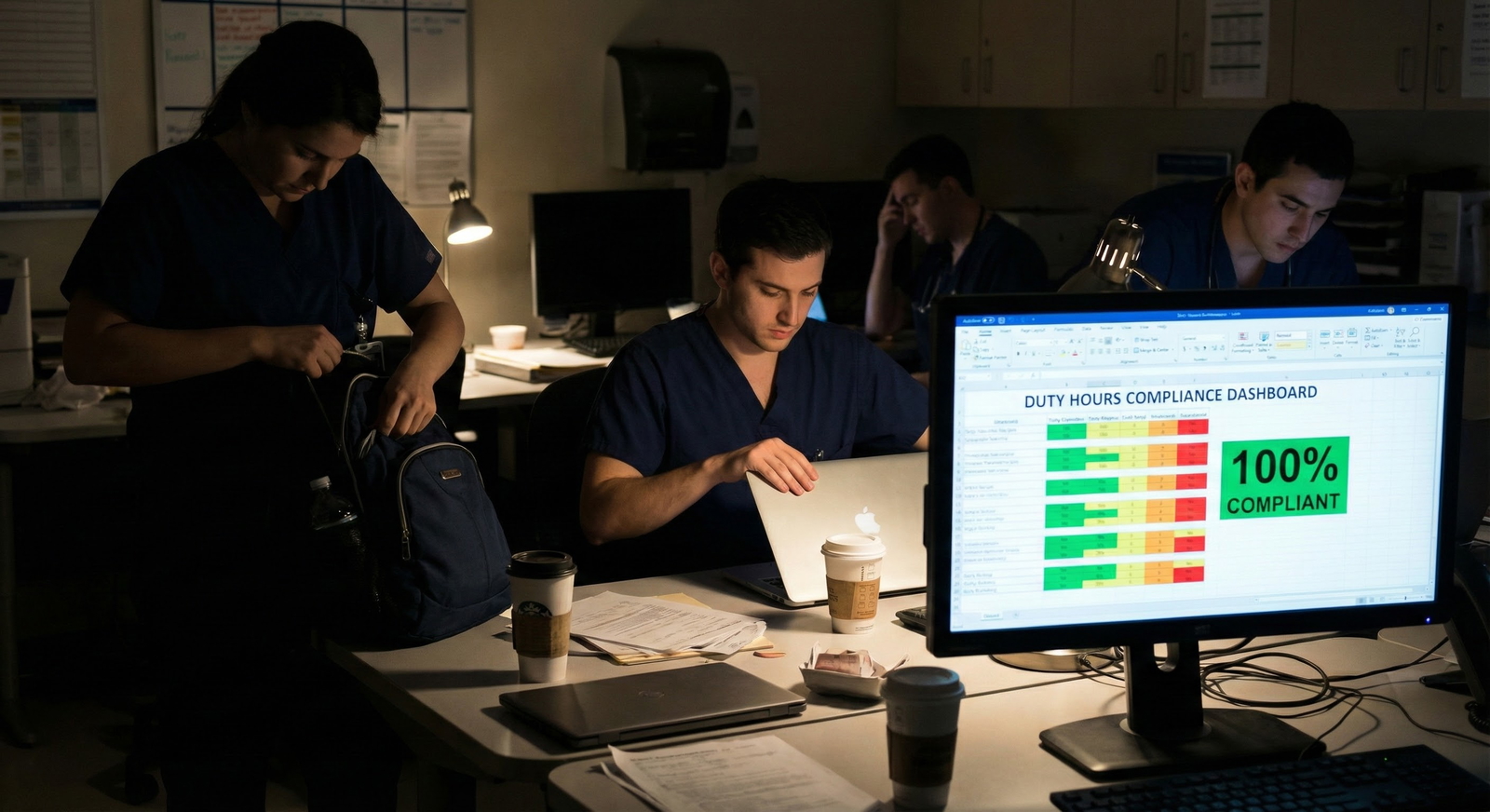
- Systematic violation of duty hour rules.
- “Under-the-table” calls not logged in official schedules.
- Little or no backup for sick days or emergencies.
Poor education and supervision
- Attendings rarely present, or residents functioning as cheap labor.
- Minimal teaching, no feedback, no structured curriculum.
- Residents routinely performing tasks beyond their competency without oversight.
Retaliation culture
- Residents who raise concerns are punished with bad evaluations, worse schedules, or poor fellowship letters.
- Fear of reporting issues to GME (Graduate Medical Education).
High attrition or frequent replacements
- Many residents leave, are “let go,” or are replaced mid-year.
- Multiple probation cases every year without clear reasons.
Pattern of visa or contract issues for IMGs
- Delayed or poorly managed visas.
- Threats related to visa sponsorship if residents complain.
- Inconsistent or last-minute contract changes.
For a non‑US citizen IMG, malignant traits around visa support, fairness, and institutional protection are especially critical.
Key Residency Red Flags on Paper: What You Can Spot Early
Even before interviewing, you can identify potential problems by scrutinizing online information, databases, and public records.
1. Troubling Accreditation or Board Pass Patterns
Where to look:
- ACGME program search
- Program’s website
- American Board (e.g., ABIM, ABFM, etc.) statistics if available
Red flags:
- Recent or repeated ACGME citations or probationary status.
- Board pass rates consistently below national average without a clear explanation or improvement plan.
- No published data on board pass rates at all (especially suspicious if other similar programs post them).
For a non‑US citizen IMG, low board pass rates mean you may finish residency but struggle to become board-certified—a major barrier to jobs, visas, and fellowships.
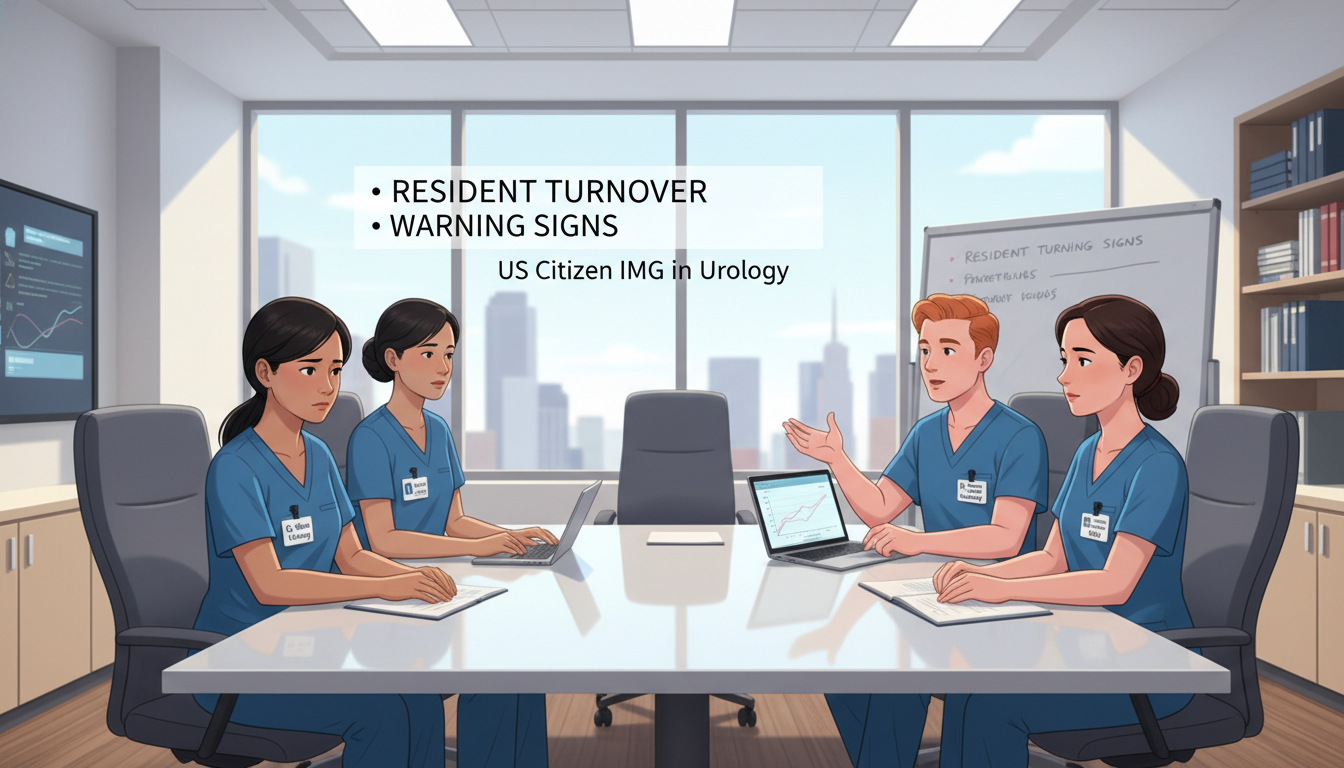
2. Extreme Turnover and Missing Residents
Look at the residency roster on the program’s website:
- Do the PGY-2 and PGY-3 classes look smaller than PGY-1?
- Are there many PGY-1s but fewer seniors, with no explanation (e.g., “transferred to another program” or “left for family reasons”)?
- Do residents disappear year to year when you check archived rosters (via the Wayback Machine or old webpages)?
Patterns of residents leaving or being replaced mid-training are classic malignant program indicators.
3. Visa and Sponsorship Inconsistencies
As a non‑US citizen IMG, pay special attention to:
- Programs that vaguely state: “We accept IMGs” but do not clearly state which visas (J-1, H-1B) they sponsor.
- Programs that previously sponsored H‑1B or J‑1 but now say “case by case” without clarity.
- Frequent changes in policy without explanation.
You need transparent answers during interviews:
- Who handles visas (institution vs. program coordinator vs. an external office)?
- How long does visa processing typically take?
- Any recent residents whose visas were denied, late, or caused them to miss orientation?
4. Poorly Maintained Website and Opaque Information
While not proof of malignancy, certain patterns are concerning:
- Outdated resident lists (last updated several years ago).
- No clear schedule, curriculum, or call structure description.
- Vague statements like “We are like a family” with no concrete educational data.
- No information on fellowships, job placements, or alumni trajectories.
Healthy programs usually can show:
- Sample rotations.
- Approximate call frequency.
- Representative fellowships or jobs obtained by recent graduates.

Toxic Program Signs During Interviews and Virtual Interactions
Interviews are your best opportunity to detect whether a program might be malignant. As a foreign national medical graduate, you may be attending mostly virtual interviews, but you can still gather a lot of information.
1. Resident Behavior and Atmosphere
During resident Q&A or social events, observe carefully:
Warning signs:
- Residents appear tense, speak cautiously, or look at each other before answering.
- One or two residents do almost all the speaking, others stay silent.
- When asked directly about work hours, wellness, or support, answers are vague:
- “It depends…”
- “We’re like family, so we just do what needs to be done.”
- Residents seem unfamiliar with each other or avoid describing negative experiences, even in anonymous chat.
Healthier answers:
- Clear but balanced: “Yes, we work hard, but duty hours are respected and we log everything.”
- Specific examples of support (backup call pool, wellness days, coverage when someone is sick).
- Residents can describe strengths and weaknesses openly (e.g., “Night float can be busy, but we get solid support from seniors.”).
As a non-US citizen IMG, pay extra attention to whether international residents themselves speak honestly or seem guarded, especially about visas or evaluations.
2. How Program Leadership Talks About Residents
Listen closely to the Program Director (PD) and faculty:
Red flags:
- Comments that blame residents: “If someone doesn’t survive here, they weren’t meant for medicine.”
- Overemphasis on “toughness” and “resilience” without corresponding talk of support.
- Dismissive attitude toward duty hour regulations: “Our residents always go above and beyond hours; we don’t watch the clock.”
- Vague or defensive responses when asked about past ACGME issues or changes.
Ask open, respectful questions:
- “What changes have you made based on resident feedback in the last few years?”
- “How do you handle residents who are struggling clinically or personally?”
- “Can you describe how wellness and burnout prevention are addressed?”
Programs that cannot provide concrete examples are concerning.
3. Questions You Ask That Reveal Malignancy
Prepare a set of questions specifically aimed at detecting toxic program signs:
Workload and support
- “Can you describe a typical day on your busiest rotation?”
- “What happens if a resident is sick or has a family emergency on a call day?”
- “How are duty hours monitored and enforced?”
Feedback and evaluations
- “How often do residents receive formal feedback?”
- “What is the process if a resident disagrees with an evaluation?”
- “Have any residents been placed on remediation or probation, and how was that handled?” (You don’t need names, just processes.)
Culture and safety
- “Are there any anonymous ways for residents to report concerns?”
- “Have residents ever escalated concerns to the GME or DIO, and what happened?”
- “Can you share an example of a recent resident-initiated change in the program?”
Visa and immigration-specific questions
- “How many current residents are on visas?”
- “Has any resident ever had a visa issue that affected their training start date?”
- “Who guides residents through visa renewal and possible changes (e.g., switching from J‑1 to another status after training)?”
Healthy programs will answer clearly and confidently. Hesitation, resentment, or deflection around these questions are major residency red flags.
4. Inconsistencies and Conflicting Messages
Compare what different people tell you:
- If the PD says duty hours are “always respected” but residents hint they’re routinely exceeded, that’s a red flag.
- If a coordinator claims “we have a robust wellness program,” but residents say, “We don’t really have time for that,” watch out.
- If the PD emphasizes “we rarely put anyone on probation,” but residents tell you of multiple recent dismissals, be cautious.
As a non‑US citizen IMG, it’s critical to ask other IMGs in the program privately (via email or social media) whether their experiences align with the official version.
Special Risks and Vulnerabilities for Non‑US Citizen IMGs
Malignant programs are dangerous for everyone, but foreign national medical graduates face additional unique vulnerabilities.
1. Visa as a Tool of Control
Unhealthy programs may use your immigration status as leverage:
- Implied or explicit threats: “If you don’t cooperate, we can’t guarantee your visa renewal.”
- Deliberate delays in paperwork to pressure you to accept extra work or unfair terms.
- Discouraging residents from seeking external help (“If you go to GME, they might question your status.”).
To protect yourself:
- Understand which entity truly controls your visa (ECFMG for J‑1, institution/HR for H‑1B).
- Know your rights—programs must follow federal law and institutional policies regardless of your visa.
- If multiple IMGs report fear around visas, that’s a sign of a potentially malignant residency program culture.
2. Discrimination and Unequal Opportunities
Red flags that affect IMGs more:
- IMGs routinely assigned to “worst” rotations or heavier call schedules.
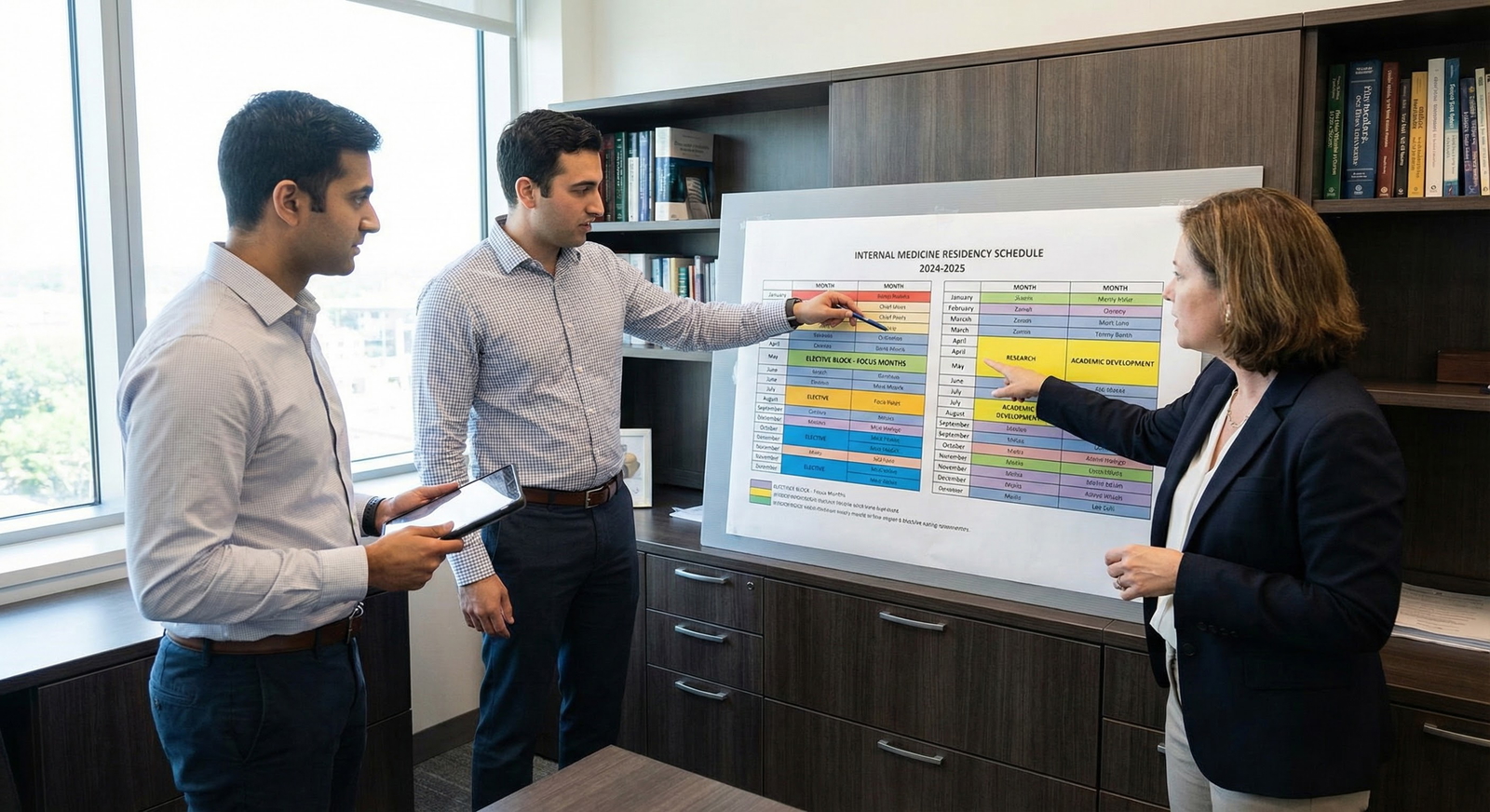
- US grads frequently getting the best elective spots or research opportunities.
- Attending physicians making disparaging comments about accents, medical schools abroad, or cultural backgrounds.
Ask current IMGs:
- “Do you feel you receive similar opportunities for leadership, research, and letters of recommendation as US grads?”
- “Have you ever felt your visa status or IMG background affected evaluations or promotion?”
3. Lack of Support for Boards, Fellowship, and Career Planning
Your long‑term future (fellowship, jobs, future visas) depends heavily on:
- Strong board preparation support.
- Access to mentors willing to write strong letters.
- Guidance on navigating J‑1 waiver jobs, H‑1B options, or permanent residency routes.
Malignant or indifferent programs may:
- Provide minimal or no structured board review.
- Offer no mentorship for fellowship applications.
- Discourage IMGs from pursuing competitive specialties or fellowships.
Ask specifically:
- “How are residents supported for USMLE Step 3 and board exams?”
- “Where have recent IMGs matched for fellowship or taken jobs?”
- “How involved are faculty in guiding career and immigration planning?”

Practical Strategies to Research and Avoid Malignant Programs
You cannot rely on one source alone. Use a structured approach combining public data, direct questions, and private networking.
1. Build an Information Matrix for Each Program
Create a spreadsheet with columns such as:
- ACGME status, cited issues (if any)
- Board pass rates and trends
- Class size and visible attrition
- Number of IMGs and visa types
- Resident well‑being indicators (call schedule transparency, backup coverage)
- Alumni outcomes (jobs, fellowships)
- Notes from interview, resident Q&A, and private conversations
- Specific residency red flags you observe
Scoring each program on transparency, support, and culture can help you compare rationally instead of emotionally after a long interview season.
2. Use Networks Strategically (Even If You Think You Have None)
As a non‑US citizen IMG, you actually have more network than you realize:
- Alumni from your medical school who are already in US residencies.
- Former observership or externship supervisors.
- Social media groups (Facebook, WhatsApp, Telegram) for IMGs in your specialty.
- Online forums (Reddit r/medicalschool, r/residency, Student Doctor Network).
Ask targeted questions:
- “Does anyone know about X program from the inside—work culture, support for IMGs, visa handling?”
- “Have you heard of IMGs leaving this program or having serious problems?”
Treat single negative stories as signals to investigate further, not absolute truth. But multiple similar stories from unrelated people about the same program is a serious warning.
3. Read Between the Lines in Official Communication
Program emails, interview invitations, and post-interview messages can also reveal culture:
Warning patterns:
- Disorganized or chaotic communication about interview logistics.
- Repeated schedule changes without apology.
- Rude or dismissive responses from staff when you ask clarifying questions.
While not definitive proof of malignancy, disrespectful communication often mirrors deeper cultural issues.
4. Identify “Acceptable Toughness” vs. True Malignancy
Some programs are extremely busy or in resource-limited settings but not malignant. They may honestly say:
- “Our residents work very hard, but we adhere to duty hours.”
- “We have challenging patient volumes, but supervision is strong.”
- “Our board pass rate dipped in one year, and we responded by adding structured teaching and mock exams.”
Differences between tough but fair and malignant:
- Transparency about challenges vs. minimizing or hiding them.
- Concrete examples of changes based on feedback vs. denial that problems exist.
- Respectful culture vs. fear and humiliation.
You might accept a demanding program if:
- Leadership is honest and supportive.
- IMGs report being treated fairly.
- Education and long-term outcomes are strong.
You should avoid a program if:
- Information is vague, inconsistent, or defensive.
- IMGs report discrimination or visa-related threats.
- Resident turnover is high and poorly explained.
5. Trust Your Instincts—but Confirm with Evidence
If a program “feels wrong” during interview day:
- Write down exactly what made you uncomfortable (body language, comments, contradictions).
- Discuss it with mentors or peers.
- Try to confirm with at least one independent source (current or recent resident, alumni, or reputable forum discussion).
It is far better to rank a slightly less prestigious but supportive program higher than to match at a big-name but malignant residency program that may damage your career and well-being.
FAQs: Non‑US Citizen IMG Questions About Malignant Programs
1. As a non-US citizen IMG, is it better to accept any residency than risk not matching?
Not always. Matching into a malignant residency program can:
- Lead to burnout, depression, or even leaving medicine.
- Result in dismissal or resignation, making it harder to re-enter the Match.
- Disrupt your visa and immigration status if your training is interrupted.
If your options include programs with multiple serious red flags, consider:
- Applying in a future cycle with a stronger profile.
- Strengthening your application with observerships, research, or improved scores.
- Targeting more community programs known to be supportive of IMGs.
A supportive, smaller program is often far better than a toxic, unstable one.
2. How can I safely ask current residents about toxicity or malignancy?
- Request permission for a private email or WhatsApp chat with at least one IMG resident.
- Use neutral, open questions:
- “How would you describe the culture for IMGs?”
- “Is there anything you wish you had known before ranking this program?”
- “Have you felt supported when you struggled with workload or personal issues?”
- Do not push them to say negative things—they may be protecting themselves. Instead, look for:
- Hesitations, very short answers, or “I’d rather not comment.”
- Vague responses when you ask about attrition or visa issues.
If multiple residents avoid discussing certain topics, consider that a sign in itself.
3. Are community programs more likely to be malignant than university programs?
Malignancy can occur in any setting—university, community, or hybrid. However:
- Some community programs may have fewer resources, but still be very supportive, especially to IMGs.
- Some prestigious university programs may have highly competitive or unsupportive cultures.
Focus less on program “type” and more on:
- Transparency.
- Resident satisfaction and retention.
- Fair treatment of IMGs and visa holders.
- Educational structure and support systems.
4. What should I do if I realize my program is malignant after I start?
This is complex, especially for a foreign national medical graduate on a visa, but options include:
Document everything
- Keep records of duty hour violations, abusive incidents, and ignored complaints.
Seek internal help first
- Talk to your program leadership, chief residents, or faculty mentors you trust.
- Use confidential channels (GME office, ombudsman, institutional compliance office).
Understand the visa implications
- For J‑1: ECFMG and your GME office are key contacts if a transfer becomes necessary.
- For H‑1B: The institution sponsors your visa, so any job change must be carefully planned.
Explore transfer options
- Discreetly ask mentors and external contacts about positions in other programs.
- Transfers are difficult but not impossible; documented abuse or major violations may support your case.
Protect your mental health
- Seek counseling if available.
- Connect with IMG support networks who understand both cultural and visa-related stress.
Whenever possible, the safest approach is to avoid malignant programs before you rank them, using the strategies described above.
For a non-US citizen IMG, identifying malignant programs is not pessimism; it is strategic self‑protection. With careful research, targeted questions, and honest conversations with current residents, you can minimize the risk of landing in a toxic program—and maximize your chances of growing, learning, and building a stable future in US medicine.