
Residency is challenging anywhere, but a malignant residency program can turn a demanding training experience into a genuinely harmful one—especially for a non-US citizen IMG in a combined Pediatrics-Psychiatry (Peds Psych) pathway or Triple Board (Peds–Psych–Child Psych) program. As a foreign national medical graduate, your visa, career trajectory, and even immigration status can be directly impacted by how supportive—or toxic—your residency environment is.
This guide is designed specifically for non-US citizen IMGs exploring Peds Psych or Triple Board positions. It explains how to recognize toxic program signs, understand residency red flags, and protect yourself from malignant environments before you commit.
Understanding “Malignant” in the Context of Peds-Psych Residency
In residency culture, “malignant” informally describes programs that are:
- Consistently unsupportive or abusive
- Emotionally, mentally, or even physically unsafe
- Administratively rigid and punitive
- Ignoring duty hour, wellness, or safety standards
For a Peds Psych residency or Triple Board program, this can show up in unique ways because trainees are split between:
- Pediatrics inpatient and outpatient
- Adult psychiatry
- Child and adolescent psychiatry
- Consult-liaison, emergency, and subspecialty rotations
You will already be switching cultures, teams, and expectations every few months. A malignant program amplifies this complexity by:
- Offering poor coordination across departments
- Providing minimal guidance during transitions (e.g., from pediatrics ward months to adult psychiatry)
- Failing to understand the extra adjustment needs of a foreign national medical graduate
Why Non-US Citizen IMGs Are at Higher Risk
As a non-US citizen IMG, malignant programs can affect you more severely because:
- Visa dependency: You are often tied to your employer for J-1 or H-1B status; changing programs can be complicated or risky.
- Less local support: No family nearby, limited social safety net, and unfamiliarity with US labor and legal systems.
- Power imbalance: Fear of jeopardizing your visa or career may make you tolerate abuse or exploitation.
- Less familiarity with US norms: It can be hard to know what is “normal tough residency” versus truly unacceptable practices.
Recognizing a malignant residency program early is not only about wellness—it is about protecting your legal status, health, and long-term career.
Structural Red Flags: What the Program Tells You Without Meaning To
Before you ever step into a hospital, you can identify key residency red flags by examining public information, recruitment behavior, and structural features of the program.
1. Inconsistent or Vague Information About Combined Curriculum
In a legitimate, well-run Peds Psych or Triple Board program, the website and interviews should clearly describe:
- Number and distribution of pediatrics, adult psychiatry, and child psychiatry months
- How continuity clinics are structured and maintained across transitions
- How they support residents re-entering a discipline after long gaps
Red flags:
- Vague language like “robust experience in all three disciplines” without specifics
- Confusion among interviewers about your exact rotation schedule
- Faculty unable to answer: “How do you make sure residents meet requirements in all three areas?”
This suggests poor planning, poor communication between departments, or a program that is not truly invested in the combined training—conditions that often overlap with a malignant residency program.
2. Suspicious ACGME or ABPN Status
Check:
- ACGME accreditation status
- Any citations or “warning” statuses
- Board pass rates for Pediatrics and Psychiatry for the last several years
Red flags:
- Repeated ACGME citations about duty hours, supervision, or resident supervision
- Below-average board pass rates in both pediatrics and psychiatry, especially among combined or triple board residents
- No data provided at all, or evasive answers when you ask about board performance
Chronic accreditation issues frequently correlate with broader dysfunction and can indicate toxic program signs.
3. Chronic Vacancies or Frequent Resident Transfers
Look closely at:
- How many positions are listed on FREIDA vs. how many current residents appear on the website
- Whether the program has interim or frequent changes in leadership
- Whether multiple residents have transferred out in the last few years
Red flags:
- “We’ve had a few people leave for personal reasons” repeated year after year
- Graduating classes significantly smaller than the number who matched
- Chief residents all being from different programs (suggesting internal dissatisfaction)
For a Peds Psych or Triple Board track, which is usually quite small, a single transfer might be bad luck; repeated attrition strongly suggests structural dysfunction or a malignant environment.
4. Non-Transparent Policies for Non-US Citizen IMGs
As a foreign national medical graduate, pay close attention to:
- Which visa types they routinely sponsor (J-1 only vs. J-1 and H-1B)
- Whether the information on the website matches what they say in writing and at interviews
- How they handle visa-related delays, ECFMG issues, or relocation logistics
Red flags:
- Vague language: “we consider IMGs case by case,” but no concrete track record
- No previous residents on visas, yet they claim they are “open to it” without specifics
- HR and GME office inconsistent about whether H-1B is possible
- No one clearly responsible for assisting with visa and onboarding issues
This is not only a logistical concern; it signals how they value and support international residents. A program that is disorganized or dismissive about visas is more likely to be unsafe for you if serious problems arise.
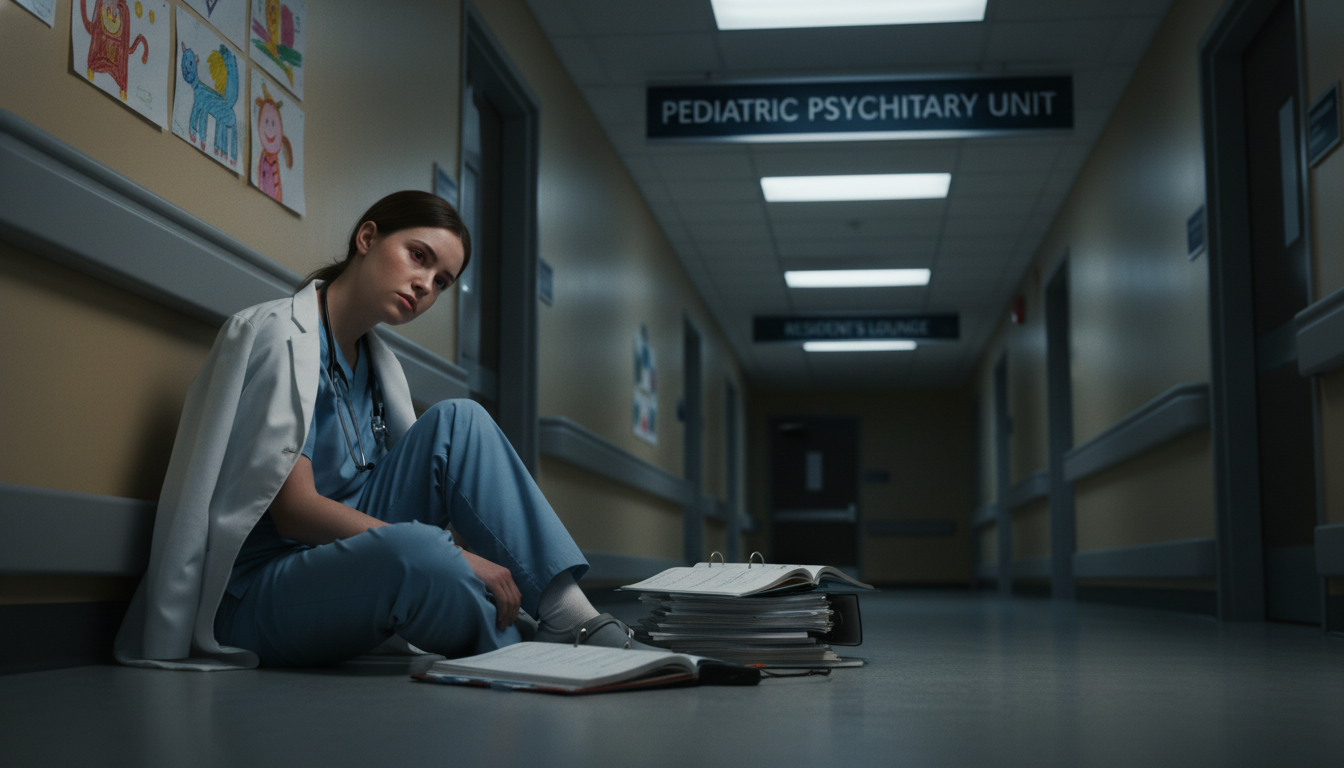
Day-to-Day Toxic Program Signs: What Life in a Malignant Program Feels Like
Even if a program appears structurally sound, its culture can still be deeply harmful. Understanding the toxic program signs specific to a combined Pediatrics–Psychiatry environment is essential.
1. Chronic Duty Hour Violations and Off-the-Record Expectations
In Peds Psych and Triple Board training, it’s normal to have intense pediatric inpatient months and psychiatry call. But there are limits.
Healthy norms:
- Clear schedules with respect for ACGME duty hours
- Ability to log hours honestly without pressure
- Back-up systems when census explodes or someone is sick
Malignant behaviors:
- You are told explicitly or implicitly to under-report duty hours
- Being asked to “just finish the notes from home” every night, effectively making shifts significantly longer
- No “post-call” protection after long overnight shifts
- Floating between pediatrics overnight and psychiatry emergencies without adequate rest or staffing
For a non-US citizen IMG, duty hour violations carry extra weight. Chronic sleep deprivation plus fear of retaliation can create a dangerous environment where medical errors are more likely, and you may feel trapped because of your visa status.
2. Bullying, Public Humiliation, and Blame Culture
In a malignant residency program, learning is replaced by fear.
Examples of bullying in Peds Psych contexts:
- Being yelled at during pediatric rounds for slow presentations, especially if English is your second language
- Psychiatry attendings mocking your cultural understanding of mental illness or your accent, even subtly
- Being singled out in morbidity and mortality conferences as the “problem,” without balanced analysis or systems review
Red flags:
- Residents tell you, “Just keep your head down. Don’t make waves.”
- Multiple stories of attendings who are “difficult, but you get used to it.”
- No safe forum to provide upward feedback without fear of retaliation
As a non-US citizen IMG, bullying can intersect with discrimination—comments about your country, your medical school, or your assumed knowledge level—and you may feel powerless to respond.
3. Unsafe Patient Care Expectations
Combined Peds–Psych and Triple Board residents often work with high-acuity populations: suicidal adolescents, medically complex children, and patients with overlapping behavioral and medical needs.
Toxic care expectations:
- Being responsible for too many patients without attending presence (e.g., a full pediatrics team plus psychiatry consults)
- Lack of psychiatry backup for severe crises on pediatric floors
- Being pushed to prescribe medications or clear suicidal patients without adequate supervision
- Pressure to “clear the ED” by prematurely discharging vulnerable patients
This exposes both you and your patients to risk. If something goes wrong, malignant programs tend to blame the resident, not the system.
4. Little to No Support During Rotational Transitions
In combined programs, you are constantly shifting roles:
- From pediatric intern to psychiatry junior resident
- From adult psychiatry to child psychiatry
- Back to pediatrics after months away
A supportive program will:
- Provide orientation refreshers when you return to a discipline
- Assign mentors who are familiar with combined training
- Give extra feedback during the first weeks of each switch
In a toxic program:
- You are treated as if you should already know everything on day one
- Mistakes are punished rather than used as teaching opportunities
- Rotations are scheduled back-to-back with no buffer, making you feel constantly behind
Example:
You finish several months of adult psychiatry outpatient then suddenly start a high-intensity pediatric ICU rotation. No one orients you; the senior assumes you remember all pediatric protocols, and when you struggle, you are labeled “slow” or “unprepared.”
Specialized Red Flags for Non-US Citizen IMGs in Peds-Psych and Triple Board
Your situation as a non-US citizen IMG brings additional layers of vulnerability and specific warning signs to watch for.
1. Weak or Hostile Attitude Toward IMGs
Observe how the program talks about and treats IMGs:
Positive signs:
- Current or recent foreign national medical graduates in the program who feel supported
- Leadership openly acknowledging the strengths IMGs bring (clinical maturity, global experience)
- Transparent description of exam preparation support and US systems orientation
Malignant attitudes:
- Comments like “We prefer US grads but we sometimes take IMGs.”
- Residents joking about IMGs being “behind” or “needing extra help” in a demeaning way
- No non-US citizen IMG graduates in many years, yet they are recruiting you now
For Peds–Psych, where complex communication and cultural nuance matter, subtle bias can quickly turn into systematic exclusion, less opportunity, and harsher evaluations.
2. Poor Support for Visa, Licensing, and Board Exams
Your legal and academic status is intertwined:
Red flags:
- Vague timeline for sponsoring your visa or delays in initiating paperwork
- No one seems to know who handles state license or training permit applications for IMGs
- No specific support for Step 3, board exams, or adaptation to US documentation standards
- Past stories of a foreign national medical graduate whose visa or contract renewal almost lapsed
These are not minor bureaucratic issues. They directly threaten your legal ability to remain in the US. A program that mismanages these areas is showing you that your stability is not a priority.
3. Inflexibility in Crisis or Personal Emergencies
As an IMG, you may:
- Have family emergencies abroad
- Need to travel for visa stamping
- Face additional stressors related to adaptation and isolation
Ask how they’ve handled such situations in the past.
Malignant responses:
- “We expect all residents to handle personal matters on their vacation days only.”
- Refusal to consider schedule swaps or short leaves even in serious emergencies
- Threats that visa issues are “your problem, not the program’s”
A punitive, inflexible environment toward reasonable requests is a hallmark of a malignant residency program and should be taken seriously.

How to Detect Residency Red Flags Before You Match
You cannot rely solely on program websites or official presentations. Use multiple sources to identify malignant or toxic environments early.
1. Use the Interview Day Strategically
Questions to Ask Faculty
Targeted, open questions will reveal a lot:
- “How do you ensure combined residents meet requirements in both pediatrics and psychiatry without burnout?”
- “Can you describe a time when a resident was struggling? How did the program respond?”
- “How are residents supported when rotating back into a discipline after being away for several months?”
- “For non-US citizen IMGs, how do you handle visa issues or unexpected delays? Can you share some examples?”
Be cautious if answers are:
- Vague or evasive
- Focused on “high expectations” with little mention of support
- Blame the struggling resident rather than describing structural solutions
Questions to Ask Current Residents (Ideally Without Faculty Present)
- “How comfortable do you feel reporting duty hour violations?”
- “Have residents left the program in the last few years? What were the reasons?”
- “As a combined or Triple Board resident, do you ever feel treated as a ‘guest’ in both departments rather than owning a home base?”
- “For IMGs here, how has the program supported your adaptation and visa needs?”
- “If you had to choose again, would you still rank this program first?”
Listen for hesitations, nervous laughter, or heavily scripted answers. These can be subtle indicators of an unsafe culture.
2. Research Beyond the Program’s Official Narrative
Use:
- Alumni LinkedIn profiles: Do past residents stay in the same city? Do multiple people leave after PGY-1?
- Online forums, but with caution: Focus on consistently repeated themes, not one-off angry posts.
- E-mail or message alumni, especially prior non-US citizen IMGs, and ask direct questions.
Specific questions to alumni:
- “How did the program respond when you had a bad outcome or complaint?”
- “Did you ever feel your visa or employment status was used as leverage?”
- “What would you have wanted to know about this program before matching here?”
3. Analyze the Culture Around Feedback and Evaluation
In Peds–Psych and Triple Board programs, you will be evaluated by multiple departments. Look for:
- Transparency in evaluation processes
- Clear remediation plans if you struggle
- Evidence of growth-minded, not punitive, approaches
Red flags:
- Stories of residents being placed on probation suddenly
- Hard-to-understand criteria for promotion or remediation
- Heavy reliance on subjective comments like “not a good fit”
Especially as a foreign national medical graduate, vague negative labels can follow you and impact fellowship or job prospects later.
Protecting Yourself: Practical Strategies Before and After You Match
Even with careful research, you may still land in a challenging environment. You can reduce risk and protect yourself by being proactive.
Before You Rank Programs
Create a Red-Flag Checklist
Include items like:- Multiple reports of bullying
- Chronic duty hour violation rumors
- High attrition or transfers
- No support structure for non-US citizen IMGs
- Evasive answers about supervision or crisis handling
Weigh Safety and Support Over Prestige
For a Peds Psych or Triple Board pathway, being in a healthy, nurturing environment will matter far more than a big-name brand when you are juggling three specialties and visa issues.Prioritize Programs with IMG Track Records
Rank higher those that:- Have graduated several foreign national medical graduates
- Regularly manage J-1 or H-1B visas
- Offer explicit orientation and mentorship for IMGs
After You Match: Monitoring for Malignant Traits
Once you’re in the program:
Document Early and Often
- Keep a private log of duty hours, unsafe situations, and problematic behaviors.
- Save e-mails and messages related to scheduling, evaluations, or conflicts.
Build a Support Network Quickly
- Identify at least one supportive faculty member in pediatrics and one in psychiatry.
- Connect with other IMGs at your institution or nearby hospitals.
- Stay in touch with mentors outside your program who can advise objectively.
Learn Your Rights and Support Pathways
- Understand ACGME duty hour rules and grievance processes.
- Know who in GME or HR handles mistreatment or harassment reports.
- Identify confidential resources (e.g., ombuds office, counseling, employee assistance).
Act Early if You Feel Unsafe
If you notice clear toxic program signs—chronic humiliation, unsafe patient care, or threats involving your visa—seek advice outside the immediate program:- Institutional GME office
- ECFMG (for J-1) or immigration counsel (for H-1B)
- National specialty organizations (AAP, APA) resident sections
- Trusted external mentors or alumni
Transfer is challenging but possible. For a non-US citizen IMG, it requires careful coordination to protect your immigration status, but staying in a genuinely malignant residency program can be far more damaging long-term.
FAQs: Non-US Citizen IMG Concerns About Malignant Programs in Peds-Psych
1. How do I distinguish between a “rigorous” program and a truly malignant residency program?
Rigorous programs:
- Have high expectations but clear supervision, teaching, and feedback
- Take resident wellness seriously and enforce duty hours
- Treat errors as opportunities for learning, not occasions for humiliation
Malignant programs:
- Promote a culture of fear, blame, and secrecy
- Expect unpaid, undocumented extra work and criticize honest duty hour reporting
- Regularly ignore your wellbeing, safety, and legal obligations (like visas and contracts)
If you feel consistently unsafe, silenced, or threatened, especially when raising legitimate concerns, you are likely in a toxic environment.
2. As a non-US citizen IMG, should I avoid smaller or newer Peds-Psych or Triple Board programs?
Not necessarily. Some smaller or newer programs are exceptionally supportive and flexible. But you must investigate more carefully:
- Do they have institutional experience with IMGs and visas, even if the combined track is new?
- Is there strong collaboration between pediatrics and psychiatry leadership?
- Do residents (even in categorical tracks) describe a healthy culture?
The presence of solid institutional infrastructure and supportive faculty matters more than the age or size of the combined program itself.
3. What are the biggest residency red flags specific to Peds-Psych or Triple Board programs?
Key combined-training red flags include:
- Poor coordination between pediatrics and psychiatry departments
- Combined residents repeatedly feeling “homeless” in both areas
- No orientation when switching between specialties
- Conflicting expectations from both sides (e.g., each department treating you like a full-time categorical resident)
- Lack of mentors who understand combined training pathways
When these issues are compounded by bullying, duty hour violations, or dismissiveness toward IMGs, they strongly suggest a malignant residency program.
4. If I realize my program is malignant after starting, do I have any realistic options as a non-US citizen IMG?
Yes, but you must plan carefully:
- Document issues thoroughly
- Seek confidential advice from GME, an ombuds office, or trusted faculty outside your department
- Consult with ECFMG (for J-1) or an immigration attorney (for H-1B) before making drastic moves
- Explore internal solutions first (schedule adjustments, mediation, rotation changes)
- If necessary, look for transfer opportunities while maintaining legal status
Leaving or transferring is complex, but staying indefinitely in a toxic environment can harm your mental health, professional reputation, and long-term US career prospects.
Identifying malignant programs as a non-US citizen IMG in Peds Psych or Triple Board training is challenging—but not impossible. By understanding structural residency red flags, recognizing toxic program signs in daily life, and asking strategic questions before ranking, you can significantly reduce your risk of landing in a harmful environment and instead find a program that will support you, your patients, and your future.