
Understanding Resident Turnover as a Warning Sign
When you are an MD graduate aiming for an ophthalmology residency, you are entering one of the most competitive and specialized fields in medicine. Because ophthalmology programs are relatively small, resident turnover—residents leaving the program, transferring, or not completing training—can be an especially powerful signal about program health.
A single resignation in a five‑resident per year program is very different from one resident leaving a 30‑resident internal medicine program. In ophthalmology, each departure is magnified and often affects case volume, call schedules, and morale.
For an MD graduate focused on a strong allopathic medical school match, paying attention to turnover is part of doing due diligence. While no program is perfect, patterns of residents leaving the program should prompt you to slow down, ask more questions, and consider whether the issues are fixable growing pains or deeper program problems.
This article will help you:
- Recognize resident turnover red flags
- Distinguish between normal attrition and concerning patterns
- Ask targeted questions on interview day
- Use turnover data to interpret an ophtho match list strategically
- Balance risk when ranking programs in the NRMP
What Counts as Resident Turnover in Ophthalmology?
Before deciding whether a program’s turnover is alarming, clarify what “turnover” means in this context.
Types of Resident Turnover
Voluntary Resignation or Transfer
- Resident leaves the program by choice (personal reasons, specialty change, geographic move).
- Resident transfers to another ophthalmology residency or to a different specialty.
Involuntary Departure
- Resident dismissed for academic, professionalism, or disciplinary reasons.
- Resident cannot progress due to repeated failure to meet milestones or board requirements.
Extended Leaves and Non-Completion
- Resident takes prolonged leave (health, family, military) and does not return.
- Resident finishes PGY-2/PGY-3 but does not complete PGY-4 at the program.
Chronic Under-Filling of Resident Slots
- Program consistently leaves one or more PGY-2 positions unfilled.
- Frequent Supplemental Offer and Acceptance Program (SOAP) participation or post‑Match scrambling to fill vacancies.
In ophthalmology, any of these should prompt scrutiny, but especially patterns across several years.
Normal vs Concerning Turnover
Some turnover is understandable and not necessarily a red flag:
- A single resident leaves in a five-year period for a spouse relocation.
- A resident switches to neurology after realizing they dislike microsurgery.
- A trainee takes extended leave for a serious medical condition.
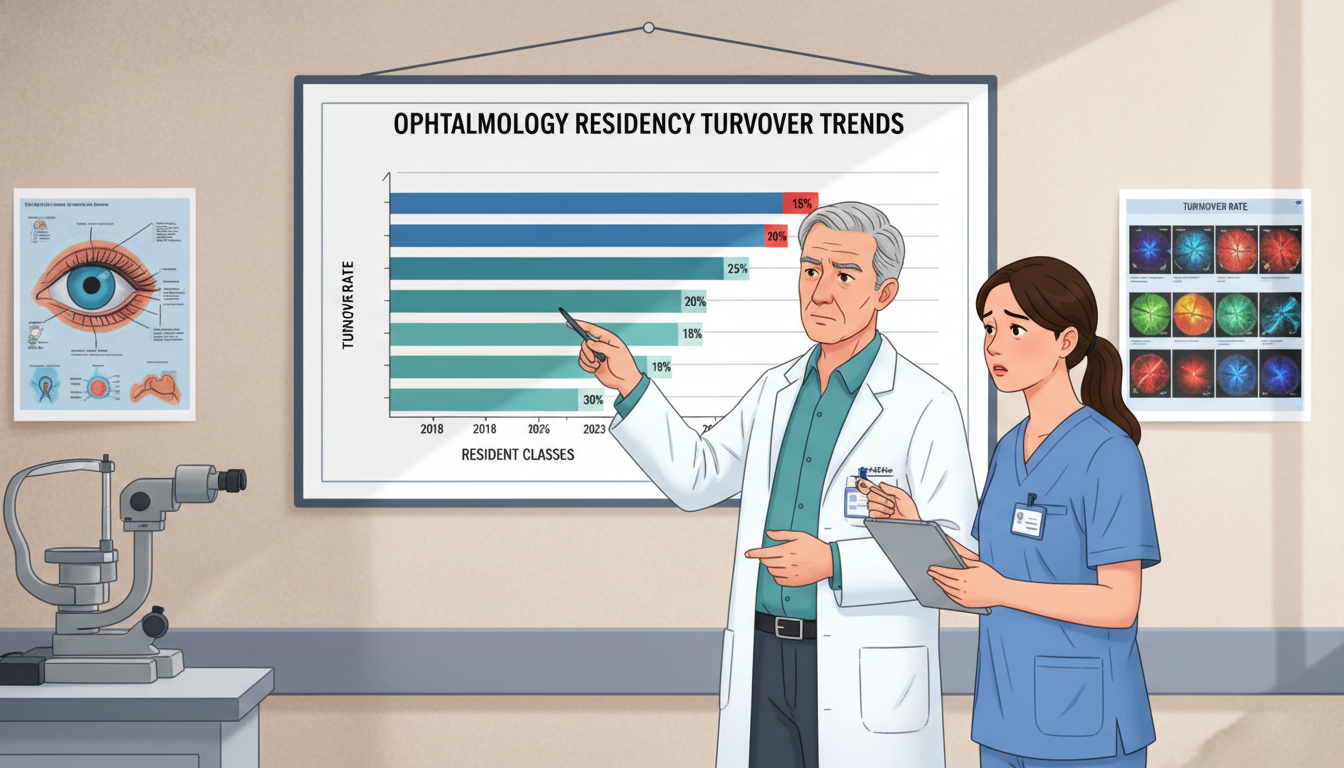
On the other hand, recurrent turnover can point to program problems:
- One or more residents leave almost every year.
- Multiple classes have had someone leave, be dismissed, or transfer out.
- Residents consistently warn applicants about “a lot of changes” or “high turnover” but can’t clearly explain why.
The key is to differentiate between isolated, well-explained cases and repeated, vaguely explained departures.
Concrete Turnover Red Flags in Ophthalmology Programs
Below are specific resident turnover warning signs MD graduates should watch for when evaluating ophthalmology residencies.
1. Multiple Residents Leaving in Consecutive Years
Red flag pattern:
- “We had a PGY-3 leave last year, and another resident left the year before that.”
- “We’ve had someone leave almost every year for the past few years.”
In a small ophtho program of 9–12 residents total, losing two or three in back-to-back years is significant. It can indicate:
- Chronic dissatisfaction with training quality
- Personality or leadership problems within the department
- Unmanageable workload or poor staffing
- Unresolved toxicity (bullying, harassment, lack of support)
How to probe diplomatically:
- “I noticed the roster online lists fewer residents than positions. Have there been recent transitions or residents leaving the program?”
- “Over the past 5 years, have there been any residents who did not complete training here? What were the main reasons?”
You are not trying to interrogate them—you’re looking for transparent and consistent explanations.
2. Vague or Deflective Explanations About Departed Residents
Programs sometimes have legitimate confidentiality constraints, but you can still learn a lot from how they respond.
Concerning responses:
- “They weren’t a good fit,” with no further context.
- “There were some issues, but we can’t talk about it.”
- “We don’t really discuss that—it’s in the past.”
- Different people give different stories about why someone left.
More reassuring responses:
- “We had a resident leave three years ago for family reasons; their spouse was in another state and they chose to be closer.”
- “A prior resident realized they preferred pathology and transferred. We supported that transition.”
- “We dismissed a resident for professionalism issues after due process. It was difficult but necessary, and it prompted us to further clarify expectations.”
The content matters, but so does the tone. Watch for either uncomfortable defensiveness or overly rehearsed, evasive answers.
3. Frequent Mid-Year Vacancies and Scramble Fills
A classic resident turnover red flag is a program that:
- Regularly has “unexpected” open PGY-2 or PGY-3 spots mid-year.
- Appears on listservs or social media repeatedly seeking off-cycle residents.
- Often relies on SOAP/post‑Match to fill core positions.
This can indicate:
- Residents leaving the program unexpectedly.
- Inadequate screening or support, leading to academic or professional difficulties.
- A poor reputation among applicants in the ophtho match community.
Key questions:
- “Have you needed to fill mid-year positions in the past few years? What led to those openings?”
- “How often do you participate in SOAP for ophthalmology positions?”
4. High PGY-2 Entry, Low PGY-4 Graduation Numbers
When you look at the website:
- PGY-2: 4 residents
- PGY-3: 3 residents
- PGY-4: 2 residents
If this pattern is persistent rather than a one-time anomaly, it suggests attrition across multiple years.
Ask:
- “I noticed there are fewer senior residents than juniors. Is that due to changes in complement or did residents leave or transfer?”
- “Has the number of funded positions changed, or is this reflective of attrition?”
A straightforward explanation might be a recent increase in resident complement (e.g., they expanded from 2 to 3 positions per year). But if numbers are shrinking as you go up, especially over multiple years, that’s worrisome.
5. Residents Hinting at Unhappiness but Not Speaking Freely
On interview day, current residents are your most valuable source of real-time information about resident turnover and general program health.
Concerning signs include residents who:
- Use phrases like “it’s been a rough few years,” “a lot of changes,” or “some people didn’t feel this was a good fit” without elaborating—and look uncomfortable if you press gently.
- Look at each other before answering basic questions about call, support, or why someone left.
- Say things like “we’re working on it” repeatedly, without being able to point to concrete improvements.
- Quickly change the subject when you ask about previous residents or attrition.
When multiple residents independently give subtly negative or guarded answers, take note. You are likely seeing the outward face of deeper issues.
6. Rapid Leadership Turnover Alongside Resident Attrition
Every department goes through leadership changes, but if you observe:
- Frequent turnover of program director or chair every 1–3 years AND
- Multiple residents leaving or not graduating on time
you may be looking at systemic instability. This can affect:
- Curriculum continuity
- Clinical site arrangements
- ACGME accreditation status
- Departmental morale and mentorship
Ask tactfully:
- “Have there been significant leadership changes recently? How has that affected resident training?”
- “How long has the program director been in place, and how would you describe their vision for the program?”
If the program is in the midst of major re-structuring, weigh potential long-term benefits against the short-term chaos you may experience during your 3‑4 critical training years.
7. Residents Consistently Warn You About Workload or Culture
Another classic red flag: when you ask, “What’s one thing you would change about this program?” and several residents answer with:
- “The workload is unsustainable.”
- “The call burden is brutal and hasn’t been addressed.”
- “We’re constantly backfilling for missing residents.”
- “The culture can be harsh; feedback isn’t always constructive.”
If the same theme emerges across different residents, classes, and settings, especially linked with people leaving, that becomes a significant warning sign.

Distinguishing Benign From Concerning Turnover: Nuanced Judgment
As an MD graduate targeting an allopathic medical school match in ophthalmology, you need to balance healthy skepticism with realistic expectations. No residency is flawless; what matters is whether problems are isolated and addressed or chronic and ignored.
When Turnover Might Be Acceptable or Benign
These scenarios usually do not represent serious program problems:
Single Well-Explained Departure Over Many Years
- Resident left due to unexpected family crisis or geographic necessity.
- A trainee realized a deep mismatch with clinical ophthalmology and chose another specialty.
Clear, Isolated Professionalism Issue
- Department explains that a resident was dismissed after repeated, documented professionalism violations.
- Program can describe how they support struggling residents while still upholding standards.
Transparent, Improving Program
- The program acknowledges prior issues (e.g., too much call, limited surgical exposure) that may have contributed to dissatisfaction.
- They show specific changes already implemented: new faculty, revised call schedules, wellness initiatives, mentorship structure.
Recent Complement Expansion
- Fewer seniors than juniors because they added positions recently, not because residents left.
In these cases, if the rest of the signals (morale, surgery numbers, teaching quality, faculty engagement) look strong, the risk from one or two unusual situations may be relatively low.
When Turnover Should Heavily Influence Your Rank List
You should assign significant weight to turnover when you observe:
- Multiple residents leaving in the last 3–5 years.
- Conflicting or evasive explanations for why they left.
- Recurrent participation in SOAP or chronic mid-year vacancies.
- Visible strain on remaining residents (exhaustion, resentment about covering extra work).
- Combined with other red flags: poor surgical volume, minimal faculty supervision, or a hostile culture.
In this situation, it may be safest to rank such programs lower, especially if you have other acceptable options. Remember that in ophthalmology, small differences in training environment can dramatically affect your:
- Surgical competence and confidence
- Fellowship opportunities
- Board pass rates
- Professional trajectory
How to Investigate Resident Turnover During the Ophtho Match Process
You can’t rely solely on program websites or official presentations. Use multiple channels to understand resident turnover dynamics before committing your future.
1. Review Public Information Before Interview Season
Program Websites
- Compare annual PGY-2, PGY-3, and PGY-4 rosters.
- Look for unexplained drops in class size or missing residents.
- Note any recent major leadership shifts.
FREIDA and ACGME Listings
- Check accreditation status and any public citations.
- Look for recent probation or warning signs.
Word of Mouth
- Ask trusted mentors, especially those in ophthalmology, what they know about the program.
- Many faculty are aware of which programs have chronic issues with residents leaving the program.
2. Ask Targeted Questions on Interview Day
You can phrase questions neutrally to convey curiosity rather than accusation. Examples:
To Program Leadership:
- “Over the past 5–10 years, have there been many residents who did not complete training here? How often does that occur, and why?”
- “How do you support residents who are struggling academically or personally?”
- “How has resident complement changed over the last few years?”
To Current Residents (without faculty present):
- “Have any residents left or transferred in recent years? What were the general reasons?”
- “How does the program respond when a resident is overwhelmed—does the culture encourage asking for help?”
- “Do you feel the number of residents is adequate for the clinical volume, or are you often short-staffed?”
Pay attention to verbal and non-verbal responses. Hesitations and glances between residents can be as telling as the actual words.
3. Seek Informal, Off-the-Record Insights
If you have access to:
- Recent graduates from the same medical school who matched into that program
- Alumni of the ophthalmology residency who are now fellows or attendings
ask them for candid impressions:
- “I’m considering ranking this program. Were there many residents who left during your time there?”
- “How did the program treat residents who were struggling?”
- “If you had to choose again, would you still go there?”
These closed‑door, informal conversations can reveal what official tours and presentations never will.
4. Interpret Turnover in Context of Your Risk Tolerance
Your personal circumstances matter:
- If you absolutely need to be in a specific geographic region, you might accept a slightly higher risk.
- If you have multiple strong options, it may be unwise to choose a program with a documented history of resident turnover unless they demonstrate substantial, credible reform.
Ultimately, you are choosing where you will train for the next 3–4 years—years that will shape your entire ophthalmic career.
Integrating Turnover Data Into Your Rank List Strategy
Understanding resident turnover patterns helps you build a safer, smarter rank list in the ophthalmology match.
Stepwise Approach
Categorize Programs by Turnover Risk
- Low Risk: Minimal or well-explained single departures, strong morale, transparent leadership.
- Moderate Risk: One or two uncertain cases, some hints of stress but no clear pattern.
- High Risk: Multiple residents leaving, evasive answers, visible strain, leadership instability.
Adjust Within Tiers
- Among your top-choice academic centers with similar strengths, push those with cleaner turnover histories higher.
- Use turnover as a tiebreaker when deciding between otherwise similar programs.
Avoid Overweighting Single Events
- A single departure, if plausibly explained, should not automatically tank a program in your ranking.
- Focus on patterns over time, corroborated by multiple sources (website, interviews, alumni).
Protect Your Well-Being and Training Quality
- Programs with chronic turnover are more likely to have:
- Overworked remaining residents
- Disorganized rotations
- High stress and burnout
- Potential risk for ACGME citations or changes during your training
- Programs with chronic turnover are more likely to have:
In a highly specialized field like ophthalmology, this can directly affect your comfort performing cataract surgery, retina procedures, and managing complex pathology independently after graduation.
Frequently Asked Questions (FAQ)
1. How much resident turnover is “too much” in an ophthalmology residency?
In a small ophthalmology program (2–5 residents per year), any pattern of residents leaving in multiple consecutive classes is concerning. One departure over 5–7 years with a clear explanation may be acceptable. But if 2–3 residents have left in the last 3–4 years—especially with vague explanations—that’s a serious resident turnover red flag you should factor heavily into your ranking.
2. Is it okay to directly ask about residents leaving the program during interviews?
Yes, if done respectfully and neutrally. You can say:
“Over the past several years, have there been residents who didn’t complete the program here? What were the general reasons?”
Programs that are healthy and transparent should be able to answer this honestly. Defensive or evasive reactions are themselves informative.
3. Could high turnover ever be a sign of positive change, like cleaning up a toxic culture?
Occasionally, yes. If a new chair or program director was brought in to reform a historically problematic department, some early turnover may reflect growing pains as expectations and culture change. In this case, look for:
- Clear acknowledgment of past issues
- Specific reforms already underway
- Current residents who genuinely feel things are improving
If you hear mostly vague “we’re working on it” without concrete changes, be cautious.
4. How should I weigh turnover compared to other factors like surgical volume or prestige?
Resident turnover is primarily a proxy for program stability, culture, and support. Excessive turnover can undermine even a prestigious name or strong surgical numbers by creating:
- Chaotic schedules
- Poor morale
- Burnout and erosion of learning climate
When building your ophtho match rank list, consider turnover alongside:
- Surgical case volume and complexity
- Faculty mentorship and accessibility
- Fellowship outcomes
- Geographic and personal fit
If two programs are similar in training quality, choose the one with a cleaner resident turnover history. Long-term career satisfaction often depends more on training environment than on small differences in prestige.
By systematically evaluating resident turnover warning signs, you move beyond glossy brochures and slide decks to understand the true day-to-day reality of an ophthalmology residency. As an MD graduate aiming for an allopathic medical school match in this competitive specialty, that insight can protect your training experience, your well-being, and ultimately your future as an ophthalmologist.