Understanding Resident Turnover in Medical Genetics Programs
For a Caribbean IMG aiming for a medical genetics residency, understanding resident turnover is not optional—it’s strategic self‑protection. Because the field is small and often combined with other specialties (pediatrics, internal medicine), a single resident leaving the program can dramatically impact coverage, call schedules, and your daily life.
You may already be focused on the big, visible issues—board pass rates, fellowship outcomes, SGU residency match statistics, or whether a program has an established track record with Caribbean medical school residency applicants. But resident turnover is one of the clearest and most immediate red flags for program problems that can damage your training, well‑being, and long‑term career.
This article will help you:
- Decode what “resident turnover” actually means in medical genetics
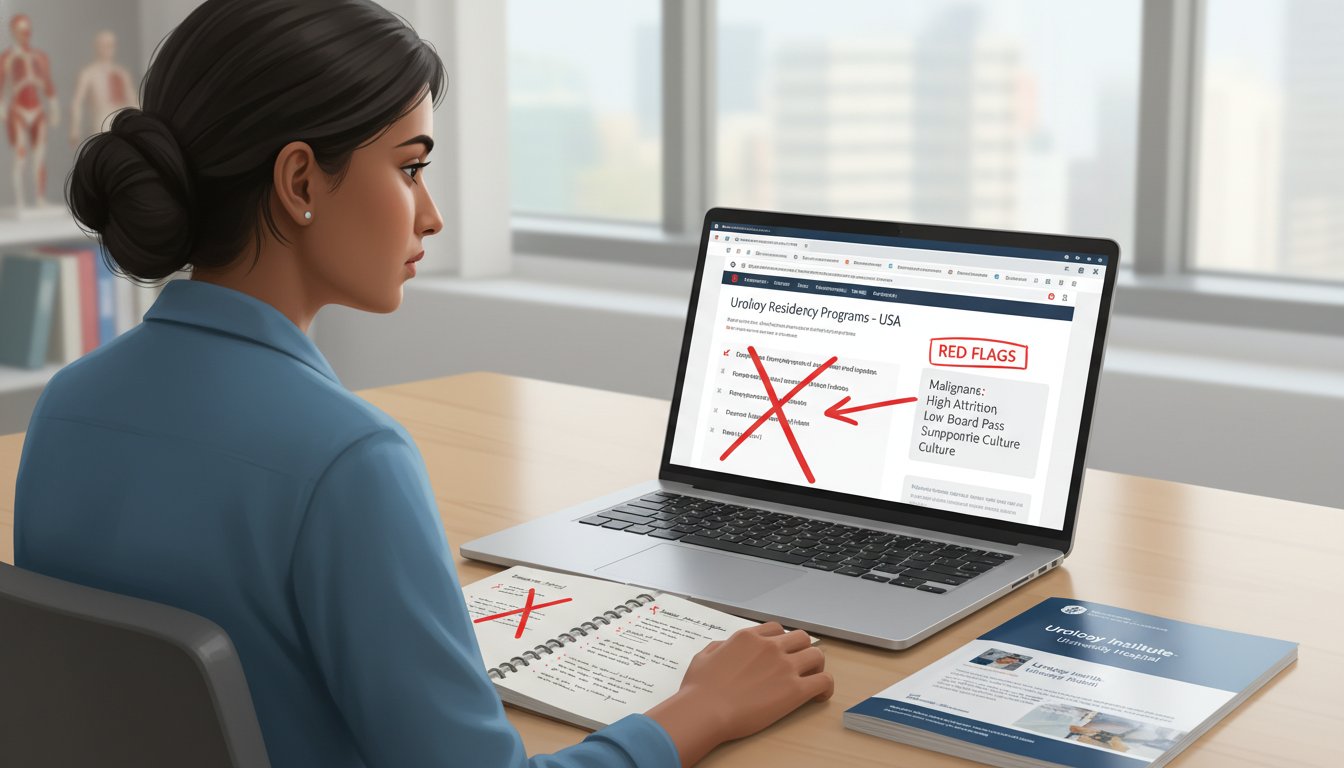
- Recognize resident turnover red flags that should make you pause
- Ask targeted questions during interviews and virtual visits
- Interpret what you hear as a Caribbean IMG with unique vulnerabilities
- Decide when turnover is a benign issue—and when it’s a deal‑breaker
Throughout, we’ll take a medical genetics–specific lens and include examples directly relevant to Caribbean IMGs, including those from SGU, Ross, AUC and similar Caribbean schools.
1. What Resident Turnover Really Means in Medical Genetics
Resident turnover is broader than just “someone quit.”
In the context of a medical genetics residency, turnover can include:
- Residents who resign or transfer to another program
- Residents who switch specialties (e.g., leave genetics for pediatrics, neurology, or pathology)
- Residents who are not promoted to the next year (academic or professionalism issues)
- Residents who take unplanned extended leaves that are really “soft exits”
- Residents who finish but strongly discourage applicants from coming
In a large internal medicine program, a few residents leaving might be absorbed into the system. In medical genetics, where programs may only have 1–4 residents per year, even a single departure can dramatically expose underlying issues:
- Toxic leadership or unresponsive administration
- Unsustainable clinical load in a small subspecialty
- Poor integration with pediatrics, maternal-fetal medicine, or oncology services
- Inadequate faculty numbers, turnover of key attendings, or loss of genetic counselors
- Systematically poor treatment of IMGs or of residents with visas
Why Caribbean IMGs Need to Be Extra Alert
As a Caribbean IMG, you may face:
- Visa complexity (J-1/H-1B concerns)
- Heightened scrutiny from program directors
- Less social and family support locally
- Dependence on a successful residency for long-term immigration and career plans
If multiple residents are leaving the program, you are the one who may face:
- Increased workload as “the one who stayed”
- Less flexibility to address your own personal issues (visa, exams, family)
- Being blamed or scapegoated when coverage is tight
- Greater risk if the program becomes unstable and struggles to maintain accreditation
So when you see a pattern of residents leaving a program, treat it like a high‑stakes diagnostic clue, not background noise.
2. Hard Data: Objective Signs of Resident Turnover Problems
Before you ever interview, you can do a first-pass “chart review” of a program’s turnover by looking at publicly available information.
A. Recent Graduate Lists and Current Residents
Most medical genetics programs list:
- Current residents (with PGY year)
- Recent graduates and their current positions
Scan for patterns that suggest resident turnover:
- Missing PGY levels (e.g., PGY‑3 absent, but PGY‑1, PGY‑2, PGY‑4 present)
- A listed resident for previous years who has disappeared from the current roster
- Unusual career shifts (e.g., “former medical genetics resident now internal medicine PGY‑1 at another institution”)
- Several residents who “left medicine” or moved to nonclinical roles prematurely
Actionable step:
Make a simple table or spreadsheet of 3–5 years of graduates and current residents. Ask yourself:
- “Does each class appear to be intact through graduation?”
- “Are there unexplained gaps?”
- “Is there evidence of multiple residents leaving program mid‑stream?”
B. Program Websites, Social Media, and Match Announcements
Many programs proudly post match results or “Welcome new residents” announcements on:
- Department websites
- Twitter/X, Instagram, LinkedIn
- Hospital newsletters
Compare:
- How many residents were welcomed vs. how many appear one year later
- Whether the same class size is maintained each year (sudden down‑sizing can signal problems)
- Whether the program has stopped advertising its residents or alumni altogether
If a medical genetics program repeatedly matches fewer residents than its posted positions, or clearly filled spots then appears short‑staffed later, this may indicate:
- Residents leaving program early
- ACGME concerns forcing the program to decrease positions
- Difficulty recruiting due to reputation issues
C. Board Pass Rates and Accreditation Actions
Resident turnover often coexists with other quantitative red flags:
- Low or inconsistent ABMGG board pass rates
- Recent ACGME citations, warnings, or probation
- Frequent changes in program director or core faculty
While one citation doesn’t automatically mean trouble, consistent program problems plus missing residents can be the genetic equivalent of a pathogenic variant—not just a benign polymorphism.
Where to look:
- ACGME public program search (for accreditation history)
- ABMGG or program brochures for board pass rates
- NRMP charting outcomes and FREIDA for hints (e.g., changes in positions offered)

3. Soft Data: Behavioral and Cultural Warning Signs During Interviews
Not all resident turnover shows up in public data. Much of what matters is culture—how faculty and residents interact, how problems are addressed, and how IMGs are integrated.
A. How People Talk About Previous Residents
When you ask, “Have many residents left the program early?” listen for:
Defensiveness or vagueness
- “People leave all the time; it’s normal.” (without specifics)
- “There were some issues, but everything’s fine now.” (no examples)
Blaming the resident without context
- “They just couldn’t handle the workload.”
- “They weren’t a good fit; we’re very demanding here.”
- “She had family drama—nothing to do with us.”
Inconsistency between faculty and residents
- Program director: “We haven’t had anyone leave in years.”
- Resident: “Actually we had two people step away last year.”
None of these automatically prove a toxic environment, but they are classic resident turnover red flags and suggest deeper program problems.
B. Resident Behavior During a Pre‑Interview Social or Virtual Q&A
Watch how current residents behave:
- Do they avoid eye contact when you ask about workload, mentorship, or prior residents leaving program?
- Is there nervous laughter, awkward pauses, or side‑glances?
- Does one resident dominate conversation while others stay silent?
Healthy programs may acknowledge a departure calmly:
“We did have one resident transfer last year. She realized she was more passionate about pediatric neurology. We helped her find a spot, and we did a structured review to make sure our advising process was stronger.”
Unhealthy programs might show:
- Visible tension when the topic of resident turnover arises
- Conflicting stories about why people left
- Residents who appear overly rehearsed or scripted
C. What is NOT Being Said
In virtual interviews, you might only get 10–15 minutes with residents. If they mention:
- “We are really short on coverage right now.”
- “You’ll get a lot of autonomy—sometimes more than you want.”
- “We’re in the process of restructuring our call system.”
Probe gently:
- “Have residents left the program recently?”
- “Has there been turnover in faculty or leadership that contributed to this restructuring?”
- “How has the recent resident turnover affected your day‑to‑day workload?”
Your role is to perform clinical reasoning: integrate subtle clues, not rely on a single comment.
4. High-Risk Patterns: When Resident Turnover Should Be a Major Red Flag
Not all turnover is bad. One person leaving for family reasons or a better fit specialty is normal. The danger lies in patterns.
A. Multiple Residents Leaving Within 1–3 Years
Red flag scenarios for a medical genetics program:
- Two or more residents leaving program in a 2–3 year span
- A whole class reduced from 3 to 1 or 2 in the middle of training
- Residents from multiple backgrounds (US grads and IMGs) leaving, suggesting systemic issues
Possible underlying causes:
- Chronic understaffing and unsustainable calls, especially if genetics residents are covering non‑genetics services
- Hostile relationship with associated departments (e.g., pediatrics, OB, oncology)
- Toxic leadership or poor conflict resolution
- Insufficient support for research or scholarly activity, especially required for ABMGG eligibility
As a Caribbean IMG, you may be more likely to be assigned the “extra” work if others have left, making this pattern particularly concerning.
B. IMGs Leaving Disproportionately
If you notice that residents leaving program are mostly IMGs, including those from Caribbean medical schools (SGU, Ross, AUC, etc.), investigate thoroughly:
Ask current residents (in a private setting if possible):
- “Have IMGs had different experiences here compared to US grads?”
- “Have IMGs ever left the program early? Why?”
- “Do IMGs typically graduate from this program and successfully enter the genetics match for fellowships or positions?”
If a program can place US grads into fellowships or academic roles but has trouble retaining and graduating IMGs, it may not be neutral ground for a Caribbean IMG.
C. Resident Turnover + Other Program Instabilities
Combine these high-risk signals:
- Several residents leaving program in recent years
AND - Frequent program director changes (e.g., 3 directors in 5 years)
AND/OR - Loss of key attendings or genetic counselors
AND/OR - Evidence of resident burnout (night float overload, constant “picking up slack”)
In a small, niche specialty like medical genetics, this cluster suggests program problems that may not stabilize quickly. As an IMG depending on a smooth path to graduation, this is high risk.
D. When Turnover Might Be Less Concerning
Some situations are not necessarily deal-breakers:
- One resident switching specialties within the same institution, with transparent explanation
- A resident leaving due to relocation for spouse/partner and expressed positive feelings about the training
- A planned restructuring (e.g., moving from categorical pediatrics-genetics to combined tracks) clearly documented by the program and ACGME
Here, ask for details and follow‑up questions:
- “How did you adjust workload when that resident left?”
- “What changes did you implement after they departed?”
- “How have outcomes been for the current classes since then?”

5. Targeted Questions Caribbean IMGs Should Ask About Turnover
Asking the right questions, in the right way, can reveal much more than what’s on a website.
A. Questions for the Program Director or Associate PD
Ask these in a professional, non‑confrontational tone:
“How many residents have left the program before graduation in the last 5 years?”
- Look for clear numbers, not vague statements.
- If they answer: “One, and she left for family reasons,” ask: “Did that change how you support residents with personal challenges?”
“Have any residents transferred to other specialties or programs recently?”
- Follow‑up: “What did the program learn from that experience?”
“How do you monitor resident well‑being, especially in such a small field with high complexity like medical genetics?”
- You’re assessing whether burnout and isolation are recognized and acted upon.
“How have you supported Caribbean IMGs or other IMGs in this program?”
- Listen for specific examples: mentorship, visa support, exam preparation, integration into the team.
“If a resident is struggling academically or clinically, what is your process for remediation?”
- A healthy program has a structured, supportive process—rather than “we just don’t renew their contract.”
B. Questions for Current Residents (Group and 1:1)
For group sessions, keep it general; for private 1:1 conversations, you can be more direct.
Group setting:
- “How has the resident workload changed over the last 2–3 years?”
- “Do you feel the program listens to resident feedback and acts on it?”
Private 1:1 (email or virtual coffee after the interview):
- “Have there been residents who left the program early? How did that affect you day‑to‑day?”
- “Would you choose this program again if you had to redo the match?”
- “As an IMG (or Caribbean IMG), how have you felt supported or not supported here?”
C. Reading Between the Lines as a Caribbean IMG
When you get answers, interpret them with your situation in mind:
- If residents say, “When people leave, we just cover each other,” that’s riskier for you if you’re on a visa and less able to step away or complain.
- If the PD emphasizes “We’re a very tough program, and not everyone can make it,” ask yourself whether that is high standards or a euphemism for unsupportive culture.
- If IMGs have rarely matched into this program and there was one prior Caribbean IMG who left, that deserves detailed follow‑up.
6. Practical Strategy: Balancing Turnover Risks with Your Career Goals
You may not have the luxury to apply only to “perfect” programs, especially as a Caribbean IMG entering a small field like medical genetics. The key is to stratify risk and be intentional.
A. Use a Simple Risk Framework
When evaluating each medical genetics residency:
- Low risk: No recent residents leaving program early; stable leadership; positive, consistent feedback from residents; transparent discussion of challenges.
- Moderate risk: One recent resident departure with a clear, plausible reason; no established pattern; strong current resident satisfaction.
- High risk: Multiple residents leaving within a few years; unclear or conflicting explanations; IMGs leaving disproportionately; leadership churn; coverage strain obvious.
Aim for a portfolio of programs across this spectrum, but think carefully before ranking a clearly high‑risk program near the top—unless other factors strongly justify it (location, visa, family needs).
B. Special Considerations for SGU and Other Caribbean Graduates
If you’re coming from SGU or another Caribbean medical school:
- Leverage any connection with SGU residency match alumni who went into genetics or related fields—reach out and ask about programs with strong IMG support.
- During interviews, you can say:
“As a Caribbean IMG, my progression through residency is especially important to my long‑term goals and visa status. Can you share how your program has ensured that IMGs succeed and graduate on time?”
- Specifically ask whether Caribbean IMGs in this program have:
- Completed the program on time
- Successfully passed boards
- Matched into fellowships or jobs in the genetics match or secured positions in academic or clinical genetics
Programs that have a track record of supporting Caribbean IMGs are less likely to tolerate patterns of residents leaving program without serious introspection and change.
C. When You Might Still Choose a “Risky” Program
You might still rank a program with some turnover concerns if:
- It’s the only program sponsoring your needed visa type
- It’s the only feasible option near critical family support
- It offers unusually strong exposure in your preferred niche (e.g., cancer genetics, metabolic genetics, prenatal genetics) and current residents vouch for real improvement after prior turnover events
If you do this, go in with eyes open:
- Clarify backup plans (research years, inter‑institutional networks)
- Build relationships with mentors outside your institution
- Maintain strong exam performance and documentation of your work
Resident turnover is most dangerous when it surprises you. If you understand and anticipate the program’s weaknesses, you can better protect yourself.
FAQ: Resident Turnover Warning Signs for Caribbean IMG in Medical Genetics
1. How many residents leaving program is considered a “red flag”?
In a small medical genetics residency, even two residents leaving within 3–4 years can be significant. One departure with a clear, non‑program‑related explanation may be benign. Multiple unexplained departures, especially involving IMGs, should prompt serious concern.
2. Should I avoid a program entirely if I hear about resident turnover?
Not always. Consider the pattern and context. Ask for specific details and what changes were made afterward. If turnover appears to be isolated and transparently addressed, the program may even be stronger now. If turnover is recurrent, poorly explained, and associated with other program problems, consider ranking it lower.
3. As a Caribbean IMG, how do I protect myself if I join a program with past turnover?
- Secure clear written expectations about evaluations and remediation processes
- Identify multiple mentors, including outside your home department
- Stay proactive with communication if you’re struggling
- Keep your CV strong with research, presentations, and good exam performance
- Document feedback and keep personal copies of evaluations (within institutional rules)
4. Are combined or dual‑certification genetics programs (e.g., pediatrics–genetics) at higher risk for turnover?
They can be more complex, because you’re dealing with two departments, two cultures, and often heavier clinical loads. Turnover in these programs may reflect friction between departments or overly ambitious scheduling. Carefully ask how prior residents have fared, whether anyone left mid‑track, and how call coverage is handled when residents leave the program.
By treating resident turnover data like you would a complex pedigree—with attention to patterns, penetrance, and modifying factors—you can make far more informed decisions about where to train. As a Caribbean IMG entering medical genetics, this level of scrutiny isn’t paranoia; it’s prudent, career‑saving due diligence.