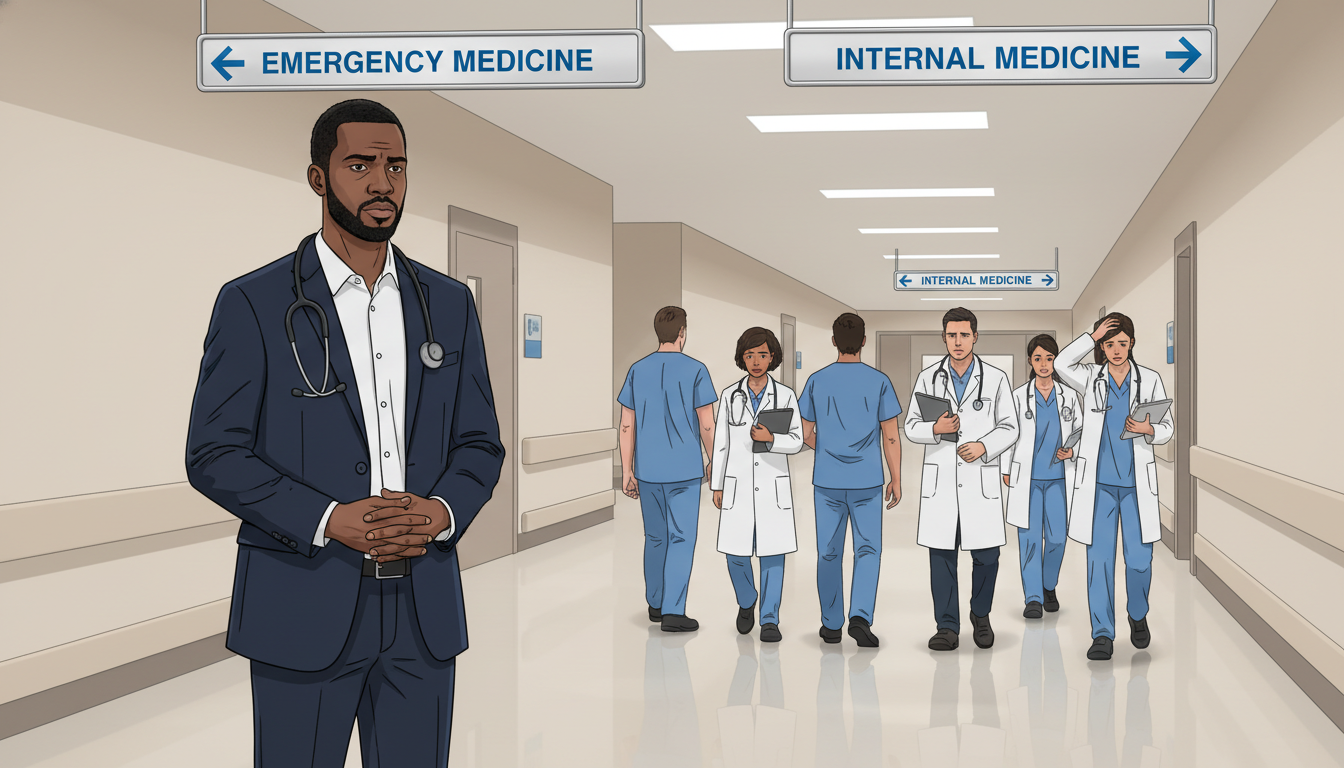
Why Resident Turnover Matters So Much for Caribbean IMGs in EM-IM
For Caribbean IMGs, choosing an Emergency Medicine–Internal Medicine (EM IM combined) residency is a high‑stakes decision. You are investing years of your life, significant money, and your visa future into a single program. One of the strongest signals about a program’s health—especially in EM/IM combined training—is resident turnover.
When residents leave a program unexpectedly, transfer out, fail to be promoted, or seem to “disappear” from the website, it can point to serious program problems. Some turnover is normal; medicine is unpredictable. But repeated unexplained departures or high resident turnover is a genuine red flag—and as a Caribbean IMG you have less margin for error with visas, board eligibility, and reputation.
This article will help you:
- Understand what “resident turnover” really means in the EM-IM context
- Recognize resident turnover red flags specific to Emergency Medicine–Internal Medicine
- Ask the right questions on interview day and during pre-/post-interview communication
- Interpret the warning signs realistically as a Caribbean IMG
- Decide when to walk away from a program, even if you are worried about matching
Throughout, we’ll use the required search terms naturally, but the goal is to give you practical tools, not just keywords.
What Does Resident Turnover Look Like in EM-IM Programs?
Resident turnover isn’t just “someone left.” It includes a spectrum of events that, taken together, show you how stable or unstable a program is.
Normal vs. Concerning Turnover
Normal, understandable events (usually not red flags):
- A resident leaves for family reasons (illness, partner job relocation, caregiving)
- A resident realizes EM-IM combined isn’t the right fit and switches to categorical IM or EM with transparent communication
- A single resident in several years has academic difficulties but receives documented support and remediation
- A resident transfers for geography (e.g., partner match, returning home state) and this is openly acknowledged
Potentially concerning patterns:
- Multiple residents “suddenly gone” from the program website without explanation
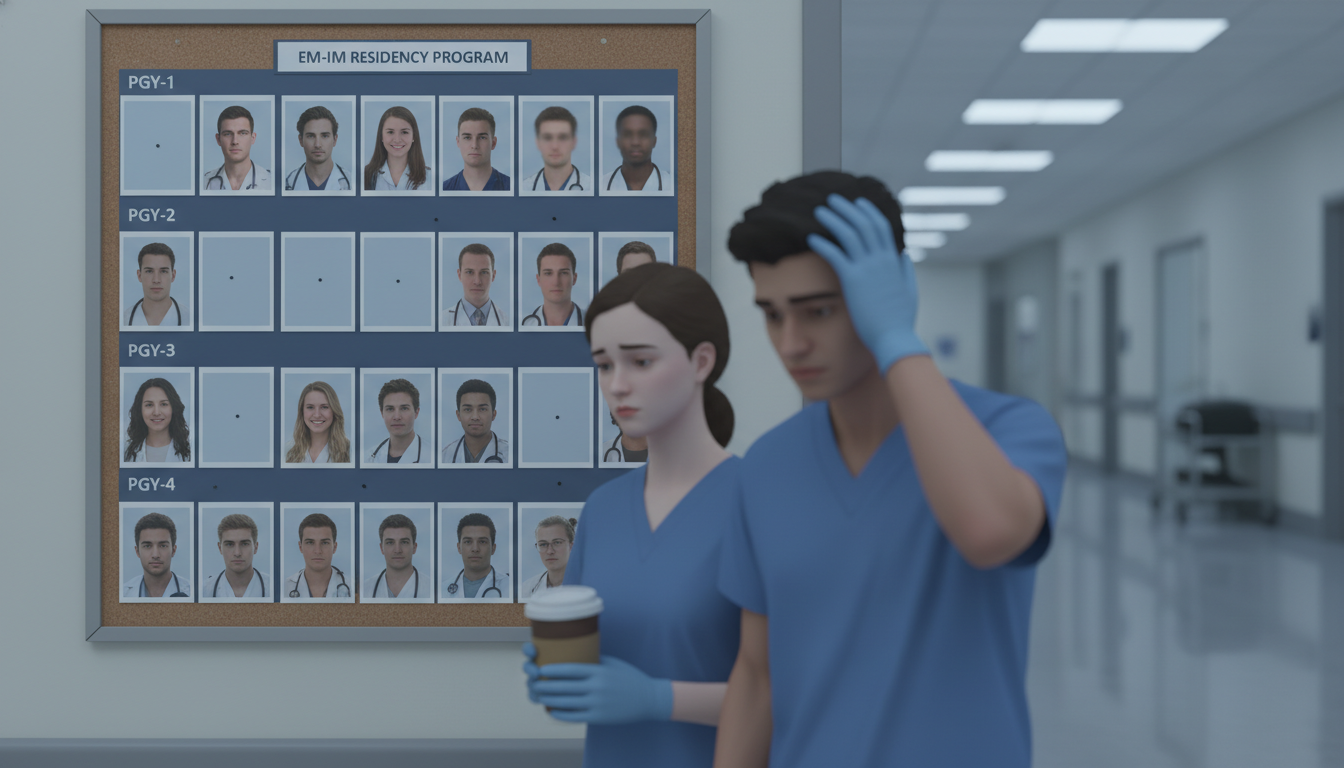
- Residents not progressing as expected (e.g., PGY-2s missing from the roster, PGY-4s who should be there but aren’t)
- A high proportion of residents switching out of EM-IM into categorical tracks at other institutions
- Several resignations or dismissals over behavioral issues, “unprofessionalism,” or non-specific descriptions
- Residents telling you “we’ve had a lot of changes” but not providing coherent detail
In EM IM combined programs, the training is intense: two different cultures (Emergency Medicine and Internal Medicine), dense schedules, and often heavy night and ICU exposure. Some attrition is expected. But repeated, poorly explained losses should grab your attention.
Why Turnover Hurts EM-IM Residents More
In an EM-IM combined program, resident losses can affect everyone’s training:
- Schedule strain: When residents leave, the remaining residents pick up extra calls, nights, and ED shifts.
- Identity confusion: Fewer seniors mean less guidance on balancing the dual-specialty culture.
- Fellowship impact: EM-IM residents often pursue critical care, ultrasound, or admin leadership roles; a destabilized program may weaken your fellowship application.
- Board eligibility risk: If a program is under scrutiny (e.g., ACGME citations) and multiple residents leave, worst-case scenarios can threaten dual-board eligibility if accreditation status changes.
As a Caribbean IMG, you must think in terms of risk containment: Can this program reliably support you for five years of EM-IM training and help you land a good job/fellowship afterward?
Concrete Resident Turnover Warning Signs You Can Detect
You won’t see “WARNING: residents leaving program” in any official document. You have to read between the lines using publicly available information, your interview day impressions, and what current residents say (and don’t say).
Below are specific, actionable signs that a program may have resident turnover red flags.
1. Website and Social Media Clues
Before your interview, study:
- Resident rosters for the last 3–5 years
- Graduates’ lists and “Where are they now?” sections
- Program social media (Instagram, X/Twitter, LinkedIn)
Red flags:
- Missing residents: The PGY-3 class shows only 3 people when the program usually takes 5 annually, with no explanation.
- Photos silently removed: Using an internet archive (Wayback Machine), you notice that last year there were 6 PGY-2s, but this year only 4 remain in that same class.
- Incomplete graduate lists: The program lists only a few graduates per year, with missing entries, and no explanation for where others went.
- Avoidance of outcomes: Many programs proudly highlight their successes; a lack of information about where residents matched for fellowship or took jobs can be a subtle sign of program instability.
Practical tip for Caribbean IMGs:
Write out the PGY classes and count how many residents are in each year. In a 3–4 resident per year EM-IM program, even one missing person is a significant percentage of the class. Document these numbers before your interview so you can ask specific questions diplomatically.
2. Inconsistent Explanations About Departed Residents
On interview day, programs expect questions about turnover. How they respond is even more important than the raw numbers.
Concerning patterns:
- Different stories from different people:
- PD says: “He left for family reasons.”
- A senior resident says: “I’m not sure what happened; it was kind of sudden.”
- Vague, non-specific answers repeated for multiple residents:
- “We decided it wasn’t a good fit.”
- “There were professionalism issues,” without description of support or remediation.
- Shaming language:
- “Some of our residents just couldn’t handle our volume; this is a program for the toughest of the tough.”
This can hide a culture of inadequate support or poor wellness.
- “Some of our residents just couldn’t handle our volume; this is a program for the toughest of the tough.”
What you want to hear instead:
- A consistent, transparent narrative that respects privacy but acknowledges reality. Example:
- “Over the last 5 years, we’ve had two residents leave the EM-IM track—one transferred to a categorical IM program closer to family, and one moved to an EM-only program for career preference. We worked with both to make sure they maintained board eligibility and had a smooth transition.”
- Evidence of systematic response:
- “After that turnover, we added structured mentorship and adjusted scheduling to reduce burnout.”
As a Caribbean IMG, ask yourself: Are they being honest enough that I would trust them with my visa, board eligibility, and five years of my life?
3. Chronic Schedule Instability and Coverage Gaps
Resident turnover often shows up as persistent schedule problems.
Red flags during interviews or second looks:
- Residents mention frequently being “short-staffed” or constantly covering “holes in the schedule.”
- A culture of last-minute schedule changes that wrecks any attempt at planning exams, family visits, or wellness.
- Complaints like:
- “We just had another person leave, so everyone has picked up extra shifts.”
- “We’ve been rescuing the ED schedule all year.”
- You notice EM residents and IM residents both complaining about the EM-IM residents’ schedule—suggesting the combined track is being used as a flexible plug for both departments, sometimes after others leave.
In EM IM combined training, some chaos is normal. But chronic understaffing means that when residents leave, the program does not have a sustainable plan, which can increase burnout and further turnover—a vicious cycle.
4. Defensive or Evasive Leadership Responses
On interview day, evaluate how leadership speaks about challenges.
Concerning signs:
- Defensive posture:
- “All residencies have turnover; it’s nothing special here,” said with irritation when you ask calmly.
- Blaming “weak residents”:
- “We hold our people to extremely high standards; not everyone can keep up.”
This can mean residents are set up to fail without adequate teaching or support.
- “We hold our people to extremely high standards; not everyone can keep up.”
- Minimizing serious issues:
- “Yes, a couple of our residents left suddenly, but we’ve moved on,” with no detail on what was learned or changed.
You want leaders who can say:
“Here’s what happened, here’s what we learned, and here’s what we fixed.”
If they can’t do that about resident turnover, what happens when you have your own crisis?
5. Tension Between EM and IM Departments Around EM-IM
A unique risk in EM-IM combined programs is culture clash between EM and IM. Resident turnover sometimes reflects deeper integration problems.
Watch for:
- EM faculty or residents saying:
- “We’re not really sure what the EM-IM residents do on the medicine side.”
- IM side saying:
- “The EM-IMs are always gone in the ED; we can’t rely on them on the wards.”
- Hints that EM-IM residents are used as “swing labor” to plug holes wherever each department is short—especially after other residents leave.
If multiple residents have left the EM-IM pathway but stayed in the same institution (e.g., switching to categorical IM), it can indicate that the combined structure is poorly run, leading to dissatisfaction and attrition.
Questions Caribbean IMGs Should Ask About Resident Turnover
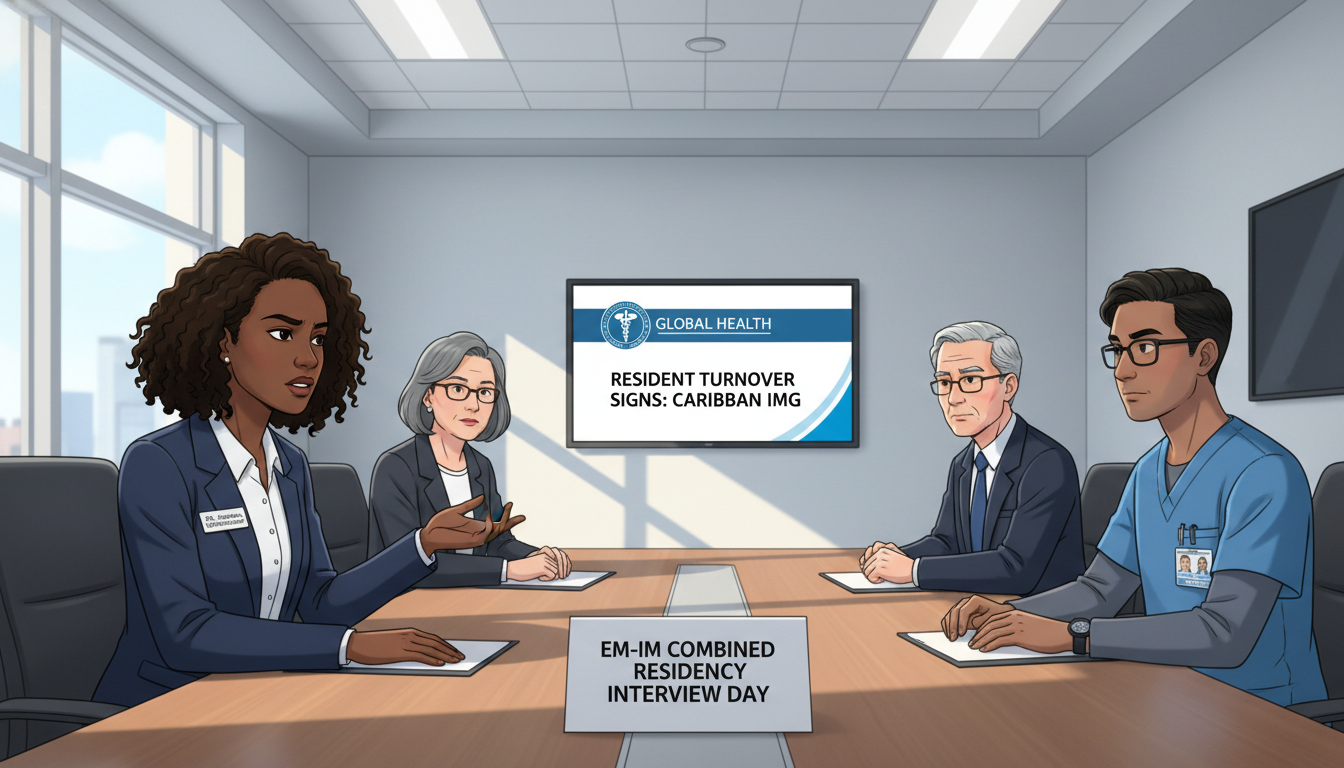
You can’t just ask, “Do you have residents leaving program?” and expect a useful answer. You need specific, neutral questions that invite honest conversation.
Smart Questions for Program Leadership
Use a respectful, data-seeking tone:
“Can you share how many EM-IM residents have left the program or switched tracks over the last 5 years, and what the main reasons were?”
- Pay attention to numbers, patterns, and whether they sound consistent with what you observed on the roster.
“How does the program support residents who are struggling, either academically or personally, before things get to the point of considering leaving?”
- Look for structured remediation, mentorship, wellness resources, and non-punitive approaches.
“Have you made any specific changes in response to resident feedback or departures in recent years?”
- Healthy programs will mention concrete interventions: new mentorship structures, schedule reforms, added faculty, or wellness changes.
“If a resident determined that EM-IM combined was not the right fit, what options would they have here?”
- Strong programs can describe pathways to categorical EM/IM, without hostility.
Smart Questions for Current Residents (Especially Senior EM-IMs)
You’ll often get more honest nuance from residents:
“Over the last few years, have many residents left or switched out of EM-IM? How has that affected your day-to-day schedule?”
- Listen for exhaustion, frustration, or bitterness.
“If someone is really struggling here—for whatever reason—what tends to happen?”
- Red flag if the answer is primarily punitive or vague (“they usually just leave”).
“Do you feel like the program is transparent with you about big changes, including resident departures?”
- Healthy cultures share information within the resident body.
“Is there anyone who left that you keep in touch with? How do they feel about the program now?”
- You may not get names, but tone matters. If multiple residents shake their heads and say, “It was bad,” pay attention.
How to Phrase Tough Questions as a Caribbean IMG
If you worry about seeming “difficult” or harming your chances, frame questions in a self-reflective way:
- “I’m really committed to finishing a full EM-IM combined program, and as an IMG my visa depends on program stability. Can you help me understand your track record with residents completing training and any patterns in those who didn’t?”
This shows seriousness and professionalism, not accusation.
Interpreting Red Flags as a Caribbean IMG: When to Walk Away
Not every resident departure means danger. You need a balanced framework to decide.
Step 1: Count and Contextualize
Ask:
- How many EM-IM residents has the program had in the last 5–7 years?
- How many left prematurely, switched tracks, or failed to advance?
- Were reasons:
- Mostly family/geography and clearly explained?
- Or mostly burnout/conflict/“fit” with vague details?
Example interpretation:
- Program A: 25 EM-IM residents over 10 years; 2 left for family moves, 1 switched to categorical IM but stayed at the institution. Leadership explained changes made.
- Likely not a major red flag.
- Program B: 14 EM-IM residents over 7 years; 4 left suddenly, 2 transferred to other institutions, residents speak cautiously about “a lot going on.”
- This is a significant warning.
Step 2: Weigh Against Your Risk Profile
As a Caribbean IMG, additional risks include:
- Visa stability: Program closure or major accreditation trouble can threaten your status.
- Perception bias: If there are issues, IMGs sometimes get blamed or targeted more easily.
- Flexibility: It may be harder to transfer programs or switch specialties compared with US grads.
Therefore, you should set a higher bar for program stability than someone with multiple other backup options.
If you encounter:
- Unexplained disappearance of multiple residents
- Defensive leadership and anxious residents
- Ongoing schedule strain clearly tied to departures
it may be safer to rank that program lower or not at all, even if it seems like one of your few EM-IM options.
Step 3: Consider How the Program Responds to Problems
Problems happen everywhere. But high-quality programs:
- Are transparent about difficult history
- Show evidence of ACGME responsiveness (e.g., addressing citations, adding faculty, revising schedules)
- Have residents who—despite acknowledging prior issues—feel the trajectory is improving
In contrast, in a program with deeper program problems:
- Residents seem resigned (“It’s just how it is here”)
- Faculty blame residents more than the system
- Mention of prior concerns is brushed aside or hidden
As a Caribbean IMG, you want to see active problem-solving, not denial.
Special Considerations for Caribbean IMGs Coming from Caribbean Medical Schools
If you’re coming from a Caribbean medical school, you may already know peers who matched to EM-IM or EM/IM-related programs like SGU residency match outcomes. Use that network wisely.
Use Alumni Intelligence
- Reach out to alumni from your Caribbean medical school who matched into Emergency Medicine-Internal Medicine or similar combined programs.
- Ask candidly:
- “Did many residents leave your program?”
- “How did leadership handle struggling residents?”
- “Would you choose that program again?”
If you’re considering a program that has taken multiple Caribbean graduates previously, ask those graduates specifically about resident turnover red flags and whether they felt IMGs were supported or scapegoated.
Don’t Let Scarcity Push You into a Bad Situation
EM-IM combined spots are few, and as a Caribbean IMG, you may feel pressure to take any offer. But:
- A toxic, unstable program can jeopardize your training, visa, mental health, and long-term career more than a year of reapplying or starting in a different track.
- A solid categorical IM or EM program (even if not dual-board) may be a safer path than a chaotic EM-IM program with high turnover and residents leaving program frequently.
Think long-term: your career will be decades; residency is 3–5 years. Prioritize completion, safety, and support over prestige or a specific EM-IM brand.
Frequently Asked Questions (FAQ)
1. How much resident turnover is “too much” in an EM-IM program?
There’s no magic number, but as a guideline:
- Occasional departures for clear, individualized reasons = usually acceptable.
- >15–20% attrition of EM-IM residents over 5–7 years, especially with vague explanations, is concerning.
- Two or more residents leaving in a small program (e.g., 2–3 residents/year) within a short time frame should trigger deeper questioning.
Always weigh patterns and narratives, not just raw numbers.
2. If I see missing residents on the website, should I ask about them directly?
Yes, but ask tactfully. For example:
- “I noticed that the current PGY-3 class has fewer residents than the prior PGY-2 class. Could you help me understand any changes in class size or resident transitions in recent years?”
This shows attention to detail without sounding accusatory. You are entitled to clarity before committing five years of your life.
3. Are small EM-IM programs always riskier for resident turnover?
Not automatically, but small size magnifies impact:
- One departure in a 2-per-year program means 25–50% of a class is gone.
- Smaller programs may have fewer buffers for schedule coverage and less redundancy in mentorship.
On the other hand, small programs can offer stronger individual support. Focus on:
- How leadership talks about past departures
- Whether residents seem supported and heard
- Any evidence of sustained instability (e.g., repeated gaps, chronic overwork)
4. As a Caribbean IMG, should I avoid any EM-IM program with previous turnover?
No. Prior turnover alone isn’t a reason to avoid a program, especially if:
- Reasons are clearly explained and reasonable
- The program can demonstrate concrete improvements made in response
- Current residents say things have improved and would choose the program again
You should be most cautious when turnover is frequent, poorly explained, and ongoing, and when residents and faculty seem fearful, exhausted, or defensive discussing it.
Resident turnover is one of the clearest windows into a program’s culture and stability. As a Caribbean IMG aiming for Emergency Medicine-Internal Medicine training, you must evaluate this carefully. Look at the numbers, listen to the stories, ask direct but respectful questions, and be willing to walk away from programs that show persistent, unexplained instability. Your future career—and your well-being—are worth that vigilance.