
A neurology residency can either launch your career—or make the next several years unnecessarily stressful. For a US citizen IMG (American studying abroad and returning to the US), understanding resident turnover red flags is especially critical. You often have fewer backup options, more visa/credentialing complexity, and less insider knowledge of programs. Choosing a neurology residency with serious resident retention issues can derail your neuro match strategy.
This guide focuses on resident turnover warning signs specifically for US citizen IMGs applying to neurology residency. You’ll learn how to recognize high-risk programs, interpret what resident turnover really means, and use this information strategically in your applications, communications, and rank list.
Why Resident Turnover Matters So Much for US Citizen IMGs in Neurology
Resident turnover—when residents leave a program early, transfer out, or fail to complete training—is one of the strongest indicators that something may be wrong. While no program is perfect, consistent resident loss is rarely random.
For a US citizen IMG in neurology, turnover matters even more because:
- You may have fewer alternative neurology programs if you need to transfer later (fewer spots, visa/ECFMG timing, and IMG-unfriendly programs).
- You rely heavily on your first match to build a career in a competitive, small specialty.
- Neurology is relatively tight-knit: reputations spread faster, and a problematic program can impact fellowship and job opportunities.
- As an American studying abroad, you may underestimate smaller or lesser-known programs and over-trust names you don’t fully understand.
Resident turnover is not always a deal-breaker—some departures are for legitimate personal or career reasons. The real concern is pattern + opacity:
- Pattern: multiple residents leave or transfer, or residents appear unusually unhappy.
- Opacity: the program cannot or will not explain what happened in a transparent, professional way.
When pattern + opacity coexist, that’s a resident turnover red flag.
Understanding Resident Turnover: What It Actually Looks Like
Resident turnover can be obvious—or very subtle. As a US citizen IMG, you need to know how to decode what you see and hear.
Types of Resident Turnover
Residents leaving the program entirely
- Leave medicine
- Switch specialties
- Transfer to another neurology program
- “Step away” for unspecified “personal reasons” and never return
Residents disappearing from rosters or schedules
- Their photo is missing from the current website but appears in old pages
- They’re referenced in older materials but not in current leadership bios
- Current residents mention “someone who used to be here” but don’t elaborate
Chronic underfilled classes
- Several PGY years have fewer residents than the number of listed positions
- Multiple “prelim-only” or vacant spots after the match year after year
Repeated “off-cycle” or non-standard entries
- Many residents listed as starting mid-year
- Several residents noted as “transfers in” without clear reasons why others “transferred out”
When Turnover Might Be Benign vs Concerning
Some turnover is neutral or even reasonable:
- A resident leaves neurology to pursue a lifelong passion in psychiatry or radiology
- Someone has a serious family or health crisis and steps away
- One or two residents over many years leave for geographic or personal reasons
On the other hand, resident turnover becomes a program problem when:
- Several residents leave in a short span (1–3 years)
- More than one resident leaves the same PGY class
- Multiple residents transfer out while very few seem to transfer in
- Residents hint at “issues” but won’t openly discuss them
For your neuro match, treat multiple departures + vague explanations as a significant warning.
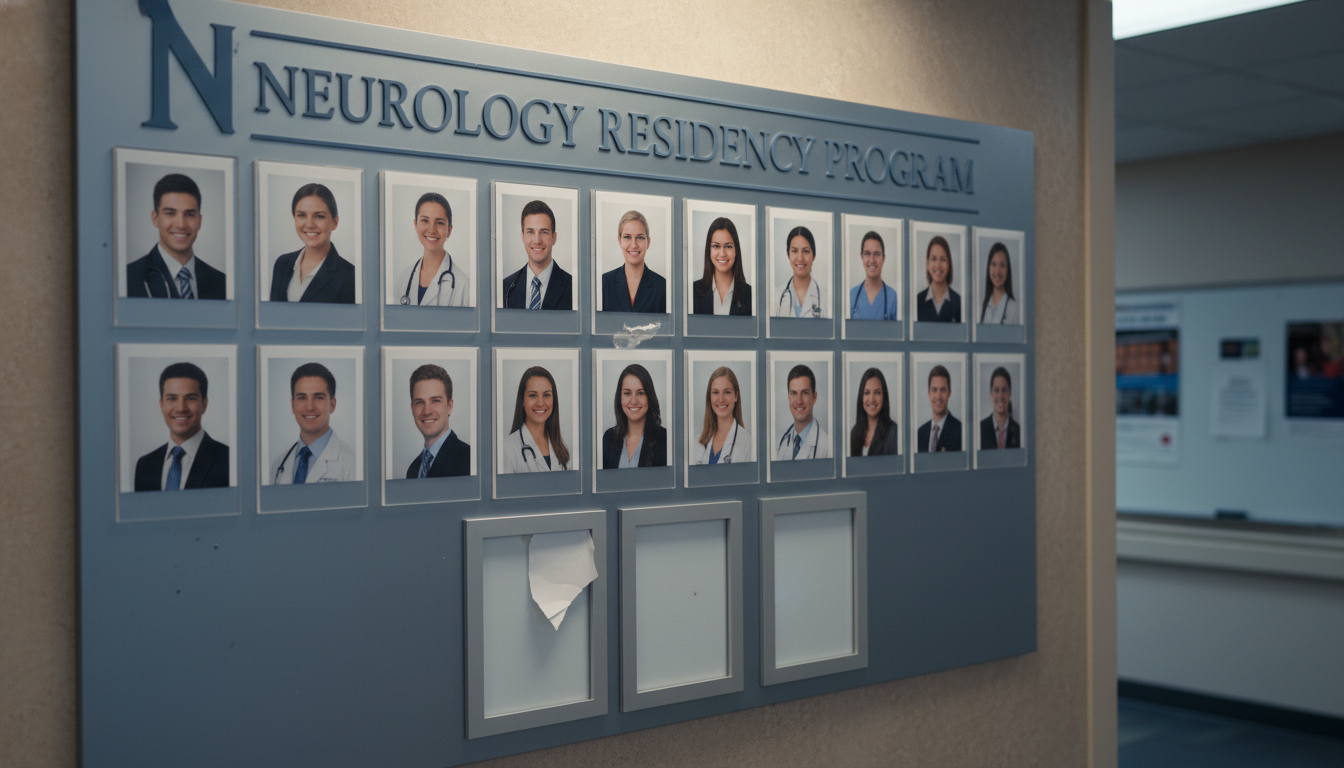
How to Spot Resident Turnover Red Flags Before You Rank a Program
You can detect many turnover warning signs before you ever set foot in the hospital, and then confirm or clarify them during interview season.
1. Analyzing the Residency Website and Public Data
Start with a methodical look at the program’s public footprint.
A. Compare class lists across years
- Visit:
- “Current Residents” page
- Archived / older versions (use the Internet Archive’s Wayback Machine)
- Any “Alumni” section with graduation years
Look for:
- Missing residents (e.g., PGY-1s listed one year, not listed the next, with no mention in alumni)
- Inconsistent class sizes (e.g., 8 PGY-1, 8 PGY-2, but only 5 PGY-3)
- Alumni sections with fewer graduates than the number of starting PGY-2 neurology spots would suggest
B. Check GME and ACGME records when possible
Some institutions or state GME reports list the number of funded positions vs filled residents. If you see consistent under-filling or recurrent vacancies, that may indicate:
- Difficulty recruiting
- Residents leaving mid-training
- Program instability
C. Look at fellowship match lists
While not directly about turnover, poor or inconsistent fellowship match outcomes, especially in an academic-focused neurology program, can correlate with:
- Weak mentorship
- Poor educational culture
- High burnout and disengagement
Combine that with potential turnover signs and you have a stronger concern.
2. Using Online Forums and Social Media—Carefully
As a US citizen IMG or American studying abroad, you may rely heavily on Reddit, Student Doctor Network, or IMG Facebook groups. Use them as one data point, not the whole truth.
Look for patterns like:
- Multiple posts over different years mentioning:
- “Residents leaving the program”
- “High attrition”
- “Toxic culture”
- Mentions of:
- “Residents cried daily”
- “Chief residents quit”
- “Regular transfers out of the program”
But also:
- Watch for dates (is this 8 years old or recent?).
- Pay attention to whether multiple unconnected users report similar concerns.
If you see recent, repeated references to residents leaving and “program problems,” that’s worth taking seriously.
3. Asking Smart Questions During Interviews
Your interview day is your best chance to validate or refute your concerns. As a US citizen IMG in neurology, you must ask tactfully but directly.
Here are examples of neutral, professional questions to raise with residents and program leadership:
Questions for Current Residents
- “Have any residents left the program in the last 3–5 years? If so, were they mostly for career changes or were there other issues?”
- “If a resident struggles academically or personally, how does the program support them? Do they typically stay and succeed?”
- “Would you say most residents here would choose this program again?”
- “What happens with residents who are clearly unhappy—is there an open path to address concerns?”
- “How stable have your class sizes been? Any unexpected vacancies recently?”
Questions for Program Leadership / PD / APD
- “How has resident retention been in recent years?”
- “Can you talk about any residents who have transferred or left, and how the program responded or changed as a result?”
- “How do you monitor resident wellbeing and burnout in a demanding neurology residency?”
Pay attention less to the specific content of the answer and more to the tone and transparency. A strong, healthy program will not be thrown off by these questions.
Red flag responses include:
- Evasive language (“We prefer not to talk about that.”)
- Blaming individual residents (“They just weren’t cut out for neurology.”)
- Inconsistency between what residents and leadership say
Interpreting Red Flags: When Resident Turnover Really Signals Program Problems
Not all turnover is a deal-breaker. The key is learning what combinations of signs should strongly influence your neuro match rank list.
Strong Red Flag Combinations
Multiple residents leaving + zero clear explanation
- You see reduced class sizes over several years
- Residents acknowledge people left but give vague, nervous responses:
“Yeah, a few people left… it’s complicated.”
Residents leaving + visible burnout or fear
- On interview day, residents:
- Look exhausted and disengaged
- Give short, guarded answers
- Avoid discussing workload or call structure directly
- They say things like:
- “You’ll learn a lot, but it’s tough,” followed by silence
- “People here survive, that’s for sure.”
- On interview day, residents:
High turnover + poor educational infrastructure
- No consistent didactic schedule or constant cancellations
- Little to no research or mentorship despite being marketed as academic
- Poor fellowship matches combined with residents leaving midway
Residents leaving program + culture of blame
- Leadership portrays residents who left as “weak” or “lazy”
- No mention of program self-reflection or systemic improvement
For a US citizen IMG in neurology, these strong combinations should dramatically lower a program on your rank list, no matter how attractive the location or name.
Moderate Red Flags to Weigh Carefully
1–2 departures over 5–7 years, but:
- Explanations are vague or inconsistent
- You notice residents are unusually hesitant when discussing leadership or wellness
A program that recently lost multiple faculty or a long-standing program director
- Combined with a few residents leaving, this may indicate a transition period
- Could improve—or get worse
In these cases, consider:
- Where you stand in the application cycle (Do you have stronger options?)
- Your personal risk tolerance (Are you ready to push for change if needed?)
- Whether you have strong support systems in that city/region
Benign or Understandable Turnover
Some programs can explain a few departures in a way that actually increases your trust:
PD says:
“One resident decided to switch to psychiatry, and another moved out-of-state for family reasons. We supported both transitions and learned from their feedback about schedule flexibility.”Current residents confirm this explanation, and you see:
- Stable class sizes otherwise
- Good morale
- Reasonable workloads and didactics
Here, resident turnover is not a major red flag.

Special Considerations for US Citizen IMGs and Americans Studying Abroad
Being a US citizen IMG—for example, an American studying abroad at a Caribbean or international medical school—changes how you should weigh resident turnover.
1. Your Transfer Flexibility Is Limited
Neurology is a relatively small specialty. If you end up in a program with repeated residents leaving program issues, your ability to transfer may be restricted by:
- Few neurology spots opening mid-year
- Programs with bias against IMGs
- Timing constraints around Step/ECFMG verification, state licensure, and visas (even as a US citizen, some states have additional hurdles for IMGs)
Therefore, front-loading your analysis of resident turnover is an investment in avoiding a painful transfer process later.
2. Don’t Overweight Name Recognition
Some US citizen IMGs will accept serious red flags because the program is:
- In a “dream” city
- In a big, recognizable hospital system
- Known for research, but not necessarily for resident support
If you’re hearing:
- “We’ve had some residents leave recently”
combined with - “But we work hard here; that’s just how neurology is”
Pause and consider:
- Good neurology programs are demanding without being destructive.
- High resident turnover is not a normal cost of prestige.
- You will be spending 3–4 crucial years there building your clinical foundation.
3. Ask Other US Citizen IMGs Specifically
On interview day (or via email/LinkedIn afterward), try to speak to:
- Current residents who are US citizen IMGs
- Alumni who are Americans studying abroad who matched there previously
Questions to consider:
- “As a US citizen IMG, did you feel supported here?”
- “Do you know of any IMGs who left or transferred?”
- “How open is leadership to feedback from IMGs about workload and teaching?”
This perspective matters because sometimes turnover problems can disproportionately affect IMGs, especially in programs where:
- IMGs are given the heaviest or least educational rotations
- IMGs feel less safe reporting mistreatment or bias
- IMG residents are seen as “replaceable”
If you detect this pattern, that’s a major resident turnover red flag specifically relevant to you.
How to Use Turnover Information in Your Neurology Match Strategy
Knowing about resident turnover is only useful if you integrate it into how you apply, interview, and rank neurology programs.
During Application Season
- Research early: As soon as you create your program list, do a quick turnover scan.
- Stratify risk:
- Low-risk programs with stable classes and transparent cultures
- Medium-risk programs with some concerns, but also strengths
- High-risk programs with clear resident turnover red flags and poor transparency
As a US citizen IMG, balance your list:
- You may still apply to a few high-risk programs to maintain enough interview volume.
- But do not rely on problematic programs as your main path to match.
During Interviews
- Use your limited face time wisely:
- Prioritize questions about retention, wellness, and support.
- Talk to multiple residents at different levels (junior and senior).
- Take notes immediately after:
- Any mention of residents leaving
- Non-verbal discomfort or hesitation
- Conflicting stories between PD and residents
Building Your Rank List
When ranking:
- Move programs down where:
- Multiple residents have left recently
- Explanations are vague or defensive
- Residents appear unhappy or fearful
- Prioritize programs with:
- Stable classes and transparent discussion of challenges
- Residents who confidently say they would choose the program again
- Clear evidence of mentorship and support structures
For a US citizen IMG in neurology, it is usually better to be at:
- A less famous but stable, supportive program
than at - A highly recognizable institution with chronic turnover and resident dissatisfaction.
Your goal is to finish residency as:
- Competent
- Well-trained
- Not burned out
- Well-positioned for fellowship or practice
Stable programs help you get there.
Frequently Asked Questions (FAQ)
1. Is any resident turnover automatically a red flag?
No. One or two residents leaving over several years is common and can reflect normal life events (family needs, career change, health issues). Pattern + lack of transparency is what creates a resident turnover red flag. Look for multiple departures, reduced class sizes, and guarded explanations.
2. How many residents need to leave before I worry?
There’s no strict number, but concern increases when:
- Multiple residents from the same class leave
- Several residents leave within a 3–5 year span
- You see consistent underfilled years or unexplained roster gaps
If 3–4 residents have left in a recent timeframe and explanations are vague, be cautious.
3. Should a US citizen IMG avoid any program with resident turnover?
Not necessarily. As an American studying abroad, you may have to consider some imperfect programs to maximize your chances of neurology residency. The key is risk management:
- Understand exactly why residents left
- Ensure there is evidence of program improvement
- Confirm that current residents are reasonably satisfied and supported
If a program won’t address resident turnover candidly, you should seriously consider ranking it low or not at all.
4. How can I ask about residents leaving without sounding confrontational?
Use neutral, data-oriented language:
- “I’m trying to understand how programs support residents through challenges. Have there been residents who left or transferred in the last few years, and how did the program respond?”
- “What is the resident retention like here? Do most people complete the program?”
Well-run programs welcome these questions. If your question is met with defensiveness, that reaction itself is informative.
Resident turnover is one of the clearest windows into a neurology program’s true environment. As a US citizen IMG, you can’t afford to ignore it. Analyze rosters, ask direct but professional questions, and trust what you see in residents’ faces and behavior. Integrating this information into your neuro match strategy will help you avoid programs with serious underlying problems—and choose a residency where you’ll not only survive, but thrive.